Tag Archives: George Wolf

Forgotten Warriors

Devotion

by George Wolf

Both the title and the trailer hint at a formulaic, button-pushing war movie. Heck, seeing Glen Powell back in a cockpit might have Top Gun: Maverick fans hoping for a slice of Hangman’s family backstory.

Happily, neither pans out. Devotion does offer some thrilling air maneuvers, but reaches even greater heights with an inspiring, true-life account of two friends in a “forgotten war.”

Director J.D. Dillard (Sleight)and screenwriters Jake Crane and Jonathan Stewart bring hard truths and humanity to their adaptation of Adam Makos’s book detailing the bond between airmen on the eve of the Korean War.

Ensign Jesse Brown (Jonathan Majors) is the Navy’s first African American aviator. Lt. Tom Hudner (Powell), the “new guy,” is assigned to be his wingman. When Squadron 32 gets airborne, Dillard and cinematographer Erik Messerschmidt deliver the gripping goods. But away from the runway, two sterling performances and an understated script enable the film to bypass most of the usual cliches for an effective look at struggle, sacrifice and the need for true allies in the fight for equality.

Majors is so good, delivering his best work since The Last Black Man in San Francisco. His commanding physical presence comes easily, but the way Majors conveys the soul-deep pain beneath Jesse’s strong silence is never less than moving.

Powell is an impressive wingman here, as well, as a man of privilege who can’t ignore the contradictions between Jesse’s service and the treatment he so often endures.

So come for the aerial dogfights, you won’t be disappointed. But Devotion also serves up something special on the ground, and that’s worth saluting.

Come On Feel It

White Noise

by Hope Madden and George Wolf

“All plots move deathward.”

With an unusual foray into developing someone else’s work for the screen, Noah Baumbach delivers a satirical fantasy penned in 1985 that speaks so clearly of 2022 it’s almost absurd. Which makes the filmmaker’s approach to Don DeLillo’s White Noise that much more fitting.

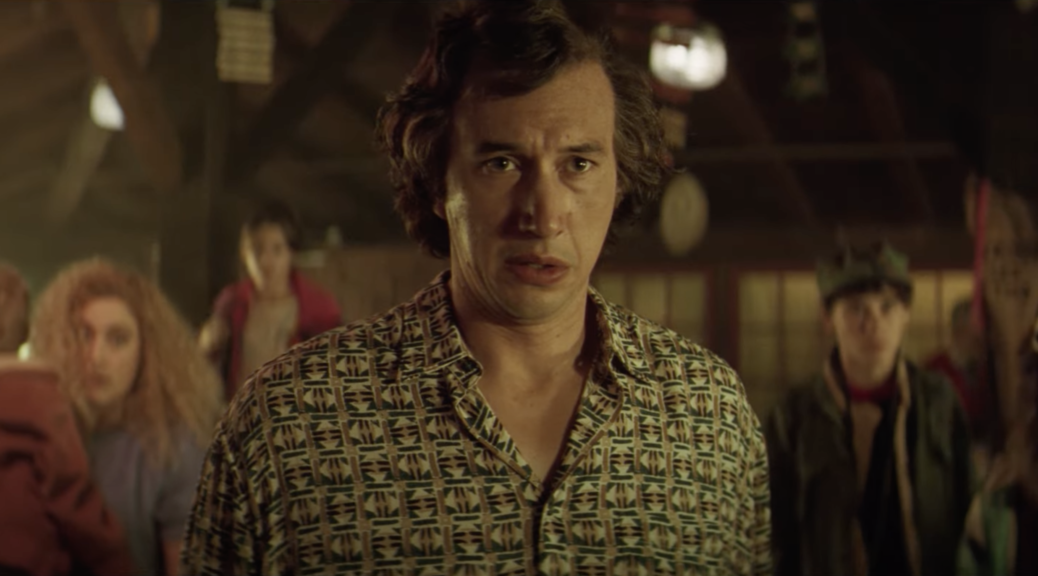
The film follows Jack Gladney (Adam Driver) – pioneer in the field of Hitler studies at the College on the Hill – his wife Babbette (Greta Gerwig), her important hair, collective trauma and pudding pockets.

Jack is so preoccupied preparing for the international Hitler conference that he fails to notice how distracted Babbette has become. Denise (Raffey Cassidy), the oldest of their combined four children (one is Babbette’s, two are Jack’s, one belongs to both), notices. Her interest sets off a covert investigation that can’t even be slowed by the toxic airborne event that sends the family, station wagon and all, into quarantine.

The fascinating ensemble also includes Don Cheadle, whose Murray is hoping to establish an Elvis Presley power base at the university, and could use Jack’s in giving his plan more relevance.

The 2+ hour adventure takes unexpected turns, as does the tone of the film itself. Droll, prescient satire makes way for National Lampoon Vacation-esque exploits before finding a grim if tender resolution.

The rapid-fire dialog keeps hammering away, as if characters are talking at us rather than to each other. On its face, this wouldn’t seem to be the best approach for effective film satire. But in time, the terrific cast carves out a strange, comfortable world for the many declarations to live, and Baumbach nurtures an ironically effective strategy for realizing the novel’s many big ideas.

Check that, in the mid-80s these ideas were big. Now, they cast a post-internet and pandemic shadow that may be darkly comic, completely depressing, or both. From conformity to death culture, the cult of personality to disinformation and the warm embrace of consumerism, White Noise miraculously finds madcap, anxious entertainment in the blissfully unaware.

True to its title, White Noise throws plenty at you almost all the time. And while the overriding aesthetic wallows in a bemused detachment, the film ultimately embraces important details that hint at actual warmth. It’s a film that might leave you giggling, scratching your head, or convinced that we’re all doomed, but you’ll be damned near helpless against the strange beauty of synchronized shopping.

Over the Hills And Far Way

Strange World

by Hope Madden and George Wolf

So, one of the main characters here looks exactly like John Krasinski, but is voiced by Jake Gyllenhaal?

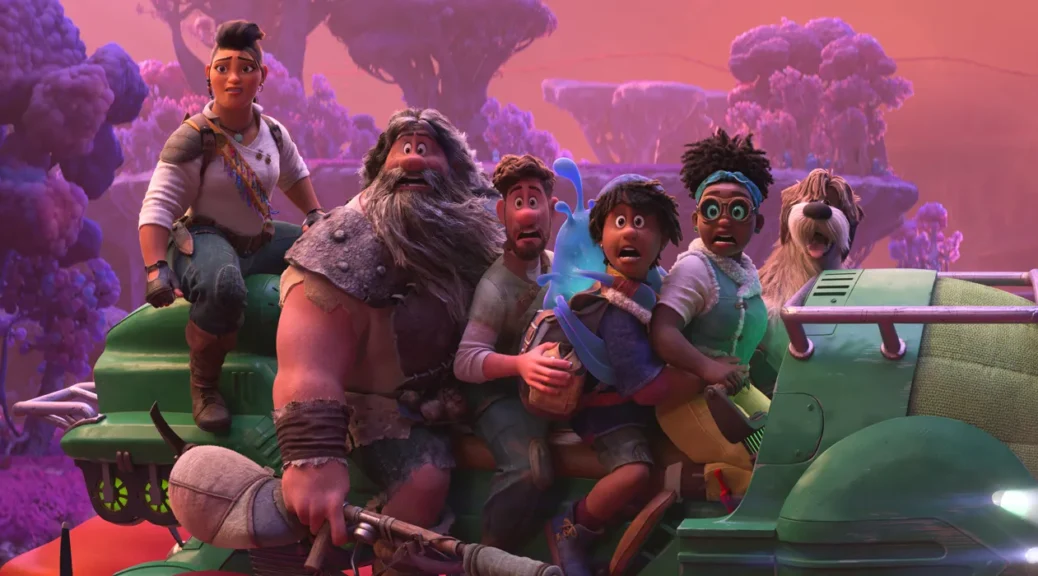
Strange World, indeed, but that’s just an amusing footnote in Disney’s latest animated feature, an enjoyable family adventure with a straightforward message and commitment to inclusion.

Jake is the voice of Searcher Clade, a contented farmer still dealing with the ghost of his famous father, Jaeger (Dennis Quaid). Twenty-five years ago, Jaeger vanished during the family’s quest to discover what lies beyond the mountains of Avalonia. But while Jaeger was lost on the expedition, Searcher brought back a vital new resource for his homeland: the Pando plant.

Pando now provides the energy that drives almost everything in Avalonia, which is all fine until the crops show signs of a serious infection. Putting aside a vow not to follow his father’s adventuring path, Searcher, his wife Meridian (Gabrielle Union), their son Ethan (Jaboukie Young-White) and their three-legged dog join President Mal (Lucy Liu) on a mission to cure the Pando plant and preserve their comfortable way of life.

Writer Qui Nguyen (Raya and the Last Dragon) joins his co-director Don Hall (Raya, Moana, Big Hero 6) to craft an ecological allegory seemingly inspired by the union of a role-playing board game and one of those cute posters you pass while waiting in the lines at Disney World.

The animation itself is stunning, whether snowy peaks, verdant village or trippy, drippy otherworld. Strange World lives up to its title, delivering a visual feast.

But there’s more on Nguyen’s mind than eye candy. His story offers a world where generations do not have to be defined by what they always believed was right, where masculinity has no concrete quality but is a term owned by the individual. More importantly, this Strange World is one where creature comfort is not more important than survival.

Often the film feels like it’s trying too hard to correct the stereotypes nourished by generations of children’s entertainment. But there’s a kindness and a sense of forgiveness throughout the movie that does make you yearn for a world like this one.

Drive-By

Lamborghini: The Man Behind the Legend

by George Wolf

The name “Lamborghini” probably brings to mind some beautiful, expensive cars that go very fast. In fact, they can reach speeds that are recommended only for the most skillful drivers.

That’s very much like the approach of Lamborghini: The Man Behind the Legend, writer/director Bobby Moresco’s drive-by telling of Ferruccio Lamborghini’s rise from the vineyards to the showrooms and the race tracks.

It is great to watch Frank Grillo dig into the lead role, though. He’s been a mainstay of action films for years, but here Grillo gets the chance to move beyond a reliance on brawn for a performance that shines with passion and charisma. He’s easily the best part of the film.

It’s also nice to see Oscar-winner Mira Sorvino as Ferrucchio’s loving-but-frustrated wife, Annita. But Moresco (who won his own Oscar for co-writing Crash with Paul Haggis) is simply content to check off the boxes of Ferrucchio’s journey, never giving any of them the depth or consideration required to resonate.

Moresco frames the biography around a late-night drag race between Lamborghini and rival Enzo Ferrari (Gabriel Byrne in a glorified cameo once pegged for Alec Baldwin). As the men trade steely glares and steady gear-shifting, Moresco quickly moves the flashbacks through Ferrucchio’s return from war, the launch of the company, personal and professional strife, success, and the constant drive for perfection.

The rush to get a car ready for the 1964 Geneva auto show instantly recalls James Mangold’s Ford v Ferrari, which is not a comparison that works in Lamborghini‘s favor. While Mangold wisely chose to limit his film’s scope so we could become invested in the lives and the details of a particular mission, Moresco is just reciting all these things that happened in a famous man’s life and hoping we might care as much as he does.

That’s rarely a winning formula. The film’s constant lack of authenticity undercuts any attempt to deconstruct Ferruchio’s need for recognition as more than a poor farmer, and Lamborghini: The Man Behind the Legend just can’t deliver the horses, or the power.

Grass Is Green, Girls Are Pretty

Paradise City

by George Wolf

Until the recent news that Bruce Willis had sold his “likeness” for use in future projects, Paradise City was once targeted as his final film before the retirement brought on by aphasia.

It seemed like a good plan. Reunite him with John Travolta, add the talents of Stephen Dorff, and Bruce could bow out with a respectable crime thriller.

Turns out, they should have saved Gasoline Alley for last.

Paradise City lands as another cookie cutter production from Edward Drake, Corey Large and Chuck Russell, surrounding solid work by the three leads with a litany of dreadful supporting performances and careless construction.

Willis is bounty hunter Ian Swan, who goes missing in Maui after finally confronting the $10 million fugitive he’s been tracking for years. Ian’s son Ryan (Blake Jenner) wants in on the family business, so he travels to Hawaii where he teams with Ian’s old partner Robby (Dorff) and a Maui cop named Savannah (Praya Lundberg) to take up the mystery of what happened to his old man.

And odds are it has something to do with Buckley (Travolta), a local big wig who’s buying off all the Maui politicians for the rights to strip mine all over the island.

Explosions. Shoot ’em ups. Bikinis. Embarrassing fight choreography. Unsurprising surprises.

Fattening this holiday turkey to feature length also requires a side trip to the village of Paradise City, where the natives are resisting Buckley’s bribes. Why don’t Ryan and Savannah use one of her endless supply of off days to try on some skimpy swimsuits and learn about Hawaiian culture?

And then…back to the bad guys.

Travolta mercifully tones down scenery chewing, Willis is game for what he’s asked to do and Dorff seems like Olivier next to most of the cast members he’s often saddled with.

Really, I can’t imagine what was going through Dorff’s head during some of his takes. He may as well be teaching a class for mannequins who just came to life that very day. But they’re so excited to be acting! Painful.

But they all probably had a great time in Maui.

Screening Room: Wakanda Forever, Spirited, My Father’s Dragon & More

Defying Depravity

Spirited

by George Wolf

Turns out, the afterlife is a musical!

And Spirited knows that’s not everyone’s idea of heaven, which just becomes another part of its holiday charm.

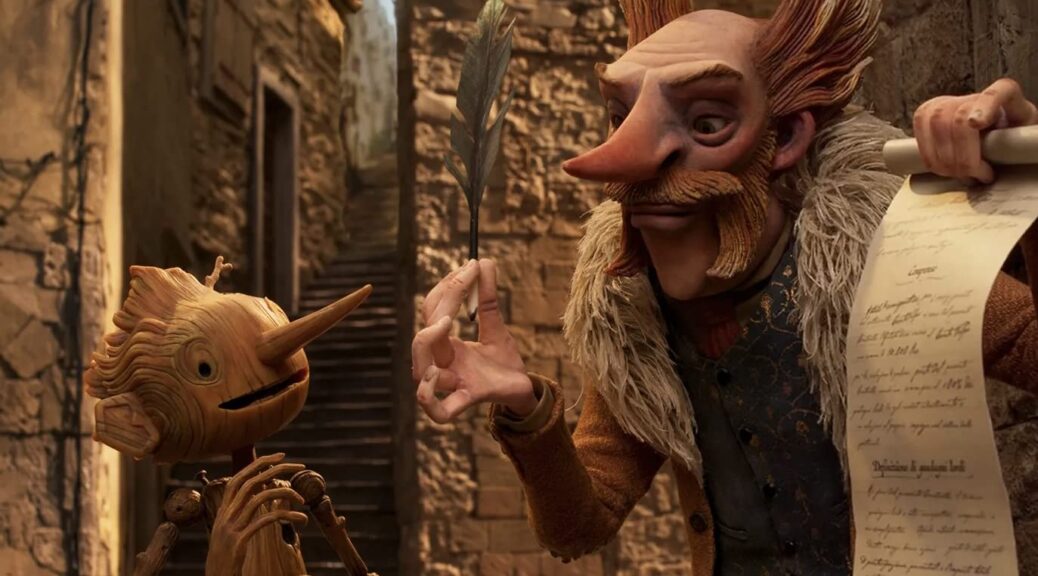
Director and co-writer Sean Anders (Instant Family) takes a cue from Wicked by spotlighting the little-known good side of a classic villain. What happened to Ebenezer Scrooge after his change of heart? Well, he re-teamed with Jacob Marley in the Great Beyond, leading a firm that haunts more Earthly souls into redemption.

And the Ghost of Christmas Present (Will Ferrell) has a tough assignment in Clint Briggs (Ryan Reynolds). Clint’s a smug mix of “Mussolini and Seacrest,” a media chaos and disinformation specialist that Marley (Patrick Page) calls unredeemable.

But Present, Past (Sunita Mani) and Yet-to-Be (voiced by Tracy Morgan) get the assignment, which only gets more complicated when Present’s attraction to Clint’s assistant Kimberly (Octavia Spencer) has him contemplating a return to human form.

It’s high concept, but the ensemble cast is all in, the production design sparkles and the original songs from The Greatest Showman‘s Benj Pasek and Justin Paul feature at least a couple of future holiday classics. Okay, “Good Afternoon” might not technically be a Christmas song, but it’s Pasek and Paul’s hilarious answer to Scrooge‘s “Thank You Very Much” and is going on my playlist right now.

And while there are no great singers here, that’s a detail rendered more and more minor as the surprise cameos, meta asides and winks thrown at musical tropes create a “let’s all sing and dance” vibe that’s hard to resist.

Ferrell and Reynolds share a likable chemistry only old Scrooge himself would dismiss. But underneath all the jokes and pizzazz, you will still find some character arcs here, and one surprisingly dark turn on Clint’s toe-tapping road to redemption.

It’s been nearly 20 years since Ferrell’s done Christmas (some of us have been counting), and it’s easy to see why he thought Spirited was the big ticket item he couldn’t pass up. Yes, the two-hour run time would benefit from a slight tree trimming, but this is a film some households will make required viewing for plenty of seasons to come.

And for the others…

Good afternoon!

Into the Void

Black Panther: Wakanda Forever

by Hope Madden and George Wolf

The shocking news of Chadwick Boseman’s death brought plenty of feelings. One of them was curiosity about the future. How would the Black Panther franchise – newly launched via Marvel’s most impressive feature – move forward?

Wakanda Forever does it with respect, love and reverence, in a worthy second effort that’s anchored by loss, grief and perseverance.

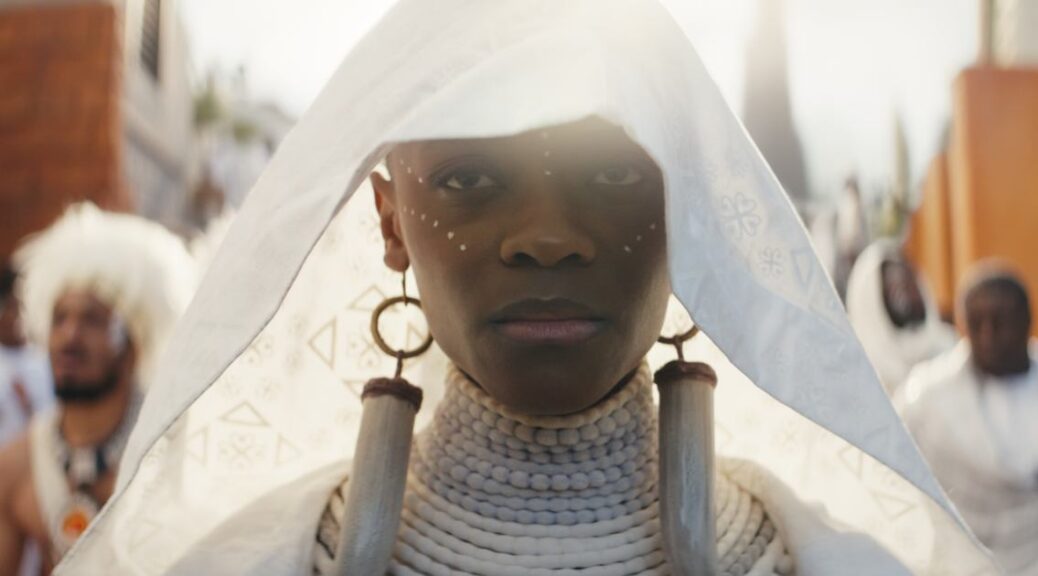
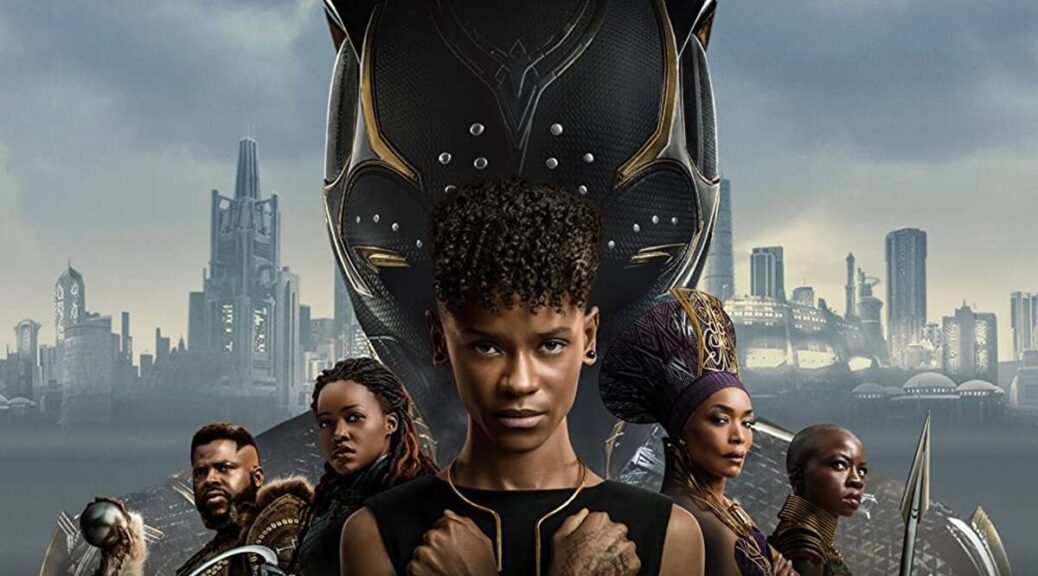
One year after King T’Challa’s death, Princess Shuri (Letitia Wright) is wondering if the idea of a “Black Panther” is outdated and Queen Ramonda (Angela Bassett) is facing increased pressure to share vibranium with other world powers.

The world powers, of course, aren’t just asking. And their efforts to take are aided by a new device that can detect vibranium in the environment, which brings the powerful “Feathered Serpent God” Namor (Tenoch Huerta from The Forever Purge and Sin Nombre) out of hiding.

Vibranium is also the resource vital to his undersea world of Talukan. Namor views the detection device as a threat to his nation and demands that Ramonda and Shuri turn over the scientist responsible. If they do not, Wakanda will have a formidable new enemy.

Hannah Beachler’s production design rivals that of her Oscar-winning work in Ryan Coogler’s 2018 original. Wakanda itself is as stunning and fully realized as ever, while Namor’s undersea realm becomes a lush waterworld that puts Aquaman to shame.

But after the defiant, often furious adventure of Black Panther, the most striking aspect of Wakanda Forever is the way it embraces the void left by the loss of both T’Challa and Boseman.

Coogler, writing again with Joe Robert Cole, delivers a more contemplative film this time around. Characters wrestle with loss and power, tradition and progress, rage and mercy. The depth of the script allows Basset and Lupita Nyong’o to really shine, while Winston Duke steals many scenes with a meatier, more layered take on M’Baku.

There is room for action aplenty, equally impressive whether massive seafaring attacks or intimate one-on-one battles (much thanks to the forever badass Danai Gurira).

The introduction of young M.I.T. phenom Riri (Dominique Thorne) is a well-intentioned mirror to Shuri’s technical genius, but the thread ultimately lands as a bit light and superfluous next to the complexities being pondered here. Still, Coogler’s skill with both emotion and spectacle never allows the two-and-a-half hour plus running time to feel bloated, and the film soars highest when the rush to war plays out against a backdrop of immense, intimate grief.

Have the tissues handy for the mid-credits coda. It’s a touching toast to an absent friend, and it cements Wakanda Forever‘s beautiful commitment to looking forward with cherished memories intact.

Screening Room: Banshees of Inisherin, Armageddon Time, Enola Holmes 2 and More