Disclaimer: Villain Diaries is a non-commercial work of fan fiction and parody. All characters, names, and elements from the film belong to their respective copyright and trademark holders. I don’t own them and I’m not affiliated with, endorsed by, or sponsored by the creators, studios, or rights holders. This piece is an original creative commentary inspired by their work. It is shared for free, for entertainment and critical purposes, and earns me no money. If you’re a rights holder and have concerns, please contact me at maddwolf95@gmail.com and I’ll respond promptly.
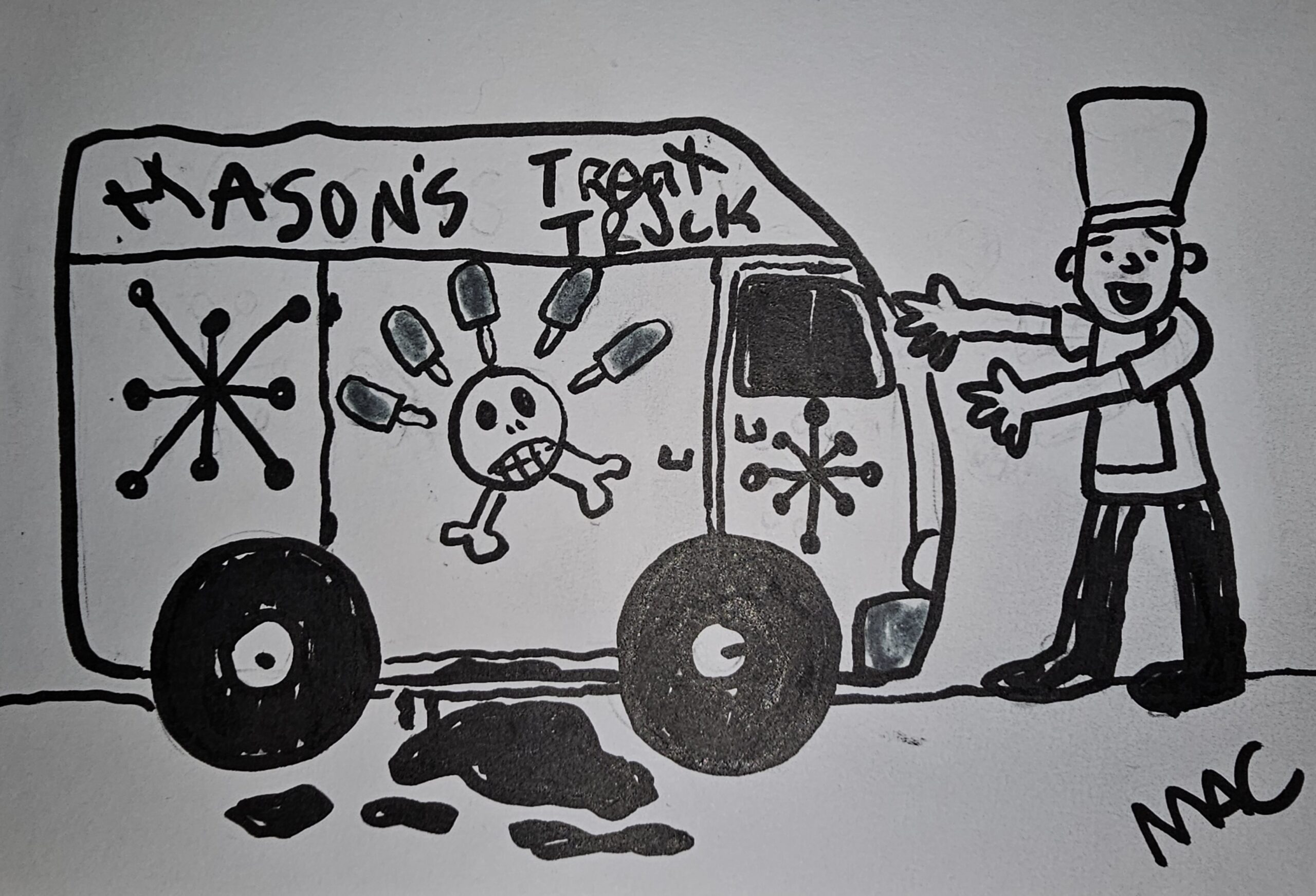
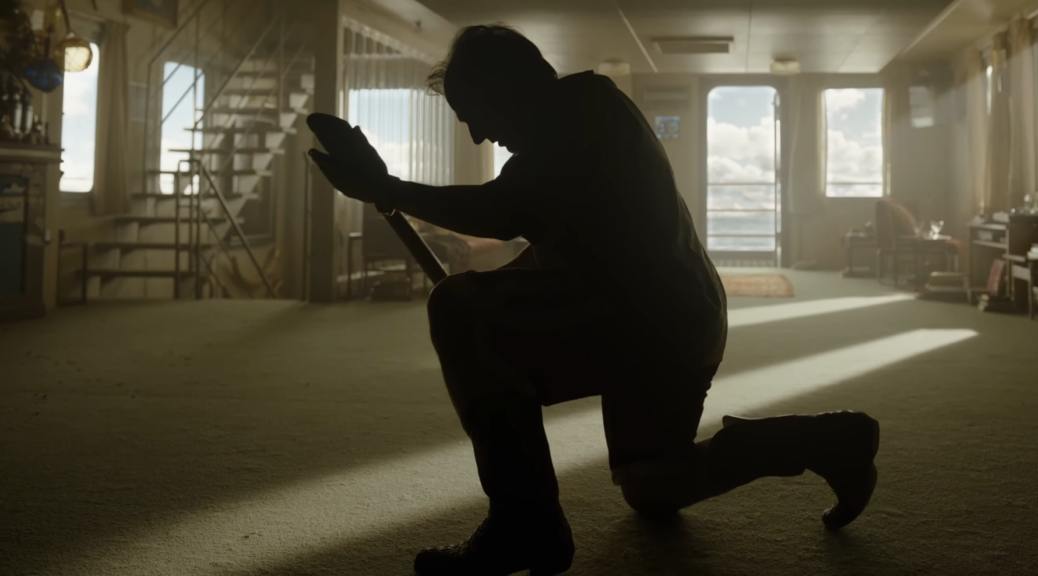
Well, I had to kill Wanda to get use of the treat truck. I think we both knew it was likely, you and I, and I suppose good practice. Just hope nobody wants ice cream where we’re going, because those little van freezers are pretty sloppy right now!
I also killed my dad’s friend Phil because he was reluctant to give up the whereabouts of this weekend’s race meetup, and also because he certainly would have told Dad about my visit, and also because I never especially cared for Phil. Didn’t like the cut of his jib. Oh, did he cry!
I think you’ll be proud, Diary, I decided to paper map it. No phone app on this mission, and not just for judicial deniability, either. The paper map felt right, like my tall, white paper hat. Proud, somehow.
It’ll be a great surprise for Dad, I think. Don’t you? All his elite athletes murdering the inferior competition, while I make mincemeat of the race organizers and security detail? I did, by the by, find a challenging but manageable how-to for the proper mincing of meat. No short cuts!
Anyhoo, can’t wait to see the look in Dad’s eyes, his whole premium-grade super superior team blown, gutted, and fileted as all the sad sack losers on the course die.
It is a little sad, you’re right. Losers are my favorite. Maybe I’ll butcher your odd athlete here and there. I’m told they sometimes come in costume! Dandy!
Diary, my dear, you have been such a support as we’ve plotted and planned this day of carnage. I wish I could carry you with me, but we both know I barely have hands enough for all these knives! Still, rest easy, friend. For I will report back. Every gruesome detail.
Onward!
Your favorite culinary artist,
Mason
*by Hope Madden. Voiceover by Riley Wolfington. Art by Anthony Michael Carroll.
Back in 2010—aah, that innocent time—writer Aaron Sorkin (with writer Ben Mezrich) took us behind the curtain to witness the weaselly, insecure, creepy underpinning of the social media revolution.
With The Social Reckoning, writer/director Sorkin checks back in on Mark Zuckerberg (Jeremy Strong) to see how his social network was doing between 2018 – 2021. A less innocent time for all involved.
But “Zuck” is not the main character. This is the story of whistleblower Frances Haugen (Mikey Madison), a Facebook engineer who loves her job on the Civic Integrity team and believes in the mission to connect people. But she can no longer live with Facebook and Zuckerberg’s intentional misuse of research to amplify profits while knowingly damaging users’ mental health, public safety, and democracy itself.
If The Social Network was a warning, The Social Reckoning is less an “I told you so” than a “holy shit!”
Haugen slowly learns to trust Wall Street Journal investigative journalist Jeff Horwitz (Jeremy Allen White) with what she knows, hoping he can expose the corporate malfeasance, and her dream job can go back to being dreamy.
Sorkin’s films work best when he’s dealing with hyper intelligent characters, and that’s certainly the case here. His spectacular cast, including Betty Gilpin, Wunmi Mosaku, Billy Magnussen, and Bill Burr, is on point in every scene. The banter between the analog Horwitz and the tech-intensive Haugen is often delightful, bringing a low-key levity to the otherwise very high-key script.
The film’s pace juggles timelines efficiently, allowing Sorkin to make a sly juxtaposition of two viruses and use a data scientist’s “dumbed down” explanations to an old school journalist as the perfectly organic vehicle for bringing us all into their circle of trust. The Oscar-winning Madison is terrific, revealing hurt and disillusion as Haugen’s belief that social media reveals the best of us is crushed by the realization that her employer is knowingly manufacturing our worst.
White becomes a wonderful counterpoint, a more world-weary soul careful to protect his prized source while patiently encouraging her instincts to expose what she knows.
And Jeremy Strong turns in yet another award-worthy supporting turn as a real person. He takes the cutthroat glimpses of Zuck we saw from Jesse Eisenberg and molds them into a cold and detached tycoon, eager to proclaim his devotion to the “public square” while quietly giving bigger bullhorns to the town criers that are most profitable.
Anyone with a social feed knows that anger is a helluva drug, and when the company line fears blowback more than incitement, fires get stoked early and often.
Scenes with Zuck conferring in a lair with investors prove there are still spots where Sorkin can’t resist the urge to overstate the obvious and push one preachy beat too hard. But, man, then he’ll unleash a string of intelligent, well-stated and completely engaging points, counterpoints and rebuttals (often between Strong and Burr in the film’s most fiery moments) that right the ship right quick.
Even if you haven’t followed the story of Haugen, Horwitz and the Pulitzer Prize-winning Facebook Files, The Social Reckoning probably won’t surprise you with how obscene this all has become. But it might help you reconsider your own algorithms, and it will definitely remind you of the type of courage and integrity that still defines the best of us.
I mean, really, how many of us still think that social media was a good idea?
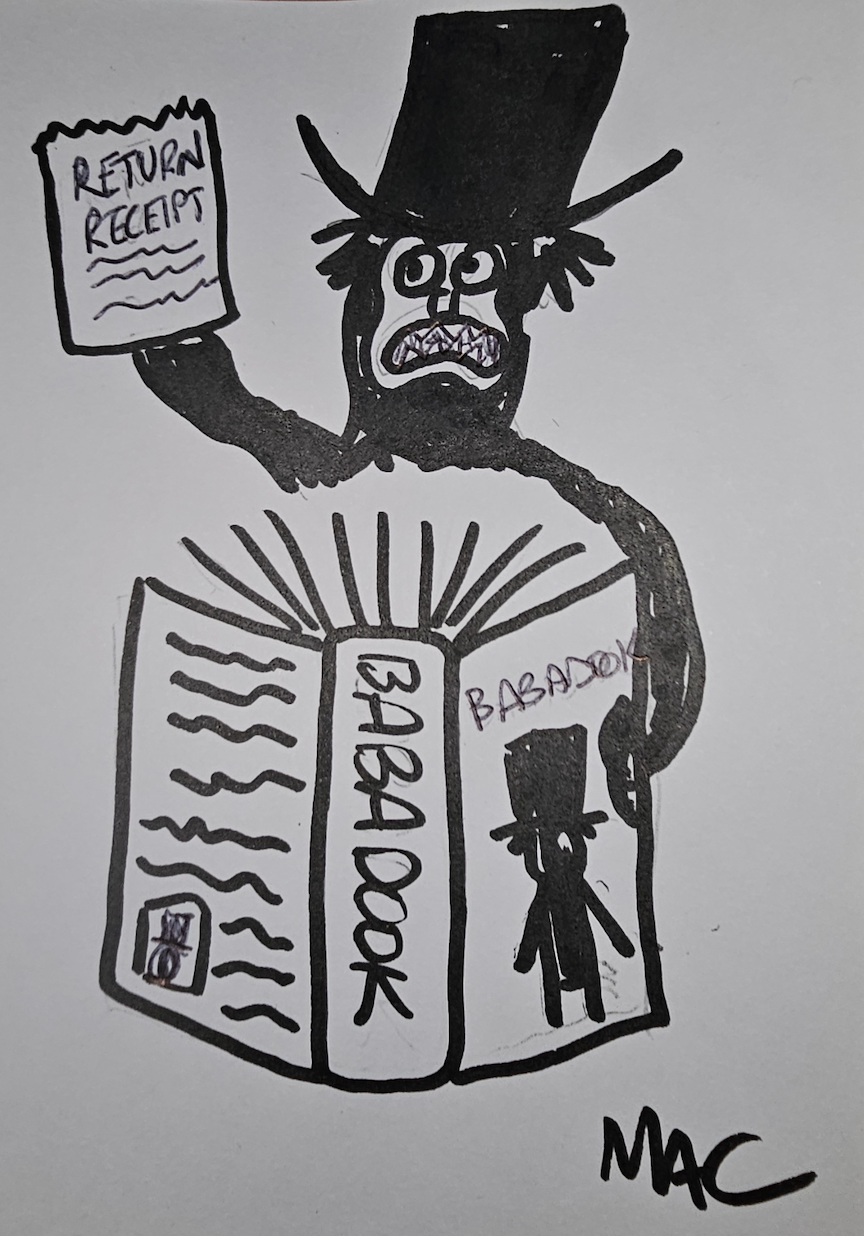
Before we say more, let us begin with this. We stand behind our product. We do not disregard nor disrespect the concerns surrounding our lushly illustrated pop-up book, Mr. Babadook. Every concern from a reader, be it a child or a parent, whether it’s in a word or it’s in a look, is taken very seriously by our organization.
Perhaps not every child is cut out for Mr. Babadook. He appeals to a certain imagination. He can make some children feel less alone. Isn’t there comfort in knowing your child believes he’s let someone into his life who will never leave? For some children—and their overworked, under-rested parents—Mr. Babadook is a dream come to life.
Concerns such as those shared about this product are hard to be rid of. A mistake, error, or issue like this is something that, once you see it, can’t be unseen. If, indeed, you see it at all. Perhaps it’s there. Perhaps you’re reading something into it. That’s the real issue, isn’t it? Not what’s there, but what’s underneath?
Maybe it’s not our book. Maybe it’s you.
If Mr. Babadook does not thrill your child, we’ll gladly mail one of our publisher’s other remarkable tales for children: Basement Buddy, The Face at the Window, Who’s There in the Corner? or the classic, Come and Play With Mr. Goat.
But keep Mr. Babadook at no additional cost. Perhaps you’ll change your mind. Perhaps you’ll find a spot in your family for him.
Regards,
Somebody’s Knocking Publishing House
*by Hope Madden. Voiceover by Hope Madden. Audio production by George Wolf. Art by Michael Anthony Carroll.
Disclaimer: Villain Diaries is a non-commercial work of fan fiction and parody. All characters, names, and elements from the film belong to their respective copyright and trademark holders. I don’t own them and I’m not affiliated with, endorsed by, or sponsored by the creators, studios, or rights holders. This piece is an original creative commentary inspired by their work. It is shared for free, for entertainment and critical purposes, and earns me no money. If you’re a rights holder and have concerns, please contact me at maddwolf95@gmail.com and I’ll respond promptly.
There’s a lot of recipes for bar-b-que, but you’re gonna wanna eat mine. I promise! Good old Texas BBQ the way Grandpa taught me. There was nobody better’n ol’ Grandpa. Did it the old fashioned way. He even kilt the meat. Give it a respectable killing too, not like they do nowadays.
Now, I can’t take no pleasure in killing. Don’t have the heart for it. The suffering, now, that I don’t mind.
And I know something about feeding a family on a budget. I got two sons to feed. Hungry fellas. Sometimes they need some discipline. I have to give ‘em the stick! But most days, my barbeque quiets ‘em down. They even like to help, dumb as they are.
Even Grandpa still likes a taste! He’ll suck a bone clean. There’s nothing like a family dinner. And my bbq recipe, why, it won’t break the bank.
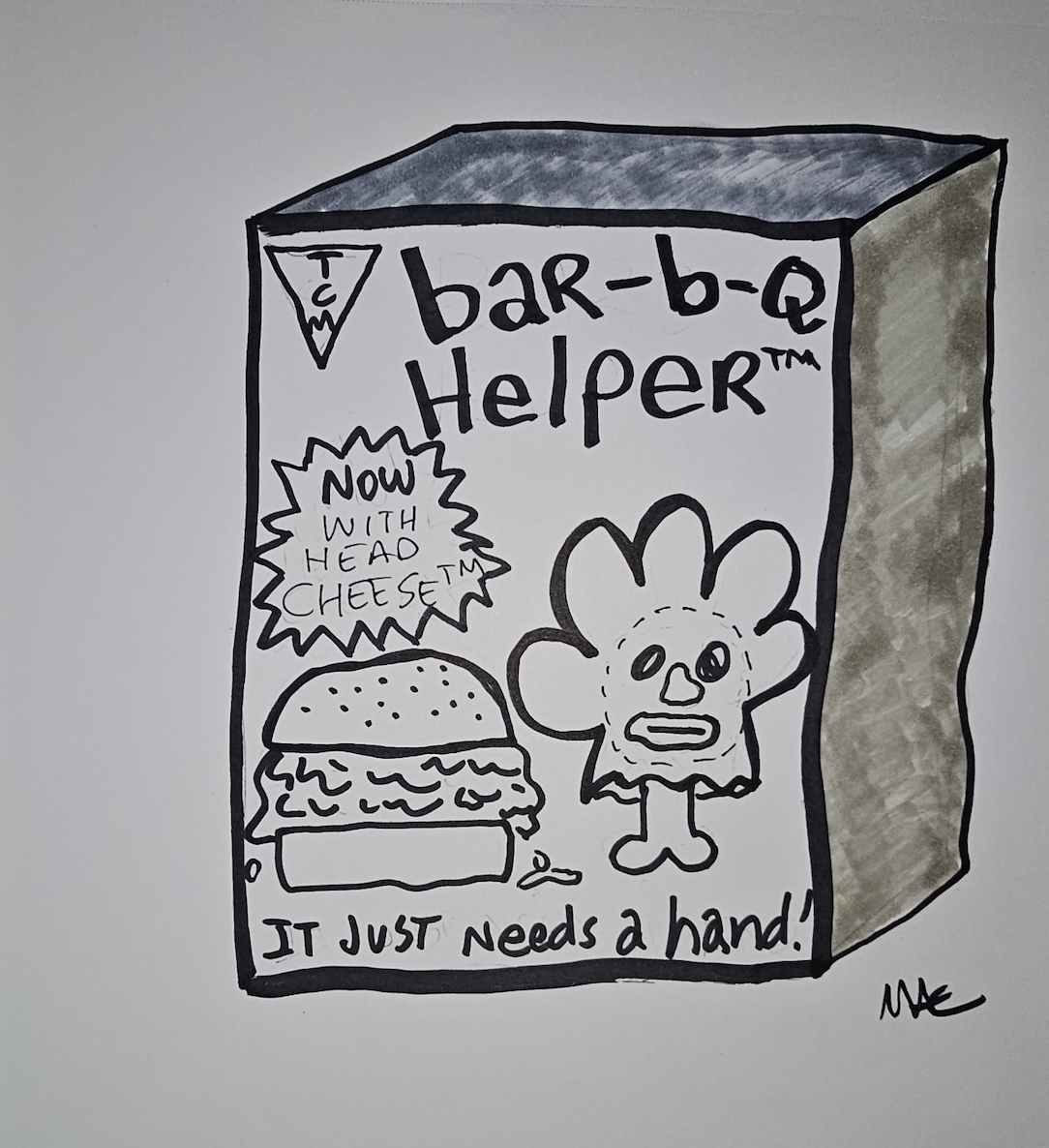
Start with the meat. Any kind will do, really, so long as you give it a good killing. And you use all the parts. You can even boil the head for head cheese. You can even find use for the skin, the bones. My boys, they’re artistic like. But me, I stick to what I know: barbeque.
I like it smoked. Saves on electricity. The cost of electricity is enough to drive a man out of business! So, you need a good smoke stack and some hooks. Steel hooks, any kind of hook big enough to hold the meat. Then a good fire, let it hang there and cook in its juices. That’s what makes it tender, a good old fashioned hooking!
And the sauce, well, the sauce, that’s just odds and ends, whatever’s handy. It’s the meat that counts. Good piece of meat, fresh, killed proper and smoked to bring out its flavor. Nothing, I mean nothing, beats some good old fashioned Texas barbeque.
*by Hope Madden. Art by Michael Anthony Carroll.
Disclaimer: Villain Diaries is a non-commercial work of fan fiction and parody. All characters, names, and elements from the film belong to their respective copyright and trademark holders. I don’t own them and I’m not affiliated with, endorsed by, or sponsored by the creators, studios, or rights holders. This piece is an original creative commentary inspired by their work. It is shared for free, for entertainment and critical purposes, and earns me no money. If you’re a rights holder and have concerns, please contact me at maddwolf95@gmail.com and I’ll respond promptly.
*by Hope Madden. Voiceover by Riley Wolfington. Clip production by George Wolf. Art by Michael Anthony Carroll.
Disclaimer: Villain Diaries is a non-commercial work of fan fiction and parody. All characters, names, and elements from the film belong to their respective copyright and trademark holders. I don’t own them and I’m not affiliated with, endorsed by, or sponsored by the creators, studios, or rights holders. This piece is an original creative commentary inspired by their work. It is shared for free, for entertainment and critical purposes, and earns me no money. If you’re a rights holder and have concerns, please contact me at maddwolf95@gmail.com and I’ll respond promptly.
BOAT TOURS! CAPE FEAR RIVER AND SURROUNDING TRIBUTARIES! CALL CAPTAIN MAX CADY!
North Carolina. This really is the land of the free.
You know what you are? Free as a bird. Free to go wherever, whenever. But you can’t escape your demons just by leavin’ home. That much freedom could get a fella into trouble. Without the right guide, I mean.
Do you want a lake tour guide who’s less than human? My mission is to be more than human.
And just let me get a gander at the rest of your family. I can even get in touch with my feminine side, if that’s what it takes. I got something planned for your wife and kid that they ain’t never gon’ forget.
I’ll show you things on the Cape Fear river you never in your wildest dreams imagined. I am offering you something hot. I won’t force you to make a commitment. But you could say I’m here to save you. Save you money and frustration on a cut rate boat captain, that is.
Contact Captain Max Cady.
I’ll see ya around, counselor.
*By Hope Madden. Art by Michael Anthony Carroll.
Disclaimer: Villain Diaries is a non-commercial work of fan fiction and parody. All characters, names, and elements from the film belong to their respective copyright and trademark holders. I don’t own them and I’m not affiliated with, endorsed by, or sponsored by the creators, studios, or rights holders. This piece is an original creative commentary inspired by their work. It is shared for free, for entertainment and critical purposes, and earns me no money. If you’re a rights holder and have concerns, please contact me at maddwolf95@gmail.com and I’ll respond promptly.
Hope & George review this week’s new releases: Digger, Verity, Beware Boiúna, The Last First: Winter K2, Ghost in the Cell, Deathgasm 2: Goremageddon, Her Will Be Done, Infirmary, The Nice Ones, and The History of Concrete.
Listen, listen. I’m not the villain here. All right?
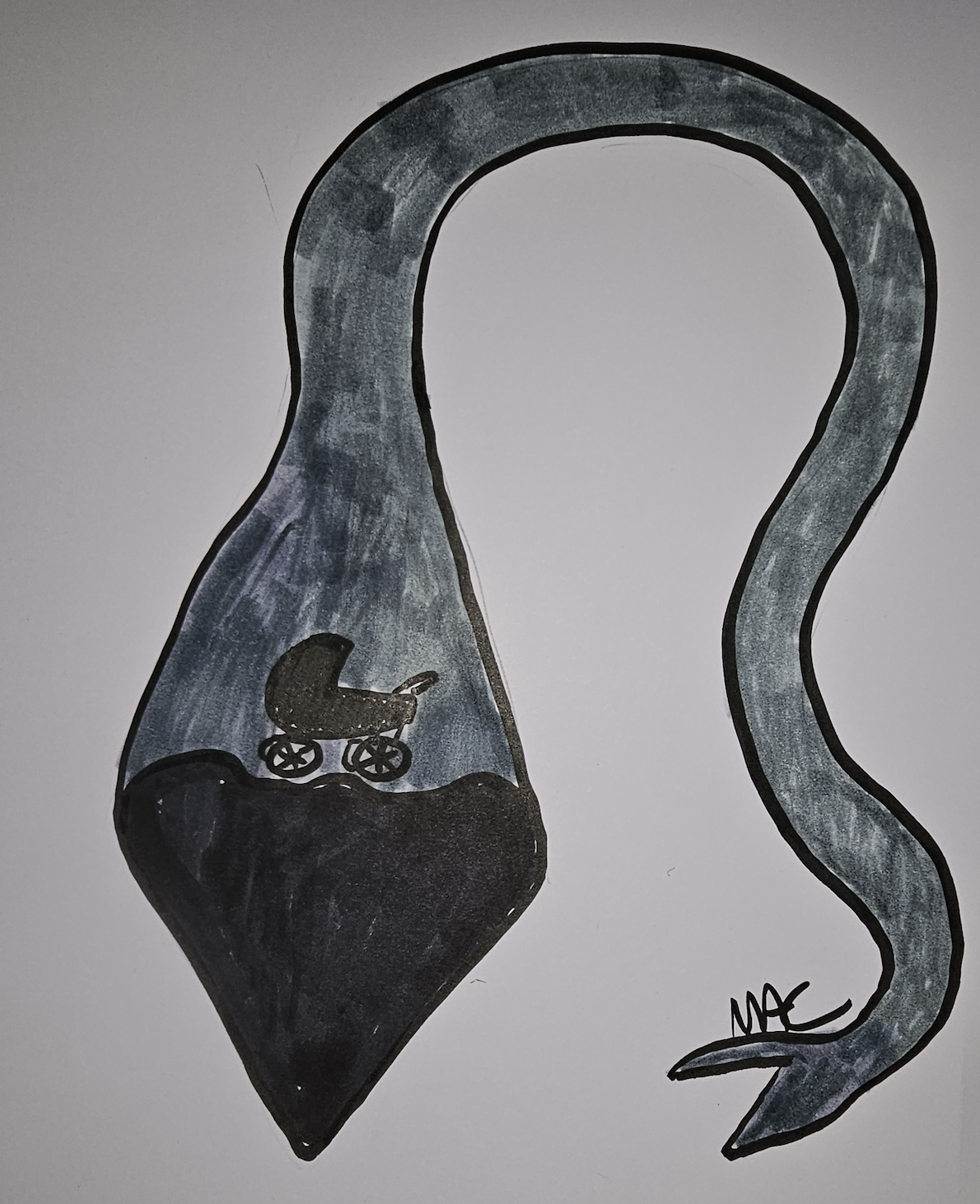
I’m an actor. There’s this kooky older couple in the building where I live. They said they could help me. Just bring me a tie, they said. Just bring them a tie that belonged to the one guy who kept getting all my parts.
You have no idea how competitive this industry is. And these people, they can help. They really can. One necktie, and suddenly I’m the golden boy. I didn’t do anything to him. I didn’t do anything. I didn’t even know what they were going to do. Hell, I don’t know what they did do or how they did it, but…and I do feel bad for the guy! But am I going to pass up my big break?
And now they need a little more. The necktie, that was really to prove a point. To show me what they could do.
And Rosemary—my wife—deserves better than what we had. So, yes, I took some liberties. But who did it hurt, really? She wasn’t supposed to remember any of it. That’s what they told me! She wouldn’t remember anything. She’d just be pregnant – sure, a little sicker than a regular pregnancy, but a lot of women are sick while they’re pregnant. And then, it would be like she had miscarried. Sad, sure, but she’d get over it and we’d try again. Begin our own family. A family that could live the way we wanted to live, deserved to live.
It wasn’t easy for me, either, you know. Seeing my wife with that – thing. That beast. I had to watch that. But my sacrifice—you know—it was for us. I did it for us.
And what those people do, well, that’s their business. To each his own. Live and let live, right? They’re not so bad, really. I kind of feel sorry for them. Rosemary is always getting on me to be nicer to people. That’s all I was doing.
I’m not the villain.
*by Hope Madden. Voiceover and audio production by George Wolf. Art by Michael Anthony Carroll.
Disclaimer: Villain Diaries is a non-commercial work of fan fiction and parody. All characters, names, and elements from the film belong to their respective copyright and trademark holders. I don’t own them and I’m not affiliated with, endorsed by, or sponsored by the creators, studios, or rights holders. This piece is an original creative commentary inspired by their work. It is shared for free, for entertainment and critical purposes, and earns me no money. If you’re a rights holder and have concerns, please contact me at maddwolf95@gmail.com and I’ll respond promptly.
Don’t listen to anyone about Digger. I’d say the odds are 50/50 that you’ll love it or hate it. But if you appreciate a positive ratio of sheer ideas per moviegoing minute, you’ll be hard pressed to beat the latest opus from Oscar-winning Mexican auteur Alejandro G. Iñárritu.
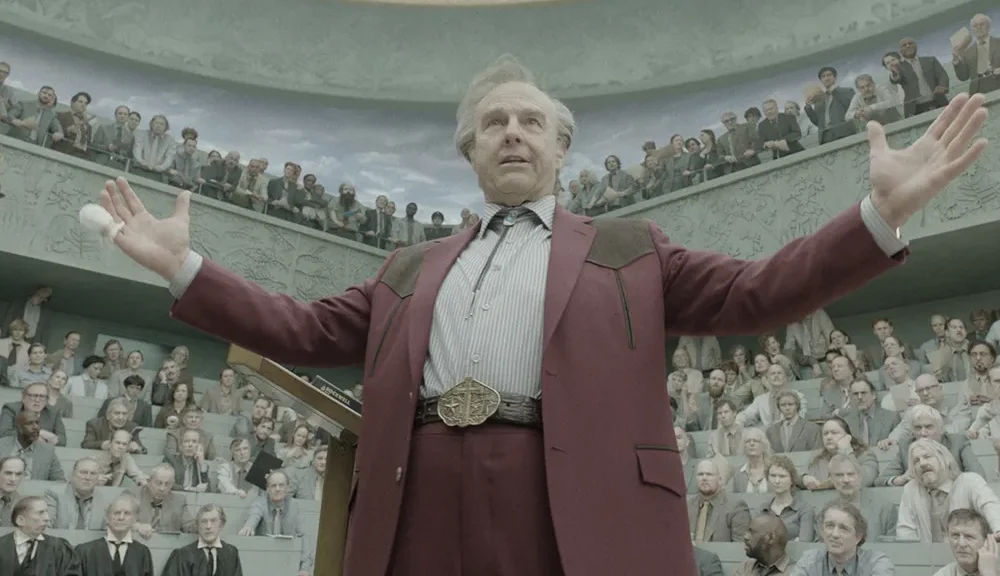
Speaking of awards, get used to seeing Tom Cruise in the upcoming nomination lists, and he most definitely earns the acclaim. Call it tour de force, over the top or whatever, but he absolutely commands the screen and this satirical epic as Digger Rockwell, a my-way-or-the-highway oil tycoon whose company has caused an environmental disaster that threatens life as we know it.
Can Digger dig us all out? And can director/co-writer Iñárritu climb out of the narrative hole he digs in the early going?
For my money, yes.
His impressive resume (including The Revenant, Birdman, Bardo, and Babel) is stacked with impeccable craftmansmanship, ambitious framing, boundary pushing visuals and increasing self-indulgence. You’ll find it all in Digger, and per usual, subtlety is not in the toolbox.
If you thought Don’t Look Up was too direct, buckle up. This message, and this coal black humor, is obvious and repetitive, layered through extreme POVs and garish sets that underscore Digger’s promise of damage control through performative storytelling. And just when the bombast threatens to bring the entire film down, Iñárritu makes a shocking pivot that is sure to make Digger one of the most divisive films in recent memory.
I’m not spoiling it, and shame on anyone that does.
Even with Cruise dominating the film, the incredibly stacked supporting cast carves out a steady stream of interesting and often larger-than-life characters. From John Goodman, Riz Ahmed, Sandra Hüller to Michael Stuhlbarg, Jesse Plemons and even a Burn Gorman sighting, there is excellence evident on nearly every corner of the screen.
And by the way, choose that screen wisely. Iñárritu shot this in VistaVision, so unless you want the pillarbox view, avoid the standard widescreens.
But if you appreciate the movie theater experience, do not avoid Digger. And don’t leave halfway through, even if you’re tempted. You’ve got to see this through — including a few minutes into the credits — before you can really start mulling over what you’ve seen.
Hell, a year from now I may wish I’d given this five stars, or two. But right now, I’m glad it’s given me this much to think about.