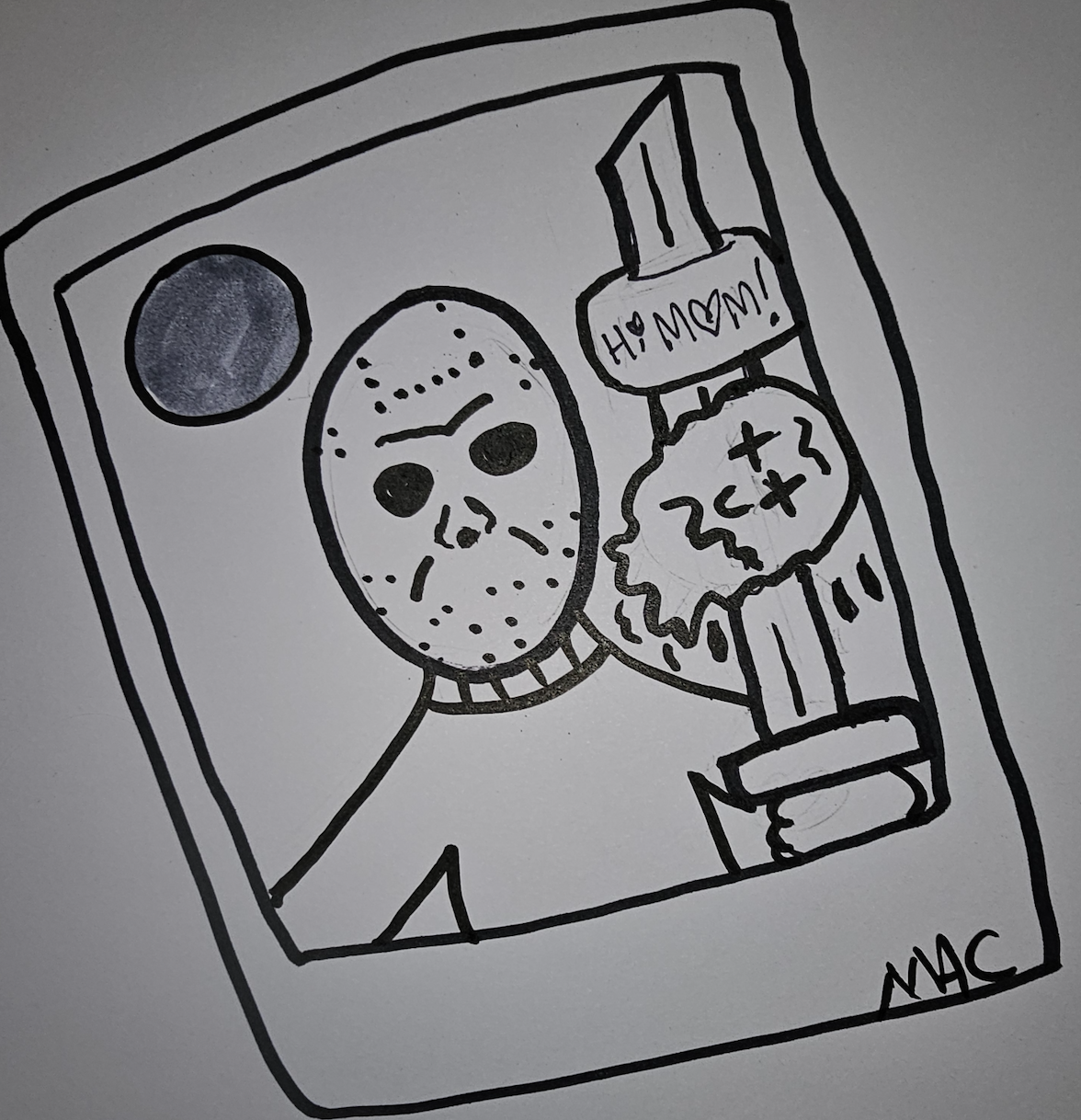
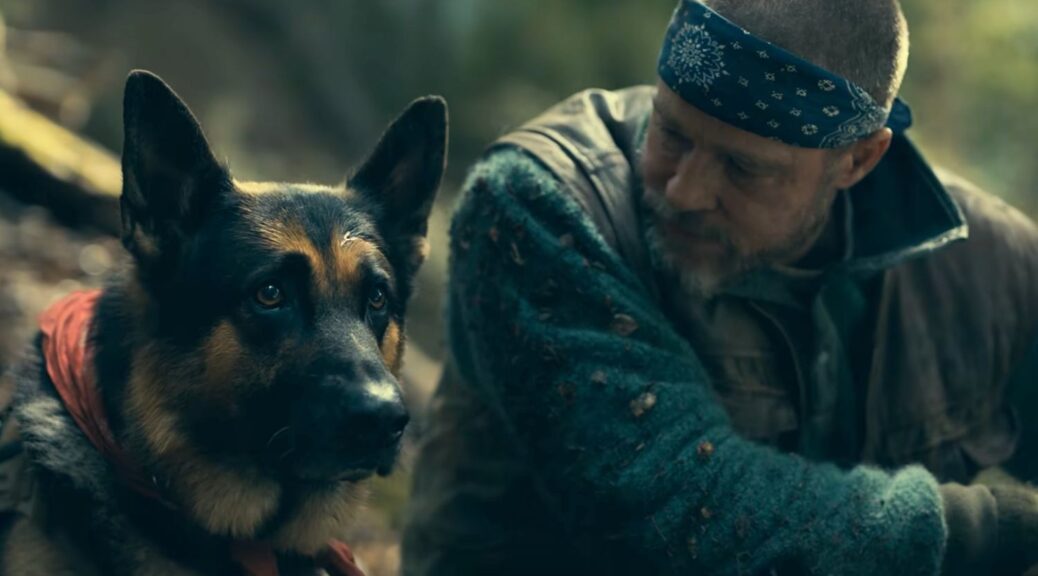
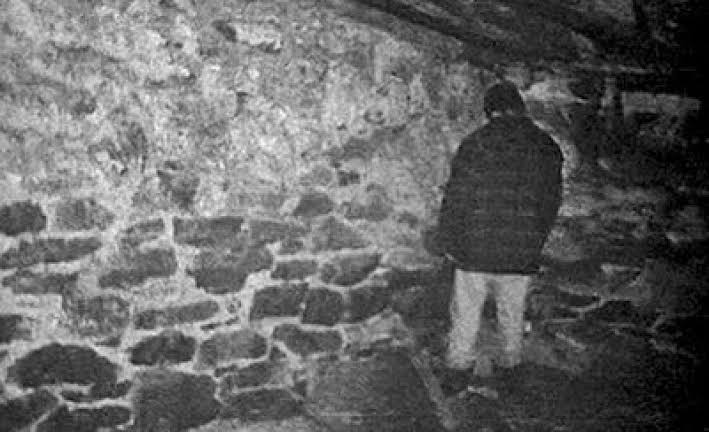
I know I said I didn’t want to go to camp this year. I said nobody ever talks to me. Nobody ever asks me to swim or hike, or play truth or dare, or arm wrestle. Nobody offers me an enchilada. I said I didn’t like it. I said it was boring, but what I really meant was that it was lonely. I didn’t want to have to spend the whole summer—again!—with no friends. I said nobody likes me here. I said I would miss you.
But you said, “Jason, they’re just as scared of you as you are of them! They can’t like you if they don’t know you, so just march right up to them and show them who you are. Show them what you’re made of. You might even see what they’re made of.”
You were right, Mom. As always! I love it here. I am having the best summer, just like you said I would. Thanks for always having my back. I still miss you, though!
Jason
*by Hope Madden. Video in partnership with Mills James Productions. Voiceover by Dave Man Bjorklund. Art by Michael Anthony Carroll.
Disclaimer: Villain Diaries is a non-commercial work of fan fiction and parody. All characters, names, and elements from the film belong to their respective copyright and trademark holders. I don’t own them and I’m not affiliated with, endorsed by, or sponsored by the creators, studios, or rights holders. This piece is an original creative commentary inspired by their work. It is shared for free, for entertainment and critical purposes, and earns me no money. If you’re a rights holder and have concerns, please contact me at maddwolf95@gmail.com and I’ll respond promptly.
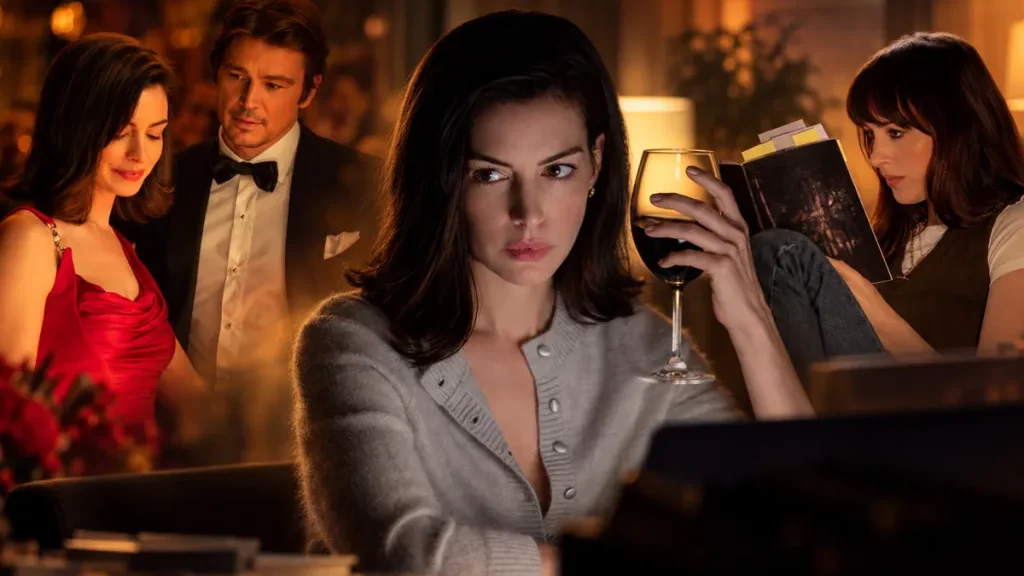
The most interesting thing about Verity is what a stupefying mess it turns out to be. Anne Hathaway and Dakota Johnson aren’t just stars, but producers as well. And though Michael Showalter might seem a surprising choice to direct an erotic thriller, his resume includes some big wins (The Big Sick, Wet Hot American Summer).
Where did it all go wrong? Pretty much everywhere.
Based on Colleen Hoover’s best seller, the film follows struggling novelist Lowen Ashleigh (Johnson) as she is hired to finish a book series by world renowned writer Verity Crawford (Hathaway). Crawford is incapacitated after a car accident, so her husband Jeremy (Josh Hartnett) invites Lowen to stay in their Vermont mansion, pour over Verity’s notes and deliver three much-anticipated books.
But Lowen finds more than notes. She finds a flash drive holding a secret manuscript that appears to be an autobiography where Verity makes some earth-shattering confessions.
Cue the thunder claps and lightning strikes, and hold any trace of a winking nod to how ridiculous this all is. Hoover’s story (adapted by Nick Antosca) seems heavily borrowed from a couple more well-plotted novels, and Showalter’s humorless tone never leans into the pulpy aspects that might have made this a fun, guilty popcorn pleasure.
Sexy moments aren’t sexy. Jump scares aren’t scary. Witty banter isn’t witty, and the three very talented stars just seem confused. That’s a bad combo, one that allows for plenty of time for us to wonder about those breakdowns in internal logic.
But honestly, there isn’t much concern with any one thinking too much. An over-reliance on voiceover narration drains the shock value from big reveals, and ends up negating those seeds of doubt the film seems to think it is planting.
This type of Neo-noir blurring of truth and fiction has resulted in some twisty fun in the theaters over the last several years. But what might have been a self-aware ride on the order of A Simple Favor or The Woman in the Window barely rises to the level of Hathaway’s own curious dud Serenity.
Too much talent, not enough pulp. Sad to say, that’s Verity.
“Whoever climbs K2 in the winter will claim the last great prize in mountaineering.”
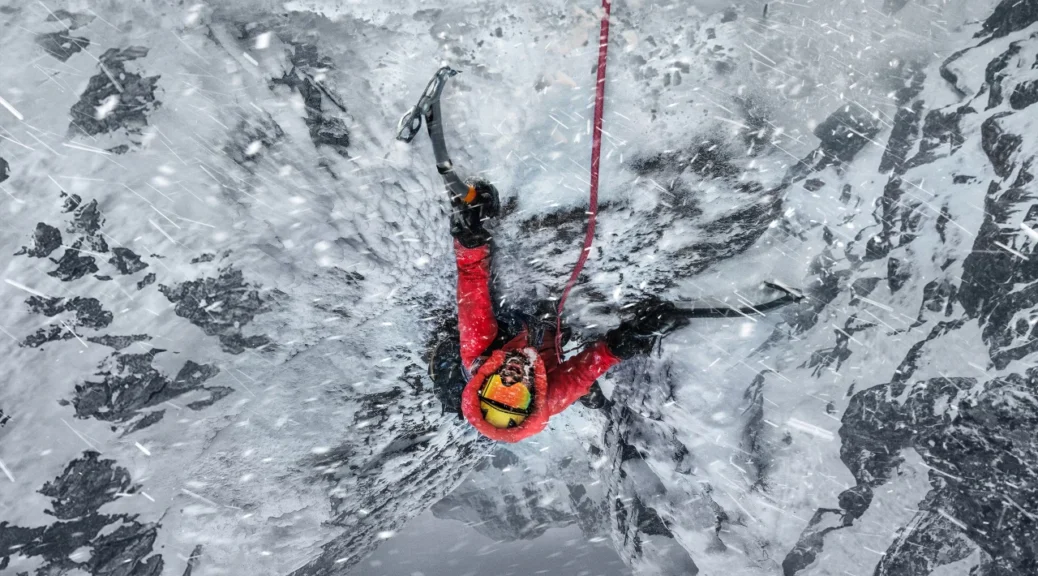
In 2021, that mission became a deadly competition. Businesses were reeling from COVID restrictions, social media likes became a new form of currency, and an unexpected crowd gathered to earn that last first: summiting the world’s second-highest peak amid the worst conditions imaginable.
K2 — aka “The Savage Mountain” — had proved too much for all previous winter attempts. But veteran climber John Snorri Sigurjónsson and local Pakistani hero Ali Sadparas thought they could be the first, only to be met with an unexpected crowd thinking the same thing.
There was filmmaker Elia Saikaly, Nepalese legend Nims Purja and his team, extreme athlete Colin O’Brady, Italian climber Tamara Lunger and a commercial group of climbers from Seven Summit Treks. The party atmosphere at base camp deteriorated into a brutal fight for survival, and director Amir Bar-Lev deconstructs the bad decisions with reverence and determination.
The visuals are often breath taking and the quest gets jaw-droppingly tense, which is not uncommon for this type of extreme documentary that we’ve seen over the last several years. What sets Bar-Lev’s approach apart is how he balances the multiple factors lurking behind the tragic deaths of five climbers.
When the over-commercialization of summitting meets an industry struggling to survive the pandemic, social media dopamine addiction and foolish hubris, common sense caution struggles for attention. The contrasts between tourist climbers and seasoned vets, layered into the already tense caste system of the region, creates an added atmosphere of suspicion and finger-pointing once the situation turns dire.
If the time of pioneers is truly gone, The Last First: Winter K2 bids them a stark, unforgettable farewell. At times thrilling, tragic, and exasperating, it is ultimately a sad reminder of how high human folly can climb.
This week, Hope & George review Heart of the Beast, Primetime, Forgotten Island, The Stunt Driver, The Incomer, You Had to Be There, Never After Dark, Unabomber, and Bloody Tennis.
Don’t pretend you don’t want to hear a homemade recording of a 15 year-old Martin Short singing Frank Sinatra tunes in his bedroom.
You Had to Be There gives you that gem early on, and then rolls out a succession of beautifully human moments that live inside the story of one ridiculously talented 1972 Toronto production of Godspell. More than one thousand people auditioned, and an ever-growing tree of success began to take root.
Not just Short, but Gilda Radner, Eugene Levy, Andrea Martin, Victor Garber, Dave Thomas, Paul Shaffer and more. Household names, plus other veteran performers who have carved out long careers and influenced generations of popular culture. They were all here together for a magical time that “felt like Paris in the ’20s,” and director Nick Davis (with executive producer Judd Apatow) tells their tale with absolute joy and reverence.
There are no videos of the actual shows, but thanks to the always resourceful Short, there is audio from a small cassette recorder stashed on the stage. And some from that same recorder pulled out at cast parties. It’s great stuff, and Davis presents it with some fitting, SNL-style animation that makes sure you can identify each player. So fun, even without the archival footage.
Current interviews with living cast members are presented in front of colorful blank screens, illuminating each personality in a different glow before cutting away to animation or due praise from admirers such as Lin-Manuel Miranda, Janeane Garofalo, Mike Myers and more.
And as the film moves into the closing stages, it becomes undeniably touching. We feel the love these people have for other, and for the wonderful experience they shared. We also see the highs and lows of their respective lives, including Radner’s tragic passing and one cast member admitting — for the first time — about sexual assault she endured on the set of a network TV show.
Then we, and this cast, see something else. And it results in such a warm surprise I’m not going to spoil it. But it’s special. So is the film.
You Had to Be There not only supports the claim that this Godspell production was the ’27 Yankees of comedy, it reminds us to cherish the good friends, good times, and yes, good art that we are blessed enough to experience in our lives.
If you’ve seen the underrated 2011 hockey comedy Goon, you’ll understand why I was stoked for The Stunt Driver. It reunites writer/director Michael Dowse with star Jay Baruchel for another based -on-true-events look at a rough and tumble lug fighting to stand out in the crowd.
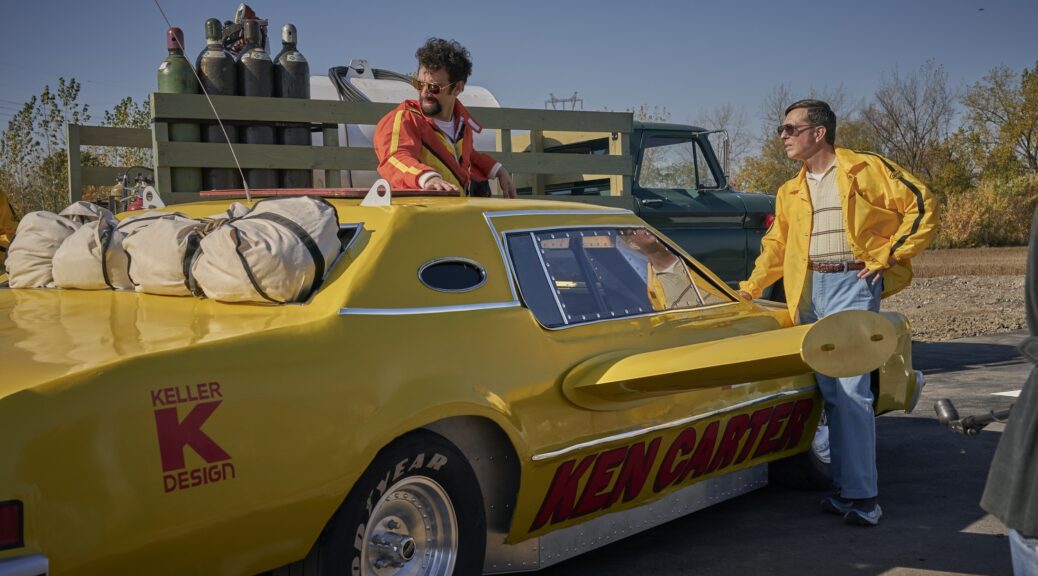
Back in the 1970s Ken Carter was known as “The Mad Canadian,” a cross-eyed, bushy-haired high school dropout who made his name through high-flying car stunts. So, when Evel Knievel’s Snake River Canyon jump fizzled out in ’74, Carter hatched a plan to show him up.
He would jump over the St. Lawrence river in a “rocket car,” taking off in Canada and landing a mile away in Ogden Island, New York. In Carter’s view, Evel was “a nerd and a coward,” and the St. Lawrence jump would put the stunt driver glory – don’t call him a “daredevil!” – where it belonged.
As Carter, Baruchel delivers a career-best performance. Stunt driving is all Carter knows and the passion to “leave his mark” is felt throughout the years-long journey toward the jump. When doubt and even fear creeps in, Baruchel makes sure both are just shades of a completely human character we want to succeed.
Much like Goon, the commitment to character drives the film. Dowse surrounds his Mad Canadian with interesting people on all sides. From Carter’s long-suffering wife (Laurence Leboeuf) to his engine designer (Ed Helms), his protege (Marc Beaupré) and his promoter (Dan Bakkedahl), we get a series of fleshed-out personalities to bring a perfectly 70s aesthetic to life.
And when producers on ABC’s Wide Wide of Sports insist on bringing Evel himself (Ben Foster) on as a tech consultant, the relationship between Knievel and Carter instantly becomes a deadpan delight.
Dowse takes inspiration from the 1981 doc The Devil at Your Heels. He juggles different film stocks and aspect ratios throughout the film’s 99 minutes, which makes the use of real jump footage feel seamless, and bolsters the hardscrabble appeal of Carter’s entire persona.
Even when the tonal path starts to wobble in the second act, The Stunt Driver again shows Dowse and Baruchel can find heart, soul and authenticity in the life of a true sports underdog. Maybe Ken never got as famous as Knievel, but it’s a good bit of absurd fun getting to know him.
We had fully intended to look across so many big cities for their bloodsuckers, but it turned out New York is so brimming with vampires that we looked no further. Heck, we even had to do fuzzy math!
But quickly, a shout out to:
Detroit: Only Lovers Left Alive
Los Angeles: Blacula
New Orleans: Scream Blacula, Scream
Pittsburgh: Martin
There’s more, of course, especially once you leave the States, but instead of doing that, we focused squarely on NYC. And here’s what we found.
6. Nadja (1994)
Michael Almereyda spins an oh-so-indie-90s vampire tale of New York. Dreamy black and white cinematography blend with footage shot using a toy camera to create a weird dynamic—surreal, poetic, and often absurd.
Peter Fonda plays both Dracula and Van Helsing, the latter having killed the former and begun a search for Dracula’s daughter, Nadja (Elina Löwensohn). The startling cast also includes Martin Donovan, Jared Harris, and David Lynch.
The humor, violence, and stark beauty make for a heady mix.
5. Habit (1995)
Writer/director/star Larry Fessenden explores alcoholism via vampire symbolism in this NY indie. Fessenden plays Sam, a longtime drunk bohemian type in the city. He’s recently lost his father, his longtime girlfriend finally cut bait, and he runs into a woman who is undoubtedly out of his league at a party.
And then he wakes up naked and bleeding in a park.
The whole film works beautifully as an analogy for alcoholism without crumbling under the weight of metaphor. Fessenden crafts a wise, sad vampiric tale here and also shines as its lead.
4. The Addiction (1995)
Like most of director Abel Ferrara’s work, the film is an overtly stylish, rhythmically urban tale of brutal violence, sin and redemption (maybe). Expect drug use, weighty speeches and blood in this tale of a doctoral candidate in philosophy (Lili Taylor) over-thinking her transformation from student to predator.
Taylor cuts an interesting figure as Kathleen, a very grunge-era vampire in her jeans, Doc Martens and oversized, thrift store blazer. She’s joined by an altogether awesome cast—Annabella Sciorra, Edie Falco and Christopher Walken among them.
Ferrara parallels Kathleen’s need for blood to drug addiction, but uses her philosophy jibberish to plumb humanity’s historical bloodlust.
3. Vampire’s Kiss (1988)
Cage was always willing to behave in a strangely effeminate manner, and perhaps even eat a bug. He made some great movies that way.
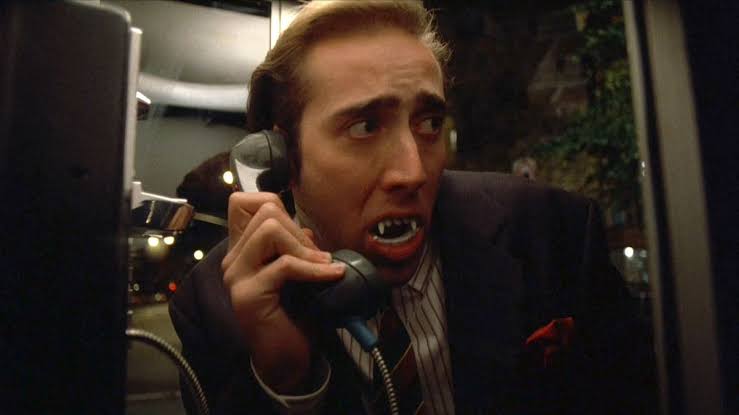
Peter Lowe (pronounced with such relish by Cage) believes he’s been bitten by a vampire (Jennifer Beals) during a one night stand. It turns out, he’s actually just insane. The bite becomes his excuse to indulge his self-obsessed, soulless, predatory nature all over New York for the balance of the running time.
Cage gives a masterful comic performance in Vampire’s Kiss as a narcissistic literary editor who descends into madness. The actor is hilarious, demented, his physical performance outstanding. The way he uses his gangly mess of limbs and hulking shoulders inspires darkly, campy comic awe. And the plastic teeth are awesome.
Peter may believe he abuses his wholesome editorial assistant Alva (Maria Conchita Alonso) with sinister panache because he’s slowly turning into a demon, but we know better.
2. The Hunger (1983)
Tony Scott’s seductive vampire love story has a little bit of everything: slaughter, girl-on-girl action, ’80s synth/goth tunage, David Bowie. What more can you ask?
Actually the film’s kind of a sultry, dreamily erotic mess. Catharine Deneuve is the old world vampire Miriam, Bowie is her lover. The two spend years – perhaps centuries – together seducing victims. But he suddenly begins aging, and she needs to find a replacement. Enter Susan Sarandon as a medical specialist in unusual blood diseases and a fine actress who’s not above smooching other girls.
Bowie and Deneuve are both so effortlessly cool and sexy that you can almost forgive them their nighttime savagery. You find out just how dangerous he is once he begins the rapid-aging process, but once you get a peek into Miriam’s chick Manhattan attic you find that she’s been far more dangerous – to her lovers and everyone else – for a very long time.
1. The Transfiguration (2016)
Milo likes vampire movies.
So, it would seem, does writer/director Michael O’Shea, whose confident feature debut shows us the relationship between the folklore and the life of a forlorn high school outcast.
Eric Ruffin plays Milo, a friendless Queens teen who believes he is a vampire. What he is really is a lonely child who finds solace in the romantic idea of this cursed, lone predator. But he’s committed to his misguided belief.
O’Shea’s film borrows ideas from George Romero’s Martin, Tomas Alfredson’s Let the Right One In, and openly gushes over Murnau’s Nosferatu. Inside and out, the film draws on the best in vampire cinema to help Milo deal with a world in which he is a freak no matter what he decides to do.
A few desperate men are given the chance to wipe their slates clean. Transport some precious cargo across 100 miles of hazardous terrain —including one very unstable bridge — and they’ll all be free to start new lives.
The Weight will bring to mind Sorcerer and The Wages of Fear, specifically, but on a more general level it recalls a throwback brand of thriller that’s dense with themes of sin and redemption layered through the choices, toil and sweat of conflicted souls.
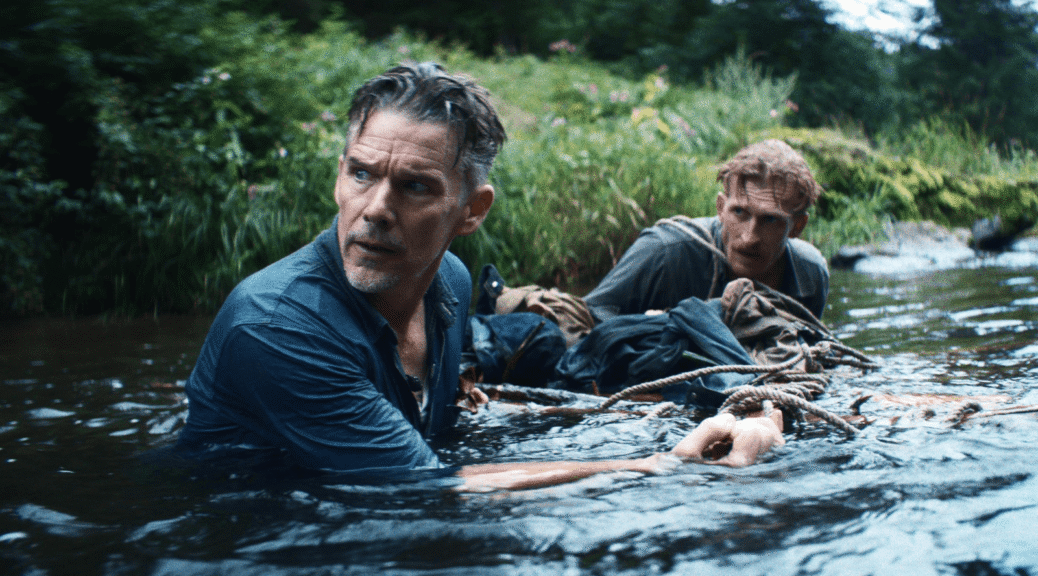
It’s 1933 in Oregon, and the country is still reeling from the Great Depression. Sam Murphy (Ethan Hawke) is already struggling to provide for his young daughter Penny (Avy Berry) when a brush with the law lands him in a labor camp.
Warden Clancey (Russell Crowe) notices that Murphy is a quiet man who can solve problems, so he presents a tempting offer: move the stash of gold out of Blackhawk mine before FDR confiscates it, and Murphy will be out of jail in time to save his daughter from becoming a ward of the state.
It’s an easy call, so Murphy handpicks a small team, and heads out — under the watchful eyes of two armed chaperones, of course.
Director Padraic McKinley, reuniting with Hawke after The Good Lord Bird series, crafts his big screen debut with detail and vision, adapting the weighty script from Matthew Booi, Shelby Gaines and Leo Scherman into a tense and visually striking adventure. The forests and rivers become daunting obstacles that raise the stakes, while McKinley illuminates an exquisite fight for life via lighting bursts of a thunderstorm.
And of course Hawke is perfect. He’s become such a reliably wonderful actor, and this type of understated inner struggle is his sweet spot, finding an authentic, cautious chemistry with a terrific Crowe and the solid ensemble, including Julia Jones (Dexter: New Blood) as a runaway woman eager to join the mission and not look back.
You may guess a plot turn or two, and a tighter grip in the editing room would have trimmed some bloat from the nearly two-hour runtime, but The Weight still carries plenty of welcome genre heft. It manages to balance familiarity with richness of character and craft, giving us the kind of movie we should be glad to still find in the theater.
Hope & George review this week’s new releases: Practical Magic 2, The Uprising, Runner, The Sun Never Sets, and Hope. PLUS News & Notes from The Schlocketeer Daniel Baldwin!