Word is, writer/director Alexander Payne has had the Downsizing idea for years, apparently waiting for when a satire of endless greed and unapologetic self-interest would feel the most relevant.
Good timing, then.
Payne, working with frequent co-writer Jim Taylor, returns to the political mindset he showcased so effectively in the classrooms of 1999’s Election. Here, their palette is a not-at-all distant future where science has come up with a solution for global sustainability: shrinkage!
By reducing people and communities to a ratio of 2.744 to 1, the potential for a guilt-free good life is off the charts! That sounds pretty great to Paul and Audrey Safranek (Matt Damon and Kristen Wiig), and a hilariously obnoxious info-mercial (Lauren Dern and Neal Patrick Harris, killing it) seals the deal.
Of course, it isn’t long before human potential meets human nature, familiar class systems develop and, as Paul’s smarmy neighbor (Jason Sudeikis) points out, getting small becomes more about saving yourself than saving the planet.
For three quarters of the film, the satirical slings and arrows find frequent marks, and layers deepen when Paul starts hanging with a crazy new neighbor (Christoph Waltz) and his cleaning lady (Hong Chau, in an award-worthy, film stealing performance).
Payne and Taylor aren’t as sure-footed when the satirical tone gives way to the absurd, or when a budding pretense makes the opening of a white man’s eyes feel a bit too heroic.
But while the scale of Downsizing is small, the film is thinking mighty big. The new world it envisions is engaging, with sharp comedy, unexpected turns and the keen observational structure to make it all impactful.
It’s coming from some easily identifiable high schoolers in detention, but this time they’re in an old storage room filled with everything from old magazines to a gaming system from the 1990s.
Turns out, that’s the same decade the soul-sucking Jumanji morphed from board to video cartridge, so the nerd, the jock, the queen bee and the outcast decide to power up this mystery game and kill some time.
In an instant, Welcome to the Jungle puts them all in the heart of one, playing for their lives as the avatars they chose, which just happen to be the polar opposites of their “real” selves.
Whaaat?
Yes, convenient, but director Jake Kasdan and an extremely likable cast squeeze a fine amount of fun from a colorful adventure that follows its own advice for a healthy self-image.
Nerdy Spencer becomes the muscular hero (Dwayne Johnson), athletic “Fridge” is now the diminutive sidekick (Kevin Hart), and introvert Martha becomes a Lara Croft-y babe (Karen Gillan) while the self-absorbed beauty faces life as Jack Black.
Some solid laughs are landed from the foursome discovering their new gaming strengths (“smoldering intensity”), weaknesses (“cake”) and body parts (“don’t forget to aim!”), with the actors’ willingness to poke fun at their own images only adding to the good vibes.
There are some effective set pieces, but the overall heroics required to get back home are fairly standard, and Kasdan (Bad Teacher, Sex Tape, the under-appreciated Walk Hard) wisely doesn’t overreach. He’s not tasked with one-upping Indiana Jones, and keeps things focused more on the breezy fun to be had with his stars. These moments when the tone hits a frisky groove of self-awareness (no doubt aided by Chris McKenna and Erik Sommers, two writers from the wonderful Spider-Man: Homecoming) are the film’s high points, making it easier to look past some shaky CGI or an overly cartoonish villain (Bobby Cannavale, in yet another over-the-top waste of his talent).
The teens have to learn something today, so Welcome to the Jungle can’t hold that tone throughout, but it displays enough of a commitment to character-based comedy for a ruckus worth exploring.
Get excited, people. What may turn out to be the best film of 2017 is available this week on DVD, as is undoubtedly the most polarizing and discussed flick of the year, mother! Get you some!
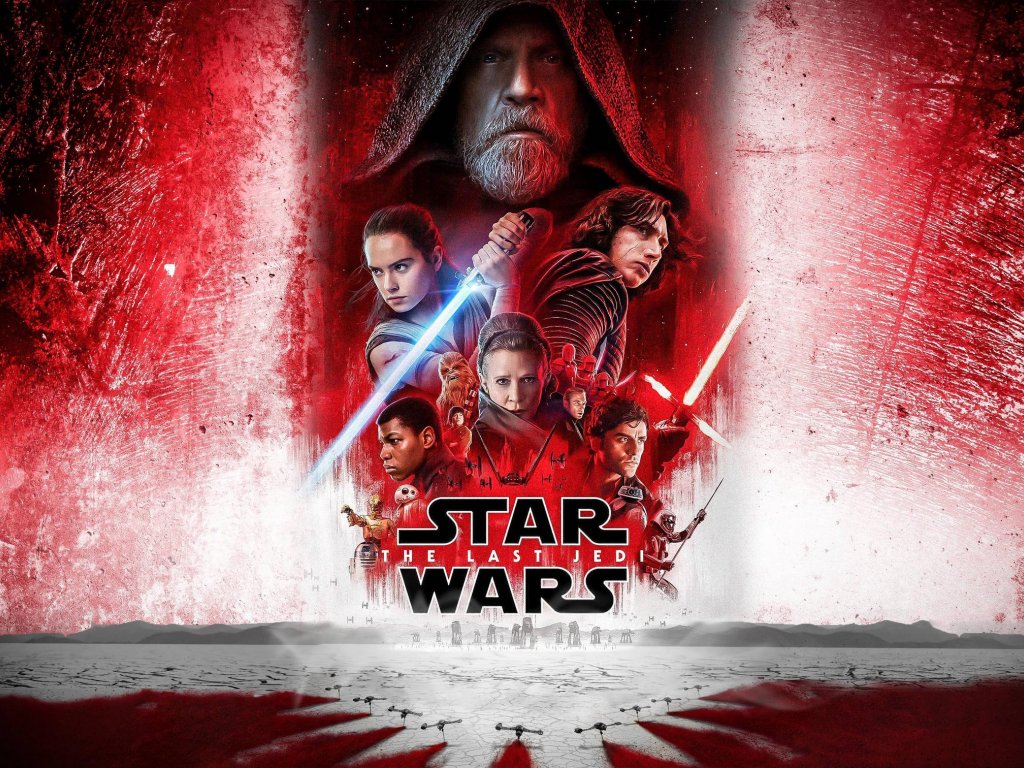
Action packed week in The Screening Room. We run down the spoiler-free pros and cons of Star Wars: The Last Jedi, The Shape of Water, Wonder Wheel and Ferdinand and have a look at what’s new in home entertainment.
Did The Force Awakens simply recycle our Star Wars memories and sell them back to us? It did, but not simply, damn near brilliantly.
Then we got the sneak attack from the surprisingly deep Rogue One, a highly effective prequel that only strengthened our bond with the original Star Wars trilogy, and our confidence in the filmmakers now at the helm of this historic franchise.
The Last Jedi makes any letdowns seem light years away. With a deft mix of character-driven emotion, high stakes action and mischievous fun, it waves a proud flag for the legacy of this cinematic universe while confidently taking big strides toward crafting a new one.
Visionary talent Rian Johnson (Looper, Brick) now has the con as both director and sole screenwriter. His affection for the franchise, coupled with an innovative sense of character arc and storyline, combine for a freshness that respects nostalgia even while priming you to move beyond it.
Like J.J. Abrams, Johnson revisits iconic images and bits from the predecessors, but even with much more screen time for Mark Hamill’s Luke, Last Jedi feels less indebted to the original trilogy than did Force Awakens. You’ll find more humor (an opening “on hold” bit is a riot), more action and more Kylo Ren.
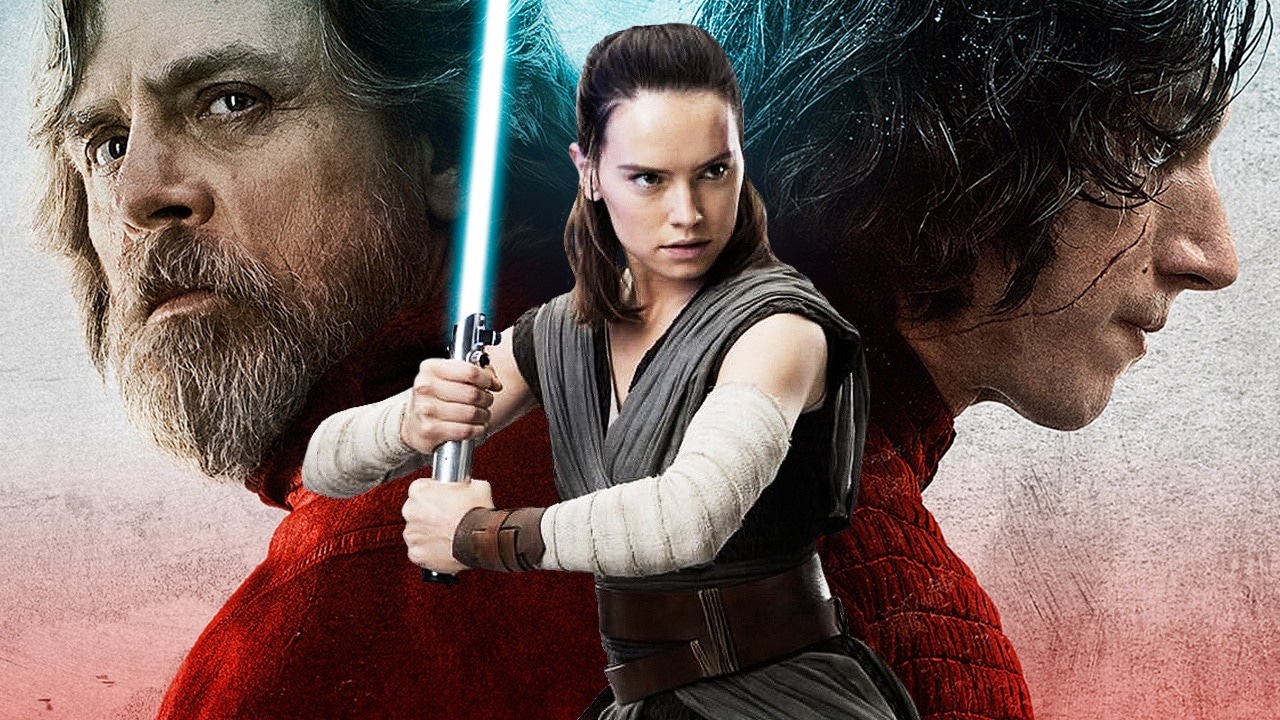
As Rey, Leia (Carrie Fisher in a bittersweet appearance), Poe (Oscar Isaac) and Finn (John Bodega) gather their scrappy troops to resist the First Order’s plan for pasty-faced, black-clad tyranny, the yin and yang of the film pits Adam Driver’s dark Ren against the spunky light of Daisy Ridley’s Rey.
Force Awakens gave Ridley plenty of opportunity to claim her spot at the center of the franchise, but Last Jedi allows Driver the chance to fully expand into the role of series villain. A true talent, Driver delivers a Ren who is emotionally manipulative and yet sincere (so emo!), needy and conflicted as he struggles to prove himself more than the “child in a mask” derided by Supreme Leader Snoke (Andy Serkis – aided by improved CGI).
Last Jedi also completes the transition of Poe into the courageous, never-tell-me-the-odds “flyboy” we knew was his destiny since the fist moments of Force Awakens. Isaac never disappoints, and it’s a joy to see him buckle this swash so Han-dily (sorry).
While we meet some great new characters, too, there is little exposition and a near constant barrage of action which renders the extended running time meaningless. It might get a little too cute once or twice, but there’s enough social commentary here to be relevant, enough visual glory to look wondrous, and more than enough spirit to be confident in its vision.
Things happen to characters we care about and to others we just met, and nearly all of those things carry the emotional heft of torches being passed.
And The Last Jedi makes it feel not only right but necessary, and all the more satisfying.
Some exceptional films coming home this week, so if you like true life, brutally devastating historical dramas, this is your week! No, seriously, watch them.
The sheer number of films Woody Allen continues to churn out almost guarantees that some will hit (Midnight in Paris, Vicky Cristina Barcelona) and some will miss (Cassandra’s Dream, Magic in the Moonlight).
Wonder Wheel is more of a pop foul.
Allen’s latest (I think…what time is it?) is wrapped in nostalgia for 1950s Coney Island, lovingly photographed and peppered with characters that never quite become as interesting as Allen intends.
Ginny (Kate Winslet) works as a waitress in a Coney Island seafood joint, frazzled by the antics of her budding arsonist son and disenchanted by life with husband Humpty (Jim Belushi – surprisingly good), who runs the Wonder Wheel carousel. Lately, Ginny has begun a secret affair with Mickey (Justin Timberlake), a younger lifeguard whose fourth-wall narration is awkward and unnecessary.
The arrival of Humpty’s daughter Carolina (Juno Temple) only adds to Ginny’s frequent migraines. Not only is Carolina on the run from some mobsters (The Sopranos’ Tony Sirico and Stephen R. Schirripa – nice!) but she might be catching Mickey’s eye as well.
Winslet is sensational, tapping squarely into Ginny’s maniacal desperation for any shred of hope for the future. Initially, Allen seems intent on building the film from Winslet’s performance outward (much like he did with Cate Blanchett in the sublime Blue Jasmine), only to over-indulge with repetitious dialog and pointless diversions.
Though set in the heart of Coney Island’s summer sun, Wonder Wheel’s mind is never far from stage nor screen. Ginny had dreams of being an actress, while Mickey fancies himself a writer, and we’re often reminded that life is a series of parts being played by characters with a succession of fatal flaws.
Allen’s story arc may be aiming for grand tragedy, but it can never move past bittersweet melodrama. Well-acted throughout and often striking to look at, Wonder Wheel ends up as an aimless kid at the amusement park, running in too many directions at once.
Westerns share a lot in common with horror. Both deal in black and white, good and evil, blood. There’s not a lot of true cross over. Sure, you’ve got some brilliant horror that pulls ideas from the Western: Sam Peckinpah’s Straw Dogs, Wes Craven’s The Hills Have Eyes. But that’s not what we’re looking for. We want horses and cowboy hats and shit. And we found them.
Here are the five best Western/horror crossovers.
5. The Burrowers (2008)
Here’s one that bears a resemblance to Bone Tomahawk: someone’s love goes missing, Indians are blamed, a posse heads out in search but finds something more sinister than expected.
Writer/director J.T. Petty laments the barbarism of the white settler and its Cavalry with a bleak and subconsciously gruesome image of the consequences of “progress”.
Burrowers, though, asserts itself as a horror film early and often. It certainly borrows from both genres, balancing themes well by exploring what’s ugliest in Western lore. Horror films tend toward social commentary in a way that Westerns rarely do—indeed, classic Westerns tend to revel in the exact elements of human nature that horror likes to exploit for its blood-curdling nastiness.
Solid performances, especially from veteran character actors Clancy Brown and William Mapother, elevate the film above its monster movie trappings.
4. Ginger Snaps Back: The Beginning (2004)
In 2004, director Grant Harvey offered an origin story for the lycanthropic Fitzgerald sisters (Katharine Isabelle and Emily Perkins reprising their roles). It’s 1815 and Ginger and Bridget find themselves lost in the Canadian wilderness, seeking assistance from a Native American woman and then shelter from a creepy pastor and his flock at a fur trading post.
What’s got the traders so spooked? Werewolves!
They bring the sisters in because they are nicer than the people at The Slaughtered Lamb, but it turns out they’d have been better off leaving G&B to die in the woods.
The movie has a fun, self-consciously anachronistic style to it that allows the Fitzgerald sisters to seem even more like us and like outsiders than they did in the original high school horror show. Dream sequences, practical effects, creepy kids, sisterly love and old fashioned carnage make this one a decent throwback.
3. Dead Birds (2004)
First, we get to liking the rag tag bunch of misfits—deserters from the Confederate army: two brothers (Henry Thomas and Patrick Fugit), two buddies (Michael Shannon and Mark Boone Junior – hell yes!), an escaped slave (Isaiah Washington) and a nurse (Nicki Aycox).
Next, we’re freaked out by the mutant boar and grisly scarecrow in the abandoned plantation where they will hole up with their ill-gotten loot.
What director Alex Turner does best with his supernatural Western is to draw you in with sympathetic characters played well by talented actors. Though the pace is slow—as is often the case with supernatural horror—and the FX are not spectacular, the film has a hypnotic quality and it fills you with dread.
Turner benefits from an empathetic script penned by Simon Barrett, who’d go on to a fruitful partnership with director Adam Wingard (You’re Next, The Guest, Blair Witch). Together with haunting performances, the mind-bender of a story leaves you troubled.
2. Ravenous (1999)
The blackest of comedies, the film travels back to the time of the Mexican/American War to throw us in with a cowardly soldier (Guy Pearce) reassigned to a mountainous California outpost where a weary soul wanders into camp with a tale of the unthinkable – his wagon train fell to bad directions, worse weather, and a guide with a taste for human flesh.
Pearce is great as the protagonist struggling against his own demons, trying to achieve some kind of peace with himself and his own shortcomings, but Robert Carlyle steals this movie.
As the wraithlike Colonel Ives, he makes the perfect devil stand-in. Smooth, compelling and wicked, he offsets Pearce’s tortured soul perfectly. The pair heighten the tensions with some almost-sexual tension, which director Antonia Bird capitalizes on brilliantly.
1. Bone Tomahawk (2015)
In a year rife with exceptional Westerns (Slow West, The Hateful Eight, The Revenant), this film sets itself apart. S. Craig Zahler’s directorial debut embraces the mythos of the Wild West, populating a familiar frontier town with weathered characters, but casting those archetypes perfectly.
Kurt Russell and Richard Jenkins, in particular, easily inhabit the upright sheriff and eccentric side kick roles, while Patrick Wilson’s committed turn as battered heroic lead offers an emotional center.
Zahler effortlessly blends the horror and Western genres, remaining true to both and crafting a film that’s a stellar entry into either category. Bone Tomahawk looks gorgeous and boasts exceptional writing, but more than anything, it offers characters worthy of exploration. There are no one-note victims waiting to be picked off, but instead an assortment of fascinating people and complex relationships all wandering into mystical, bloody danger.
Because the true horror is a long time coming and you’re genuinely invested in the participants in this quest, the payoff is deeply felt. This is a truly satisfying effort, and one that marks a new filmmaker to keep an eye on.
We have one full week to wait until the new Star Wars. What will we do? Well, there are a couple of great movies you can see in the meantime. We talk through The Disaster Artist and Thelma, plus hip you to what’s new in home entertainment.