1964’s Bedtime Story begat 1988’s Dirty Rotten Scoundrels and now, after begettin’ a gender switch, the con is on again as The Hustle.
This third time is not lucky, or charming, or funny. Mostly, it’s just painful.
Anne Hathaway is high-class grifter Josephine, who’s wary of newcomer Penny (Rebel Wilson) trying to work the same bit of French Riviera turf. Josephine’s attempts to drive Penny away go nowhere, so the two hatch a wager to decide just who will have to find new hunting grounds.
Hathaway is a worthy Oscar winner, and though Wilson’s pony could really use more tricks, she can be funny. What either one of them saw in this inane script is beyond me and beneath both of them.
The film seems overly proud of itself for the girl power wokeness, while director Chris Addison bases the updated gags on such contorted silliness that when Penny exclaims “That makes zero sense!” it feels like we just learned the identity of Keyser Soze.
If you’ve seen either of the first two go ’rounds, you already know how the con winds up, and it’s never been less fun getting there.
But if the heart of The Hustle is new to you, see steps one or two.
Better confess right now: the whole Hobbit, Lord of the Rings thing just isn’t my bag. God bless you if you love the books, films and all, but the whole story just leaves me cold.
That’s not to say I can’t respect and admire the incredible imagination of author J.R.R. Tolkien, or the biopic about him that’s full of so much respect and admiration.
But what’s strangely missing in Tolkien is the wonder, the spark of endless creativity so abundant in the author’s expansive literary landscapes.
Writers Stephen Beresford and David Gleeson anchor Tolkien’s pre-Hobbit life in the trenches of WW1. As Officer Tolkien (Nicholas Hoult) searches the battlefield for a boyhood friend, flashbacks fill us in on his upbringing as an orphan adopted into wealth.
With an eye on “changing the world through the power of art,” Tolkien forms a “Dead Poets” – type secret society with his mates at Oxford, where he impresses esteemed language professor Joseph Wright (Derek Jacobi in a wonderful cameo) as well as the lovely Edith Bratt (Lily Collins).
Both Hoult and Collins are committed and pleasing, but the courtship becomes just another informative but less-than-engrossing leg the film stands on.
Though director Dome Karukoski keeps things well-assembled and plenty reverent toward his subject, this film never quite conveys the spirit of inspiration it seeks to celebrate. With a frustrating lean toward safety over enlightenment, Tolkien turns an ambitious quest into a rather pedestrian journey.
Horror has a love/hate relationship with hippies. I suppose most of us do. And while some of the greatest films in the genre were made by Sixties freaks George Romero, Wes Craven, Tobe Hooper and the like, most of the time hippies’ onscreen representation got wrapped up in Manson hysteria.
5. Children Shouldn’t Play with Dead Things (1972)
Full disclosure: George objects to including this film on the list. It’s not good.
But it’s not good in such a good way! Director Bob Clark (Black Christmas, A Christmas Story) and writer/co-star Alan Ormsby seem basically to be taking out their frustrations at being part of the theatrical community.
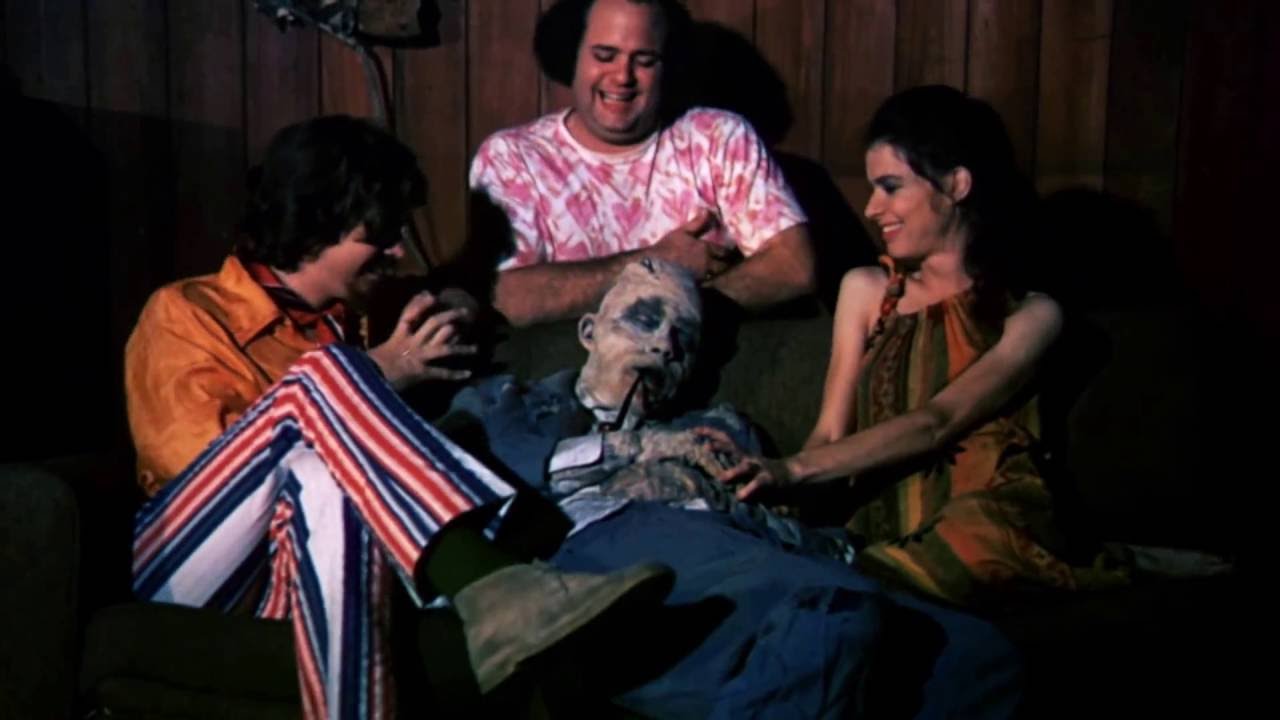
Ormsby’s Alan is a director, and he drags his troupe of hippie thespians to a lonely island once used to bury the criminally insane. He then insists—if they ever want to work with him again—that his merry band dig up a body and perform a ritual to bring him back to life.
It’s basically theater kids making fun of theater kids. Watching a group of actors being literally eaten alive by their audience is its own stoke of genius, even if the film itself is not.
4. Let’s Scare Jessica to Death (1971)
In this Age of Aquarius riff on J. Sheridan Le Fanu’s vampire novel Carmilla, the unfortunately titled Let’s Scare Jessica to Death follows a somewhat delicate woman through what amounts to either a nervous breakdown or the seduction of a female vampire.
A married couple and their organic farmer friend move into an old, abandoned house on a New England island. They find a vagrant—long haired, pretty, can play an acoustic guitar, natch—and they ask her to stay. Why not?
Deliberately paced and boasting a genuine and sympathetic performance by lead Zohra Lampert, the film’s a slow burn, a hallucinogenic smalltown horror. The creepy townies, the spooky cemetery girl, and the moody cinematography blend with Lampert’s committed performance to make this one a dusty little gem.
3. I Drink Your Blood (1970)
David Durston’s grindhouse classic (in which no one drinks anyone’s blood, regardless of what this lying trailer tells you) marks that great divide in hippie horror: those made by and about hippies and those made by opportunists seizing upon a population’s terrified fascination with the Manson Family murders.
I Drink Your Blood is the latter. We open on a group of hippie Satan worshippers who turn out to be gang rapists. They descend on a little town almost empty of inhabitants—the menfolk all having moved to live and work in the nearby mining camp. That leaves just that scrappy family working in the bakery.
But once young, vindictive Pete injects the baker’s meat pies with rabid dog blood, them no goodnicks might learn some manners.
Actually, that’s the last thing they’ll do.
This is an extremely violent film, not very well made and certainly not well acted. It has a punch, though, and several scenes are provocative enough to warrant its inclusion on this list.
2. Mandy (2018)
A hallucinogenic fever dream of social, political and pop-culture subtexts layered with good old, blood-soaked revenge, Mandy throws enough visionary strangeness on the screen to dwarf even Nicolas Cage in full freakout mode.
Red (Cage) and Mandy (Andrea Riseborough) live a secluded, lazily contented life somewhere in the Pacific Northwest.
That contentment is shattered by a radical religious sect under the spell of Jeremiah (Linus Roache), who takes a liking to Mandy when the group’s van (of course it’s a van!) passes her walking on a country road.
Horror of the late 60s and early 70s saw hippies terrorizing good, upright citizens, perpetrating cult-like nastiness. Thanks to Charles Manson, society at large saw the counterculture as an evil presence determined to befoul conventional, Christian wholesomeness.
With Mandy, it’s as if the 70s and 80s have collided, mixing and matching horror tropes and upending all conceivable suppositions. In this case, zealots consumed with only the entitlement of their white, male leader wreak havoc on good, quiet, earth-loving people. The Seventies gave us some amount of progress, civil justice and peace that the Eighties took back under the guise of decency.
1.The Texas Chainsaw Massacre (1974)
Hippie pals pile into a van and head to Texas to double check that Grammy and Gamps still rest in peace, what with these rumors of grave robbing. Along the way they talk astrology, smoke some weed, pick up a hitchhiker–it’s all in a day’s journey for a hippie.
That hitchhiker thing goes sideways. In fact, the whole trip feels like a bad idea by the time pretty Sally Hardesty and her friends make a second trip to the cemetery. Well, what’s left of them.
A lot of new movies opening in Edgame’s aftermath. We talk through the good, the bad, the ugly, the missable and what’s new in home entertainment, including Long Shot, UglyDolls, The Intruder, Her Smell, The River and the Wall and Ask Dr. Ruth.
If you caught Dennis Quaid creeping around your house on numerous occasions, would you be scared, or just figure he was bringing over some mac and cheese?
Quaid might be one of the ultimate likable dudes, and his playing waaay against type is one of promising threads that The Intruder squanders in its warmed over dish of jump scares and borrowed ideas.
Beautiful couple Scott (Michael Ealy) and Annie (Meagan Good) are living the good life in San Francisco, but Annie feels it’s time they move to the country and start a family. She finds her dream house at the Napa Valley home of Charlie Peck (Quaid), and as quickly as you can say “overly rushed setup,” they’re moving in.
Charlie says he’s selling to head South, so why is he still coming over to mow the lawn, assist with the Christmas decorations, and find reasons to be alone with Annie?
Whaddya bet he’s not really retiring to Florida, or that some guy at Scott’s office would like nothing better than dig into Charlie’s past to find what he’s hiding?
Director Deon Taylor (Traffik) and writer David Loughery (Lakeview Terrace) are both treading familiar ground, too much on autopilot to successfully mine the contrasts they introduce.
It’s old ways versus new, city versus country, and a red hat wearing white guy terrorizing a black couple.
That’s plenty to chew on, but everyone goes hungry while characters make one idiotic decision after another on the subtlety-free ride to a finale lifted verbatim from a 90s thriller.
At some point, Taylor and Loughery needed to chose a path: logical, layered tension or unhinged, over-the-top fun.
It’s clearly evident which one Quaid wanted, but both he and the film end up undecided on the remodeling plans. Like that old, musty spare room with the bad wallpaper, The Intruder is a little creepy, too often unintentionally funny and in need of some work.
Long Shot‘s first success comes before the opening credits even start rolling. It’s right there on the movie poster: “Unlikely, but not impossible.”
So before you can scoff at the idea of Charlize Theron giving Seth Rogen the time ‘o day, your protest of the premise is a) acknowledged, and b) set aside, leaving plenty of loophole to just appreciate an R-rated romantic comedy that’s brash, smart, timely, and pretty damn funny.
Rogen is Fred Flarsky, a scruffy, sweatsuit-loving online journalist known for cutting-edge exposes such as “F*&^ You, Exxon,” and “The Two Party System Can Suck a D&^%.” When media monarch Rupert Murdoch, er, I mean Parker Wembley (Andy Serkis) buys the digital magazine Fred works for, he quits in protest.
Theron plays Secretary of State Charlotte Field, a graceful, brilliant stateswoman who’s ready to make a run for the Oval Office and could use a speechwriter. Back in her teens, Charlotte was Fred’s babysitter (!), and after they cross paths at an ill-fated fundraiser, he’s brought on to give Charlotte’s speeches a little of that Fred Flarsky feeling.
The surprising (but not impossible!) romance that follows doesn’t thrill Team Charlotte (the slideshow explaining how it might impact her poll numbers is a scream) but credit writers Dan Sterling (The Interview) and Liz Hannah (The Post) for having more on their minds than a dude makeover.
Keeping just enough of that Rogen stoner-comedy vibe, Long Shot skewers Bernie Bros, female candidate double standards, romantic comedy tropes, celebrity presidents and, most pointedly and hilariously of all, Fox News.
Theron and Rogen elevate every bit of it, working as a comedic power couple out in front of an ensemble cast full of standouts, most notably June Diane Raphael as Charlotte’s disapproving Chief of Staff and O’Shea Jackson, Jr. as Fred’s motivational best friend.
Director Jonathan Levine (The Wackness, 50/50, The Night Before) keeps things grounded and character-focused. Just when the parody or implauseability is in danger of running amok, he gets us back in the semi-real world of crowd pleasing entertainment.
And though that does mean a third act that gives in to overt sentimentality, Long Shot has the heart, charm and hilarity to win you over long before then.
Hey, is there anything new in theaters this week? Yes! Avengers: Endgame–maybe you’ve heard of it. But there are others you may not have heard of: Family, High Life, Stockholm, JT LeRoy and I Trapped the Devil. We talk through all of them plus give some thoughts on what’s new in home entertainment.
In tackling the final frontier, it’s not surprising that unconventional filmmaker Claire Denis shows little interest in the usual themes that dominate the sci-fi genre. High Life floats very deliberately in its own headspace, touching down somewhere between enlightened consciousness and acid-blooded killing machines.
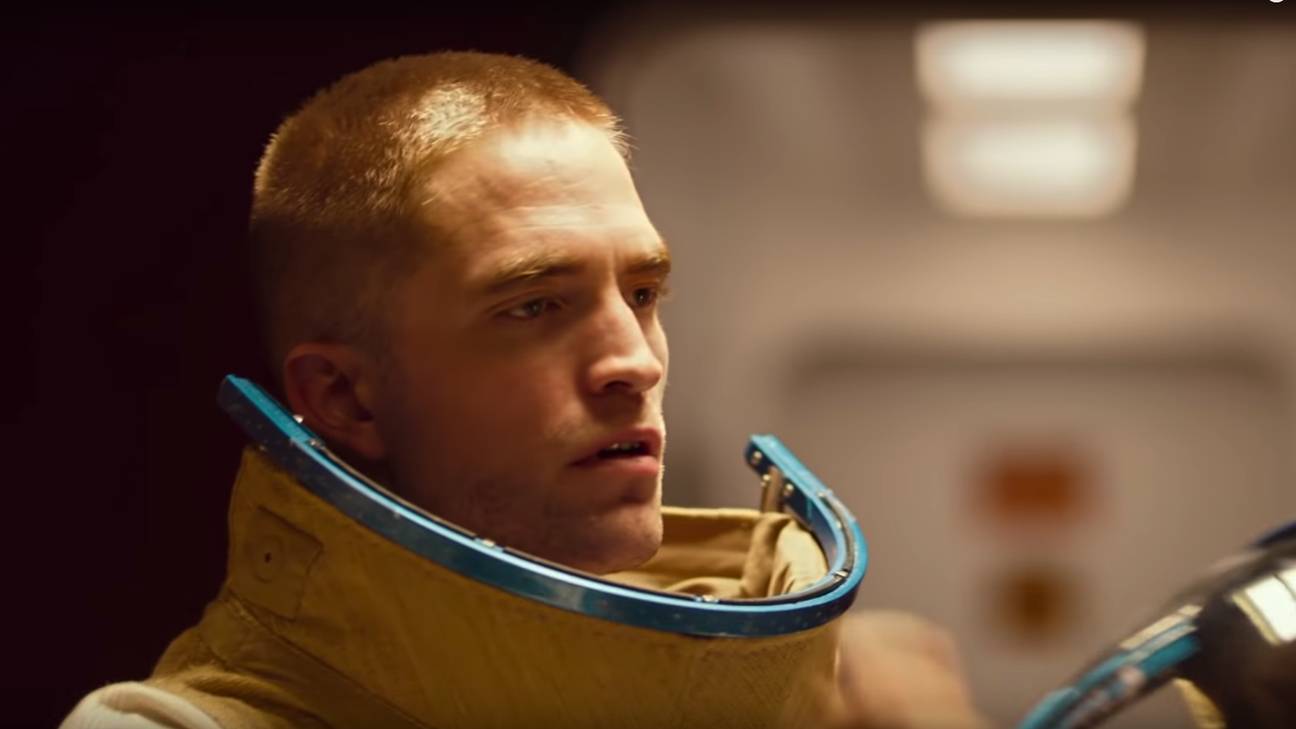
Monte (Robert Pattinson) appears to be the last survivor of a spacecraft’s crew, but he’s not alone in deep space. He has baby Willow to care for, tending to her needs while he performs his duties and files the regular progress reports that feel increasingly futile.
The infant is one of many general questions director/co-writer Denis casually raises before playing with the film’s timeline to address them, all the while picking at the scabs of deeper insights into the primal desires and self-destructive instincts we cannot escape.
Denis is more than aware of her genre playground (there is a character named Chandra, after all), and while you may be reminded of other sci-fi institutions, High Life lives in the uncomfortable places even the best of these films gloss over. It is bleak and often surreal, draped in the stifling desperation of a crew seemingly controlled by Dr. Dibs (Juliette Binoche – a terrific model of subtle menace).
There is sex (Binoche’s solo sequence is damn near unforgettable) but no affection, reproduction reduced to its most clinical nature and an element of body horror that Denis’s close-up camerawork demands you acknowledge. Though the deep space effects may not be big-budget worthy, succinct visual storytelling is always in play.
In the latest of many challenging indie roles he’s been choosing post-Twilight, Pattinson is again impressive. In a succession of unlikable characters, he gives Monte a gradually sympathetic layer, an element that becomes critical to making the film’s third act as effective, and ultimately hopeful, as it is.
To her credit, Denis has always shown little regard for standard convention. While there is much to be gleaned from the opening and closing shots of her latest, it is the ride in between that makes High Life such a different animal.
“How many of you have never been to space before?”
There is a lot to resolve in Avengers: Endgame, but it’s the film’s commitment to character and character relationships as articulated by fun, throwaway lines like that, that continue to elevate this series above its single-hero franchisees.
The Avengers who haven’t yet done space travel put up their hands, and it instantly rings true, underscoring a pillar of the MCU.
In every group setting, the different heroes don’t fight for opportunities to remind viewers who they are—the angry one, the sarcastic one, the winsome one. Instead, each reacts to another character; duos and trios bicker or riff, and true character dynamics emerge.
Directors Anthony and Joe Russo, and writers Christopher Markus and Stephen McFeely, Marvel vets all, return to reap what they’ve been sowing for years. With that veteran cast bringing instant investment to their respective roles, the filmmakers cultivate relationships Joss Whedon sparked back in 2012 when he first put Tony Stark, Steve Rogers, Bruce Banner and Thor at the same table.
You may have heard, Endgame goes to new lengths in the MCU: three hours and one minute, to be precise. While you might skip the jumbo soda to avoid restrooms trips, you won’t begrudge this film its time. In fact, give Marvel props for not splitting it into two separate blockbusters that would have diluted the impact of such an apt, respectful and yes, emotional capper to the saga.
There’s plenty of humor here, as well, but never at the expense of the drama or action developing. Rather, it’s the natural ribbing born of well worn, familial relationships. (One Lebowski comment and another about “America’s ass” both land really well.)
On the other hand, we still cannot get behind where this series has taken the Hulk. These developments may have comic-book roots, we won’t pretend to know, but outside of a memorable scene with The Ancient One (Tilda Swinton) this Hulk is no smash.
Thematically, the film thinks big: time, love, loss, sacrifice. It moves impressively from ruminating on a post-9/11 reality to the importance of cherishing your own time and place, even while you accept the challenge of fighting for a better world.
There is plenty of fighting. The action is well-placed and well-presented, delivering fireworks without the dizzying, rapid-fire editing which can often reduce battles royale to battles of patience.
And we need to clearly see who is doing what when these Avengers assemble, because, let’s be honest, Thanos (Josh Brolin) and his Infinity Stones are a tough out, and it’s going to take all hands on deck to take him down.
For any upset fanboys who might still be wondering, that does include female heroes, a fact the film makes inescapably clear with a sequence that’s well-intentioned but maybe a tad pointed (or tardy?) in its parting defiance.
In the months since Infinity War, there have been plenty of theories about how Marvel will address that mountain of a cliffhanger they dumped on us.
Maybe you’ll guess some of it, maybe you won’t (you probably won’t), but wherever the MCU goes from here, Endgame is character capital well-spent,
As long goodbyes go, this one is satisfying and …pretty marvelous.