Tag Archives: George Wolf

Living Out Loud

Raise Hell: The Life & Times of Molly Ivins

by George Wolf

Even if you know nothing of Molly Ivins, you won’t be long into Raise Hell before you’re wondering: WWMID?

After a lifetime of speaking truth to power was ended by cancer in 2007, what would Ivins do – or more pointedly, what would she say – about the cesspool of blatant corruption that is American politics in 2019?

And as entertaining as Janice Engel’s documentary is, its biggest takeaway is just how badly Ivins is missed in a profession now facing unprecedented threat.

Engel is clearly a fan, but her portrait of Ivins as one of a kind is hard to rebut. A six-foot-tall Texas native who could out-drink the Bubbas while she skewered their elected reps, Ivins blazed a gender trail through newsrooms across the country.

Ivins even covered Elvis’s obit and funeral for the New York Times before settling in as a Pulitzer-nominated political columnist and author, the role that brought her legions of what one longtime colleague called “not readers…constituents.”

Her writing was smart, informed, and extremely opinionated, laced with acerbic wit, a passion for civil liberties and an undeniable voice. And Engel, as director and co-writer, makes sure you realize how unnervingly prescient it was, as well.

Of course, all this also brought Ivins plenty of haters, and though Engel isn’t preaching to that choir, she doesn’t completely shy away from the personal demons that dogged Ivins throughout her life.

Like its subject, the film is fast-paced, smart, fun and funny, as Engel deftly uses Ivins’s timeline as a microcosm of shifting political landscapes. But more importantly, Raise Hell is a fitting tribute to a woman who wasn’t afraid to, and an urgent call to follow her lead.

Head Space

Ad Astra

by George Wolf

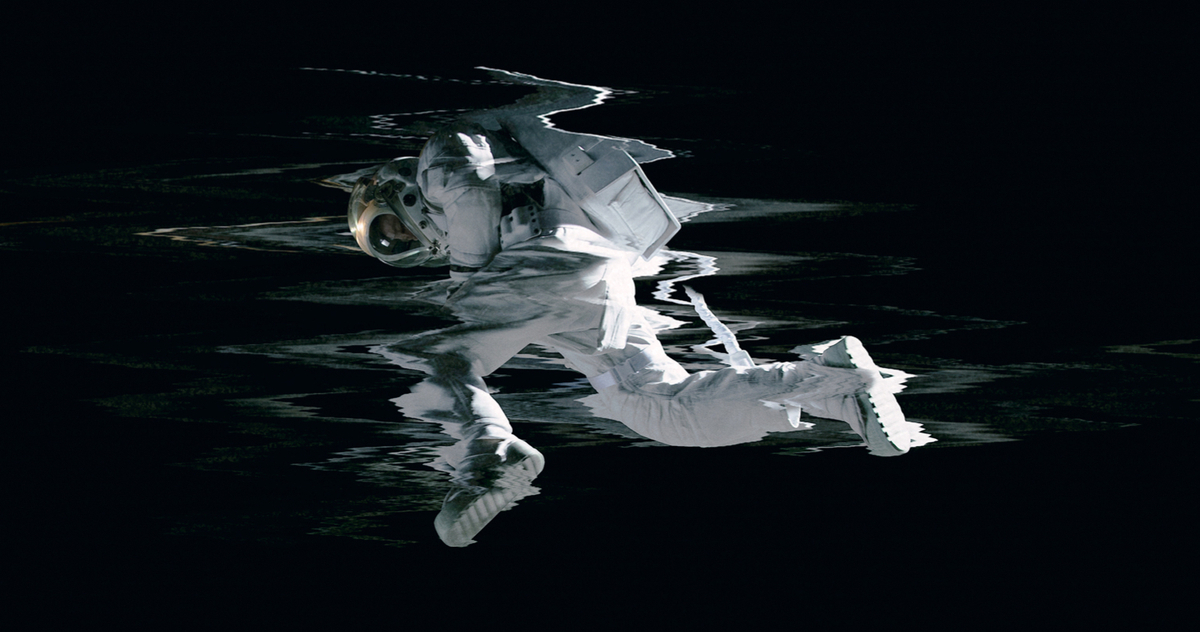
In a near future world full of wondrous space travel, the presence of t-shirt vendors and war zones on the moon provides apt bookends for the struggle to balance both hope and conflict.

The continued search for intelligent alien life keeps mankind gazing “to the stars” (Ad Astra in Latin), but that search has hit a dangerous snag.

Strange electrical surges are amassing casualties all over the globe, and a top secret briefing blames the Lima Project, a deep space probe led by hero astronaut Clifford McBride (Tommy Lee Jones) that hasn’t been heard from in years.

McBride’s son Roy (Brad Pitt) is a decorated astronaut himself, so who better to task with finding out just what happened to dad and his crew?

Daddy issues in zero gravity? There’s that, but there’s plenty more, as a never-better Pitt and bold strokes from writer/director James Gray deliver an emotional and often breathless spectacle of sound and vision.

The film’s mainly meditative nature is punctured by bursts of suspense, excitement and even outright terror. Gray (The Lost City of Z, We Own the Night) commands a complete mastery of tone and teams with acclaimed cinematographer Hoyte Van Hoytema (Dunkirk, Interstellar, Let the Right One In) for immersive, IMAX-worthy visuals that astound with subtlety, never seeming overly showy.

And speaking of subtle, Pitt is a marvel of piercing restraint. Flashback sketches of an estranged wife (Liv Tyler, effective without dialog) and reflective voiceovers help layer Roy as a man lauded for his lack of emotion, but lost in a space devoid of true connection. Though the role is anchored in common masculine themes, Pitt’s take never succumbs to self pity. A new tux for award season would be wise.

We’ve seen plenty of these elements before, from Kubrick to Coppola and beyond, but it is precisely in the beyond that Ad Astra makes its own way. It’s a head trip, and a helluva rocket ride.

Screening Room: Hustlers, Brittany Runs a Marathon, Tigers Are Not Afraid, Haunt, Depraved

She-Wolves of Wall Street

Hustlers

by George Wolf

“You don’t have to believe me. I’m used to people not believing me.”

“Destiny” (Constance Wu) is telling her tale to Elizabeth (Julia Stiles), a writer in the midst of a story on a gang of high-end strippers who were busted for drugging clients and fleecing them for thousands.

The disclaimer is a clear yet-not-overbearing sign that our window into the world of Hustlers may not necessarily be the most clear and reliable. It’s one of many wise choices made by writer/director Lorene Scafaria in her adaptation of Jessica Pressler’s article on “The Hustlers at Scores.”

Wu is terrific as the naive newbie, overshadowed only by a completely magnetic Jennifer Lopez as Ramona, the stripping legend who teaches Destiny (and by extension, us) the ropes of spotting the highest-rolling Wall St. d-bags to milk for all they can.

But when the crash hits in ’08, times get tough for everybody, and it isn’t hard to justify hatching a plan to swindle the swindlers.

Scafaria ((Seeking a Friend for the End of the World, The Meddler) is not shy about the Scorsese influences, and seeing Will Ferrell and Adam McKay as executive producers makes The Big Short-syled humor all the more understandable.

No matter. This is still a supremely assured vision from Scafaria, cleverly constructed with visual flair, solid laughs, a sizzling pace and some truly memorable sequences.

One of the many great soundtrack choices comes right out of the gate, as Scafaria sets the stakes with Janet Jackson’s spoken-word opening to “Control.”

Who’s got it? Who doesn’t? And who’s badass enough to go get it?

It’s a wild, intoxicating high of girl power. And when it all comes crashing down, the moral ambiguities are scattered like dollar bills under the pole. As Ramona is quick to remind us, if there’s money being thrown, there will always be people ready to dance.

Different Drum

Linda Ronstadt: The Sound of My Voice

by George Wolf

You may have heard that Linda Ronstadt can’t sing anymore, her incredible instrument silenced by Parkinson’s disease. But Ronstadt’s harmonies with a nephew in The Sound of My Voice are gentle and effective, and rendered more bittersweet by her quick, self-deprecating dismissal.

“This isn’t really singing.”

The ironic truth in this engaging documentary is that the sound of her spoken voice is what gives the film the warmth it needs to register as more than just a big screen fan letter.

Ronstadt initially balked at the pitch by directors Rob Epstein and Jeffrey Friedman (Howl, Lovelace) but they won her over with a promise to let her tell the story and define its terms.

So while we don’t get any juicy intimacies or sordid details, we do get some fantastic highlights from her archives and a unique, first-person perspective of being a queen in a king’s game.

For anyone under 40, the film is also a great intro to one of the most successful female singers in history. I know Taylor Swift is great and all, kids, but in the 1970s, her name was Linda Ronstadt.

An Arizona native who was raised on a multitude of musical styles, Ronstadt came to L.A. as a teen. After first raising interest and eyebrows as the defiant girl singer not wanting to be tied down to just one lover on the Stone Poneys’ 1967 hit “Different Drum,” Ronstadt’s 70s solo success reached unprecedented levels for a female artist.

With hits on the pop, R&B and country charts, a string of platinum albums and magazine covers, she was everywhere. Later decades brought torch song projects with Nelson Riddle, a starring role in Gilbert & Sullivan’s The Pirates of Penzance, a record-breaking Spanish language album paying tribute to her father’s heritage, and forming a legendary country trio with Dolly Parton and Emmylou Harris.

It is truly an incredible career, and reminding us of that fact seems to be goal number one for Epstein and Friedman. Their mission is more than accomplished, and with Ronstadt herself as the guide, it’s like getting a backlot studio tour from Spielberg.

You hear wonderful anecdotes about how Ronstadt handled sexism both systemic and casual (former boyfriend J.D. Souther asked her to cook him dinner – she handed him a PB&J), how her backing band left to start a little combo called the Eagles and how none of the successes could quell the nagging feeling that she was never good enough.

She was. The Sound of My Voice is all the proof you need.

Running for Her Life

Brittany Runs a Marathon

by George Wolf

In a surprisingly touching circle of art and life and imitating, Brittany Runs a Marathon charts its main narrative course with humor, charm and insight, while solid doses of humanity are never out of sight.

It may be the based-on-truth story of a woman taking control of her life, but in the process, it’s also the story of longtime supporting actor not only taking the lead, but literally transforming before our eyes.

Writer/director Paul Downs Colaizzo, a playwright and TV director making his feature debut, drew inspiration from close friend Brittany O’Neil, who got her messy affairs in order by making some big changes.

One of those was a commitment to running, and a goal to complete the New York City marathon.

The film version finds Brittany Folger (Jillian Bell) out of shape and out of sorts. Allowing herself to be used by friends and randos, Brittany is the fat, funny sidekick who uses her quick, caustic wit as a suit of armor.

Early on, Brittany is just the sort of vessel Bell has used to steal big and small screen scenes for years. She nails the setup with hilarity, which isn’t surprising. But the most impressive layer in Bell’s performance is how she ups her game when the laughs don’t come as often, dodging any false notes in Brittany’s wake up call.

We knew Bell could do funny, but this is a performance full of drama that’s equally impressive (if not more).

Credit Colaizzo for some equally deft maneuvering, making sure this is more complex that the standard “get hot to get happy” makeover fantasy you could hardly be blamed for expecting.

Brittany may joke about people who “missed the point of those Dove ads,” but when she tells her attractive friend that “my life is just harder than yours,” it rings with the capital that Colaizzo’s script has earned.

The in-the-moment nods are numerous but not overdone, contrasting Brittany’s self-loathing with the emptiness of comparing real life to social media staging or quick assumptions from afar.

As hard as it is for Brittany to stick with running, dropping the pounds is the easy part. She has to grow emotionally, starting with accepting the fact that she’s worthy of the friendship her running pals (Michaela Watkins, Micah Stock) are offering.

And what’s up with Jern (Utkarsh Ambudkar- terrific), who pulls the night housesitting shift the same place Brittany handles the daytime? Is he stuck in the friend zone? Is she?

Sure, the film has a convenient plot turn or two, but this is some sneaky good crowd-pleasing. Brittany Runs a Marathon ropes you with the comfort of formula, then dopes you with emotional complexities, warm sincerity and a knockout lead performance.

Winner winner sensible dinner.

Even the Losers

It Chapter 2

by Hope Madden and George Wolf

Two years ago, director Andy Muschietti and writer Gary Dauberman accomplished quite a magic act. They made the film It, not only improving upon Part 1 of the beloved 1990 TV miniseries, but cleaning up some of Stephen King’s most audacious, thrilling and sloppy work.

Their second outing together closes the book on Pennywise, the scariest of all scary clowns. But this sequel faces inherent obstacles that loom even larger because the second half of King’s novel and the ’90 adaptation are both worse than weak. They’re massive let downs, and it’s pretty tough to make a great film with poor source material.

How bad is the King ending? So bad that it’s actually a running gag in It Chapter Two, a tale that sees a bunch of losers returning to their hometown 27 years after they last battled town bullies, abusive fathers, low self-esteem and that psychotic, shape-shifting clown.

The outstanding young cast from chapter one returns for flashback sequences and sometimes awkward de-aging effects. Their adult counterparts are, to a one, impressive. Jessica Chastain is reliably solid, as is James McAvoy. Isaiah Mustafa (hey, it’s the Old Spice guy!) and James Ransone (Tangerine – see it!) make fine additions to the cast, but it’s Bill Hader who owns this movie. He’s funny, heartbreaking and more than actor enough to lead this ensemble.

But Muschietti runs into serious problems early and often. He’s at a disadvantage in the thrills department in that children in peril generate a far more palpable sense of terror than what you can get by threatening adults. We’re just not nearly as invested in the survival of the grown up Losers Club.

The filmmaker flashes some style with his scene transitions, but betrays a serious lack of inspiration when it comes to both CGI and practical effects. If the scare doesn’t come directly from Bill Skarsgård’s committed performance as Pennywise, it doesn’t come at all.

And even then, set piece after set piece seems constructed with only one aim: a clearly telegraphed jump scare. The slog of a second act is where the film is at its most undisciplined -and where the nearly three hour running time feels more than unnecessary.

When the Losers strike out alone to face their long repressed demons, the narrative loses its grip on any sustained, cohesive tension.

Then, like a conquering hero, act three arrives with guns blazing, blood spurting and the emotional weight to give this bloated clown show a proper send off.

It’s here – when things get most intensely horrific – that the psychological wounds Muschietti had been poking are the most raw and resonant. Nostalgic melodrama finally gives way to graceful metaphor, and we remember why we cared so much about these characters the first time.

Does Chapter Two improve the finales of the novel and TV version? Most definitely.

But can it successfully realize all the promise from the first chapter?

Sadly, that’s a clown question, bro.