Bad Boys for Life

The Turning
Like a Boss
The Gentlemen (DVD)

by George Wolf
Imagine it’s 1984.
One of the members of Banarama has joined one of the members of Duran Duran in the cast of a new horror movie. That movie is assembled with the ideas and scenes from much better films, but young pop music fans probably haven’t seen any of ’em, so who cares?
Now, put on your mask and join us back in 2020. A similar mindset seems to propel 0.0 Mhz, a Shudder original that brings two stars of the South Korean K-Pop phenomenon to the screen.
Jung Eun-ji, lead singer of the band Apink, also takes the lead here as So-hee, the newbie in a teen team of ghost-chasers known as “Club 0.0 Mhz.” See, that’s the best frequency to call ghosts (don’t argue), and So-hee’s first outing with the group is to a supposedly haunted house in the woods where the kids aim to dial up a little necromancy.
But what Sang-Yeob (Lee Sung-yeol from the band Infinite) and the rest of the gang don’t know is…their new recruit comes from a long line of dead people-seers.
The local at the general store who tells them all not to go to there is just the first in a string of heavily borrowed narrative checkpoints. Pulling from The Grudge to Elm Street to The Conjuring to The Exorcist, first time director Sun-Dong Yoo adapts Jang Jak’s popular webcomic with barely a whisper of originality or visual flair.
But 0.0 Mhz is clearly aimed a notch below anyone who has seen those films. This is strictly teenage fare, content to provide good-looking idols to swoon over and warmed-over scares for kids who want to scream but not have nightmares.
It accomplishes that, and not much else.
So when get-togethers are all good again, 0.0 Mhz will be more than ready to slumber party!

It is creepy when you can’t see someone’s face, unless it’s hidden behind one of those big horse masks, which forever tickle George. But whether the voice on the other side of that mask is asking if Tamra’s home or is telling you where to find your missing daughter, whether that mask is made of burlap, human flesh or the NHL standard fiberglass/Kevlar mix, murder is highly likely.
Here are our favorite masks in horror.
There are so many reasons to love this movie, but the fact that it started that incredibly effective trend in horror movies: the anonymity of the group mask.
It was done again and to magnificent effect in The Purge films, Strangers, and You’re Next. But what Robin Hardy does with it gooses the macabre, medieval nuttiness of his story. A bunny has rarely looked so menacing.
What made Tobe Hooper’s 1974 classic the unnerving, even scarring, savage film that it was? The meat hook? The slam of that heavy metal door? The sound of the chainsaw?
There are so very many moments of terror, so many reasons to scream, you can almost overlook the fact that the main character, though he delivers no lines at all, is wearing somebody else’s face. In fact, depending on the scene (or his mood? his outfit?) he could be wearing any one of three different faces.
How messed up and genius is that?
Director Georges Franju casts a spell with the haunting Christiane (Edith Scob). Graceful and lifeless, the mask hides Christiane’s flaws and her humanity. She is otherworldly.
Unlike the grotesque image often drawn by a mask in a horror film, Christiane’s smooth, colorless visage is as lovely and melancholy as it is terrifying.
Thematically, it makes sense. Young Michael Myers is wearing a mask, looking through those little false eye holes, when he commits his first, soul-deadening murder. So when he comes home to pick up where he left off, naturally he’d need another costume.
But what John Carpenter created with his altered William Shatner mask was the prototypical boogeyman for all slashers to follow and for all retro horror after that. The soulless, colorless, unmoving face perfectly matched the lifeless killing machine, transforming Michael Myers into The Shape and changing the shape of horror as it did.
First of all, the sack head Jason from Part 2 is so much creepier than the hockey mask Jason of Parts 3 – X and beyond. That burlap sack has been a terrifying look in horror movies (from The Town that Dreaded Sundown to Nightbreed to The Orphanage to Trick or Treat).
But it’s the hockey mask you remember. That’s the image that became iconic. Hell, it even made goalies seem cool. (Yes, they stole the idea from the old Martin Landau/Jack Palance/Donald Pleasance film Alone in the Dark, released earlier the same year), but still, who wore it better?
Jason did.
The original Phantom’s mask may not be the coolest. In fact, his mask has evolved over the decades and iterations into something way, way cooler looking. But back in 1925, it was the mask and its removal that made this film a heart attack in the making.
Director Rupert Julian and star Lon Chaney used that mask and its removal to deliver one of cinemas first great scares.
by George Wolf
When does the guise of self discovery collapse under the reality of self absorption? Endings, Beginnings unwittingly toes that line for most of its running time, ultimately rescued by the sheer earnestness of its lead performance.
Shailene Woodley shines as Daphne, an aspiring artist who’s living in her sister’s LA pool house after quitting her job and longtime boyfriend to go find herself.
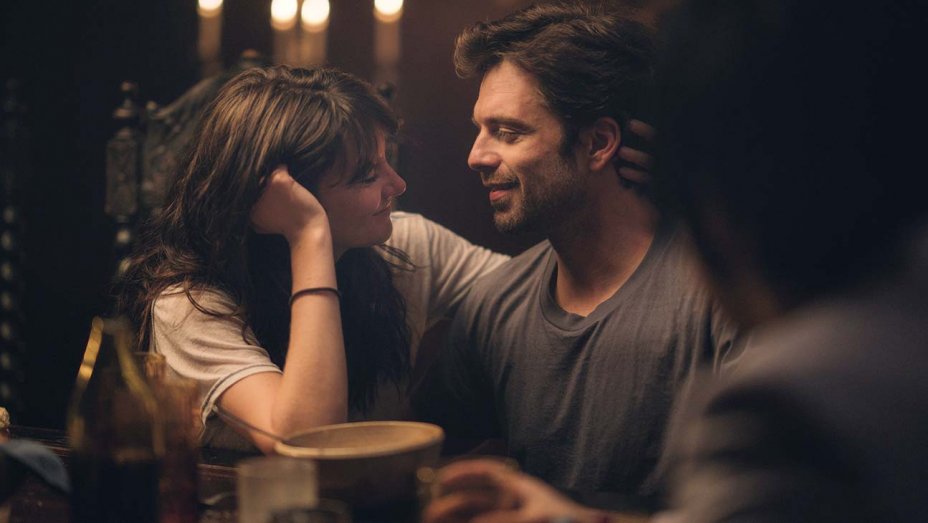
But first, she finds Frank (Sebastian Stan) and Jack (Jamie Dornan), two good friends who don’t try very hard not to let Daphne come between them. Frank’s the impulsive bad boy and Jack’s the reliable good guy, with Daphne bouncing between them while the film pretends it’s because the two men see her differently.
It’s Daphne who sees herself differently, and her inability to choose is just one of the ways Daphne’s newly-stated goal of doing good for others rings with as much authenticity as her winning the claw game at the arcade (really, she wins!).
Don’t get me wrong, an unlikeable protagonist can be more than okay, it can be a bold and challenging narrative choice. But here, director/co-writer Drake Doremus (Like Crazy) is desperate to sell us personal growth and “music to suffer to” playlists when all we keep seeing are excuses for selfishness.
The always reliable Woodley still manages to make Daphne an interesting train wreck. Her vulnerability and confusion at facing this premature midlife crisis does feel real, and Woodley elevates the film by making sure Daphne – likable or not – is a complex personality forgotten by a litany of romance fantasies.
The chemistry between Woodley, Stan and Dornan is solid, seemingly bolstered by improvisational trust amid Doremus’s abrupt cuts and flashback sketches.
Endings, Beginnings has all the parts of a consistently competent and watchable affair. But the resonant character study it aspires to be – much like the character itself – slips away simply from pretending to be something it’s not.
Frank Darabont really loves him some Stephen King, having adapted and directed the writer’s work almost exclusively for the duration of his career. While The Shawshank Redemption may be Darabont’s most fondly remembered effort, The Mist, an under-appreciated creature feature, is our vote for his best.
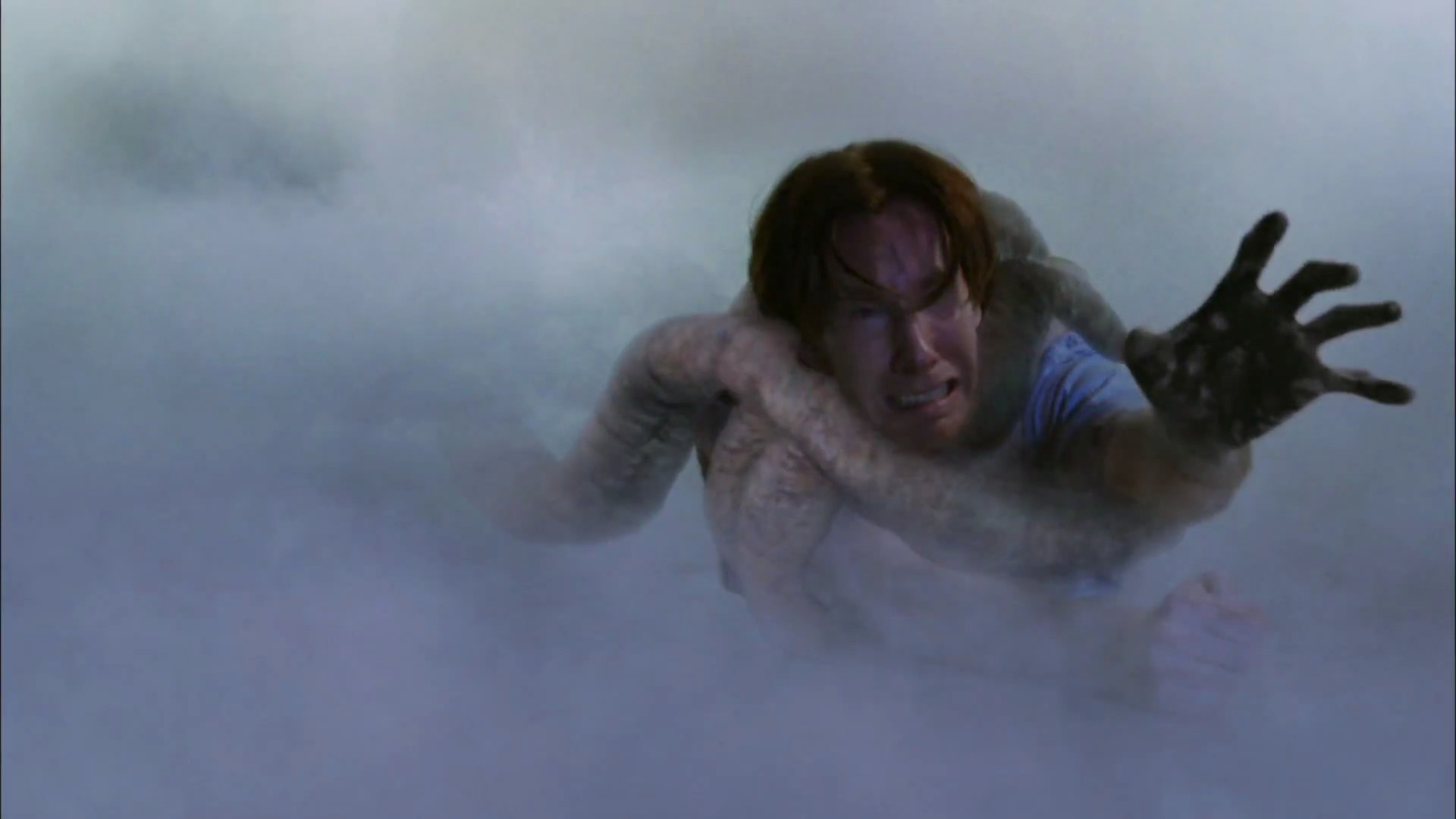
David Drayton (Thomas Jane) and his young son head to town for some groceries. Meanwhile, a tear in the space/time continuum (who’s to blame?!) opens a doorway to alien monsters. So Drayton, his boy, and a dozen or so other shoppers all find themselves trapped inside this glass-fronted store just waiting for rescue or death.
Marcia Gay Harden is characteristically brilliant. As the religious zealot who turns survival inside the store into something less likely than survival out with the monsters, she brings a little George Romero to this Stephen King.
In a Romero film, no matter how great the threat from the supernatural, the real monsters tend to be the rest of the humans. King does not generally go there, but he does so with The Mist and it’s what makes this one of his most effective films.
While Harden excels in a way that eclipses all other performances, the whole cast offers surprisingly restrained and emotional turns – Toby Jones is especially effective.
The FX look good, too, and let’s be honest, a full-on monster movie with weak FX is the lamest. The way Darabont frames the giants, in particular, gives the film a throw-back quality to the old matinee creature features. But he never gives into cheekiness or camp. The Mist is a genuinely scary film – best seen in the black and white version if you can find it.
Regardless, it’s the provocative ending that guarantees this one will sear itself into your memory. Though this is likely what kept The Mist from gaining an audience in theaters, it is a brilliant and utterly devastating scene that elevates the film from great creature feature to great film.
by George Wolf
Miles Davis, the original cool? Well, at the very least, he’s in the team picture.
And part of that iconic allure, along with groundbreaking talent, was his elusiveness. Until that unexpected 1980s stretch of pop collaborations, art exhibitions and Miami Vice appearances, Davis was the prickly genius you could not pin down.
Enough talk, his every glance seemed to sneer (behind the coolest of sunglasses, of course). Just stand back and let me play.
With Birth of the Cool, director Stanley Nelson weaves archival footage, first-person interviews and Davis’s own words (read by actor Carl Lumbly) into a captivating career retrospective buoyed by important historical context.
Longtime aficionados will relish the dive into early stints with Dizzy, Bird and Coltrane as much as the later mentorships of Shorter and Hancock. The amount of respect and adoration here is healthy, indeed, but the darker layers of Davis’s drug use and abusive relationships are treated as part of his human complexity rather than mere whispers on a scandal sheet.
Birth of the Cool is an obvious must for any Davis fans wanting to feel as close to the legend as they’ve ever been. And for anyone using the film as intro to Miles 101, it’s a fine primer on road to Bitches Brew and beyond.

by George Wolf
Invisible Life (A Vida Invisvel) is one of the few films that earns its melodrama status in only positive ways. Director/co-writer Karim Ainouz attacks our sentimentality in such a loving, dreamlike manner you easily fall under his spell of family strife in 1950s Brazil.
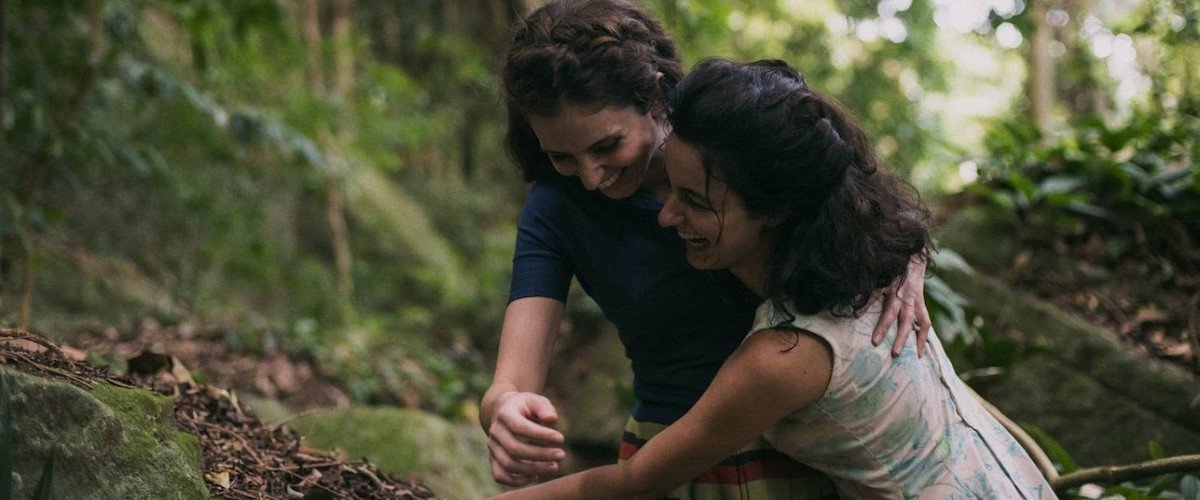
Sisters Euridice and Guida (Carol Duarte and Julia Stockler, both exceptional) grew up inseparable but have begun to follow different paths. While Guida dreams of finding love, Euridice has aspirations as a classical pianist.
A dramatic turn leads to one of the women being disowned by their father, and the two sisters begin living disconnected lives, each believing the other’s circumstances are very different than reality.
The “invisibility” of the sisters to each other, and of the lives of all women in a patriarchal society, is a thread Ainouz weaves skillfully and repeatedly throughout. The result is a lush and emotional period piece that dives into its genre with no apologies, tugging at your heart with broken dreams and familial bonds until you’re nothing but thankful for it.
It’s time to get real. And by that, we mean real nasty.
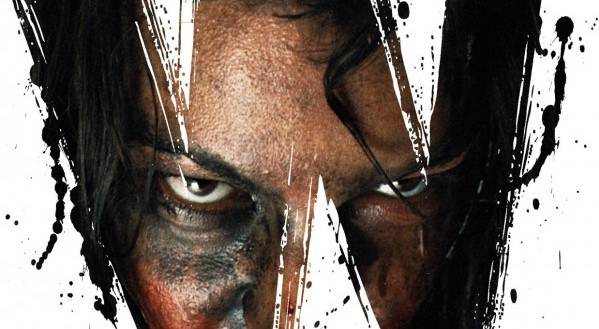
There’s something not quite right about Chris Cleese (an unsettlingly cherubic Sean Bridgers), and his family’s uber-wholesomeness is clearly suspect. This becomes evident once Chris hunts down a feral woman (an awesome Pollyanna McIntosh), chains her, and invites the family to help him “civilize” her.
The film rethinks family – well, patriarchy, anyway. Notorious horror novelist and co-scripter Jack Ketchum may say things you don’t want to hear, but he says them well. And director Lucky McKee – in his most surefooted film to date – has no qualms about showing you things you don’t want to see. Like most of Ketchum’s work, The Woman is lurid and more than a bit disturbing. (Indeed, the advanced screener I watched back when the film was first released came in a vomit bag.)
Aside from an epically awful performance by Carlee Baker as the nosey teacher, the performances are not just good for the genre, but disturbingly solid. McIntosh never veers from being intimidating, terrifying even when she’s chained. Bridgers has a weird way of taking a Will Ferrell character and imbibing him with the darkest hidden nature. Even young Zach Rand, as the sadist-in-training teen Brian, nails the role perfectly.
Nothing happens in this film by accident – not even the innocent-seeming baking of cookies – nor does it ever happen solely to titillate. The Woman offers a dark and disturbing adventure that finds something unsavory in our primal nature and even worse in our quest to civilize.
Don’t even ask about what it finds in the dog pen.
by George Wolf
Before hitting play on Slay the Dragon, make sure you’re a good social distance away from Grandma’s fine china.
Because you’re going to want to break something.
Directors Chris Durrance and Barak Goodman open their deep dive into political gerrymandering with a quote from Founding Father John Adams about democracies and suicide. They then spend almost two hours making the case that time is running short for America to prove Adams wrong.
The film’s historical context of gerrymandering – or drawing Congressional districts in a hyper-partisan manner – is informative and even entertaining in spots. Who knew the practice got its name from pairing an old Massachusetts governor with a salamander?
But once it digs into the deep pockets and advanced metrics behind “packing,” “stacking” and “bleaching,” the film’s view that this a fight between voters picking winners and winners picking voters does not seem hyperbolic.
The direct, measured approach pushes hardest when reminding us that new district maps are drawn every ten years, so elections in a year that ends in zero – LIKE THIS YEAR – are especially important.
But to make their film a rallying cry for passionate turnout, Durrance and Goodman know that beneath the dirty tricks, blatant hypocrisy, systemic oppression, corporate greed and Supreme Court setbacks, there has to be hope.
We get it via Katie Fahey and Voters Not Politicians, a grassroots movement fighting gerrymandering in Michigan that began with a Facebook post. Fahey, a total neophyte diving into vicious waters, is instantly relatable and easy to root for, creating a narrative contrast that’s a bit simplistic but naturally effective.
It does get a bit long-winded in spots, but Slay the Dragon makes its case with enough info, passion and persistence to make it necessary, especially in a year that ends in zero.
Like this year. 2020. An election year.
Did we mention that?