Tag Archives: entertainment

Family Feud

The Invitation

by George Wolf

If you thought Get Out was too nuanced, Ready or Not too wickedly funny, and what they both needed was some trusty Twilight obviousness, The Invitation is waiting for you.

Nathalie Emmanuel (Some Furious films, Game of Thrones) stars as Evie, a struggling art student in NYC who takes a DNA test and finds she has some new kin overseas.

Evie lost her dad when she was just a teen, and is still hurting from her mother’s recent passing only months ago, so this news lifts her spirits enough to accept a free trip to London for a lavish new-family wedding.

The country estate reeks of wealth, and Walter, the Lord of the Manor (Thomas Doherty) is handsome and charming. Flirtations help distract Evie from the ghostly apparitions, bumps in the night, and blood sucking.

Everyone’s very interested in Evie, giving little thought to the bride and groom who seem nowhere to be found.

Huh.

Director and co-writer Jessica M. Thompson borrows liberally from better films while leaning on tired devices such as red herring jump scares, waking from a nightmare, and handy clues that are nice enough to present themselves right when you need them.

But even those clues seem subtle next to the contrived exposition that takes liberties with vampire lore while it telegraphs the get out of jail free card that Thompson and co-writer Blair Butler (the dreadful Hell Fest) have for Evie. And by that time, all the character names taken from Stoker feel less like homages and more like desperation.

This invite promises only bargain-priced goth, watered-down frights and surface level commentary on classism and white privilege. The pivot from the Get Out setup to the Ready of Not revenge tour is much too long in coming, with a payoff that just isn’t worth the wait.

So wherever that bride and groom are, I bet they’re having more fun.

Jean Genie

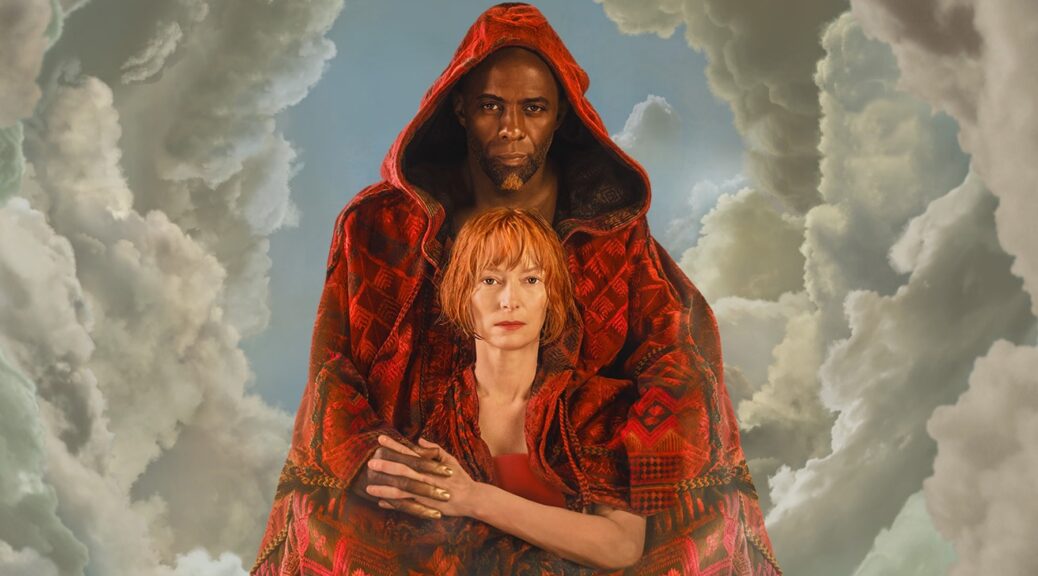
Three Thousand Years of Longing

by Hope Madden

The logic seems inarguable. If Idris Elba wants to be in your movie, you say yes. If Tilda Swinton wants to be in your movie, you say yes. If both of them want in? You dance a jig.

To be sure, Swinton and Elba are excellent in George Miller’s new fantasy Three Thousand Years of Longing. Swinton is Alithea, a self-satisfied, hyper-intelligent, solitary creature who finds connection to her fellow humans through stories. She’s a narratologist. She studies stories, their structure and their meaning.

Elba is a djinn, a supernatural force Alithea has unintentionally let out of his bottle. He has some stories to tell. He is a maelstrom of weary tenderness and raw emotion, a wonderful balance of wisdom and naivete. Swinton’s chilly reason and childlike curiosity make a similar balance, and the two together are a delight.

Miller hasn’t made a film since his 2015 masterpiece Mad Max: Fury Road, and those are big boots to fill. His new effort looks gorgeous, as Elba spins yarns of his previous wish fulfillment mishaps across time.

Miller’s storytelling here is fanciful but meaningful. He is exploring storytelling, what it means to write your own story, and how authentic and original storytelling transports you. In this case, it transports Alithea from her modest hotel room to palace intrigue, battlefields and lustful chambers.

Both actors — two of the most talented and versatile working today — breathe life, love and dimension into their characters. It seems effortless, the way they make you believe them: two beings long resigned to being alone, slowly awakening to like-minded company.

They’re so good you can almost forget that they are playing the literally magical negro and the white heroine his magic helps on her journey. It’s a trope I think we all hoped was dead by now, but the truth is that the only way to avoid this trope with this particular film would be to deprive us of Elba, Swinton, or both.

It’s a conundrum and not the only flaw in the tale. The act three romantic plot feels a bit forced, though charming. Where Miller really succeeds is in delivering a layered consideration of the power and wonder of stories—even in the land of artless blockbusters, sequels and superheroes; even in an era of content creation.

It’s not a masterpiece and it falls into some old-school storytelling traps, but Three Thousand Years of Longing offers much originality and two undeniable performances.

Portrait of the Artist as a Young Nerd

Funny Pages

by George Wolf

It’s Christmas Day, and the one place Robert (Daniel Zolghadri) finds his comfort and joy is the comic book store.

And though the feature debut from writer/director Owen Kline may instantly earn a place alongside American Splendor, Ghost World and Crumb on the comic nerd movies Mt. Rushmore, a love for the funnies isn’t required for Funny Pages to cast its wild, weird spell.

Through massive bites of hamburger at a local New Jersey diner, Robert informs his parents (Maria Dizzia and Josh Pais, both perfectly exasperated) that he won’t be finishing his senior year of high school.

All Robert cares about is drawing comics, and he can work any boring job while he pursues his artistic dreams, so why not get right to it?

So he does, renting half a sweltering room in Trenton and working a few hours for Cheryl (Marcia DeBonis), a public defender with a list of several clients. And as luck would have it, one of those clients, Wallace (Matthew Maher), used to work for the famous Image Comics.

Sure, Wallace is angry, aggressive and openly hostile, but knowing him puts Robert one step closer to where he wants to be. And that means Robert wants to stay close to Wallace, whatever the consequences.

And there are plenty of awkward, often hilarious consequences.

Kline (son of Pheobe Cates and Kevin) develops memorably offbeat characters you don’t let go of easily. Zolghadri brings a wonderful zest to Robert’s coming-of-age, showcasing a sweetly resonant mix of resolve, confidence and vulnerability.

And from Wallace to roommates, from co-workers to best friends, there’s a universe of weirdos populating Robert’s journey up from square zero. Kline envelopes you in so many layers of nerdery that the film races past disbelief and circles back, crashing cars and dropping pants with a surprisingly lived-in abandon.

In the early moments of Funny Pages, Robert’s enthusiastic art teacher proclaims that his art should “always subvert!” That sounds like something Kline might have been told some time ago.

I’d say he was paying attention.

Love In the Time of Breadsticks

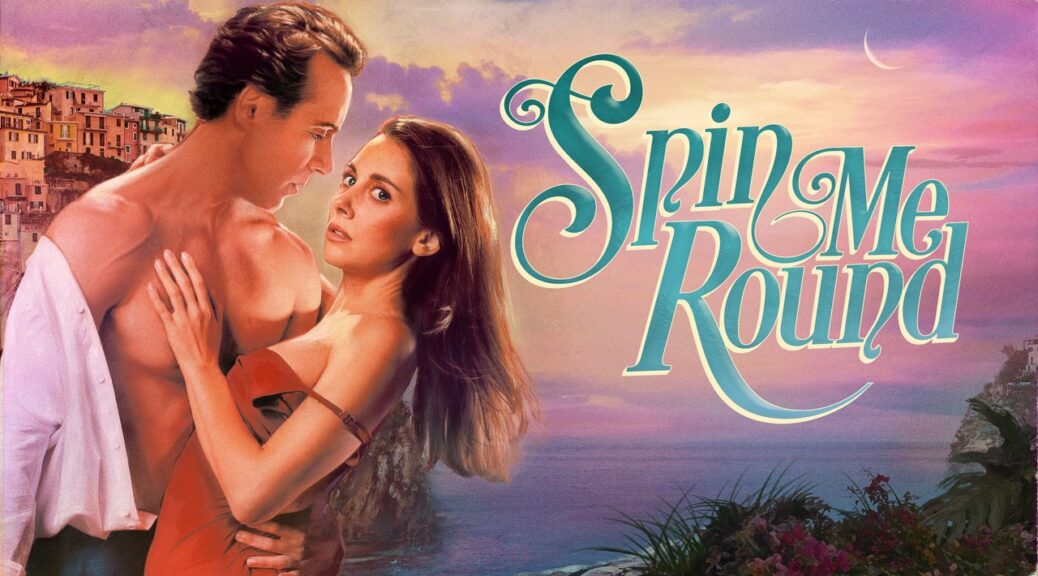
Spin Me Round

by George Wolf

A madcap reminder that what seems too good to be true probably is, Spin Me Round finds Alison Brie and an engaging ensemble looking for love in the time of endless breadsticks.

Brie co-writes the screenplay and stars as Amber, the manager of the Bakersfield, CA branch of Tuscan Grove restaurants, an Olive Garden-type Italian chain. Single and not loving it, Amber’s luck turns when her supervisor (Lil’ Rel Howry) tells her she’s won a spot in the company’s “Exemplary Manager’s Program.” And that means a free trip to the Tuscan Grove Villa in Pisa, Italy!

Ciao, suckers, think of me when you’re rolling silverware!

Okay, so the hotel isn’t quite as nice as expected, and her fellow winning managers are a little eccentric (including the great Molly Shannon as a woman really needing the meds that were lost with her luggage), but Tuscan Grove CEO Nick Martucci (Alessandro Nivola) is here in person!

Nick’s suave and handsome, and when his assistant Cat (Aubrey Plaza, perfectly condescending but curiously underused) delivers an invite to Nick’s private yacht, it’s Amber’s head that starts swimming. Could her BFF’s (SNL’s Ego Nwodim) predictions of amore be coming true, or is this too much too soon?

Bet you can guess.

But director and co-writer Jeff Baena (The Little Hours, Horse Girl, the I Heart Huckabees screenplay) is eager to take the film off the expected rom-com path. Just when you think you’ve got it pegged, there’s wild boars, kidnapping, shady characters and plenty of suspicion.

Brie is always likable, and her wide-eyed and accommodating Amber is the perfect tour guide through this land of tonal shifts and total weirdos (including Fred Armisen, Ben Sinclair and Tim Heidecker). And while the film is never uproarious, it’s consistently amusing and never a bore.

But what’s the end game here? Pointing out how many rom-com’s find romance in sexual harassment? How day to day drudgery can easily breed unrealistic fantasy? The consistent appeal of bland comfort food?

There’s a dash of all that in Spin Me Round‘s entree. It’s light but filling, with a pleasing aftertaste. Just don’t spend too much time wondering what’s going on in the kitchen, and dig in.

She’s No Annie

Orphan: First Kill

by Hope Madden

There’s something wrong with Esther.

That was the excellent tag line for Jaume Collet-Serra’s fun 2009 surprise Orphan. Then 12-year-old Isabelle Fuhrman delivered an inspired performance buoyed by the nuanced work of two veteran talents (Vera Farmiga and Peter Sarsgaard), but it was the climactic shocker that guaranteed the film’s place in horror history.

The bigger surprise might be to make a prequel 13 years later with the same lead. Furhman, now in her twenties, reprises her role as the orphan you do not want to adopt.

In director William Brent Bell’s episode, we go back in time to meet up with our wee villain in an Estonian facility. It’s a fun, bloody start to Esther’s adventure and an early reminder (it has been 13 years) that if you wonder whether Esther’s evil, F around and find out.

That, of course, is one of the obstacles writer David Coggeshall needs to overcome. We already know Esther’s big secret and we already know what she’s capable of. What surprises are left?

Plenty!

Orphan: First Kill goes in unexpected places, many of them an absolute hoot. Bell’s film walks an impressive line between tension, horror and laughs. It works because of a tight script, but mostly because of rock-solid performances from Fuhrman and Julia Stiles.

Stiles is Esther’s new mommy, a wealthy helicopter parent with an artist husband and a teenage son. She’s magnificent.

Able support work surrounds the pair, and Coggeshall’s screenplay meshes the expected with the unexpected.

I had no idea Bell—whose previous work includes the unintentionally funny The Boy and Brahms: The Boy II­—had this in him. Yes, Orphan: First Kill may have benefitted from low expectations: a heretofore weak director, a 25-year-old trying to convince the audience she’s 12, a franchise none of us thought needed a sequel. Still, there’s no denying it entertains.

The film is no masterpiece and Fuhrman’s age does take you out of the fantasy now and again. But it is sly fun.

Occupied!

Glorious

by George Wolf

I like to imagine the pitch meeting went something like this:

Picture it: a desperate man, trapped in a remote roadside rest stop with an ancient monster named Ghat.

Who’s playing the monster?

The voice of J.K. Simmons.

Go on.

So our man’s in one stall, with the monster in the other, offering commands from behind a glory hole.

What’s it called?

Glorious.

You’re damn right it is, and Shudder wants it for August.

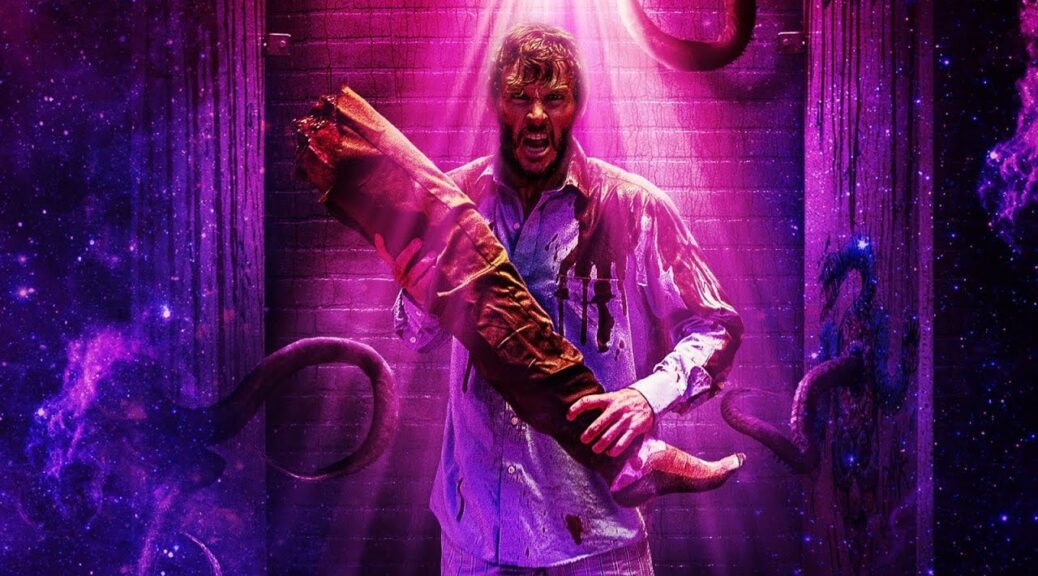
Well now it’s here, and while the downsized cast and location recalls a host of pandemic-era productions, director Rebekah McKendry makes the most of what she’s given. Glorious proceeds at an intriguing pace that never feels sluggish, showing us just enough of the tentacled bathroom beast to strike an effective balance between bloody Lovecraftian spectacle and doomsday humor.

True Blood‘s Ryan Kwanten is perfect as a sad, pantsless bathroom sack named Wes. Screenwriters Joshua Hull, Todd Rigney and David Ian McKendry give Wes a wisecrack-fueled arc that shifts from wallowing in the pain of losing Brenda (Sylvia Grace Crim) to bargaining with Ghat for the fate of humanity (and Simmons, of course, is priceless). While the character is never quite compelling, Kwanten settles in a notch of two below Ryan Reynolds on smartass scale, making it easy have an interest in where Wes’s trippy toilet trip ends up.

And you may catch on early to that destination, but the real test of how Glorious will hit you is how much love you have for Lovecraft. Even if it’s minimal, this is a bathroom break full of squalid, forgettable fun.

Days of Future Past

My Old School

by George Wolf

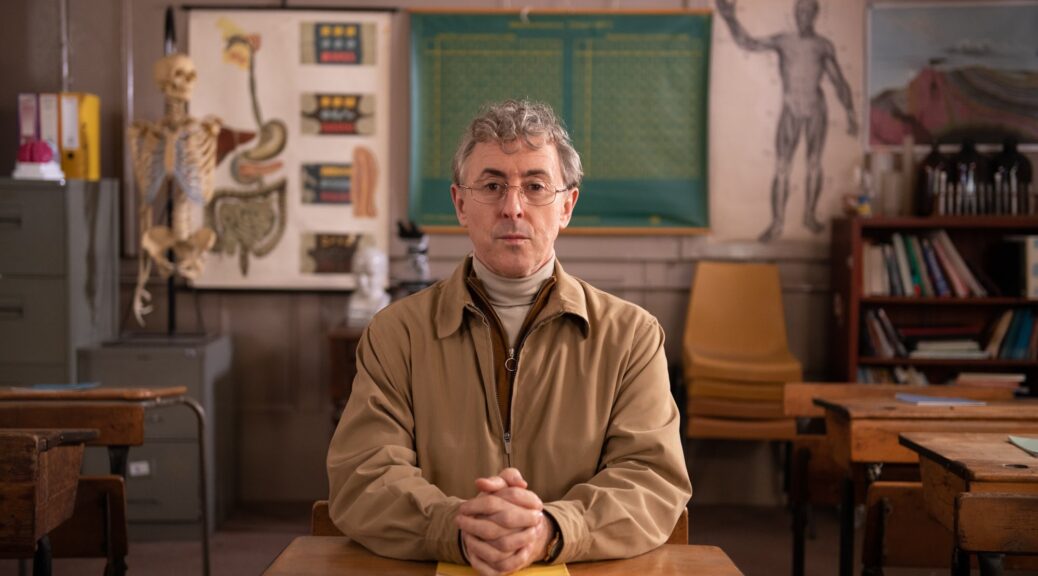
Brandon Lee was a mystery wrapped in an enigma inside the body of an awkward Scottish high schooler.

Or, maybe he was something else. My Old School revisits those teenage days for a light and entertaining look at a head-scratching scammer.

Brandon’s story was set to be told in a Mid-90s movie starring Alan Cumming. That project never got off the ground, but now Cumming finally gets his chance to play the part, lip-synching Brandon’s interview audio because the real guy won’t show his face.

And why is Brandon still hiding?

Well, that’s one of the mysteries writer/director Jono McLeod hopes to unravel.

Talking to Brandon’s former classmates and often re-creating their memories through animation, McLeod introduces us to the boy his peers first knew.

In 1993, Brandon enrolled as a 16 year-old at Bearsden Academy, a secondary school in an upper class section of Glasgow. His intelligence and behavior made him a favorite of the staff, but the kids found him weird.

Getting cast as Lt. Cable in the school’s production of South Pacific changed Brandon’s social status. And soon there were friends, holidays, brushes with the law, multiple passports and…oops.

Obviously, knowing as little as possible about this case benefits how the film will hit you, but even the biggest revelations don’t land quite as hard as McLoed seems to think they will. There are no jaw-on-the-floor twists on the order of 2012’s The Imposter, but some interesting questions are raised about selective memory and a belief in Jedi mind tricks.

An animation style that recalls MTV’s “Daria” and the laugh-it-off vibe of Brandon’s old classmates only fuels the feeling that the film is a little too forgiving of its subject.

Looking back, most everyone involved now admits that they should have looked closer at Brandon Lee. Entertaining a yarn as it may be, My Old School might have been more compelling by doing the same.

First Time Long Time

Prey

by George Wolf

Well-crafted memories of the mid-80s helped Top Gun Maverick blow up the box office this summer. And while Prey skips the big screens for a rollout on Hulu, the film is not shy about its plan for more crowd-pleasing nostalgia.

It’s also not shy about the carnage.

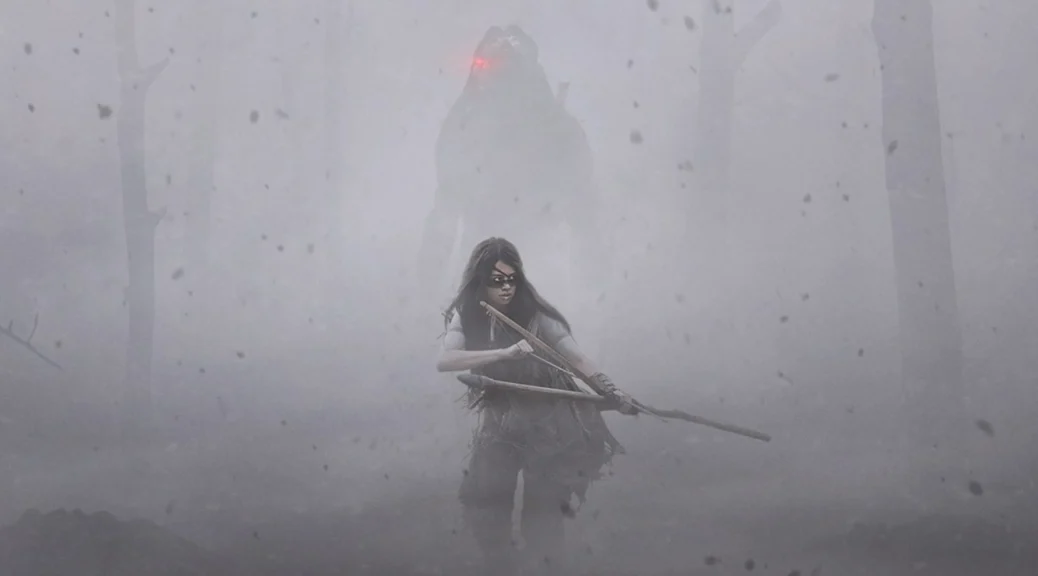
Director Dan Trachtenberg (10 Cloverfield Lane) takes the reins for installment number five in the Predator franchise, teaming with writer Patrick Aison to rewind 300 years, when a tribe of Comanche hunters suddenly found themselves among the hunted.

Naru (Amber Midthunder) thinks she has the skills to join the hunt and help provide for her tribe, but her brother Taabe (Dakota Beavers) isn’t so sure. And when Taabe has to come to Naru’s rescue in the wild, she’s urged to stand down.

But Naru has glimpsed something large and lethal in the woods, and when that something begins making bloody sport of Comanche nation, she’s eager to prove just how lethal she can be.

Midthunder (The Wheel, TV’s Legion) is a fine heroine, more than capable with the role’s physicality and Naru’s stubborn resolve. And she’s able to keep the character compelling when Aison’s character arcs and “the hunter is now the prey” themes seem hurried and obvious.

Trachtenberg compensates with a string of arresting visual set pieces. As his camera dives deep into the trees and then high above, Trachtenberg crafts the Predator’s first Earthly battlefield as a home suddenly and violently unknown to its natives, a metaphor for the Native American experience that lands with resonance.

Those well-known monster calls fuel the tension, the action is thrilling, and the blood is splattered with pride, complete with unmistakable callbacks to the original 1987 film through both movement and dialog.

And about that dialog…

Trachtenberg and producer Jhane Myers (of both Comanche and Blackfeet heritage) have clearly taken great care with the film’s cultural representation and depiction. In fact, you can choose a version of Prey that is dubbed by the cast in the Comanche language (becoming the first film to offer this option).

It’s a wise choice, because as distracting as dubbed audio can be, the English dialog in Prey is even more so. It’s not just that the Comanche characters speak English, but the phrasing and delivery is so very present day, it’s hard to stay grounded in the film’s otherwise impressive world-building.

Word is that before making the decision to dub, Trachtenberg and Myers considered filming exclusively in the Comanche language. Damn, that would have been a great action film.

Prey is a good one.

Secret Chords

Hallelujah: Leonard Cohen, A Journey, A Song

by George Wolf

For longtime fans of Leonard Cohen, the continued pop culture embrace of “Hallelujah” can sometimes feel bittersweet. Other times it just makes you want to scream.

Jeff Buckley didn’t write it! It’s not a Christmas song! And for God’s sake, stop messing with the lyrics!

And even though that’s satisfying to yell when another TV talent show contestant attacks Cohen’s masterpiece with more bluster than feeling, you can’t deny you’re guilty of an equally false claim of ownership. As singer/songwriter Brandi Carlile rightly points out, by now the song “Is its own person. It has a life of its own.”

So, how’d that happen? Back in the early 80s, “Hallelujah” was DOA, buried on a Cohen album that Columbia Records dismissed outright as unworthy to release.

Alan Light first tracked the song’s ascent in his 2012 bestseller “The Holy or the Broken,” and Light serves as a consultant to co-directors Daniel Geller and Dayna Goldfine for their documentary examination. Straddling the line between biopic and expose, the film gives the uninitiated an overview of Cohen’s background while indulging veteran admirers with a deeper dive into his most acclaimed composition.

Geller and Goldfine interview fans, friends and journalists, tracking Cohen’s unique troubadour life alongside the gradual wave of “Hallelujah” cover versions. It seems only right that Bob Dylan was one of the first to recognize the song’s genius, and it’s a treat to hear his interpretation set the stage for the mainstream breakthrough that came via Jeff Buckley and Shrek (John Cale in the film, Rufus Wainwright on the soundtrack).

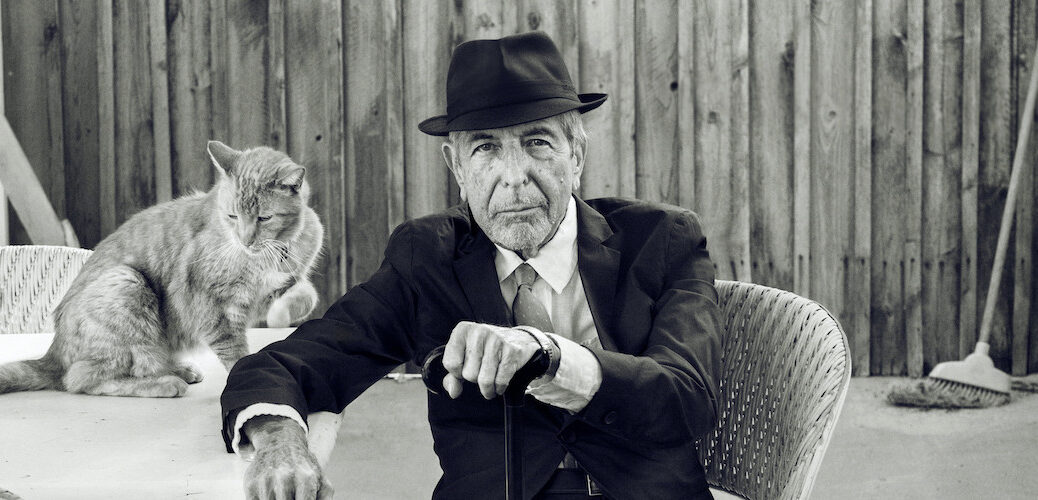
But the film’s strongest moments come through the intimacy of hearing from Cohen himself, and getting closer to his often tortured songwriting process (“If I knew where songs came from, I would go there more often”). We see notebook after notebook full of lyrics, while handwritten lines appear and disappear as guesses are made as to just how many verses (100? 180?) Cohen wrote for “Hallelujah” alone.

At times Geller and Goldfine lean back on biography just when the musical detective work is cooking, but A Journey, A Song ultimately connects the two with a resonant thread.

Leonard Cohen was a seeker, always striving to reconcile the primal with the spiritual. The process may have taken several years, but he wrote a song that lays that search bare with unparalleled eloquence. And though Cohen himself admitted before his death that “too many people sing it,” Geller and Goldfine are smart enough to include plenty of footage of Cohen performing the song himself, and to close with k.d. lang’s goosebump-time version that Cohen hinted was his favorite.

Go West, Young D-bag

Vengeance

by George Wolf

As you may have noticed, we’re living in extraordinary times. So when we’re looking back decades from now, what film commentaries will separate themselves as the most insightful of the day?

In the words of Sammy Hagar, only time will tell what stands the test of time. But there are two releasing just this week that seem like good bets to at least make the team picture.

Quinn Shephard’s Not Okay takes some satirical daggers to the social media age, while Vengeance broadens the focus for a lightly comical mystery with some hot button issues on its mind.

It’s the feature debut as writer and director for familiar face B. J. Novak, and it instantly marks him as a smart, sly, and entertaining storyteller.

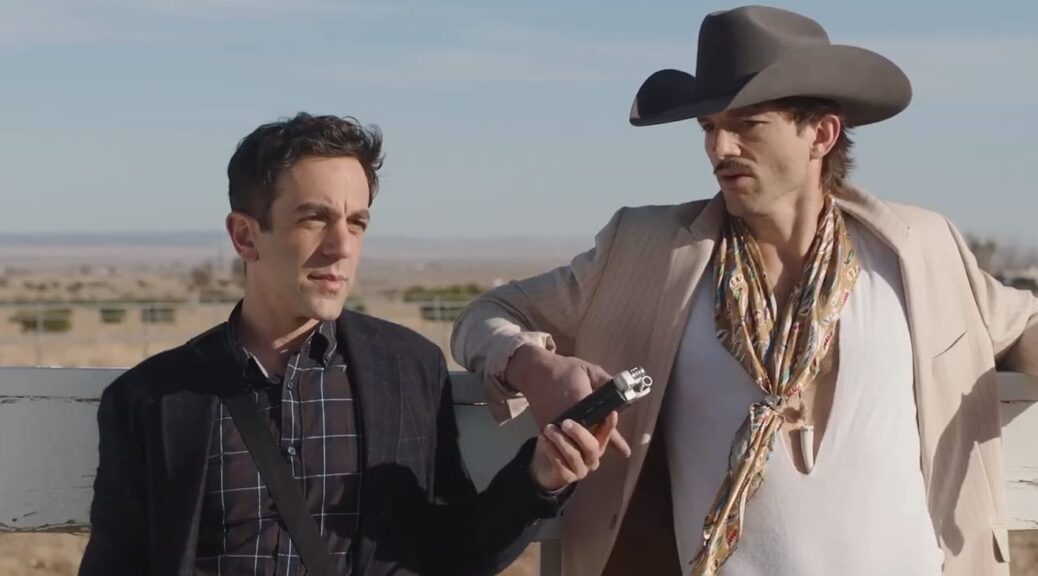
Novak (Saving Mr. Banks, Inglourious Basterds, TV’s The Office) also stars as Ben, a writer for the New Yorker who wants to be more. He wants to be a “voice.” Fate steps in when he’s lured to West Texas after the fatal opioid overdose of his occasional hookup Abilene (Crazy, Stupid, Love‘s Lio Tipton). Abi may have been little more than a fling, but Abi’s family thinks she and Ben were a longtime committed couple.

They also think Abi was murdered, and when her brother Ty (Boyd Holbrook, terrifically nutty) proposes a teamup to avenge Abi’s death, Ben seizes the chance to pitch a “Dead White Girl” true crime podcast to his editor Eloise (Issa Rae, always welcome).

Early on, Novak gets laughs from throwing a “hundred percent, hundred percent” New York hipster into the home of an eccentrically red state brood who will teach him many things about Texas, including what makes Whataburger so great.

“It’s right there!”

But as Ben starts piecing together Abi’s last days, and glimpsing her dreams of stardom with a local record producer (Ashton Kutcher, understated and better than he’s ever been), Novak begins weaving some impressive and resonant layers.

Speeches are made and then refuted. Stereotypes are outlined and defended, only to be punctured as Novak and Ben dig deeper, searching for the heart of a “new American reality” that took shape when truth became unacceptable.

From podcasts, conspiracy theories and hot takes to the ideological divide between coastal elites and country bumpkins, Vengeance sure feels like an authentic national portrait.

It’s also a funny and entertaining mystery caper, self-effacing but not afraid to wander into some dark places, with a social conscience that Novak reveals in organic and endearing ways. We are more just the record of ourselves in and around new media, and our evolving societal challenges deserve more than convenient cop-outs.

Sounds like a good start to Novak’s transition into filmmaking.

Hundred percent.