Tag Archives: documentary reviews

Read All About It

Scandalous: The True Story of the National Enquirer

by George Wolf

About 94 minutes into Scandalous, Mark Landsman’s completely engrossing documentary about tabloid journalism, you realize he’s buried the lede.

“How did a tabloid subject get to be President of the United States?”

In telling the tale of the birth, rise and fall of the National Enquirer, Landsman is also drawing a fairly persuasive roadmap to America’s current standing as a place where, in the view of no less than Carl Bernstein, no fact-based debate is even possible.

Born to original owner Generoso “Gene” Pope from a no-interest mafia loan, the Enquirer had a simple goal: sell the most papers, period. Taking inspiration from roadside gawkers at a grisly accident, Pope printed the crime scene photos others didn’t.

But when the rise of suburbia meant less lines at the newsstand, Pope made a genius move to the supermarket checkout line. And since blood and guts don’t mix too well with the bread and milk, the Enquirer went all in on celebrity gossip.

Using press badges for nifty introductions, Landsman rolls out a succession of former Enquirer reporters and editors, none of whom can hide their fondness for the memories. It was an intoxicating working environment of bottomless expense accounts, cutthroat competition and a ruthless dedication to getting the story.

It wasn’t about facts, it was about eyeballs. Start with some sliver of truth, and then cater to the core (“Missy Smith in Kansas City” the staff called her) with unapologetic sensationalism.

Let the public decide, right? They have a right to know. Except when they don’t, because “catch and kill” protection deals started decades before Donald Trump. Landsman scores with those details, but curiously omits any mention of successful legal pushback from celebrities such as Carol Burnett.

The paper’s backstory is informative and intriguing, but the red meat of Scandalous comes fittingly from scandals. The coverage of both Gary Hart and O.J. Simpson not only brought new journalistic respect to the Enquirer, but ushered in a new approach to journalism itself that is still being debated.

“That’s not my problem,” says a former editor. “It sold papers.”

It did that. But Landsman argues it also blurred lines that became ripe for exploitation by a new owner with a political agenda, something – according to all former staffers interviewed – the Enquirer had always avoided. After that, greasing the political rails of longtime Enquirer darling Trump became almost inevitable.

But above all, Scandalous resets the folly in underestimating the Enquirer’s legacy. When we listen to a reporter’s recording of a much younger Trump calling to plant favorable stories by posing as a “Trump insider,” it feels like a visit from the Ghost of Christmas Past.

So how did the checkout aisles evolve from promising dirt on the latest celebrity divorce to serving up blatant political propaganda? In the words of one former reporter, the Enquirer simply got “out-Enquired.”

Scandalous, indeed.

…And Let’s Give It Acid Blood!

Memory: The Origins of Alien

by Hope Madden

“The reek of human blood smiles out at me.”

It’s an unusual opening line for a documentary about that icon of SciFi horror, Alien. And yet, Memory: The Origins of Alien is an unusual documentary.

Alexandre O. Philippe takes you deep into our collective psyche, our “cauldron of stories,” to explore the alchemy behind the lingering success and haunting nature of Ridley Scott’s film. Though the story starts long before Scott’s involvement.

Philippe begins by mining writer Dan O’Bannon’s influences and preoccupations.

“I didn’t steal from anyone,” he said. “I stole from everyone.”

A Nebraskan whose father once staged an alien landing, O’Bannon’s out of the ordinary young life and preoccupation with comics fueled his short screenplay, “Memory.” But it was his battle with Crohn’s disease that inspired that pivotal scene that moved the tale from short to feature.

Then came H. R. Giger, whose “Mythology of the future” offered visual entryway to the world the film would imagine. Joined eventually by Scott, who saw their genius and raised it. Philippe’s joy at displaying the way these three imaginations coalesce to form the greater vision spills off the screen.

But why, after 40 years, is Alien still a heart-pounding success?

If you buy the film’s thesis—and Philippe does make a good case—we basically had no choice.

Alien is both the lovechild of H.R. Giger, Dan O’Bannon and Ridley Scott—each as seemingly necessary for this product as the next—and the culmination of primal images and ideas mined from the collective unconscious.

This is more than undulating fandom aimed at the object of adoration. It’s a deep, immersive dive into how Alien evolved to become the  masterpiece that it is and why the film remains as haunting today as it was when John Hurt’s chest first burst in 1979.

Heart of Darkness

Cold Case Hammarskjöld


by Christie Robb

Initially an exploration of the suspicious death of UN Secretary General Dag Hammarskjöld in 1961, Mads Brügger’s documentary Cold Case Hammarskjöld takes a sharp turn down a rabbit hole into the lengths taken to maintain white supremacy in Africa. 

In a meta move, Brügger makes himself and the process of creating the documentary as much of a focus as Hammarskjöld and the film’s elderly interview subjects. Brügger’s a bit of a fop—dressing in the same clothes affected by the “villain” of the film and occasionally sporting a pith helmet. In much of it, Brügger looms over a black female secretary explaining the twists and turns of his years-long investigation.

You are never unaware that the narrative is being shaped by a white male European.

Which, of course, is much of what the film is about—who gets to shape the story. And the story is both about what really happened to Hammarskjöld (pilot error or multinational assassination conspiracy) and the story of who gets to script the future of Africa. 

The looming is an interesting move, but tends to slow down the pace of the film. Much of the information is presented twice—in the style of a more conventional documentary and via Brügger’s pontification to the secretary. 

With such a breadth of information to cover, the film would have benefited from a bit less artifice and a bit more contextual information. Still, it’ll stay with you, prompting some serious thinking about the intersections of political and corporate interests and what people will do to maintain power.

Cry and Laugh Again

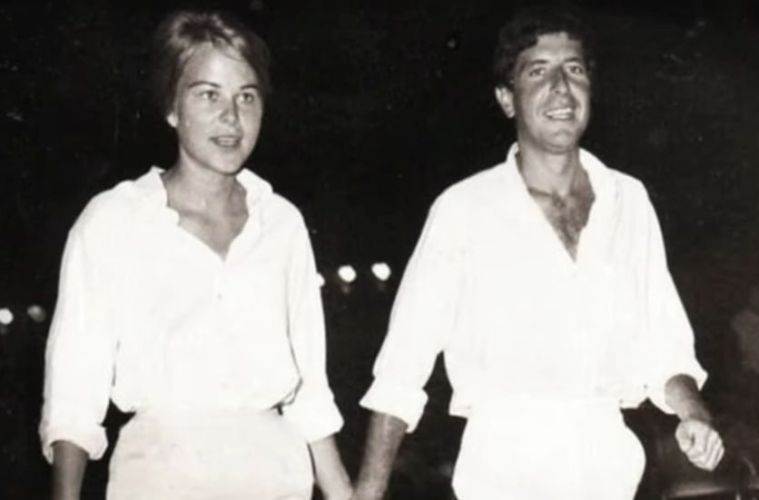
Marianne & Leonard: Words of Love

by Hope Madden

For fans, there is something endlessly fascinating about Leonard Cohen. Maybe it’s because, regardless of the volume of his work—songs, novels and poems—or the intimacy of his words, it’s still impossible to feel as if you know him.

In Nick Broomfield’s latest documentary, Marianne & Leonard: Words of Love, it’s clear that Cohen’s longtime companion and eternal muse Marianne Ihlen felt the same way.

Ihlen inspired the Cohen classic So Long, Marianne, obviously, as well as dozens of others including Bird on a Wire. The two had one of those Sixties relationships—open but committed, tumultuous but loving, and ultimately doomed.

For eight years they lived together, on and off, along with Ihlen’s son Axel in a humble cottage on the Greek island of Hydra. An artists’ refuge of sorts, it was the kind of pre-hippie paradise where eccentrics engaged perhaps too freely in freedom.

It was there that Broomfield first met Ihlen. Their friendship and the director’s clear fondness for his subject give the film a fresh and odd intimacy.

Though his personal connection to Ihlen is an interesting inroad into this story, the doc sometimes feels like two separate and uneven pieces sewn together.

That seems partly appropriate, given that Leonard and Marianne spent increasing spans of time apart as the years wore on. And there’s no question that—for Leonard devotees, at least—the behind the scenes footage of Cohen on tour in the Sixties, commentary from his bandmates, and snippets of background intel from close friends is as engaging as it is enlightening.

Unfortunately, we lose Marianne almost entirely by Act 2. The titular character becomes a bit of a ghost, and not even one who looms large over the material in the foreground.

Of course, as the film was made posthumously (both Ihlen and Cohen died in 2016), their own insights are limited. In this way, though, Ihlen’s presence outweighs Cohen’s in that Broomfield dug up audio conversations in which she discusses the relationship.

The lack of Cohen’s own thoughts on their pairing—outside of one or two rambling, drug-riddled onstage song intros—makes its absence known.

Still, there is a melancholy beauty in the way Bloomfield’s documentary—his love letter to Marianne and Leonard—follows Cohen’s song lyrics, telling of a fractured, unconventional but nonetheless loving connection.

Indeed, it is Cohen’s final words of love to Ihlen, a note sent to her hospital room as she lay dying, filmed at her request, that illustrates that very point.

A bit disjointed but never uninteresting, Words of Love is an often compelling look at the relationship between muse and artist. For Cohen fans, it’s required viewing.

No Treble

The Quiet One

by George Wolf

Even as a child, Bill Perks felt the need to be a pack rat., saving and categorizing mementos from throughout his life. Usually, the interest for such an archive is limited to friends and family. Not this time.

After a trouble relationship with his father, Bill Perks created a new identity for himself as Bill Wyman, and The Quiet One opens his vaults for a look inside the life of the original bass player of The Rolling Stones.

Wyman has quite a collection to show you, and director Oliver Murray assembles it all dutifully. Anchored by Wyman himself as the wistful curator in an office full of artifacts, it’s not long before we understand a youthful Keith Richards remarking to the camera, “If I want to know what I did yesterday, I have to ask Bill Wyman.”

Wyman’s devotion to documenting his life becomes both a blessing and a curse for Murray”s documentary. For Stones aficionados (like myself, admittedly) the videos, photos, interviews and memories create a true insider’s tour through the history of one of the greatest rock bands of all time.

For anyone else, the film might resemble an unassuming tour guide pointing things out at the Rock and Roll Hall of Fame.

In a band with Mick and Keith (and later, even Ron Wood), Wyman’s nickname was never going to be the Charismatic One. But now, at 82 and retired, he’s like the weary grandfather proudly showing you his keepsakes.

They are some pretty amazing keepsakes, no doubt. But only at the end of the film, when Wyman recounts a backstage meeting with his hero Ray Charles, does Wyman really let you in. 

It’s only a rock and roll doc, but a little more of that honest insight and we could love it.

Fall Down and Geek Out

The Great Buster

by Brandon Thomas

Physical comedy is as important to the history of cinema as the cameras themselves. Charlie Chaplin, The 3 Stooges, Jim Carrey and the cast of Jackass all kept the time-honored tradition of taking a blow for the sake of a laugh. Even everyday folk got into the act by sending their accident-filled home movies to TV’s America’s Funniest Home Videos.

For many fans, historians and critics, Buster Keaton was the best of them all.

Keaton started in the biz by performing alongside his parents in their traveling vaudevillian show. His adept ability to sell a pratfall like no one else made their act enormously popular. A fortuitous meeting with Fatty Arbuckle introduced Buster to the art of filmmaking, and by the time Keaton reached his mid-30s, he’d directed, starred in and produced multiple feature and short films.

With The Great Buster, director Peter Bogdanovich (The Last Picture Show, Paper Moon) delivers an absolute love letter to Keaton and his career. The film not only touches on Keaton’s highs in the 1920s, but also on his low points when he lost all creative and financial control of his projects. Alcoholism, infidelity, divorce and family estrangement all plagued Keaton during the downturn in his career.

Bogdanovich wisely spends most of the time discussing and reveling over Keaton’s work. Bogdanovich himself narrates the film, and his adoration of Keaton is evident in his voice as he touches on everything from Keaton’s masterworks in the 1920s to his commercial work in the 1960s. Filmmakers and actors such as Mel Brooks, James Karen, Quentin Tarantino and Johnny Knoxville also share how their affinity for Keaton helped shape their careers.

The film really takes hold when the more “film geek” elements are at play. Specific scenes and/or gags from Keaton’s work are broken down, analyzed and fawned over by Bogdanovich and fellow filmmakers. The film even backtracks to spend the last third pouring over the classics that Buster created in the 20s, leading right up to the invention of talkies.

Like recent documentaries De Palma and Milius, the love and affection for the subject and their creations is all over The Great Buster. Bogdanovich has crafted a precise and professional movie, but, more importantly, he’s infused the film with respect and admiration.

https://youtu.be/NLiRLN_EKu8


The Story of Her Life (and Ours)


by George Wolf

In Stories We Tell, director Sarah Polley lets the secrets in her own family history speak to all families, eloquently questioning truths in which we often take comfort.

She already had an extensive list of acting credits when 2006’s Away From Her established Polley’s additional skills as a writer and director. Her instincts are just as true in the documentary genre, perhaps more so, as a story that has intensely private beginnings becomes universal, entertaining and genuinely moving.

Normally, we include a film’s trailer when posting a review, but not in this case. Avoid it if you can, as knowing absolutely nothing about Polley’s family dynamics before seeing Stories We Tell adds a wonderful element of discovery.

In much the same manner Bart Layton structured his incredible documentary The Imposter last year, Polley moves the story along with the best possible pace, releasing new bits of information at the exact moment they will have the most impact. This holds true even halfway through the end credits, when she drops a bombshell that gives the entire saga a new perspective.

Though some of the family members involved are not shy about wanting the film anchored from their perspective, Polley is having none of it. Her film, personal as it may be, is crafted so well that a reexamination of your own family is almost inevitable. And yet, it unfolds in such an engrossing fashion, you may forget it’s not an adaptation of the latest best-selling novel.

It is a testament to Polley’s own storytelling skill that she can turn the focus inward, and still prompt you to look at your own world in a different way.

Stories We Tell is, so far, the best film of the year.