Fright Club: Feminist Horror

Horror’s come a long way from the days of nubile, sexually wayward teenage girls being victimized and/or rescued by men. Strong female characters have become staples of the genre, thanks in part to a rise in female writers and directors, but likely just as much credit goes to an audience unwilling to accept ridiculous stereotypes. Today we are joined by Senior Feminist Correspondent Melissa Starker as we pay tribute to half dozen of the best feminism horror has to offer.

6. The Descent (2005)

This spelunking adventure comes with a familiar cast of characters: arrogant authority figure, maverick, emotionally scarred question mark, bickering siblings, and a sad-sack tag along. And yet, somehow, the interaction among them feels surprisingly authentic, and not just because each is cast as a woman.

These ladies are not Green Berets who, unlike the audience, are trained for extreme circumstances. These particular thrill seekers are just working stiffs on vacation. It hits a lot closer to home.

More importantly, the cast is rock solid, each bringing a naturalness to her character that makes her absolutely horrifying, merciless, stunningly brutal final moments on this earth that much more meaningful.

Writer/director Neil Marshall must be commended for sidestepping the obvious trap of exploiting the characters for their sexuality – I’m not saying he avoids this entirely, but for a horror director he is fantastically restrained. He also manages to use the characters’ vulnerability without patronizing or stereotyping.

5. The Woman (2011)

In horror movies, things don’t always go so well for the ladies. But sometimes we’ll surprise you, and your pervy freak of a son, as director Lucky McKee details in his most surefooted picture, the gender role horror show The Woman.

There’s something not quite right about Chris Cleese (an unsettlingly cherubic Sean Bridgers), and his family’s uber-wholesomeness is clearly suspect. This becomes evident once Chris hunts down a feral woman (an awesome Pollyanna McIntosh), chains her, and invites the family to help him “civilize” her.

The film rethinks family – well, patriarchy, anyway. Writer Jack Ketchum may say things you don’t want to hear, but he says them well. McKee has no qualms about showing you things you don’t want to see. Like most of Ketchum’s work, The Woman is lurid and more than a bit disturbing. Still, nothing happens in this film by accident – not even the innocent seeming baking of cookies – nor does it ever happen solely to titillate.

4. Ginger Snaps (2000)

Ginger Snaps picks at most of the same adolescent scabs as Carrie – there’s the underlying mania about the onslaught of womanhood accompanied by the monsterization of the female, which leads to a mounting body count.

Ginger (Katharine Isabelle) and her sister Bridget (Emily Perkins), outcasts in the wasteland of Canadian suburbia, cling to each other, and reject/loathe high school (a feeling that high school in general returns). On the evening of Ginger’s first period, she’s bitten by a werewolf. Writer Karen Walton cares not for subtlety: the curse, get it? It turns out, lycanthropy makes for a pretty vivid metaphor for puberty. It also proves especially provocative and appropriate for a film that upends many mainstay female cliches.

Walton’s wickedly humorous script stays in your face with metaphors, successfully building an entire film on clever turns of phrase, puns, and analogies, stirring up the kind of hysteria that surrounds puberty, sex, reputations, body hair, and one’s own helplessness to these very elements. It’s as insightful a high school horror film as you’ll find, peppered equally with dark humor and gore.

https://www.youtube.com/watch?v=Zoa1A987A_k

3. Alien (1979)

Ridley Scott made a lot of great decisions with this film – the pacing, the look, the monster, and the casting. Especially the casting. Because the Ripley characgter was not specified on the page as a female – no character was – but Scott decided that a couple of these crewfolk would certainly be women by this point in human history. And history was made.

Ellen Ripley is just the next in charge. She’s just a solid, smart, savvy crewman. That’s what makes the film so special. In Aliens – an all around outstanding film – Ripley is out to save a little girl. She draws on her maternal instinct, which is a far more traditional and comforting reason for audiences to accept a female behaving this way. But in Alien, her gender really is not an issue. She happens to be the strongest, most ass kicking survivor on board.

2. The Babadook (2014)

A weary single mother contending with her young son’s erratic, sometimes violent behavior begins to believe that her son’s imaginary boogeyman may well be a monstrous presence in her house.

The film’s subtext sits so close to the surface that it threatens to burst through. Though that does at times weaken the fantasy, it gives the film a terrifying urgency. In the subtext there is a primal horror, a taboo rarely visited in film and certainly never examined with such sympathy. Indeed, the compassion in the film may be the element that makes it so very unsettling.

Writer/director Jennifer Kent’s film is expertly written and beautifully acted, boasting unnerving performances from not only a stellar lead in Essie Davis, but also the alarmingly spot-on young Noah Wiseman. Davis’s lovely, loving Amelia is so recognizably wearied by her only child’s erratic, sometimes violent behavior that you cannot help but pity her, and sometimes fear for her, and other times fear her.

1. The Silence of the Lambs (1991)

Jonathan Demme did the impossible. He took the story of a flesh eater who helps the FBI track down a flesh wearer and turned it into an Oscar magnet. How did he do it? With muted tones, an understated score, a visual focus on the characters rather than their actions, and a subtle but powerful use of the camera. The performances didn’t hurt, either.

Yes, it’s awesome, but how is it feminist? Mainly, through Jodie Foster’s character of Clarice Starling – our point of view character and the film’s hero. We are meant to identify with and root for this fledgling FBI agent as she navigates the horrifying mind of Dr. Hannibal Lecter (an epic Anthony Hopkins) in the hopes of stopping a serial killer (the under appreciated Ted Levin).

Usually, a director shoots a villain from below, making him look larger and more menacing. (It’s also not a very flattering angle, which doesn’t hurt when you’re trying to make someone seem mean.) The victim is usually shot from above, which makes them seem smaller, less powerful, more vulnerable, and cuter. When Starling and Lecter are talking in the prison, they’re shot at the same angle, eliminating that power struggle. They’re shot as equals. In this way the film as a whole affords Starling all the respect and credibility the character proves to deserve.

Thanks to Senior Feminist Correspondent Melissa Starker for joining us today! Listen to the whole conversation on our podcast FRIGHT CLUB.


Tale From the Dark Side

The Stanford Prison Experiment

by George Wolf

“Should we step in?”

“No..let’s see where this goes.”

“THIS IS where it goes!”

Imagine watching the ugliness of human behavior materialize in front of your eyes and realizing you not only lit the spark, but enthusiastically fanned the flames?

That very scene proves a pivotal moment in The Stanford Prison Experiment, a completely mesmerizing account of the legendary 1971 psychology study.

If you’re not familiar, the experiment was Dr. Philip Zimbardo’s attempt to study the effects of incarceration with a 2 week prison simulation in the Stanford University psychology building. Attracting volunteers through an offer of a $15 per day salary, Zimbardo and his research team assigned 24 young men to roles as either “guard,” or “prisoner” and monitored the events via video camera.

After 6 days, the guards’ behavior turned so depraved, Zimbardo shut the project down.

Wait, didn’t this movie come out five years ago?

The Experiment did, but that was a fictionalized version based on a novel. This time, director Kyle Patrick Alvarez draws from Zimbrano’s own book, as well as the actual transcripts from both the experiment and the exit interviews, to craft an unflinching look at just what we’re capable of.

In the years since it took place, the experiment has reappeared in pop culture numerous times – most notably during the Abu Ghraib prison scandal. But while the possible conclusions drawn from the SPE continue to be debated, the film wisely keep its focus on the lives affected during those 6 harrowing days.

We watch events unfold through Zimbrano’s perspective, delicately delivered in a career performance from Billy Crudup. From innocent beginnings, through an angry defense of his methods, to the moment the doctor realizes what he hath wrought, Crudup is riveting, aided by a taut script from Tim Tabott that doesn’t tiptoe around Zimbrano’s culpability.

The stable of young actors in the supporting cast are uniformly stellar, led by Ezra Miller as the first prisoner to break down, and Michael Angarano as a power drunk guard who insists on imitating Strother Martin from Cool Hand Luke. Nelsan Ellis shines as an ex-con conflicted by his spot on Zimbrano’s team, and Olivia Thirlby, as Zimbrano’s girlfriend, effectively provides a badly-needed conscience.

Alvarez, in just his third feature, turns the screws with a precision that leaves you shaken by events you already know are coming. Though seemingly more trivial, his subtle flair with the period details bathes the entire film in a stark authenticity from first frame to last.

Did an “evil place win over good people,” did the situation attract sociopaths waiting to strike, or was the execution too flawed for any conclusion? To its credit, The Stanford Prison Experiment offers no concrete judgements, just a gripping, sadly relevant look at ourselves.


Verdict-4-0-Stars


Riddle Me This

Mr. Holmes

by Hope Madden

The last time the great Ian McKellen donned the lead role in a film for director Bill Condon, he was rightfully nominated for an Oscar. In their collaboration Gods and Monsters, McKellen played director James Whale in his waning years, trying to remember for himself and articulate for others the difference between who he was as a man and who the world believed him to be.

Director and star tread a similar path with their latest effort, Mr. Holmes. A 93-year-old Sherlock faces his mortality and – worse still for the brainiac detective – encroaching senility. Attempting to battle enfeeblement, he tries to remember the details of his final case – facts clouded by the published story and subsequent film written by his longtime friend, Dr. Watson.

Though the film does stalk a mystery, don’t expect clues, lurid suspicions and a tidy conclusion. Rather, Condon’s effort, based on Mitch Cullin’s 2005 novel A Slight Trick of the Mind, puzzles over bigger questions about morality, fallibility, regret, and the regenerative power of storytelling.

The retired sleuth spends his waning years in a Sussex seaside farmhouse tending bees and basking in the admiration of Roger (Milo Parker), the son of his housekeeper, Mrs. Munro (Laura Linney).

Linney feels slightly miscast as the put-upon housekeeper, aware of her own intellectual limitations and envious of her son’s affections for her employer. Her accent is off-putting and her intelligence is perhaps too fierce to be believably buried inside this character, but she certainly finds the frail humanity beneath Mrs. Munro’s sturdy exterior.

The tale is a bit soft-hearted and not nearly as cerebral as fans of the sleuth might hope. Don’t expect the expected – there is no Watson, no deerstalker, no pipe. Sherlock’s deductive prowess does come into play now and again, but even as logic continues to form and inform his actions, he’s developing an admiration for emotion – even for fiction.

Condon’s pace is slow and his storytelling is not as crisp as it should be, but McKellen soars nonetheless. With effortless grace and honesty he delivers a turn full of fear, courage, regret, need, and joy. It’s a masterful performance.

Verdict-3-5-Stars

Of Vice and Men

Trainwreck

by Hope Madden

Ten years ago, The 40-Year-Old Virgin introduced the new voice of cinematic comedy. A decade later, 40 writer/director Judd Apatow is – for the first time – directing a film he didn’t write. Why? Because there’s a new sheriff in town and Apatow has the clout to ensure that the next voice in cinematic comedy gets heard.

Trainwreck is the bawdy, wise, hilarious, about-fucking-time romantic comedy written by and starring Amy Schumer. Startlingly honest and utterly lacking in pretension, she followed up years of refreshingly raw stand-up comedy by destroying cable TV with her brilliant Inside Amy Schumer. (YouTube 12 Angry Men Inside Amy Schumer immediately to see just how savvy a writer she is.)

She and Apatow collaborate on this sometimes touching, boisterously funny upending of rom-com clichés. (As Amy narrates the lovey-dovey montage backdropped by the Manhattan skyline, even she finds it cloying, quipping, “I hope this love montage ends like Jonestown.”)

Schumer plays Amy, a heavy drinking, sexually active (very active) writer for a magazine that runs stories like “How Does Eating Garlic Change the Taste of Semen?” and “You’re Not Gay, She’s Boring.” Her editor – the ever glorious Tilda Swinton – assigns her a piece on a sports doctor (Bill Hader), and Amy is reluctantly pulled into the world of monogamy.

The screenwriting is ingenious. This is a role reversal romantic comedy, basically, but it’s far too crafty to rely on that as a gimmick. On the surface, Amy’s the same protagonist trapped in an extended adolescence that has become commonplace in Apatow’s filmography, but there is no denying Schumer’s ability to find something new and authentic to bring to the mix.

She’s aided by an impeccable cast. Bill Hader has quickly become one of the most versatile and authentic actors of the SNL alum. Swinton’s magnificent, LeBron James is deadpan hilarious and a very good sport, as is John Cena, and Dave Attell is a hoot. Cameos galore draw belly laughs in a comedy that has something to say underneath hundreds of well-aimed gags.

Trainwreck might be the best romantic comedy since Bull Durham.

Verdict-4-0-Stars

Cleaning Up the Streets

Lila & Eve

by George Wolf

Two things land Lila & Eve on the big screen: one great lead, and one big twist in the script. Okay, maybe one and and a half things, because without Viola Davis, this is next week’s episode of CSI: Some Big City.

Davis, truly one of the most gifted actors around, plays Lila, a single mother who loses her oldest son to stray bullets from a drive-by shooting. Struggling to cope, she joins the “Mothers of Young Angels” support group, where she meets Eve (Jennifer Lopez), who has lost a daughter.

Eve doesn’t really have much use for the group’s advice, and both women are distressed at how little interest the authorities seem to have in helping them.

So, they hit the streets, determined to do whatever it takes to uncover the lead their local detective (Shea Whigham) says he needs to move forward.

The script is the debut for writer Pat Gilfillan, which is a fairly evident. There’s nothing original or seasoned at work here, as Lila & Eve is just a mashup of Jodie Foster’s The Brave One and another title I won’t mention for fear of spoilers.

But really, that will only save you about the first twenty minutes or so, until the breadcrumbs to where the film is going start to glow like a bright neon exit sign. Director Charles Stone III (Drumline) sets an early pace that’s too rushed, leaving the ladies’ choice for vigilantism unconvincing, and the racial aspect of legal foot-dragging overly played. He slows down during the big reveal to let the drama resonate, but instead provokes an eye rolling disbelief at the notion we’ve been caught by surprise.

It’s no surprise that Davis elevates the material. Lila’s grief and desperation both ring true, as does the delicate flirting with her neighbor Ben (Julius Tennon, Davis’s real-life husband). Lopez is passable, though she’s more naturally hamstrung by the weaknesses in script and direction, and has trouble moving Eve beyond a standard generalization.

We’ve seen this movie before, almost note for note. There’s only so much that one superior performance can do, and Davis’s can’t save Lila & Eve.

Verdict-2-0-Stars


Let’s Get Small

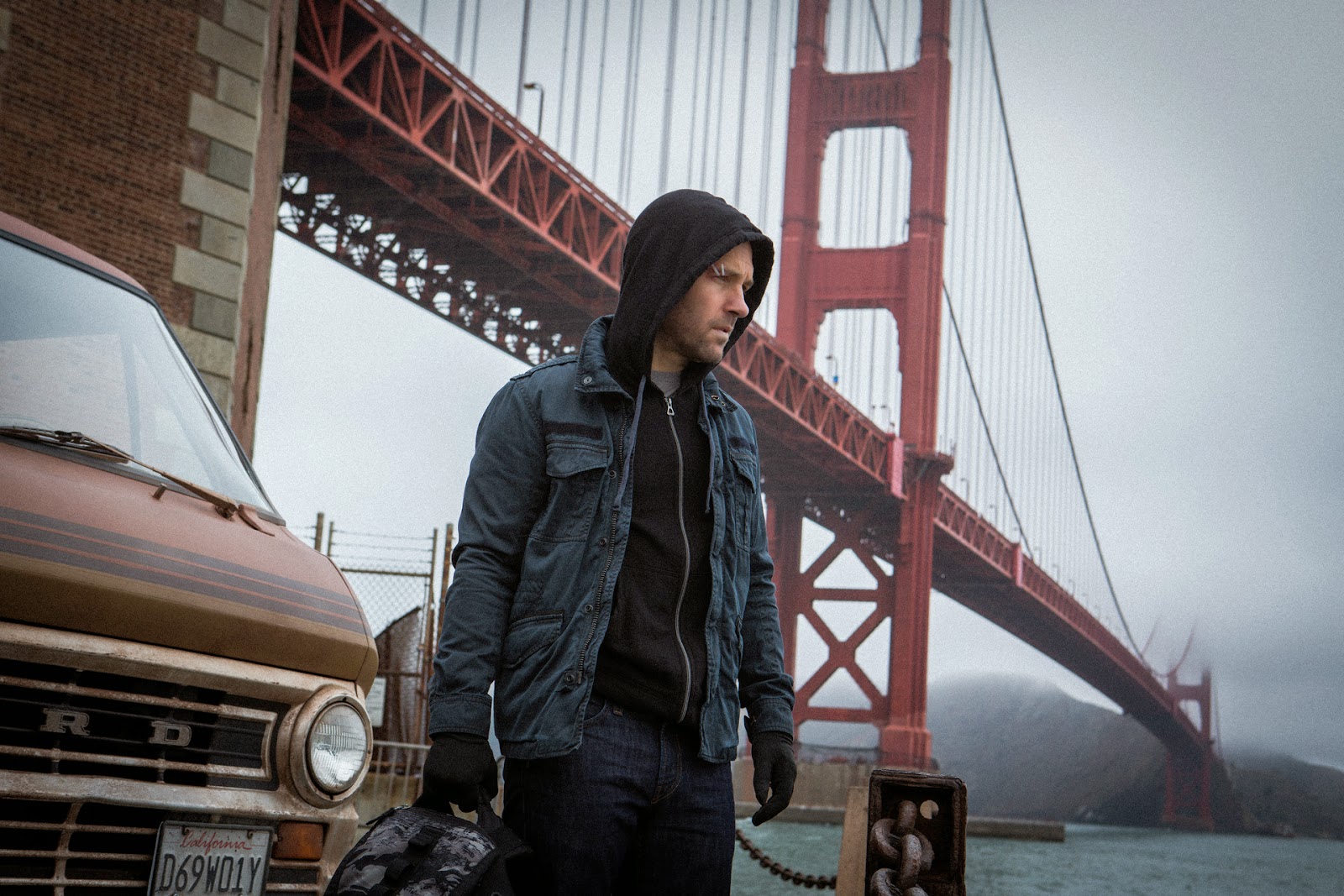
Ant-Man

by George Wolf

A legendary screen icon once coolly remarked, “A man’s got to know his limitations.” Ant-Man seems to know his, and comes equipped with enough style, wit and attitude to move past most of them.

As you might guess, the Ant-Man gets his name from being very small and extremely powerful. But, those qualities only come from wearing the special Ant-Man suit invented by Dr. Hank Pym, super- genius (Michael Douglas). Hank’s been looking for a younger suit-filler, and he hand picks ex-con Scott Lang (Paul Rudd), who’s looking to go straight after serving time for some illegal high tech hacking.

Scott’s in line for the gig because Hank’s original protege, Darren Cross (Corey Stoll), had to go get all evil and shit, trying to sell all their shrink technology to HYDRA.

See, Hank has a history with S.H.I.E.L.D., and living so ironically in the Avengers universe is one of the things Ant-Man gets right. The writing team of Edgar Wright (Shaun of the Dead/Scott Pilgrim), Adam McKay (Anchorman/Step Bothers), Joe Cornish (Attack the Block) and Rudd (Role Models) brings some serious cred, with solid instincts for what this hero needs to stand out in the Marvel lineup.

Ant-Man’s backstory just isn’t that memorable, so the film wisely doesn’t spend too much time trying to chase some universal humanity that isn’t there. Instead, the script brings that wisecracking, wry humor the writers know well and Rudd excels at delivering. He makes Lang instantly likable and Ant-Man easy to root for, even in the midst of some clunky exposition.

Collateral damage from the dude-a-thon? Hank’s daughter Hope (Evangeline Lilly). Sure, you can knock the entire Marvel franchise as one extended bro-down, but this under-written character is so poorly realized it just becomes a distraction, failing to justify the future that seems in store.

Director Peyton Reed (The Break Up) jumps enthusiastically into the superhero pool, providing a number of memorable set pieces and some truly dazzling visuals as the tiny Ant-Man navigates his immense surroundings. A Thomas the Tank set suddenly becoming a gigantic battleground of rolling tracks and cheeky engines? I’m in.

The payoffs get bigger as our hero gets smaller and the origin story fades farther in the rear view. Expect some Avenger cameos, with two extra scenes after the credits start rolling, and enough self-aware vibe to make Ant-Man‘s corner of the Marvel playground seem like a cool place to hang.


Verdict-3-5-Stars


Fright Club: Best Horror Documentaries

Sometimes the truth is scarier than fiction, which is why we decided to look at documentaries this week. From true crime to weird tales, from psychological nightmares to war crimes, we look at the best documentaries the genre has to offer.

5. Room 237 (2012)

Stanley Kubrick’s magnificent film The Shining inspires close examination. Director Rodney Ascher assembled some of the most inspired – obsessed, even – for his documentary on the Kubrick ghost story, Room 237.

It would be too simplistic to take Room 237 as a deconstruction of The Shining, and those hoping to uncover Kubrick’s deeper meaning may be disappointed. But what the film does, it does well. It explores one of cinema’s most exquisite films, using it to encourage the spectator’s active participation in viewing. In doing so, it positions film as an art equal to literature or painting in terms of thematic dissection.

It also opens our eyes to the abject nuttiness of Kubrickian “scholars” – and a documentary always gets extra points if it introduces an audience to an entirely new concept, like that of the Kubrickian scholar.

More than anything, though, Room 237 is a documentation of obsession, and a fascinating one at that. It bares more insight into the act of obsessing than it does on Kubrick’s work itself, but it helps that these people spend all their time analyzing such a great movie. If they were this excited about tessellations or ringworm, well, the movie would have lacked that certain panache.

4. My Amityville Horror (2012)

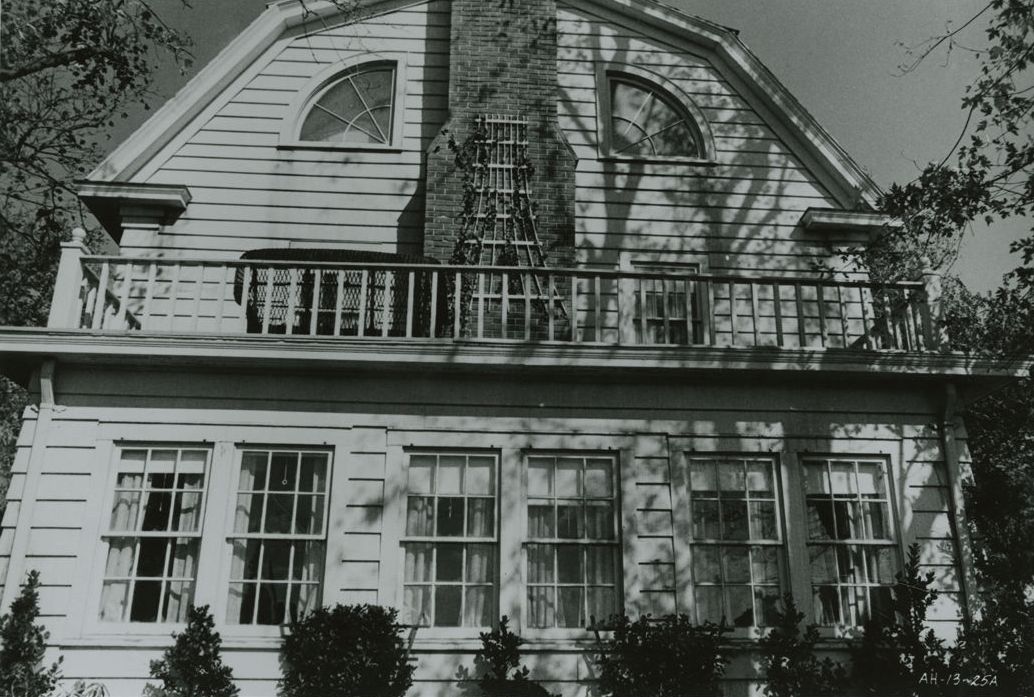
The film begins as yet another tale spun ‘round the Long Island home called High Hopes, where Ronald DeFeo Jr. killed his parents and siblings before the Lutz family took up residence, remaining only 28 days. The Lutzes’ tale informed a fantastically popular book and no fewer than 12 films, as well as plenty of hoax accusations. What sets My Amityville Horror apart is that it quickly becomes a character study of the eldest of the Lutz children, Daniel.

He’s a troubled, heartbreaking, mesmerizing central figure for the film. His stories are so wild and yet he believes them so earnestly that, whether phantasms traumatized his family or whether these tales are the coping mechanism of a young boy subjected to a different kind of abuse becomes hazy and deeply sad.

Director and Amityville fanatic Eric Walter uses a compassionate but unerring focus to illuminate something honestly troubling: the struggle of one of the Amityville horror victims, regardless of the actual horror that went on inside the house.

3. Cropsey (2009)

Cropsey was the Hudson River area summer camp name for a boogeyman. In Staten Island’s Boy Scout camp tales, Cropsey lived in a tunnel system beneath the borough’s abandoned mental hospital. He nabbed children while their parents weren’t looking and killed them out in the woods.

But in Staten Island, the story of Cropsey was true, only his name is Andre Rand.

As filmmakers Barbara Brancaccio and Justin Zemen dig into this story of a convicted sexual predator/mental hospital orderly suspected in the disappearances of as many as seven children, they pull us through fact and myth, expertly choosing news footage to anchor modern interviews.

Their clever approach combines the best of any serial killer drama with the haunting reality of Capturing the Friedmans. They explore the investigation of a serial child killer, all the while exposing the human foibles, mob mentality, and lurid fascination that makes you wonder, even though they clearly have a very bad man, do they have the right one?

2. The Act of Killing (2012)

Surreal, perverse, curious and horrifying, The Act of Killing demands to be seen.
It is anchored in the atrocities committed during the overthrow of the Indonesian government in 1965. Paramilitary death squads and ruthless gangsters captured, tortured and killed at will, all under the guise of exterminating “communists.” Over one million Indonesians lost their lives, and those responsible continue to gloat about their actions from a seat of power they still enjoy today.

Co-director Joshua Oppenheimer met with some of the most famous death squad leaders and made them a distasteful yet ultimately brilliant offer: would they re-enact their savagery on camera?

The result is mesmerizing, can’t-believe-what-I’m-seeing-stuff.

Recalling the finest of their work, The Act of Killing is unforgettable. It calls to mind past cruelty, an Orwellian present and an uncertain future, emerging as essential, soul-shaking viewing.

1. The Nightmare (2015)

An effective scary movie is one that haunts your dreams long after the credits roll. It’s that kind of impact most horror buffs are seeking, but even the most ardent genre fan will hope out loud that Rodney Ascher’s documentary The Nightmare doesn’t follow them to sleep.

His film explores sleep paralysis. It’s the phenomenon that inspired Wes Craven to write A Nightmare on Elm Street. It’s a clear creative root for Insidious, Borgman and scores of other horror movies. But it isn’t fiction. It’s a sometimes nightly horror show real people have to live with. And dig this – it sounds like it might be contagious.

Ascher’s a fascinating, idiosyncratic filmmaker. His documentaries approach some dark, often morbid topics with a sense of wonder. His films never seem to be pushing an agenda, he doesn’t seem to have made up his mind on his subject matter. Rather, he is open which, in turn, invites the audience to be open.

We spend a great deal of time watching horror movies, and I cannot remember an instance in my life that I considered turning off a film for fear that I would dream about it later. Until now.

Listen to the whole conversation on our FRIGHT CLUB podcast.

Anyone Seen My Rope?

The Gallows

by Hope Madden

Ever have that dream where you’re trapped inside your old high school? I think maybe Travis Cluff and Chris Lofing have. They work through their issues with the theatrical horror show The Gallows.

The writing/directing duo resort to found footage to tell their tale. What you’re watching is Nebraska police evidence – so kind of the cops to edit together multiple different camera sources for us! The footage captures the horrific events surrounding the high school production of The Gallows.

First, the good news: You don’t have to actually watch a high school play. Whew!

Twenty years ago a boy died during a performance. To honor that anniversary, the school puts on the same damn play. Now that’s just in poor taste. As retribution, someone or something terrorizes the kids who break in to the school the night before the performance to bust up the sets. Scamps!

Like the surprise fun of this summer’s Unfriended, The Gallows taps some insightful ideas concerning modern teens – like that they are, on average, stupid enough to film themselves committing felonies. This film also has some fun at the expense of drama kids, as well as those kids who believe they are way too cool for high school theater.

The original trailer for this film was a scream, and the scene it depicts remains the film’s high water mark in terms of terrifying fun. Set decoration is spooky and the brisk 81 minutes offers a goodly number of jump scares.

Performances are generally solid, too. Pfeifer Ross, in particular, strikes the perfect note as the perky, earnest drama kid, while Ryan Shoos is equally on-mark as the insecure, douchey jock. A couple of supporting turns are fun as well in a movie that hopes to quickly create a believable high school microcosm before it turns into a predictable if entertaining riff on some familiar horror ideas.

It’s better than going back to high school, that’s for damn sure.

Verdict-2-5-Stars

Amy Sings the Blues

Amy

by Hope Madden

It takes a real gift for storytelling to take a Behind the Music tale – rags to riches to tragedy – and turn it into a riveting, relevant, surprising film. Documentarian Asif Kapadis (Senna) has done just that with the vital and heartbreaking film Amy.

For his picture of Amy Winehouse he collects hundreds of interviews and sifts through countless bits of personal footage to craft more than just a powerful look at a self-destructive talent. The footage is so personal, the interviews so honest, we become voyeurs as a bawdy, vivacious young talent finds her own voice, indulges her dangerous appetites, spirals out of control, and finally succumbs to her demons.

That lens – the voyeur’s eye view – is a pivotal component to the success of Kapadis’s film. While Winehouse’s story is eerily similar to so many others, it may have been the utterly public self-destruction that sets her story apart. We watched it happen, and to a great degree, we participated. Kapadis is asking us to do it again.

Winehouse’s story certainly echoes too many others. Dead at 27, she joins a prestigious if tragic club: Jimi Hendrix, Kurt Cobain, Jim Morrison, Janis Joplin. Like those musical supernovas, Winehouse struggled with depression, drug abuse, family issues, and a string of bad decisions.

Too few people knew her before she was a Jay Leno punchline, but the doc takes us back to her throaty pre-teen singalongs with buddies, her earliest club dates, to scenes with the same group of friends from grade school onward. We see the raw, shocking potential in this voice, something that echoed both jazz divas of days gone by as well as the most contemporary hip hop, and are reminded of the breathtaking intimacy of her lyrics.

A crafty filmmaker, Kapadis knows what to do with the collection of material. He understands the complexity of the Winehouse story. Though he implicates those whose influence helped determine the chanteuse’s fateful trajectory – a dirt bag junky husband, an emotionally disinterested mother, a manipulative, self-serving father, a short sighted tour manager, and a public thirsty for controversy – he never paints Winehouse as a true victim.

Like many hard living performers of remarkable talent before her, Amy Winehouse was a train wreck. Asif Kapadis respects that. You should, too.

Verdict-3-5-Stars

Villain Wanted

Minions

by George Wolf

We can all agree the minions were the best thing about the Despicable Me films, right? The little yellow orbs brought an inspired zaniness that elevated the otherwise average outings, becoming a big hit with both kids and parents in the process.

So why wouldn’t Minions, a prequel of their very own, be a thoroughly delightful installment that builds on all that promise?

Well……

Mainly, it just doesn’t feel worthy of the opportunity. A new story of how the minions hooked up with Gru presents deliciously wide open possibilities, but the ones the film explores land more like an early draft that needs re-tooling.

Geoffrey Rush starts things off well, narrating a look at the minions through history and the search to fulfill their destiny: serving the most nefarious villains they can find.

Eventually, the tale settles in 1968, when a minion search team (Bob, Stuart, Kevin) hitches a ride from a bank robbing family (led by Michael Keaton and Alison Janney) to the big villainy convention in Orlando. Once there, the 3 impress the infamous Scarlett Overkill (Sandra Bullock) enough to become part of her devious plan to steal the Queen of England’s crown.

The Queen of England? Yeah, it’s a strange adventure that’s a bit skimpy on the charm.

With their unique build and gibberish language, the minions are sight gags just waiting to happen, and their screen time in the DM films took fine advantage. Minions just doesn’t, leaving you scanning the background quite often, searching in vain for some subtle silliness to pump up the fun. This film is more interested in spoofing music from the era (especially during the post credits scene), which just isn’t a viable trade off.

Bullock’s vocal work is also a letdown, again proving that successful voice acting is a distinct talent. Jon Hamm has that talent, and his enjoyable turn as Scarlett’s husband Herb only reinforces the memorable edges missing in Bullock’s performance.

Still, kids will love Minions, because the minions are easy to love. But like the Penguins of Madagascar, maybe they weren’t quite ready for a solo album.


Verdict-3-0-Stars


Hope Madden and George Wolf … get it?