Nut Job 2 is here, which immediately raises a question.
Was there a Nut Job 1?
There was, in 2014, and despite being completely forgettable it raked in enough cash to warrant a sequel. Plus, there’s a third installment already on the docket whether the franchise deserves it or not.
It doesn’t, as Nutty by Nature offers another uninspired, completely forgettable adventure that can’t find the depth to render its political themes effective.
We catch up with Surly the squirrel (voiced by Will Arnett) and his rodent friends living large off the forgotten inventory of the now-abandoned nut shop from the first film. Andi the squirrel (Katherine Heigl) thinks they all are getting too fat and lazy, but when a corrupt mayor (Bobby Moynihan) levels their habitat to build a theme park, the gang must work together to provide a successful…ahem…resistance.
Despite a couple scene-stealing moments from Maya Rudolph (Precious the Pug) and Jackie Chan (Mr. Feng, the Weapon of Mouse Destruction), director/co-writer Cal Brunker (Escape from Planet Earth) offers precious little in the way of personality, humor or resonance. Music sequences cranked up to dialogue-obscuring volumes are no help.
Just last year, Zootopia set the bar for socially conscious animation very, very high. While it’s commendable that Nut Job 2 has similar ambitions, the result will be appreciated only by the youngest viewers who just like watching the silly animals.
There are a lot of things James Wan’s 2013 hit The Conjuring got right. Leaning toward practical effects over CGI, casting high-quality talent, and digging into an allegedly true story – all good choices that, matched with his eye for framing and skill with mounting dread, led to a chilling and memorable flick.
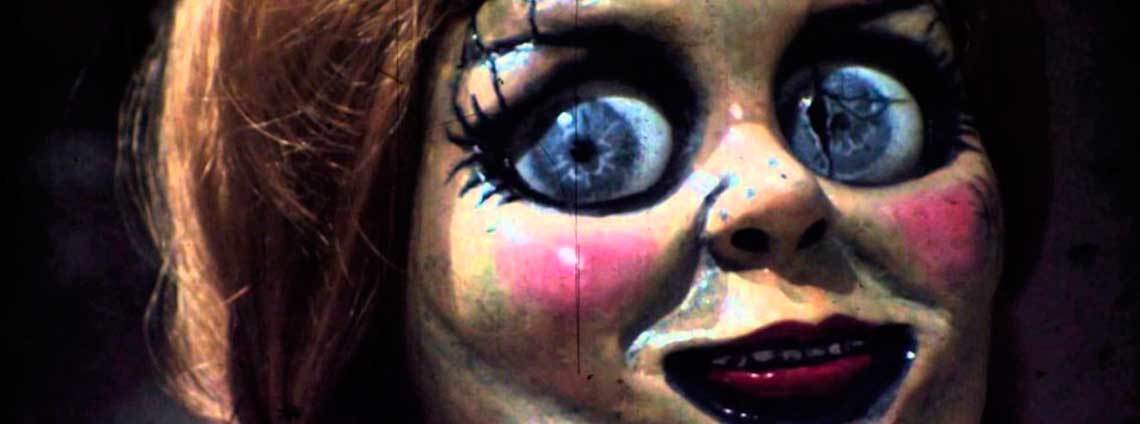
There’s also a creepy doll, the element that seems to be driving this unexpected franchise and the only item from the original film that made the leap to Annabelle: Creation.
You remember her – she terrorized a young family, and later a pair of nursing students before being locked in a glass case in that creepy room at Ed and Lorraine Warren’s house.
But did you ever wonder what kind of demonic hijinks created her in the first place? Or do you just find yourself in the mood to watch orphans being persecuted? Either way, may I introduce you to Annabelle: Creation?
Director David F. Sandberg (Lights Out) does what he does best, relying on good, old-fashioned jump scares. If that’s your bag – and you don’t get side tracked with nit-picky things like how utterly ignorant writer Gary Dauberman is of actual Catholicism (so maybe he shouldn’t have chosen a Catholic orphanage!) – then this film may be for you.
Years after a doll maker and his wife lose their precious daughter, they accidentally conjure up a demon to live in the single ugliest doll any toy maker has ever seen fit to make.
Bad choice.
Worse choice? Inviting those orphans to move in.
Welp, empty-headed horror it is. And there is something to be said for that in a mid-August slump. This is the sequel to a weak film, itself a sequel of sorts to the kind of movie that felt like a one-off.
It seems unlikely a franchise was the expectation back when Conjuring hit screens in ’13. Since then, filmmakers have scrambled to cobble together a universe of supernatural spookiness to spin off and connect. (Look closely at the picture from Sister Charlotte’s convent – any of those nuns look familiar?)
Sandberg offers little in the way of originality. (He’s clearly a pretty big fan of Wan’s Insidious.) But there are jumps aplenty and a couple of very freaky images in the third act.
Because if you can’t have a creepy nun, may as well make due with a disfigured mother and a scarecrow.
Australian campers find trouble in what amounts to Eden Lake meets Wolf Creek.
If you missed either of those two deeply troubling horror classics, you should watch them now. Right now, seriously.
Great, right? Terrifying, eh? Makes you kind of want to see what writer/director Damien Power has in store with his feature film debut, Killing Ground.
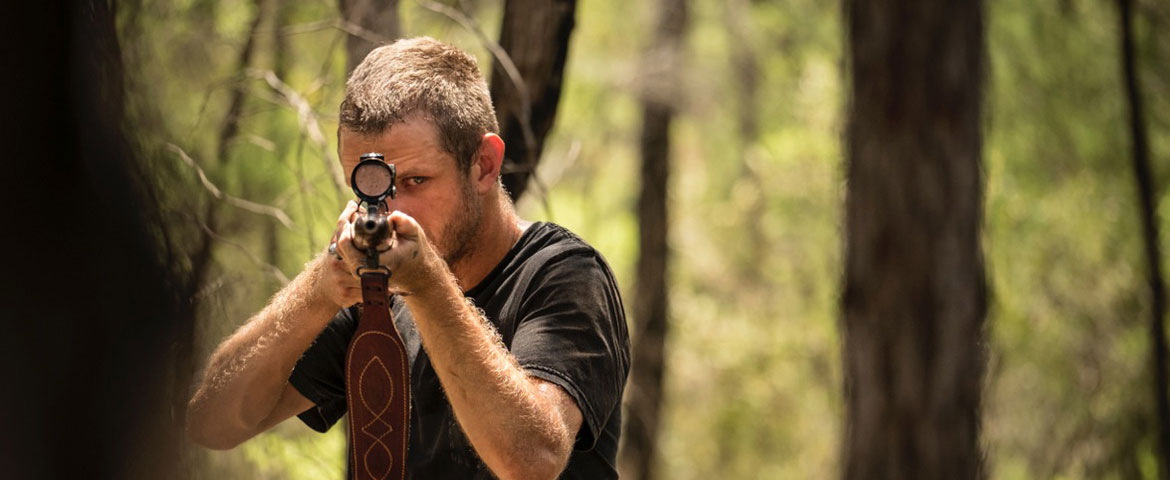
He starts off predictably enough: Sam (Harriet Dyer) and her boyfriend Ian (Ian Meadows) are headed to an out-of-the-way campsite Ian remembers from his childhood. They stop for directions, are warned off by a creepy Aussie with a barking pit bull, go anyway.
Right.
They arrive and are disappointed to see that they’ll be sharing the site with another group – based on the parked SUV and the pitched tent. But where are these other campers?
Though Power doesn’t explore a lot of new ground with this campsite horror flick, his approach is so authentic and spare that it breaks free of cinematic hyperbole and leaves you seriously wondering why in the hell anybody camps – anywhere, but especially in Australia.
His narrative builds tension by cross-cutting between the tale of the camping couple and the story of the family whose vacant tent begins to really worry Sam and Ian come nightfall.
From The Babadook to Wyrmwood to The Loved Ones, Australia’s horror output has been outstanding in recent years. Earlier this year, newcomer Ben Young rocked cinemas with his low-budget Aussie horror Hounds of Love.
Killing Ground isn’t quite ready to join those ranks, mainly because, at its core, it’s an unremarkable story – although a few clever twists and choices keep it fresh enough.
The tale is well told and beautifully performed. Aaron Pendersen and Aaron Glenane, in particular, craft believable, dimensional, terrifying characters.
A satisfying power struggle and the provocative use of ambiguities that refuse to offer a tidy ending help the film hang around after credits role.
When my son was about 8, our eye doctor retired and we inherited a newer, better version. The new eye doctor was explaining some of the specifics of Riley’s condition to him, and mentioned that he had astigmatism. To which Riley naturally replied, “And how is that related to stigmata?”
Perplexed and maybe a little frightened, our ophthalmologist looked to me.
I explained to the boy:
“Well, there’s a lot less blood.”
Why was my 8-year-old already familiar with the term stigmata – the spontaneous appearance of wounds corresponding to the wounds of the crucifixion? Well, why isn’t yours?
I myself was trained in the gorier aspects of the Catholic faith when I was very young, so why not my boy? Though I doubt I could provide the appropriate tutelage on the darker edges of Catholicism that I’d received from Sister Cleofa.
Sister Cleofa was my first grade teacher. Back in those days, twins were separated in school to encourage individual development, so my sister Joy was across the hall in Sr. Angela’s class.
Ah, Sr. Angela’s – the envy of all Sr. Cleofa’s pupils. Sr. Angela was youngish. She wore the more lightweight habit, sometimes in a jaunty pale blue. She played acoustic guitar. She smiled routinely.
Sister Cleofa, she was not.
No, my teacher wore the full black garb, boasted heavy facial hair, and never smiled once. (I promise you I could not vouch for the fact that she had teeth at all, though I would predict fangs.)
And while the 6-year-olds across the hall drew pictures of angels and learned folk gospel tunes, we studied the Stations of the Cross.
If you’re unfamiliar, these are the pivotal steps of Christ’s condemnation, death, and – if you’re brave enough to make it through the tale of innocent blood and carnage without sobbing so loudly you drown out that final station – resurrection.
My mustachioed teacher terrified us all. Catholicism had been utterly run of the mill for me up until then: my dad worked for the Catholic church and my mother was deeply devoted in an unadorned, tight lipped way. We gave up meat during lent. We genuflected as we entered pews. We made the sign of the cross with holy water. We never missed Mass.
Even when we went on vacation, my dad may not have been able to find a public restroom, but by God he’d find a Catholic church.
But Sr. Cleofa’s obstinate devotion to the darkest, ugliest, most purple robed and mysterious elements of the religion began to fester in my young mind. And though Satan was never studied outright, he always seemed present in her teaching, hiding just beyond all that blood, misery and fear. Maybe that’s why the great devil worship scare of ’88 felt so natural, obvious even.
What great devil worship scare of ’88, you ask?
You probably didn’t know what stigmata meant, either.
Let me introduce you to my hometown sheriff, Dale Griffis. In the Eighties, Griffis was considered an expert in Satanism. I swear this is true. Look it up.
He claimed that the rural counties of Ohio were home to dozens of covens, and that ritualistic human sacrifice was commonplace out among our heartland corn rows.
A lot of people think the Necronomicon is a pretend anti-bible used in movies like Evil Dead, but Griffis claimed to own a copy.
He witnessed on all the talk shows – Geraldo, in particular. He even appeared on 20/20 at least once. Naturally, this suggested to us in Tiffin that our hometown and its outlying agriculture was the hotbed of Satan.
And there was proof!
Rossford, Ohio’s telephone exchange is 666 – I swear to God!
The streets in the town of Gallipolis take the form of sixes, and townsfolk chase outlanders to the town center for sacrifice. (This is unverified, but so obvious if you know anyone from Gallipolis, which you probably do not.)
Plus, our town founder was killed as he camped in what would one day be called Hedges Boyer Park. He was skinned alive, his bones all that was left of him, because he’d disturbed a coven.
(Note: This may not be true. My brother-in-law Brett told this story to my sister and me at bedtime one night. This makes him a likely liar, and an undeniably poor babysitter.)
OK, maybe we were looking for evidence where none existed, but we were only following Griffis’s lead.
His tales of rural demons were eventually uncovered as an overripe paranoid frenzy. For a truly horrific example of the damage done, though, Griffis was the prosecution’s “expert on the occult” in the trial of the West Memphis Three – you remember, those teenage boys wrongly convicted of child murder?
The court ruled they were Satanists, based largely on expert witness testimony, but would later find that they’d been wrongfully imprisoned for 18+ years based on superstition, ignorance and poor police work.
Between Griffis’s stories and Cleofa’s grim teachings, I’m lucky all I have to show for their influence is a keen interest in horror films and a son with unusual questions about vocabulary.
I’m lucky I didn’t end up with repressed memory syndrome or some other lasting stigma.
Now, how again is that related to stigmata?
Thanks to James Garze for the kick ass illustration!
The film community lost another of its greats, and we want to celebrate the wonderful and the weirdly watchable of Tobe Hooper.
Hooper’s ability to pervert social expectations, his unsurpassed gift for creating terrifying atmospheres among America’s backwoodsfolk, and his nonchalantly visceral presentation made every film an experience worth attempting. Not every one paid off, but those that did left a nasty mark.
5. Eaten Alive (1976)
We open on a backwoods Florida whore house. A bewigged young pro loudly protests the request of her new customer, Robert Englund, who plays a hillbilly who prefers backdoor action. She’s cast out of the cathouse with nowhere to go and nothing to do with that ridiculous wig, until kindly maid Ruby (Betty Cole, wardrobed in a traditional maid’s uniform because hookers are such sticklers about the way their help looks) offers her a stack of cash so she can afford a room at the nearby motel.
Unfortunately, the guy who runs that motel is a sadistic pervert who feeds his problematic borders to the gator out back.
Hooper’s follow up to The Texas Chainsaw Massacre is a lurid affair once again focused on delicious interlopers who misunderstand the customs of the locals.
Eaten Alive tries more openly at humor, mostly failing to find laughs (other than the ironic sort) but succeeding in creating an unsettling atmosphere for the carnage. It’s a B-movie, the kind that screams for a drive-in theater and a tub of greasy popcorn, but there is a time and a place for those movies, too.
https://www.youtube.com/watch?v=MSRpivA1mgo
4. Lifeforce (1985)
A naked alien vampire woman sucks seemingly willing men dry on her first trip to London.
Nope, Lifeforce is not a porno. It’s a silly horror film, especially if you come in expecting the kind of visceral gut punch Tobe Hooper tends to deliver. But as a SciFi guilty pleasure (and mash note to Hammer’s Quatermass and the Pit), it’s a bit of fun.
Mathilda May sure is naked. She plays one of three aliens saved from an otherwise decimated space ship found hiding in the tail of Halley’s Comet by European astronauts. Mysteriously, that European ship meets its own disaster before safely dropping off the three aliens on earth.
But wait! Don’t open her case!!
Of course they open her case, and she and her two henchmen begin sucking the life force from all they can find, creating their own kind of Brit zombipocalypse in one of the film’s nuttiest and greatest scenes.
The movie is a mess that lacks any hint of the characteristic Tobe Hooper vision, but it is more than peculiar enough to be compelling.
3. The Funhouse (1981)
Hooper creates a creepy atmosphere on the Midway with this periodically tense freak show. Double dating teens hit the carnival and decide to spend the night inside the park’s funhouse. What could go wrong?
Well, as would become the norm in every carnival-themed horror film to come, the ride is the secret hideaway of a carny’s deformed and bloodthirsty offspring. He hides his misfortune beneath a Frankenstein mask, but he can’t contain his violent rage when teased. (Not that it’s ever wise to pick on a premature ejaculator, particularly in a horror film.)
Sure, The Funhouse follows all the protocol of a slasher set inside an amusement park, and is, for that reason, somewhat predictable. Still, Hooper delivers pretty well. He develops a genre-appropriate seediness among the carnies, as well as an unwholesome atmosphere. He also pays open homage to the genre throughout the picture. (As a way of paying him back, the genre would rip off this film for years to come – most blatantly in 2006’s Dark Ride.)
It’s hard not to find Hooper’s post-Texas Chainsaw Massacre films lacking. This one’s no masterpiece, but it is a tidy, garish, claustrophobic and unsettling piece of indie filmmaking.
https://www.youtube.com/watch?v=BMoQQ7OsX5M
2. Poltergeist (1982)
This aggressive take on the haunted house tale wraps Hooper’s potent horrors inside producer Steven Spielberg’s brightly lit suburbia. In both of Spielberg’s ’82 films, the charade of suburban peace is disrupted by a supernatural presence. In E.T., though, there’s less face tearing.
Part of Poltergeist’s success emerged from pairing universal childhood fears – clowns, thunderstorms, that creepy tree – with the adult terror of helplessness in the face of your own child’s peril. JoBeth Williams’s performance of vulnerable optimism gives the film a heartbeat, and the unreasonably adorable Heather O’Rourke creeps us out while tugging our heartstrings.
Splashy effects, excellent casting, Spielberg’s heart and Hooper’s gut combine to create a flick that holds up. Solid performances and the pacing of a blockbuster provide the film a respectable thrill, but Hooper’s disturbing imagination guarantees some lingering jitters.
1. The Texas Chainsaw Massacre (1974)
Not everyone considers The Texas Chainsaw Massacre a classic. Those people are wrong. Perhaps even stupid.
Tobe Hooper’s camera work, so home-movie like, worked with the “based on a true story” tag line like nothing before it, and the result seriously disturbed the folks of 1974. It has been ripped off and copied dozens of times since its release, but in the context of its time, it was so absolutely original it was terrifying.
Hooper sidestepped all the horror gimmicks audiences had grown accustomed to – a spooky score that let you know when to grow tense, shadowy interiors that predicted oncoming scares – and instead shot guerilla-style in broad daylight, outdoors, with no score at all. You just couldn’t predict what was coming.
He dashes your expectations, making you uncomfortable, as if you have no idea what you could be in for. As if, in watching this film, you yourself are in more danger than you’d predicted.
But not more danger than Franklin is in, because Franklin is not in for a good time.
So, poor, unlikeable Franklin Hardesty, his pretty sister Sally, and a few other friends head out to Grampa Hardesty’s final resting place after hearing the news of some Texas cemeteries being grave-robbed. They just want to make sure Grampy’s still resting in peace – an adventure which eventually leads to most of them making a second trip to a cemetery. Well, what’s left of them.
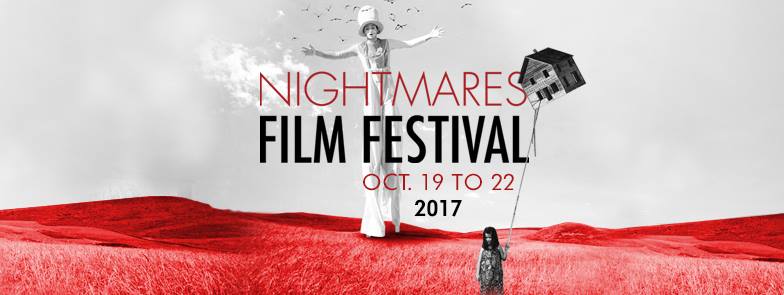
For filmmakers and fans alike, Nightmares Film Festival (Oct. 19 to 22) is making the number 13 lucky again.
The renowned genre and horror festival, watched by critics and ranked first on FilmFreeway by filmmakers, today revealed the first thirteen films and screenplays to be included in its 2017 worldwide program of “#BetterHorror.”
The dazzling list includes feature-film world premieres, a 3D feature, shorts from the director of Turkish horror feature Baskin and a Dr. Who writer, and a horror screenplay by a poet laureate finalist from Michigan.
“We are tradition-rich at Nightmares, and this is one we’re always excited about,” said NFF Co-founder and Programmer Jason Tostevin. “Each year we unveil thirteen early selections as a way to give Nightmares attendees a taste of the program we’re building to present in October.”
The 2017 Early 13 is composed of three features, eight shorts and two screenplays. Highlights include:
NFF’s first-ever 3D feature presentation, Found Footage 3D, produced by Texas Chainsaw Massacre co-creator Kim Henkel.
The world premiere of controversial feature Flesh of the Void, “The Ring video, if it were released on the Deep Web.”
One of the first-ever screenings of horror comedy short Blood Shed, from director James Moran (Cockneys Vs. Zombies, Dr. Who).
A rare screening of Can Evrenol’s (Baskin) early short, To My Mother and Father.
“We’re particularly proud of the diversity represented by the selections,” which include women, people of color, international and homegrown filmmakers, said co-founder Chris Hamel. “The horror community is about inclusion, and for us, that means making sure we include all kinds of voices.”
Nightmares Film Festival is held every October in Columbus, Ohio at the world-renowned Gateway Film Center, named a top 20 North American art house by Sundance. There, one of the last dedicated movie projectionist teams ensures every Nightmares film looks and sounds its best as exuberant fans – affectionately called “The Sleepless” for marathoning the program – mingle with filmmakers from around the world.
Both VIP and festival passes for Nightmares will become available on August 13 on the Gateway Film Center website, www.GatewayFilmCenter.org.
COMPLETE LIST OF NIGHTMARES FILM FESTIVAL “EARLY THIRTEEN”
FEATURES
WORLD PREMIERE: Flesh of the Void, midnight feature, directed by James Quinn, NFF Best Midnight Short winner in 2016.
Found Footage 3D, horror feature, directed by Steven DeGennaro and produced by Texas Chainsaw Massacre’s Kim Henkel – will be presented in 3D at NFF 17.
WORLD PREMIERE Bong of the Living Dead, horror feature, directed by Columbus-based Max Groah and four years in the making.
SHORTS
To My Mother and Father, horror short; an early, rarely-screened short by Baskin director Can Evrenol.
Dickeaters, midnight short, directed by Aaron Immediato.
The Cure, midnight short, directed by Slamdance winner and Columbus-based filmmaker Mike Olenick.
Blood Shed, horror comedy short, directed by James Moran (Cockneys vs. Zombies, Dr. Who) and co-written by Cat Davies (Connie).
La Sirena, thriller short, directed by Columbian filmmaker Rosita Lama Muvdi.
Creswick, thriller short, directed by Australian-Japanese filmmaker Natalie Erika James.
Your Date Is Here, horror short, directed by Todd Spence and Zak White.
The Naughty List, horror comedy short, directed by Paul Campion (The Devil’s Rock) and adapted from the story by best-selling horror novelist Brian Keene (The Rising).
SCREENPLAYS
The Knife Association, feature screenplay by Ron Riekki, finalist for Poet Laureate of Michigan’s Upper Peninsula.
The Wood, short screenplay, written by B. Maddox.
Hope Madden and George Wolf are thrilled to be part of the judging panel for Nightmares Film Festival, a nationally-renowned horror and genre film festival dedicated to inspiring horror filmmakers and promoting #BetterHorror. Its 2017 edition will be held Oct. 19 to 22 in Columbus, Ohio at the celebrated Gateway Film Center.
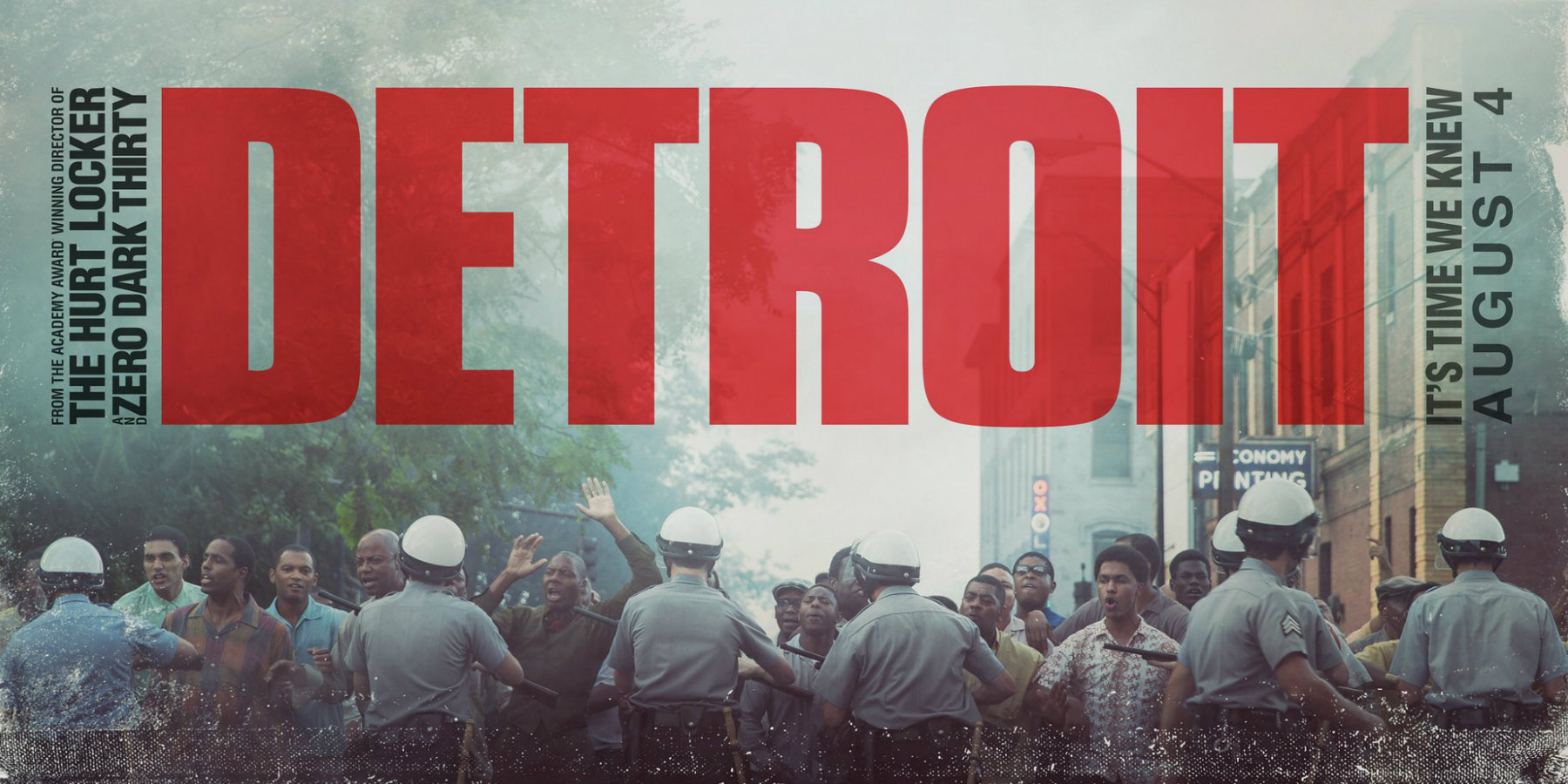
Detroit burns with a flame of ugliness, rage and shame that simmers well before it burrows deep into you. It is brutal, uncomfortable, even nauseating. And it is necessary.
Director Kathryn Bigelow and writer Mark Boal, the Oscar-winning duo behind The Hurt Locker and Zero Dark Thirty, bring craft and commitment to the story of Detroit’s infamous Algiers Motel Incident.
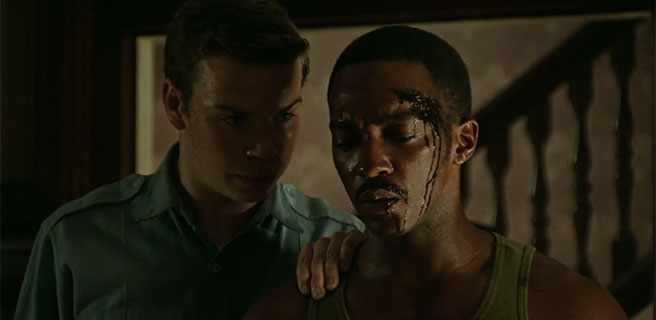
In July of 1967, during days of rioting from civil unrest, a riot task force raided an annex of the Algiers amid reports of sniper fire coming from the building. After hours of beatings and interrogation, three young African American men were dead.
Bigelow and Boal wrap this tragedy in their meticulous brand of storytelling, and it bursts with an overdue urgency. Layering timelines, characters, and bits of archival footage, the filmmakers achieve the stellar verite effect that has become their calling card. We become part of these events through an authenticity that brings terror to you, takes the breath from you and quickens your pulse. In conveying atrocities now decades old, the film builds its lasting power from how it makes us confront our present while depicting our past.
John Boyega (Star Wars: The Force Awakens) carries the film’s soul with thoughtful nuance as Melvin Dismukes, the black security guard at the scene for assistance. In one of the film’s most quietly powerful scenes, the gravity of his situation begins to hit Dismukes, and he quietly trembles. It’s one of the many instances the film deepens its feeling by letting events speak for themselves.
Ironically, it is precisely thesubtle and organic nature of Detroit’s truths that call attention to the few moments of heavy-handed overreach, more from surprise than their effect on the overall narrative.
With a chilling, award-worthy turn, Will Poulter (The Revenant) makes the sadistic Officer Krauss all the more terrifying for how casually his violence erupts. There is excellence throughout Bigelow’s ensemble cast, and from Anthony Mackie’s embodiment of African American veterans denied the very rights they fought for to Algee Smith (The New Edition Story) as an aspiring R&B singer whose life is forever altered, sharply defined characters are revealed regardless of screen time.
Concerns about the voyeuristic nature of running this brutality through a white filmmaker’s lens are legitimate, but Bigelow also delivers a level of sensitivity that is palpable and frankly surprising for a tale so inherently savage. The strive to get this right is felt in nearly every frame, down to the end title card explaining the need for dramatic license.
Intimate in scope but universal in reach, Detroit shows a shameful part of the American experience, one rooted in white power and black fear, that continues to be perpetuated.
Click HERE to joins us in the Screening Room to break down Detroit, The Dark Tower, Kidnap, An Inconvenient Sequel: Truth to Power, Landline and what’s new in home entertainment!
Let me admit this from the start – I may have liked Kidnap better than I should have. Why? Well, I saw it immediately after The Dark Tower, and it is Citizen Kane compared to that festering pile.
In this film, Haley Berry plays Liam Neeson. It’s her second time in the role, actually.
Back in ’08, Neeson – with help from the pen of Luc Besson – revolutionized film with the (wildly over-appreciated) genre flick Taken. Mid-budget “I have a particular set of skills” thrillers have littered the cinematic landscape since, wreaking righteous vengeance and prolonging the careers of middle aged actors everywhere.
In 2013, Berry made The Call, which was not a bad B-movie thriller and her first turn as Liam Neeson. Kidnap sees the Oscar winner playing a loving mother whose 6-year-old (a very sweet Sage Correa) is nabbed from a busy park. Mom sees the napper shoving her son into a car, she jumps in her minivan and the pursuit begins.
The film amounts to a 90-minute car chase with one unreasonably attractive mom behind the wheel. Several of the action sequences are interesting and flashy (for a film with this level of budget – do not go into this hoping for Fast and the Furious: Minivans).
Writer Knate Lee can’t really justify the lack of cell phone or police presence, but he does what he can. Meanwhile, director Luis Prieto ably assembles car chases and panicked driver close ups, then competently shifts tone for a final act that toes the line between thriller and horror.
There’s nothing exceptional about Kidnap. Not one thing. You’ll forget it existed as quickly as you forgot The Call was ever made. But for a getting-the-phone-bill-paid flick, it’s not too bad.