Yes, the faithful believe Jesus sacrificed himself for us – to clear our sins with God. But would he have sacrificed us for the sake of reverence?
Martin Scorsese’s elegant pondering on faith, Silence, enters the mind of Jesuit priest Fr. Rodrigues (Andrew Garfield) as he and his colleague Fr. Garrpe (Adam Driver) venture into 1640s Japan in search of a mentor priest lost to a violently anti-Catholic government.
Gorgeous, imposing shots paint the image of the vast and dangerous beauty of God’s world and the small if admirable people trying to survive there. Garrpe and Rodrigues first hide with faithful Japanese villagers, losing their primary mission while serving those oppressed Christian Japanese longing for signs of the church.
Garfield and Driver cut nicely opposing images, Garfield the sweet-faced picture of buoyant faith, Driver the more skeptical, impatient believer. While it’s Garfield whose story we hear, Driver’s counterpoint is a required piece of this crisis of faith driving the film and his performance delivers something painful and honest.
Scorsese’s abiding interest – some might say preoccupation – with faulty men and their tenuous grasp on Catholic faith has flavored many a film, though rarely as thoroughly as this one. What is faith? What is it, really? And who’s to say what harm Jesus would have you do to protect him?
The film may take itself too seriously (though, this is hardly light fare). Any possible misstep Scorsese can mostly overcome with meticulous, near-magical craftsmanship, though there are a handful of hang ups that sometimes break the seduction of the project.
These are Portuguese priests in 17th Century Japan speaking English (why?), and mainly with British/Irish accents (Liam Neeson plays lost Fr. Ferreira). (At least Driver gives the Portuguese accent a shot.)
And though Garfield is a genuine talent, this role requires something perhaps uglier than what he has to offer.
Mainly, though the film’s resolution is both nuanced and satisfying, there are certain answers, certain signs that feel more like movie magic than spiritual presence. They are minor flaws in a beautiful if ponderous work, but they keep Silence from joining Scorsese’s true masterpieces.
Writer/director Joshua Locy has crafted a unique, poignant drama with Hunter Gatherer.
The film succeeds in part due to Andre Royo’s stunning portrayal of Ashley, a man recently released from prison who wants to re-establish himself in his former girlfriend’s life. Fully inhabiting his character, Royo has chemistry with everyone he shares the screen with. His chemistry with George Sample III is especially winning – Sample’s Jeremy/“Germs” as the straight man to Royo’s boisterous Ashley.
Sample brings a sweetness to his character – especially apparent in Jeremy’s interactions with Dr. Merton (Jeannetta Arnette), a doctor involved in the medical science research for which Jeremy is a paid volunteer.
The film’s subtle comedy is quirky, but it works well alongside the more dramatic moments. A scene in which Ashley searches for a backpack could be mundane, but is enlivened by the funny interaction with the store clerk. The comedy is necessary, as the film quietly moves toward darker moments.
Though Ashley appears the eternal optimist, it’s clear as the film moves forward he is struggling to find his way – a depression lurks underneath the surface. Ashley jokes to hide the pain he feels as he tries to find connections with the people in his life.
It would be remiss not to mention Kellee Stewart’s noteworthy performance as Nat, the woman with whom Ashley spends most of his time. Her character’s sensitivity is much needed in Ashley’s life, but he takes her for granted as he continues to focus on rekindling his relationship with his ex, Linda (Ashley Wilkerson).
As a directorial debut, Locy’s film is not without problems, but as a moving character study, this is a film that will stick with viewers for its touching take on love and friendship.
The jury on Ben Affleck’s skills as a filmmaker came in about one and a half films ago. After Gone Baby Gone and halfway through The Town, it was clear this guy can direct. Argo hammered that point home but good. And don’t forget that Oscar for co-writing Good Will Hunting.
But after all that’s good about Live by Night, seeing Leonardo DiCaprio’s name in the producer credits instantly makes you wonder how much more effective he might have been in the lead role.
Instead, Affleck casts himself as Joe Coughlin, an “outlaw” in prohibition-era Boston who runs afoul of the local crime boss after getting cozy with the wrong dame (Sienna Miller). A few years and double-crosses later, Irish Joe is working Florida for the Italian mob, cornering the rum market and laying complicated groundwork for a sprawling casino.
Give Affleck credit for challenging himself with a big slice of genre filmmaking, and he comes close to pulling it off. In adapting the novel by Dennis Lehane (Gone Baby Gone), Affleck pens a smart script that’s full of juicy twists, satisfying callbacks and requisite noir touchstones that never feel overdone (though the questionable voiceover pushes it). We also get consistently interesting characters brought to life by a stellar supporting cast. Through Brendan Gleeson and Zoe Saldana to Chris Cooper, Elle Fanning and beyond, we see soul after soul facing serious moral compromises, and, to the film’s detriment, all resonate more deeply than Affleck.
This is Joe’s journey, rife with sin, judgement, hypocrisy and redemption, but Affleck never makes Joe worthy of being the center of all this gravity. Though the character isn’t that far removed from the outlaw Affleck played effectively in The Town, his move to genre actor, classic jawline aside, is clearly unnatural.
The film often looks fantastic, with nifty period details, sweeping panoramas, nicely backlit interiors and exciting shootouts, but Affleck’s incessantly gradual pace eventually takes a toll. In reaching for a sweeping gangster saga, Affleck includes too much plodding exposition that makes the film’s just-over two hour running time feel a good bit longer.
Though Affleck makes sure his film pushes all the genre buttons, Live by Night ranks as an ambitious overreach, never quite finding the right mix to make it truly memorable.
From Truffaut’s Day for Night to Burton’s Ed Wood and countless others, films frequently take the setting of filmmaking as their playground. For horror, the meta-possibilities seem endless. What if a serial killer hired a documentary crew to capture him as he lived the tropes of the slasher? I give you Behind the Mask: The Rise of Leslie Vernon. Or what if a horror veteran reinvigorated a dying genre by creating a horror film where life imitated art – a serial killer struck a small town using all the slasher cliches in his arsenal – just as a horror film was being released about that town? Oh Wes Craven, you genius.
The options are numerous, but today we focus on those films that use filmmaking as a backdrop to explore both horror and filmmaking, all the while entertaining and horrifying us all.
5. Berberian Sound Studio (2012)
Mild mannered – even for a Brit – sound engineer Gilderoy (Toby Jones – perfect) flies to Italy to do the sound for a documentary about horses. But The Equestrian Vortex is, in fact, a gaillo horror film about torturing women – not that director Santini (Antonio Mancino) will admit that.
Gilderoy is bullied and misused, returning to his quiet room at night to miss his mum and work on some sound effects. As the harassment in the studio spills beyond his own bullying to something more sinister with one of the female voiceover talent, and the sounds and images he’s forced to work with become more and more brutal, Gilderoy begins to see the world differently.
This is a surreal look into the splintered imagination of a delicate man pushed into something ugly. It’s also a very slow but effective, absorbing meditation on horror.
4. The Editor (2014)
Adam Brooks plays Rey Cisco, the editor of gaillo films who finds himself at the center of a murder mystery resembling the very films he helps to create. Adam Brooks is also the editor of the film The Editor, a gaillo film about an editor caught inside a gaillo-film-like mystery.
Oh so meta!
If you do not know Italian horror well, this may feel like a slapstick piece of nonsense. But if you do know this very nichy genre, man, do Brooks and his co-writer/director Matthew Kennedy know what they are doing.
The reason the send up is so funny is not just because it’s very loving, but because an unreasonably popular line of films behaves exactly like this one. It’s just that this one knows it’s funny.
3. The Last Horror Movie (2003)
A clever concept handled very craftily, The Last Horror Movie is found footage in that we, the audience, have found it recorded over the VHS tape we are apparently watching. What serial killer Max (a top notch Kevin Howarth) has done, you see, is made a documentary of his ghastly habits and shared them with an audience that’s shown, by virtue of the movie it intended to rent just now, its predeliction for someting grisly.
There’s a lot of “yes, I’m a bad person, but aren’t you, too” posturing going on, and while it is an idea to chew on, it nearly outlives its welcome by the time Max applies his theory to concrete action. It’s an idea explored masterfully by Michael Haneke in 1997 (and again, ten years later) with Funny Games, and by comparison, The Last Horror Movie feels a bit superficial. (Not a huge criticism – few could withstand a comparison to Michael Haneke.)
But director Julian Richards deserves immense credit for subverting expectations throughout the film. Just when we assume we’re seeing a predator anticipating the pounce – just when we’re perhaps feeling eager to see someone victimized – the film makes a hard right turn. In doing this, Richards not only manages to keep the entire film feeling fresh and unpredictable, but he enlightens us to the ugliness of our own horror movie fascinations.
https://www.youtube.com/watch?v=McCUO5tQ5gk
2. Shadow of the Vampire (2000)
E. Elias Merhige revisits F. W. Murnau’s masterpiece Nosferatu with smashing results in Shadow of the Vampire. Wickedly funny and just a little catty, ‘Shadow’ entertains with every frame.
This is the fictional tale of the filming of Nosferatu. Egomaniacal artists and vain actors come together to create Murnau’s groundbreaking achievement in nightmarish authenticity. As they make the movie, they discover the obvious: the actor playing Count Orlok, Max Schreck is, in fact, a vampire.
The film is ingenious in the way it’s developed: murder among a pack of paranoid, insecure backstabbers; the mad artistic genius Murnau directing all the while. And it would have been only clever were it not for Willem Dafoe’s perversely brilliant performance as Schreck. There is a goofiness about his Schreck that gives the otherwise deeply horrible character an oddly endearing quality.
Eddie Izzard doesn’t get the credit he deserves, reenacting the wildly upbeat performance of Gustav von Wagenheim so well. The always welcome weirdness of Udo Kier balances the egomaniacal zeal John Malkovich brings to the Murnau character, and together they tease both the idea of method acting and the dangerous choice of completely trusting a director.
https://www.youtube.com/watch?v=uAn5uLNMmjk&t=10s
1. Man Bites Dog (1992)
In another bit of meta-filmmaking, Man Bites Dog is a pseudo-documentary made on a shoestring budget by struggling, young filmmakers. It is about a documentary being made on a shoestring budget by struggling, young filmmakers. The subject of the fictional documentary is the charismatic Ben – serial killer, narcissist, poet, racist, architecture enthusiast, misogynist, bird lover.
There’s more than what appears on the surface of this cynical, black comedy. The film crew starts out as dispassionate observers of Ben’s crimes. They’re just documenting, just telling the truth. No doubt this is a morally questionable practice to begin with. But they are not villains – they are serving their higher purpose: film.
At first.
Benoit Poelvoorde’s (who also co-directs) performance as Ben is just as quirky, ridiculous and self-centered as it can be. He’s perfect. His character needs to move the group toward fear, camaraderie, and sometimes even pity – but slyly, he also moves the audience.
The film examines social responsibility as much as it does journalistic objectivity, and what Man Bites Dog has to say about both is biting.
Elle is a flummoxing, aggravating, possibly masterful piece of filmmaking that will leave you reeling.
A misanthropic tale with a complex – even befuddling – moral core, the film explores the aftermath of a brutal rape.
It opens – before we even see an image – on the sounds of the assault. Michele Leblanc (a beyond-magnificent Isabelle Huppert), a prosperous video game developer, is being attacked by a masked figure who’s broken in.
No matter what you expect to happen next, the only thing you can predict is that clichés will be upended.
The storyline offers an almost endless look at complicated gender politics, systemic misogyny and rape culture. As Michele goads the mostly-male team working on the firm’s latest beta game that the tentacle penetration of a medieval maiden is not orgasmic enough, the film further complicates – well – everything.
Another element tangling the viewing experience is the fact that the creative team behind the film is entirely male: director Paul Verhoeven, novelist Philippe Djian, and screenwriter David Burke – who, interestingly, specializes in true-life horror films, often succeeding in humanizing the serial killer (Dahmer, Gacy).
To articulate the film’s frustrating turns would be to give away far more than is appropriate. Suffice it to say, the deeply flawed heroine makes baffling choices in a story chastising a culture that promotes rape while simultaneously encouraging rape fantasy.
Or does it?
Verhoeven’s resume may taint this perception. A provocateur always, his latest effort is his most dialed down and intelligent. And yet, this same director managed to turn a Holocaust interrogation into a scene from Flashdance in his 2016 film Black Book.
There is basically nothing he cannot reframe to objectify women – and yet, there is not one sexual act in this film that is played for titillation.
It is quite possible that Huppert is the entire reason Elle works – and God help me, it does.
Huppert understands this character’s damaging backstory – information allowed the audience in slow bursts – and captures the icy resilience it instilled. Her Michele is a restrained narcissist, a pragmatic survivor at odds with expectations – unlikeable but hard to root against. Above all things, she is unpredictable, but in Huppert’s hands, every decision – no matter how bizarre or offensive – feels utterly natural.
I cannot imagine this film surviving without Huppert in the lead role, but with her as the central conundrum in Verhoeven’s indecipherable set of intentions, Elle leaves a mark.
La La Land glitters at 15th annual Central Ohio Film Critics Association awards
(Columbus, January 5, 2017) Damien Chazelle’s musical La La Land has been named Best Film in the Central Ohio Film Critics Association’s 15th annual awards, which recognize excellence in the film industry for 2016. The film also claimed four other awards. Chazelle was honored as Best Director. Linus Sandgren won for Best Cinematography. Tom Cross was recognized for Best Film Editing, a COFCA category he also topped in 2014 for Whiplash. Justin Hurwitz garnered the prize for Best Score.
Columbus-area critics lauded Best Film runner-up Moonlight with four awards: Best Supporting Actor Mahershala Ali; Best Ensemble; and Breakthrough Film Artist and Best Adapted Screenplay for director Barry Jenkins. Individual performers commended for their achievements include Best Actor Denzel Washington (Fences); Best Actress Rebecca Hall (Christine); Best Supporting Actor Lily Gladstone (Certain Women) and Actor of the Year Michael Shannon (Batman v Superman: Dawn of Justice, Complete Unknown, Elvis & Nixon, Frank & Lola, Loving, Midnight Special, and Nocturnal Animals).
Hell or High Water’s Taylor Sheridan won Best Original Screenplay. Other winners include: Best Documentary O.J.: Made in America; Best Foreign Language Film Toni Erdmann; Best Animated Film Kubo and the Two Strings; and 10 Cloverfield Lane as Best Overlooked Film.
Founded in 2002, the Central Ohio Film Critics Association is comprised of film critics based in Columbus, Ohio and the surrounding areas. Its membership consists of 25 print, radio, television, and internet critics. COFCA’s official website at www.cofca.org contains links to member reviews and past award winners.
Winners were announced at a private party on January 5.
Complete list of awards:
Best Film
La La Land
Moonlight
Hell or High Water
Manchester by the Sea
Sing Street
Arrival
The Lobster
Hacksaw Ridge
The Witch: A New-England Folktale
The Nice Guys
Best Director
-Damien Chazelle, La La Land
-Runner-up: Barry Jenkins, Moonlight
Best Actor
-Denzel Washington, Fences
-Runner-up: Casey Affleck, Manchester by the Sea
Best Actress
-Rebecca Hall, Christine
-Runner-up: Viola Davis, Fences
Best Supporting Actor
-Mahershala Ali, Moonlight
-Runner-up: Michael Shannon, Nocturnal Animals
Best Supporting Actress
-Lily Gladstone, Certain Women
-Runner-up: Naomie Harris, Moonlight
Best Ensemble
–Moonlight
-Runner-up: Hell or High Water
Actor of the Year (for an exemplary body of work)
-Michael Shannon (Batman v Superman: Dawn of Justice, Complete Unknown, Elvis &
Nixon, Frank &Lola, Loving, Midnight Special, and Nocturnal Animals)
-Runner-up: Ryan Gosling, La La Land and The Nice Guys
Breakthrough Film Artist
-Barry Jenkins, Moonlight (for directing and screenwriting)
-Runner-up: Robert Eggers, The Witch: A New-England Folktale (for directing and screenwriting)
Best Cinematography
-Linus Sandgren, La La Land
-Runner-up: Chung Chung-hoon, The Handmaiden (Ah-ga-ssi)
Best Film Editing
-Tom Cross, La La Land
-Runner-up: Joi McMillon and Nat Sanders, Moonlight
Best Adapted Screenplay
-Barry Jenkins, Moonlight
-Runner-up: Eric Heisserer, Arrival
Best Original Screenplay
-Taylor Sheridan, Hell or High Water
-Runner-up: Kenneth Lonergan, Manchester by the Sea
Best Score
-Justin Hurwitz, La La Land
-Runner-up: Andy Hull and Robert McDowell, Swiss Army Man
Best Documentary
–O.J.: Made in America
-Runner-up: 13th
Best Foreign Language Film
–Toni Erdmann
-Runner-up: The Handmaiden (Ah-ga-ssi)
Best Animated Film
–Kubo and the Two Strings
-Runner-up: Zootopia
Best Overlooked Film
–10 Cloverfield Lane
-Runner-up: Christine
COFCA offers its congratulations to the winners.
Previous Best Film winners:
2002:Punch-Drunk Love
2003:Lost in Translation
2004:Million Dollar Baby
2005: A History of Violence
2006: Children of Men
2007: No Country for Old Men
2008: WALL·E
2009:Up in the Air
2010:Inception
2011:Drive
2012: Moonrise Kingdom
2013: Gravity
2014: Selma
2015: Spotlight
For more information about the Central Ohio Film Critics Association, please visit www.cofca.org or e-mail info@cofca.org.
The complete list of members and their affiliations:
There is something deeply brave in A Monster Calls, director JA Bayona’s cinematic presentation of Patrick Ness’s understandably praised young adult book.
A boy of 12 – no longer a child, not yet a man, as these tales often go – finds himself trapped in a period of tremendous discomfort. Not adolescence – although that is rarely fun for anyone. Never mind the bullies who routinely beat him, or the balance of his schoolmates who don’t notice him at all.
True, these are real problems that often litter angsty pre-teen dramas. But Bayona and Ness are prepared to more closely examine something far less frequently explored because it is untidy, uncomfortable and hard to look at.
Conor’s mom is going to die, and we spend 108 minutes – brilliant, honest and profoundly sad minutes – with him as he deals with that sad reality.
A monster (Liam Neeson) – in the form of a walking yew tree – visits Conor (Lewis MacDougall) every night and tells him stories. But like everything else about this film – and about life, for that matter – the stories are messy and frustrating. They do not fit the tidy, black-and-white fables Conor wants to hear.
“Your mind will believe comforting lies while also knowing the painful truths that make those lies necessary,” explains the monster.
Simply and beautifully, A Monster Calls articulates so many insights about adolescence and about grief.
What is so startling about A Monster Calls is now true it is to this particular time in life: the baffling behavior of adults, the suffocating aloneness, the disconcerting rage and guilt.
MacDougall steers clear of clichés with a courageous central performance. Though Sigourney Weaver’s accent is noticeably weak, supporting turns are uniformly strong.
Neeson – who narrates one of every three documentaries produced on earth – knows how to employ his voice alone to bring this thrilling beast to life.
But the real stars are Ness, who adapted his novel for the screen, and Bayona.
As he did with his breakout 2007 film The Orphanage, Bayona takes his time and lets his story take its own shape. Of course, part of that shape comes courtesy of a darkly imaginative animation department.
As splendid as the film is, minor faults stand out – the sound is sometimes garbled; sick-bed make up could be stronger; Weaver’s no Brit.
And like Spike Jonze’s underappreciated 2009 masterpiece Where the Wild Things Are, A Monster Calls is in many ways a better fit for adults than for children. It is such a refreshing and intelligent departure from traditional family fare that it’s hard to even see it as part of the same category. This poignant beauty is in a class all its own.
When you learn whose story is being told by Hidden Figures -three African American women who were instrumental to the success of America’s space program – no one could blame you for fearing the “white savior.”
Thankfully, director Theodore Melfi (St. Vincent) avoids that pitfall…for the most part, anyway.
In the 1960s, mathematicians Katherine Johnson (played by Taraji P. Henson), Dorothy Vaughan (Octavia Spencer) and Mary Jackson (Janelle Monae) were working in segregated areas of Langley Research Center in Virginia. As pressure mounted for the U.S. to catch up in the “space race,” Johnson (a Presidential Medal of Freedom recipient in 2015) was promoted to calculating launch and flight data for Project Mercury, while Vaughan and Jackson blazed similar trails in computer programming and engineering, respectively.
It is an inspiring piece of history, one that is overdue for a big screen tribute, and Melfi -who also helped adapt the script from Margot Lee Shetterly’s book-gives it as much respect as he can without fully committing to the heroines themselves.
That’s not to say this is patronizing fodder on the order of The Blind Side or even The Help, far from it. But some moments of achievement from these African American women are framed as if the credit should go to the white people (mostly men) for realizing the ills of segregation and courageously allowing these geniuses to contribute.
When NASA director Al Harrison (a fictional composite played by Kevin Costner) reverses Langley’s segregated restroom policy, he does it in the most grandstanding, heroic way possible as the music swells to self-congratulatory crescendos. Dramatic? Oh yes. Pandering? You bet, and unnecessary.
A late exchange between Vaughan and a supervisor (Kirsten Dunst) has the subtle bite that shows Melfi content to merely knock on a door that needed opening.
The three principal actors are terrific, Costner, Dunst and the rest of the ensemble (including Mahershala Ali and Jim Parsons) provide fine support, the film is competently written and judiciously paced.
Hidden Figures has all the parts for what could have been a more meaningful sum, if it was a bit less concerned with playing it safe. And considering the subject matter, that’s ironic.
Nominees for the 15th annual Central Ohio Film Critics Association awards
(Columbus, December 31, 2016) The Central Ohio Film Critics Association is pleased to announce the nominees for its 15th annual awards. Winners will be announced on the evening of January 5th, 2017.
Founded in 2002, the Central Ohio Film Critics Association is comprised of film critics based in Columbus, Ohio and its surrounding areas. Its membership consists of 25 print, radio, television, and online critics. COFCA’s official website at www.cofca.org contains links to member reviews and past award winners.
The 2016 Central Ohio Film Critics Association awards nominees are:
Best Film
-Arrival
-Hacksaw Ridge
-Hell or High Water
-Jackie
-La La Land
-The Lobster
-Manchester by the Sea
-Moonlight
-The Nice Guys
-Nocturnal Animals
-Sing Street
-The Witch: A New-England Folktale
Best Director
-Damien Chazelle, La La Land
-Barry Jenkins, Moonlight
-Kenneth Lonergan, Manchester by the Sea
-David Mackenzie, Hell or High Water
-Denis Villeneuve, Arrival
Best Actor
-Casey Affleck, Manchester by the Sea
-Colin Farrell, The Lobster
-Ryan Gosling, La La Land
-Tom Hanks, Sully
-Denzel Washington, Fences
Best Actress
-Amy Adams, Arrival
-Viola Davis, Fences
-Rebecca Hall, Christine
-Hailee Steinfeld, The Edge of Seventeen
-Natalie Portman, Jackie
-Emma Stone, La La Land
Best Supporting Actor
-Mahershala Ali, Moonlight
-Jeff Bridges, Hell or High Water
-John Goodman, 10 Cloverfield Lane
-Lucas Hedges, Manchester by the Sea
-Michael Shannon, Nocturnal Animals
Best Supporting Actress
-Laura Dern, Certain Women
-Lily Gladstone, Certain Women
-Naomie Harris, Moonlight
-Lupita Nyong’o, Queen of Katwe
-Rachel Weisz, The Light Between Oceans
-Michelle Williams, Manchester by the Sea
Best Ensemble
-Hell or High Water
-The Lobster
-Manchester by the Sea
-Moonlight
-Nocturnal Animals
Actor of the Year (for an exemplary body of work)
-Amy Adams (Arrival, Batman v Superman: Dawn of Justice, and Nocturnal Animals)
-Ryan Gosling (La La Land and The Nice Guys)
-Michael Shannon (Batman v Superman: Dawn of Justice, Complete Unknown, Elvis & Nixon, Frank
& Lola, Loving, Midnight Special, and Nocturnal Animals)
-Michelle Williams (Certain Women and Manchester by the Sea)
Breakthrough Film Artist
-Robert Eggers, The Witch: A New-England Folktale – (for directing and screenwriting)
-Lucas Hedges, Manchester by the Sea – (for acting)
-Barry Jenkins, Moonlight – (for directing and screenwriting)
-Sunny Pawar, Lion – (for acting)
-Anya Taylor-Joy, Barry, Morgan, and The Witch: A New-England Folktale – (for acting)
Best Cinematography
-Chung Chung-hoon, The Handmaiden (Ah-ga-ssi)
-James Laxton, Moonlight
-Giles Nuttgens, Hell or High Water
-Linus Sandgren, La La Land
-Bradford Young, Arrival
Best Film Editing
-Tom Cross, La La Land
-John Gilbert, Hacksaw Ridge
-Jennifer Lame, Manchester by the Sea
-Joi McMillon and Nat Sanders, Moonlight
-Jake Roberts, Hell or High Water
-Joe Walker, Arrival
Best Original Screenplay
-Damien Chazelle, La La Land
-Robert Eggers, The Witch: A New-England Folktale
-Yorgos Lanthimos and Efthimis Filippou, The Lobster
-Kenneth Lonergan, Manchester by the Sea
-Taylor Sheridan, Hell or High Water
Best Score
-Nicholas Britell, Moonlight
-Simon Franglen and James Horner, The Magnificent Seven
-Andy Hull and Robert McDowell, Swiss Army Man
-Justin Hurwitz, La La Land
-Jóhann Jóhannsson, Arrival
-Mark Korven, The Witch: A New-England Folktale
-Mica Levi, Jackie
Best Documentary
-13th
-Cameraperson
-I Am Not Your Negro
-O.J.: Made in America
-Weiner
Best Foreign Language Film
-Elle
-The Handmaiden (Ah-ga-ssi)
-A Man Called Ove (En man som heter Ove)
-Toni Erdmann
-Under the Shadow
-The Wailing (Goksung)
Best Animated Film
-Finding Dory
-Kubo and the Two Strings
-Moana
-Sausage Party
-Zootopia
Best Overlooked Film
-10 Cloverfield Lane
-Christine
-The Edge of Seventeen
-Green Room
-Krisha
COFCA offers its congratulations to the nominees.
Previous Best Film winners:
2002: Punch-Drunk Love
2003: Lost in Translation
2004: Million Dollar Baby
2005: A History of Violence
2006: Children of Men
2007: No Country for Old Men
2008: WALL·E
2009: Up in the Air
2010: Inception
2011: Drive
2012: Moonrise Kingdom
2013: Gravity
2014: Selma
2015: Spotlight
For more information about the Central Ohio Film Critics Association, please visit www.cofca.org or e-mail info@cofca.org.
The complete list of members and their affiliations:
Richard Ades (Freelance); Dwayne Bailey (Bailey’s Buzz); Logan Burd (Cinema or Cine-meh?); Kevin Carr (www.7mpictures.com, FilmSchoolRejects.com); Bill Clark (www.fromthebalcony.com); Olie Coen (Archer Avenue, DVD Talk); John DeSando (90.5 WCBE); Johnny DiLoretto (90.5 WCBE, PencilStorm.com);Frank Gabrenya (The Columbus Dispatch); James Hansen (Out 1 Film Journal); Mark Jackson (MovieManJackson.com); Brad Keefe (Columbus Alive); Kristin Dreyer Kramer (NightsAndWeekends.com, 90.5 WCBE); Adam Kuhn (Corndog Chats); Joyce Long (Freelance); Rico Long (Freelance); Hope Madden (Columbus Underground and MaddWolf.com); Paul Markoff (WOCC-TV3; Otterbein TV); David Medsker (Bullz-Eye.com); Lori Pearson (Kids-in-Mind.com, critics.com); Mark Pfeiffer (Reel Times: Reflections on Cinema; WOCC-TV3; Otterbein TV); Melissa Starker (Columbus Alive, The Columbus Dispatch); George Wolf (Columbus Radio Group and MaddWolf.com); Jason Zingale (Bullz-Eye.com); Nathan Zoebl (PictureShowPundits.com).
The following information is not for publication:
If you would like comments about COFCA and these awards, please contact:
Mark Pfeiffer (mark.pfeiffer@gmail.com)
Co-host/co-producer, Now Playing, WOCC-TV3 and Otterbein TV
Reel Times: Reflections on Cinema
Yeah, I know I’ve got two number 25’s….I was told there’d be no math.
25. 20th Century Women
What a joyous conundrum this film is. Set in 1979, the film looks on as Jamie (Lucas Jade Zumann) maneuvers the troubles of adolescence, societal sea change and his loving if enigmatic mother, Dorothea (Annette Bening).
Perhaps the biggest surprise in 20th Century Women is the humor – the film, like life, is peppered with laugh out loud moments that help make even the barely endurable pain of adolescence enjoyable.
Writer/director Mike Mills falls back at times on a punk rock undercurrent that creates a wonderful energy as well as a thoughtful theme for the time in history and in Jamie’s life, because it’s about, “When your passion is bigger than the tools you have to deal with it.”
It’s a line that’s almost too perfect, as this cast is almost too perfect. This seems to be the quiet wonder of Mills: he puts his own complicated, insightful and emotionally generous writing into the hands of genuine talent.
Good call.
25. Sully
Carrying a true American icon both in front of the camera and behind it, Sully lands with a smooth craftsmanship as fitting as it is inevitable.
Director Clint Eastwood and star Tom Hanks build the tension quietly, maintaining a consistent tone of understatement that makes the spectacle of Capt. Sullenberger’s “Miracle on the Hudson” all the more breathtaking.
Not every scene embraces subtlety and not every line finds its mark, but Sully does, because it approaches the story precisely the way Sully himself seemed to approach his job. It’s a film that is modest, prepared and professional, with important moments that rise to the occasion.
24. Elle
Elle is a flummoxing, aggravating, possibly masterful piece of filmmaking that will leave you reeling.
A misanthropic tale with a complex – even befuddling – moral core, Elle explores the aftermath of a brutal rape. No matter what you expect to happen next, the only thing you can predict is that clichés will be upended.
Raising more eyebrows, the creative braintrust behind the film is entirely male: director Paul Verhoeven, novelist Philippe Djian, and screenwriter David Burke – who, interestingly, specializes in true-life horror films, often succeeding in humanizing the serial killer (Dahmer, Gacy).
To articulate the film’s frustrating turns would be to give away far more than is appropriate. Suffice it to say, the deeply flawed heroine (an incredibly good Isabelle Huppert) makes baffling choices in a story that chastises a culture that promotes rape while simultaneously encouraging rape fantasy.
Or does it?
It is quite possible that Huppert is the entire reason Elle works – but somehow, it does.
23. 10 Cloverfield Lane
More of a second cousin than a sequel to 2008’s Cloverfield, J.J. Abram’s-produced 10 Cloverfield Lane is a claustrophobic thriller. No found footage. No shaky camera. No perturbed kaiju.
First-time director Dan Trachtenberg ratchets up the tension as the film progresses, finding the creepiness in even the most mundane domestic activities, as an award-worthy performance from John Goodman reminds us monsters come in many forms.
22. Midnight Special
Know as little as possible going into this film because writer/director Jeff Nichols is a master of the slow reveal, pulling you into a situation and exploiting your preconceived notions until you are wonderfully bewildered by the path the story takes.
Midnight Special is just another gem of a film that allows Nichols and his extraordinary cast to find exceptional moments in both the outlandish and the terribly mundane, and that’s probably the skill that sets this filmmaker above nearly anyone else working today. He sees beyond expectations and asks you to do it, too.
You should.
21. Rogue One: A Star Wars Story
Like JJ Abrams’s The Force Awakens, Rogue One: A Star Wars Story peppers the action with welcome humor and continually reminds viewers of the film’s place – chronological and geographical – in the saga.
One or two of the tricks up director Gareth Edwards’s (Monsters, Godzilla) sleeve come up short, but the majority land with style. With his team of writers and a game cast, he takes us back to the height of the Empire’s smug attitude – their belief in their right to silence those who oppose them and dictate to a voiceless population with impunity.
It’s a clever, thoughtful slice of entertainment that adds depth to the Star Wars franchise as it deftly salutes those who sacrifice for hope.
20. Southside With You
Even if you knew nothing about the characters involved, Southside With You would be a sweet, smart, refreshingly grown up romance. It does nothing more than follow two people over the course of their first date.
But these people are Michelle Robinson and Barack Obama (Tika Sumpter and Parker Sawyers – both terrific) during a very hot Chicago day in 1989, and writer/director Richard Tanne, in a confident feature debut, finds plenty of resonance in an otherwise uneventful afternoon that changed the course of history.
19. The Eyes of My Mother
First time feature writer/director Nicolas Pesce, with a hell of an assist from cinematographer Zach Kuperstein, casts an eerie, three act spell of lonesome bucolic horror.
Shot in ideal-for-the-project black and white, The Eyes of My Mother often reminds you of any number of horror films. Where Eyes differs most dramatically is in its restraint. The action is mostly off-screen, leaving us with the sounds of horror and the quiet clean-up of its aftermath to tell us more than we really want to know.
18. 13th
Director Ava DuVernay follows her triumphant Selma with an urgent dissection of mass incarceration in the United States. Informative, stirring, and heartbreaking, 13th is an essential history lesson.
https://www.youtube.com/watch?v=V66F3WU2CKk
17. Arrival
Amy Adams is as reliable an actor as they come. Thoughtful and expressive, she shares a tremendous range of emotions without uttering a sound.
With his latest, Arrival, director Denis Villeneuve puts her skills to use to quietly display everything from wonder to terror to hope to gratitude as her character struggles to communicate with visitors.
People looking for explosions and jingoism on a global scale need not attend. In its place is a quiet contemplation on speaking, listening and working together. While that may not sound like much excitement, it’s about as relevant a message today as anything we can think of.
https://www.youtube.com/watch?v=aTNJtEXYsyw
16. Krisha
Krisha is not only a powerful character study awash in piercing intimacy, it is a stunning feature debut for Trey Edward Shults, a young writer/director with seemingly dizzying potential.
And then there’s the startling turn from Krisha Fairchild, Shults’s real-life Aunt, who after decades of scattershot film and voice work, delivers a jaw-dropping lead performance full of such raw authenticity you begin to feel you are treading where you don’t belong.
It’s a timely reminder what undiscovered talents can achieve despite their limitations of budget, cast or location.
15. The Handmaiden
Mesmerizing director Park Chan-wook (Oldboy) mesmerizes again, with this seductive story of a plot to defraud a Japanese heiress in the 1930s. Gorgeous, stylish and full of wonderful twists, The Handmaiden is a masterwork of delicious indulgence.
14. The Birth of a Nation
The Birth of a Nation recreates a primal scream of outrage from one man driven to a violent uprising against the inhumanity of slavery. It is a passionate, often gut-wrenching film that stands as a stellar achievement from director/producer/co-writer/star Nate Parker.
Parker pours his soul into this film, both behind the camera and in front, delivering a searing performance as Nat Turner, the Virginia slave who organized a bloody rebellion in 1831. Parker’s film is blunt and visceral, displaying a strong sense of visual style and narrative instinct.
13. Green Room
As he did with Blue Ruin, writer/director Jeremy Saulnier plunges unprepared characters into a world of casual savagery, finding out just what they have to offer in a nasty backwoods standoff. It’s a path worn by Straw Dogs, Deliverance, and plenty more, but Saulnier again shows a knack for establishing his own thoughtful thumbprint.
What Green Room lacks in depth, it makes up in commitment to genre. It’s lean, mean, loud and grisly, and a ton of bloody fun.
12. O.J.: Made in America
ESPN’s 5-part “30 For 30” documentary examined much more than just a football star’s fall from grace. It is an exacting, expertly blended spotlight on race, class, oppression and privilege. Made in America, indeed.
11. Zootopia
With Zootopia, Disney – not Pixar, not Dreamworks, but Disney proper – spins an amazingly of-the-moment political tale with real merit, and they do it with a frenetically paced, visually dazzling, perfectly cast movie.
It is simply the most relevant Disney film to come along in at least a generation.
10. Loving
Like Barry Jenkins’s miraculous Moonlight, the latest film from Jeff Nichols offers a needed, optimistic reminder that progress is not dead and the ugliness of hatred need not win – even when it looks like it has already won. Here the writer/director quietly shares the triumphant story of the couple whose Supreme Court case made interracial marriage legal in the US.
In 1958, Mildred (Ruth Negga) and Richard Loving (Joel Edgerton) married. Richard was savvy enough to have the ceremony conducted in D.C., but upon returning to their rural Virginia home, the two were arrested for breaking the state’s anti-miscegenation laws.
Nichols conducts the effort with an understatement that gives certain small moments and images true power. Never splashy and far from preachy, Loving sits with an otherwise ordinary family and lets their very normalcy speak volumes about the misguided hate that would separate them.
The approach does give the film a lovely intimacy, and it reminds us that progress, though often ugly in its pursuit, can be won.
9. Jackie
Director Pablo Larrain disregards traditional biopic structure and reshapes it to hypnotic effect in Jackie, a complex portrait of First Lady Jacqueline Kennedy as she struggles with the shock and grief of her husband’s assassination.
Anchored by a committed, transfixing lead performance from Natalie Portman, Jackie emerges as a surreal character study layered with the intimacy of a soul struggling to balance public demands with private resentment.
With one of history’s most famous women as his subject, Larrain wisely narrows his focus to these watershed moments, adding unspoken gravitas to the film through what we already know about the rest of Mrs. Kennedy’s life. In the whirlwind of November 1963, she had a husband to honor, children to reassure, and a future to guard.
With Jackie, Larrain and Portman deliver a meticulous, visionary statement full of both vital history and raw humanity.
8. Fences
Denzel Washington is an Oscar contender in about one of every three films he makes – Fences is clearly one of those special performances.
As a director, he’s chosen to focus on the African American experience – August Wilson’s Pulitzer and Tony-winning stage play being the strongest effort yet.
Troy Maxson – a 1950s garbage man with a lot to say – is a character that feels custom-made for Washington. Larger than life, full of conflict and bullshit, bravado and stubbornness, Troy is a big presence. He fills up the screen, he fills up a room, but it is Viola Davis as his wife Rose who offers an emotional and gravitational center to the story.
Together she and Washington boast such chemistry, their glances, smiles and gestures articulating a well-worn, bone-deep love. Their time together on screen – which is a great chunk of the film – is an opportunity to watch two masters riff of each other for the benefit of character and audience alike. The result is in turns heart-warming and devastating.
True to the source material, Washington’s direction feels very stage-bound and theatrical. But in most respects, Washington’s delivery – faithful as it is to the idea of the stage from which it leapt – retains what is needed about the sense of confinement allowed by the few sets and locations. There is no doubting this play’s bonafides, and Washington honors its intimacy and universal themes.
7. The Jungle Book
Much like the “man-cub” Mowgli prancing gracefully on a thin tree branch, director Jon Favreau’s live action version of Disney’s The Jungle Book finds an artful balance between modern wizardry and beloved tradition.
The film looks utterly amazing, and feels nearly as special.
Based on the stories of Rudyard Kipling, Disney’s 1967 animated feature showcased impeccable voice casting and memorable songs to carve its way into the hearts of countless children (myself included). Clearly, Favreau is also one of the faithful, as he gives the reboot a loving treatment with sincere, effective tweaks more in line with Kipling’s vision, and just the right amount of homage to the original film.
All the elements blend seamlessly, never giving the impression that the CGI is just for flash or the cast merely here for star power. The characters are rich, the story engrossing and the suspense heartfelt. Credit Favreau for having impressive fun with all these fancy toys, while not forgetting where the magic of this tale truly lives.
6. The Witch
The unerring authenticity of The Witch makes it the most unnerving horror film in years.
Ideas of gender inequality, sexual awakening, slavish devotion to dogma, and isolationism roil beneath the surface of the film, yet the tale itself is deceptively simple. One family, fresh off the boat from England in 1630 and expelled from their puritanical village, sets up house and farm in a clearing near a wood.
As a series of grim catastrophes befalls the family, members turn on members with ever-heightening hysteria. The Witch creates an atmosphere of the most intimate and unpleasant tension, a sense of anxiety that builds relentlessly and traps you along with this helpless, miserable family.
Every opportunity writer/director Robert Eggers has to make an obvious choice he discards, though not a single move feels inauthentic. Rather, every detail – whether lurid or mundane – feels peculiarly at home here. Even the most supernatural elements in the film feel appallingly true because of the reality of this world, much of which is owed to journals and documents of the time, from which Eggers pulled complete sections of dialog.
Though The Witch is Eggers’s first feature as filmmaker, his long career in art direction, production and costume design are evident in this flawlessly imagined and recreated period piece.
Equally important is the work of Eggers’s collaborators Mark Kovan, whose haunting score keeps you unnerved throughout, and cinematographer Jarin Blaschke. From frigid exteriors to candle-lit interiors, the debilitating isolation and oppressive intimacy created by Blaschke’s camera feed an atmosphere ripe for tragedy and for horror.
As frenzy and paranoia feed on ignorance and helplessness, tensions balloon to bursting. You are trapped as they are trapped in this inescapable mess, where man’s overanxious attempt to purge himself absolutely of his capacity for sin only opens him up to the true evil lurking, as it always is, in the woods.
5. Hell or High Water
Two brothers in West Texas go on a bank robbing spree. Marshalls with cowboy hats pursue. It’s a familiar idea, certainly, and Hell or High Water uses that familiarity to its advantage. Director David Mackenzie (Starred Up) embraces the considerable talent at his disposal to create a lyrical goodbye to a long gone, romantic notion of manhood.
Two pairs of men participate in this moseying road chase. Brothers Toby and Tanner – Chris Pine and Ben Foster, respectively – are as seemingly different as the officers trying to find them. Those Texas Marshalls, played with the ease that comes from uncommon talent, are Marcus (Jeff Bridges) and Alberto (Gil Birmingham).
These four know what to do with Taylor Sheridan’s words.
Sheridan more than impressed with his screenwriting debut, last year’s blistering Sicario. Among other gifts, the writer remembers that every character is a character and his script offers something of merit to every body on the screen – a gift this cast does not disregard.
Even with the film’s unhurried narrative, not a moment of screen time is wasted. You see it in the investment in minor characters and in the utter, desolate gorgeousness of Giles Nuttgen’s photography. Every image Mackenzie shares adds to the air of melancholy and inevitability as our heroes, if that’s what you’d call any of these characters, fight the painful, oppressive, emasculating tide of change.
A film as well written, well acted, well photographed and well directed as Hell or High Water is rare. Do not miss it.
4. The Lobster
Imagining how Charlie Kaufman might direct a mashup of 1984 and Logan’s Run would get you in the area code, but still couldn’t quite capture director Yorgos Lanthimos’s darkly comic trip to a future where it’s a crime to be single.
The Lobster builds on themes we’ve seen before but bursts with originality, while every setting looks at once familiar and yet like nothing we’ve ever known.
The entire ensemble cast is uniformly terrific, each actor finding subtle but important variations in delivering the script’s wonderfully intelligent takedown of societal expectations.
It’s a captivating experience full of humor, tenderness, and longing, even before Lanthimos starts to bring a subversive beauty into soft focus. The Lobster pokes wicked fun at the rules of attraction, but finds its lasting power in asking disquieting questions about the very nature of our motives when following them.
3. Manchester by the Sea
Manchester by the Sea will put your emotions in a vice and slowly squeeze, buffering waves of monumental sadness with moments of biting humor and brittle affection. Writer/director Kenneth Lonergan crafts a film so deeply felt it can leave you physically tired. A very good kind of tired.
Casey Affleck and Michelle Williams are sure Oscar contenders as Lonergan sketches a narrative without regard for any strict linear structure, and the dense fog of grief surrounding the characters becomes palpable, anchored in Affleck’s tremendous performance.
Lonergan’s entire supporting cast is stellar, highlighted by an unforgettable Williams. Despite limited screen time, Williams conveys the pain beneath her character’s facade, finally airing it in a shattering scene with Affleck so full of ache and humanity you’ll be devastated, yet thankful for the experience.
Williams’s small but mighty performance pierces the film’s admittedly male-centric worldview. The other female characters are more broadly drawn in negative lights, yet this reinforces the sad cycle of emotional immaturity in danger of being passed on to another male in the family. In the end, Manchester by the Sea is a hopeful ode to breaking these barriers, and enduring in the face of the worst that life can bring.
2. La La Land
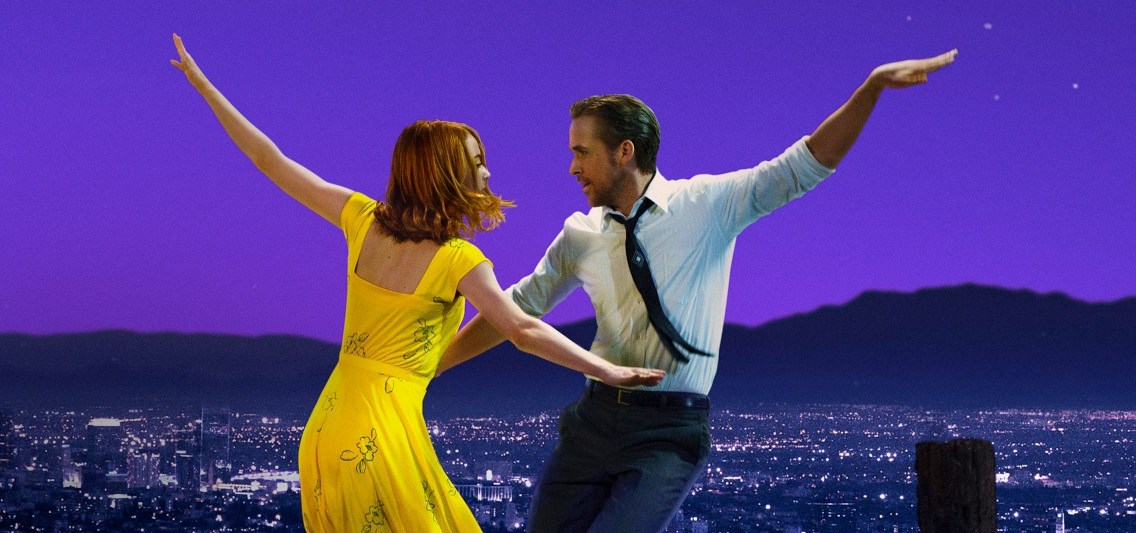
Have you ever smiled for two hours straight? From the opening sequence – a dazzling song and dance number in the middle of an L.A. traffic jam that’s skillfully edited to resemble one long shot – writer/director Damien Chazelle plants a wide one on your face with his unabashed mash note to old Hollywood, old jazz, and young love.
Like a beautiful bookend to Chazelle’s thrilling Whiplash, La La Land is also steeped in music and starry-eyed dreamers, but trades cynicism for an unfailing belief in the power of those dreams. It’s easy to say “they don’t make movies this any more,” and that’s right – they don’t, because doing so means risking all that comes from putting such a heart on such a sleeve.
It could have gone Gangster Squad wrong, but Chazelle’s instincts here are so spot-on, every tactical choice adds a layer to the magic. The Cinemascope framing and extended takes prove a fertile playground for the film’s vibrant colors, relevant backdrops, catchy tunes and snappy dance steps. Who needs 3D to create a world so tactile and dizzying? Not Chazelle.
But as much as La La Land has its head in the clouds, it’s grounded by a bittersweet reality, with wonderful lead performances from Emma Stone and Ryan Gosling that showcase the heartbreak often awaiting those that choose this life.
Let’s not kid ourselves, real life in 2016 has been tough. This type of joyful jolt to the senses is long overdue.
Take two hours of La La Land and call me in the morning.
1. Moonlight
Saving the world is great, so is finding love, or cracking the case, funnying the bone or haunting the house. But a movie that slowly awakens you to the human experience seems a little harder to find at the local multiplex.
You can find one in Moonlight, a minor miracle of filmmaking from writer/director Barry Jenkins. With just his second feature (after 2008’s Medicine for Melancholy), Jenkins presents a journey of self-discovery in three acts, each one leading us with graceful insight toward a finale as subtle as it is powerful.
Jenkins adapts Tarell Alvin McCraney’s play “In Moonlight Black Boys Look Blue” with astonishing sensitivity and artful nuance. Simple shots such as closing doors or hands on a sandy beach scream with meaning, as Jenkins is confident enough to let the important moments breathe, finding universal truth and beauty in the most intimate of questions.
The performances are impeccable, the craftsmanship precise, the insight blinding. You will be a better human for seeing Moonlight. It is a poignant reminder that movies still have that power.