Not just a smash-and-grab hack, either, but the leader of four notoriously slippery bandits specializing in priceless works of art. All are patients of psychotherapist Ruben Brandt (voiced by Ivan Kamaris), and each offers their talents in his time of need.
Ruben is suffering from violent nightmares inspired by legendary works of art from masters such as Manet and Hopper. Ruben comes to believe possessing these works is his only hope for relief, and his thieving patients believe they can help with that.
As the art world is shaken by the brazen thefts, the identity of the ringleader dubbed “The Collector” remains a mystery.
In his feature debut, writer/director Milorad Krstic displays a wonderful eye and a frisky wit, filling his film with the familiar fun of a big screen heist, unexpectedly winning soundtrack choices and a rich, textured animation style worthy of the high art setting.
The caper itself is a wry, understated hoot, with intellectual asides to subliminal psychology and plenty of homages to iconic artworks. But, as only seems fitting, the constantly engaging animation is the true centerpiece here.
From the shadows that follow a thief along his clandestine wall climb, to the uneasy confines of a van struggling to navigate some dangerous curves, Krstic’s animation fills nearly every scene with rewards for close inspection, and a promise of more frivolity to any willing accomplices.
Like a pop-up book full of highbrow surprises, Ruben Brandt, Collector is never less than delightful.
Man, remember the boon of movies released for home viewing last week?! Well, don’t get greedy, I guess. This week contains a fun little psycho-sexual thriller plus two bloated SciFi blunders. Here is the skinny.
Big week in theaters and crowded week in home entertainment. In this week’s Screening Room we talk (spoiler free!) about Captain Marvel, Apollo 11, The Hole in the Ground and I’m Not Here. Then we hit the lobby to give you a sense of what’s worth your while in home video.
Loss, regret and redemption permeate people’s lives. We all have those things we wish we could “do over” — a life mulligan, if you will. It’s a universal fantasy that binds us together as human beings. This idea of redemption, or at least the understanding of one’s mistakes, is right at the muddled heart of I’m Not Here.
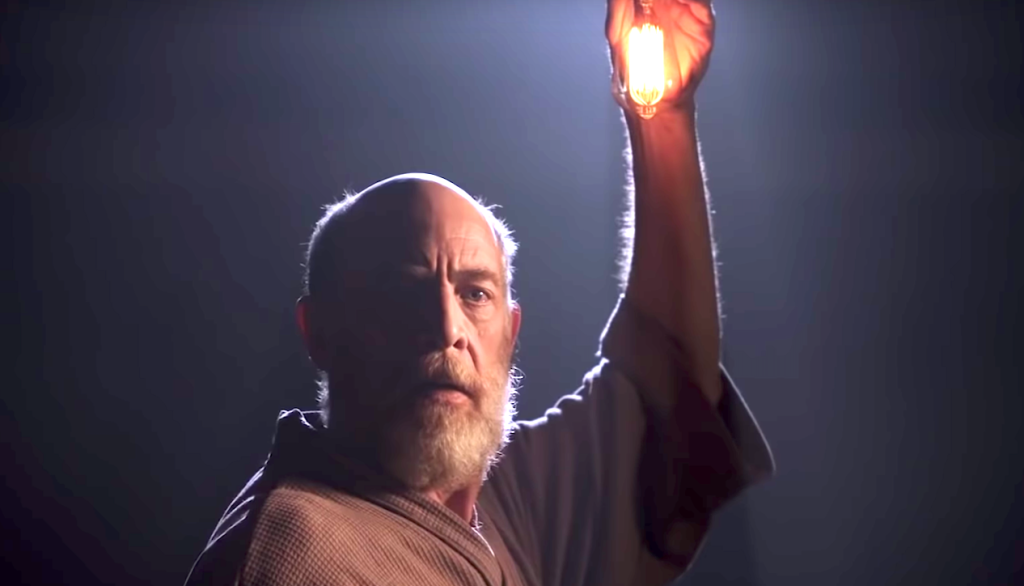
Steven (J.K. Simmons) is a shell of a man. He drinks too much, lives in squalor and has distanced himself from his remaining family. Through a rotating series of flashbacks, we’re introduced to Steven as a boy dealing with the complexities of his parents’ divorce, and also as a young man (Sebastian Stan) who has just started to make his own life-altering missteps. For present-day Steven, a phone call delivering upsetting news brings all of his past trauma to the surface.
I’m Not Here is frustrating. Its cast is more than capable of knocking this kind of material out of the park, but they are hobbled by a poor script and weak direction. Simmons fares best as his segments are solo and allow him to channel the intensity that’s he’s so well known for. The rest of the cast, including Stan, Maika Monroe and Mandy Moore, get bogged down by the cliche-ridden script. The lack of subtlety, especially in the flashback segments, undermines the emotional wallop of grief and loss that director Michelle Schumacher is trying to convey.
Schumacher’s handling of the material is scattershot. The present day scenes involving Simmons show a confidence that isn’t replicated in the flashbacks. The present day material has a more natural flow that lets the audience settle into Steven’s world of loneliness and self-pity. The darkness of his home mirrors the darkness of his life. On the other hand, the flashbacks offer hazy, overlit scenes that wouldn’t be out of place on CBS’s prime time schedule.
Casting Steven as the ultimate Unreliable Narrator is perhaps I’m Not Here’s greatest strength. His unwillingness to come to terms with his choices have clouded his memories with excuses. Steven’s memories cast him as a victim with only slivers of truth peeking through.
I’m Not Here has the foundation for a complex look at how tragedy and grief shape us, but it doesn’t have the follow-through. This one is not worth remembering.
Because showcasing this historic, female Marvel hero offers the chance to see everything from a new lens?
That’s awesome, but no.
Because Oscar-winner Brie Larson is always a kick and we could not wait to see what she could do with such a big movie?
True, but no.
We were pumped because writers/directors Anna Boden and Ryan Fleck are amazing filmmakers and we always, always have high expectations for their work. Who cares that it‘s a superhero movie? True, they’ve made their names with indie standouts (Half Nelson, Sugar), but we were betting they could move the setting to “blockbuster” and keep their character-based storytelling instincts.
After a wobbly start, that bet pays off.
So does Larson. She commands the screen—not to mention earthlings and aliens alike—and is a flat-out gas as Carol Danvers/Captain Marvel. Even better is the way Boden and Fleck address sexism with a character who’s basically just always pissed off.
Agent Fury (Sam Jackson – hilarious) is right: the “grunge thing” suits her.
Grunge is a thing because Captain Marvel wallows gleefully in all things 90s – especially the tunes. A glorious action sequence set to Gwen Stefani’s “Just a Girl” is a high point, and could’ve rivaled Kingsman‘s “Free Bird” segment if given a Skynyrd-level running time (lighters down, please). A needle-on-turntable shot seems a bit out of place, but hey, that Nirvana tune that follows goes down just fine.
The throwback vibe entertains and the clever soundtrack kicks all manner of ass—as does Marvel. The humor feels mostly right, the galactic tensions carry greater weight as the film progresses, and both the mid and end credits stingers are winners.
Boden and Fleck (with co-writer Geneva Robertson-Dworet) streamline Danvers’s comic book history effectively, but as is often the case with these origin stories, act 1 still sputters, betraying a lack of intergalactic vision (or too much of a fondness for cheap-ass Star Trek movies). Once Vers (The Captain’s pre-metamorphosis name) hits earth and some deeper themes are woven into the fun, Captain Marvel finds its groove.
Much of that is thanks to Jackson, whose chemistry with everyone is his trademark in films, and his screen time with Larson is always a sparkling, witty treat. Because of its time stamp, the film can also craft an engaging origin story for Fury, Coulson (Clark Gregg) and the entire Avengers project, aided by continually amazing advancements in digital fountains of youth.
Jude Law, Annette Bening and Lashana Lynch sparkle in a supporting cast buoyed by Ben Mendelsohn’s welcome presence. Playing sometimes with, and sometimes against type, he reminds Big Box Office audiences that he’s so much more than his scenery-chewing villains of late. (Boden and Fleck, who cast him in their amazing poker flick Mississippi Grind, already knew this.)
So, over 20 films and DC’s Wonder Woman success later, the MCU offers its first female lead, a fact certainly not lost on Boden and Fleck. They pull no punches when it comes to the idea of heroism: question authority, don’t let anyone tell you what you can and can’t accomplish, fuck mansplaining. Oh, and heroes rescue refugees, they don’t cause them more suffering.
And as much as Wonder Woman earned its acclaim, Marvel manages to one-up DC yet again. Captain Marvel is anchored by even more unabashed girl power, and stands strong on its own while whetting your appetite for what comes next.
About a month ago the film The Prodigy came out, and promptly disappeared. Lee Cronin’s Irish horror The Hole in the Ground treads similar territory: a mother looks at her young son and wonders with terror who it is she sees.
Where Prodigy took the path most ludicrous, Cronin mines a parent’s disappointment, grief, loneliness and alienation for more poignant results.
Sara (Seána Kerslake), along with her bib overalls and young son Chris (James Quinn Markey), are finding it a little tough to settle into their new home in a very rural town. Chris misses his dad. Sara is having some life-at-the-crossroads anxiety.
Then a creepy neighbor, a massive sink hole (looks a bit like the sarlacc pit) and Ireland’s incredibly creepy folk music get inside her head and things really fall apart.
I grew up listening to nothing but Irish music. If you don’t think it’s creepy, you aren’t listening properly.
In execution, The Hole in the Ground is less The Prodigy and more of a cross between the masterpiece of maternal grief, The Babadook, and another Irish horror of changelings and woodland spirits, The Hallow. (Plus a surprise third act inspiration I won’t mention for fear of spoilers.)
You look at your child one day and don’t recognize him or her. It’s a natural internal tension and a scab horror movies like to pick. Kids go through phases, your anxiety is reflected in their behavior, and suddenly you don’t really like what you see. You miss the cuter, littler version. Or in this case, you fear that inside your beautiful, sweet son lurks the same abusive monster as his father.
Cronin’s subtext never threatens his story, but instead informs the dread and guilt that pervade every scene. Performances are quite solid and the way folklore – in tale and in song – is woven through the story creates a hypnotic effect.
If you’re a horror fan looking to celebrate the season, here’s a more authentic way to do it than watching Leprechaun for the 15th time.
Dayumm there are a lot of movies available for home viewing this week! Oscar winners, foreign gems, underseen treasures, underappreciated family films, and also Aquaman. So much! Let us help you sort through it all.
The cold, sterile morgue. That basement examination room with those drawers that should really never open on their own. Those rows of tables with sheets that should not just blow around. It’s a quiet, peaceful place where, in horror movies, attractive naked women lay prone and yet onscreen without a line of dialog for 90 minute stretches.
That’s not to say that they do nothing. Sometimes they talk. Sometimes they even bite.
Thanks to Jenny from Cali for the topic idea.
Here are our favorite autopsy/morgue horror movies.
5. Re-Animator (1985)
Stuart Gordon’s Re-Animator reinvigorated the Frankenstein storyline in a decade glutted with vampire films. Based, as so many fantasy/horror films are, on the work of H. P. Lovecraft, Re-Animator boasts a good mix of comedy and horror, some highly subversive ideas, and one really outstanding villain.
Jeffrey Combs, with his intense gaze and pout, his ability to mix comic timing with epic self-righteousness without turning to caricature, carries the film beginning to end. His Dr. Herbert West has developed a day-glo serum that reanimates dead tissue, but a minor foul up with his experimentations – some might call it murder – sees him taking his studies to the New England medical school Miskatonic University. There he rents a room and basement laboratory from handsome med student Dan Caine (Bruce Abbott).
They’re not just evil scientists. They’re also really bad doctors.
First-time director Gordon’s effort is superb. He glories in the macabre fun of his scenes, pushing envelopes and dumping gallons of blood and gore. He balances anxiety with comedy, mines scenes for all they have to give, and takes you places you haven’t been.
4. Anatomy (2000)
Franka Potente leads a medical school mystery in Stefan Ruzowitzky’s film about Germany’s ugly history with medical experimentation and societal hierarchy.
Ruzowitzky would go on to direct the Oscar winning foreign language film The Counterfeiters in 2007, but back in 2000 he was still riding high on the surprise success of this mid-budget medical horror.
Potente is Paula. She’s new and maybe a little frigid for her prestigious medical school. In one of her classes she recognizes a corpse. Her curiosity piqued, what she stumbles into may look like a by-the-book slasher, but it digs into the scars of a generation whose beloved forebears were either implicit in heinous crimes against humanity, or who participated willingly.
3. The Corpse of Anna Fritz (2015)
Young hospital orderly Pau (Albert Carbo) attends the morgue, where the famous actress Anna Fritz (Alba Ribas) awaits an autopsy come morning. He secretly texts a selfie with the body to two buddies.
Soon, three young men are alone with a beautiful, naked, dead woman with absolutely no chance of being interrupted for hours. If you’re a little concerned with where this may lead, well, you should be.
Sort of a cross between 2008’s irredeemable rape fantasy Deadgirl and Tarantino’s brilliant Kill Bill, Volume 1, The Corpse of Anna Fritz will take you places you’d rather not go.
As a comment on rape culture, the film is a pointed and singular horror.
And while contrivances pile up like cadavers in a morgue, each one poking a hole in the credibility of the narrative being built, The Corpse of Anna Fritz has a lot more to offer than you might expect – assuming you stick it out past the first reel.
2. I Am Not a Serial Killer (2016)
Billy O’Brien (Isolation) finds a new vision for the tired serial killer formula with his wry, understated indie horror I Am Not a Serial Killer.
An outsider in a small Minnesota town, John (Max Records) works in his mom’s morgue, writes all his school papers on serial killers, and generally creeps out the whole of his high school. But when townsfolk start turning up in gory pieces, John turns his keen insights on the case.
Records, who melted me as young Max in Spike Jonze’s 2009 masterpiece Where the Wild Things Are, serves up an extraordinarily confident, restrained performance. His onscreen chemistry with the nice old man across the street – Back to the Future’s Christopher Lloyd – generates thrills enough to offset the movie’s slow pace.
For his part, Lloyd is in turns tender, heartbreaking and terrifying.
Bursts of driest humor keep the film engaging as the story cleverly inverts the age-old “catch a killer” cliché and toys with your expectations as it does.
1. The Autopsy of Jane Doe (2017)
Back in 2010, Andre Ovredal established himself as a filmmaker of unusual vision with his found footage style gem Trollhunter. His first English-language film takes him into the basement examination room of father and son coroners.
Both stars Brian Cox and Emile Hirsch are underappreciated actors, and each one turns in a wonderfully familiar, tender performance. Their kinship and associated dysfunction are played with enough restraint to keep it from weighing down proceedings, instead creating a believably protective relationship that causes certain scenes to hurt.
As the two dig in to the mystery of their latest patient, an unidentified woman found underground in a nearby basement, an intimate and claustrophobic but always smart and creepy mystery starts to unveil itself. The result is a chilling and effective thriller.
A majestic and inspirational marriage of the historic and the cutting edge, Apollo 11 is a monumental achievement, one full of startling immediacy and stirring heroics.
Just weeks after the debut of Peter Jackson’s time-traveling masterwork They Shall Not Grow Old, director Todd Douglas Miller also makes history live again through similar reliance on restorative genius and respectful restraint.
There is no flowery writing or voiceover narration, just the words and pictures of July 1969, when Americans walked on the moon and returned home safely.
The restored footage is so crisp and detailed (even more so in the IMAX version) that shots of a young Johnny Carson among the launch spectators stand as a bracing reminder this is not the latest big budget Hollywood production.
This is living, breathing history you’re soaking in. And damn is it thrilling.
From the capsule “home movies” of Neil Armstrong and Buzz Aldrin, to the mission control checklists and ticking event countdowns, Apollo 11 immerses you in moments that will elicit breathlessness for the drama, pride for the science, respect for the heroism and awe for the wonder.
And still, Apollo 11 stands even taller for its own humble nature. Even in this grand scale, the film never feels like it is trying to deliver a final word, in fact just the opposite.
It is a salute to the thirst for knowledge and discovery with an invitation, on the near 50th anniversary of the iconic voyage, to reconsider the achievement.
Now if you’ll excuse me, I’m going to check if there’s any theaters still playing First Man….
Captain Marvel is still a week out, which makes for a pretty quiet weekend at the box office. Join us as we run down the highs and lows: Greta, A Madea Family Funeral plus all that’s fit to watch in new home entertainment.