Screening Room: Beautiful Day in the Neighborhood, Frozen 2, 21 Bridges & More
by Hope Madden
A loosely structured day-in-the-life, writer/director Ira Sachs’s Frankie drops in on a family vacation in lovely Sintra, Portugal.
It’s a posh event, no doubt, but the idyllic setting contrasts with the emotions roiling beneath the surface of the film. That is best depicted by cinematographer Rui Pocas, who captures the distance, the awkward directionlessness, and the isolation.
Pocas’s camera catches the meandering spirit of the film as it winds its way through the streets of this historic, mist-enshrouded city, catching up here and there with the different members of the party. Each arrives at the behest of family matriarch, Frankie (Isabelle Huppert), and her doting second husband, Jimmy (Brendan Gleeson).
Intersecting stories involve Frankie’s ex-husband Michel (Pascal Greggory) and their grown son Paul (Jeremie Renier); her step-daughter Sylvia (Vivette Robinson) and her family; and a close friend (Marisa Tomei) who’s surprised everyone by bringing along a boyfriend (Greg Kinnear).
The tiny yet formidable Huppert perfectly embodies her character, frail but decidedly in control. In fact, the size difference between the great Huppert and the also great Gleeson is in gorgeously inverted proportion to their stubborn resolve.
Gleeson is all gentle, heartbroken support while Huppert’s performance is removed stoicism, which makes her fleeting moments of vulnerability all the more human. Seeing these remarkable veteran talents and their love story is more than reason enough to experience this film.
Sachs’s greying narrative, while never pushy, feels determined to expose our personal desires to check off boxes and maintain the illusion of control. Frankie manipulates events to find solace in the idea that there are final solutions, or that a person may continue to be needed and useful, even present for our loved ones after we’re gone.
But life is untidy, and fittingly, so is Frankie.

by Hope Madden
My God, I love Fred Rogers.
I didn’t watch the show as a kid, preferring Under Dog, Scooby Doo and other dog-related animation. But the last time I cried, not from sadness but from gratitude and longing, was during Morgan Neville’s beautiful 2018 documentary, Won’t You Be My Neighbor?
I sobbed. In public.
When news reached the world that Mr. Rogers was due for a biopic, surely each of us realized in our own separate ways that Tom Hanks was A) perfect, and B) going to make us sob all over again.
No way that was just me.
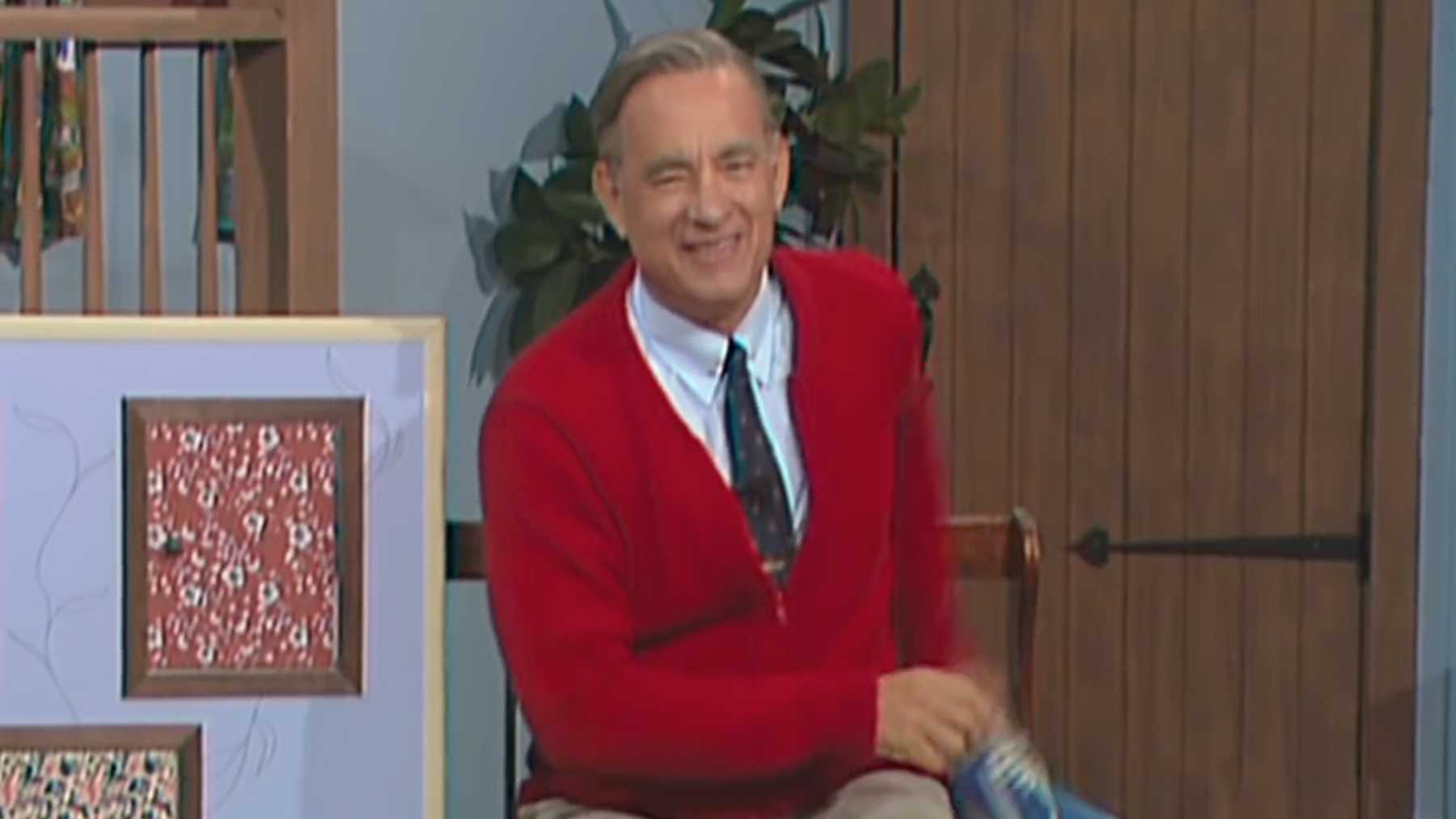
Hanks doesn’t love Fred Rogers as much as he entirely accepts him, and that’s the magic of this performance. While the rest of us may look on Rogers and his deep, genuine and implausible goodness with suspicion or awe, it’s nearly impossible to accept him as one of us. Hanks does. He doesn’t plumb for human frailty, he takes Fred Rogers on Fred Rogers’s terms, and that’s why Tom Hanks has two Oscars already. His performance here is unerring, eerily so.
Truth be told, though, A Beautiful Day in the Neighborhood is not really Fred’s story. Rather, Mr. Rogers is the transformative catalyst for cynical NY magazine writer Lloyd Vogel. Vogel is played by Matthew Rhys and loosely based on real-life journalist Tom Junod, whose Esquire article is the inspiration for the film.
Director Marielle Heller (Can You Ever Forgive Me?) structures the film much like an episode from Mr. Rogers Neighborhood, and that almost-surreal-but-not quality serves to underscore the absurdity of the situation as Lloyd sees it: Who is this guy? Is this really what he’s like?
That healthy skepticism and Rogers’s ability to break it down creates the thrust of the film, but it’s also a window for the audience to question, accept and then celebrate this lovely man.
With two films in two years, the late children’s programming icon is having quite a moment. It’s hard to be sad about that.

by George Wolf
Okay, huddle up.
Sometimes, your team comes in the underdog. They run the same old plays we’ve seen so many times, it’s not hard to figure out the game plan. But stack that team with enough talent, and it just might succeed anyway.
Hut 21, hut 21…Bridges!
That’s a cliched analogy, perfect for a cliched film. 21 Bridges lives in a familiar world of drug deals gone bad, hero cops who might be crooked, damaged cops who might be heroes, ticking clocks and killers on the run.
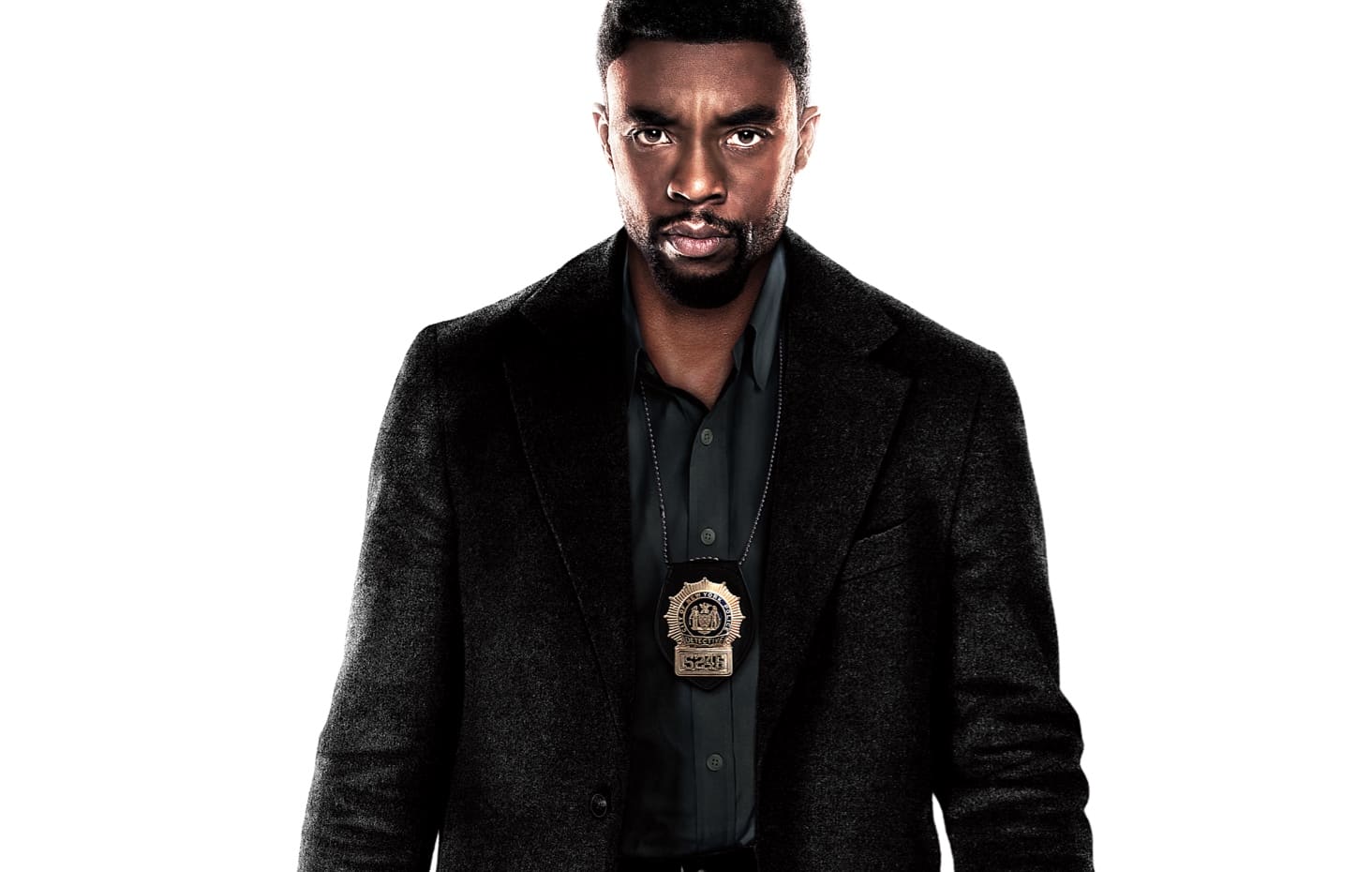
Chadwick Boseman stars as Andre Davis, a NYC detective with “cop in his DNA” since his father was gunned down on duty years ago. Andre has a reputation for being quick with the trigger, which is why Captain McKenna (J.K. Simmons) is happy to see him at a bloody Brooklyn crime scene.
Eight of McKenna’s cops are dead, after surprising two drug runners (Stephan James, Taylor Kitsch) during a botched cocaine robbery. McKenna is confident Andre will enforce their right to remain dead, but the Mayor’s (“he eats pizza with a fork!” – nice) flunkies make it clear hizzoner wants the perps alive for a campaign-friendly show trial.
But first, they have to find the two cop killers. Forced to accept help from narcotics officer Frankie (“fight me or use me”) Burns (Sienna Miller), Andre is granted a five hour window to shut down every possible avenue out of Manhattan, flood the island with blue, and get his men.
Director Brian Kirk, a TV vet helming his second feature, has clearly seen a crime thriller or two. The aerial shots of the city and shaky cam pursuits are standard moves, but Kirk manages to add his own layers of grit and intensity without ever letting the pace bog down.
One half of the writing team, Matthew Michael Carnahan, has some impressive credits, and about half the time, it shows. But even when the dialogue reeks of recycled cop drama, the talent of this cast manages to put a shine on it.
Simmons adds his usual mastery to a role that could have easily been one-note, and Miller again proves how good she is at morphing into completely different looks and personalities.
But this is Boseman’s film to carry, a nice break from his run of biopics and superheroics. The film’s success at exploring the paradoxes of a life in law enforcement is due mainly to Boseman. He finds a mix of outrage and conscience for Andre that feels true, often when the story around him doesn’t quite keep up.
There’s not much freshness to be found in 21 Bridges, just the visceral satisfaction and forgettable fun of talent winning out.
by George Wolf
Four year-old Ruby, bouncing in her seat and making friends while sporting a sparkly tiara, is here for it.
“The fun part is watching Elsa!”
From Ruby’s lips to Mickey’s ears, because the perfectly acceptable Frozen II seems overly calculated to be just that: perfectly acceptable to anyone and everyone who’s even vaguely aware of the original from 2013.
Directors/co-writers Jennifer Lee and Chris Buck are back for round two, along with songwriters Robert Lopez and Kristen Anderson-Lopez and the starring voices from the first adventure.
This new one is set in motion by a siren song that attracts Queen Elsa (Idina Menzel), calling her north to a magical forest that is holding captives – and secrets. With sister Anna (Kristen Bell), Anna’s beau Kristoff (Jonathan Groff) and goofy snowman Olaf (Josh Gad) close behind, Elsa sets off into the unknown to right wrongs and learn the origin of her magical powers.
“Into the Unknown,” get used to it. A soaring ballad delivered with customary power by Menzel, it’s served up not only as part 2’s “Let It Go,” but as just one of the many broadly-drawn themes the film leans on.
Don’t give up, take one step at a time and do the right thing. Nothing wrong with any of those messages, but largely thanks to Disney and Pixar, animated films of the last twenty odd years have shown us how many more layers of resonance are possible – for children and adults.
And while families – especially the younger members – will find a fine holiday time to be had, don’t expect the heights of Up, Inside Out, Zootopia, or even the original Frozen.
The songs are just a bit more bland this time, the laughs a little less frequent (although Gad does deliver some winners) and the animation not quite as rich or defined.
From start to finish, FII‘s journey seems interested only in the path of least resistance toward more of that Elsa/Anna feeling. And by that measure, it certainly succeeds.
“See you at the next Frozen! Are you gonna be here?”
Count on it, Ruby. Save me a seat.

by George Wolf
About 94 minutes into Scandalous, Mark Landsman’s completely engrossing documentary about tabloid journalism, you realize he’s buried the lede.
“How did a tabloid subject get to be President of the United States?”
In telling the tale of the birth, rise and fall of the National Enquirer, Landsman is also drawing a fairly persuasive roadmap to America’s current standing as a place where, in the view of no less than Carl Bernstein, no fact-based debate is even possible.
Born to original owner Generoso “Gene” Pope from a no-interest mafia loan, the Enquirer had a simple goal: sell the most papers, period. Taking inspiration from roadside gawkers at a grisly accident, Pope printed the crime scene photos others didn’t.
But when the rise of suburbia meant less lines at the newsstand, Pope made a genius move to the supermarket checkout line. And since blood and guts don’t mix too well with the bread and milk, the Enquirer went all in on celebrity gossip.
Using press badges for nifty introductions, Landsman rolls out a succession of former Enquirer reporters and editors, none of whom can hide their fondness for the memories. It was an intoxicating working environment of bottomless expense accounts, cutthroat competition and a ruthless dedication to getting the story.
It wasn’t about facts, it was about eyeballs. Start with some sliver of truth, and then cater to the core (“Missy Smith in Kansas City” the staff called her) with unapologetic sensationalism.
Let the public decide, right? They have a right to know. Except when they don’t, because “catch and kill” protection deals started decades before Donald Trump. Landsman scores with those details, but curiously omits any mention of successful legal pushback from celebrities such as Carol Burnett.
The paper’s backstory is informative and intriguing, but the red meat of Scandalous comes fittingly from scandals. The coverage of both Gary Hart and O.J. Simpson not only brought new journalistic respect to the Enquirer, but ushered in a new approach to journalism itself that is still being debated.
“That’s not my problem,” says a former editor. “It sold papers.”
It did that. But Landsman argues it also blurred lines that became ripe for exploitation by a new owner with a political agenda, something – according to all former staffers interviewed – the Enquirer had always avoided. After that, greasing the political rails of longtime Enquirer darling Trump became almost inevitable.
But above all, Scandalous resets the folly in underestimating the Enquirer’s legacy. When we listen to a reporter’s recording of a much younger Trump calling to plant favorable stories by posing as a “Trump insider,” it feels like a visit from the Ghost of Christmas Past.
So how did the checkout aisles evolve from promising dirt on the latest celebrity divorce to serving up blatant political propaganda? In the words of one former reporter, the Enquirer simply got “out-Enquired.”
Scandalous, indeed.
by George Wolf
Okay, reel talk: I’m a sound nerd, so I probably geeked out over Making Waves: The Art of Cinematic Sound a bit more seriously than your average bear.
But if you’re even a little bit at home in the foam-padded clubhouse with us audiophiles, rejoice! Director Midge Costin has given us our overdue salute to the history and pioneers of big screen sound design.
Costin, a veteran sound editor making her directorial debut, does seem mindful of avoiding an approach only digestible by techies. Her straightforward timeline of sound design history may lack style points, but it’s layered with plenty of movie clips and director interviews to rein in the average movie buff.
The sincerity of Steven Speilberg’s statement that “the ears lead the eyes to where the story lands” is echoed by other film greats who seem genuinely pleased to discuss a side of the craft they’re rarely asked about.
And we see that – like so many aspects of cinema – modern sound design took root in the 1970s, as mavericks such as Spielberg, Coppola, Lucas, Lynch, Streisand and Scorsese began to re-shape Hollywood.
It’s through these legends that that we’re introduced to sound design legends Ben Burtt, Walter Murch and Gary Rydstrom. Their names may not be as familiar, but Costin wants to make sure you understand that their contributions are just as monumental.
Showcasing a wealth of information with an engaging pace, Costin finds an easily enjoyed sweet spot between the tech geek and casual movie fan. Ultimately it’s a film that can satisfy as both an intro to further research or a complete quick-study course, making Making Waves sound like a winner.
Not bad little week in home entertainment whether you’re looking for some joyfully earnest Bruce, some joyously earnest Dora, or a gorgeous and strangely seductive Polish romance. You’re not looking for one of those things? Oh, we think you are.
Click the movie title to link to the full review.

There is something terrifying about being in a strange land, especially if the language is not your own. There are so many great horror flicks that take advantage of that sense of isolation and confusion that we needed a second list of stuff that didn’t make the final cut but that you should check out anyway: And Soon the Darkness (1970), Road Games (2015), Transsiberian (2008), Hostel (2005) and Hostel: Part II (2007), The Human Centipede: First Sequence (2009) and, in particular, the double shot of Spanish horror Who Can Kill a Child? (1976) and its 2012 remake, Come Out and Play.
What’s better? Here you go:
Italian director Dario Argento is in the business of colorfully dispatching nubile young women. In Suspiria, his strongest film, American ballerina Suzy Bannion (Jessica Harper) moves to Germany to join a dance academy, but the other dancers are catty and the school is staffed with freaks. Plus, women keep disappearing and dying.
As Suzy undertakes an investigation of sorts, she discovers that the school is a front for a coven of witches. But Argento’s best film isn’t known for its plot, it’s become famous because of the visually disturbing and weirdly gorgeous imagery. Suspiria is a twisted fairy tale of sorts, saturating every image with detail and deep colors, oversized arches and doorways that dwarf the actors. Even the bizarre dubbing Argento favored in his earlier films works to feed the film’s effectively surreal quality.
Brisk, effective and terrifying, Them is among the most impressive horror flicks to rely on the savagery of adolescent boredom as its central conceit.
Writers/directors David Moreau and Xavier Palud offer a lean, unapologetic, tightly conceived thriller that never lets up.
Set in Romania, Them follows Lucas and Clementine, a young couple still moving into the big rattling old house where they’ll stay while they’re working abroad. It will be a shorter trip than they’d originally planned.
What the film offers in 77 minutes is relentless suspense. I’m not sure what else you want.
Creepy noises, hooded figures, sadistic children and the chaos that entails – Them sets up a fresh and mean cat and mouse game that pulls you in immediately and leaves you unsettled.
Director John Landis blends horror, humor and a little romance with cutting edge (at the time) special effects to tell the tale of a handsome American tourist David (David Naughton) doomed to turn into a Pepper – I mean a werewolf – at the next full moon.
Two American college kids (Naughton and Griffin Dunne), riding in the back of a pickup full of sheep, backpacking across the moors, talk about girls and look for a place to duck out of the rain.
Aah, a pub – The Slaughtered Lamb – that’ll do!
The scene in the pub is awesome, as is the scene that follows, where the boys are stalked across the foggy moors. Creepy foreboding leading to real terror, this first act grabs you and the stage is set for a sly and scary escapade. The wolf looks cool, the sound design is fantastically horrifying, and Landis’s brightly subversive humor has never had a better showcase.
A bunch of buddies head to the States for a spelunking adventure.
Writer/director Neil Marshall begins his film with an emotionally jolting shock, quickly followed by some awfully unsettling cave crawling and squeezing and generally hyperventilating, before turning dizzyingly panicky before snapping a bone right in two.
And then we find out there are monsters.
Long before the first drop of blood is drawn by the monsters – which are surprisingly well conceived and tremendously creepy – the audience has already been wrung out emotionally.
The grislier the film gets, the more primal the tone becomes, eventually taking on a tenor as much like a war movie as a horror film. This is not surprising from the director that unleashed Dog Soldiers – a gory, fun werewolf adventure. But Marshall’s second attempt is far scarier.
For full-on horror, this is one hell of a monster movie.
In Midsommar, we are as desperate to claw our way out of this soul-crushing grief as Dani (Florence Pugh). Mainly to avoid being alone, Dani insinuates herself into her anthropology student boyfriend Christian’s (Jack Reynor) trip to rural Sweden with his buds.
Little does she know they are all headed straight for a modern riff on The Wicker Man.
Like a Bergman inspired homage to bad breakups, this terror is deeply-rooted in the psyche, always taking less care to scare you than to keep you unsettled and on edge.
by Christie Robb
It’s a truth universally acknowledged that a cute accent will make even the silliest sentiment 20 percent more charming. So, it’s fortunate that the dialogue in Kiah Roache-Turner’s action/comedy/horror is mostly delivered in appealing Australian accents. Otherwise it’s a bit of a mess.
A take on cell phone addiction, Nekrotronic asks the question, “What if demons got online and created a knock-off of Pokémon Go to steal our souls?”
Thankfully, Howard, a sanitation engineer/orphan, discovers he’s the descendant of generations of necromancers (nekromancers?) with demon-fighting superpowers, now upgraded with what look like coaxial cable ports in the backs of their heads. Years ago, his necromancer parents split up when mom, Finnegan, was turned to the dark side. Howard’s dad hid him with muggles before being murdered by his ex.
Ben O’Toole delivers a decent performance in Howard. He’s equally able to pull off his silly X-Men-style superhero suit and deliver the occasional bit of banter that reminds us that the movie is supposed to be part comedy. His chemistry with his tragically underused sidekick Rangi (Epine Bob Savea) is probably the best part of the film. Too bad it’s mostly in the first 18 minutes.
After the initial setup, Nekrotronic often seems to forget the comedic slant and leans heavily into the action. The special effects and fight sequences are acceptable. But there are no stakes. What is Finnegan going to do with the power of the souls she devours through the cell phone game? Use the power to get more souls. Why? To what purpose? Unclear. What does Howard stand to lose? Little. He already seems to hate his foster family and his job. He’s not invested in random strangers. His BF Rangi might take a hit, but Howard’s powers can sorta mitigate that.
The movie mashes up Matrix, Tron and Ghostbusters and sets it to a half-hearted attempt at a Tarantino soundtrack. But there’s no focus or originality in the result.
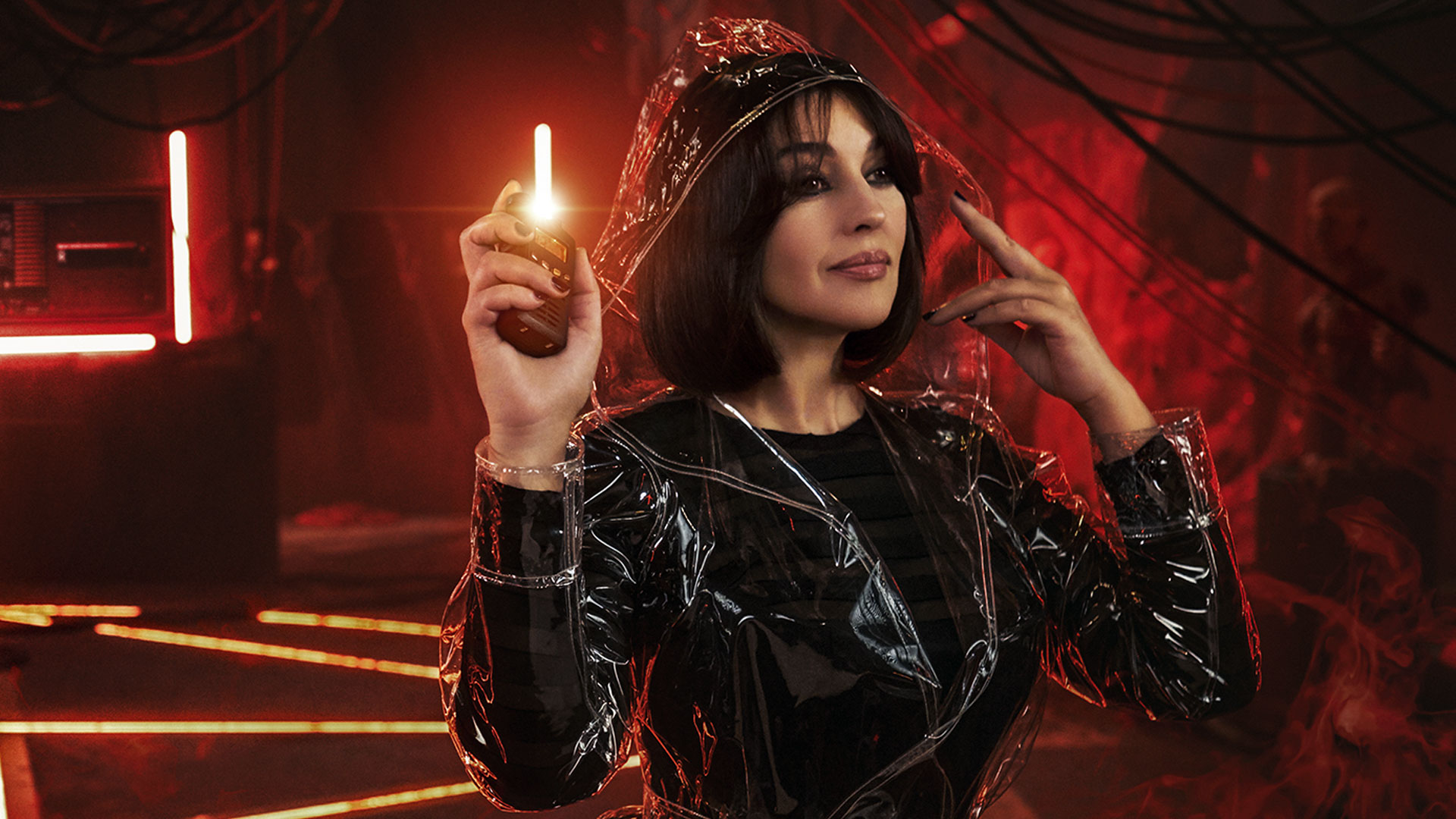
The weakest part of the movie is probably Monica Bellucci’s Finnegan. Possessing a gorgeous Italian accent, her delivery proves the exception to the accent-makes-it-better maxim. She struggles to enunciate the juvenile, expletive-laden dialogue that comes much more naturally from the other characters. It feels like when your manager researches slang on Urban Dictionary and pulls the results out in the conference room to seem relevant. It’s cringy and off-putting.
In the end, Nekrotronic delivers a little bit of everything, but it not enough of the right things.