…And Let’s Give It Acid Blood!

Memory: The Origins of Alien

by Hope Madden

“The reek of human blood smiles out at me.”

It’s an unusual opening line for a documentary about that icon of SciFi horror, Alien. And yet, Memory: The Origins of Alien is an unusual documentary.

Alexandre O. Philippe takes you deep into our collective psyche, our “cauldron of stories,” to explore the alchemy behind the lingering success and haunting nature of Ridley Scott’s film. Though the story starts long before Scott’s involvement.

Philippe begins by mining writer Dan O’Bannon’s influences and preoccupations.

“I didn’t steal from anyone,” he said. “I stole from everyone.”

A Nebraskan whose father once staged an alien landing, O’Bannon’s out of the ordinary young life and preoccupation with comics fueled his short screenplay, “Memory.” But it was his battle with Crohn’s disease that inspired that pivotal scene that moved the tale from short to feature.

Then came H. R. Giger, whose “Mythology of the future” offered visual entryway to the world the film would imagine. Joined eventually by Scott, who saw their genius and raised it. Philippe’s joy at displaying the way these three imaginations coalesce to form the greater vision spills off the screen.

But why, after 40 years, is Alien still a heart-pounding success?

If you buy the film’s thesis—and Philippe does make a good case—we basically had no choice.

Alien is both the lovechild of H.R. Giger, Dan O’Bannon and Ridley Scott—each as seemingly necessary for this product as the next—and the culmination of primal images and ideas mined from the collective unconscious.

This is more than undulating fandom aimed at the object of adoration. It’s a deep, immersive dive into how Alien evolved to become the  masterpiece that it is and why the film remains as haunting today as it was when John Hurt’s chest first burst in 1979.

Posse of One

Wrinkles the Clown

by Hope Madden

It’s fun to scare kids.

Oh, wait, is that illegal?

Documentarian Michael Beach Nichols (Welcome to Leith) looks at just about every side of that unusual argument with his sly documentary Wrinkles the Clown.

Ostensibly, Beach Nichols digs into the story of the man behind Wrinkles, a shady older gentleman living in a van in Fort Myers who failed as a traditional clown, so he improvised. Placing stickers around town with his masked face, clown name and phone number, Wrinkles offered to frighten your misbehaving children for a fee.

Yes, it is sort of genius.

As we ride around the beach town for the aged in a lived-in conversion van, we’re privy to the voice mails recorded at the Wrinkles number. Reprobate that he seems to be, Wrinkles is still considerably less frightening than the parents hoping to take advantage of his behavioral services.

Says one father, his child wailing in the background, “I want you to eat her.”

Wrinkles’s response? “My favorite kind of scares are the ones that pay the most.”

This kind of dry, deadpan humor fuels a film that explores the most peculiar sociological experiment.

Who would call? How will their children react? Why are clowns so effing scary in the first place? A solid documentarian, Beach Nichols understands that these are the deeper questions to be addressed. Admittedly, continually flashing the image of a grampa-faced clown holding balloons and peeking into your sliding glass door late at night is his excellent way to keep your interest as he digs into these concerns.

We hear from folklorists (with still-packaged action figures mounted to their office walls, so  you know they’re legit), child psychologists, pro-Wrinkles parents, anti-Wrinkles parents and one traditional clown.

Poor Funky. “There’s a whole generation growing up with no positive image of a clown whatsoever,” he laments, happy face in place.

It’s a fascinating look at the function clowns have served since their medieval beginnings, as well as the internet’s way of amplifying folk tales.

And while Beach Nichols, like the great showmen, performs his own sleight of hand, the film itself is more interested in the primal, collective unconscious tapped by those Wrinkles wrinkles.

Set a Course for Adventure

Harpoon

by Hope Madden

There are a limited number of reasons people become and remain friends. Some of those reasons are just nonsense. And yet, three friends of dubious worth to one another gather to repeat their familiar patterns, which land them on a yacht for an apology daytrip.

Richard (Christopher Gray) —  brash, spoiled and quick to anger— is apologizing. Jonah (Munro Chambers – Turbo Kid!) —bruised and bloody—is probably too quick to forgive. Sasha (Emily Tyra) has plenty of reason to be tired of both boyfriend Richard and bestie Jonah.

The fact that Jonah and Sasha bring along Richard’s birthday gift clarifies how little anyone in this triangle has learned.

And so, Sasha, Jonah, Richard and Richard’s new harpoon set off on an unplanned, ill-advised, seafaring jaunt.

Drinks all around!

Co-writer/director Rob Grant keeps events snarky with a voice-of-God narration (assuming God’s a sailor) performed by a brilliantly deadpan Brett Gelman. As far as this nameless narrator who inexplicably sees all is concerned, the dangers facing this volatile threesome have less to do with their pathological history and more to do with the sailing omens they ignorantly flout.

Give an irrational drunk prone to fits of rage the gift of a pointy projectile weapon? Meh. But bring bananas on board—now that’s really pushing things.

The darkly silly commentary adds some tang to the friends’ foolhardy adventure, but Grant’s themes are not entirely comedic. He strands the trio at sea for days on end, their survival instincts overtaking their petty sniping as they find a new reason for friendship: the common good.

Grant offers a nice balance here between dark humor and genuine tension born of realistic performances. Chambers, Tyra and Gray offer frustratingly recognizable characters, the kind that make idiotic choices, less because it forwards the action of the script (although it does) and more because people are stupid and they fall into familiar roles.

The film makes more than a few convenient moves, but it packs a lot of surprises and showcases very solid performances.

Who knew redheads were bad luck?

Fright Club: Bars in Horror

We needed a drink, so we threw back a few and brainstormed the best bars in horror movies. Some of them were dives we’d love to haunt. Others were just really, seriously scary. All of them set the stage for something important in horror.

Who wants a cocktail?

6. The Slaughtered Lamb (An American Werewolf in London, 1981)

What is going on with these guys?! How hard would it have been to just ignore the yanks and let them hang around? What harm could have come of it? But no! They ask one silly question and the next thing you know…

“Enoof!”


5. The Gold Room (The Shining, 1980)

“Little slow tonight, isn’t it Lloyd?”

Great line, even better delivery, in a scene—and a room—that haunts Stanley Kubrick’s masterpiece interpretation of Stephen King’s best novel.

https://www.youtube.com/watch?v=HJVVGzEbJC0

4. Mahers (Grabbers, 2012)

Sea monsters have come to Ireland. They crave the water but they hate alcohol. The only way to save yourself is to get blind drunk and stay inside the pub.

Most Irish movie ever.


3. The Winchester (Shaun of the Dead, 2004)

It’s familiar, you know where the exits are, and you can smoke. It’s The Winchester, best place to hole up and wait out the zombipocalypse.

How’s that for a slice of fried gold?

2. Titty Twister (From Dusk Till Dawn, 1996)

A couple of nogoodnik brothers go from frying pan to the pit of vampire hell as they and the family they kidnapped wait out the night at a strip club of death.

1. Green Room (2015)

You may not catch its name, but that’s OK by the clientele. This Boots & Braces establishment likes its music loud, its patrons white and its dogs bloodthirsty.

Hillbilly Elegy

The Death of Dick Long

by Hope Madden

Director Daniel Scheinert (Swiss Army Man) walks an amazing tight rope between hillbilly stereotype and sympathetic character study with his latest, The Death of Dick Long, a crass comedy with deeply human sensibilities.

Zeke (Michael Abbott Jr.), Earl (Andre Hyland) and Dick (Scheinert) work on some Nickelback covers for their band, Pink Freud. Band practice out at Zeke’s ends late, long after Zeke’s misses (Virginia Newcomb, excellent) and their daughter (Poppy Cunningham, also excellent) head off to bed.

The fellas get a little weird, things get out of hand and let’s just say Pink Freud won’t be touring.

Yes, we have all witnessed films situated within the world of dive bar cocktail waitresses and their paramours. Tailer parks, mullets, giant prints of tigers, they’re all here. But what makes Dick Long kind of miraculous is how generous Scheinert, writer Billy Chew and the whole cast are with these characters.

Really, generous to a degree unseen in a comedy of this sort—which is to say, the sort of comedy built entirely on the idiocy of its white trash characters.

As Scheinert slowly unearths the details of the mystery, a lesser filmmaker might wallow in inbred, backwoods, banjo pickin’ gags. Not this guy. The more unseemly the subject matter, the more bare the soul. Abbott’s inevitable vulnerability is almost alarmingly heart wrenching given the comedic tone of the film and the actual crime committed.

Likewise, Newcomb mines her character and this situation for something honest enough that you wonder what the hell you would do if you were to find yourself in this situation. Her performance has the texture of a long and comfortable relationship suddenly and irreparably busted.

Hyland’s Earl, on the other hand, is straight up hill jack comic gold, but even this performance sidesteps broad strokes and finds a recognizable, human soul.

There’s not a single performance in the film that isn’t a welcome surprise. And underneath it all, Dick Long reimagines small town masculinity, isolation and loneliness.

Daniel Scheinert follows up on the promise of the crowd favorite madness of Swiss Army Man with a crime caper of a wildly, weirdly different sort. I’m all for his brand of lunacy.

The Shapes of Water

Aquarela

by George Wolf

“We swam out through the trunk!”

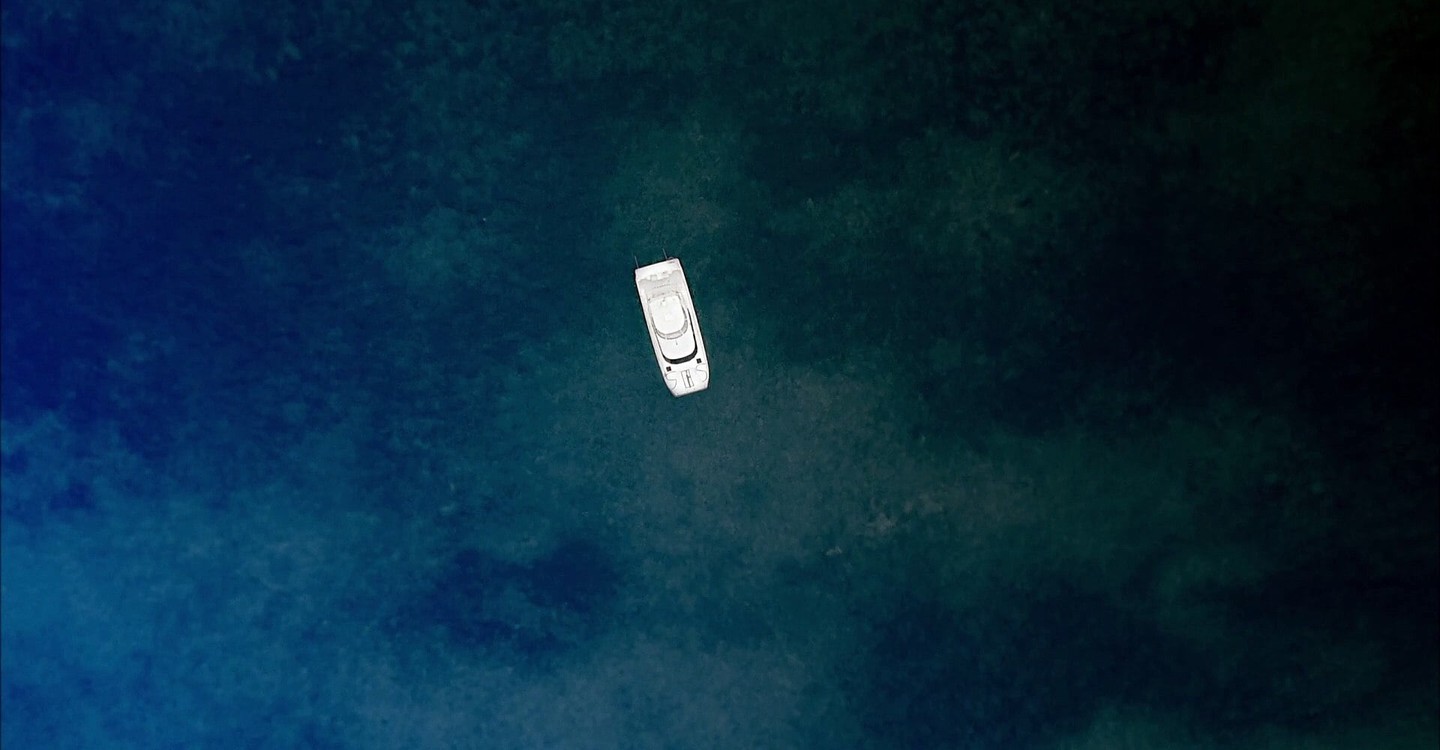
Those are six of the very few spoken words in Aquarela, and they quickly establish the stakes in Victor Kossakovsky’s immersive documentary. His aim is to get you startlingly close to the world war between man and water.

There is power, there is beauty, there is death. And there’s some death metal, which isn’t as out of place as you might think.

In case you haven’t noticed, this is a great time to be a documentarian, and thus, a fan of documentaries. This year alone, we’ve seen technological breakthroughs make possible the wonders of Apollo 11, They Shall Not Grow Old and Amazing Grace.

Like those, Aquarela (“watercolor” in Portuguese) employs cutting-edge wizardry for an experience that begs for the biggest screen you can find.

Monstrous ocean waves build and crash, huge chunks of ice fall prey to rising global temperatures, and a hypnotic narrative emerges. Mankind has battled the shapes of water for centuries, in hopes of lessening its dangers and harnessing its power, and Kossakovsky feels it’s time to hear from the other side. The few humans who speak feel like party crashers.

Don’t expect explanations, you won’t get any. What you will get in Aquarela is an utterly astounding profile of a living, breathing, dying force of nature.

Born in a Trunk

Judy

by George Wolf

Call it a comeback, a re-introduction or a friendly reminder, but Renee Zellweger’s channeling of Judy Garland is an awards-worthy revelation.

Since winning an Oscar for Cold Mountain over fifteen years ago, Zellweger’s resume has been scattershot and curious enough to make seeing her name on top of the marquee a rather nostalgic blast from the past.

But here, she’s just a blast, bringing a can’t-look-away magnetism to every moment she’s on screen, and leaving a noticeable absence when she’s not.

Based on Peter Quilter’s stage play The End of the Rainbow, Judy shows us a legend struggling to get work and fighting to retain custody of her children. By the late 1960s, daughter Liza was off starting a career of her own, but Judy’s two young kids with producer Sid Luft needed a stable home that Garland could not provide.

Accepting a lucrative offer for a string of concerts in London, Judy leaves her son and daughter with their father in hopes that the British engagement will give her the resources needed to take them back full-time.

Focusing on this late, sad period in Garland’s life is a wise move by director Rupert Goold (True Story) and screenwriter Tom Edge (The Crown). A limited scope can usually provide biopics with a better chance for intimacy, and true to form, Judy’s false notes arrive with the flashbacks to Garland’s days as a child star.

Showcasing her mistreatment as a young cog in the MGM studio system is well-intentioned but unnecessary, the blunt forcefulness of this thread adding little more than jarring interruption.

Zellweger is all we need to feel the tragedy of Garland’s fall. Her portrayal comes fully formed, as both remarkable outward impersonation and a nuanced glimpse into a troubled soul. Nary a movement seems taken for granted by Zellweger, and her delivery of Edge’s memorable dialog is lush with an organic spontaneity.

And though she barely sang publicly before her training for Chicago, Zellweger again shows impressive vocal talent. Of course she can’t match the full richness of the real Judy (who could?), but Zellweger’s style and phrasing are on-point bullseyes, never shrinking from Goold’s extended takes and frequent closeups during some wonderfully vintage musical numbers.

In one of the film’s best moments, Judy joins two male superfans (Andy Nyman, Daniel Cerqueira) for a late night dinner at their apartment. I won’t spoil what happens, but have some tissues handy. It’s a beautifully subtle and truly touching ode to Garland’s status as an early gay icon, and to the universal pain of loneliness.

Ironically, this brilliant performance should bring Zellweger the second act that Judy didn’t live long enough to enjoy. I’m guessing she’ll appreciate it, and I know she’s earned it.

Living Out Loud

Raise Hell: The Life & Times of Molly Ivins

by George Wolf

Even if you know nothing of Molly Ivins, you won’t be long into Raise Hell before you’re wondering: WWMID?

After a lifetime of speaking truth to power was ended by cancer in 2007, what would Ivins do – or more pointedly, what would she say – about the cesspool of blatant corruption that is American politics in 2019?

And as entertaining as Janice Engel’s documentary is, its biggest takeaway is just how badly Ivins is missed in a profession now facing unprecedented threat.

Engel is clearly a fan, but her portrait of Ivins as one of a kind is hard to rebut. A six-foot-tall Texas native who could out-drink the Bubbas while she skewered their elected reps, Ivins blazed a gender trail through newsrooms across the country.

Ivins even covered Elvis’s obit and funeral for the New York Times before settling in as a Pulitzer-nominated political columnist and author, the role that brought her legions of what one longtime colleague called “not readers…constituents.”

Her writing was smart, informed, and extremely opinionated, laced with acerbic wit, a passion for civil liberties and an undeniable voice. And Engel, as director and co-writer, makes sure you realize how unnervingly prescient it was, as well.

Of course, all this also brought Ivins plenty of haters, and though Engel isn’t preaching to that choir, she doesn’t completely shy away from the personal demons that dogged Ivins throughout her life.

Like its subject, the film is fast-paced, smart, fun and funny, as Engel deftly uses Ivins’s timeline as a microcosm of shifting political landscapes. But more importantly, Raise Hell is a fitting tribute to a woman who wasn’t afraid to, and an urgent call to follow her lead.

Hope Madden and George Wolf … get it?