Table for Three

First Blush

by Rachel Willis

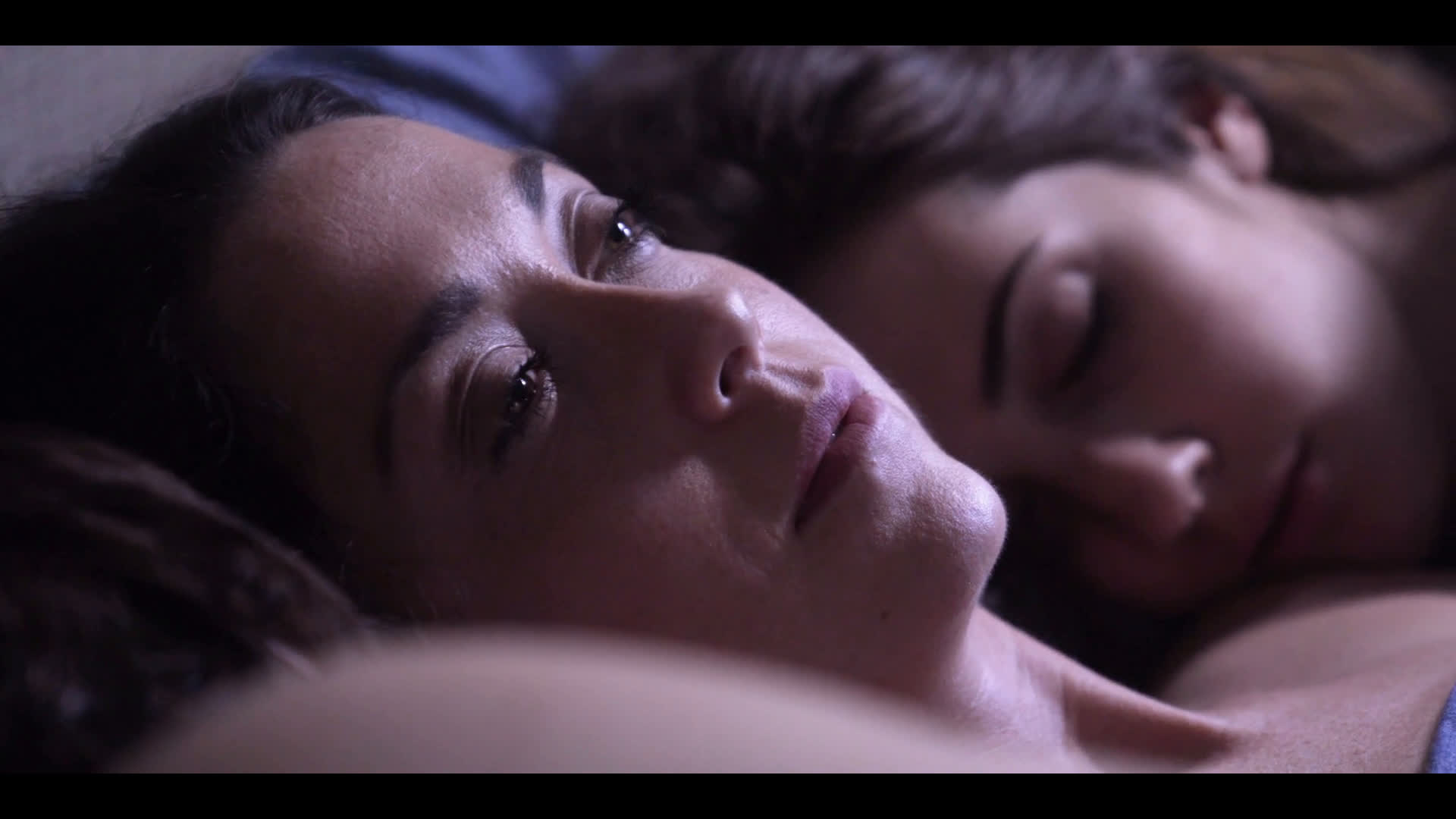
When Nena (Rachel Alig) meets Olivia (Kate Beecroft), there’s an instant spark. So even though Nena is married to Drew (Ryan Caraway), that doesn’t stop her from pursuing Olivia. In writer/director Victor Neumark’s first film, First Blush, an unconventional relationship forms as a duo becomes a trio in an exploration of a polyamorous relationship.

The best part of First Blush is that the characters seem like normal people. Save Olivia’s background as a Parisian model, the rest of the people we meet feel a lot like people we know. There were several moments that nailed the transition from single (or dating) twenty-somethings into married thirty-somethings – anxious Nena particularly reminded me of quite a few people (myself included).

Overall, these are characters who struggle with happiness, with what it means to be grown up, and with how to be brave. Nena’s resolve to say ‘yes’ more often is what leads her to pursue Olivia. While at first Drew seems simply along for the ride, Neumark makes sure to insert him (no pun intended) into the relationship as more than a bystander but an equal part.

The predictable ménage à trois montage, when it comes, is light on the sex, and more interested in illustrating the fun the three have as they fall into a relationship. The movie never stoops to voyeurism, instead it plays out as one would expect of any romantic dramedy – not to say it entirely follows a pattern, but by following a semi-predictable model, the film means to normalize the polyamorous lifestyle as a valid choice.

But the third act flounders. Following the film’s unnecessary time jump, Neumark isn’t as skillful at navigating the complications that arise within the trio. Unlike the naturalistic first and second acts, the third relies on things we’ve been told rather than shown. It would have been more interesting to see the interim time between the second and third acts, to give us a chance to watch as the tensions arise between the characters.

However, the movie never fails to engage emotionally. We’re invested in this relationship, we want to know how it will work, where it will go. While it might not be a relationship style most of us will experience, that doesn’t mean we can’t understand the appeal. You want the characters to be happy, in whatever relationship style that works best for them.

Making the Monster

A Nightmare Wakes

by Hope Madden

It’s hard not to be fascinated by Mary Wollstonecraft Shelley, who, at 18, wrote arguably the most iconic piece of Gothic horror or science fiction—or both in one—ever to be penned.

Writer/director Nora Unkel takes us back to that rainy summer night when young Mary, her lover Percy Shelley (Guillian Yao Gioiello) and his friend Lord Byron (Philippe Bowgen, over the top) participated in a challenge to write a ghost story.

We all remember what Mary came up with, right?

Alix Wilton Regan plays the young scribe. It’s an adequate performance in a fairly lifeless film that suggests writing and madness go hand in hand but plays it safe when it comes to what really haunts Mary.

As Mary Shelley suffers through indignities at the hands of a lover she believed to be a better man than he is, she escapes through writing. Aside from one particularly difficult scene, though, Percy’s behavior is largely sanitized or quarantined to offscreen antics we can only guess at.

Wilton Regan offers a needy heroine more likely to lash out at her sister (who may or may not deserve it, Unkel never really clarifies) than to stand up for herself. The performance might have delivered an intriguing central figure—unlikeable and almost impossible to root for.

It seems like a conscious creative decision between Unkel and Wilton Regan, given some of Mary’s behaviors. Creating an unlikeable female to anchor a film is an endlessly intriguing, brave and chancy decision, but the film you hang around her has to turn her performance into something worthy of the attention. Unkel can’t manage it.

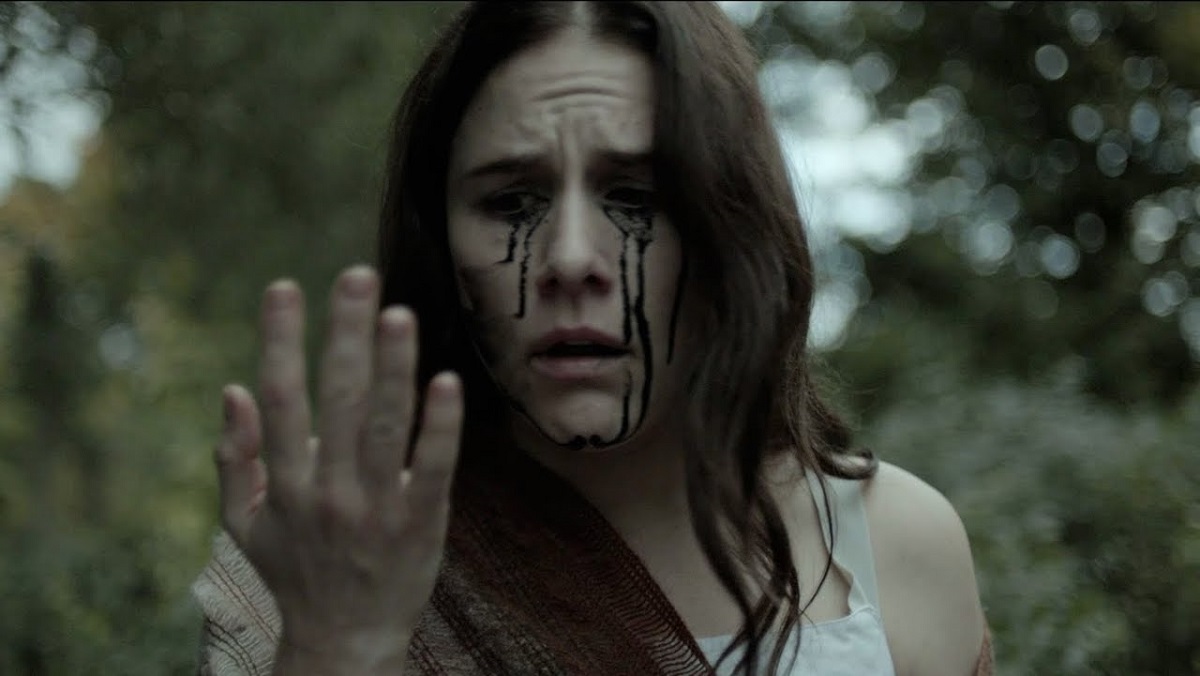
Still, Mary descends into a kind of madness and soon enough, her creation takes on a life of its own.

Unkel is not the first filmmaker to conflate the writer’s life with the writer’s product. Just a few years back, Haiffa Al-Mansour’s biopic Mary Shelley convincingly drew Frankenstein as a near autobiography. That film didn’t quite deliver on its promise, either.

In Al-Mansour’s case, hero worship led to a superficial character (played soundly by Elle Fanning) with few faults and a lot of frowning. Unkel’s version is close to the opposite, but both filmmakers set out to depict what it was Mary Shelley was really trying to say when she wrote Frankenstein.

It’s a laudable goal. The problem may just be that Mary Shelley said it so much better.

Red Pill or Blue?

A Glitch in the Matrix

by Hope Madden

Nobody makes documentaries quite like Rodney Ascher.

You can see the 2010 short that first got him the attention of the Sundance Film Festival, S from Hell, in its entirety on YouTube right now. I think you should. It gives you just a taste of the mixture of absurd, earnest, terrifying and funny that inform his nonfiction recipes.

His 2012 documentary feature debut, Room 237, gave us a glimpse of his own fascination with personal obsessions. Ascher’s interest in the opinions and voices of his subjects clearly allows them to feel the safety necessary to share deeply held and seemingly ludicrous ideas. It also gives the film a sense of exploration rather than judgment. You are truly invited to wonder what if?

His most potent and terrifying invitation, The Nightmare, is so sincere in its sleuthing it may convince you that the film itself has infected you with a debilitating condition. So it’s no surprise that any new effort from Ascher draws awed anticipation from weirdos and cinephiles alike (not that there’s a big difference between the two).

Plus a ton of utterly fascinating footage of Philip K. Dick speaking.

A Glitch in the Matrix, premiering earlier this week at Sundance and opening digitally (appropriately enough) this weekend, explores Simulation Theory. You know, that zany notion that we’re not real, we’re all living in a simulating played by beings of a higher intelligence.

Nutty, right?   

Once again, Ascher’s meticulously built doc feels simultaneously playful and dark—two adjectives that suit the topic brilliantly. We’re reminded of Descartes attempts to prove that he exists, and before that, of Plato’s musings that we may be simply witnessing some form of life facsimile and not participating in reality at all.

So, it’s not a new idea. Perhaps the most intriguing notion the film brings up is that, when aquaducts were the height of technology, the world believed our bodies were at the mercy of our own humors. Once the telegraph became top tech, suddenly our bodies were run by electrical currents. And later, we “understood” that our brains were like computers.

It’s no surprise, then that in a virtual world, we lean toward the notion that reality is its own form of virtual reality. But Ascher digs much deeper, drawing images of a culture and personality type compelled by these ideas, and the hard potential consequences of a Matrix in the hands of someone less noble than Neo.

A Glitch in the Matrix becomes Ascher’s most complicated and poignant film.

Moon in Her Eye

The Reckoning

by Hope Madden

It’s been nearly 20 years since Neil Marshall first caught our attention with his remarkable military/lycanthropic standoff, Dog Soldiers. Just three years later, the writer/director offered his genre masterpiece, The Descent, and suddenly anticipation was high for a filmmaker who knew how to scare us.

A couple of disappointments later and the Englishman began to rebuild his reputation doing one-off TV episodes and horror shorts until possibly sinking his career forever in 2019 with the Big Box Office Bomb that was Hellboy.

The Reckoning won’t help things.

Marshall’s latest, co-written with Edward Evers-Swindell (Dark Signal) and star Charlotte Kirk, takes us back to the Dark Ages. The black plague is wiping out the English countryside, but witch hunters are a close second in terms of death toll.

Striking images are everywhere in this film—a home burning, a horse rearing, misty moors and the like. But the first sight that will really make you scratch your head is that of Grace (Kirk), humble-but-loving wife in full, never-to-be-flawed makeup. It’s so jarring given the plague-ridden scenes surrounding her that you cannot help but notice it.

And for the next hour 50 (at least 30 minutes longer than necessary), Kirk poses. She stands firm. She yearns. She dotes. She hesitates. She resolves. Yes, I believe that runs the full gamut of Kirk’s poses.

It doesn’t help matters that The Reckoning brings so little new to the historical witch torture genre. Grace’s ordeals, once her lascivious landlord brings her up on charges of witchcraft for spurning him, lead to increasingly gratuitous and sexualized torture.

And still, that nude lip liner never smudges.

Around Kirk’s showy performance is a wide variety of talent. Sean Pertwee and Steven Waddington offer fine, villainous turns, for instance.

The writing is not a real strength, as most of the plotting and dialog serve only to create new opportunities to pose. It’s hard to call The Reckoning a wasted opportunity because, aside from some solid framing and cinematography, there’s nothing here to even exploit. It’s a superficial ripoff of a worn out genre, built entirely around a laughable performance.  

I Dream of Horses

The Wanting Mare

by Hope Madden

Light on plot, heavy on atmosphere, Nicholas Ashe Bateman’s feature debut drops us in a distant post-apocalypse. Here, those trapped on a sparsely populated island of dust and heat dream of boarding the once-yearly barge that transports the island’s wild horses to a wintry mainland.

Poetic and dreamy, Bateman’s tale plays out before us without allowing us to truly penetrate it. Moira (Jordan Monaghan) has one wish only: passage across. She’s plagued by nightmares of a fiery past—maybe the event that brought about the now-times, nightmares passed down to her from her own mother.

She saves a man. He promises her a ticket. But how good is a man’s word in a society like this?

Bateman’s vision is often transportive. There are leaps in timeline and in logic that you’ll forgive by virtue of the lyrical nature of his story. This is a fable, not a drama. The Wanting Mare has a fantasy for you, if you have the patience for it.

You will need patience, though. The 90-minute runtime feels much longer, partly because Bateman’s storytelling intentionally keeps you at arm’s length from his characters. Without any skin in the game, the game becomes tiresome.

It’s never less than beautiful, but it’s definitely less than compelling. There are brief scenes in the second act that almost offer excitement, plot twists, some genuine call for redemption. These are the only scenes in the film that Bateman rushes.

Performances are necessarily stilted and can’t be criticized for that. We are not meant to feel close to these characters, although Bateman himself does personalize his character. His own acting style is far more accessible and intimate than that of his co-stars.

The benefit: act 2 feels more emotionally compelling than the rest of the film. The drawback: the film’s point of view becomes muddy. We travel through time along with Moira and her offspring, but because we identify with Bateman’s nameless man, these women become even more distant and peripheral. They are idealized reasons for the film to be rather than a driving force or voice in the film itself.

And that’s what the film is missing. It’s a gorgeous effort, poetic and somber and dreamlike. But it lacks a central voice, and without that, any real connection with the audience.

Fjords of Forgettable

Sacrifice

by Brandon Thomas

If we’ve learned anything from horror cinema over the decades, it’s that Europe is a scary place and to avoid it at all costs. Werewolves on the moors, rage zombies, predatory hostels – just go to Myrtle Beach again and try your luck with the drunk rednecks. And now, with Sacrifice, co-writers/co-directors Andy Collier and Toor Mian give us a taste of the unsavory side of Norway.

Isaac (Ludovic Hughes) and Emma (Sophie Stevens) return to Isaac’s birthplace on a remote Norwegian island to claim his inheritance. Unknown family truths bubble to the surface as Isaac confronts a dark legacy and Emma fears not only for her husband’s sanity but for the life of her unborn child. 

Sacrifice is a frustrating film from the start. The basic “fish out of water” premise is one we’ve seen time and time again, and Sacrifice offers nothing new to this subgenre. The opening credits promise a story built around the works of H.P. Lovecraft, but the closest we get to Lovecraft is unsubtle nods to Cthulhu.

Subtlety in horror certainly has its place. There are countless horror movies that take a more methodical approach to dole out the scares. These movies eventually pay off, though. Sacrifice is a film that tries to build tension and atmosphere, but whiffs at every opportunity. Semi-odd behavior from backwoods Norwegian folk isn’t exactly edge-of-your-seat material. And I would be ashamed of myself if I didn’t mention how the film uses the tried and true “character wakes up from a nightmare that seemed real” device a grand total of four times. 

At this point, I was hoping the movie was a dream.

So much of the films’s tension is built around the unraveling of Isaac and Emma’s relationship. The problem with this is that the characters toggle between unlikable and uninteresting from the get-go. Isaac’s descent into madness never once borders on tragedy. Instead, this turn feels like the filmmaker’s checking off a box on their genre bingo card. 

Even the illustrious Barbara Crampton (Re-Animator, From Beyond) doesn’t come out unscathed. It’s a role that asks her to do little more than be a suspicious local and deliver an uneven Norwegian accent. 

The film does get a lot out of the location shooting in Norway. The lush green fjords with their raging waterfalls inject a strong sense of place. These scenic establishing shots help set an “otherness” to the island, even if the remainder of the film does a poor job of maintaining the eerie mood. 

Sacrifice tries to set itself alongside Europe-centric horror movies like The Wicker Man and Midsommar, but instead comes off as a watered-down, and quite lazy, copy of better movies. 

Fright Club: 1, 2, or 3 Person Casts

Fuzzy math takes over as we count cast members and celebrate minimalist films that can seep into your nightmares with the help of very few performers. There are some great options, but here are our six favorites films with 1, 2, or 3 people in the cast.

Thanks Fright Clubber Michael for the topic!

6. Hard Candy (2005)

It would be two years before Elliot Paige burst into public consciousness as the hilarious and pregnant teen in Juno–still a kid getting herself into trouble, I guess. But the trouble in Hard Candy is tougher to manage.

Paige is a force of nature, playing off Patrick Wilson in a cat-and-mouse game where roles are flexible. Director David Slade keeps tensions ratcheted up to an unbearable level while Brian Nelson (who collaborated with Spade on the underappreciated vampire flick 30 Days of Night) twists the knife in a script as sharp and shady as these actors are wily and hard edged. It’s a breathless exploration of all that’s bad in the world.

5. Buried (2010)

If you’re claustrophobic, you might want to sit this one out. A tour de force meant to unveil Ryan Reynolds’s skill as an actor, Buried spends a breathless 95 minutes inside a coffin with the lanky Canadian, who’s left his quips on the surface.

Writer Chris Spalding stretches credibility as he tries to keep the crises lively, which is unfortunate because the simple story and Reynolds’s raw delivery makes this a gut-wrenching experience.

4. Creep (2014)

This true two-man show boasts dark and twisted humor, a great jump scare, and a truly exceptional mask.

Writer/director Patrick Brice plays Aaron, hapless videographer seeking work, thrills, maybe even love. He answers an ad to record Josef (Mark Duplass) at home, and then on the road. The film toys with that inner warning you hear and then choose to ignore.

Duplass has an incredible aptitude for pushing boundaries just enough to prick that inner voice but not quite enough to guarantee that you’ll head for the exit. As red flag after red flag go unheeded, Brice unveils more and more chilling detail.

3. 10 Cloverfield Lane (2016)

This one is a threesome. Well, not if Howard (a glorious John Goodman) has anything to say about it.

The feature debut from director Dan Trachtenberg toys with the idea of an alien invasion (or some kind of chemical warfare), but it keeps you snugly indoors with Howard and his guests Michelle (Mary Elizabeth Winstead) and Emmett (John Gallagher Jr.). Guess which one Howard doesn’t really want around?

The trio of performances compel your attention, even in the few down moments. This is a tight, taut thrill ride—even if it is confined to one guy’s basement.

2. Antichrist (2009)

Boy, Charlotte Gainsbourg and Willem Dafoe are a one/two punch in this one. A married couple overcoming the guilt and desperate grief of their son’s death, the two make some increasingly dreadful decisions.

Alone in their apartment, the two bodies take up much of the screen. Once we move to the cabin in the woods, the colors become deeper and darker, the atmosphere denser, and the actors appear almost tiny and insignificant inside all this throbbing, living nature. Both performances are jarring and fantastic in a movie quite unlike any other.

1. The Lighthouse (2019)

The one thing you just don’t do as you descend into madness is spill your beans.

Dafoe again, this time with Robert Pattinson as his wickie mate in one of the most fascinating examinations of power shifts in horror history. Gorgeously photographed in black and white and boasting 2019’s best sound design, The Lighthouse offers these two actors plenty to work with.

But in the end, it’s the performances that kill you. Madness!

Earning Your Wings

Palmer

by George Wolf

Palmer has Justin Timberlake, an adorable little kid and a heartwarming message. Heck, it’s not much more than some sexytime and a few beers away from being an afterschool special.

Yes, you can guess where it’s going. No, you will not be sorry for the trip.

J.T. is Eddie, who prefers you just call him by his last name. He was once a hot shot Louisiana high school quarterback with a scholarship to LSU. But after injuries ended Palmer’s career early, his quick temper got him sent away for 12 long on attempted murder.

But he’s served his time, so now Palmer has come back to his small, “church and football” hometown to move in with Grandma Vivian (June Squibb). Once there, it doesn’t take Palmer long to notice Shelly, the trailer train-wreck next door (Juno Temple).

Shelly leaves town a lot, and when she does, her son Sam (Ryder Allen in a perfectly lovable debut) stays with Viv. Sam doesn’t like football. Sam likes princesses, having tea parties, and dressing up in costumes that come with wings and tiaras.

Director Fisher Stevens fleshes out Cheryl Guerriero’s script with a fine instinct for knowing we don’t need to be led by the nose. There will be bonding, bullies beaten down and lessons learned, plus Sam’s pretty teacher (Alisha Wainwright) is single, so, you know.

Timberlake is gritty and finely understated, letting Palmer’s feelings for Sam unveil themselves with a gradual, and ultimately authentic depth. Palmer has scars from his childhood, too, but as expected as his kinship with Sam is, it seldom feels mawkish.

And Allen, well this kid just skips away with the movie tucked inside his glittery backpack. When Palmer tells Sam there are no boys on his favorite TV show and Sam confidently responds that he will be the first, all the hate that the world throws at kids like Sam seems – if only for a moment – miles away.

There is contrivance and familiarity at work in Palmer, no doubt. But there’s also enough heart, and pure hopeful innocence, to earn this film some wings.

A Little Familiar

The Little Things

by Hope Madden

When you see a film whose plot synopsis exactly mirrors hundreds of other movies, it is the little things you have to look for to set it apart.

Writer/director John Lee Hancock’s The Little Things introduces plenty of those small details: a massive cross high in the Hollywood hills, a gun casing, a barrette, a radio station, a dog. Like the 1990s setting, though, they mostly amount to little more than understated flourish.

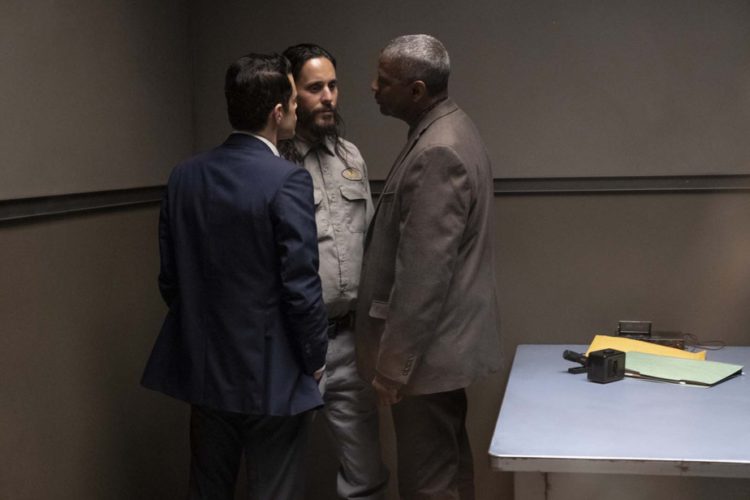
Hancock (who wrote and directed The Blind Side, but I will try not to hold that against him) introduces two cops. One, Deke (Denzel Washington, always a pleasure), is a Kern County sheriff’s deputy with bad blood back in LA. The other, Baxter (Rami Malek), is a climbing homicide detective hot shot in the big town.

When Deke is sent to the city to retrieve some evidence for a county case, Baxter inexplicably pulls him into a serial killer investigation, and there you have it: haunted veteran cop, ambitious newcomer, cold blooded killer (who may or may not be Jared Leto).

Again, that barebones description could be about 300 movies and TV series, including Netflix’s current true crime mini The Night Stalker (who is mentioned once during this film). How to elevate it?

Well, four Oscars among your three leads is a start. Perhaps that’s why this police procedural turns character study so quickly.

Washington’s worn out crime fighter offers a low key emotional center, which is a needed respite from the odd Baxter. Malek’s characterization of the by-the-books half of this duo is curiously manic, and Hancock spends frustratingly little time digging into Baxter’s motivation. Still, Malek and Washington offer quick chemistry that gives their scenes some depth.

Leto delivers a characteristically tic-heavy performance—perhaps also a tad overdone. Both he and Malek help generate a little energy with their accumulated weirdness, but it’s not enough to overcome the film’s general lack of momentum or purpose.

It doesn’t help that the color, period and low boil bring to mind two wildly superior Fincher efforts—Seven and, even more clearly, Zodiac. And however competently made (and it is) or impressively cast (obviously), The Little Things just can’t distinguish itself from the pack.

Digging in the Dirt

The Dig

by Hope Madden

Indiana Jones made archeology look thrilling and dangerous. Director Simon Stone’s The Dig makes it look positively British.

Back in 1938, as England sat on the precipice of WWII, an informally trained excavator named Basil Brown unearthed an ancient Saxon ship in a mound around back of the widowed Edith Pretty’s land. Journalist/novelist John Preston’s aunt Margaret Piggott was part of the larger archeological crew at Sutton Hoo that would mine the site for its cultural riches. Many years later, Preston would mine that story for a novel.

Refined and marked by the proper restraint of the English, Moira Buffini’s adaptation of the source material remains keenly interested in the difference between what we unearth and what we leave buried. Stone’s film shadows two romances and the emotions they choose to excavate as well as those they do not.

Brown and Pretty are played by Ralph Fiennes and Carey Mulligan, respectively. Fiennes finds a sweetly vulnerable center to Brown’s guarded stoicism. Meanwhile Mulligan reminds us again of her limitless range, playing essentially the opposite character of her bitingly brilliant Cassandra in Promising Young Woman.

Watching the gentle dance these two impressive talents engage in as their characters come to understand one another is hypnotic. There’s rarely an excuse to miss the opportunity to see either Mulligan or Fiennes act, and their delicate chemistry here is gorgeous.

Stone flavors his film and this relationship with notes of longing and melancholy that balance the overall theme of discovery. And then a sudden development—the arrival of Basil’s amiable and thoroughly loyal wife May (Monica Dolan, irresistible)—does more to sever their tale than complicate it.

This odd second act shift – just when we’ve really begun to invest in the primary relationship – turns Mulligan and Fiennes into supporting players in their own movie. Johnny Flynn and Lily James take it from here, he the attentive young RAF man in waiting and she the spunky archeologist/unsatisfied newlywed.

Both actors are solid, as is the entire and sizable ensemble of support, but the film feels out of sorts the moment the youngsters arrive.

It’s a lopsidedness The Dig never quite recovers from. Of course, had Mulligan and Fiennes not shone quite so brightly, it may not have been a problem at all.

Hope Madden and George Wolf … get it?