Fantasy Based

Finding You

by George Wolf

Here’s the perfect marriage of a formulaic, instantly forgettable title with a formulaic, instantly forgettable film.

Talented violinist Finley Sinclair (Rose Reid) fails her audition at the Manhattan music conservatory due to a “lack of passion” in her playing. She thinks a change of scenery will ease the sting of rejection, so it’s goodbye to New York, hello to a semester studying abroad in Ireland (where she’ll go to class exactly one day).

Before wheels up, though, a flight attendant offers Finley an empty seat in First Class. I’ll pause now for laughter.

Welcome back. And wouldn’t you know, that seat is right beside Beckett Rush (Jedidiah Goodacre), international movie star heartthrob! Of course Finley’s put off by his arrogance, and the meet cute becomes a completely unconvincing setup for a nonstop flight to Young Adult romance fantasyland.

In the quaint Irish village of Cardington, Finley’s host family (which includes the irresistible Saoirse-Monica Jackson from Derry Girls) runs a B&B, and guess who else is staying there?

Bono?

Incorrect. It’s that obnoxious Beckett! He’s in town to film the latest Dawn of the Dragon flick, reprising his role as “Steel Markoff” and his tabloid-friendly romance with co-star Taylor Risdale (Katherine McNamara)! But Beckett seems eager to break from the grip of his pushy manager/father (Tom Everett Scott), and fate sure does seem to like throwing Finley and Beckett together, so…

No! “We can’t get involved!” “It would never work!”

Writer/director Brian Baugh (adapting Jenny B. Jones’s 2011 YA novel “There You’ll Find Me”) has a resume heavy on faith based projects, and Finding You does some very similar preaching to its own choir. Though Baugh manages some amusing wink-winks at those dragon-based franchises, there’s no such self awareness to be found for his own audience.

How the story is told doesn’t matter, as long as that story is a wholesome PG-rated romance (no tongues, kids!) with plenty of rolling Irish hills (they are gorgeous) and even more chances for our girl Finley to be magical.

Can that musical hobo Seamus (Patrick Bergin) bring out the passion in Finley’s playing? Can she step dance into town and finally end the decades long feud between mean Mrs. Sweeney (Vanessa Redgrave!) and her sister, while also coming to terms with her own brother’s memory and helping Beckett to be his own man?

Will she ever remember to go to class?

Death Be Not Proud

There Is No Evil

by George Wolf

Presenting four short films together as separately compelling variations on a theme is impressive. Make those four shorts all from the same writer/director, telling distinct stories that raise the emotional stakes in distinct ways, and you have a stunning achievement.

You have Iranian filmmaker Mohammad Rasoulof delivering a political statement of immense weight and moral conviction. You have There Is No Evil.

After an opening segment that lulls you with a family’s mundane daily schedule before dropping a hammer of casual horror, Rasoulof unveils small sets of characters, each dealing with the effects of seemingly impossible choices.

While serving the two-year term of military service mandated in Iran, a man may be forced to perform executions. Go along you’ll get along, and you’ll be a killer. Say no?

“They destroy our lives.”

Each chapter of the film presents a seemingly unique paradox, then quietly mounts the tension before revealing gripping plot turns that unite the strands in memorably devastating fashion.

Dare we hope for any happy endings here, even when a desperate decision seems to pay off?

With four masterful bits of storytelling and the exceptional ensemble cast in There Is No Evil, Rasoulof deftly explores the wages of those decisions, as well as the immoral center of a despotic regime that makes them necessary.

Wishful Thinking

The Djinn

by Hope Madden

There is something to be said for films that do a lot with very little. The ability to awaken the imagination without the help of a big budget, multiple locations, a giant cast or too much in the way of FX is a credit to filmmakers.

And hell, David Charbonier and Justin Powell’s The Djinn does most of it without dialog.

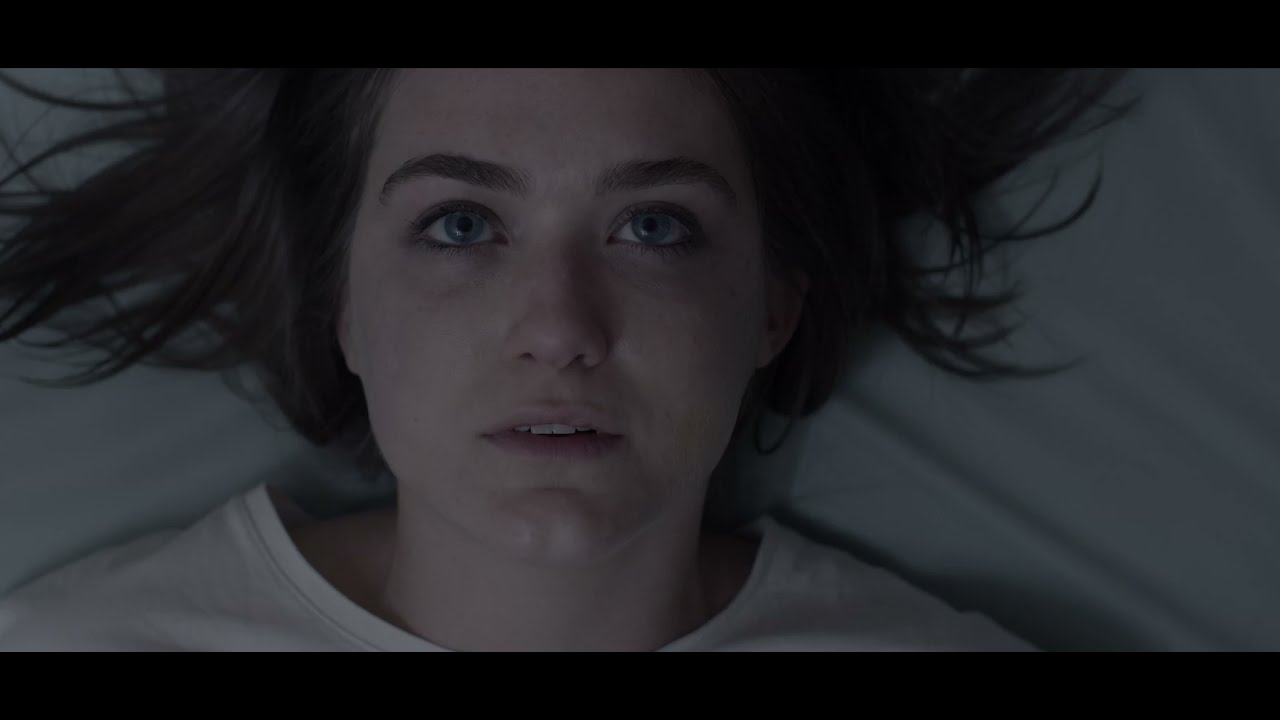
Dylan Jacobs (Ezra Dewey) and his dad (Rob Brownstein) have just moved into a new apartment. There’s a recent tragedy in their past, but that’s not the only reason Dad’s a little hesitant to go to his shift at the radio station. Dylan is mute and maybe he needs another day or two in the apartment to be truly safe on his own.

Ignoring his instincts, Dad leaves for work. For the balance of the film, we’re alone in the apartment with Dylan and the demon he innocently summons trying to regain his voice.

The Djinn succeeds on the strength of its young lead, who carries every scene without benefit of dialog. Star of the filmmakers’ 2020 horror tale The Boy Behind the Door, Dewey’s emotional performance is enough to keep you compelled for the film’s brisk run time.

Charbonier and Powell have other tricks up their sleeve to elevate their story. Cinematographer Julian Estrada, for one, who gives the impression that the apartment itself is watching the boy. Setting the film in 1988 frees the filmmakers up from recent tech that simplifies communication, which feels a tad like a cheat but does amplify a creepy sense of helplessness.

Not everything works, though. The filmmakers rely too heavily on music stabs and jumps, the soft rock soundtrack is curious, and a handful of tropes—the asthma inhaler, in particular—give the film a less-than-inspired feel.

But plenty of tense moments and creepy images punctuate the heartbreaking, age-old cautionary tale about getting what you wish for.

Fire Starter

Those Who Wish Me Dead

by Hope Madden

Michael Koryta’s heart-thumping YA adventure tale Those Who Wish Me Dead comes to the big screen. Well, mainly—it’s also on HBO Max—but the mountainous, fiery, wooded adventure is better suited to the largest screen you can find.

Koryta himself adapted his novel, along with co-writers Charles Leavitt (not very good—Warcraft, Seventh Son, In the Heart of the Sea) and Taylor Sheridan (very good—Hell or High Water, Sicario).

It should even out.

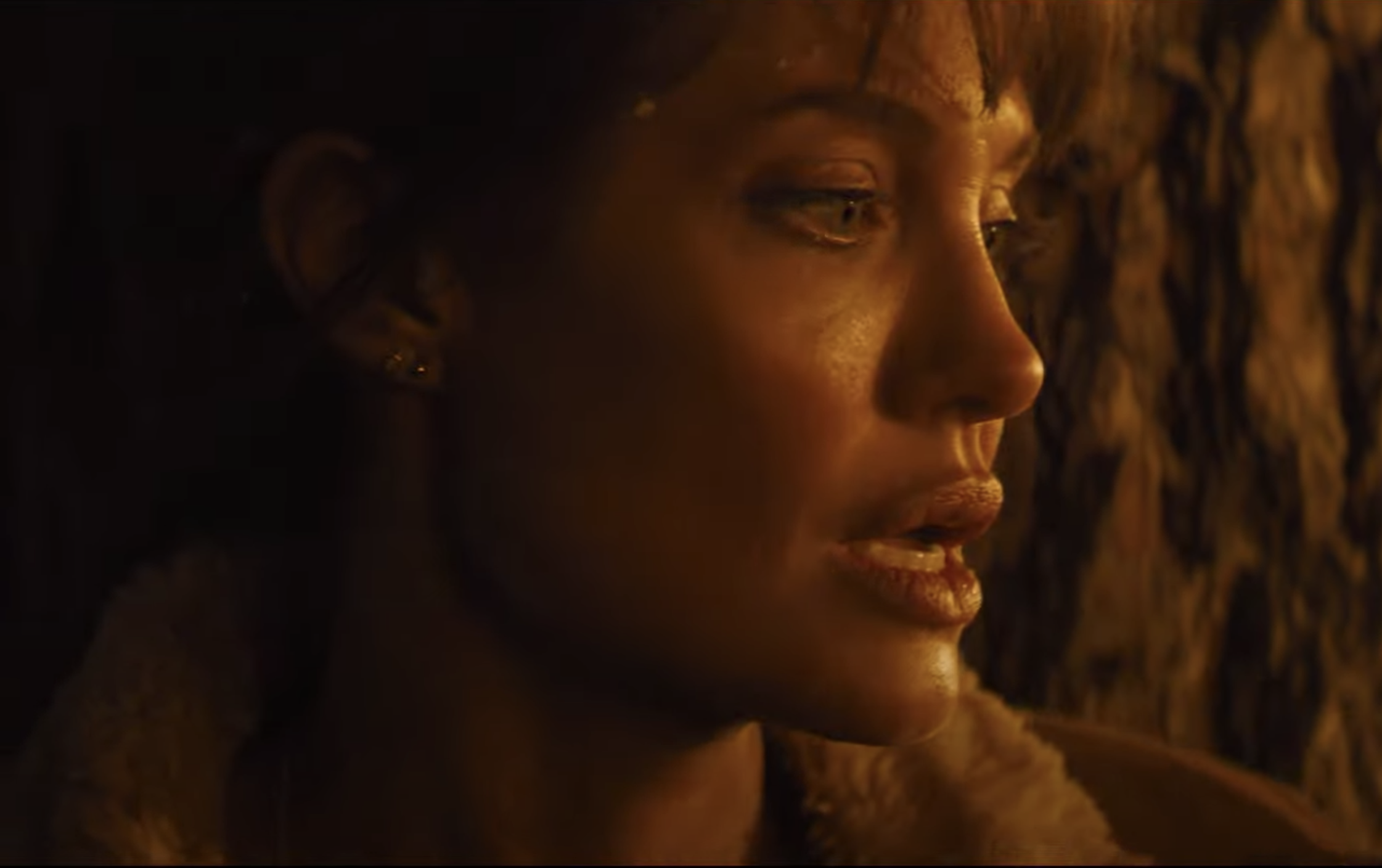
Sheridan also directs, dropping a young boy (Finn Little) in a burning forest, hunted by two murderers (Nicholas Hoult and Aiden Gillen), with only Angelina Jolie to help.

She does have a way with children, though.

Jolie’s Hanna Faber is a damaged Hotshot (those firefighters who parachute into forest blazes). She failed her psych eval after those fatalities last season and now she’s stuck in a lonely fire lookout tower miles from anywhere with nothing to keep her company but her own haunted thoughts.

So what I’m saying is, Those Who Wish Me Dead is now about Hanna rather than being about the kid who is wished dead. I just want fans of the novel to be prepared for this.

It’s still a perfectly satisfying if not particularly inspired adventure tale.

Little delivers an emotional blow as the newly orphaned youth who’s trying to be brave, trying to be smart, and sincerely in need of a hug. The biggest issue is simply the way he becomes a side character in his own story.

He’s not as discarded as the couple who run the survival camp (Jon Bernthal and Medina Senghore – though the latter does look glorious riding horseback with her rifle through the flames).

The basic backstory does suit this cinematic vehicle, though, and Jolie proves a charismatic central figure who can sure take a beating. As the bad guys close in from one direction, the fire from the other, Sheridan and team build a perfectly reasonable and structurally sound thriller.

Performances are strong and locations are gorgeous, but Those Who Wish Me Dead doesn’t take a lot of risks and that’s unfortunate.

Roadside Assistance

Goodbye Honey

by Hope Madden

Another new horror flick that does a lot with a little, Goodbye Honey is off the festival circuit and available in your home.

Director Max Strand’s isolated roadside buddy picture hitches a ride in the big rig with weary traveler Dawn (Pamela Jayne Morgan). She will deliver this cargo on time—she will!—but first she needs to pull into this isolated, wooded spot for a rest.

Morgan’s performance snagged her a number of fest awards, including Best Actress from Nightmares Film Festival. With so very few other faces on screen, it’s lucky she can carry so much scenery. She gives the character layers with a turn sometimes conjuring Melissa Leo or Ann Dowd—a no-nonsense everygal who is sometimes slow to pick up on things, has a bigger heart than you may think, and will surprise you with violence as needed.

Her nap is complicated by a plea for help: a young woman (Juliette Alice Gobin) wearing nothing but a tee-shirt, asking for water and a phone to call the police. But Dawn’s defenses are up—a woman alone out here can’t trust just anyone. Still, she wants to do the right thing.

Quickly Strand tweaks tensions as the isolated location brings out others, violent looneys mostly. Dawn will take care of this, all of it. All that matters is that her client is none the wiser and that she makes this delivery on time.

Gobin delivers a strong, wild-eyed but smart performance. Paul C. Kelly’s small but pivotal role could not be more deftly handled. Among the three primary performers, there is barely a wasted word or glance.

Strand’s nimble screenplay, co-written with Todd Rawiszer, twists and turns in ways that are both unexpected and fully reasonable.

Though one or two of the predicaments that befall the pair feel contrived simply to lengthen the film to feature-length, on the whole, Goodbye Honey delivers a tight set of smart thrills.

Benny and the Deaths

Benny Loves You

by Hope Madden

There is something inescapably silly about toy horror. Whether it’s a marionette or a ventriloquist doll, a china doll (with those creepy eyelashes) or a friend til the end, the toy itself can only generate so much authentic terror. After that, it’s just goofiness.

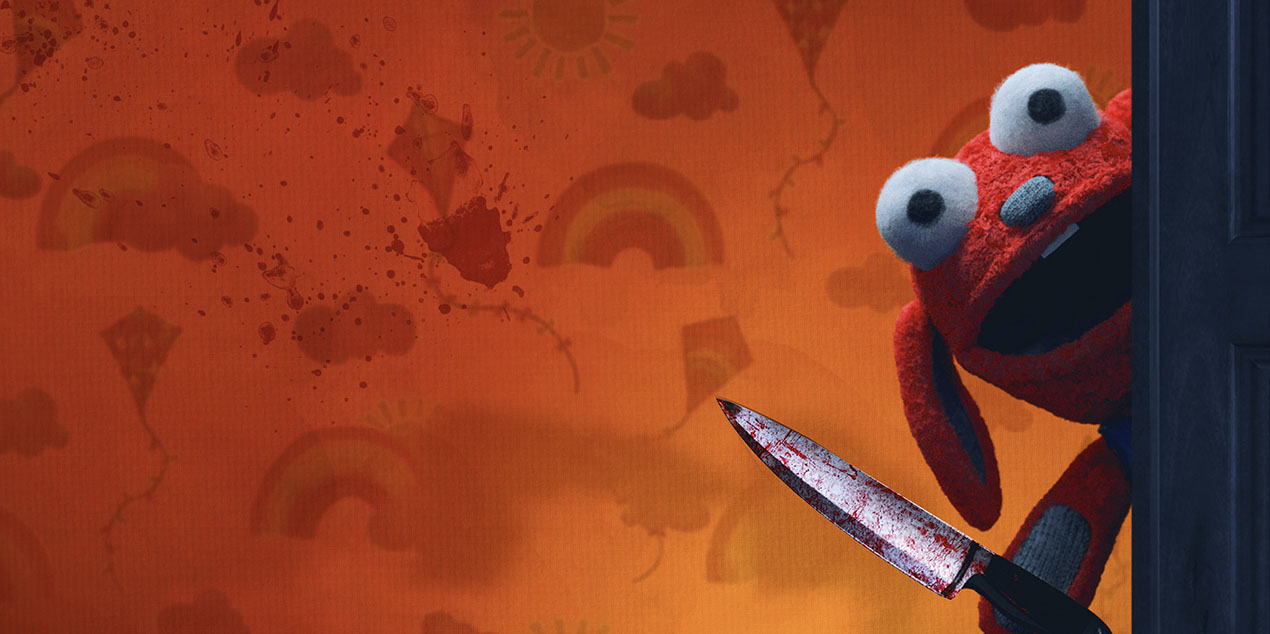
Karl Holt embraces that combination for his vengeful toy story, Benny Loves You.

We open on a spoiled child, her new Barbie, and the now-discarded stuffed dog, Todd. But soon we’re entrenched in the subpar life of Jack (Holt, who also writes and directs). It’s his 35th birthday. He still lives with his parents, still sleeps in his childhood bedroom that is still decorated as it was when he was seven.

Jack is a toy designer, but co-worker Richard (a colossal tit) makes him look like a peon. They’re both up for the same promotion. Things go from bad to worse, then worse, then worse still. Finally, Jack decides to grow up and put away all his childish things, including his beloved stuffed bear (Bear? With those ears?), Benny.

It goes less than well, the unruly toy responding like a bloodthirsty if very cheery jilted lover.

Holt turns in a solid performance as the stunted man-child living a nightmare of adulthood, and there are times when his writing suggests something deeper. He almost develops themes about arrested development, the entertainment/gaming/toy industry, maybe even masculine entitlement. Almost.

Instead of digging in, he settles for a superficial but generally charming and very violent comedy. (Dog lovers may want to skip this one.)

Low-rent FX heighten the film’s silliness and general wrong-headed glee. All the support work is on target, from George Collie as the noxious Richard to the love interest (Claire Cartwright), dog-loving boss (James Parsons), and incompetent cops (Anthony Styles and Darren Benedict). Each understands the tone here and nails it.

It’s just that it doesn’t amount to much. A mean spirit punctuates the romplike atmosphere a couple of times and feels wildly out of step with the balance of the film, but other than that, Benny Loves You offers forgettable, bloody fun.

Dr. Feel Bad

Antidote

by Rachel Willis

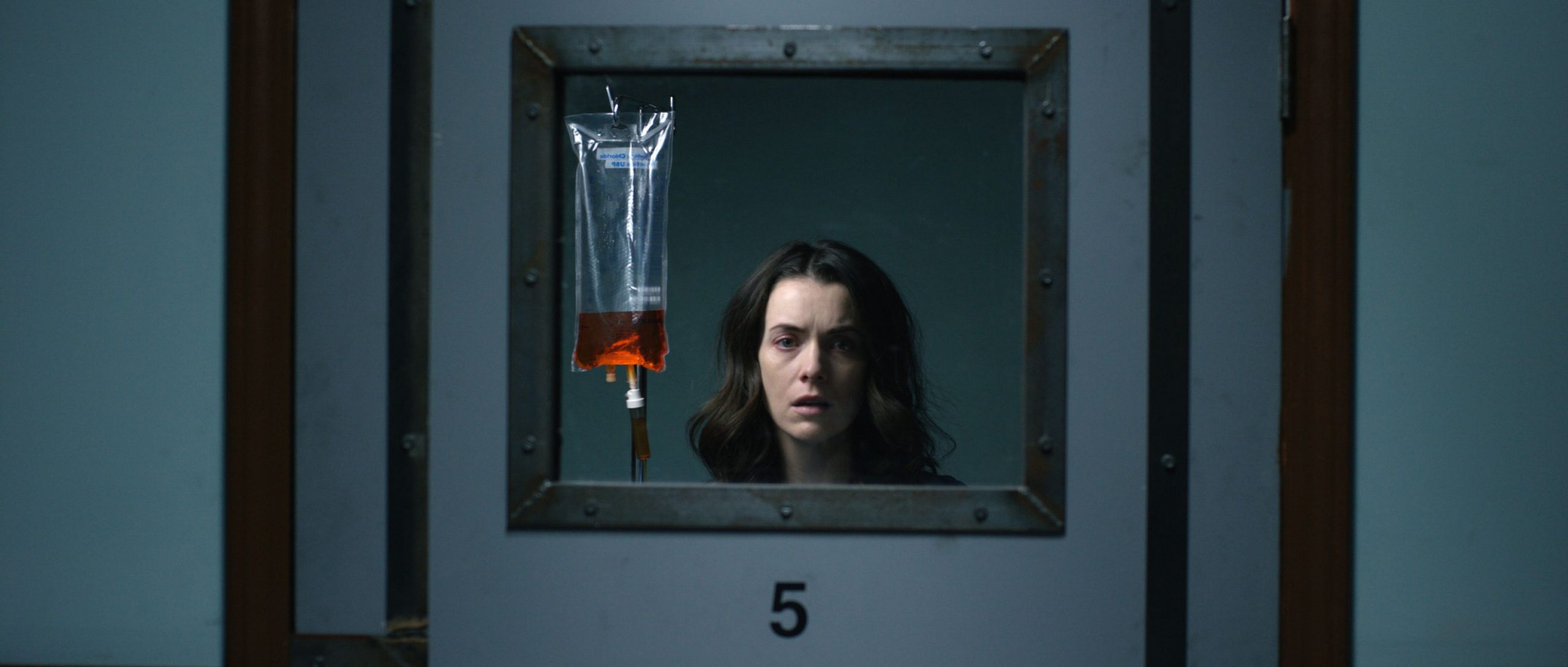
Imagine going to the hospital for a routine appendectomy and waking up in a hospital that’s a little too Hostel. That’s what happens to Sharyn (Ashlynn Yennie) in director Peter Daskaloff’s film, Antidote.

From the mysterious and gruesome opening, we’re quickly plunged into this warehouse-style hospital where patients are chained to their beds and answers to the question ‘why am I here?’ are in short supply.

We’re not given much information as Sharyn awakens to this nightmarish situation. A mysteriously polite doctor (Louis Mandylor) appears to offer her medicine for her anxiety, leading us down one alley of possible explanations. Glimpses into Sharyn’s past as she struggles to cope with her new world offer another possibility.

However, Daskaloff wants to keep us guessing with each new bit of information. As Sharyn meets her fellow patients, we learn new facets of the horrific experimentation that happens at the facility. A mysterious serum promises healing from every possible injury: amputation, burning, hanging, tongue removal. The antidote is really quite magnificent stuff.

While I was initially reminded of films like Hostel and Saw, Antidote doesn’t relish the gore quite as much. Most of the brutality happens off-screen, and the film is more interested in the tension created by the unknown. The suggestion of violence often does more to put the audience on edge than the ultra-realistic rendition.

But to work, the film must keep the audience hooked. We need to feel Sharyn’s anxiety and desperation, and this is where the film struggles. Watching Sharyn wander around the hospital (why is she allowed to do this?) is repetitive and boring. It’s easy to grow disinterested as we wait for the big reveal.

Yennie does bring an everywoman quality to her character. Sharyn’s dubious past unfolds throughout the film and is the most interesting aspect. It’s a problem when the film’s backstory is more engaging than the present action. Maybe if we’d seen a little more of that suggested violence, I’d have sat up straighter in my seat.

Playing against our everywoman, Mandylor makes Dr. Aaron Hellenbach a cool, sophisticated, sadistic madman – a bit like Hannibal Lecter only not so terrifying. He never feels like a villain, even though he appears to be the main engineer of the ‘experiments’ done on the patients.

Antidote has the elements to be intriguing, but doesn’t effectively deliver them.

Yippie Ki Yay, Micro Budget

In Action

by Christie Robb

In a world where two middle-aged men have access to a room, a series of Apple products, $22,730 from Kickstarter, and five years, expect a variety of action movie tropes to be stitched together with a thread of f-bombs and self-referential humor to create this strange quilt of a feature-length buddy-action-comedy/YouTube video.

In Action follows two former writing partners, Eric and Sean, who reunite at a frenemy’s wedding. Bored with their day-to-day lives, they decide to team up again to bang out an action movie screenplay asynchronously over email. But, unbeknownst to them, their script is intercepted by hackers and the writers get more action than they expected.

Directors/writers/stars Sean Kenealy and Eric Silvera manage to get a fair amount of bang for the low-budget buck. Not strong actors, the rapid banter between the two is engaging. And it has to be, because essentially the entire movie is just those two.

An assortment of minimal props, occasional animation, and (briefly) the use of action figures do serve to interject some variety. With the exception of some camera work and quick cuts that seem inspired by Shaun of the Dead, the camera is static. Other characters are mostly filmed over the shoulder, giving the impression that the only two involved in the film are Sean and Eric (sometimes in wigs or silly hats) until more than two bodies are shown on screen at the same time. Then, it becomes honestly a little confusing as to why these characters aren’t shot more conventionally. But, whatever.

The overall product, though, is fun with sound design and editing that are way more professional than you would expect. For an action movie with essentially no budget, it gets the job done pretty darn well.

Fright Club: Side Characters, Part 1

This episode is years in the making. We’ve talked about doing this, jotted down ideas and characters, debated — and now it’s finally here. Well, half of it, anyway. There’s just no way to reasonably fit the best side characters—those fully deserving a film of their own—in just one podcast. So here is our list, in alphabetical order (no need to rank them!). This one’s for the ladies.

Aunt Martha (Desiree Gould), Sleepaway Camp (1983)

Smartly dressed, thoughtful, loving, misguided, and as if a creature from an entirely different film. She made a decision and, sure, Angela probably should have been a part of that decision-making process. But it wasn’t Aunt Martha’s fault that Paul was a no-good cheater. Or that Judy was such an asshole. I mean, yes, that surprise at the end was due in large part to Aunt Martha, but as for the campers—they had it coming.

Mademoiselle (Catherine Begin), Martyrs (2008)

What a presence. Commanding, calm, wizened and weary, Catherine Begin’s Madamoiselle has such resigned decisiveness that it’s almost impossible to argue with her. She turns something that could have easily become torture porn into a mesmerizing glimpse at zealotry.

https://www.youtube.com/watch?v=KWYFLwHbu8k

Minnie Castavet (Ruth Gordon) Rosemary’s Baby (1968)

Ruth Gordon earned an Oscar as Rosemary and Guy Woodhouse’s busybody neighbor Minnie Castavet, wife of Roman and nonplussed chief operations officer of the coven. Yes, Roman made a good figurehead, but somebody has to just keep things moving. And as long as she ate the mouse, everything’s fine.

Mother (Fons Rademakers), Daughters of Darkness (1971)

One of the many glorious things about Harry Kumel’s decadent 1971 vampire fable is the way it feels like two or three different films colliding into one elegant bloodletting. Mother casts a looming shadow over one of those storylines, that of a young, beautiful couple recently married, Stefan and Valerie. Even before they’re ensnared in Countess Bathory’s love web, Stefan (an irredeemable asshole if ever there was one) needs to figure out how to break the news of his nuptials to Mother.

Whenever a new character makes you simply need to hear an entirely other story, one focused on whatever they’re not telling you about that character, you know you have a winner. The way Fons Rademakers pets his butler’s head, holds court in the greenhouse, and wields unspecified but somehow sinister power over Stefan begs for its own movie.

Mrs. Baylock (Billie Whitelaw), The Omen (1976)

From the moment she takes the screen, Mrs. Baylock is the new sheriff in town. She quietly yet immediately takes control of the Thorn household. If you didn’t know who was alpha, you only need to see who the dog listens to. Yep, Richard Thorn is in trouble. To say nothing of his poor, useless wife Catherine.

Tangina (Zelda Rubenstein), Poltergeist (1982)

Walks in the house, owns the place. Tangina is a force of nature with a soft little lilt and a no-nonsense approach to cleaning the Freeling house. Her confidence gives the character more than a huckster vibe, although there is a sense of showmanship to everything she does. But when she is addressing the living, it’s best not to give trick answers.

Zelda (Andrew Hubatsek), Pet Sematary (1989)

Scary as hell. Sure, the cat, little Gage, that guy with the brain on the outside of his skull—all of it has its horror charm. But the real nightmare in Mary Lamber’s adaptation of the Stephen King tale is Rachel Creed’s guilty memory of the sister who terrified and horrified her, the sister she believes died—at least in part—due to her own negligence and hatred. Thanks to the angular, monstrous vision of Andrew Hubastek in a nightdress, all contorting ribcage and spine, Zelda became easily the scariest thing in the film.

Screening Room: Wrath of Man, Here Today, Fried Barry, Above Suspicion, The Oak Room & More

Hope Madden and George Wolf … get it?