Category Archives: Slider

For the homepage slider

Song of Myself

CODA

by George Wolf

CODA is the type of welcome reminder we get every so often that lets us know a formulaic story isn’t an inherently bad thing. Fill the formula with characters that feel real enough to care about, and even a predictable journey can be a touching ride.

Writer/director Sian Heder delivers an engaging crowd-pleaser with CODA, titled after the acronym for Child Of Deaf Adults. That child is Gloucester, Mass. high school senior Ruby Rossi (Emilia Jones from Netflix’s Locke and Key – just terrific), who’s the only hearing person in her household of Mom Jackie (Marlee Matlin), Dad Frank (Troy Kotsur) and brother Leo (Daniel Durant).

The Rossi family business is fishing, but Ruby’s real passion is for singing – even though she’s too shy to let people know it. On a whim, she follows her crush Miles (Ferdia Walsh-Peelo) to choir class, where the demanding “Mr. V.” (Eugenio Derbez) sees a true talent buried under nerves. Find your voice, Mr. V. tells Ruby, and you could earn a music scholarship.

Find your voice. Heder comes right out and says it – about a character who literally has the only speaking voice in her family. And in an instant, CODA acknowledges all of the ingredients for another manipulative YA special fest, and then sets about swatting them away through thoughtful writing, smart pacing and wonderful performances all around.

Events are often a tad convenient, but the stakes and the people weighing them always feel authentic. Ruby and her friends talk about sex and drugs. Jackie is a (gasp) proudly sexy and sexual middle-aged woman who also has poignant concerns about raising a hearing child. Frank is a loving family man looking for ways to keep his boat in the water, while Leo fights to prove he’s not helpless, and to push Ruby toward her dream.

And, of course, the title also works as a reference to the end of Ruby’s childhood as she moves to take more control of her own life.

So yes, expect first love, a big moment at the choir concert and a happy ending, but the trip to where we know we’re going is funny and warm thanks to the winning cast and Heder’s earnest command of tone. The spots where she removes all sound to shift the perspective are well-placed and never cloying, adding to the film’s list of sweetly resonant moments.

There aren’t many verses in CODA‘s coming-of-age composition that we haven’t heard before. But these hits benefit from an endlessly heartfelt new arrangement, leaving a setlist that’s familiar, but well worth cueing up again.

Scare City

Howling Village

by Brandon Thomas

Takashi Shimizu is J-horror (Japanese horror) royalty. His Grudge series of films were just as influential and important as Ringu, Dark Water and Pulse. Shimizu has earned his bona fides, and while the Howling Village doesn’t quite reach the heights of his earlier work, it’s still an effective entry into the ghost story realm.

Anika (Rinka Otani) and her boyfriend, Yuma (Ryoto Bando), enter the “Howling Village” late at night to witness the mysterious village for themselves. After a harrowing encounter, Anika seemingly ends her own life even though she died on land with water in her lungs. A distraught Yuma disappears into the Howling Village once more, this time with his younger brother at his side. As Yuma’s older sister, Kanata (Ayaka Miyoshi), begins to piece together the mystery around her brothers’ disappearance, the forces around the Howling Village, and Kanata’s family , rise up to stop her.  

Early on, Howling Village sets the stage for a complicated mystery between Kanata’s family and the village itself. These types of ghost stories love to mix family drama and tradition with the supernatural. The ones that do it well (Hereditary, The Changeling) do it extremely well, while those at the other end of the spectrum usually end up adding one too many layers that weigh the story down. 

The film’s mix of mystery and horror would’ve worked better had Shimizu ironed out the details with more precision The narrative becomes contrived and confusing – often bouncing around to different characters and plots without finishing the thought of those individual scenes. Howling Village is a film that wants to comment on prejudice, greed, and how those two things end up coalescing into one heinous act. The script just never quite manages to do anything more than make a superficial comment on either topic. 

All is not lost though. There are a few successful scares that are right up there with the best of J-horror. Shimizu’s fantastic grip on the tonal dread throughout the film is really the saving grace. Sure, the mystery bogs things down, and some of the rules don’t make a lick of sense, but the super creepy visuals and situations make up for the shortcomings.  

Howling Village takes some big swings at the story it tries, but ultimately fails, to hit. The major narrative surprises may fall flat, but the film manages to make up some ground through solid scares and atmosphere. 

Squad Goals

The Suicide Squad

by Hope Madden

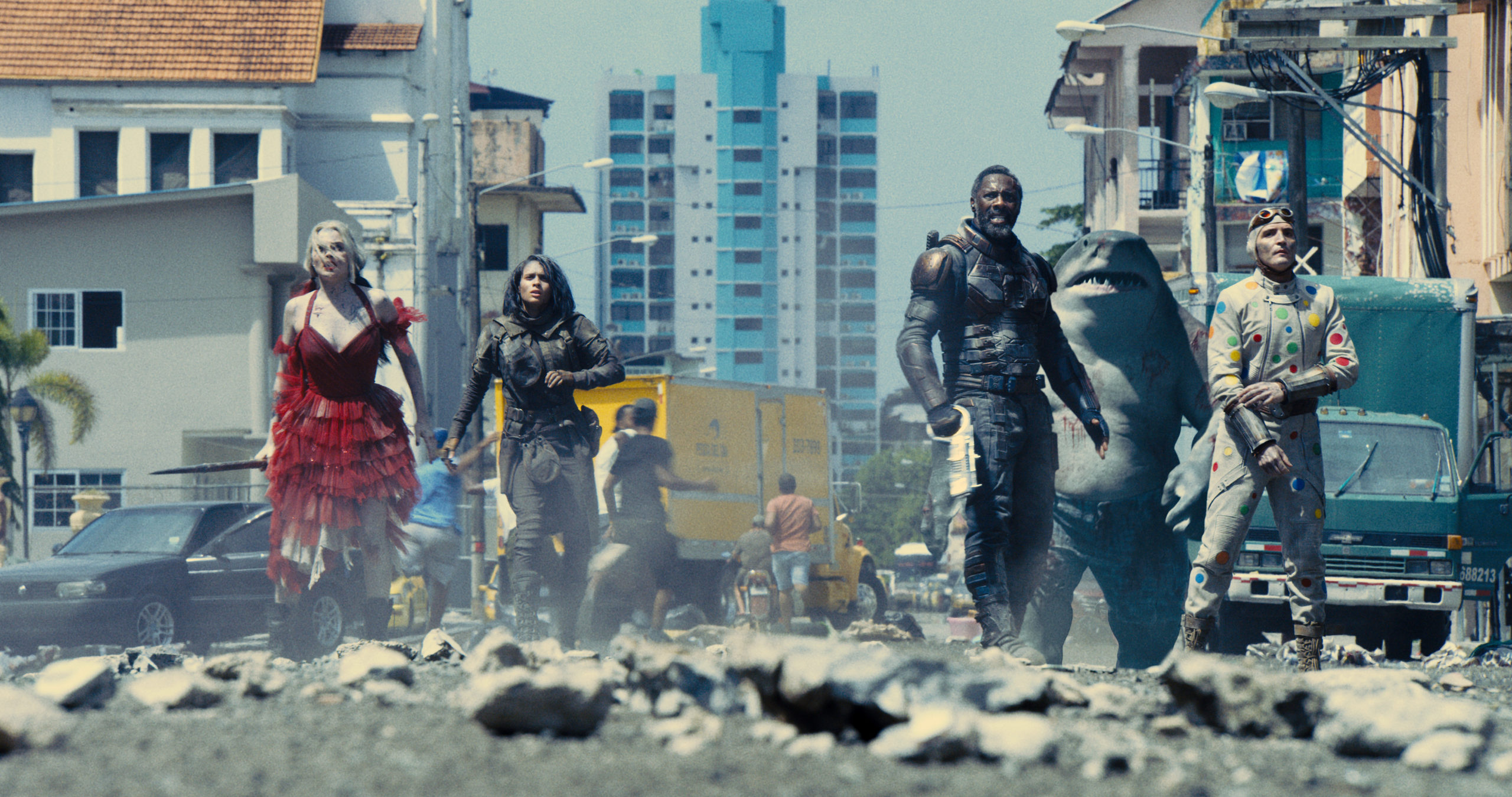
What, did you think Amanda Waller (Viola Davis, glorious goddess that you know she is) only did that supervillain black ops thing that one time? No. Don’t fix what ain’t broke—she has access to expendable bad guys and lots of very sticky situations to deal with.

Now is just the time for another Suicide Squad.

Actually, writer/director James Gunn’s clear purpose is to fix what David Ayer broke last time. And what did he break? An exceptional idea that rid us of those tedious superheroes and gave us an adventure strewn with the far more colorful characters: the bad guys.

How did he fix it? Step 1: an R rating. He’s not kidding, either. If you only know Gunn from his family-friendly Guardians of the Galaxy adventures, then you may not expect quite this much carnage. If, however, you know him from his early Troma work or his sublime creature feature Slither, then you might have a sense of what’s in store.

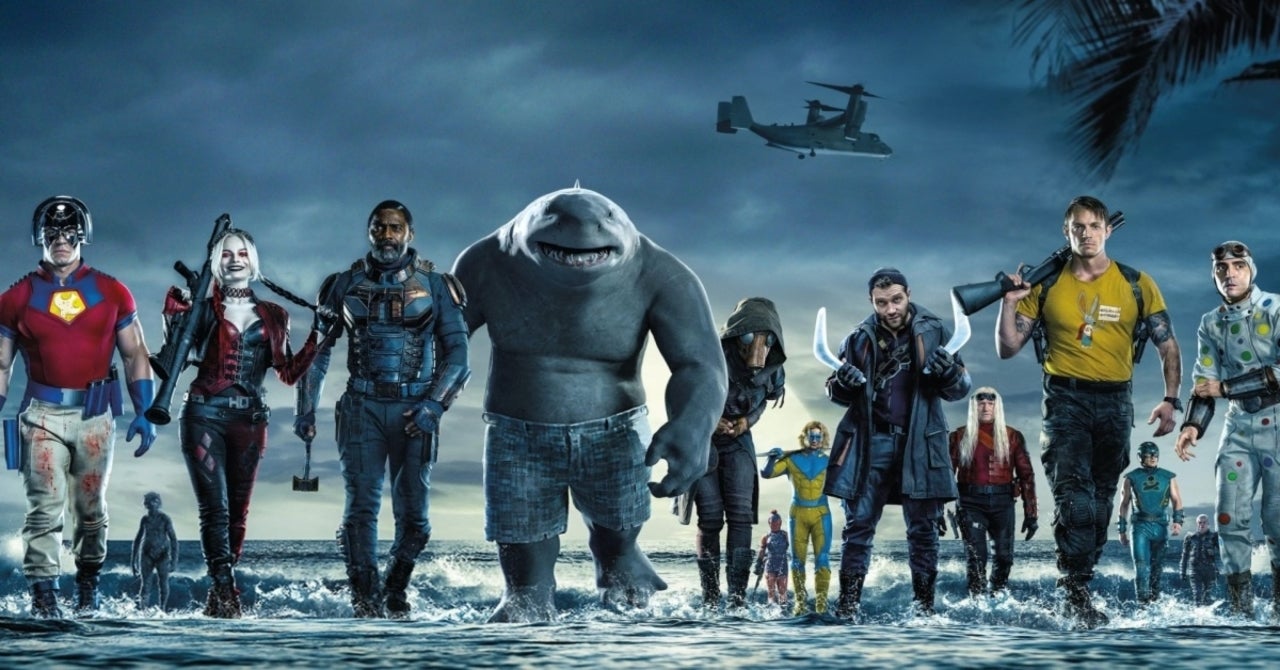
Also fixed—the cast! Bring back the good ones (Ms. Davis, Margot Robbie), add exceptional new faces (Idris Elba, John Cena), pepper in Gunn-esque cameos (Michael Rooker Nathan Fillion, Sean Gunn, Lloyd Kaufman), and voila! Joel Kinnaman’s back, too, and he has to be elated that his character gets to have a personality this time around.

The very James Gunn soundtrack delivers from the opening seconds through the closing credits and brings with it a wrong-headed sense of fun that pervades the entire effort. Gunn’s writing is gawdy, bedazzled, viscera-spattered glee, but there’s a darkness along with it that suggests he understands better than most the ugliness of these characters and their assignment.

Robbie’s Harley Quinn steals scenes, as is her way. Cena’s true talent shines brightest when he’s put in the position to be the butt of jokes, and as such, his Peacemaker gets off a lot of great lines. Elba is the solid skeleton to hang all this nuttiness on.

Not everything works, though. Stallone’s shark man feels like little more than this film’s version of Groot, only with less purpose. There’s a rat subplot that goes nowhere, and the film is as leaden with daddy issues as every comic book movie in history.

But the way Gunn handles the mommy issues that plague Polka Dot Man (David Dastmalchian, unnerving as ever) is nothing less than inspired.

Is The Suicide Squad a cinematic masterpiece? It is not. It is, however, a bloody, irreverent good time.

Aggrieved

Teddy

by Hope Madden

Even a man who is pure in heart

And says his prayers by night

May become a wolf when the wolfbane blooms

And the autumn moon is bright

Teddy (an exceptional Anthony Bajon) may not be all that pure in heart, but he’s not such a bad kid. What he is, is a loser. He knows it. “We’re the village idiots,” he tells the uncle he lives with.

Teddy’s an outsider in his very small French hamlet, a ne’er-do-well who seems harmless enough. He has a job —one he hates. And he has a girlfriend, Rebecca (Christine Gautier) — but how long can that last? Her family can’t stand him, and she’ll graduate at the end of the term. Then what?

Before we can find out, Teddy’s bitten by something in the woods. Suddenly, by the light of the moon (which seems to forever coincide with some kind of angry humiliation Teddy faces), he loses consciousness and then wakes up naked and covered in blood.

Writers/directors/brothers Ludovic and Zoran Boukhera tap into classic monster movie mythology (and sometimes score, with fun results) to mine lycanthrope lore for metaphorical purposes.

Which is usually what werewolves are used for in movies, including the 1941 classic that spawned that poem. Anyone can be cursed, it seems, and under the right circumstances, anyone can become a monster.

In this case, Teddy represents the marginalized, angry white male. The havoc he wreaks? Well, it’s not hard to figure out what that represents. Truth be told, Teddy is almost off-putting in its empathy for the aggrieved male so disillusioned by disappointments and limitations that he becomes monstrous.

I suppose that makes Teddy feel a bit transgressive, but the reason it works is Bajon’s amiably brutish performance. A horror film is rarely worth its weight in carnage if it can’t engender some empathy, provoke some tragedy. Thanks to Bajon and a strong ensemble around him, the film makes you feel something for an enemy you might rather just hate.

It’s not often you get an official Cannes selection on Shudder. I guess that’s one more reason to watch Teddy.

Choosing Wisely

Nine Days

by George Wolf

Will (Winston Duke) is a selector. Inside a modest home situated in the middle of nowhere and surrounded by nothing but flatland, he monitors the progress of his past selections while he carefully prepares to fill a new vacancy.

At the end of nine days, Will must choose wisely. His one selection among a new group of unborn souls will move on the “real world” and experience human life. The rest will not.

In his feature debut, writer/director Edson Oda presents an impressively assured vision of transfixing beauty and gentle poignancy. While the current run on “appreciate every day” films is hardly surprising in today’s climate, Oda brings an organic originality to the mantra of seeing the world through someone else’s eyes.

Will does exactly that, via the television monitors (and VHS tapes) that allow him to view the world as his past selections are living it. The monitors also play a role in the selection process, as Will gives his candidates (including Zazie Beetz, Tony Hale and Bill Skarsgård) daily assignments to write down their reactions to the world views they see.

Duke (Us, Black Panther) is phenomenal as a “cog in the wheel” who becomes caught between the clinical completion of his duties and the emotional weight of his responsibilities.

Unlike many in this otherworld – including his assistant Kyo (Benedict Wong) – Will actually spent time living in the real one. And while he won’t discuss details of his life experience, his charming reliance on VCRs and Polaroid cameras gives us a clue about the timeframe. Duke brings touching authenticity to the barrier Will has put up around his past, while also letting us glimpse how Will is haunted by the fate of a past selection, and by the chance he may have chosen poorly.

Oda’s writing and direction exhibit solid craftsmanship. His framing and use of light often work wonders together, conjuring an existential outpost full of strangely comfortable trappings.

The screenplay is finely tuned for each distinct applicant in the process, allowing a standout Beetz and the terrific ensemble to find intimate resonance in the alternately joyous and heartbreaking moments of a life.

Yes, Nine Days often has a lilting air of pretension, but with such a philosophical anchor, it would be more surprising if it did not. Give Oda credit for being unafraid of the moment. He’s taking some big swings at mighty heavy concepts here, with an originality of voice and attention to craft that is welcome any day.

Fright Club: Workout Horror

An ode to cautionary tales, this episode points out all the great reasons to just skip the gym. Those muscles aren’t going to do you any good if you are dead—seriously, hideously broken, bloody and dead. We enlist the aid of Rewatch Podcast’s Cory Metcalfe to help us work through the best in workout horror.

5. Final Destination 3 (2006)

Director James Wong returned after missing Episode 2 and picked up right where he left off: fun and horrifying Rube Goldbergs of Death.

A young Mary Elizabeth Winstead stars ad Wendy Christensen, she of the premonition about shoddy workmanship on that roller coaster. Naturally, those she saves are on Death’s list now. These films are not rocket science. A group of people cheats death. One by one, Death comes a callin’.

The fun is seeing how each demise works itself out. And Lewis (played by Texas Battle – that is a name!) gets it good.

4. Happy Birthday to Me (1981)

Director J. Lee Thompson had seen better days (Cape Fear, Guns of Navarone), but this switcheroo slasher boasts a weird vibe that makes it compelling.

It also contains a very early workout death scene. We all knew Greg had to go, and how fitting that this vane elitist got his on a workout bench. If he’d thought for one second just to drop the weights on the ground over his head…but Greg wasn’t exactly known for smarts.

3. Tragedy Girls (2017)

DirectorTyler MacIntyre’s whole approach in this film is pitch-perfect. Stars Brianna Hildebrand and Alexandra Shipp bring these bestie characters to vibrant life and the story around them is whip-smart and funny.

Speaking of funny, Craig Robinson has little more than a cameo, but he brings that Craig Robinson vibe, making this particular workout scene an uncomfortable comedic gem.

2. The Toxic Avenger (1984)

Melvin Junko’s whole life was a workout horror. Put upon and picked on, this little janitor only wanted to get his work done.

The Troma classic—awaiting an unbelievably well cast reboot from director Macon Blair—clearly had to be part of this list. Seeing Toxie finally get revenge on those Tromaville health club bullies.

1. Final Destination 5

Director Steven Quale’s prequel may be the best of the Final Destination bunch. The 3D horror takes full advantage of the intricate death sequences—especially the opening bridge set piece. Nice!

It helps that writer Eric Heisserer (Arrival, Birdbox, Lights Out, The Thing remake) knows how to write. The 5th installment feels less like a return to the well and more like an interesting riff on destiny. It also has some great support work from Tony Todd, Courtney B. Vance and David Koechner.

But we’re here to watch Candace die.

Pants and Skippy

Jungle Cruise

by George Wolf

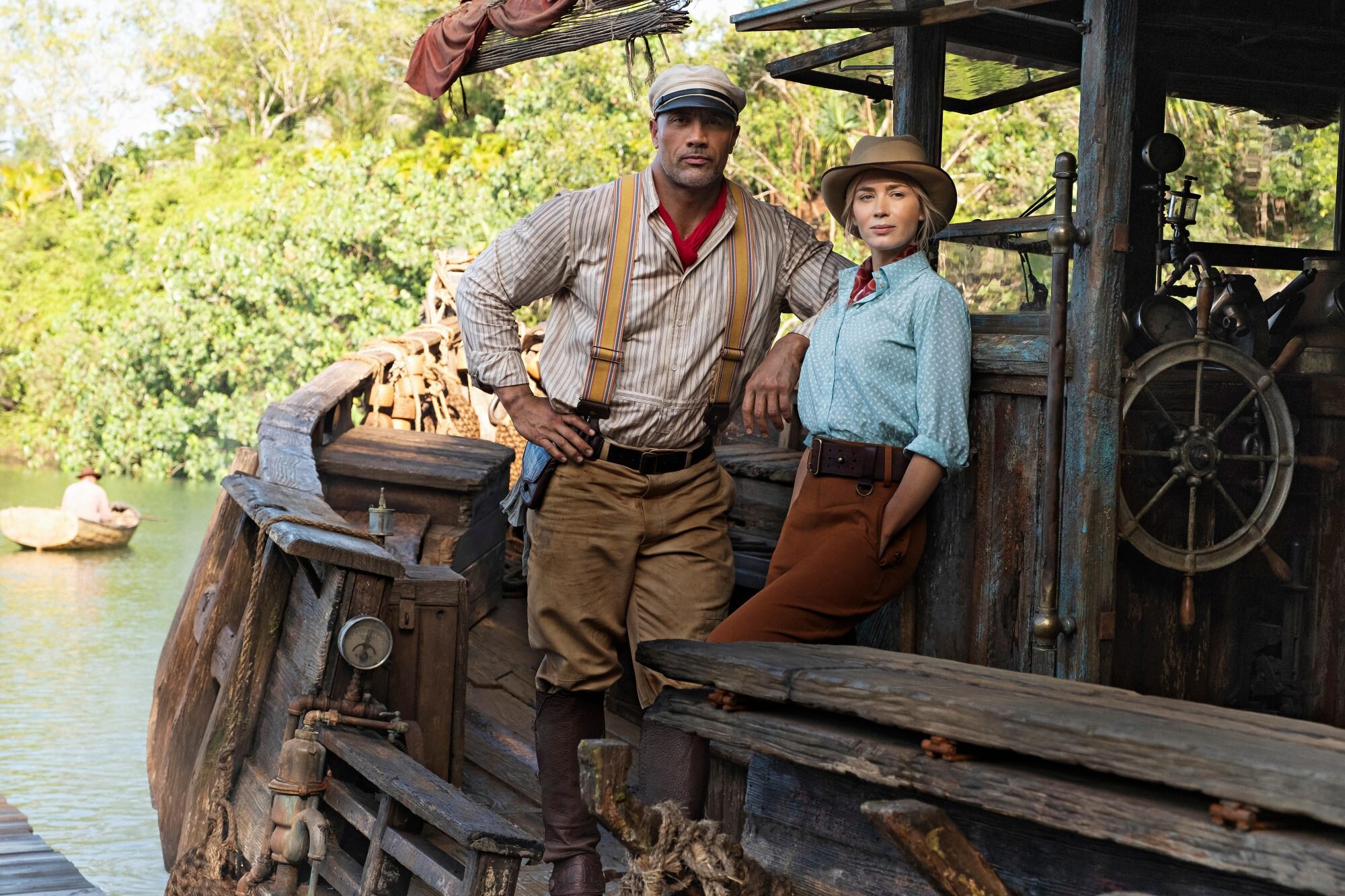
Dr. Lily Houghton (Emily Blunt) wears trousers in 1916 London, so she’s “pants.”

Frank Wolff (Dwayne Johnson) is the skipper Lily hires to guide her and her brother MacGregor (Jack Whitehall) into the Amazon jungle, she he’s “skippy.”

As Lily and Frank’s verbal sparring grows more and more flirtatious during the swashbuckling adventures of Jungle Cruise, the sheer charisma of the two leads succeeds in steering the film away from dull waters.

Director Jaume Collet-Serra fills Disney’s latest with plenty of wink-wink spirit from the original theme park ride, right down to the cornball jokes Frank insists on telling to his tour boat clients.

But Lily is no tourist. She’s a botanist in search of the Tears of the Moon, a legendary tree said to contain magical healing powers. The closer Frank gets them to the prize, the more dangers come out of the jungle. Not only does Kaiser Wilhelm’s son Joachim (Jesse Plemons) also want the magic flowers, but a 400-year-old undead conquistador (Edgar Ramirez) is seeking to break the curse that ties him to the jungle.

Yes, there’s much going on, but Collet-Serra keeps the CGI action sequences (some of which will remind you plenty of Pirates of the Caribbean) front and center on a journey that never loses the family adventure vibe.

Not that the five credited writers have forgotten about us grown-ups who took this actual Disney ride as kids. An extended bout of Blunt v Johnson innuendo becomes a frisky delight, while the subtle nods to marriage equality and the savagery of colonialism are fleeting but effective.

The film’s third act delivers a major surprise, which results in extended exposition and the first signs of treading water. But even at its most formulaic, there’s enough humor, heart and genuine movie star appeal here to make Jungle Cruise an excursion full of rollicking good fun.

American Dad

Stillwater

by Hope Madden

A couple weeks back, Nicolas Cage played a man desperate to reclaim a loved one that was lost to him, a man who might stop at nothing to do just that. His film Pig hit every beat of a John Wick or Taken, subverting the genre trappings to create one of the most beautiful films of 2021.

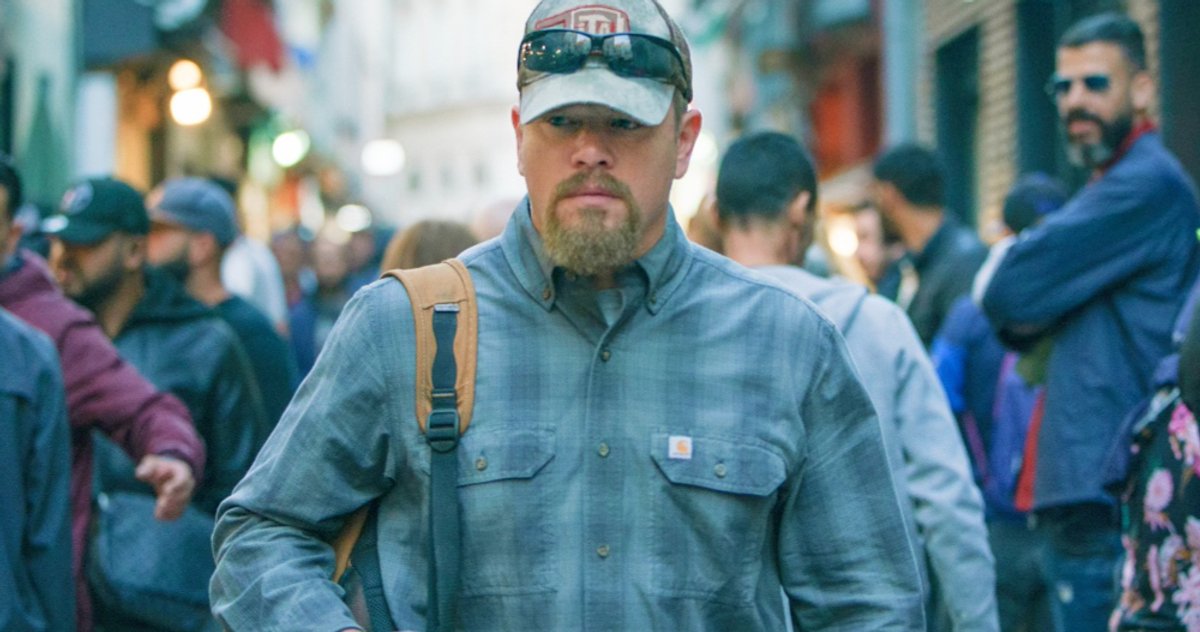
Matt Damon has not lost his beloved bovine, but in Stillwater, he leads a film equally bent on messing with audience expectations.

Damon plays Bill Baker, out-of-work oil rigger headed to Marseilles to see his daughter, Allison (Abigail Breslin). It’s not your ordinary visit, though. Allison has been in prison for five years for a very Amanda Knox type of incident.

What does Bill want? To get his little girl out of prison. What does he need? To prove himself to himself, and to the world, but most desperately to Allison. There is an aching humility undergirding this performance, giving it richness and tenderness. That humility alone is enough to separate Stillwater from other fathers-desperate-to-save-daughter films like Taken.

But co-writer/director Tom McCarthy does not stop there.

This filmmaker is hard to figure. McCarthy followed up his early indie treasures (The Station Agent and The Visitor among them) with the high profile, catastrophically terrible Adam Sandler movie The Cobbler. Bounced back pretty well, though, with his Oscar-winning Spotlight. Still, his filmography swings back and forth between masterpiece (he wrote Pixar’s Up) and misfire (he wrote Disney’s Million Dollar Arm).

Stillwater falls somewhere between.

The film opens with the threadbare premise of an earnest All American Dad taking justice in his own hands to save his daughter. It picks up that thriller storyline late in the second act with a jarring right turn you simply did not expect. In between, though, in what could easily feel like a self-indulgent side plot, is the real meat of the film.

Bill decides to stay semi-permanently in France, moving in with the French woman who’s willing to help translate and sleuth with him. While he’s drawn to Virginie (Camille Cottin), it’s really her 9-year-old (a fantastic Lilou Siauvaud) that draws him in. And here McCarthy—along with a team of writers, both American and French—betray the real theme of the film.

Stillwater is a tragedy about second chances. Its sloppy construction is both its downfall and its strong point. The film works against your expectations brilliantly to deliver a film that refuses to satisfy. The result is an often brilliant, ultimately unsatisfying work. And that seems to be the point.