Category Archives: Slider

For the homepage slider

Fright Club: Incest in Horror

Well there’s an uncomfortable topic! Of course, that’s what makes it so perfect for horror. Any idea that automatically induces a wince or a grimace, anything you want instinctively to turn away from, immediately creates the kind of discomfort that only horror can truly manipulate.

It’s been used for lurid ends in films like Flowers in the Attic, and has become the source of comedy in others – Tromeo and Juliet springs to mind. But often, it creates a particular kind of tension that drives a film in truly horrific directions: Jug Face, Crimson Peak, Pin, Angel Heart, The Crazies.

Here are the films we think handle the topic best. SPOILERS AHEAD!!!

6. 100 Bloody Acres (2012)

A testament to the entrepreneurial spirit and the bonds of family, 100 Bloody Acres is Australia’s answer to The Texas Chainsaw Massacre. Same body count and more blood, but a far sweeter disposition and loads more laughs.

Brothers Reg (Damon Herriman) and Lindsay (Angus Sampson) sell organic fertilizer. Business is good. Too good. Demand is driving the brothers to more and more extreme measures to gather ingredients.

Interesting the way writing/directing brothers Cameron and Colin Cairnes explore sibling rivalry, but the film’s strength is in its humor: silly enough to make even the most repugnant bits enjoyable. (I’m looking at you, Aunt Nancy. Oh, no! Why did I look?!)

5. The Woman (2011)

There’s something not quite right about Chris Cleese (an unsettlingly cherubic Sean Bridgers), and his family’s uber-wholesomeness is clearly suspect. This becomes evident once Chris hunts down a feral woman (an awesome Pollyanna McIntosh), chains her, and invites the family to help him “civilize” her.

The film rethinks family – well, patriarchy, anyway. You know from the opening, sunshiny segment that nothing is as lovely as it seems, but what lurks underneath this wholesome facade begins with some obvious ugliness—abuse, incest—but where it leads is diabolical.

Nothing happens in this film by accident – not even the innocent seeming baking of cookies – nor does it ever happen solely to titillate. It’s a dark and disturbing adventure that finds something unsavory in our primal nature and even worse in our quest to civilize. Don’t even ask about what it finds in the dog pen.

4. Bad Boy Bubby (1993)

Writer/director Rolf de Heer’s astonishing film is horribly marred by the fact that a cat is, in fact, killed on camera, so buyer beware. For most people, that will be reason enough to miss this one. But that just makes the director’s choice that much more tragic, because this is a really good movie.

Nicholas Hope is astonishing as the titular Bubby, a 30-year-old manchild who’s never, ever left the room he keeps with his mum.

Remember the Oscar-winning indie film Room? Remember how tragedy is somehow skirted because of the courageous love of a mother for her son? Well, this was not Bubby’s mum. Bad things are happening in that room, and once Bubby is finally free to explore the world, his adventure is equal parts deranged and soul-crushing. Hope is so frustratingly empathetic in the lead that no matter what he does, you root for him. You root for friends who will love him, for someone who will care for him, but it’s the resigned cheerfulness with which he faces any kind of abuse that really just kills you.

This taboo-shattering film is so wrong in so many ways, and yet it’s also lovely, optimistic, sweet, and funny. And just so, so fucked up.

3. Henry: Portrait of a Serial Killer (1986)

Director John McNaughton’s picture offers a uniquely unemotional telling – no swelling strings to warn us danger is afoot and no hero to speak of to balance the ugliness. He confuses viewers because the characters you identify with are evil, and even when you think you might be seeing this to understand the origins of the ugliness, he pulls the rug out from under you again by creating an untrustworthy narrative voice. His film is so nonjudgmental, so flatly unemotional, that it’s honestly hard to watch.

What’s diabolically fascinating, though, is the workaday, white trash camaraderie of the psychopath relationship in this film, and the grey areas where one crazy killer feels the other has crossed some line of decency.

Rooker’s performance unsettles to the bone, flashing glimpses of an almost sympathetic beast now and again, but there’s never a question that he will do the worst things every time, more out of boredom than anything.

It’s a uniquely awful, absolutely compelling piece of filmmaking.

https://www.youtube.com/watch?v=QcM5L-ZBmXk

2. The Loved Ones (2009)

Writer/director/Tasmanian Sean Byrne upends high school clichés and deftly maneuvers between gritty drama and glittery carnage in a story that borrows from other horror flicks but absolutely tells its own story.

Brent (Xavier Samuel) is dealing with guilt and tragedy in his own way, and his girlfriend Holly tries to be patient with him. Oblivious to all this, Lola (a gloriously wrong-minded Robin McLeavy) asks Brent to the end of school dance. He politely declines, which proves to be probably a poor decision.

Inside Lola’s house, we’re privy to the weirdest, darkest image of a spoiled princess and her daddy. The daddy/daughter bonding over power tool related tasks is – well – I’m not sure touching is the right word for it.

The Loved Ones is a cleverly written, unique piece of filmmaking that benefits from McLeavy’s inspired performance as much as it does its filmmaker’s sly handling of subject matter.

1.Oldboy (2003)

This is the one that’s utterly spoiled by the upfront knowledge of incest. It’s also easily the best example of the topic’s handling in a horror film, plus the movie is 17 years old, so we went ahead and included it. Sue us. You were warned.

A guy passes out after a hard night of drinking. It’s his daughter’s birthday, and that helps us see that this guy is a dick. He wakes up a prisoner in a weird, apartment-like cell. Here he stays for years and years.

The guy is Dae-su Oh (Min-sik Choi). The film is Oldboy, director Chan-wook Park’s masterpiece of subversive brutality and serious wrongdoing.

Choi is unforgettable as the film’s anti-hero, and his disheveled explosion of emotion is perfectly balanced by the elegantly evil Ji-tae Yu.

Choi takes you with him through a brutal, original, startling and difficult to watch mystery. You will want to look away, but don’t do it! What you witness will no doubt shake and disturb you, but missing it would be the bigger mistake.

Bring the Noise

Sound of Metal

by Hope Madden

Riz Ahmed is a guy who can do anything.

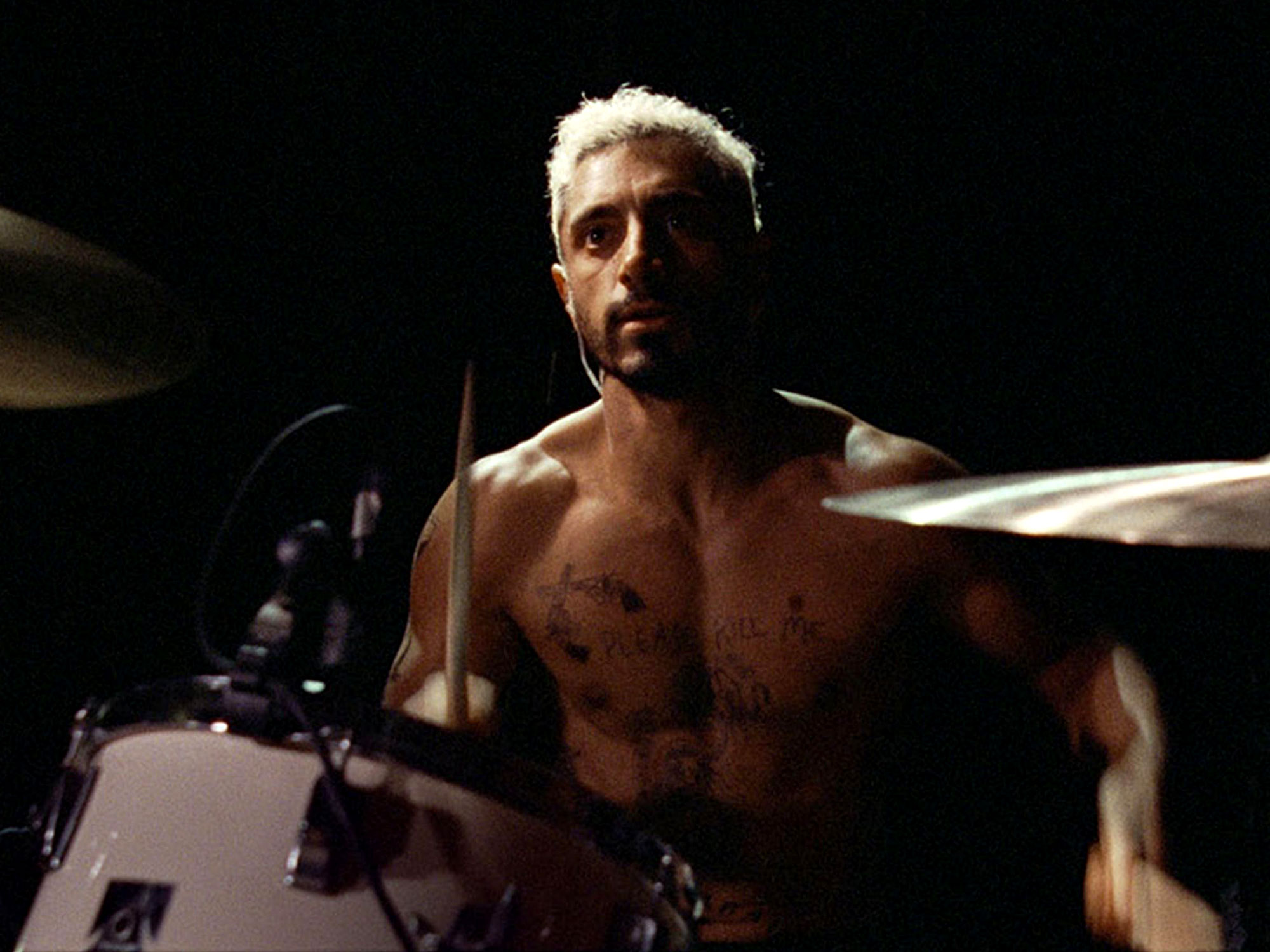
He can be funny (Four Lions), pathetic (Nightcrawler), tragic (Sisters Brothers), villainous (Venom). He’s soon to be Hamlet. But in Sound of Metal, playing a recovering addict heavy metal drummer who’s hearing suddenly deteriorates, he’s more than all of these put together.

Ahmed is Ruben, in a performance that brings this man to life with so many layers and such nuance and power it requires your attention.

Ruben’s traveling the country in an airstream with his girlfriend Lou (the always welcome Olivia Cooke). She sings/wails/screams and plays guitar, he bangs on the drums, and they keep each other safe, sane and sober. This is how they do it, one day at a time.

But Ruben’s sudden deafness is more than he can take and as he spirals out of control, Lou and his sponsor find him a place. It’s secluded, nestled on a big piece of land near a school for the deaf—a spot for recovering addicts who are deaf. No one else.

No Lou.

Even before you begin to appreciate Ahmed’s remarkable performance, you’ll likely notice writer/director Darius Marder’s choices when it comes to sound design.

Also, Sound of Metal is captioned, but not all the time. If Ruben can’t understand what’s being said, neither can you.

The sound design evokes the same sensation: of being in Ruben’s head. What he can’t really hear it, you can’t, either. Marder mimics the humming, echoing, and blurring together of sounds to create an immersive sensation that never feels like a gimmick.

It might, were it not for Ahmed, though. The rest of the cast, most of them non-actors, offer solid support. Cooke is characteristically strong, simultaneously resilient and dependent in a way that feels authentic to the character. The charming and endlessly tender third act arrival of Matthieu Amalric only adds to the emotional heft the film carries.

Sound of Metal is Marder’s first feature. It often benefits from a loose structure, but just as often, this becomes its downfall. There are scenes that amount to little, giving the film a bloated quality. But that’s not enough to defeat it, not nearly. Sound of Metal is a powerful experiment and a star turn for a talented actor.

Paint By Numbers

The Last Vermeer

by Hope Madden

Who doesn’t like a story about swindling Nazis?

There’s something festive in that notion, and Dan Friedkin’s The Last Vermeer does what it can to keep the mood light as one of Holland’s unsung artists is accused of consorting with Nazis to help Goering purchase a painting by Dutch master Vermeer.

The film is set shortly after the end of WWII. Claes Bang, who seems to only make films about art (Burnt Orange Heresy, The Cube), plays Captain Joseph Piller. A former member of the resistance with a strained family life, Piller is part of an operation that finds said Vermeer, Christ and the Adulteress.

The problem with this movie is that Friedkin treats it like a mystery. Mysteries are cool, and the reveal here is certainly interesting, but there very are few clues to follow. And following those few clues are characters far less interesting than Han Van Meegeren, played here with fanciful, libidinous panache by Guy Pearce and someone’s joke of a pair of eyebrows.

Van Meegeren’s crime, if he did collaborate with Nazis to move a masterpiece from Holland’s greatest artist, is a capital one. Not that you’d know that from Pearce’s flashes of eccentricity and decadence. He seems to be enjoying himself. His character—and, indeed, Van Meegeren himself—commands attention.

Too bad Friedkin and his slew of scriptwriters decided to bury the lede. In one of those Hollywood moves, this film chose to sideline its main character—the real life figure who could face a firing squad—in favor of a safe, blandly attractive hero we can all root for.

Yawn.

Worse still is the criminal underuse of The Phantom Thread’s Vicky Krieps as the attractive but honorable assistant.

The Last Vermeer is one of those hopelessly manipulated true histories. It looks good, although nothing about the direction seems inspired. Instead the film delivers a competently made, by-the-numbers historical recreation when it could have been art.

Goodness and Lightsabers

The LEGO Star Wars Holiday Special

by George Wolf

Ladies and gentlemen, please welcome the comedy stylings of…Emperor Palpatine!

If you’re not applauding now, you will be…you will be…as the wrinkly-faced baddie becomes the surprise standout of The LEGO Star Wars Holiday Special, a fast moving and often hilarious brick by brick homage to the entire franchise.

With narration from Master Yoda himself, the special is set around the festivities for “Life Day.” Rey and Finn have plans to attend the big celebration at Chewie’s place, but Rey is distracted.

She’s been trying to mentor Finn as a Jedi, but things aren’t going smoothly. Why can’t she train him?

Rey thinks the answers can be found with the Key to Galaxy’s Past, a tool that will let her travel across space and time and observe the training methods of previous Jedi masters. So with a promise to get back to Chewie’s as soon as possible, Rey and BB-8 take off to drop in on plenty of LEGO-fied moments from Star Wars history and gain a better understanding of the Force.

Once the time-hopping starts, director Ken Cunningham and writer David Shayne (both LEGO film veterans) unleash a barrage of wink-wink fun, highlighted by those priceless barbs from Palpatine.

This Emperor quickly becomes Darth Not-So-Serious, and no one – not Kylo Ren (“Put a shirt on!”) or anyone else (“Less talky-talky, more fighty-fighty!”) – is safe. The true power of the Dark Side? Mockery.

Featuring a smattering of voices from the original cast (Billy Dee Williams, Kelly Marie Tran, Anthony Daniels), the film threads our love of Star Wars through the spirit of some classic Christmas specials past for an irresistible family treat.

And with more lockdowns looming this Holiday season, it’s 44-minutes of smiles tailor made for repeated helpings.

The LEGO Star Wars Holiday Special debuts Nov. 17th on Disney+

TGIF

Freaky

by Hope Madden

Nobody has more fun with the slasher genre than writer/director Christopher Landon. (Well, maybe his writing partner Michael Kennedy.)

Three years ago, the duo created a time loop to allow one victim to return from the dead again and again and again and again until she stopped the marauder. Happy Death Day was so much more fun than it had any right to be, thanks, in part, to a giddy appreciation of the genre and some great casting.

Landon and Kennedy are at it again, and this time the premise and casting might be even better.

What if Freaky Friday met Friday the 13th?

That’s gold right there.

Freaky is as upbeat and lesson-filled as any Disney coming-of-age film, and its body count is as high and as messy as anything in the Voorhees universe. It’s a bloody riot, and Vince Vaughn hasn’t been this much fun since Old School.

Vaughn plays the Blissfield Butcher—at least for a while. But the boogeyman who haunts Blissfield teens right around Homecoming each year steals a cool looking dagger while dispatching nubile youth at an art collector’s house. When he uses the weapon on Millie (Kathryn Newton, Blockers), their souls magically reassign. The evil menace wakes up inside the body of a 5’5” high schooler while Millie wakes up looking like Vince Vaughn.

Oh, the hijinks.

Part of the subversive fun is watching Landon and Kennedy’s wish fulfilment, as the now-evil high schooler dispatches bully teachers, catty bitches and would-be gang rapist jocks. But most of the joy is in watching Vaughn.

He doesn’t overdo it, either. His gestures aren’t wildly feminine—he never feels like a caricature of a high school girl. It’s still funny, but the humor is far less built on a man playing a girl as it is on a petite female inhabiting the body of a really enormous man. That’s mainly the terrain Vaughn and Landon mine for physical comedy, and it is fertile ground.

And the fact that Vaughn so believably conjures the heart of a teenage girl makes any number of scenes—especially the romantic ones—delightfully sweet and tender.

And also, a lot of people die. This is not a PG-13 comedy. But it is a hoot.

Wreathal Weapon

Fatman

by George Wolf

Talk about a brand new bag.

As an entry into the Holiday season, Fatman gives us a Santa with serious issues and some high-powered heat to unpack. This is a movie that’s going to piss plenty of people off, starting right at the top of the cast list.

Starring as Chris Cringle himself, Mel Gibson is the antithesis of holly and jolly. Times are tough at the workshop, since Chris’s government contract pays by the present and kids seem to get more naughty every year.

One of those is Billy (Chance Hurstfield from Good Boys), an entitled rich boy who makes servants do his school projects and threatens torture to any classmate who might beat him out of a blue ribbon.

Santa knows who’s been bad or good, and Billy gets a big ‘ol lump of coal. Billy, for badness sake, decides that Santa must die.

Ruthless assassin Skinny Man (Walton Goggins) has his own grudge against the Fatman, so when the call from Billy comes in, he’s only too happy to make the long trek to the North Pole and stain the snow with Santa’s blood.

It only takes minutes to realize casting Gibson and his baggage was the perfect harbinger of what writers/directors Eshom and Ian Nelms (Small Town Crime) are bringing home for the holidays. This is no bad Santa, this is a dark and confrontational Santa, in an ambitiously unfocused and often bitingly funny takedown on everything from Trumpism to the military industrial complex to capitalism itself.

Gibson delivers with a gritty, committed performance that’s aided tremendously by the glorious Marianne Jean-Baptiste as Ruth Cringle. The two share a wonderful chemistry, as Ruth consistently brings the measured, cookie-baking wisdom to calm Chris’s gruff cynicism.

Workshop shortfalls force the Cringles into accepting a government contract to manufacture military hardware, which lets the Nelms brothers show just how far they’re willing to go in depicting Santa as a struggling businessman weary from the fight. Indeed, they go far enough to threaten the precision of their own barbs.

When the foreman elf comments, “It’s the giving that keeps him young,” the sudden deadpan underscores the clash of goals that muddies the road leading to the film’s final showdown. A little more lean in either direction – coal black humor or grim metaphor – might have upped the accessibility and impact.

But why would two filmmakers use uncomfortable realities, casual obscenities, wanton gunplay and blood-soaked violence to blaspheme the pristine legend of Santa Claus in the first place?

That’s a good question. The Nelms boys are glad you asked, and if you’re open to it, Fatman has a wholly unexpected, brazenly unapologetic and pretty satisfying answer.


Many thanks to Daniel Baldwin for “Wreathal Weapon”

Portrait of a Lady of Science

Ammonite

by Hope Madden

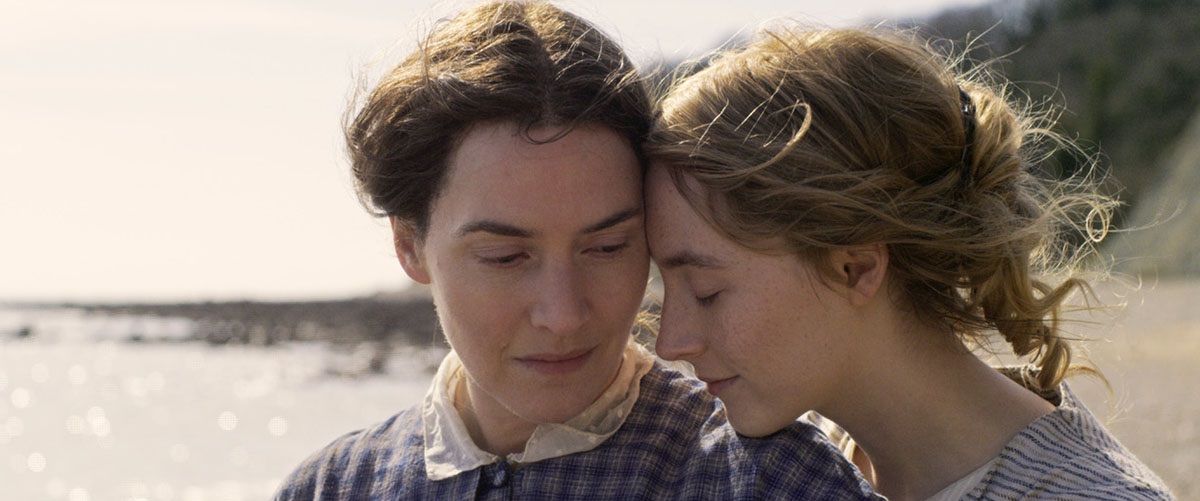
Writer/director Francis Lee’s Ammonite is a beautiful, insightful, lonesome film about European women falling in love in a time when patriarchal society only allowed that to happen because they weren’t paying attention. It boasts beautiful cinematography and two utterly stellar performances.

And it suffers by comparison to Celine Sciamma’s similarly summarized 2019 masterpiece Portrait of a Lady on Fire.

That doesn’t mean it isn’t worth seeing—it absolutely is. Kate Winslet and Saoirse Ronan—simply two of the most talented humans ever to grace a film screen—play, respectively, British paleontologist Mary Anning and the married woman she falls for, Charlotte Murchison.

Anning is, in fact, among the most influential scientists in British history. Being a woman in Victorian England, her work was accepted while she herself was not. There’s an interesting tale to tell right there, but Lee chose that repressive cultural landscape as more of a backdrop, like the forbidding English Channel coast town of Lyme where Anning did her fossil hunting.

There’s no historical evidence that Anning was gay. There’s also no historical evidence that she was not, and filmmakers have told Emily Dickinson’s story dozens of times, only once actually addressing her sexual preference. If it’s OK for them to fictionalize, why not Lee?

The telling gives Winslet opportunity—partly thanks to excellent support from Fiona Shaw, Gemma Jones and Alec Secareanu—to present a woman so ill-used by and out-of-step with the world around her that she sees a miscarriage of justice in every exchange. Winslet is sharp and brooding, superior and insecure. It’s another quietly outstanding performance.

Aglow and lilting, Ronan is all warmth, offering a swoon-worthy counterpoint to Winslet’s chill. But there is something rushed about her attraction, and the deep, risky longing never feels authentic.

The affection, however, feels painfully true, and that’s at the core of a story about limited possibilities. Lee’s no Tarantino, but keep an eye out for bare feet and (less Tarantino-esque) insects. There is something slightly melancholy in these images of freedom and vulnerability that suit the effort.

Lee doesn’t try to answer every question he raises or resolve every conflict he presents. Instead, he brings us into a story of outsiders trying to define their own realities, however limited they may have to be.

Fright Club: Best Voices in Horror

In horror, it’s often what you hear—not what you see—that terrifies you. Who can send chills of terror or thrills of another kind with just a whisper? We talk about the best voices in horror.

5. William Marshall

Effortlessly elegant, William Marshall commands respect even before he speaks. It’s impossible to imagine him playing Bar Patron #2. This is the man who tells you what to do, and you listen. You comply. And you hope he keeps talking.

4. Keith David

A classically trained singer, Keith David uses his voice like a tool of his trade. Voice over work, stage acting, song, drama, horror—his buttery baritone leaves an impression everywhere.

3. Christopher Lee

Like another great British actor with another unforgettable voice, Boris Karloff, Lee gained fame playing characters who barely (if ever) spoke. But soon enough, he was lending his saucy baritone to literally hundreds of projects from film to voice overs, theater to music. His elegant growl brought terror to The Lord of the Rings films, but long before that, it graced Anthony Shaffer’s The Wicker Man screenplay with perhaps the greatest delivery it could have hoped for.

2. Tony Todd

Todd’s physical presence guaranteed that he be noticed in a scene, but that voice made sure no one else would be. Seductive and sinister, tender and terrifying, the voice alone made you believe that Helen (or anybody else, for that matter) could be seduced regardless of the known danger.

1. Mercedes McCambridge

Like Nick Mancuso in Black Christmas and Teresa Wright in The Exorcist III, Mercedes McCambridge offered a show stopping, horror classic performance without even having to show up to the set.

The Oscar winner deepened her already gravelly voice with cigarettes and liquor to conjure a sound so sinister, it gives you chills.