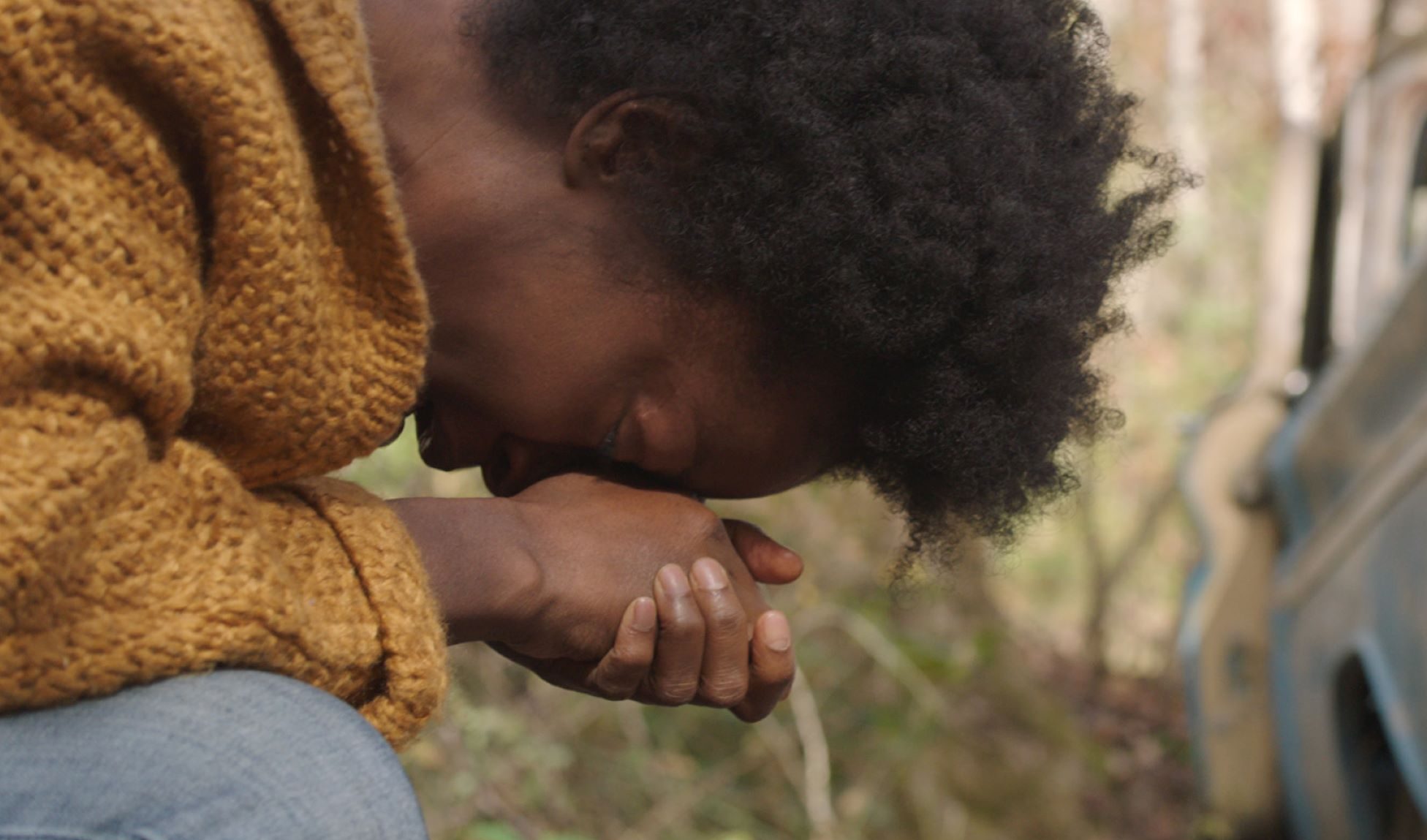
What opens as a slyly comic take on a familiar horror scene turns – with a blinding light and the sound of a garage door – into something more silly and broadly funny. Born Again, Hands Off Productions’ 6 ½ minute visit with the “worst Satanists ever,” wastes no time and packs a comedic wallop.
Written by director Jason Tostevin and co-star Randall Greenland, the film’s success relies on a clever turn. Most of the pair’s collaborations, including 2015’s impressive (and award-bedecked) gangster short A Way Out, benefit from a similar subversion of expectations. But Born Again takes the team back to horror, and the sensibility here is much more enjoyably goofy.
Regular Tostevin collaborator, cinematographer Mike McNeese, lenses an impressive effort. The two handle the shift in tone beautifully, opening with sumptuous colors and tight close ups, then pivoting to a visual style that feels in on the joke.
Production values throughout impress, while performances – though brief – are strong. Tiffany Arnold, whose work relies almost entirely on facial expressions, is a riot, but the scene stealer is Greenland.
With sharp timing and a panda mask, Greenland perfectly represents Born Again: it’s so wrong, yet endearingly hilarious.
Grief is such a provocative subject for horror. It’s a topic
ill-suited to other genres because there—in an uplifting love story or very
special drama—the tale is rarely really about the person who’s grieving. Those
stories are usually more interested in the people around the grief-stricken
whose goal is to alter the situation—end the perfectly reasonable process of
suffering that accompanies a terrible loss. Rush a happy ending.
Essentially, they no longer want to deal with someone else’s pain. Horror is different in that way. It’s very comfortable with pain.
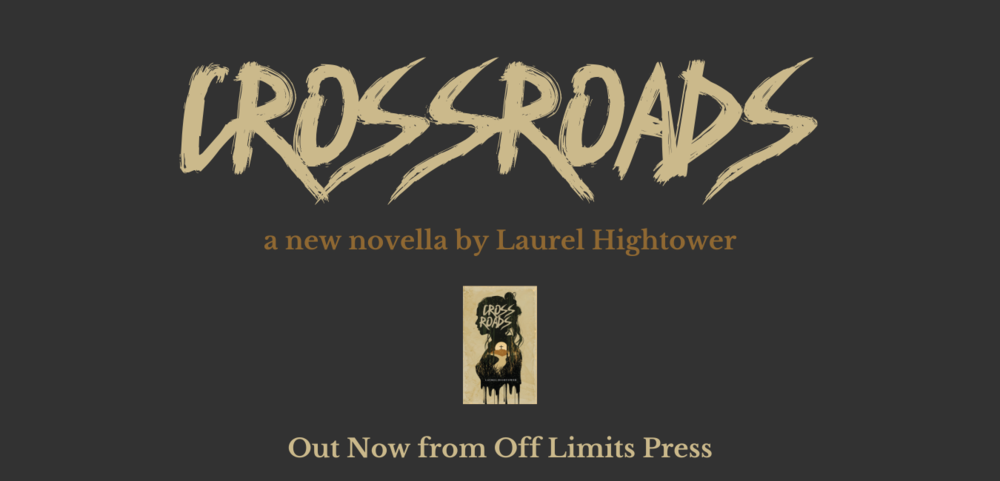
Laurel Hightower’s Crossroads introduces you to those
other people, too—the father, who’s begun to move on; the grandmother, who
can’t stand letting her daughter have the attention. But because of the point
of view character in this spooky novella, you’re never more than a whisper away
from the desperate pain of a mother willing to make rash choices to end her
grief.
Chris stops by the site of her teenage son Trey’s fatal car
accident every day after work. She’s been doing this for two years, almost to
the date, when she cuts her hand on the wooden cross that marks the spot. Her
blood soaks into the ground there at the crossroads, and things will never be
the same for Chris again.
Hightower never wallows or dips into the maudlin as she
shadows a woman whose life has ceased to exist outside the rituals that keep
her son alive for her. The device introduces us to a character who’s
simultaneously rational and a bit crazy, a necessary component for the
supernatural tale the author conjures.
Congratulations are due to a writer who can create an
atmosphere where you can believe not only the supernatural events, but the
behavior of the central character, and Hightower has achieved both. We’re in it
with Chris, we understand her thought processes and we ache for her loss.
Crossroads is a tale about grief and about
parenthood, about what we do and do not learn from our own parents, and how
entities outside ourselves read and manipulate us. It explores a personality
type primed for sacrifice. Part of what make the novella so tough is that Chris
feels incredibly familiar, so deeply human.
Hightower knows how to work your nerves and deliver a gut
punch. She lulls you and then delivers a powerful emotional blow. You’ll be thinking
about this one for a while.
Alcoholism and addiction prove to be powerful underlying
themes for a lot of horror films—The Shining, The Monster, and Habit
among them. Writer/director/star Rakefet Abergel delivers a twist on that
sobriety tale in her short, Boo.
It’s a clever film with a savvy lead turn by Abergel as
Devi, 7 years sober and waiting for her fiancé to pick her up from the meeting
where she gets her chip.
So much can happen in those minutes between “Come get me”
and “I’m here.”
A couple of friends, both more recently sober, smoke and
wait with her awhile, and Devi reveals that lately she has just been so
tempted.
From there, the filmmaker runs through a quick handful of
everyday nightmares: alone in a parking lot, then not alone. Polite and then
afraid. In every scene, though, Abergel’s performance suggests a distraction
greater than the fear itself.
Darkly funny and boasting outstanding soundtrack choices, Boo is a wicked good time.
It’s almost time once again for Nightmares Film Festival, which will be hosted virtually this year as NFF: Masquerade. This fest all but guarantees that you’ll find a new favorite film. Last year, for us, that was The Devil to Pay (originally called Reckoning).
“We were honestly shocked and surprised by how the horror
community embraced this film because, to me, this is a straight family drama,”
says co-writer/co-director Ruckus Skye. “It did really well in genre festivals
but I was surprised by it. We wanted a Southern Gothic tall tale kind of a
thing.”
Ruckus and Lane Skye’s thriller makes its debut on VOD
today, and they were kind enough to answer a handful of questions about working
together, Southern women, and their film’s glorious lead, Danielle Deadwyler.
“The film wouldn’t exist if she didn’t exist because we
wrote it for her,” says Ruckus. “We met Danielle a few years earlier through
the Atlanta arts community and the three of us wanted to work together, but the
right project never came out. Finally, Lane and I said, ‘Why don’t we write
something for her?’ We knew we wanted to make a Southern Gothic thriller, and
this was the story we came up with. We wrote it and handed it to her and
crossed our fingers that she’d like it.”
“She liked it so much that she came on as a producer to help
get it made,” Lane says.
Deadwyler plays Lemon, an Appalachian farmer who struggles
once her husband goes missing. He may or may not have run afoul of the most
powerful person on the mountain, Ms. Tommy Runion, played with unerring
superiority and Southern charm by Catherine Dyer.
“Officially, the community values how long you’ve been on
the mountain more than anything else as far as status goes,” Lane explains. “But
especially being in the South, any time you see a black family surrounded by
white people who are persecuting them, you cannot help but draw your own
conclusions about what is happening.”
For a film that pits matriarch against matriarch, the Skyes
had a couple of influences.
“My family became matriarchal after my grandfather died,”
Lane recalls. “All my aunts and uncles live in the same place, and once my grandmother
became the oldest in the family, she got to make the family decisions. So that
idea that whoever’s the oldest member, whether they’re male or female, is the
one in charge worked really well here.”
“Also, I like to think about praying mantises and how the
women are way stronger and more fierce than the men,” Ruckus adds. “I think
Southern women are especially fierce.”
They say The Devil to Pay took them only 12 days to
write and a total of three months to make.
“We were just insanely motivated. We were excited about the
idea and we had a window, if we could get it together fast enough,” Ruckus
says. “That is absolutely the fastest we’ve ever written anything.”
“There are definitely a lot of themes and ideas in the film that
we love and that we’ve been stewing on for a long time,” Lane says. “A lot of
this world has been in our brains for a while.”
The pair, who co-wrote 2020’s drive-in hit Becky and are working
on a coming-of-age film for Becky star Lulu Wilson called Hearts on the Run, have an intricate system for working together.
“We come up with the idea together or we shape it together
and then we’ll break the story in a room together,” says Lane. “But when we get
to the actual writing part, we don’t ever write in the same room because we’d
probably kill each other. We have this really elaborate dropbox structure and
we go back and forth.”
“We break it down by every single scene in the movie,” Ruckus says. “That way she can be writing one scene and I can be writing another. It took us a while to get to that, but we just rewrite each other until we both think it’s done.”
And when directing together?
“On set directing, the golden rule is we don’t move on from
a set up or a scene until we’re both happy,” says Ruckus. “Because we’ve
written and developed it, by the time we’re on set we’re working from the same
vision. So, a lot of arguments when we’re writing, not near as many when we’re
actually shooting because we kind of know where we’re going with that.”
The pair say they began writing comedies, which brought no
success at all. Once they realized that all their favorite films were
thrillers, they changed course.
“We make films that we want to watch, so it’s just us
satisfying our own tastes,” Lane says.
“We are more concerned with the grounded reality of
characters rather than cool ways to kill someone,” Ruckus admits. “We say that
we write heartwarming movies where people are murdered.”
The Devil to Pay is available today on all major VOD platforms.
If you’ve lived anywhere near Columbus, Ohio during the last few decades, you’ve probably got some great memories of the longest continually running rock club in America: Newport Music Hall.
Full disclosure: I tended bar right next door for two years, was lucky enough to meet many of the Newport headliners, even used the access from the shared basement storeroom to sneak behind stage a time or two.
My wife and I had our first date there at a Warren Zevon show in 1990. Years later we dropped our teenage son off to see some band I can’t remember.
Still, I instantly think of an electric James Brown concert in 1986. It was the second of two sold out shows at the Newport, and Mr. Dynamite was riding a smash with “Living in America.” He loaded the stage with about 500 band members, never letting up until we begged for mercy.
Pure funky magic.
The Newport has enjoyed countless nights of magic in the 50 years since it began hosting live shows as the Agora in 1970. If These Walls Could Talk gives the club the respectful, nostalgic salute it deserves, one full of history, some rockin’ archival footage, and plenty of damn good stories.
Ted Nugent threatening a sound man’s life. Melissa Etheridge going acoustic when the power went out. Todd Rundgren staying up all night to fix the sound system. Future O.A.R. members walking to class at Ohio State and dreaming of playing on the Newport stage. U2 live for four dollars and fifty cents.
And offstage, the tale of how Scott Stienecker saved the North High St. venue in 1984 ain’t bad, either. The short version: sorry Walgreens, hello Newport.
The film effortlessly cements how important the Agora/Newport has been not only to Columbus, but to the entire live music industry. Executive Producer Jason Corron understandably has more footage from recent concerts at his disposal, but he creates enough of an overall sense of history to make the classic moments that much more resonant.
No director is credited, and there are some moments of bumpy production values (sound mix transitions, especially) that could have benefitted from an experienced filmmaking hand.
But If These Walls Could Talk will have fans practically salivating for the return of live music. It will remind you how unforgettable the intimacy of a small club can be, and just how much of a gem we have right here in our backyard.
We Die Alone—writer/director Marc Cartwight’s award-winning short horror/thriller—prizes both character and story. It benefits from committed performances that develop textured characters you feel for.
Baker Chase Powell is effective as Aidan. Cripplingly
anxious about women, Aidan is also far too handsome to believe his issues are
insurmountable. Surely someone will fall for this dangerously isolated young
man if given the chance, right?
Likewise, the tenderness and insecurity shining from Ashley
Jones’s performance—along with just a handful of ostensibly throwaway lines
from her co-stars—cement her as a believable lonely heart you hope can turn
things around.
And of course, there is the catalyst for their developing storyline,
Chelsea (a perfectly cynical Samantha Boscarino). The filmmaker brings together
characters, makes you root for them, makes you anxious for their emotional
wellbeing, and then delivers on a promise you didn’t realize he made.
Cartwright understands how story develops and uses this expertise to subvert expectations. His film plays with your preconceptions but never substitutes clever gimmick for story. The result is a sly, entirely satisfying journey into love, loneliness and how little we understand each other.
We can all agree on one thing: 2020 blows. It hasn’t been
great for movies, either, what with every major film being pushed back until at
least autumn. But, as is always the case, these challenges have created
opportunities for spunky little movies ready to come into our homes, where we
spend so very, very much time now, and help us make it through The Great Pause.
These are our favorite films of the first half of 2020.
10. Capone
You’ve seen Capone on film: films about him, films containing
him, films about gangsters reminiscent of him. A lot of these movies have been
great – some of them classic. But you have never seen Alphonse Capone the
way writer/director Josh Trank sees him.
Wisely, Trank realized Tom Hardy
would be able to translate his vision.
The film focuses on the final year of the
infamous mobster’s life—the adult diapers and dementia year. Hardy finds
the faulty humanity in this character. His depiction of Capone’s confusion is
unerringly human, and in his hands Trank’s macabre humor never feels like
mockery.
Trank’s loose narrative is less concerned with
the scheming, criss-crossing and backstabbing from underlings trying to find
the money than it is with Capone’s deterioration, and that’s what makes this
film so gloriously odd. No doubt some viewers will be disappointed—those who
tuned in to see Hardy play a badass at the top of his game. My guess is that
the reason one of the finest actors working today was drawn to Capone was the
opportunity to do something just this unexpected.
https://www.youtube.com/watch?v=XQapVC-mpHo
9. The Lodge
Several Fiala and Veronika Franz follow up
their creepy Goodnight Mommy with this “white death” horror that sees a
future stepmom having a tough time getting to know the kids during a weeklong,
snowbound cabin retreat. Riley Keough is riding an impressive run of
performances and her work here is slippery and wonderful. As the unwanted new
member in the family, she’s sympathetic but also brittle.
Jaeden Martell, a kid who has yet
to deliver a less than impressive turn, is the human heartbeat at the center of
the mystery in the cabin. His tenderness gives the film a quiet, pleading
tragedy. Whether he’s comforting his grieving little sister or begging Grace
(Keough) to come in from the snow, his performance aches and you ache with him.
There’s no denying the mounting dread the filmmakers create, and
the three central performances are uniquely effective. Thanks to the actors’
commitment and the filmmakers’ skill in atmospheric horror, the movie grips
you, makes you cold and uncomfortable, and ends with a memorable slap.
8. Why Don’t You Just Die!
Given that 75% of writer/director Kirill Sokolov’s Why Don’t You Just Die! takes place
in a single apartment—one room of that apartment, really—you might be surprised
to learn that it’s an action film.
It’s pretty heavy on the action,
actually, amplified by inspired framing, kinetic cinematography, sometimes
hilarious but always eye-popping choreography, and blood. Just a ton of blood.
With a spare script, visual wonder and energy to burn, Why Don’t You Just Die! promises
to snatch your attention like a duffle bag of cash and hang on until exactly
enough blood is spilled.
That’s a lot.
7. The True History of the Kelly Gang
Planting its flag unapologetically at the
corner of accuracy and myth, The True History of the Kelly
Gang reintroduces a legendary 1870s folk hero through
consistently bold and compelling strokes.
Director Justin Kurzel and screenwriter Shaun
Grant – the duo behind the true crime shocker The Snowtown Murders nine
years ago – go bigger this time, trading spare intimacy for a tableau of grand
visual and narrative ideas.
With a direct nod to the moment when “the myth
is more profitable than the man,” Kurzel spins an irresistible yarn that
manages to balance the worship of its hero with some condemnation for his sins.
And as the road to Kelly’s guns-blazing capture unfurls, the film incorporates
elements of both a tense crime thriller and a Nightingale-esqe
reminder of savage colonialism.
6. Capital in the 21st Century
New Zealand filmmaker Justin Pemberton has
assembled an array of scholars and historians (including Thomas Piketty, author
of the source book) for a 103-minute presentation that is so informative,
measured and concise it should earn you college credits.
There are graphs, illustrations and pop culture
snippets from film and television that Pemberton weaves throughout the lecture
material to attract the eye and boost the film’s overall entertainment value.
But make no mistake, his mission is about breaking down the 400 years of
history that explain the social and economic precipice we’re teetering on right
now.
And while some of the lessons are not new (i.e.
we need a strong middle class) the context here is so vivid and relevant many
observations may land with an echo of “eureka!” inside your head.
5. Never Rarely Sometimes Always
With her 2013 debut It Felt Like Love, Eliza
Hittman brought a refreshing honesty to the teen drama. At its core, Never Rarely Sometimes Always could be seen as
Hittman’s kindred sequel to her first feature, as two friends (Talia Ryder and
a stunning Sidney Flanagan) navigate a cold, sometimes cruel world that lies
just beyond the hopeful romanticism of first love.
NRSA shows
Hittman in full command of her blunt truth-telling, demanding we accept this
reality of women fighting to control their own bodies amid constant waves of
marginalization.
Just three films in, Hittman has established
herself as a filmmaker of few words, intimate details and searing
perspective. NRSW is a sensitive portrayal
of female friendship and courage, equal parts understated and confrontational
as it speaks truths that remain commonly ignored.
4. The Vast of Night
Opening with vintage Rod Serling welcoming us
to “Paradox Theatre,” director Andrew Patterson unveils an incredibly polished
debut, one that’s full of meticulous craftsmanship, effective pacing and
wonderfully engaging storytelling.
Peterson’s commitment to production
and sound design results in a totally immersive experience. The period details
– from costumes to recording equipment – are more than just historically
correct. Paired with the rapid-fire, comfortably lived-in dialog from
screenwriters James Montague and Craig W. Sanger, they create a throwback
setting that charms without the tell of undue effort.
Peterson also flexes confidently
behind the camera, moving from extended tracks to slow pans to quiet stills,
all in service of the film’s wondrous tone. With Sierra McCormick and Jake Horowitz
leading a stellar ensemble, what could have been a generic sci-fi time filler
becomes a smart parable with an eerie grip.
3. Swallow
Putting a relevant twist on the classic
“horrific mother” trope, writer/director Carlo Mirabella-Davis uses the rare
eating disorder pica to anchor his exploration of gender dynamics and, in
particular, control.
Where Mirabella-Davis’s talent for building tension and framing scenes drive the narrative, it’s Bennett’s performance that elevates this work. Serving as executive producer as well as star, Haley Bennett transforms over the course of the film.
When things finally burst, director and star
shake off the traditional storytelling, the Yellow Wallpaper or Awakening or even Safe.
The filmmaker’s vision and imagery come full circle with a bold conclusion
worthy of Bennett’s performance.
2. Shirley
Director Josephine Decker’s languid style
seduces you, keeps you from pulling away from her films’ underlying tensions,
darkness, sickness. She specializes in that headspace that mixes the story as
it is and the story as it’s told, which makes her a fitting guide for Susan
Scarf Merrell’s fictionalized account of this slice of Shirley Jackson’s life.
Decker manipulates the pacing,
melancholy and sensuality of her tale beautifully, drawing a stirring
performance from Young. But my god, what she gets from Elisabeth Moss and Michael
Stuhlbarg.
Moss and Stuhlbarg play Shirley
Jackson and her husband, Stanley Hyman. To witness two such remarkable talents
sparring like this, aided by a biting script that offers them ample opportunity
to wade into the sickness and dysfunction of this marriage—it’s breathtaking.
The result is dark and unseemly,
appropriately angry and gorgeously told—fitting tribute to the author.
1. Da 5 Bloods
A heist movie on the surface, Da
5 Bloods is clearly about a great deal more than making it rich. Writer/director
Spike Lee has a lot to say about how those in power tell us what we want to
hear so we will do what they want us to do.
As is always the case with Lee’s
films, even the most overtly political, deeply felt performances give the
message meaning. The entire cast is excellent, but Delroy Lindo is
transcendent.
Lindo’s never given a bad performance in his 45
years on screen. As commanding a presence as ever at 68 playing Paul, Lindo
again blends vulnerability into every action, whether funny, menacing or
melancholy. His MAGA hat-wearing, self-loathing, dangerously conflicted
character gives Lee’s themes a pulse. This may finally be the performance to
get Lindo the Oscar he’s deserved for ages.
It should surprise no one that Lee’s latest
happens to hit the exact nerve that throbs so loudly and painfully right now,
given that he’s been telling this exact story in minor variations for 30+
years.
by George Wolf (originally published 4/12/2012 in The Other Paper)
It’s rude, it’s crude, it’s vulgar, crass and brutal. And I enjoyed the hell out of Goon.
Should Mom be worried?
It’s also a sports movie, full of all the usual cliches. Credit the sheer joy of the filmmakers, then, for the way it entertains its way right through them. These guys are childish, sure, but they’re also funny, and smart enough to celebrate their sport with a reckless abandon that becomes infectious.
The script, based on a book about the exploits of former hockey enforcer Doug Smith, comes courtesy of Evan Goldberg (co-writer of Superbad) and Jay Baruchel (star of She’s Out of My League). It follows the heroic rise of lovable Doug Glatt (Seann William Scott, from the American Pie series), a bar bouncer whose face-punching skills earn him a new career as a minor league “goon.”
Doug’s an outcast in his well-to-do family, and a bit of a simpleton with a gentle soul, at least until it’s go time. Scott, who’s made a living being funny and likable regardless of the material, breaks out of his “Stifler” persona with a fine performance. He’s most effective when opposite Liev Schreiber, menacingly good as an aging goon on the way out.
Throw in able support from Alison Pill as Doug’s possible girlfriend, and Sons of Anarchy‘s Kim Coates as the coach, and there’s some actual acting to be found here among all the dick jokes and flying teeth.
Goldberg, Baruchel and director Michael Dowse revel in the locker room antics and on-ice brutality. Through it all, they’re also sly enough to cast a satirical glance in the direction of the “fighting is ruining the sport” crowd.
Maybe nothing can replace the Hanson Brothers and their suitcase full of toys from Slap Shot, but Goon gives a new generation a bawdy hockey flick to call its own.
It fills us with glee to look back on a year brimming with so many great movies. Original movies, even! Jojo Rabbit—that was unique. The Farewell, Marriage Story, Knives Out, The Lighthouse, Parasite, The Souvenir, Uncut Gems, Us, Portrait of a Lady on Fire, The Last Black Man in San Francisco—it’s a long list, and not all of the entries made it as far as an Oscar nomination (unfortunate!). But they did make for a fascinating year.
We have only a handful of complaints about this year’s batch of nominees, but we really want to point out how impressed we are with the animation nominees: two excellent blockbusters (Toy Story 4 and How To Train Your Dragon: The Hidden World) plus three outstanding and entirely underseen animated gems (Missing Link, I Lost My Body, Klaus). Whenever the Academy leads people to find great films they might have missed, they’re doing their job.
On the whole we expect the 2020 awards to be somewhat predictable. Luckily, on the whole, we also think the awards will go where they should.
Our picks for Oscar, 2020:
Best Adapted Screenplay
Steven Zaillian, The Irishman
Taika Waititi, Jojo Rabbit
Todd Phillips, Joker
Greta Gerwig, Little Women
Anthony McCarten, The Two Popes
We begin with the one category that feels undecided. While we are semi-confident in our picks, we also think Jojo Rabbit could hop away with gold.
Should Win: Greta Gerwig, Little Women
Will Win: Greta Gerwig, Little Women
Best Original Screenplay
Rian Johnson, Knives Out
Noah Baumbach, Marriage Story
Sam Mendes, 1917
Quentin Tarantino, Once Upon a Time…in Hollywood
Bong Joon Ho, Parasite
Should Win: Bong Joon Ho, Parasite
Will Win: Bong Joon Ho, Parasite
Best Supporting Actress
Kathy Bates, Richard Jewell
Laura Dern, Marriage Story
Scarlett Johansson, Jojo Rabbit
Florence Pugh, Little Women
Margot Robbie, Bombshell
Although it would not break our hearts to see Scarlett Johansson win this one for her tender, lovely turn as mom to the cutest little Nazi ever…
Should Win: Laura Dern, Marriage Story
Will Win: Laura Dern, Marriage Story
Best Supporting Actor
Tom Hanks, A Beautiful Day in the Neighborhood
Anthony Hopkins, The Two Popes
Al Pacino, The Irishman
Joe Pesci, The Irishman
Brad Pitt, Once Upon a Time…in Hollywood
Should Win: Joe Pesci, playing against type and delivering a quietly powerful turn that’s the heartbeat of Scorsese’s film.
Will Win: Brad Pitt, Once Upon a Time…in Hollywood. Good news – another top-notch acceptance speech!
Because we want to make you wait for it, and because you might need some help with other buckets in your poll…
Best Documentary
American Factory, Julia Riechert & Steve Bognar
The Cave, Feras Fayyad
The Edge of Democracy, Petra Casta
For Sama, Waad al-Kateab
Honeyland, Ljubo Stevanov
Here’s a fantastic category. Make it your mission to see each one of these films.
Should Win:Honeyland
Will Win: In a rare split decision, Hope predicts Honeyland; George predicts American Factory.
Best International Feature
Corpus Cristi (Poland)
Honeyland (North Macedonia)
Les Miserables (France)
Pain and Glory (Spain)
Parasite (South Korea)
Should Win:Parasite
Will Win:Parasite
Best Animated Feature
How to Train Your Dragon: The Hidden World
I Lost My Body
Klaus
Missing Link
Toy Story 4
Should Win:Toy Story 4
Will Win:Toy Story 4, but really, we all win with this group of movies. But Toy Story 4 better win.
Best Cinematography
Rodrigo Prieto, The Irishman
Lawrence Sher, Joker
Jarin Blaschke, The Lighthouse
Robert Richardson, Once Upon a Time…in Hollywood
Roger Deakins, 1917
Should Win: Jarin Blaschke, The Lighthouse
Will Win: Roger Deakins, 1917
Best Original Song
“I Can’t Let You Throw Yourself Away” (Toy Story 4) — Randy Newman
“(I’m Gonna) Love Me Again” (Rocketman) — Elton John & Bernie Taupin
“I’m Standing With You” (Breakthrough) — Diane Warren
“Into the Unknown” (Frozen 2) — Robert Lopez & Kristen Anderson-Lopez
“Stand Up” (Harriet) — Joshuah Brian Campbell & Cynthia Erivo
Should Win: Elton & Bernie
Will Win: John & Taupin
OK, on to what you’re here for.
Best Actress
Cynthia Erivo, Harriet
Scarlett Johansson, Marriage Story
Saoirse Ronan, Little Women
Charlize Theron, Bombshell
Renee Zellweger, Judy
Should Win: Renee Zellweger, Judy
Will Win: Renee Zellweger, Judy
Best Actor
Antonio Banderas, Pain and Glory
Leonardo DiCaprio, Once Upon a Time…in Hollywood
Adam Driver, Marriage Story
Joaquin Phoenix, Joker
Jonathan Pryce, The Two Popes
Should Win: We would not weep to see Adam Driver take this one home, but he won’t and we’re not that upset because Joaquin Phoenix was astonishing.
Will Win: Joaquin Phoenix
Best Director
Martin Scorsese, The Irishman
Todd Phillips, Joker
Sam Mendes, 1917
Quentin Tarantino, Once Upon a Time…in Hollywood
Bong Joon Ho, Parasite
Should Win: Bong Joon Ho makes a great case with his nearly perfect film.
Will Win: Sam Mendes, 1917
Best Picture
Ford v Ferrari
The Irishman
Jojo Rabbit
Joker
Little Women
Marriage Story
1917
Once Upon a Time… in Hollywood
Parasite
Should: Parasite
Will: 1917
The 92 annual Academy Awards will be held this Sunday, February 9th, and aired live on ABC.
Any year as strong a 2019 is going to see its share of snubs
in the Oscar race because there are just too damn many worthy films and
performances. It’s a blessing, really. But we will complain anyway.
First, though, we’ll celebrate Scarlet Johansson for finally
getting a nomination, and then getting a second. She nabbed a nom in both lead
and supporting categories this year. Antonio
Banderas and Cynthia Erivo nab their first Oscar nominations—Banderas waited
just a tad longer for the recognition, but both are well deserved. Also
thrilled to see Parasite clean up, JoJo Rabbit and 1917
collecting so much love.
But where was Uncut
Gems? Not a peep for Adam Sandler’s career-turning performance or for the
Safdie Brothers writing, direction or film. Same for Awkwafina and
writer/director Lulu Wang’s The Farewell, both films that deserved a
spot.
The most obvious snubs belong to Jennifer Lopez, whose
brilliant turn in Hustlers was forgotten, Frozen 2, which didn’t garner an animation nomination (although
we’re OK with that), and Apollo 11, which went unnoticed in the
documentary category.
Here’s what we did get.
Best Film
Ford v Ferrari
The Irishman
Jojo Rabbit
Joker
Little Women
Marriage Story
1917
Once Upon a Time in
Hollywood
Parasite
Surprises
Knives Out struck us as a clear contender for Best
Picture. It would be great to fill the list out to its full capacity of 10,
include Knives Out and either The
Farewell or Uncut Gems.
Best Director
Martin Scorsese for The Irishman
Todd Philips for Joker
Sam Mendes for 1917
Quentin Tarantino for Once Upon a Time in Hollywood
Bong Joon Ho for Parasite
Surprises
Greta Gerwig needed to be here for Little Women, not just because this is once again the All Male Olympics, but because she deserves to be here. We’d give her Phillips’s spot.
Best Performance by a Lead Actress
Cynthia Erivo for Harriet
Scarlett Johansson for Marriage Story
Saoirse Ronan for Little Women
Charlize Theron for Bombshell
Renee Zellweger for Judy
Surprises
Awkwafina, who won the Golden Globe and showed remarkable
skill, vulnerability and range in The
Farewell deserved a slot as did Lupita Nyong’o for Us. We’d have put
them in over Theron and Erivo. It would not have made us unhappy to see Tessa
Thompson or Elisabeth Moss make the list for Little Woods and Her
Smell, respectively, but that would have been asking a lot.
Best Performance by a
Lead Actor
Antonio Banderas for Pain and Glory
Leonardo DiCaprio for Once Upon a Time in Hollywood
Adam Driver for Marriage Story
Joaquin Phoenix for Joker
Jonathan Pryce for The Two Popes
Surprises
Hooray for Antonio Banderas. It’s about damn time.
I don’t know that we’re surprised the Academy voters didn’t go with Adam Sandler, but we’re definitely disappointed. He should have had Pryce’s spot. It’s a tough, stacked year for lead actor, which is why glorious work by Robert Pattinson (The Lighthouse), Eddie Murphy (Dolemite Is My Name) and Kelvin Harrison, Jr. (Luce) went unnoticed. More surprising are snubs for DeNiro (The Irishman), Taron Edgerton (Rocketman) and Christian Bale (Ford v. Ferrari), but again, this category is loaded.
Best Performance by
an Actor in a Supporting Role
Tom Hanks for A Beautiful Day in the Neighborhood
Anthony Hopkins for The Two Popes
Al Pacino for The Irishman
Joe Pesci for The Irishman
Brad Pitt for Once Upon a Time in Hollywood
Surprises
Who are those guys? Never heard of them.
If we had our way, Song Kang Ho’s incandescent turn as
patriarch in Parasite would have edged out Hopkins, but the biggest let
down is Willem Dafoe, whose insane wickie in The Lighthouse deserved a
spot.
Best Performance by an
Actress in a Supporting Role
Kathy Bates in Richard Jewell
Laura Dern in Marriage Story
Scarlett Johansson in Jojo Rabbit
Florence Pugh in Little Women
Margot Robbie in Bombshell
Surprises
If you’d asked us ten years ago whether we would ever utter the
line, “Jennifer Lopez deserves the Oscar nomination that went to Kathy Bates,”
we would have assumed you were high. But there you have it. Or maybe Robbie
took J Lo’s place, we don’t know. They were all good, but Lopez was better.
Best Screenplay, Adapted
The Irishman
Jojo Rabbit
Joker
Little Women
The Two Popes
Surprises
That’s an exciting category.
Best Screenplay, Original
Knives Out
Marriage Story
1917
Once Upon a Time in Hollywood
Parasite
Surprises
Another great category, and one that’s hard to argue. The
Farewell deserved a spot as did Uncut
Gems, but we don’t know where we would have put them.
Best Documentary
American Factory
The Cave
The Edge of Democracy
For Sama
Honeyland
Surprises
No Apollo 11? We’d have given the damn Oscar to that
breathtaking piece of history, and here it isn’t even nominated. It was a great
year for docs, though, and here’s proof.
Best Animated Film
How to Train Your Dragon:
The Hidden World
I Lost My Body
Klaus
Missing Link
Toy Story 4
Surprises
Lots. I Lost My Body
might come as a surprise to a lot of people, but we thought it might crack the
list. Hell, Missing Link might
surprise some folks, even with the Golden Globe win. But Klaus is certainly a film that few expected to see named on this
list. What did we expect? Frozen 2,
although if we’re honest, we’re pleased as punch to see this list. (As long as TS4 wins.)
Best International
Feature Film
Corpus Cristi
Honeyland
Les Miserables
Pain and Glory
Parasite
Surprises
Great to see the brilliant
Honeyland draw noms in both
International Picture and Documentary, but where the hell is Portrait of a
Lady on Fire?
Best Cinematography
The Irishman
Joker
The Lighthouse
1917
Once Upon a time in Hollywood
Surprises
All deserving. We are just grateful they recognized the
glorious cinematography in The Lighthouse.
Best Score
Joker
Little Women
Marriage story
1917
Star Wars: The Rise of Skywalker
Surprises
No Us? We’d
put Michael Abels score in Skywalker’s place, but the rest sound fine to
us.
Best Original Song
“I Can’t Let You Throw Yourself Away” (Toy Story 4) — Randy Newman “(I’m Gonna) Love Me Again” (Rocketman) — Elton John & Bernie Taupin “I’m Standing With You” (Breakthrough) — Diane Warren “Into the Unknown” (Frozen 2) — Robert Lopez & Kristen Anderson-Lopez “Stand Up” (Harriet) — Joshuah Brian Campbell & Cynthia Erivo
Surprises “Glasgow” from Wild Rose would have been a nice inclusion, but everyone here is battling for second place after Rocketman.
The
92 annual Academy Awards will be held February 9th, and aired live
on ABC.