Category Archives: New In Theaters

Reviews of what’s out now

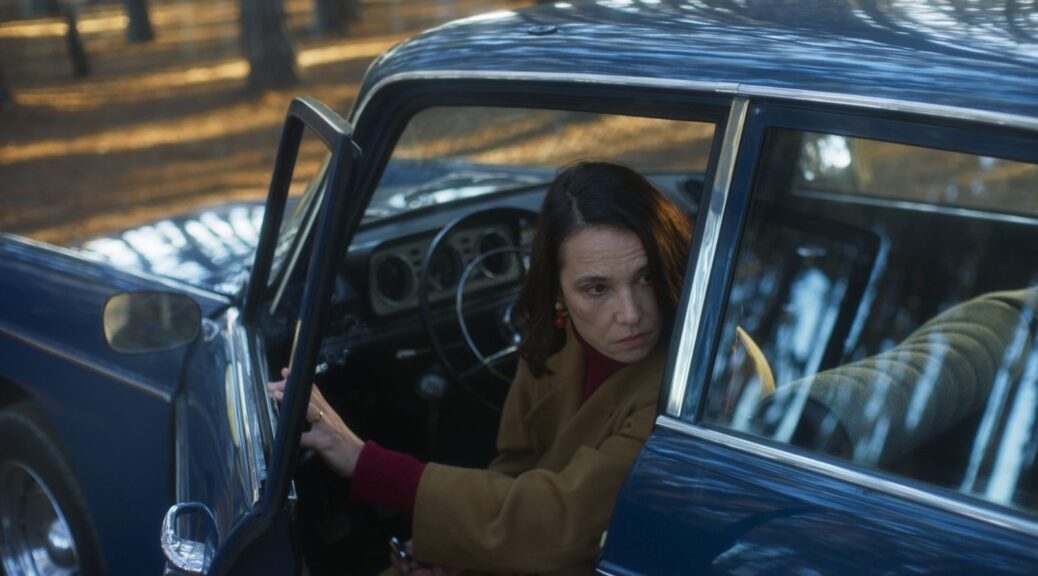
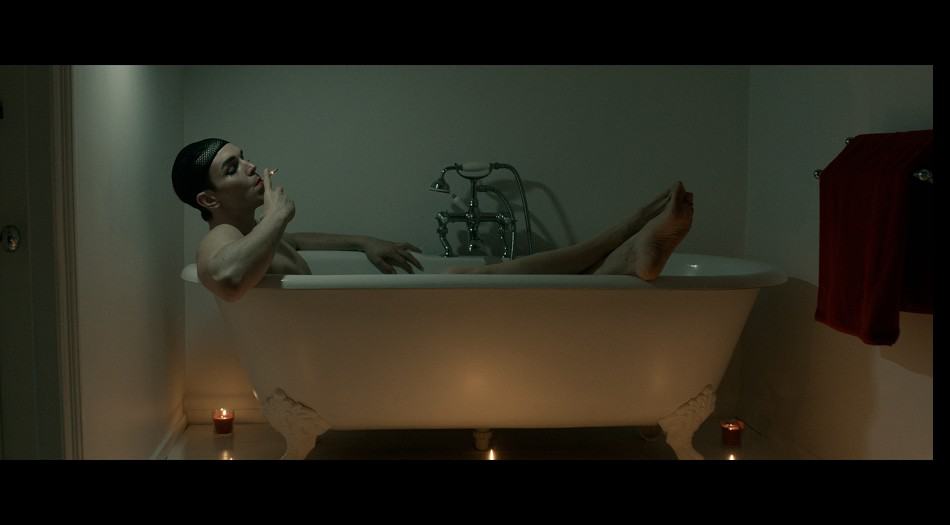
Black Magic Woman

The Love Witch

by Hope Madden

Anna Biller, everybody. Holy shit.

Wes Anderson with a Black Mass fetish and a feminist point of view, Biller wrote/directed/produced/edited/set-designed/costume-designed/music-supervised the seductive sorcery headtrip The Love Witch.

Elaine (Samantha Robinson – demented perfection) needs a change of scenery. Driving her red convertible up the seacoast highway toward a new life in northern California, her troubles – and her mysteriously dead ex-husband – are behind her. Surely, with her smart eyeshades and magic potions, she’ll find true love.

Shot in dreamy 35mm and produced in lurid Technicolor, the film achieves a retro aesthetic unparalleled in modern cinema. And yet, a mid-film cell phone and third act DNA evidence pulls you from the hip Sixties spell of burlesque shows and tea rooms – but don’t mistake this for anachronism. Instead, it fits perfectly into a narrative that sees a deranged lunatic embrace archaic gender roles with the rage of one already ruined by them.

Enough cannot be said for Biller’s imagination for detail – from the contents of a “witch bottle” to the retro look of every actor, the era-evoking flatness in line delivery to the excruciating art adorning Elaine’s walls.

The orgy of colors, textures and dessert treats signifies the sensual madness eating away at poor, narcissistic Elaine.

Biller’s casting sense is as keen. Every actor not only fully embraces the weirdness of Biller’s spell, but each looks like they just walked out of a Sears Roebuck catalog circa 1968.

Expect a loose confection of a plot, as Elaine molds herself into the ideal sex toy, winning and then tiring of her trophies. This allows Biller to simultaneously reaffirm and reverse gender roles with appropriately wicked humor.

Biller pulls thematically from her 2007 film Viva, but her epic knowledge of the sexual revolution era Black Magic Woman flicks (Oh, there are plenty: Mephisto’s Waltz, Season of the Witch, The Velvet Vampire) and her clear growth in her craft help The Love Witch exceed all expectations.


Big City Nights

Evil Dead Rise

by Hope Madden

Deadites hit the big city in Lee Cronin’s Evil Dead Rise, the latest instalment in the old Sam Raimi demon possession franchise. As was true with its predecessors, blood will rain, viscera will spew, chainsaws will bite, and the dead will most definitely rise. Just don’t expect any jokes this time around.

We open, as usual, on a cabin. Despite the top-notch title sequence, though, this episode will not be a cabin-in-the-woods horror. Cronin, who’s credited with the script as well, takes the Necronomicon and all its secrets into an urban high rise to see what hell he can raise.

Beth (Lily Sullivan) has some troubling news and wants to lay low with her sister’s family for a bit. But her sister Ellie (Alyssa Sutherland) is about to have some real troubles of her own because an earthquake opened a hole from the parking garage to a vault beneath the building. That vault held a book and some vinyl.

Lessons we should all have learned by now:

  • Don’t play unknown albums backwards.
  • Don’t read from flesh bound books.
  • Stay out of elevators. I know this one is pretty inconvenient, but honestly, it’s for the best.

Cronin (The Hole in the Ground) tosses in some loving homages to the Raimi films. Who doesn’t love a demon POV shot?! In fact, he uses disorienting angels and shots throughout the film to beautifully bewildering effect. A fisheye-of-death through a peephole is just one of the film’s many horrifying highlights.

Sutherland takes the most abuse as devoted mother turned chief Deadite, a role her lanky, angular frame is ideally suited to. She’s terrifying, but the most disturbing idea at play in this sequel is that children are fair game.

Cronin’s vision offers none of the slapstick, Three Stooges-esque humor of Raimi’s original trilogy. In fact, it leans far closer to the tone of Fede Alvarez’s underappreciated 2013 genre treasure, Evil Dead. And while this installment’s nods to the iconography of the original set is wonderful, Evil Dead Rise also recalls [Rec] and Joko Anwar’s Satan’s Slaves: Communion and even a little bit of Kubrick’s The Shining, Carpenter’s The Thing (or maybe Yuzna’s Society) – all exceptional horrors and worthy inspiration.

It’s also fun that Evil Dead Rise boasts an altogether new storyline, since so many films in the franchise are reworkings of earlier episodes. That storyline is somewhat slight, but what the film lacks in depth it makes up for with inspired visuals, solid casting, and so much blood.

War Horse, Revisited

To Catch a Killer

by Hope Madden

To Catch a Killer is a title that begs to be forgotten, bland and obvious and broad as it is. The film is about a disgruntled and underappreciated cop with the skills to get inside the mind of a killer, skills that are being nurtured by a grizzled detective who sees potential.

So far so yawn.

And yet, filmmaker Damián Szifron’s thriller is weirdly compelling.

His visuals are on point. Fireworks, cop cars, aerial shots, sudden impact – clarity in presentation tells us what is going on long before any actor speaks.

Those actors don’t hurt. Shailene Woodley delivers an un-showy but emotionally raw central performance as a beat cop quietly desperate for a meaningful challenge.

She’s aided by Ben Mendelsohn as the beleaguered senior investigator. While Det. Lammark doesn’t offer Mendelsohn the opportunities for pathos that allowed him to create iconic characters in Slow West, Mississippi Grind, Killing Them Softly, Animal Kingdom and more, the veteran finds enough humanity to make the detective memorable.

Politics, sycophancy, scapegoating and bad decisions cripple the investigation, giving Szifron and co-writer Jonathan Wakeham a chance to impress with their script as well. No broad strokes, the script indicts media, greed, cowardice, sexism, and capitalism in turn and finds reason to empathize with the least likable characters.

Still, it follows the beats you expect from a film called To Catch a Killer about an unsung but brilliant cop finding her legs as an investigator. The film can never fully escape that dull familiarity.

The film is solidly built on understated performances, and it makes viable points. But it can’t quite stick the landing.

Ole Ole Ole

Gringa

by Rachel Willis

When her mom dies, rather than live with her grandparents, Marge (Jess Gabor) decides to track down her long-lost dad (Steve Zahn) in Mexico in directors Marny Eng and E. J. Foerster’s film, Gringa.

It makes sense that our narrator would choose to find a dad she doesn’t know rather than live with her mother’s parents. The little we see of them shows they’re too critical, nothing like Marge’s supportive mother.

This is one of the film’s strengths – we’re able to glean a lot of information about Marge, her mother, and her grandparents during the film’s first fifteen minutes.

The other strength is the actors. Each is captivating on screen, particularly Gabor. She is a relatable, sympathetic young woman who fails to fit in. She copes with her depression by binging, her bulimia telegraphed early to help us understand this complicated young woman.

Unfortunately, Patrick Hasburgh’s script tries to be too many things at once, and none of the issues raised are given the weight they deserve. If the film had struck the right comedic balance, this could be overlooked, but because there is a seriousness to the tone, these difficult issues come across as shallow.

Alcoholism and bulimia are treated as switches a person can turn on or off at will. Marge’s problems are apparently solved by a month-long trip to Mexico with a near-perfect father. The fact that he left Marge and her mother when Marge was two is too easily forgiven, and when the climax comes, it’s predictable and uninspired.

This is also a sports movie, bringing all the tropes you would expect. Unlike her team at home in California, Marge – the gringa – quickly fits in with her soccer teammates in Mexico. They’re initial reluctance to have her on their team is quickly replaced by appreciation when she helps them win a critical game. Several montages take the place of moments that would have been better represented with honest dialogue.

Yet, the movie has its moments. Zahn is charming, as are several members of the supporting cast. Gabor is easy to root for; you want her and her dad to find their way. But the film is a patchwork of too many ideas and tones to effectively hook the audience. You might be carried along by what works, but it’s more likely you’ll disappointed by what doesn’t.

Ari, Are You OK? Are You OK, Ari?

Beau Is Afraid

by Hope Madden

Is Ari Aster all right?

Asking as a fan who is starting to think Hereditary was autobiographical.

Aster’s new 3-hour self-indulgent opus Beau Is Afraid revisits the scene of his 7-minute 2011 short film Beau, in which a middle-aged man loses his keys and is delayed in his plan to visit his mother.

For his exponentially longer feature, Aster employs the inarguably brilliant Joaquin Phoenix.

Phoenix is Beau Isaac Wasserman from Wasserton and he is living a nightmare of undiluted Freudian scope. Things seem fine as we open on his session with his therapist (Stephen McKinley Henderson, slyly hilarious), who prescribes some new meds. But Beau’s walk back to his apartment is a descent into Escape from New York territory. Escalating tension leads to a naked, corpse-leaping, maniac-fleeing car accident that lands Beau in the highly medicated home of Roger (Nathan Lane, an absolute treat) and Grace (Amy Ryan, always welcome).

But he needs to get to his mom’s house.

Aster generates much of the same kind of primal, ceaseless tension of the Safdies’ Uncut Gems or Aronofsky’s Mother. But he embraces the absurdity of it all in a way the others did not. At times, his film is astonishingly beautiful. There’s a surreal theatricality to the middle portion that’s stunning, but even the comparatively mundane scenes are shot gorgeously.

And as odd as they are, performances throughout are great. Patti LuPone, Kylie Rogers, Parker Posey, Zoe Lister-Jones, Armen Nahapetian, Hayley Squires, Richard Kind, Julian Richlings and a barely glimpsed but nonetheless memorable Bill Hader all add intrigue as they populate Beau’s increasingly desperate and blisteringly imaginative quest to get to his mom’s place.

But damn, it is long. And it asks a lot. Beau Is Afraid is essentially a 3-hour string of traumatic dream sequences, beautiful but shapeless, leading to something out of Pink Floyd’s The Wall. And if Hereditary triggered your mother issues, for the love of God, do not see Beau Is Afraid.

The similarities between Aster’s 2018 horror are legion: the house, the attic, the physically beaten son, a headless body – you’re almost waiting for Mona (LuPone) to deliver the line “I am your mother!”

All told, Beau Is Afraid is a fascinating, gorgeously realized vision and I don’t think you’re going to like it. I can’t say I liked it. I admire it, am stunned by it, and kind of want to see it again. Maybe I do like it, I can’t tell.

One thing I know for sure, Aster is still working some shit out.

Forbidden Photo of a Man Above Suspicion

Ran Mi Lowo (Help Me)

by Daniel Baldwin

The synopsis for writer/director Akorede Alli’s Ran Mi Lowo describes a film about a young lady, Yemisi (Omowunmi Dada), in high school within Nigeria who is tasked with solving a mystery. That mystery? Exactly who is sexually assaulting her fellow female students, including her best friend, and threatening their lives if they expose who he is to anyone. Nearly all of the victims quit school shortly after their assault, with some committing suicide…or were they murdered?

Yemisi believes that the perpetrator has a connection to the school, but the administrator won’t take her concerns seriously. But who is doing it? Is it the lecherous gatekeeper who constantly hits on the female students as they arrive every morning? Is it one of the male teachers? And if it is one of the teachers, would anyone even believe Yemisi (or the victims) without hard evidence? After all, they’re respectable members of the community and how often do people actually believe women in these circumstances? If they won’t believe them, then what is Yemisi to do?

If you’re thinking that this Nigerian film is a hard-hitting drama…you’re wrong! As deathly serious as all of the above sounds, Ran Mi Lowo couldn’t be further from awards season-style brutal dramatic fare. In fact, its closest cinematic cousin is that of the ‘70s Italian thriller, aka the giallo!

Many of the classic gialli hallmarks are on display here. There’s the protagonist with a connection to the arts, as Yemisi wants to be an investigative journalist. She’s surrounded by an overly-horny cast of characters. There are occasional swirling camera movements and POV shots. We’re also presented with weird dolls, strange subplots with no direct connection to the main story, and even the director’s own hands being those that commit onscreen murder. Speaking of the the festishistic fiend, once revealed they even give an appropriately-twitchy psychotic performance and lay out a traumatic backstory befitting the subgenre.

This is not to say that Akorede Alli entirely nails the subgenre. The writing falls flat at times and while gialli fans can appreciate superfluous subplots and (intentional or not) wonky subtitles, those aren’t exactly the best things to copy from the decades-old subgenre. Still, it’s a surprising and intriguing debut from Alli. One worth seeing for those who appreciate wilder foreign genre fare.

In Need of Some Restraint

The Pope’s Exorcist

by Hope Madden

Fair warning: I do tend to get in the weeds with these Catholic horror movies.

So, The Pope’s Exorcist.

Russell Crowe plays Fr. Gabriele Amorth, who was an honest to God exorcist based in the Vatican. He founded the International Association of Exorcists. For real, not in this movie. In this movie, he gets called to Spain to help an expat American family whose son is possessed.

The Pope’s Exorcist is the third possession film Michael Petroni has penned. Is that good news? He also wrote The Secret Lives of Alter Boys, the TV series Messiah, and The Chronicles of Naria: The Voyage of the Dawn Treader. (How is that relevant, you say? Aslan is lion Jesus. FYI.) Is the point that he knows his stuff? Or that most of those scripts aren’t very good?

Co-writer Evan Spilotopoulos has also written lukewarm Catholic horror (The Unholy). What you can expect from their script (also co-written by R. Dean McCreary in his first holy horror) is very little that’s truly original.

This is where Crowe comes in.

Crowe is great. He’s funny, clever, looks amazing on his little Vespa. Alex Essoe as the possessed boy’s mother Julia is stiff, her acting even less believable when she sits across the table from Crowe, who’s enjoying every moment of his own performance. As will you.

Franco Nero plays the pope. This marks the second time Nero has played the pope, which is hilarious to me. Anyway, that’s fun. And Ralph Ineson (The VVitch) is the voice of the demon, which is the most authentic casting ever.

The Pope’s Exorcist directly mentions that the Catholic church has been the cause of two of the greatest and longest lasting sources of human misery in history: the Inquisition and the history of rampant, institutional sexual abuse. Credit for that. The film’s resolution can’t be discussed because of spoilers, but battling your demons has rarely felt less feminist.

The Pope’s Exorcist doesn’t hold a candle to the diabolical military fun of director Julius Avery’s Overlord. There are too few surprises, the FX are so-so at best, and the outcome is never really in question. Plus, it treads too heavily on the popularity of The Conjuring’s universe of “this must be true because some Catholic person wrote it down, so let’s create a Holy Water franchise.”

Is it better than Petroni’s 2011 dumpster fire, The Rite? It is. Is it another movie that says men throughout the history of Catholicism have done evil things to the powerless around them, but the only way to correct this is to believe other men in the Catholic church? It is.

But Crowe is having a blast, and it’s infectious.

Don’t Attract the Worm

Suzume

by Matt Weiner

With yet another worldwide success, director Makoto Shinkai’s newest film Suzume cements this stage of his career as one of the effective filmmakers dealing with ecological and psychological calamity.

Shinkai excels at balancing personal drama with major, world-altering stakes. Suzume feels in the same vein as his recent blockbuster successes, such as 2019’s Weathering with You and the smash hit Your Name. But Suzume also shows the difference between formula and formulaic.

There is plenty of coming-of-age and falling in love to be had during Suzume’s road trip. But there is also the inescapable backdrop of disaster, death and loss, as refracted through the 2011 earthquake that killed over 20,000 people and that Shinkai said has deeply affected his recent films.

That disaster is personal for Suzume Iwato (voiced by Nanoka Hara), the 17-year-old orphan who lost her mother at an early age. A chance encounter with the mysterious stranger Souta (Hokuto Matsumura) opens her eyes to an unseen world, where a dark worm-like force threatens to break into Japan, which, if successful would result in earthquakes and a catastrophic death toll.

The battle between hope and environmental doom stands out in Suzume, and here, too, Shinkai doesn’t lose his sense of optimism. This is helped along visually by his vibrant animation and palette. Whether it’s real-world Tokyo or the ethereal visions of the Ever-After, Shinkai’s exquisite art is both lived-in and otherworldly. To that Suzume adds a welcome bit of action and levity, helped along by Souta’s transformation into the cutest chair you’ll likely see all year.

The tonal shifts can be jarring for a film dealing with the end of the world, but it’s of a piece with Suzume’s story. Whether it’s the whole world ending or a more personal loss means your world is ending (or at least changing), you have to hold onto what matters. And there’s a quiet sweetness to the fact that even as the apocalyptic visions in his films sharpen, what matters to Shinkai above all appears to be love.

Bloody Good

Renfield

by Hope Madden and George Wolf

So, two Robot Chicken writers and the guy who directed The Lego Batman Movie got together and said, I bet they’d let us make a movie if we could get Nic Cage to play Dracula.

I mean, maybe it didn’t go down like that, but it could have and if it did, it worked. They totally made a movie with a very saucy Nic Cage as Dracula. And a saucy Nic Cage is the best Nic Cage.

Through inspired cinematic homages, we’re whooshed through a little backstory. Robert Montague Renfield (Nicholas Hoult – who played Cage’s son in Gore Verbinski’s 2005 dramedy The Weather Man) is an ambitious real estate agent who sells his soul to Dracula. Fast forward 150 years or so and he’s grown weary of the co-dependent relationship.

The blood sucker’s insatiable appetite means that his reluctant manservant is forever finding a new place for them to lay low. Right now, it’s New Orleans, where an angry cop (Awkwafina) is fighting a losing battle with a corrupt city.

But enough about the story. Honestly, if you’re here for the story, you’ve come to the wrong place. Not that co-writers Ryan Ridley and Robert Kirkman do a poor job. They do a fine job of serving Cage opportunities to ham it up, while director Chris McKay wows with Story of Ricky levels of carnage, except here it’s intentionally funny.

And the blood-splatter here is much more accomplished then Ricky, as it’s woven through a spicy gumbo of action set pieces that mix Zombieland and Shaun of the Dead with a dash of Matrix. But as fun as this all often is, the film never fully commits to any of its multiple directions.

There’s at least one bloody toe in waters that send up rom-coms, satirize narcissistic relationships and homage a classic horror character while it’s also modernizing the themes that built him.

But experiencing Count Nicula alone is worth it. Plus, Hoult is perfect as the put-upon sad boy with access to anti-hero superpowers and Awkwafina can wring plenty of humor from simply telling a guy named Kyle to F-off.

Renfield might be bloodier than you expect, but it’s just as much fun as you’re hoping for. Call it bloody good fun.

Fight the Team

Imagining the Indian: The Fight Against Native American Mascoting

by George Wolf

“We’ve been used for entertainment for so long, most Americans don’t even question it.”

Imagining the Indian is a documentary with a clear agenda and a specific target audience. It isn’t really interested in preaching to the choir, and it seems to realize there are those on the opposite side who view even broaching the subject as threatening some God-given right to tell others how to feel.

But in the middle, there’s a group that may indeed have never questioned why Native American team names and mascots need to be changed.

Imaging the Indian makes a clear and very convincing case.

In short, “It’s either racist or it’s not.” True enough, but directors Aviva Kempner and Ben West follow that early declaration with multiple historical and uniquely personal perspectives that repeatedly drive the point home.

Like Kempner’s 2019 doc The Spy Behind Home Plate, the approach is far from stylish, but heavy on substantial persuasion, usually from those most directly affected by the demeaning mascots, team names and group cheers.

While veteran sports journalist (and co-producer) Kevin Blackistone finds no shortage of sports fans who dig in their cleats and yell “It’s just a name!,” we see a series of Native Americans who have receipts. And they say it honors nothing but a continued “white fantasy” of a people swept out of the way for hundreds of years.

“I’m so past arguing. This is life and death for us.”

Really? Life or death? Yes, expect more receipts.

Kempner and West also highlight the leadership of Native American activist (and 2014 Medal of Freedom winner) Suzan Shown Harjo, and offer solid rebuttals to the frequent charges of “erasing history” and those misleading polls which seem to suggest Native American support for the controversial mascots.

I’m actually writing this review while a Cleveland Guardian’s game plays in the other room. And while it’s encouraging to note that the Cleveland Indians/Chief Wahoo die-hards are becoming less and less vocal, I know first hand that plenty still proudly resist the name change as some heroic stand against “wokeness.”

But with the Washington football team finally ditching “Redskins” (a name singled out as the most blatantly offensive of all), progress is being made, which is why it may be the most opportune time for Imaging the Indian to get this wider release.

Can a documentary actually be the tipping point for a new conventional wisdom, and a catalyst for permanent change?

Ask Sea World.