Category Archives: New In Theaters

Reviews of what’s out now

You’re Beginning to Look a Lot Like Victims

It’s a Wonderful Knife

by Hope Madden

For some people, it’s not even Thanksgiving, let’s not get into Christmas movies quite yet, OK? Meanwhile, countless people have been binging Hallmark Christmas tales since July. And the rest of us are still stinging that Halloween is over.

By that math, 2/3 of all viewers will be pleased with It’s a Wonderful Knife, the Christmas story with all the feel-good cheer of the classics and all the bloody knifework of a solid slasher.

The title gives away the film’s core conceit, but honestly, it bore more of a resemblance to Dolly Parton’s 2020 holiday debacle – I mean, charmer – Christmas on the Square. One small town real estate tycoon (Justin Long) intends to turn a historic strip into a shopping and dining oasis, even if it means bullying kindly old Mr. Evans (William B. Davis) into selling his family home.

But wait! No time to think about that when a white clad, knife wielding maniac is on a tear! And all this in the first ten minutes of the movie. Fast forward one year and everyone’s pretty much over those murders, except Winnie (Jane Widdop). No one cares, no one notices, it wouldn’t even matter if she’d never been born (…never been born…never been born…).

Director Tyler MacIntyre (Tragedy Girls) and writer Michael Kennedy (Freaky) have some fun piling on the holiday film cliches. And there are plenty of reasons to enjoy their movie.

First of all, Justin Long. There are few people more reliably fun to see in a horror flick, and in this one he rocks a spray tan and fake teeth. So many bonus points.

Also fun, Joel McHale (Becky), who is somehow now the go-to for horror movie supportive dad with daughter issues. Add the always welcome Katharine Isabelle, and though she’s tragically underutilized, it’s great to see Cassandra Naud (who was phenomenal in Influencer).

The story itself, with its plot twists and turns, is not as clever as it pretends to be. It is wryly funny, though, and often quite sweet. It’s not as raucous as Kennedy’s Freaky nor as badass as MacIntyre’s Tragedy Girls, but it is a bloody slice of Christmas fun.

Intergalactic. Planetary.

The Marvels

by George Wolf

With some misguided storytelling and off-screen tumult, Marvel’s post-Thanos phases have been uneven, to say the least. Recent rumors even have the studio willing to pony up whatever it takes for a re-assembling of the core Avengers.

Nią DaCosta’s The Marvels gets the MCU back on some steady ground, layering characters, tones and multi-verses for a fast and fun trip to the stars.

Intergalactic trouble starts when Cree warrior Dar-Benn (Zawe Ashton) uncovers a “Quantum Band” buried on planet MB-418. Her meddling causes a power surge in the universe jump points. It’s enough to get the attention of both Nick Fury (Samuel L. Jackson) and Carol Danvers/Captain Marvel (Brie Larson), but nothing compared to what Dar-Benn could do if she found the other matching Band.

So where would it be?

In Jersey City, on the arm of Kamala Khan/Ms. Marvel (scene-stealer Iman Vellani). And it isn’t long before Carol, Kamala and a grown up Capt. Monica Rambeau (Teyonah Parris) come together to find that every time they use their respective “light-based” powers, they switch physical spaces.

This is going to make it difficult to battle Dar-Benn and her revenge tour, but “The Marvels” will have to figure it out.

DaCosta (Candyman, Little Woods), also co-writing with WandaVision‘s Megan McDonnel and Loki‘s Elissa Karasik, sets a funny, frisky tone from the start. The split screen panels and universe jumping tap into a hipper Spider-Man type vibe, while Ms. Marvel’s glee at working alongside her idol provides a seamless infusion of her series’ youthful charm.

There are a few rough spots, including more trouble in the Marvel visual department. Some of the wider, more expansive looks are fine, if not exactly eye-popping, but too many of practical set pieces come with a look of discount production design and thrown-together costuming.

Most of the film’s humor lands firmly, with a self-aware wink and a nod. And while our heroes’ stop at a planet that communicates only through song falls flat, the musical number starring Goose the cat becomes a laugh out loud highlight.

For real, if you liked Goose the first time, this installment will feel like catnip.

The end result creates its own crowd-pleasing jump point, one that brings Marvel’s small screen spirit to the multiplex. At 105 minutes (and that includes one mid-credits stinger) The Marvels may be the most brisk feature in the entire MCU. But compared to the bloated run times spent on Love and Thunder, Quantumania and Eternals, this less certainly feels like more.

Not at Home, Not Quite Alone

The Holdovers

by George Wolf

It’s the holiday season! The time of peace, joy, and goodwill!

Or…conflict, resentment, and spite.

Director Alexander Payne serves up plenty from group B in The Holdovers, a period comedy that also finds time to unwrap some warmth and understanding.

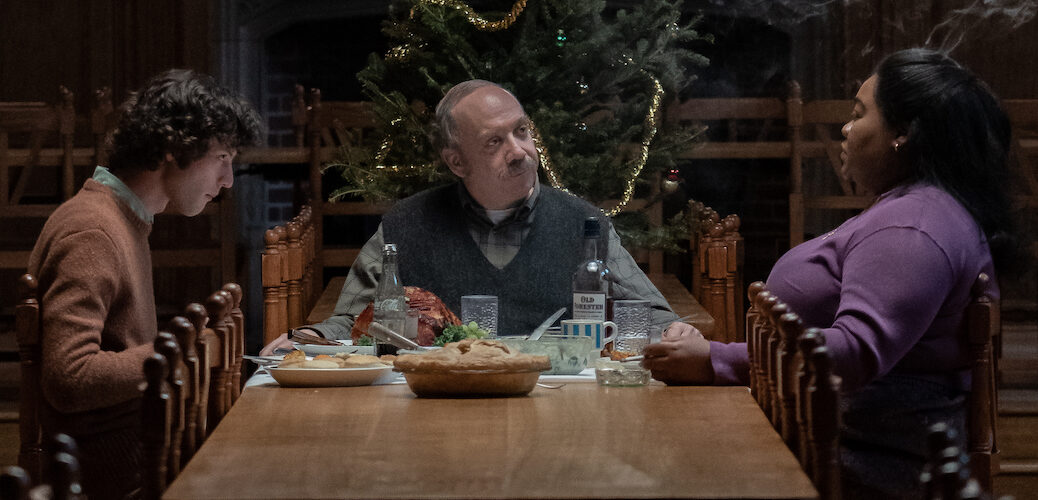
It is December 1970, and most of the boys at New England’s Barton boarding school are heading home for the two-week Christmas break. Circumstance has left five “holdovers” behind, where they will endure the disciplined regimen of Mr. Paul Hunham (Paul Giamatti), a bitter history teacher who delights in the misery of his rich, entitled students.

But through an additionally cruel twist of fate for the angry, young Angus Tully (newcomer Dominic Sessa), the four other left behinds get sprung, leaving Angus alone with the cantankerous teacher the boys have nicknamed “Walleye.”

Well they’re not quite alone. Kitchen manager Mary Lamb (Da’Vine Joy Randolph) is on campus, too. Mary’s still mourning the loss of her son Curtis in Vietnam, and she has no room in her heart of festive merrymaking.

Giamatti is perfection as a man who seems to have forged a comfortable “hate-hate” relationship with life. Sessa impresses in his screen debut, giving depth to the rebellion that has brought Angus multiple expulsions from multiple schools. And Randolph brings plenty of weary humanity, crafting Mary as a heartbroken woman still trying to understand why her Curtis was deemed more expendable than these rich white boys who are preparing for college instead of war.

And as Mr. Hunham tells Angus that we “must begin in the past to understand the present,” David Hemingson’s script sends the three unlikely friends off on a “field trip.” The adventure will reveal how their respective pasts have shaped them, and how they may have more in common than they knew.

There are areas of contrivance that recall Hemingson’s extensive TV resume, but Payne (Nebraska, Sideways, The Descendants) grounds it all with a comfortable restraint that allows the actors and some terrific production design to work authentic moments of magic and laughter..

We all have a story. Life can be unfair, and most of us are struggling with something. Be kind.

Those are lessons that seem to resonate a little deeper this time of year, which means now is the perfect time to accept an invitation from The Holdovers.

American Nightmare

Ghosts of the Void

by Christie Robb

Jason Miller’s directorial debut Ghosts of the Void is successfully unsettling.

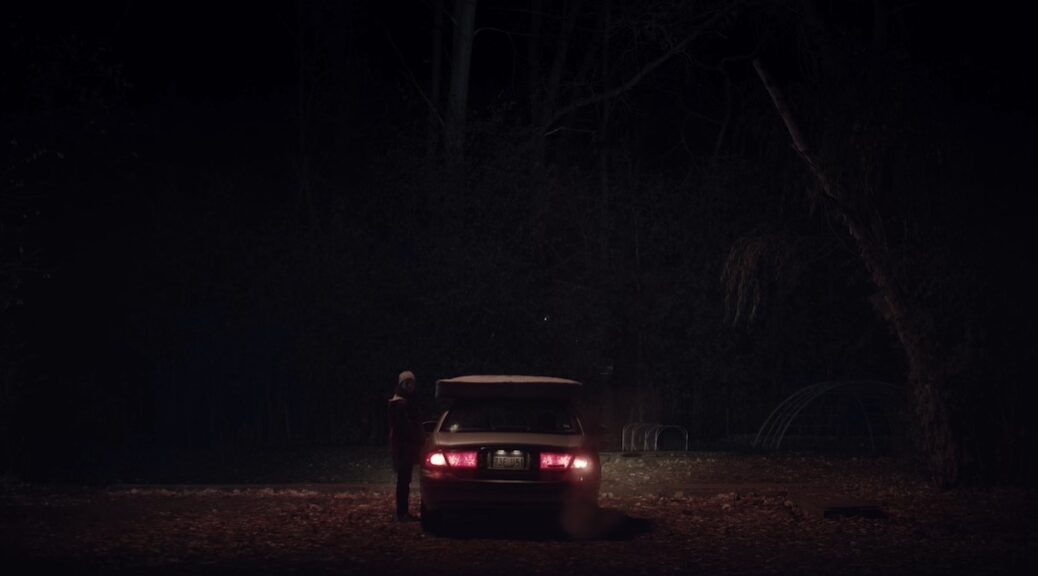
Jen (Tedra Millan, Daddy’s Girl) is barely keeping her shit together. She’s been supporting her husband Tyler’s (Michael Reagan, Lovecraft Country) ambition to become a novelist. He’d shown promise in college, but now they’ve been evited from their home and are trying to find an inconspicuous place to park for the night with only $40 and the contents of the car to their names.

They’ve driven to the “nice” side of town, just outside a country club’s fence. But physical proximity to the middle class will not be enough to secure their safety.

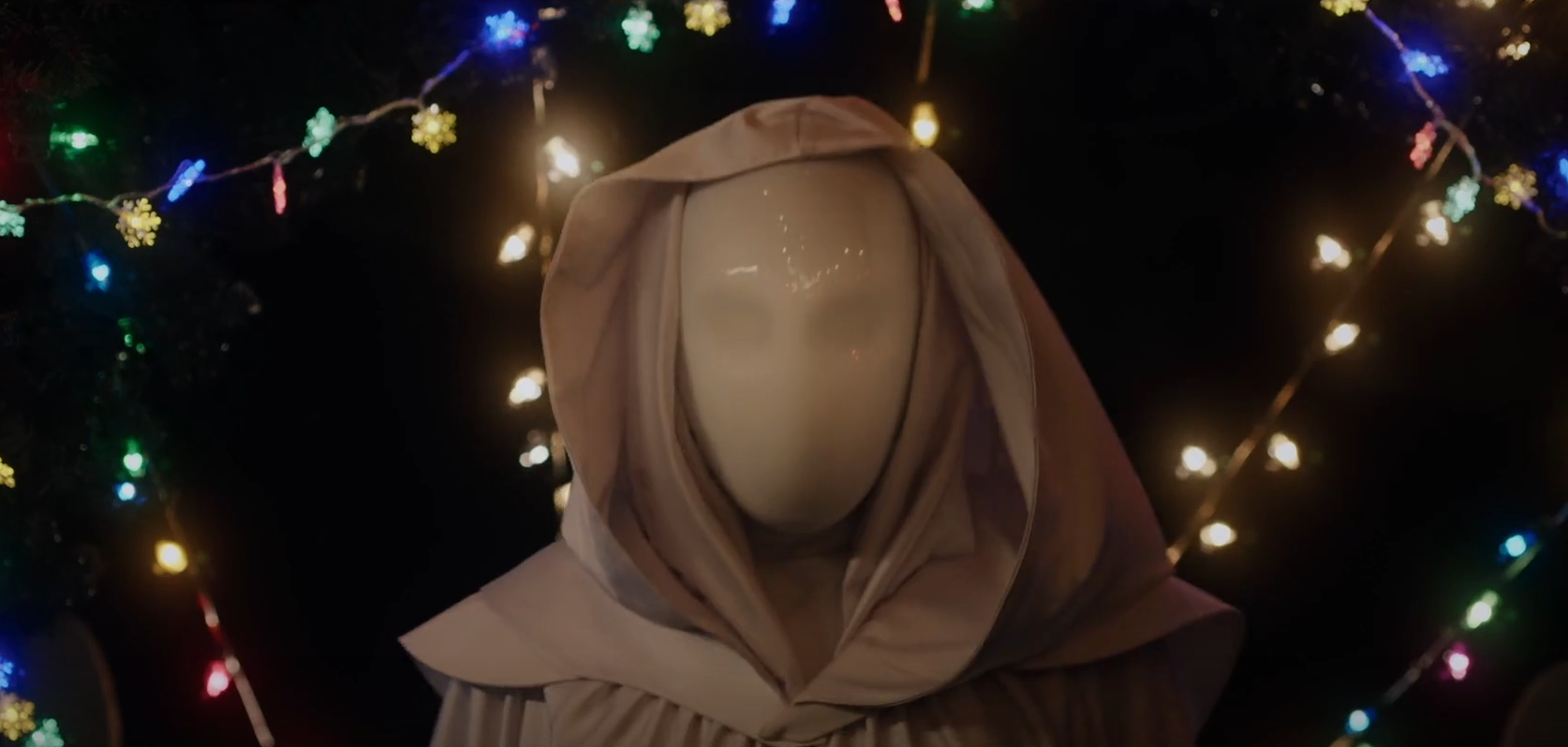
Jen’s not slept in weeks. They don’t have health insurance. And what’s with those creepy masked folks in the woods?

The film flashes back from the couple’s chilly car to scenes of the past, depicting the growing strain of the financial and creative pressures on their marriage and Jen’s growing emotional servitude to an unstable partner.

With a cast of just eight people and a very limited number of locations, Miller delivers an unexpected amount of creeping unease. Danger could come from multiple angles, so you find yourself scanning the screen, hoping to keep one step ahead of the jump scare.

Millan and Reagan deliver layered and realistic performances that keep the pace of this slow-burn of a character-driven horror moving.

With themes of financial and housing insecurity and lack of access to health care,  Miller really taps into the ways in which the American capitalist system can easily shift from an ambitious dream to a living nightmare.

https://www.youtube.com/watch?v=9u89mMGhejY

Buffalo Stance

Butcher’s Crossing

by Hope Madden

Nicolas Cage has done the wild West before. Of course, with 116 acting credits, he’s done most everything before. But he’s done this recently ­– earlier this year in The Old Way, and a couple of years back in Prisoners of the Ghostland. What’s new with Butcher’s Crossing?

Cage plays Miller, a buffalo hunter. He works for himself. And he knows the stragglers with their paper thin hides around these parts ain’t nothing compared to the majestic creatures he’s seen in the thousands over in Colorado territory. If only somebody’d pony up the dough, he could put together a hunting party and bring in the biggest haul this town’s ever seen.

Well, sir, that’s just what young Will Andrews (Fred Hechinger) wants to hear. He dropped out of Harvard in search of adventure, and this looks to be that.

Co-writer/director Gabe Polsky adapts John Williams’s gorgeous 1960 novel of bitter truth and American mythology. Visually striking, the film’s untamed beauty belies its meager budget. Creating an atmosphere with limited means is an instinct Polsky has shown since his impressive feature debut, Motel Life.

Miller, Will, the hyper-religious Charlie (Xander Berkeley) and the scoundrel Fred (Jeremy Bobb) head into the Rockies in search of buffalo. What they find, along with the beasts, is themselves, and that is not pretty.

Butcher’s Crossing becomes a descent into madness film. This should be where Cage excels. Madness is essentially his brand. The character isn’t written well enough to leave an impression and Polsky’s storytelling is too tight to let the veteran madman open up. Lunacy never materializes.

Hechinger, memorably naïve in News of the World, delivers well enough as innocence turned sour. Both Bobb and Paul Raci, as the bitter entrepreneur who warned the men against the hunt, add a bit of color to the story.

Butcher’s Crossing is an ugly story of greed. It’s an ugly story of America. The shots of bison carcasses make an impression – the photography throughout is impressive, but this sickening image is particularly something. Unfortunately, Polsky’s script and cast can’t quite match the visual clarity he gives the tale.

In the Mouth of Madness

Mister Organ

by Matt Weiner

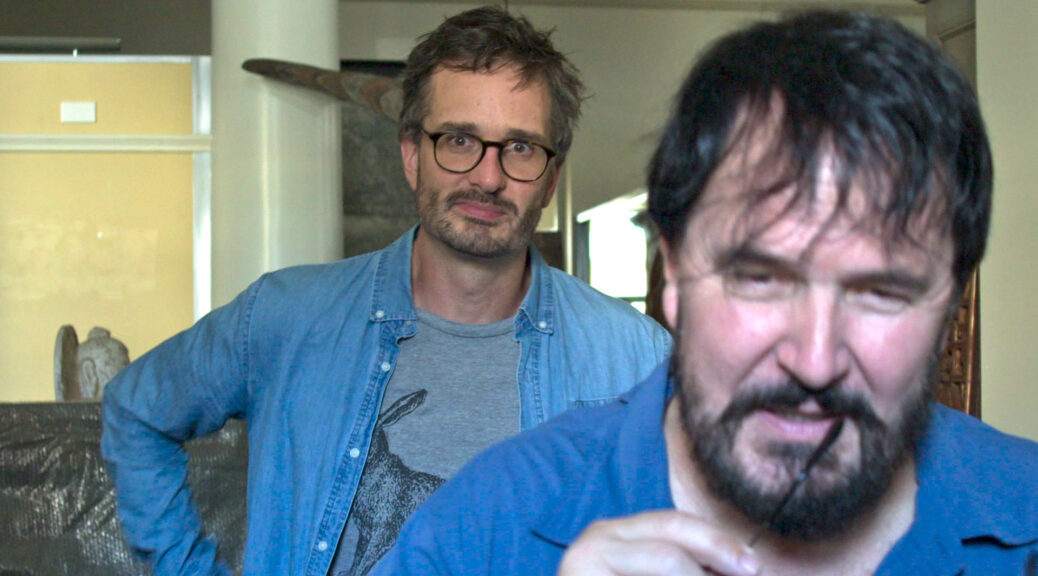
There is a mystery at the heart of Mister Organ, the new documentary from David Farrier that is compelling and maddening. As with Farrier’s last feature film, the highly acclaimed (and equally eccentric) Tickled, the filmmaker finds himself personally caught up in a seamy underbelly that touches up ever so slightly against the real world, and it’s impossible to see things the same way afterward.

But in the same way that the subculture of Tickled opened itself up to be larger than expected, Mister Organ is like a funhouse mirror opposite. Each step of Farrier’s investigation draws him further and further into the strange and sinister world of one Michael Organ.

In the best possible way, Mister Organ does not seem like the documentary Farrier wanted to make. It starts with a shady but quasi-legal towing scheme in the parking lot of an Auckland antiques store. Farrier’s spotlight on the extortionary fees being levied in this private parking lot make enough waves in local news to lead to political action around towing rules.

Unable to help himself, Farrier pulls at some small inconsistent threads and a possible connection between the tow driver and the shop owner. A few lawsuits, some light larceny and a possible home break-in later, and Farrier’s entire life is consumed by his investigation into the driver—Michael Organ.

A parade of former roommates, acquaintances and even family members suggests that Organ is, at best, a mercurial and deeply unpleasant man. And at worst, he may be an abusive con artist who has harassed people to suicide. (Allegedly! Organ’s penchant for lawsuits is a key part of the film. And Farrier is still dealing with court cases from Organ.)

There’s no real mystery about Organ himself. He is the man you think he is—a manipulative brute with the money to enact his cruelties on anyone unlucky enough to come into his orbit.

The enthralling mystery at the heart of Mister Organ instead is the way Farrier so thoroughly establishes that there is nothing there to Organ—he calls him a “black hole” at one point—while being unable to stop himself from getting caught up in the man’s grievances.

Organ’s mental state, while not something anyone would classify as “solid,” isn’t all that interesting. Farrier offers up half-baked insights on Organ near the end of the movie as a sort of a-ha moment, but the real climax has been Farrier himself slowly losing sanity points while locked in Organ’s sick games for years on end.

The character study is one of the director, not Organ, and the depths to which a man’s soul can be broken when it comes into contact with a relentless force that is tuned a few degrees toward evil but with the impish sadism to maintain plausible deniability. Is it rude to make a feature documentary about a non-public figure only to conclude that he’s a real-life Lovecraftian horror put on earth to torment people? Probably. But spending just 90 minutes with Mister Organ is enough to inspire gratitude to Farrier for the public service.

God Save the Queen

The Marsh King’s Daughter

by Hope Madden

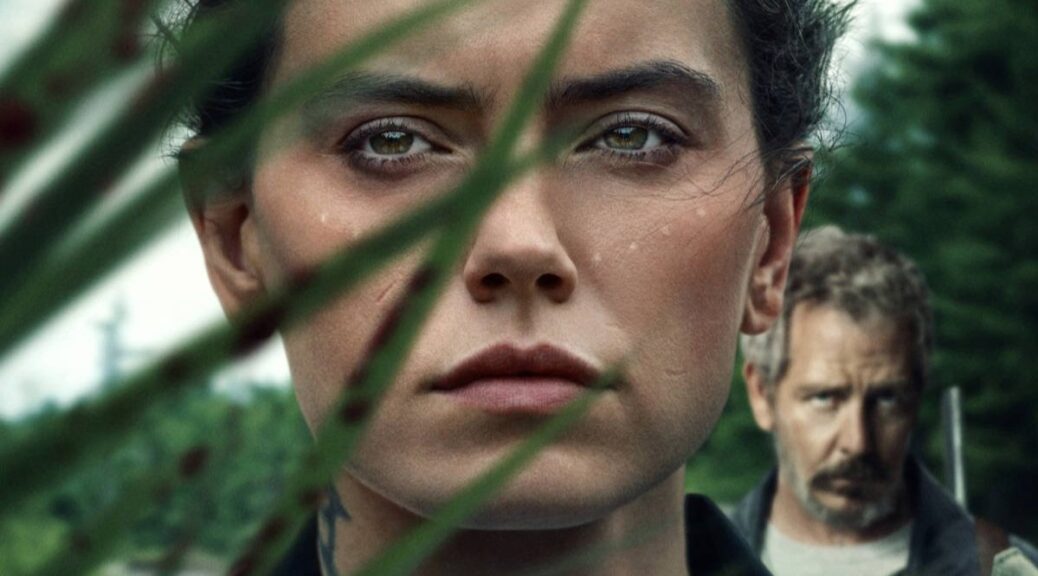
From its opening moments, Neil Burger’s The Marsh King’s Daughter establishes a meditative, even spooky mood. And though tensions rise fairly steadily over the following 108 minutes, he never entirely loses that atmosphere.

It’s a mood that suits a film about a young woman (Daisy Ridley) brought up in the most remote part of Michigan’s upper peninsula. Her father (Ben Mendelsohn) raises her to track, hunt, and recognize her place in the natural world.

Young Helena (played in youth by Brooklynn Prince, solid as ever) disapproves of her mother’s dour ways and prefers the company of her doting if strict father. This is why she’s so unhappy to be separated from him when her mother – who’d been kidnapped years earlier and forced to live in isolation – is finally rescued, and takes Helena with her to freedom.

And though Act 2 devolves into a fairly predictable if well shot and well-acted thriller, the effort put into the first act establishes Helena’s central conflict. She loved her dad more than anything in the world and he loved her back, in his way. His way was deeply, criminally wrong. But with Mendelsohn in the driver’s seat, the villainy is more than subtle and sinister enough to amplify an often-missed opportunity. We know why Helena loves and misses her father, regardless of the monster she logically realizes he is.

Mendelsohn is masterful, as is routinely the case. He brings an unnerving calm, a low key but committed sense that his way is the right way, the only way. His quietly impatient performance matches the films slow but deepening sense of unease.

Ridley – wiry, alert but never showy – convinces. Helena is what’s left of the kid whose idyllic childhood turned out to be more nightmare than dream.

None of the other characters have enough richness to feel like more than vehicles for the father/daughter story. Garrett Hedlund is particularly hamstrung by the underwritten “supportive spouse” role, and Gil Birmingham feels especially manhandled as the tragedy waiting to happen.

The most disappointing aspect of The Marsh King’s Daughter is the way the second act bends to predictability. But Burger remembers the strength of his opening when father and daughter return to the woods in the last third, and it’s worth the wait.

Better Together

Nyad

by George Wolf

Numerous biopics have shown us numerous ways to illustrate a life through formula and cliche. Nyad smartly maneuvers around most of those by anchoring a tale of persistence and achievement with a warm and intimate friendship.

The achievement is Diana Nyad’s quest to become the first to swim the 110 miles from Cuba to Key West. She tried – and failed – at the age of 28, then took a few years off. Well, more than a few.

Crediting a “soul ignited by passion,” Nyad (Annette Bening) returned to her dream at the age of 61. And her best friend Bonnie Stoll (Jodie Foster) was there to train her, push her, and sometimes protect her from herself.

Oscar-winning documentarians Jimmy Chin and Elizabeth Chai Vasarhelyi (Free Solo, The Rescue) are right at home with a true story of personal struggle, but together with screenwriter Julia Cox and the two veteran leads, carve out an entertaining and satisfying narrative.

Nyad is proud, motivated, and shamelessly self-absorbed (“It’s not that I don’t know I’m this way!”), while Bonnie is pragmatic, patient and heroically loyal. They make a fascinating and sometimes frustrating pair, and of course, Bening and Foster bring them both to life with a brilliant, lived-in authenticity.

And rather than a generic, chronological rehashing of Nyad’s life, indelible moments are seen in flashback, often at the most organic times. The long, solitary hours in the water meant Nyad’s mind would search for motivation, even if it was painful.

Chin and Vasarhelyi are not shy about weaving in some actual archival footage. And while that helps accentuate both the difficulty of Nyad’s quest and her love of self-promotion, it also adds to the list of story elements being juggled.

But with Bening and Foster setting the gravitation center, this ship never strays too far off course, and Nyad comes ashore as a worthwhile endeavor.

Blinded by Science

Fingernails

by Hope Madden

Nearly a decade ago, Yorgos Lanthimos delivered the most scathingly, cynically hilarious look at the human desire to quantify love, test it, find safety in it. And if not, be turned into a delicious crustacean.

Cristos Nikou’s delivery is more romantic, but his central theme is similar. Love is unquantifiable.

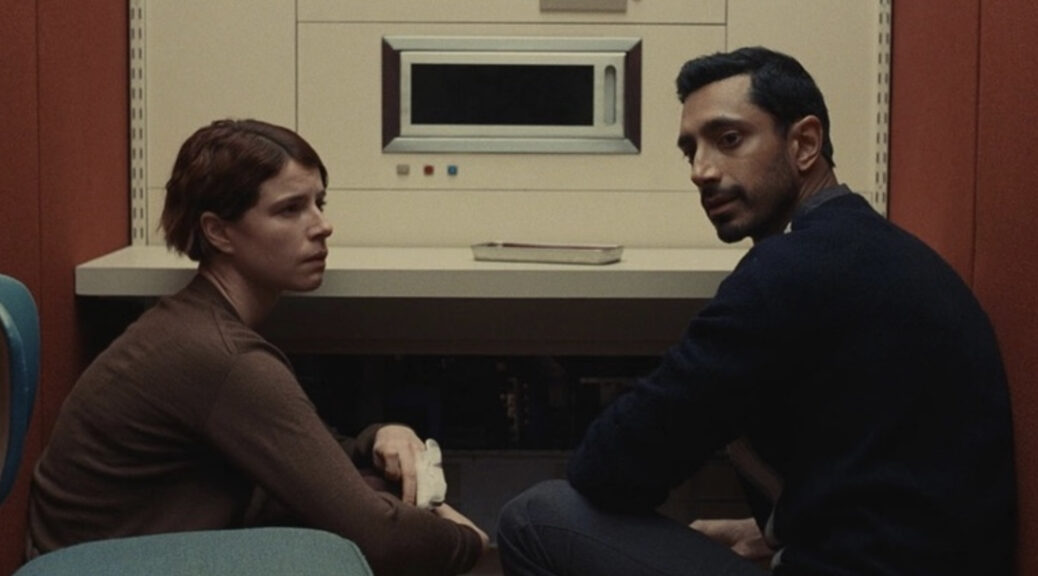
In a non-specifically retro time period with wall phones and a lot of 80s and some 90s jams but computers that look to be from the time of the dinosaur, one company has perfected a test to determine whether two people are in love. This test, it was hoped, would end divorce, end loneliness, end unhappiness. But most couples test negative, so it’s actually only created a loneliness crisis.

Anna (Jessie Buckley) and Ryan (Jeremy Allen White) are among the lucky ones. They tested positive some time back, and have fallen into a safe and predictable routine. And yet…

Anna takes a job at the very institute where the test is conducted, working alongside Amir (Riz Ahmed). That right there is the reason to see Fingernails.

Buckley’s a tremendous talent. Few actors so accurately, achingly portray yearning quite as she does. That conflict plays across Anna’s face in a raw performance matched by Ahmed’s. The Oscar winner shares electric chemistry with Buckley, which compels interest in a story that, while delightfully told, lacks a bit of depth.

White, in a smaller role, delivers as well. You can’t root for him, but neither can you root against him. He feels human, and complicating the emotion within a romantic film is never a bad idea.

Nikou’s elegant direction slides and dances from scene to scene, evoking melancholy one moment then swooning the next. It’s so beautifully shot that the occasional obvious moment – lingering on one toothbrush, holding on a reaction shot – stands out.

The trajectory is rarely in doubt and the film leaves much to mine when it comes to its premise. But whatever the weaknesses of Fingernails, Ahmed and Buckley and their thrilling rapport more than overcome.

Marching Orders

Rustin

by Hope Madden and George Wolf

In 2020, filmmaker George C. Wolfe used theatrical set design combined with snappy, rhythmic editing to contextualize the mournful, defiant music of Ma Rainey’s Black Bottom. Wolfe’s style remains much the same for his biopic of trailblazing civil rights activist Bayard Rustin. And once again, the drama sings.

That’s much thanks to a soaring performance by Colman Domingo. A character actor known for decades of memorable performances, Domingo takes the lead in Rustin and owns the film from frame one. Vulnerability and resolve pass across Domingo’s face in a performance the should absolutely be remembered this coming award season.

He’s not alone. Support work from Audra McDonald, CCH Pounder, Glynn Turman, Aml Ameen and a scorching cameo from Jeffrey Wright bring enough acting mastery to make Chris Rock’s turn seem a bit out of out of place.

Rustin was a key figure in the 1963 March on Washington, battling racism and homophobia as he mobilized scores of volunteers, advocacy groups and sometimes competing interests.

Ands Wolfe, working from a script by Julian Breece (When They See Us) and Dustin Lance Black (Milk, When We Rise), keeps his film grounded in the political realities that not only mark American history but American present. Fueled by an electric performance, Wolfe’s production saturates that history with undeniable life and passion.

The film consistently moves with the energy and staging of a musical. It’s an approach that should help hold sustained interest for home streaming, but one that results in a broad-brushed, sometimes hurried feel to the important matters at hand.

But Rustin should invite further study about a man who deserves it. And while doing so, it reminds us that the fight for equality doesn’t end until it includes all of us, and that every victory depends on the day-to-day groundwork of warriors we may never get to know.

Plus, Colman Domingo. Get to know him.