Category Archives: New In Theaters

Reviews of what’s out now

The Audacity and the Idiocy

American Animals

by Hope Madden

In 2012, director Bart Layton laid down one of the most compelling and nutty documentaries in recent history. His true crime doc The Imposter was one of those rare films that you could not predict nor could you turn away from. It was fascinating, and not just because the story was so wild, but because of Layton’s spry skills as a storyteller.

He’s again pulling from the world of true crime to tell a potent story with his latest, the narrative feature American Animals. The yarn he spins here: four perfectly reasonable, likable, comfortable college kids steal a set of pricey books from Transylvania University’s rare books collection, including Darwin’s original Origins of the Species and Audubon’s Birds of America.

The audacity of the plan itself is reason enough to pay attention. Buddies get the itch to do something big. Something life-changing. Consequences be damned. Or, more rightly, ignored.

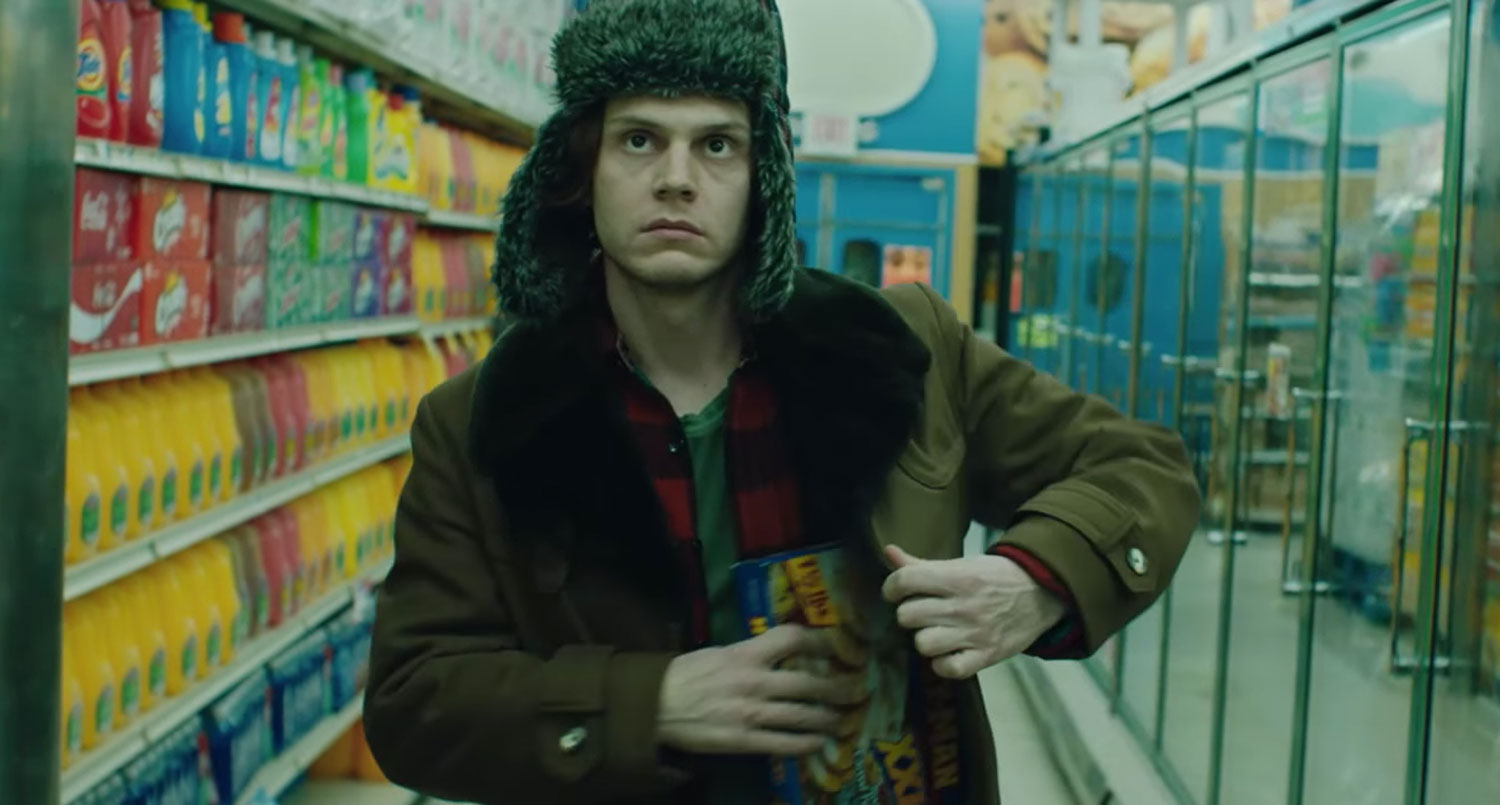
Build from there with a truly talented group of young actors: Evan Peters (X-Men’s Quicksilver), Barry Keoghan (Killing of a Sacred Deer, Dunkirk – the kid can do no wrong), Jared Abrahamson (Sweet Virginia, Detour) and Blake Jenner (Everybody Wants Some).

Layton opens with text on screen: This is not based on a true story. The words “not based on” disappear, leaving: This is a true story.

A bold statement to make, and American Animals is as interested in the effect individual perspective plays on true stories as Craig Gillespie’s I, Tonya or Sarah Polley’s near-perfect 2012 documentary, Stories We Tell.

Once again, Layton blends fiction and nonfiction devices to question the possibility of honesty in storytelling. As he weaves from actors recreating the heist to the actual participants telling their versions of events, Layton poses intriguing questions about perspective and truth.

They aren’t questions he answers, though, or even truly explores.

The film works best when it digs into the American preoccupation with unlimited potential, the individual’s specialness. The four young men who risk their futures unnecessarily suffer from that curse of the restlessly entitled.

As you watch the inevitable collapse of a reckless gang of kids’ movie-inspired heist, American Animals suggests depth and introspection but feels more like it’s grasping for a suitable ending, an appropriate way to cap all this madness with a bit of insight.

The problem with the film is the problem with the heist itself: it was fun while it lasted, but was there really a purpose?

Tryin’ to Get Over

SuperFly

by Hope Madden

The 70s blaxploitation classic Super Fly was no masterpiece, but it was a provocative time capsule of flash, style and soulful soundtrack. Any attempt to recapture the spirit seems doomed to failure.

But Director X, with a decades-long career in flashy music videos showcasing the same kind of decadent lifestyle first glamorized by films like Super Fly, has the cred to take a good swing.

Plus, he throws in some Curtis Mayfield just when you missed him the most.

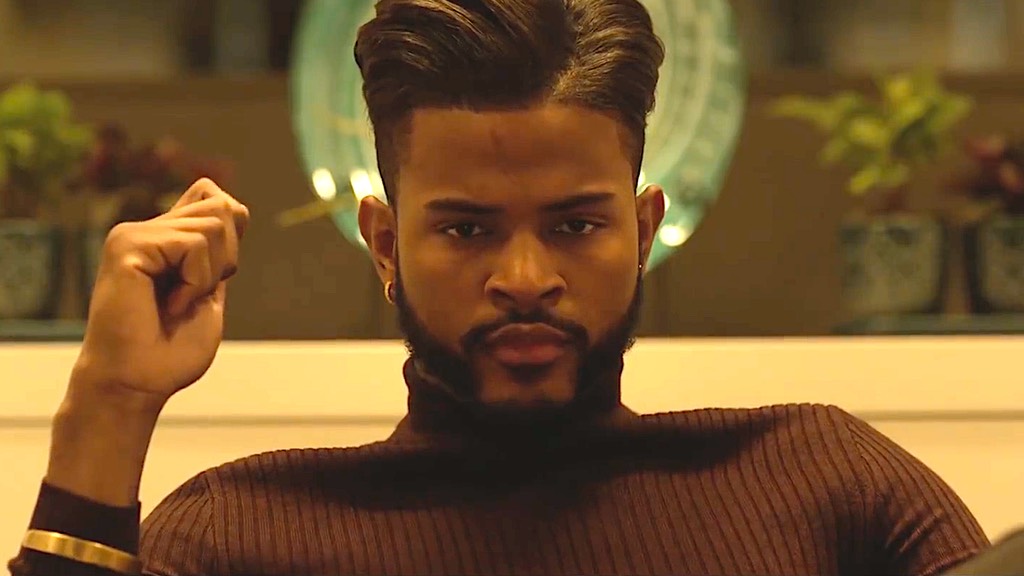
It’s clear X and screenwriter Alex Tse (Watchmen) are fans of Gordon Parks Jr.’s first and most important film. Tse is mostly, surprisingly faithful to the original. Youngblood Priest (Trevor Jackson) is a successful drug dealer who wants out while he still looks good, but The Man and an assortment of less-controlled colleagues complicate an already difficult process.

Less provocative than the original by a wide margin, X’s vision still takes some hard-earned enjoyment in scenes of comeuppance that are, unfortunately, as timely today as they were when Ron O’Neal outwitted corrupt New York detectives 46 years ago.

The update is marginally more respectful of women and boasts an impressive supporting cast including the always welcome Jason Mitchell, the always intimidating Michael Kenneth Williams, and a great turn by Esai Morales.

Oddly enough, that splashy support, which enlivens the film immeasurably, also helps to showcase its weakness—Jackson. There’s no conflicted soul inside that leather duster and skinny jeans, no tormented mind beneath that pompadour. Sure, O’Neal’s karate and cape now seem embarrassingly of-the-moment, but his performance evoked a restlessness and internal conflict that Jackson cannot manage.

A clever new image built on the skeleton of the groundbreaking ’72 film, SuperFly does not manage to provoke, intrigue or satisfy in the same way as the original. It does have style, though, and something relevant to say.

Don’t Touch Me

Tag

by George Wolf

The premise is ridiculous. It’s also attention-grabbing, and mostly true.

A film could have worse starting blocks, and Tag makes sure they’re put to good use. TV vet Jeff Tomsic flashes sharp directing instincts in his feature film debut, blending a snappy pace with sharp characterizations, some effective physical comedy and just enough heart for a solidly funny good time.

Five years ago, a front page Wall Street Journal article hipped the world to a group of 10 friends who’d been playing the same game of tag for over twenty years. Adhering to their original rules, and then amendments to those rules, they’d stalk each other every February.

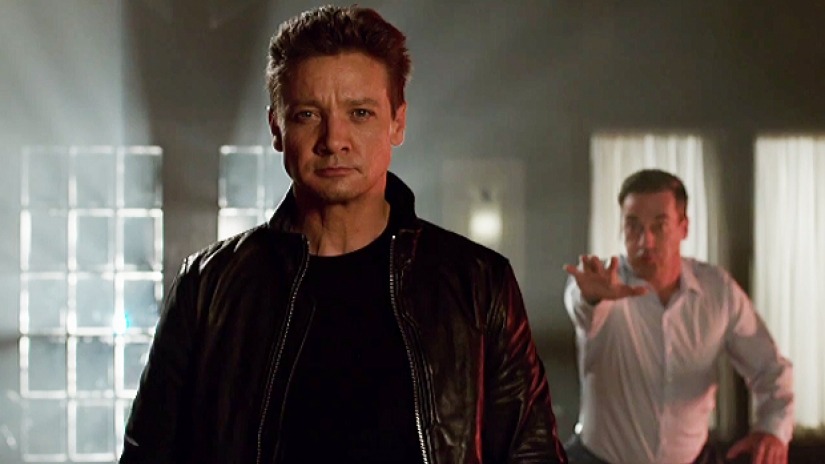
For the film version, the month has changed to May and the group scaled down to the four (Jon Hamm, Ed Helms, Hannibal Burris and Jake Johnston) that think they finally have a plan to tag the fifth (Jeremy Renner), who has never, ever been “it.”

The WSJ reporter who tags along (Annabelle Wallis) becomes an effective device to organically handle the questions we’re wondering about, and the entire ensemble quickly establishes a chemistry that feels true.

Hamm, Johnston and Renner carve out layered characters with ease, while Helms and Burris are basically leaning on their usual, but reliably funny, personas. Nice assists come from Isla Fisher as Helms’s highly competitive wife, and some assorted memorable weirdos (Steve Berg, Nora Dunn, Thomas MIddleditch).

The script, from Rob McKittrick and Mark Steilin, stays funny and hip throughout, pausing just long enough to reflect on friendship and adulthood without getting sappy. It’s more than enough fuel for this likable ensemble to play with and come out a winner.


Quality Time

A Kid Like Jake

by Rachel Willis

What happens to parents when they’re confronted with the truth about their child? In A Kid Like Jake, the titular Jake is not the kind of five-year-old boy who likes trucks and cars, but rather princesses and fairy tales. His parents, Alex and Greg (Claire Danes and Jim Parsons), see it as a harmless phase. But when it seems possible it’s more than a phase, they’re forced to confront their own fears and prejudices.

Writer Daniel Pearle (adapting from from his play) and director Silas Howard address a topic that deserves attention. With a sensitive touch, they’ve crafted a film that is heartfelt and earnest.

The film’s main shortcomings occur during the first act. It takes the film a while to get to the meat of the issue, spending too much time on inconsequential details, including a montage of private school tours that has no real bearing on the story. Rather than focusing on this minutia, the film would have been better served if some of the ancillary characters were given more to do. Friends and family members are introduced (and played well by the likes of Octavia Spencer, Ann Dowd and Priyanka Chopra), but never satisfactorily weaved into the main drama.

As Jake’s parents, Danes and Parsons work best together when they’re at odds. The dialog during Alex and Greg’s most charged moments is impeccable. Their idyllic scenes, on the other hand, are shallow. The attempt at showing us a loving family is superficial, and it’s hard to root for people we never get a chance to know.

However, there are interesting dilemmas explored in the film. When Jake wants to dress as Rapunzel for Halloween, Alex instead brings home a pirate costume for him. Her rationale is that she wants to avoid weird looks or negative comments. She wants to “protect” her son. But as Jake acts out, it’s clear that her protection is misguided. Rather than defending her son, she’s part of the problem. Greg comes to this realization more quickly, recognizing his son’s change in demeanor as a sign he’s unhappy. It leads to confrontations that are uncomfortable, yet recognizable.

As for Jake, most of what we learn about him comes from exposition. This is likely a result of the transition from stage play to film. In some ways, it works, as Jake knows who he is. But in a world that needs greater representation for gender nonconformity and transgender men and women, it would have been nice to spend time with Jake instead of only seeing him through other people’s eyes.

Screen Savers

Incredibles 2

by George Wolf

I’m no math whiz, but 2004 seems somewhere close to 14 years ago. You wouldn’t know it from Incredibles 2, where no time has passed. Kicking off right where the original left off, the long-awaited sequel delivers just enough of the same charm to stave off some stale odors.

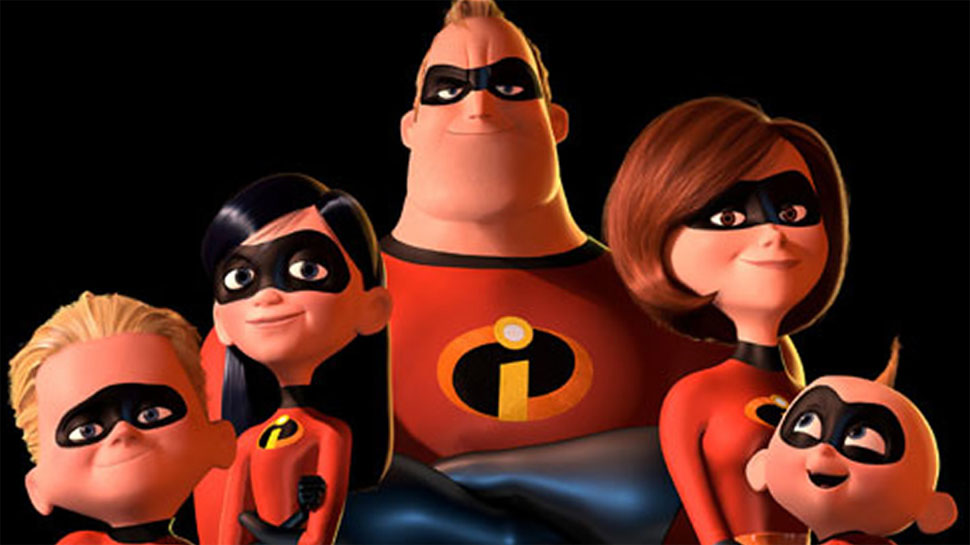
The super-powered Parr family has been sidelined, along with all the others like them, thanks to the law against superheroes. But when the evil Screenslayer starts cyber-attacking the city, local tycoon Winston Deavor (voiced by Bob Odenkirk) and his tech-savvy sister Evelyn (Catherine Keener) hatch a plan to get the supers back on the job.

It starts with putting Helen Parr aka Elastigirl (Holly Hunter) on the trail of Screenslayer, leaving Bob/Mr. Incredible (Craig T. Nelson) alone to care for baby Jack-Jack, help Dash (Huck Milner) with his homework and Violet (Sarah Vowell) with her first heartbreak.

Brad Bird returns as writer/director, armed with a worthy game plan but not quite enough nerve to swing for the fences.

While the Deavor’s groom Elastigirl for a media makeover, Screenslayer’s plan is to use technology against its users, and to “destroy the people’s trust in it.” Call that incredibly timely, and fertile ground for some Zootopia-style animated bite.

Bird is more interested in exploring the warm family fuzzies. That’s fine, but the “can clueless Dad handle the house while Mom’s at work?” angle feels every bit 14 years old, even more so when you consider the edgy path Bird abandons to chase one so safe and comfortable.

But hey, it’s summer, why so serious?

Frozone (Samuel L. Jackson) is back in chill mode, the action sequences pop and the animation has the requisite pizazz. I2 is a part 2 that’s easy to enjoy.

Outside of the near-perfect Toy Story franchise, Pixar sequels (much like sequels in general) have often faltered. Incredibles 2 ranks as one of their besteven with all it leaves on the table.


Love Stinks

The Seagull

by George Wolf

You love her, but she loves him, and he loves somebody else…

J. Geils may have rocked it up, but Russian playwright Anton Chekov was singing that tune in 1895 with The Seagull. Darker shades pepper the comedic take on unrequited love, and director Michael Mayer is the latest to bring that balancing act to the big screen.

He’s blessed with a wonderful cast. Saoirse Ronan shines again as Nina, a starry-eyed young woman who longs for a life on the stage. Nina’s boyfriend Konstantin (Billy Howle) dreams of writing plays for her, but things get complicated when the couple meets up with family, friends and servants at a country estate in the early 20th century.

Annette Bening, Elisabeth Moss, Corey Stoll, Brain Dennehy and Mare Winngham are customarily wonderful. There’s no denying everyone here is committed, but Mayer and writer Stephen Karam (adapting Chekov) can’t find the balance between comedy and drama, or stage and screen.

The setting is perfectly lush, and the material has certainly lost little of its relevance over the many years, but all the worthy parts are never assembled into anything more than serviceable.

The comedic barbs early on seem too restrained, and the later tragedies too melodramatic. Some staging seems lifted straight from a stage production, while other set pieces breath with more freedom.

Give the relatively inexperienced writer/director team credit for taking on The Seagull. Getting the competing themes to work in unison is no easy feat, and this latest film version is a well-intentioned testament to that very challenge.


Wait—Camping Is Dangerous?

Feral

by Hope Madden

Here’s the thing about Feral. It’s a decent movie: well-paced, competently directed, solidly performed. And there is not a single interesting, novel, surprising or inspired moment in it.

Maybe one, but it’s not reason enough to make this movie.

Three handsome couples head into the woods. They get a little lost, decide to pitch tents and find the lake in the morning.

They hear a noise.

One of them goes out to pee.

There’s something dangerous in the woods.

Duh.

Co-writer/director Mark Young follows up half a dozen low budget, middling-to-poor horror and action films with this adequate take on a monster-in-the-woods tale.

The sole reason the film stands out in any way is that Young’s hero, Alice (Scout Taylor-Compton) is a lesbian. Equally refreshing, males are as likely as females to fall prey to the hungry forest beast.

Bravo the nonchalance with which this is depicted, as the film does not strain to call attention to the novelty of this final girl and hero twist.

Yes, it’s about time. And yet, maybe Feral needed at least one other thing to set it apart? Because as it is, it’s simply a checklist of cabin-in-the-woods horror tropes, faithfully rendered, right up to the waning moments of its running time.

Taylor-Compton offers a perfectly serviceable performance, as do most of the actors around her. Olivia Luccardi, Renee Olstead and Landry Allbright all work to provide something close to a second dimension to underwritten, throwaway characters.

Lew Temple is an always welcome sight as the—wait for it—hermit whose assistance in this situation is suspect.

Together, cast and director generate scares by relying less on imagination and more on your familiarity with the genre itself. Therefore, assuming you have ever seen a horror movie in your life, you will not be scared.

You’ll just be reminded for the thousandth time that camping is an undeniably stupid thing to do. That’s what I got out of it, anyway.

Checking In?

Hotel Artemis

by Hope Madden

In a world where the U.S. government stops supplying bottled water to Flint, Michigan residents while international asshats Nestle are allowed to increase their pumping of clean water from just 100 miles away…

Well, that may not have been the inspiration for Hotel Artemis—the inspiration was probably that cool hotel in John Wick—but it is the kind of social disaster that will lead to the Mad-Max-like rebellion that backdrops writer/director Drew Pearce’s crime thriller.

Los Angeles, 2028, and the bloodiest riots the city has ever known have broken out over the privatization of water. With the police very, very busy, it’s a perfect time for a bank heist. But timing isn’t everything—skill helps—and soon a trio of wounded nogoodnicks are headed to the one place they can safely receive emergency care: the exclusive, subscription-based, criminal-only hospital, Hotel Artemis.

It may have a staff of only two—the nurse (Jodie Foster) and the orderly (Dave Bautista)—but it is chock full of high tech medical equipment, old-school security and strict rules. It may also be the best place to ride out these riots. Unless the tensions inside the hotel reach the same height as those outside.

It’s an intriguing premise, one rife with tense and bloody opportunity. A collection of bad people is trapped in an enclosed, retro-seedy space hoping to survive the storm.

If the story intrigues, the cast convinces. Jodie Foster nails the wearied, accepting, down-to-business Nurse. Though the dialog throughout is not as savvy as Pearce thinks it is, Foster delivers it beautifully and her physical mannerisms are even more convincing.

Bautista charms as her tender strongarm. Sterling K. Brown does no wrong ever, here again radiating an intensity that mingles sadness, obligation and moral authority.

Luckily for the entire ensemble, Pearce is more invested in character development than action. He creates a moody tension inside the walls, exacerbated by the explosion of rage and violence outside.

All of which hits fever pitch when LA crime boss the Wolf King (Jeff Goldblum as Jeff Goldblum) shows up wanting to break the rules.

Pearce and his top-to-bottom impressive cast deserve credit for sidestepping expectations and instead crafting a contained, absurd-yet-believable drama. Things get away from the filmmaker when he tries to complicate the plot with backstory, and there are two minor side plots that serve as little more than a distraction.

It’s also an awful lot of tension-building with little in the way of a final release. But Pearce and team have done something remarkable in the summer months: delivered a fresh, imaginative, original film.

All in the Family

Hereditary

by Hope Madden and George Wolf

Grief and guilt color every somber, shadowy frame of writer/director Ari Aster’s unbelievably assured feature film debut, Hereditary.

The Graham family is maybe less grief-stricken over the loss of Grandma than you might expect. Daughter Annie (Toni Collette) delivers a eulogy that admits her mother was difficult, secretive. Her oldest son Peter (Alex Wolff) seems nonplussed by it all. He’s probably stoned, though.

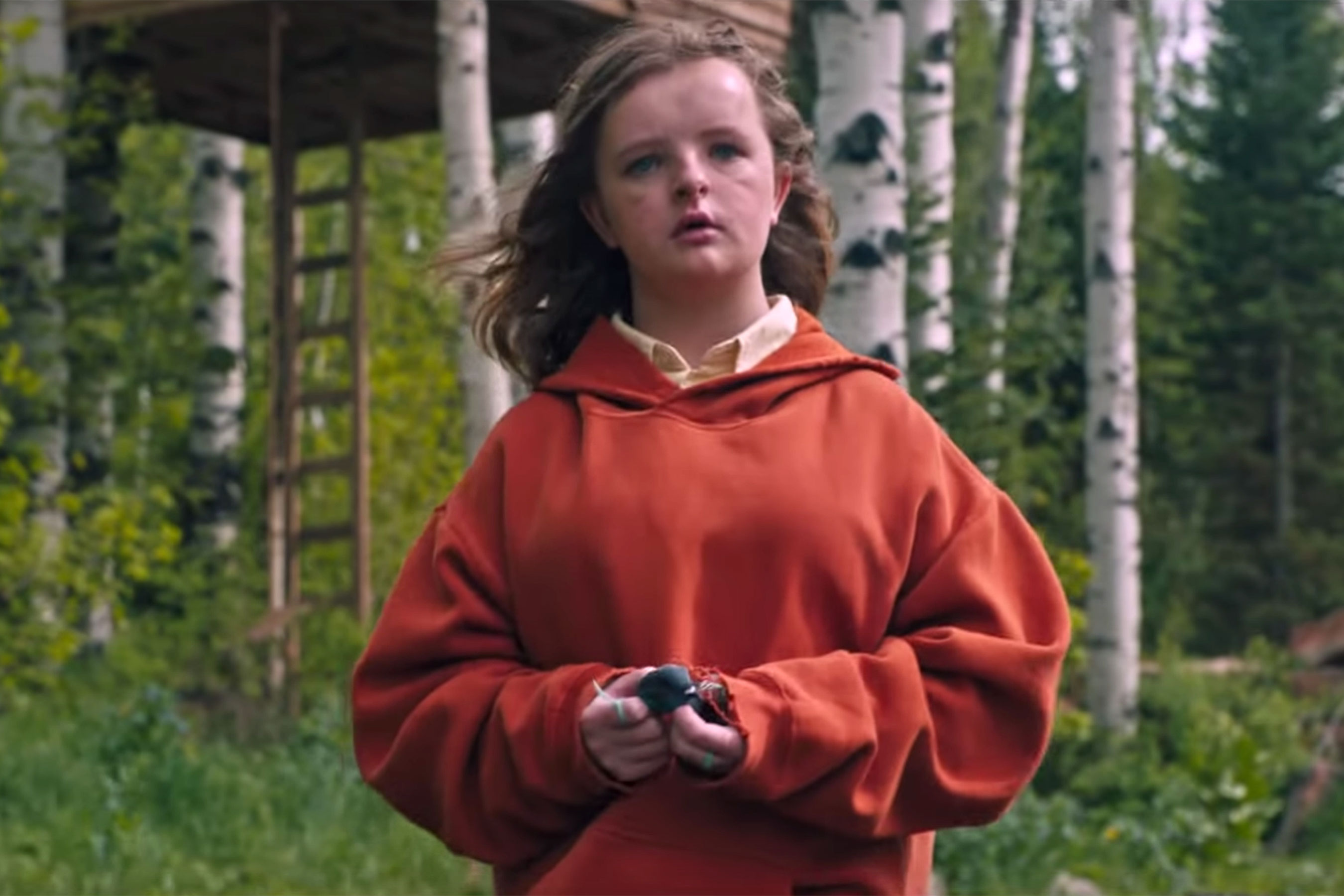
Supportive but exhausted husband Steve (Gabriel Byrne) is almost relieved, but the loss does bother the Graham’s socially isolated younger daughter, Charlie (Millie Shapiro, in one of the more chilling performances this year).

With just a handful of mannerisms, one melodic clucking noise, and a few seemingly throwaway lines, Aster and his magnificent cast quickly establish what will become nuanced, layered human characters, all of them scarred and battered by family.

The eulogy caps a striking film opening, where serpentine camera movement intertwines the Graham family with the intricate miniatures Annie creates inside their grand, secluded house. What we see suggests a scaled-down world of its own, lifelike but lifeless.

Art and life imitate each other to macabre degrees while family members strain to behave in the manner that feels human, seems connected, or might be normal. What is said and what stays hidden, what’s festering in the attic and in the unspoken tensions within the family, it’s all part of a horrific atmosphere meticulously crafted to unnerve you.

If horror fare such as The VVitch or It Comes at Night is not your bag, then you probably don’t care for the slow, detailed burn that A24 studio regularly serves. For those that do, hooray! Here’s another “adult” horror film, one that invests more in character development than in jump scares (though there are a few, including one so jarring it awakens the potential of the device).

Aster takes advantage of a remarkably committed cast to explore family dysfunction of the most insidious type. Whether his supernatural twisting and turning amount to metaphor or fact hardly matters with performances this unnerving and visual storytelling this hypnotic.

Applause to cinematographer Pawel Pogorzelski for turning this intricately designed home into a foreboding character all its own. Like Rosemary’s Baby, The Shining, The Haunting, The Others and any number of brilliant genre hauntings, Hereditary uses its surroundings to create a space where the most mundane moments take on a diabolical chill.

The family dynamic at work here is gut-punch authentic. Collette anchors the film with a performance full of grief, insecurity, bitterness and terror. It’s another in a string of award-worthy turns, and the support she gets from the ensemble, including a game Ann Dowd, elevates the tension in every intricately detailed frame.

You will have been quietly unnerved, startled from your seat, and then unsettled by the time the supernatural elements overtake the story. The peppering of hardline genre tropes in act 3 may feel like a cop out, but Aster’s interplay with the differing family members is too careful for such an easy summation.

The web of mental states, understandable suspicions and direct bloodlines layer the brutally effective fable, and Aster wields these weapons with stealthy precision. His work here is so smartly embedded that Hereditary continually tempts potential non-believers to dismiss where it leads as something you’ve seen before.

Don’t. You haven’t.

Radicalization and Reformation

First Reformed

by Rachel Willis

Reminiscent of both Andrei Tarkovsky and Robert Bresson, writer/director Paul Schrader delivers a nearly flawless meditation on faith and despair with First Reformed.

Schrader’s film centers around Reverend Toller (Ethan Hawke), overseer of the small church, First Reformed. Reverend Toller lives a simple life. He delivers a Sunday sermon to a very small congregation, gives tours of the 250-year-old church, and occasionally ministers to a youth group. It’s a simple, but seemingly pleasant existence.

His life changes drastically when he’s approached by a young, pregnant woman named Mary (Amanda Seyfried). Mary seeks counsel for her despondent husband, Michael, and Toller agrees to meet with him. It’s a decision that will open the door to the question: Will God forgive us?

Much of the film’s success rests on Hawke. In what is possibly his best performance, he perfectly portrays the inner turmoil and anguish that seizes Reverend Toller. It’s a slow slide from a pleasant façade to destructive rage, and Hawke perfectly captures every emotion, every nuance of Toller’s internal crisis and its external manifestations.

The majority of the supporting cast is able to meet Hawke’s intensity with equal verve. Seyfried’s Mary is the dynamic foil to Toller, and she mostly manages to stay on Hawke’s level. At times, however, she seems out of place, unable to convey the depths of Mary’s feelings.

Schrader’s commentary on the state of the world is bleak, and there’s not much hope to be found in First Reformed. However, it can be seen in simple moments Toller spends with Mary. It provides a few moments of balance, and light, as Toller questions the right way forward.

As the tension builds, the understated score plays a phenomenal role in pulling the audience into Toller’s world. As he contemplates his future, there is a sense of dread that stays just beneath the surface, waiting to be released. There are many moments in which the stress is palpable.

Schrader’s film is a masterful character study that asks thoughtful questions about how our choices will be viewed in the eyes of God.