Category Archives: New In Theaters

Reviews of what’s out now

We Fought a Zoo

Cryptozoo

by Matt Weiner

Harder even than finding a cryptid these days might be getting to see a new animated feature meant for adults. Cryptozoo, the latest from comic book artist Dash Shaw and animator Jane Samborski, is compelling proof of how vital it is that we still do—rare as these sightings get.

Not that there’s anything wrong with the many excellent animated options we do get, all with the requisite PG+ jokes to keep parents occupied and weepy climaxes that make you realize a matinee out with the family has turned into at least three future therapy sessions for a child 20 years into the future. But it’s refreshing to get a chance to see lushly textured, hand-drawn animal work go toward interrogating society just a little more than something like “stereotypes are bad.”

Cryptozoo kicks off as an Indiana Jones-style adventure with a mythical twist. Lauren Grey (Lake Bell), trained veterinarian and globetrotting cryptid hunter, tracks down these strange creatures and offers them a place in a protected zoo where they can safely interact with the public as well as their own kind.

Not all cryptids are humanoid, though—you try explaining “Jurassic Park but with sasquatch” to a kraken—and so the zoo’s population is a mix of humanely captured exhibits and fully sentient magical creatures who just want to live and love and go about their daily lives without fear of persecution or worse from their human neighbors.

The “worse” comes in the form of Nicholas (Thomas Jay Ryan), a mercenary ex-military tracker who hunts down cryptids to sell to governments as living weapons. When Nicholas and Lauren go after the same beast (a dream-eating baku), Lauren must partner up with Phoebe (Angeliki Papoulia), whose point of view on coexistence as a gorgon leads Lauren to slowly question her lifelong pursuit and recoil from the stinging indictment of liberalism and capitalism.

If that sounds like a drag, Shaw’s script—and especially the meticulous drawings and whimsical details on each cryptid—keep it buoyant. The result is an ambitious animated feature where the medium fits the message. This is a bestiary with real bite, mapping out a world where good intentions can still come to a bad end, and that can be the most important moral to learn.

Memories of Murder

Finding Kendrick Johnson

by Rachel Willis

In 2013, in Valdosta, Georgia, a black teenager was found dead in his high school gym. The officials ruled his death a tragic accident. There were a few unsatisfied by that ruling – including director Jason Pollock. The result of his four-year, undercover investigation is the unflinching documentary, Finding Kendrick Johnson.

Drawing on interviews with Kendrick Johnson’s family, official investigators, as well as news footage, crime scene photos, and Valdosta’s brutal history, Pollock makes his own case for what happened to Kendrick.

We’re told early on this information is being presented in a way that will allow viewers “to make up their own minds.” This isn’t an issue when focusing on what happened to Kendrick. However, the film makes a hard accusation. This isn’t to say whether or not the accusations are unfounded, but in the age of internet vengeance, it doesn’t sit well.   

It’s not done without reason. The accusation allows the film to draw parallels. If the roles were reversed, if a white child was murdered and the accused was black, the case would be handled very differently. A black teenager would certainly not be allowed to live his life, nor would a white teenager’s murder be handled so carelessly (and with utter disregard) by local law enforcement.  

Narrators, even in documentaries, often deliver a hard sell. Many times, movies fare better without the voiceover giving you the details. But this film wants the viewer to be very clear about what it’s presenting. In case you missed a detail, Jenifer Lewis’s narration helps call your attention to the many contradictions in the case.

Numerous graphic and violent images haunt the screen. Crime scene and autopsy photos of Kendrick allow the viewer to see what happened to Kendrick in gory detail. It might be too much for some, particularly as the documentary draws comparisons to past lynchings, but it’s necessary to highlight the injustices against Black Americans. Too often, Black men, women, and children are murdered, and no one is held accountable.

In the past, these crimes would be known, celebrated, and ignored by the justice system. These days, the justice system tries to pass off a murder as an accident in hopes it will go away. This documentary, along with Johnson’s family, wants to ensure that doesn’t happen to Kendrick.  

Kendrick Johnson deserves justice. His family demands it. Maybe this documentary will help them get it.

Her Propers

Respect

by George Wolf

As cliched and formulaic as music biopics can get, they’ve always got a Get Out of Jail Free Card: the hits. They can turn a stale, overly safe narrative like Bohemian Rhapsody into an Oscar contender, and elevate a joyous risk-taker such as Rocketman into another exhilarating dimension.

Respect certainly has some legendary music on its side, but the sublime cast and intimate perspective are plenty valuable as well.

Is Aretha’s the single greatest voice popular music has ever known? She’s certainly in the team picture, which means Oscar-winner Jennifer Hudson has a tough gig in bringing Ms. Franklin to life with more humanity than impersonation.

She’s fantastic. A powerhouse vocalist herself, Hudson alters her phrasing only slightly, wisely channeling the breadth of Franklin’s gift over an unnecessary impersonation. But make no mistake, when Hudson starts digging into the Queen’s songbook, there will be goosebumps.

Director Liesl Tommy and screenwriter Tracey Scott Wilson – both TV vets making their jump to the big screen – seem cognizant of the tired formula so brilliantly skewered nearly fifteen years ago by Walk Hard. They keep Respect focused on a twenty-year period from ’52 to ’72, and the personal struggles that saw Aretha take control of her life and her music.

Aretha battles to step out from the shadow of her father Rev. C.L. Franklin (Forest Whitaker), her husband/manager Ted White (Marlon Wayans) and record exec Jerry Wexler (Marc Maron), and Respect gives her story the feminist propers it deserves. Tommy keeps the grandness on the stage and in the studio, opting for an understated tone to the human drama that – one or two hiccups aside – gives it depth.

The finale takes us to Aretha’s live recording session for her landmark gospel album, and the film ends as both a celebration of a legend and an invitation to visit (or re-visit) the transcendent experience that is the 2018 documentary Amazing Grace.

Respect. Sock it to you.

New Travel Agent Wanted

Beckett

by George Wolf

The jury may still be out on the level of acting chops passed from Denzel to John David Washington, but Beckett proves once again JDW can handle a physically taxing role as well as anybody in the business.

He’s taxed early and often as the titular man on the run in Netflix’s Beckett, a moderately satisfying throwback to political thrillers of the 1970s.

While on a “get far, far away from it all” vacation in the mountains of Greece with girlfriend April (Alicia Vikander), Beckett loses control of their car on a steep curve. Crashing through the door of a remote home below, Beckett catches a glimpse of something he’s not meant to, and the threats on his life soon begin.

The local police tell Beckett that April is dead, but they won’t let him see her body, which is the least lethal reason he quickly realizes these cops can’t be trusted. The U.S. embassy in Athens is hours away even by car, but Beckett sets out on foot to beg, borrow and fight his way to safety – and the answer to why he’s a marked man.

As capably as Washington handles the action, he’s never quite able to get Beckett’s frantic paranoia to a level that rings true. And once he gets help from a determined activist (Vicky Krieps), the bad guys become easier to spot and the lack of overall intensity brings a sluggish feel.

Director/co-writer Ferdinando Cito Filomarino delivers some picturesque and well-staged set pieces, but the political conspiracy that’s brewing underneath wears thin despite worthy intentions. The point about how easily anyone can become a marginalized pawn in the game becomes a bit frayed, lost in workmanlike global thriller threads.

Song of Myself

CODA

by George Wolf

CODA is the type of welcome reminder we get every so often that lets us know a formulaic story isn’t an inherently bad thing. Fill the formula with characters that feel real enough to care about, and even a predictable journey can be a touching ride.

Writer/director Sian Heder delivers an engaging crowd-pleaser with CODA, titled after the acronym for Child Of Deaf Adults. That child is Gloucester, Mass. high school senior Ruby Rossi (Emilia Jones from Netflix’s Locke and Key – just terrific), who’s the only hearing person in her household of Mom Jackie (Marlee Matlin), Dad Frank (Troy Kotsur) and brother Leo (Daniel Durant).

The Rossi family business is fishing, but Ruby’s real passion is for singing – even though she’s too shy to let people know it. On a whim, she follows her crush Miles (Ferdia Walsh-Peelo) to choir class, where the demanding “Mr. V.” (Eugenio Derbez) sees a true talent buried under nerves. Find your voice, Mr. V. tells Ruby, and you could earn a music scholarship.

Find your voice. Heder comes right out and says it – about a character who literally has the only speaking voice in her family. And in an instant, CODA acknowledges all of the ingredients for another manipulative YA special fest, and then sets about swatting them away through thoughtful writing, smart pacing and wonderful performances all around.

Events are often a tad convenient, but the stakes and the people weighing them always feel authentic. Ruby and her friends talk about sex and drugs. Jackie is a (gasp) proudly sexy and sexual middle-aged woman who also has poignant concerns about raising a hearing child. Frank is a loving family man looking for ways to keep his boat in the water, while Leo fights to prove he’s not helpless, and to push Ruby toward her dream.

And, of course, the title also works as a reference to the end of Ruby’s childhood as she moves to take more control of her own life.

So yes, expect first love, a big moment at the choir concert and a happy ending, but the trip to where we know we’re going is funny and warm thanks to the winning cast and Heder’s earnest command of tone. The spots where she removes all sound to shift the perspective are well-placed and never cloying, adding to the film’s list of sweetly resonant moments.

There aren’t many verses in CODA‘s coming-of-age composition that we haven’t heard before. But these hits benefit from an endlessly heartfelt new arrangement, leaving a setlist that’s familiar, but well worth cueing up again.

Fascism Fascination

The Meaning of Hitler

by Hope Madden

At a time in history where fascism, neo-Nazism, nationalism, antisemitism and white supremacy flourish out in the open, it seems natural that our collective conscious directs its attention to the rise of the Nazi party.

And at the same time, doesn’t one more documentary about Hitler just add to his legend?

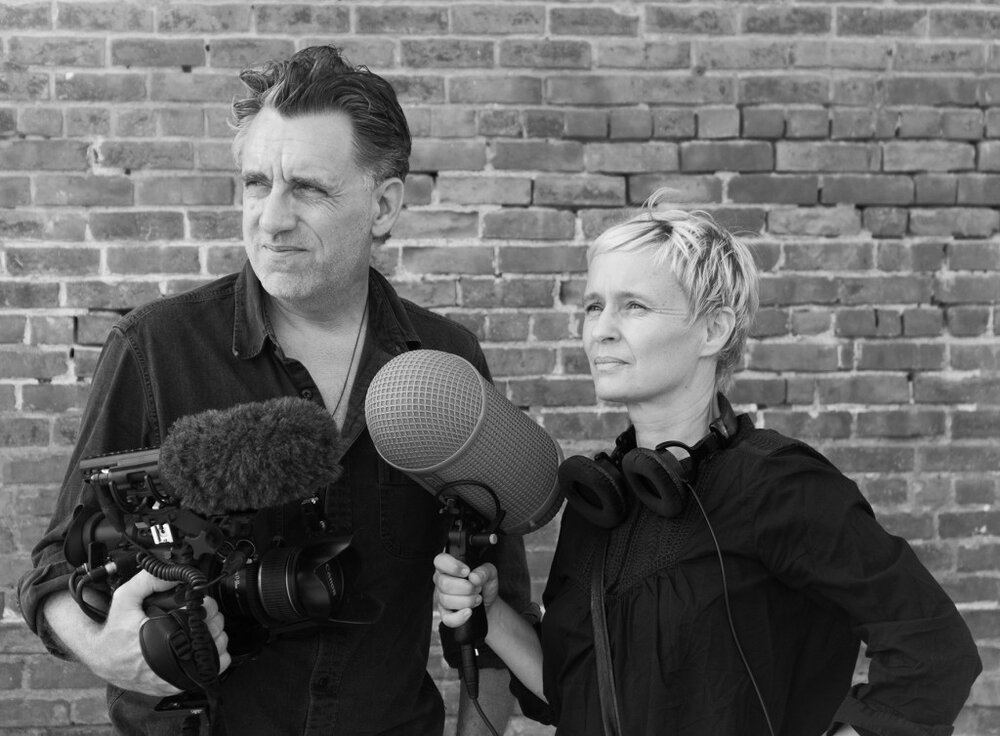
Filmmakers Petra Epperlein and Michael Tucker (Gunner Palace) grapple with that conundrum in their latest, The Meaning of Hitler.

Their primary aim is to look at how it happened in the first place to see how it might be stopped this go-round without romanticizing Hitler himself. But that had a lot to do with how he became the cult of personality he was, and why he continues to fascinate entitled, angry people.

“The Nazi ideals were acted out by people who were absolutely normal.”

Historian Yehuda Bauer, a 95-year-old who knows firsthand, shares this insight. And while much of what Epperlein and Tucker cover feels well-worn, this one bit of information gives the film upsetting relevance.

That’s why it’s happening again. Hitler was little more than a spoiled, profoundly selfish, childish man who wanted what he wanted. What he wanted was evil, but he found that an awful lot of people were OK with that as long as they believed they would also be allowed to take whatever it is they wanted.

That sounds familiar, but thankfully the film’s main point is not simply to draw obvious parallels with another vane and repugnant manchild. Their central problem is how to expose a fascist’s need to be mythologized without mythologizing the fascist.

They find freshness and relevance, partly in the transparency of their thought processes. It’s often as though we’re privy to the actual construction of the film: images of Epperlein in the scene with a clapboard or boom mic, the sound of Tucker asking the subject a question.

Part of what makes this approach work is the way it deconstructs the propaganda that Hitler used to pretend he was more than a failed artist and spoiled child. Inviting us behind the curtain, Epperlein and Tucker puncture the gaudy theatricality that makes weak men look like something they’re not.

These filmmakers are making a documentary about Hitler specifically to point out that it’s time we end our fascination with fascism.

Scare City

Howling Village

by Brandon Thomas

Takashi Shimizu is J-horror (Japanese horror) royalty. His Grudge series of films were just as influential and important as Ringu, Dark Water and Pulse. Shimizu has earned his bona fides, and while the Howling Village doesn’t quite reach the heights of his earlier work, it’s still an effective entry into the ghost story realm.

Anika (Rinka Otani) and her boyfriend, Yuma (Ryoto Bando), enter the “Howling Village” late at night to witness the mysterious village for themselves. After a harrowing encounter, Anika seemingly ends her own life even though she died on land with water in her lungs. A distraught Yuma disappears into the Howling Village once more, this time with his younger brother at his side. As Yuma’s older sister, Kanata (Ayaka Miyoshi), begins to piece together the mystery around her brothers’ disappearance, the forces around the Howling Village, and Kanata’s family , rise up to stop her.  

Early on, Howling Village sets the stage for a complicated mystery between Kanata’s family and the village itself. These types of ghost stories love to mix family drama and tradition with the supernatural. The ones that do it well (Hereditary, The Changeling) do it extremely well, while those at the other end of the spectrum usually end up adding one too many layers that weigh the story down. 

The film’s mix of mystery and horror would’ve worked better had Shimizu ironed out the details with more precision The narrative becomes contrived and confusing – often bouncing around to different characters and plots without finishing the thought of those individual scenes. Howling Village is a film that wants to comment on prejudice, greed, and how those two things end up coalescing into one heinous act. The script just never quite manages to do anything more than make a superficial comment on either topic. 

All is not lost though. There are a few successful scares that are right up there with the best of J-horror. Shimizu’s fantastic grip on the tonal dread throughout the film is really the saving grace. Sure, the mystery bogs things down, and some of the rules don’t make a lick of sense, but the super creepy visuals and situations make up for the shortcomings.  

Howling Village takes some big swings at the story it tries, but ultimately fails, to hit. The major narrative surprises may fall flat, but the film manages to make up some ground through solid scares and atmosphere. 

Revealing Our Privates in Public

Materna

by Christie Robb

With Materna, director David Gutnik presents four emotional vignettes of women and their relationships with either their mother figures, their children, or both.

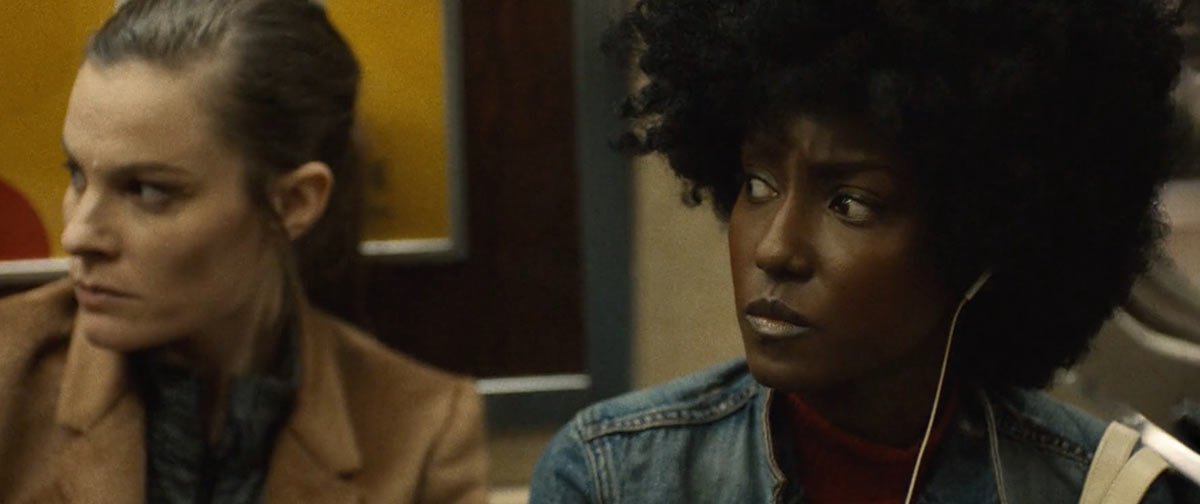
While the four women’s stories intersect in a brief, tense moment on a New York subway car, their backstories and how they came to be in that particular car are quite different.

The flashbacks don’t depict simple, saccharine, Hallmark Mother’s Day card relationships. These relationships are layered and complicated—with longing and frustration, the urge to shelter and the urge to smack.

Each of the four lead actresses, Kate Lyn Sheil, Jade Eshete, Lindsay Burdge, and Assol Abdullina, rises to the challenge and convincingly demonstrates the emotional range of her subject. (Eshete and Abdullina also co-wrote the screenplay with Gutnik.)

Rory Culkin shows up to illustrate that the maternal instinct is not solely the purview of those with two X chromosomes.

It’s not a perfect film. The initial segment, while it does pique the viewer’s interest, maybe doesn’t best set the stage for the ones that follow. There are elements that seem to signal sci-fi or body horror that aren’t carried through in the rest of the film. And because of the brevity of each of the vignettes, some of them seem a little roughly sketched, lacking in details that would more solidly ground the perspective of the woman depicted.

At the point of intersection in the subway car, each of the women is keeping herself to herself and adhering to the unspoken etiquette of public transportation. But then a white man starts loudly trying to engage them in conversation that quickly devolves into harassment and violence.

This screaming, egomaniac clearly sees himself as the most important person in the shared space and aims to capture everyone’s attention, making his private life public, doing a kind of emotional manspreading. It’s interesting to contrast this with what the women are dealing with and how their private lives either do or do not impact this public space.  

This is Gutnik’s first feature film and I’m looking forward to seeing what’s next.

A Boy and His Dingo

Buckley’s Chance

by Rachel Willis

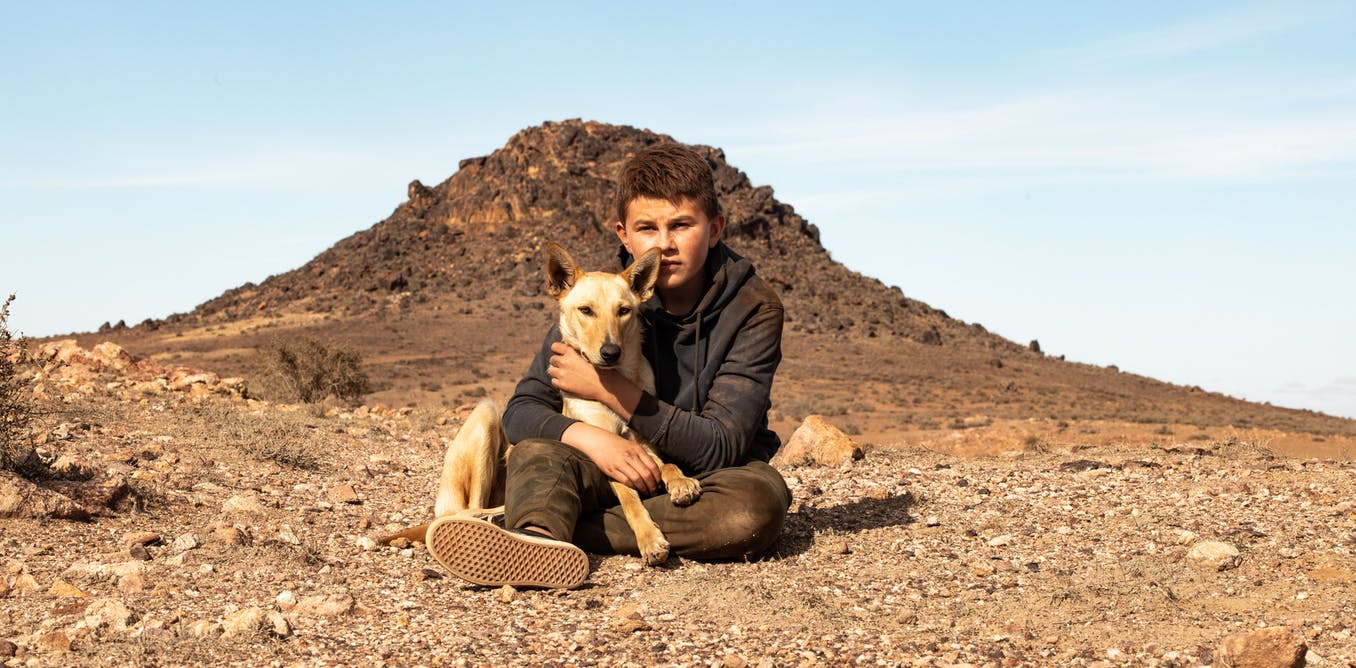
A lighthearted adventure tale about a boy and his dog – I mean, dingo – struggling to survive alone in the Australian outback, Tim Brown’s latest film, Buckley’s Chance, should delight viewers of a certain age (the under 10 crowd).

Tough kid Ridley (Milan Burch) finds his world upended when he and his mom, Gloria (Victoria Hill), move from New York City to live with his irascible grandfather (Bill Nighy) on a sheep farm in the rugged Outback.

There isn’t much explanation as to why Gloria and Ridley are moving around the world to live with a man neither of them has met. While this might not bother children, it is a bit of a head-scratcher. We get a bit more later to explain this sudden upheaval in Ridley’s life, but it’s only a tidbit of not entirely convincing information.

It takes decidedly too long to introduce the Adorable Dingo that befriends Ridley. But it’s worth the wait. From the moment the long-legged, golden-coated wild dog enters the story, he steals the show. Okay, not quite, but he does distract from the moments when Burch’s acting falters. The relationship between boy and dingo gives the movie its emotional center.

A children’s adventure film needs bumbling baddies, and this one adds a couple who have the right amount of menace and hilarity. A few laughs are hewn from these villainous hog farmers, and they’re easily the most entertaining part of the movie.

The film’s biggest weaknesses come when it forgets its target audience. There are a few scenes that center too much around the adults and their dramas. Without Ridley’s presence, these scenes are out of place. There isn’t much appeal for children in a woman and her father-in-law reminiscing. Throwing these moments into the film also leaves less time for the main adventure.

As the hardnosed grandfather, Nighy doesn’t bring his A-game. His Australian accent is bad, his performance a little wooden, but you can’t help but like him just the same. His exchanges with Burch provide some of the film’s finest moments (not including the dingo).

The Australian outback is one of the most distinctive locales on earth, and cinematographer Ben Nott knows how to draw both the beauty and the terror from it. It’s tough not to be impressed with the challenges Ridley faces against this uncompromising landscape with just his wits and a dingo.

If you need a movie to enjoy with your kids, this one is good enough for all ages.

Sandusky Fabulous

Swan Song

by Hope Madden

Do you mean to say that Udo Kier and Jennifer Coolidge were in Sandusky, Ohio and nobody told me?

Yes! All thanks to the magic of Todd Stephens, a filmmaker born and raised in Sandusky who has neighborhood stories to tell that do not involve Cedar Point. Stephens wrote the film Swan Song as a fictional homage to his own hometown hero.

Kier plays that hero, retired hairdresser Pat Pitsenbarger. Though Pat never left Sandusky, he’s been closed up in a nursing home for so long that he doesn’t even recognize it. That changes when the dying wish of an old client—the richest and most glamorous woman in all of Sandusky (Linda Evans, no less!)—is for Pat to make her gorgeous.

Kier, a staple of independent film since 1970, effortlessly infuses any movie with a palpable sense of the weird and unseemly. Often pegged to play baddies (see his recent films The Painted Bird and Bacurau for proof), he is an absolute treasure here, full of joy, impishness and sass to burn.

If Pat is going to be able to pull off this miracle, he’ll have to confront nemesis Dee Dee Dale (Coolidge) — and thank God for it. While you might expect zany comedic antics, the truth is that both veterans display tenderness and heartbreak beneath their barbs. Their scenes together bring real depth to an ultimately bittersweet homecoming.

Not every ensemble player is quite as strong and Stephens’s deeply independent roots sometimes show. But whenever things begin to feel almost amateurish or scenes run on a little longer than necessary, Kier somehow salvages it with an eye roll, a sashay, or another affectionate murmuring of “Sandusky…I love you.”

Swan Song delivers a remarkable showcase for Kier’s particular and peculiar talent, but Stephens has more on his mind than a vanity project for a deserving actor. As Pat confronts a world he no longer recognizes, Swan Song laments the death of fabulousness. The film becomes a note about what you lose when you win.

And the glory of a darling pair of shoes.