Category Archives: New In Theaters

Reviews of what’s out now

Giving Voice

Algren

by Rachel Willis

One of the literary giants of his age, Nelson Algren has faded from public consciousness in the seventy years since the publication of his award-winning novel, The Man with the Golden Arm.

Writer/director Michael Caplan hopes to revive interest in the Chicago native with his documentary, Algren.

As the winner of the first National Book Award, issued in 1950 for the above-mentioned novel, it’s surprising Algren is not grouped in similar circles as other U.S. literary greats such as Hemingway, Faulkner and Steinbeck. 

The best parts of Algren highlight the words of the writer himself. Excerpts from his letters, interviews, and his novels and short stories depict not only Algren as a person and writer, but the way he hoped to portray people in his work. Drawing attention to the underbelly of Chicago, and America itself, Algren portrayed prostitutes, addicts and the dark side of the American dream.

And he did so with sympathy rather than voyeurism or exploitation, according to the many interviews with Chicago natives (such as Billy Corgan) and Algren lovers alike. Several interviews with writers, such as Russell Banks, Studs Terkel and others, help capture the influence of Algren’s work and the importance of his depictions of the “voiceless.”

There is a lot to interest a viewer about Algren, not merely his writing, but his collage work, as well. Many of his collages are revealed throughout the film, and it’s moments like these that help the viewer understand Algren better than the tawdry details of his gambling issues or love life.

Algren’s work, though lauded, also drew controversy. Bookstores refused to carry his books; the Chicago Public Library sent a scathing letter declaring their decision to remove his work from its shelves. These are interesting tidbits provided in Caplan’s film.

Unlike the author’s groundbreaking work, Algren is standard documentary fare. It follows a common pattern, although at times, is messy, as it jumps around from subject to subject – Algren’s affair with Simone de Beauvoir, his dislike of the film version of The Man with the Golden Arm, his love of boxing and poker, his gambling issues. The documentary jerks us along through his life story without a clear focus.

If the documentary had kept a solid focus on one aspect of Algren – whether his artistic endeavors or his life experience – it would have benefitted greatly. Still, if Caplan’s film achieves its goal of reminding Americans of one of our great writers, it’s done what it sets out to do.

Face of the Nation

France

by George Wolf

France is the setting for this movie called France about a woman named France. So, subtle it’s not. But the latest from writer/director Bruno Dumont does manage to deliver some stylish eye candy with a fluffy middle that tastes plenty familiar.

Léa Seydoux is mesmerizing as France de Meurs, a celebrity journalist and host of “A View of the World,” one of the most popular talk shows in all of France. She’s juggling fame, her career, and family life with a blasé attitude about it all.

Her home life seems to bore her, the fame is satisfying only when it feeds her ego, and the integrity of her profession never seems to cross her mind. But a sudden traffic accident delivers the overdue wake-up call, and France begins to question if the person she’s become is the person she wants to be.

In the opening minutes, when some nifty editing has France asking pointed questions during an actual press conference with French President Emmanuel Macron, Dumont sets the stage for an over-the-top satire that never emerges.

Instead, it settles into a very repetitive, 133-minute groove that questions the increasingly blurry line between news and entertainment. But as France continually stages her pre-recorded reports, you realize the breezy nature of the opening has given way to an overwrought narrative that spends 30 minutes belaboring a point that Broadcast News made in 5.

Dumont is clearly speaking to his homeland first, though the message will be instantly relatable to U.S. audiences. It’s the film’s tone that becomes more curious in translation.

Seydoux is almost enough to forgive it all, with Dumont making sure his lens loves her as much as the TV cameras love France herself. And while that might not seem a difficult task when the luminous Seydoux is involved, it’s a crucial element that goes a long way toward helping the film resonate as much it does.

Women of the World

The 355

by George Wolf

Apparently, Jessica Chastain pitched the idea of an all-female Bond/Bourne hybrid to director Simon Kinberg while they were making Dark Phoenix together.

Now three years later The 355 is here, and while it’s more memorable than their X-Men installment, the project can never give the duo’s ambitious vision its own identity.

Chastain is “Mace,” a CIA agent sent to Paris with her partner (and maybe more?) Nick (Sebastian Stan). The job is to get their hands on a new cyber weapon that serves as an untraceable master key – and instant entry into any closed system on the planet.

But surprise, Mace and Nick aren’t the only agents hot for that drive, so after 45 minutes of chases and exposition, Germany’s Maria (Diane Kruger), MI6’s Khadijah (Lupita Nyong’o) and Columbia’s Graciela (Penelope Cruz) agree to team up and fight for the future. Then after another 15 minutes or so, China’s Lin Mi Sheng (Bingbing Fan) joins the world party.

Actually, Gracie’s a reluctant guest, as she’s really a psychologist and not trained for combat. So while her secret agent sisters do get to be the impressive badasses, it’s Cruz who brings the film some welcome fish-out-of-water levity.

Kinberg, who also co-wrote the script, pushes all the buttons you’d expect from a mixtape full of Bond’s high-style sexy, Bourne’s lethal brooding, and some Danny Ocean misdirection. And most of it – from Chastain in this role to the cybercrime stakes to the moments of telegraphed action and even the girl power makeover – feels pretty familiar, and that familiarity breeds discontent with the two-hour run time.

Events finally escalate in the third act, and as the globe-trotting and the double-crosses mount, Kinberg does deliver one nicely orchestrated set-piece that truly grabs your attention with tension and bloodshed.

Is it enough to merit that next adventure the finale hints at? Not really, but it’s just enough to make one three-year-old conversation worthwhile.

Holding Out

A Hero

by George Wolf

If you’re familiar with Asghar Farhadi films such as The Past, A Separation and The Salesman, you already know what to expect from his latest. The Iranian writer/director’s calling card has become the intimate drama of complex moralities and lasting impact, wonderfully layered stories that probe the societal strife of his homeland while ultimately revealing universal insight.

Farhadi does not disappoint with A Hero (Ghahreman), a film that finds him questioning the increasingly blurred lines of truth and perception.

When we first meet Rahim (Amir Jadidi), he is coming home on a two-day leave from prison. Locked up for failing to repay a debt, Rahim is hoping to use his brief amnesty to talk his creditor into withdrawing the complaint in exchange for partial payment.

It doesn’t look promising, until Rahim finds a lost handbag full of gold coins – and returns it instead of selling the coins to pay his debt.

Suddenly, Rahim is a hero. But today’s hero is tomorrow’s milkshake duck, and it isn’t long before distrust of Rahim’s story begins to threaten the promise of freedom and a new job.

Is resisting temptation even worthy of such celebration, and how far will Rahim go to retain his perceived nobility? Is it possible to recognize the moment when the best of intentions can no longer justify a possible deception? Is “the truth” even a realistic goal in the social media age of constantly manipulated realities?

Jadidi crafts Amir with a deeply sympathetic balance of earnestness and suspicion, and the terrific ensemble cast helps cement a sharp morality play that often crackles with the tension of a thriller. Farhadi seems more than comfortable moving further from his stage roots than ever, illuminating Amir’s journey with a realism that patiently waits until the final shot to get showy.

Farhadi makes sure that separating the good guys from the bad guys won’t be easy. The moral high ground of A Hero is constantly shifting, which proves to be the perfect anchor for a gifted filmmaker’s latest examination of modern life’s often messy ambiguities.

The Truth Is Not Out There

The Scary of Sixty-First

by Hope Madden

At some point during The Scary of Sixty-First you may ask yourself, “What in the hell am I watching?” Don’t feel alone. In fact, if you don’t ask that question, you may be the only one.

Director/co-writer/co-star Dasha Nekrasova mines the weak logic of many Satanic horror films to marvel at the subjective reality that’s so prevalent these days.

Noelle (co-writer Madeline Quinn) and Addie (Betsey Brown) move into an uptown NYC apartment. It’s furnished, simultaneously high end and sketchy, and they’re getting it for a song because the previous tenants had to leave so quickly.

Ripe horror context there. Who were they? Why did they have to leave so quickly? Why did they leave behind all this stuff? Why is there a mirror on the ceiling in one bedroom?

The cinematic style, stilted performances and uptown apartments blur together to form a kind of Seventies-style horror like The Sentinel or The Mephisto Waltz. The most important element: wild leaps in logic—anagrams, prime numbers, cryptic messages.

Conspiracies.

Did the girls’ apartment previously belong to Jeffrey Epstein? Some people say so, specifically the young woman who poses as a realtor’s agent and then as an investigative reporter before finally fessing up that she’s piecing together her own theories about Epstein.

Noelle is in! The sleuthing is on!

Addie, on the other hand, is having some kind of breakdown. Is something in the apartment haunting her? Possessing her?

Nekrasova and Quinn weave together real conspiracy theories about Epstein and other topics to create a fever dream of horror that points out how preposterous and salacious all these theories really are. How these theories speak more to the mind of the believer than to any kind of reality.

Nekrasova is actually pretty empathetic toward conspiracy theorists, even if she clearly thinks they are 1) wrong and 2) probably insane. The film offers bold, wet, pungent lunacy, vivid fantasies pulled from the collective unconscious of folks ready to believe—or imagine—the most effed up scenarios.

Chances are strong that, between the intentionally flat performances and the supremely WTF plotline, The Scary of Sixty-First will not land with most audiences. But it’s a wild vision and I’m not sorry I caught it.

TOGETHER AGAIN

American Siege

by George Wolf

American Siege is already the fourth film that writer and/or director Edward Drake has done with Bruce Willis in just the past two years.

And if you’ve seen any of these projects (Breach, Apex, Cosmic Sin), you know the business model: give Willis a limited role he can shoot in a day while you fill the running time with limp action, painful performances and hackneyed dialog. It’s an assembly-line approach that gets cheers for efficiency, but jeers for quality control.

This time out, Willis is Ben Watts, a former NYC cop enjoying the quiet life as a sheriff in smalltown Georgia. But his lazy days canoodling with his deputy (a Janet Jones sighting for the first time in nearly ten years) are interrupted by a hostage situation.

A small gang of baddies has taken the town doctor (Cullen G. Chambers) hostage, and they have an unusual request: reopen the case of a local woman’s disappearance, or else.

Okay, give Drake credit for a somewhat interesting setup, but it’s one that quickly gets buried under ridiculous plot turns, lazy execution and heavy-handed declarations.

The town is run by one of those Ben-Gazarra-Road House guys (Timothy V. Murphy) who can can summon a goon squad at a moment’s notice. And this one does, because there are secrets in the good doctor’s place that must be protected.

We know this because of the warning Doc gives his captors about opening that household vault with a door right out of Ocean’s Eleven.

“Some things can’t be unseen!’

But don’t be too concerned with the doctor’s realization that “I’ve already said too much!” He’ll be blurting out Not Ben Gazarra’s evil plan in no time, while making sure to blame the entire bloody mess on “coastal elites.”

Mess is right. Even the shoot-em-up payoff is lackluster, while the film’s prevailing worldview is simplistic and pandering, and the ensemble’s forced emoting makes Willis’s latest sleepwalk feel like Daniel Day-Lewis.

But, after about 90 minutes, just remember Drake and Willis already have two more of these gems in post-production, so one of them has to be better than American Siege.

Right?

Great Scot!

The Tragedy of Macbeth

by Hope Madden

Coen brother Joel delivers a vision that’s both decidedly theatrical and profoundly cinematic with his solo directorial effort, The Tragedy of Macbeth.

This film is gorgeous, in an almost Bergman manner. Hardly aesthetic for aesthetic’s sake, in true Coen fashion, every inch of screen is dedicated to a purpose. The square aspect ratio, off-kilter framing and specific use of black and white add to the film’s look of madness. Up is down, black is white, and the ground is always moving beneath your feet.

Denzel Washington and Frances McDormand play the Lord and his Lady and this, friends, is a dream team. Two of the most celebrated and talented actors of modern cinema square off. The veterans give the relationship a depth that tinges the eventual madness with grief.

Washington humanizes Macbeth with a turn full of pathos. And no soliloquy, no matter how well-worn by time and pop culture, feels stale in McDormand’s bloody hands. The adaptation and cast forego lust for something deeper and more tender, but that tradeoff does rob the film of some excitement. If there is a chink in Macbeth’s armor, it is the muted emotion of it.

A supporting cast including Brendan Gleeson, Bertie Carvel, Harry Melling, Stephen Root and Ralph Ineson impresses scene after scene. A slippery Alex Hassell is particularly memorable as Ross, but Corey Hawkins’s powerful turn as Macduff is the film’s biggest surprise.  

Let us pause a moment on the witches. The spectral sisters are played by Kathryn Hunter: spellbinding, contorted and unsettling. Her voice and image poison the beauty onscreen as they poison the mind of the Scot. The choice is inspired.

It’s not the only one. Coen’s writing — or editing, as he adapts the Bard – is precise and pointed. When is it not? Coen’s venture into Shakespeare, though it strips away the humor and quirk you may associate with Coen Brother filmmaking, stands as a strikingly Coen film. And that has never one time been a bad thing.

Glass Half Empty

The Tender Bar

by George Wolf

Look past the tabloid fodder and you’ll see that onscreen, Ben Affleck is having a fine second act. Last year’s impressive turn in The Way Back showed him more than comfortable in his older skin, and his standout support in The Last Duel is generating some Oscar buzz for this year’s best supporting actor race.

This focus on substance over leading man style is a smart one, but while Affleck digs into his pivotal role in The Tender Bar, the film itself struggles to find anything truly relevant to say.

Based on J.R. Moehringer best-selling memoir, it’s an account of his journey from a poor, dysfunctional household to a Yale education and a career in writing. Guided by voiceover narration from adult JR (Ron Livingston), we’re introduced to little JR (Daniel Ranieri) when he and his mother (Lily Rabe) are moving back into the Manhasset, New York home of Grandpa (Christopher Lloyd), Grandma (Sondra James) and Uncle Charlie (Affleck).

JR’s violent, alcoholic father (Max Martini) is a radio deejay who’s rarely around, so 11 year-old JR looks to Uncle Charlie as a role model, often soaking up life lessons found at “The Dickens,” the Long Island bar where Charlie works. Young adult JR (Tye Sheridan) continues the barstool education until it’s time for the Ivy League, new friends, and a hard-to-really-get new girlfriend (Briana Middleton).

Director George Clooney and screenwriter William Monahan craft a respectful and well-meaning adaptation, but it’s sadly lacking any hint of why they found the source material so moving. From Charlie’s advice to JR’s awakenings, the messages are broadly drawn, well worn and self-satisfied, too generic for even the Oscar-winning Monahan (The Departed) to polish into inspirational shape.

And where is the eye for vibrant period detail that helped bring Clooney that well-deserved directing nomination for Good Night and Good Luck? Here, soundtrack choices and costume design blur the stated timeline, while the young actor playing JR at 11 looks closer to 8 and shockingly unlike Sheridan. Even the “golden voice” we’re told that JR’s deejay dad possesses never materializes when he finally speaks.

A film such as this needs authenticity to resonate, but this true story never feels like one, and the chance for us to really connect with JR is derailed at multiple turns. While Affleck adds another fine showing to his current winning streak, there’s not much else in The Tender Bar to convince you the book was worth a big screen adaptation at all.

Full Frontal and Funny

Red Rocket

by Christie Robb

Mikey Saber (Simon Rex) is like an ill-trained golden retriever—all smiles and charm until he starts humping your leg and pissing all over the furniture.

In Sean Baker’s Red Rocket, Mikey makes a hangdog reappearance in his hometown of Texas City, Texas. He left 20 years before with hopes of making it big out in Los Angeles—as a porn star. That didn’t exactly turn out well for him and now he finds himself broke and on the doorstep of his ex Lexi (Bree Elrod), begging to be let back inside.

He’s a fast talker who makes a good elevator pitch, and despite a history that you can just tell is littered with drama and bad vibes, Lexi lets Mikey move in—provided he contributes to the rent and does some chores around the house.

From here, Mikey tries to pick up the pieces of his life and start over. Unfortunately, the stigma against sex workers limits his employment prospects. So he hooks up with an old boss and starts peddling weed to make ends meet.

Baker (Tangerine, The Florida Project) has made a comedy this time out, albeit a black one. Once Mikey catches a glimpse of the pert 17-year-old server Strawberry (Suzanna Son) at the local Doughnut Hole, he embarks on a mission to pimp her out to the porn industry.

She’s smart, sex-positive, and down to be filmed, but Mikey is full of lies, promoting unrealistic expectations that give the comedy a touch of a tragic undertone.

All of this is set against 2016 DNC and RNC convention speeches that make reoccurring cameos on the TVs in the background, underscoring the hogwash that Mikey is spouting.

Quotable and frequently laugh-out-loud funny, Red Rocket finally answered a question I had floating around the back of my mind for years—exactly how much bouncing would be involved when a well-endowed naked man runs full-out on a city street.  

Hail Mary

American Underdog

by Rachel Willis

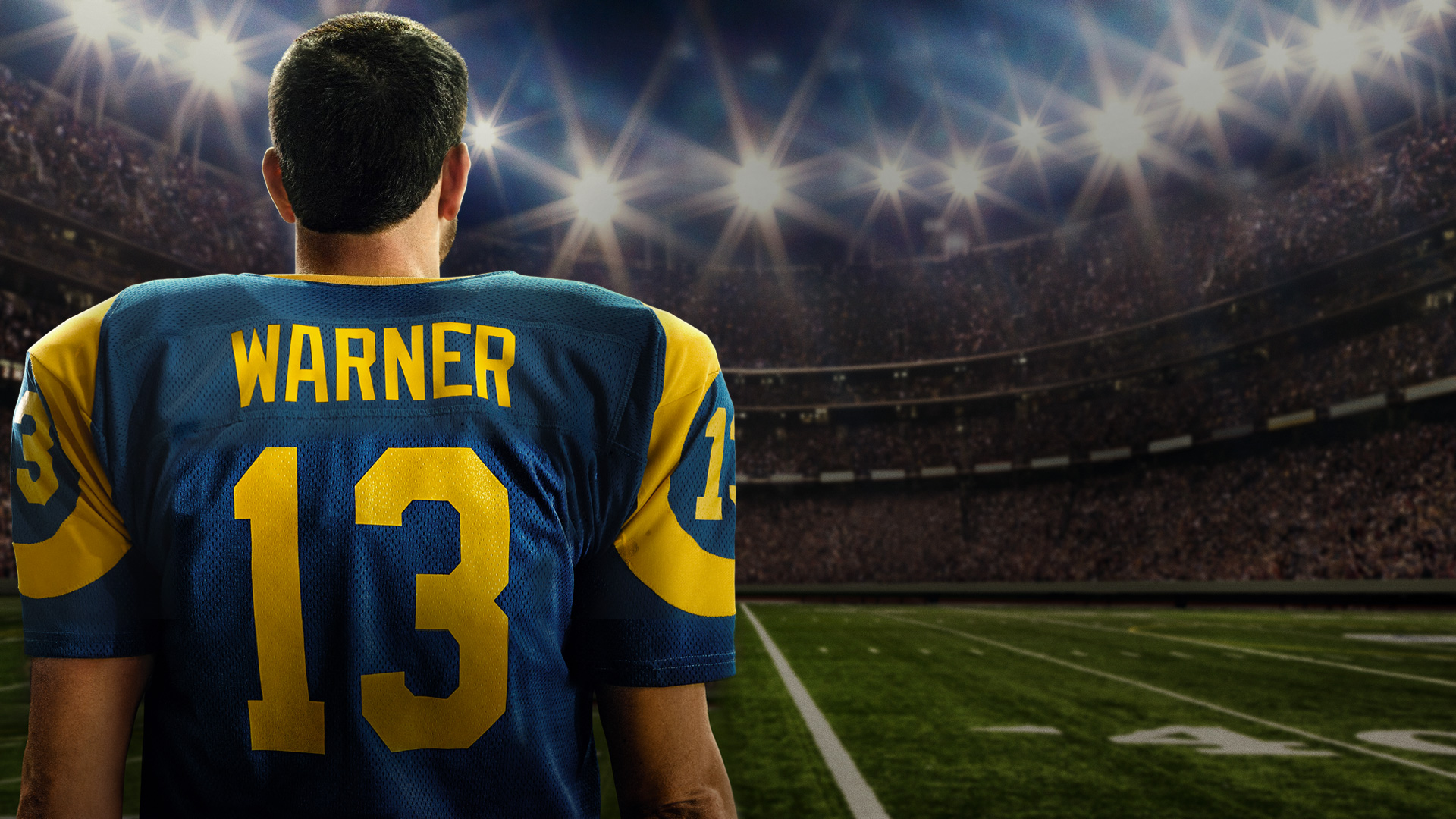
Directed by the Erwin Brothers, the life story of NFL Hall of Famer Kurt Warner is filled with the kind of inspirational messaging that is sure to hit all the right plays for a certain segment of the movie-going population.

That’s not to say American Underdog doesn’t have appeal for a wider audience, but the studio knew what it was doing with a Christmas day release. There’s football, an underdog dreamer, and a smidge of Christian faith, all bundled together in a surprisingly funny, if familiar, package.

Zachary Levi is the perfect embodiment of a quarterback with a dream delayed. From an early age, Warner has hopes of an NFL future. The movie starts with the unreality of Kurt’s goal—a short narration outlining the long odds of making it to the pros. But Kurt has genetics on his side, plus genuine talent. Unfortunately, nobody wants him.

Exactly why he’s unwanted isn’t always clear. We learn Warner spent most of his college career on the bench, only getting his chance to play as a fifth-year senior. Something about discipline is the reason behind this, but it’s never fully laid out. He isn’t part of the NFL draft upon finishing college, but he does get a chance with the Green Bay Packers. However, a misstep ends his career in Green Bay.

The film trains its focus more on the hardships Warner faced off the field alongside his girlfriend, single-mother Brenda (Anna Paquin), and his perseverance to work through them.

This is the more interesting part of Kurt’s story, and the screenwriting team of David Aaron Cohen, Jon Gunn and Jon Erwin (also co-director) know how to engage the audience. It’s not the victories on the field that matter most – though they are impressive – but the sheer determination to make the dream happen.

Of course, it’s easy to root for a man who pursues his goals with such dogged persistence and nary a negative thought. He faces hardships but with such grace, it borders on unrealistic. Even while working as a stock boy at a local grocery store, living in an apartment with no heat in the middle of winter, Brenda and Kurt radiate the kind of positivity that you typically find in a film with a faith-based anchor.

There is some cringe-worthy dialogue, and you can’t expect a movie like this to skip the inspirational speeches, but American Underdog wears its heart on its sleeve, and it’s not too hard to ignore the schmaltz.