Category Archives: Fright Club

A celebration of horror movies with updates on our monthly Fright Club film series at the Gateway Film Center.

Fright Club Friday: Red State

Red State (2011)

I actually got to talk to Kevin Smith about a year before Red State was released. Our official topic was his Smodcasts, but given my particular weakness for genre filmmaking, I veered the questions toward his forthcoming entrance into horror.

He told me: “For years I’ve called myself a filmmaker, but it’s not really true. Really I just make Kevin Smith movies. I’m at that stage where I could make a Kevin Smith Movie with my eyes closed. Let me see if I can make another movie.”

That other movie was Red State – an underrated gem. Deceptively straightforward, Smith’s tale of a small, violently devout cult taken to using the internet to trap “homos and fornicators” for ritualistic murder cuts deeper than you might expect. Not simply satisfied with liberal finger wagging, Smith’s film leaves no character burdened by innocence.

The usually stellar Melissa Leo chews more scenery than need be as a devoted apostle, but pastor Abin Cooper spellbinds as delivered to us by Tarantino favorite Michael Parks. Never a false note, never a clichéd moment, Parks’s award-worthy performance fuels the entire picture.

There’s enough creepiness involved to call this a horror film, but truth be told, by about the midway point it turns to corrupt government action flick, with slightly lesser results. Still, the dialogue is surprisingly smart, and the cast brims with rock solid character actors, including John Goodman, Stephen Root, and Kevin Pollak.

Smith said at the time: “I think we have something. It’s creepy and very finger-on-the-pulse and very much about America.”

Agreed.

Fright Club: The Reflecting Skin

The Reflecting Skin (1990)

It isn’t often when documenting horror cinema that you have the need to mention an art director, but for The Reflecting Skin, the work of Rick Roberts deserves a note. His gorgeous, bucolic Idaho is perfectly crafted, with golden wheat and decrepit wooden outbuildings representing both the wholesomeness and decay that will meld in this tale.

Writer/director Philip Ridley has a fascinating imagination, and his film captures your attention from its opening moments. A cherubic tot walks gleefully through wheat fields toward his two adorable little buddies, carrying a frog nearly as big as he is. “Look at this wonderful frog!” he calls out to them.

What happens next is grotesque and amazing – the casual but exuberant cruelty of children. It’s the perfect introduction to this world of macabre happenings as seen through the eyes of a little boy.

Seth Dove lives with his emotionally abusive mother and his soft but distant father, who run a gas station in rural Idaho sometime after WWII. Seth’s older brother Cameron (Viggo Mortensen) is off serving in Japan. Seth has decided that the neighborhood widow Dolphin Blue (a wonderfully freaky Lindsay Duncan) is a vampire.

Positively horrible things begin to happen, each of them clouded by the dangerous innocence of our point of view character.

The film plays a bit like a David Lynch effort, but with more honesty. Rather than the hallucinatory dreaminess Lynch injects into films like Blue Velvet (the most similar), this film is ruled by the ferociously logical illogic of childhood. With this point of view, the realities of a war blend effortlessly with the possibility of vampires. Through little Seth Dove’s eyes, everything that happens is predictably mysterious, as the world is to an 8-year-old. His mind immediately accepts every new happening as a mystery to unravel, and the jibberish adults speak only confirm that assumption.

This film is a beautiful, horrifying, fascinating adventure unlike most anything else available. A kind of thematic cross between Lynch’s Blue Velvet and Terry Gilliam’s Tideland (nice company!), The Reflecting Skin manages to feel more honest, and therefore more deeply frightening, than either.

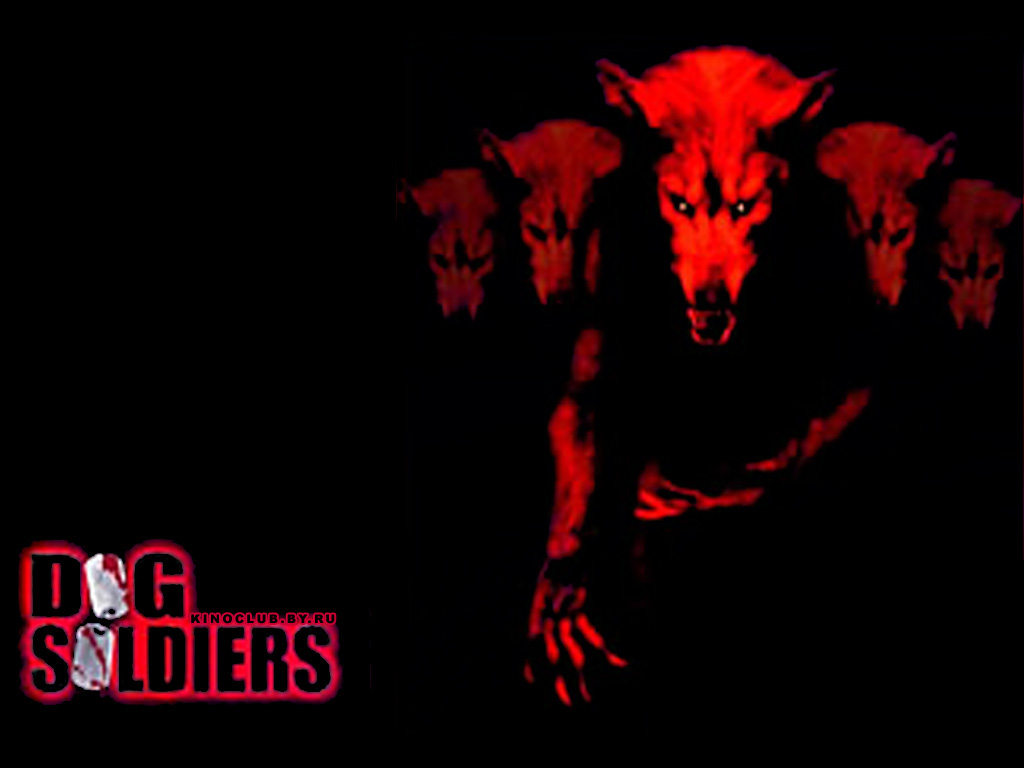
Fright Club Friday: Dog Soldiers

Dog Soldiers (2002)

Let’s get the long weekend rolling with a fun, bloody, exciting trip to the Scottish highlands. Wry humor, impenetrable accents, a true sense of isolation and blood by the gallon help separate Neil Marshall’s (The DescentDog Soldiers from legions of other wolfmen tales.

Marshall creates a familiarly tense feeling, brilliantly straddling monster movie and war movie. A platoon is dropped into an enormous forest for a military exercise. There’s a surprise attack. The remaining soldiers hunker down in an isolated cabin to mend, figure out WTF, and strategize for survival.

This is like any good genre pic where a battalion is trapped behind enemy lines – just as vivid, bloody and intense. Who’s gone soft? Who will risk what to save a buddy? How to outsmart the enemy?

But the enemies this time are giant, hairy, hungry monsters. Woo hoo!

The fantastically realized idea of traitors takes on a little extra something-something, I’ll tell you that right now.

Though the rubber suits – shown fairly minimally and with some flair – do lessen the film’s horrific impact, solid writing, dark humor and a good deal of ripping and tearing energize this blast of a lycanthropic Alamo.


Fright Club Live: Calvaire (The Ordeal)

The Ordeal (Calvaire) (2004)

This week’s Fright Club – 9pm at the Drexel Theatre in Bexley – unspools the 35mm print of Calvaire. It’s the first time the film has screened in Columbus, and we could not be more excited!

A paranoid fantasy about the link between progress and emasculation, The Ordeal sees a timid singer stuck in the wilds of Belgium after his van breaks down.

Writer/director Fabrice Du Welz’s script scares up the darkest imaginable humor. If David Lynch had directed Deliverance in French, the concoction might have resembled The Ordeal. As sweet, shy singer Marc (a pitch perfect Laurent Lucas) awaits aid, he begins to recognize the hell he’s stumbled into. Unfortunately for Marc, salvation’s even worse.

The whole film boasts an uneasy, “What next?” quality. It also provides a European image of a terror that’s plagued American filmmakers for generations: the more we embrace progress, the further we get from that primal hunter/gatherer who knew how to survive.

Du Welz animates more ably than most our collective revulsion over the idea that we’ve evolved into something incapable of unaided survival; the weaker species, so to speak. Certainly John Boorman’s Deliverance (the Uncle Daddy of all backwoods survival pics) understood the fear of emasculation that fuels this particular dread, but Du Welz picks that scab more effectively than any filmmaker since.

His film is a profoundly uncomfortable, deeply disturbing, unsettlingly humorous freakshow that must be seen to be believed.

http://www.youtube.com/watch?v=WgB9JTdrXhg

Countdown: Best French Language Horror Movies

French horror films are not for the squeamish. Hell, even Belgian and Canadian horror seems affected by the French flair for bloodshed and discomfort – the Grand Guignol, as they might say. And those crazy frogs may be making the very best in the genre right now. In celebration of this week’s live Fright Club, the brilliant and horrifying Calvaire (in 35 mm!), we count down the other 5 best French language horror films.

5. Sheitan (2006)

The fantastic Vincent Cassel stars as the weirdest handyman ever, spending a decadent Christmas weekend with a rag tag assortment of nightclub refugees. After Bart (Olivier Barthelemy) is tossed from the club, his mates and the girls they’re flirting with head out to spend the weekend at Eve’s (a not shy Rosane Mesquida). Way out in rural France, they meet Eve’s handyman, his very pregnant wife, and a village full of borderline freaks. The film is savagely uncomfortable and refreshingly unusual. Cassel’s performance is a work of lunatic genius, and his film is never less than memorable.  

4. Martyrs (2008)

This import plays like three separate films: orphanage ghost story, suburban revenge fantasy, and medical experimentation horror. The first 2 fit together better than the last, but the whole is a brutal tale that is hard to watch, hard to turn away from, and worth the effort.

https://www.youtube.com/watch?v=Jbct9qWBSME

3. Irreversible (2002)

Gaspar Noe is perhaps the most notorious French filmmaker working in the genre, and Irreversible is his most notorious effort. Filmed in reverse chronological order and featuring two famously brutal sequences, Noe succeeds in both punishing his viewers, and reminding them of life’s simple beauty. There’s no denying the intelligence of the script, the aptitude of the director, or the absolute brilliance of Monica Bellucci in an incredibly demanding role.

2. Them (2006)

Brisk, effective and terrifying, Them is among the most impressive horror flicks to rely on the savagery of adolescent boredom as its central conceit. Writers/directors/Frenchmen David Moreau and Xavier Palud offer a lean, unapologetic, tightly conceived thriller that never lets up. Creepy noises, hooded figures, sadistic children and the chaos that entails – Them sets up a fresh and mean cat and mouse game that pulls you in immediately and leaves you unsettled.

https://www.youtube.com/watch?v=z9Djvi1-k0s

1. Inside (2007)

Holy shit. Sarah lost her husband in a car crash some months back, and now, on the eve of Christmas, she sits, enormous, uncomfortable, and melancholy about the whole business. Were this an American film, the tale may end shortly after Sarah’s Christmas Eve  peril makes the expectant mom realize just how much she loves, wants, and seeks to protect her unborn baby. But French horror films are different. This is study in tension wherein one woman will do whatever it takes, with whatever utensils are available, to get at the baby still firmly inside another woman’s body.

Fright Club Fridays: We Are What We Are

We Are What We Are (2010)

Give writer/director Jorge Michel Grau credit, he took a fresh approach to the cannibalism film. His Spanish language picture lives in a drab underworld of poverty teeming with disposable populations and those who consume flesh, figuratively and literally.

In a quiet opening sequence, a man dies in a mall. It happens that this is a family patriarch and his passing leaves the desperately poor family in shambles. While their particular quandary veers spectacularly from expectations, there is something primal and authentic about it.

It’s as if a simple relic from a hunter-gatherer population evolved separately but within the larger urban population, and now this little tribe is left without a leader. An internal power struggle begins to determine the member most suited to take over as the head of the household, and therefore, there is some conflict and competition – however reluctant – over who will handle the principal task of the patriarch: that of putting meat on the table.

We’re never privy to the particulars – again giving the whole affair a feel of authenticity – but adding to the family’s crisis is the impending Ritual, which apparently involves a deadline and some specific meat preparations.

Grau’s approach is so subtle, so honest, that it’s easy to forget you’re watching a horror film. Indeed, were this family fighting to survive on a more traditional level, this film would simply be a fine piece of social realism focused on Mexico City’s enormous population in poverty. But it’s more than that. Sure, the cannibalism is simply an extreme metaphor, but it’s so beautifully thought out and executed!

The family dynamic is fascinating, every glance weighted and meaningful, every closed door significant. Grau draws eerie, powerful performances across the board, and forever veers in unexpected directions.

We Are What We Are is among the finest family dramas or social commentaries of 2010. Blend into that drama some deep perversity, spooky ambiguities and mysteries, deftly handled acting, and a lot of freaky shit and you have hardly the goriest film ever made about cannibals, but perhaps the most relevant.

https://www.youtube.com/watch?v=EBkNz3_pzsw

Fright Club Fridays: Frailty

Frailty (2001)

“He can make me dig this stupid hole, but he can’t make me pray.”

Aah, adolescence. We all bristle against our dads’ sense of morality and discipline, right? Well, some have a tougher time of it than others.

Back in 1980, Bill “We’re toast! Game over!” Paxton directed the short music video Fish Heads. Triumph enough, you say? Correct. But in 2001 he took a stab at directing the quietly disturbing supernatural thriller Frailty, with equally excellent results.

Paxton stars as a widowed, bucolic country dad awakened one night by an angel – or a bright light shining off the angel on top of a trophy on his ramshackle bedroom bookcase. Whichever – he understands now that he and his sons have been called by God to kill demons.

Whatever its flaws – too languid a pace, too trite an image of idyllic country life, Powers Boothe – Frailty manages to subvert every horror film expectation by playing right into them. We’re led through the saga of the serial killer God’s Hand by a troubled young man (Matthew McConaughey), who, with eerie quiet and reflection, recounts his childhood with Paxton’s character as a father.

Dread mounts as Paxton drags out the ambiguity over whether this man is insane, and his therefore good-hearted but wrong-headed behavior profoundly damaging his boys. Or could he really be chosen, and his sons likewise marked by God?

Brent Hanley’s sly screenplay evokes such nostalgic familiarity – down to a Dukes of Hazzard reference – and Paxton’s direction makes you feel entirely comfortable in these common surroundings. Then the two of them upend everything – repeatedly – until it’s as if they’ve challenged your expectations, biases, and your own childhood to boot.

Paxton crafts a morbidly compelling tale free from irony, sarcasm, or judgment and full of darkly sympathetic characters. It’s a surprisingly strong feature directorial debut from a guy who once played a giant talking turd.

August Fright Club: An Ohio Premier!

Join us Friday, August 22nd for the next installment of Fright Club – now at 9:00 pm! The earlier start time should allow us to discuss the film after the screening. Prizes and fun before start time, too!

This month we proudly present the Ohio premier of Calvaire (The Ordeal), a bizarre and terrifying trip into madness!

Join us!

The Snowtown Murders

The Snowtown Murders (2011)

Very quietly, Australia is putting out some of the most troublingly honest films on earth, The Snowtown Murders among them.

First time filmmaker Justin Kurzel’s movie bears more than a passing resemblance to 2010 Aussie import Animal Kingdom. Both boast unreasonably realistic performances focused on Australia’s seedier side; both examine one family’s functional disregard for the law; both hinge on the relationship between a charismatic psychopath and a quiet, wayward teen.

But Kurzel’s film, unfortunately, mines a true story.

John Bunting tortured and killed eleven people during his spree in South Australia in the Nineties. We only watch it happen once on film, but that’s more than enough.

The director seems less interested in the lurid details of Bunting’s brutal violence than he is in the complicated and alarming nature of complicity. Ironically, this less-is-more approach may be why the movie leaves you so shaken.

An unflinching examination of a predator swimming among prey, Snowtown succeeds where many true crime films fail because of its understatement, its casual observational style, and its unsettling authenticity. More than anything, though, the film excels due to one astounding performance.

Daniel Henshall cuts an unimpressive figure on screen – a round-faced, smiling schlub. But he brings Bunting an amiability and confrontational fearlessness that provides insight into what draws people to a sadistic madman.

There’s not a false note in his chilling turn, nor in the atmosphere Kurzel creates of a population aching for a man – any adult male to care for them, protect them and tell them what to do.

Once he has the trust of his neighbors in this low-income suburb, Bunting picks and chooses: who dies, who helps, who lives another day. What begins as exceedingly brutal neighborhood vigilantism turns quickly to a sort of thinning of the herd, and eventually to simple, unfathomably horrific entertainment.

The Snowtown Murders is a slow boil, and painfully tense. It’s hard to watch and harder to believe, but as a film, it offers a powerful image of everyday evil that will be hard to shake.

Fright Club Fridays: The Orphanage

The Orphanage (2007)

Some of the world’s best horror output comes from distant lands – like this gem from Spain.

Laura (Belén Rueda) and her husband reopen the orphanage where she grew up, with the goal of running a house for children with special needs – children like her adopted son Simón, who is HIV positive. But Simón’s new imaginary friends worry Laura, and when he disappears it looks like she may be imagining things herself.

This looks like a well worn tale at first glance: Is the distraught mother losing her mind, as those around her assume, or is something supernatural afoot? But it’s director Juan Antonio Bayona’s understated approach, along with Rueda’s measured performance and Óscar Faura’s superb cinematography, that buoy the film above the ordinary ghost story.

A scary movie can be elevated beyond measure by a masterful score and an artful camera. Because Bayona keeps the score and all ambient noise to a minimum, allowing the quiet to fill the scenes, he develops a truly haunting atmosphere. Faura captures the eerie beauty of the stately orphanage, but does it in a way that always suggests someone is watching. The effect is never heavy handed, but effortlessly eerie.

The Orphanage treads familiar ground, employing such iconic genre images as the lighthouse, scary dolls, scarecrows, a misshapen child – not to mention the many and varied things that go bump in the night – but it does so with an unusual integrity. Creepy images from early in the film are effectively replayed in the third act to punctuate the very real sense of dread Bayona creates throughout the film. While most of the horror is built with slow, spectral dread, there are a couple of outright shocks to keep the audience guessing.

One of the film’s great successes is its ability to take seriously both the logical, real world story line, and the supernatural one.

Screenwriter Sergio Sánchez doesn’t shortchange his characters or the audience by dismissing Laura’s anguished state of mind, or by neglecting the shadowy side of his tale. The Orphanage is reminiscent of producer Guillermo del Toro’s The Devil’s Backbone, as well as The Others, and even of the classic The Innocents.

The Orphanage has more than the unsettling spectral images of children in common with these films; it boasts a sustaining, powerful female performance. Rueda carries the film with a restrained urgency – hysterical only when necessary, focused at all times, and absolutely committed to this character, who may or may not be seeing ghosts. The realism and tenderness in her performance help one overlook flaws in the film’s storyline.

Examine it too closely and the backstory starts to crumble before you, but all is forgiven because of the final payoff – an ending that suits the characters, is faithful to the truth of the ghosts as Laura sees them, does justice to the exquisite atmosphere created in the film, and never feels inauthentic or obvious.

A good ghost story is hard to find. Apparently you have to look in Spain.