Category Archives: Fright Club

A celebration of horror movies with updates on our monthly Fright Club film series at the Gateway Film Center.

Fright Club: Most Horrifying Moments

This is an odd one for us. Generally, our countdowns are meant specifically to draw attention to films we think you should see. The films covered today are not recommended for the squeamish, and one of them is not recommended for anyone. When the hobbling scene from Misery is not tough enough to make your list – indeed, did not even make the top 10 – you know you’ve chosen some pretty miserable content. (We’ve decided to include trailers here rather than the actual scenes.) After much help from listeners and a lot of soul crushing time spent watching movies and scenes we’d rather forget, here is our list of the 5 most difficult scenes in horror movies to watch.

5. Oldboy (2003)

Like most every film on this list, Chan-wook Park’s 2003 original Oldboy boasts many scenes that are tough to watch. It’s a magnificent if punishing film, full of unseemly twists and bloody turns that ratchet up tension and keep you utterly bewildered for 120 minutes. But there are two scenes in particular that really hit a nerve as only a root canal can.

Dentistry horror is tough for a lot of people to take, and Park explores his oral fixation several times in this film. For us, the hardest one to watch happens toward the bitter end, when the smitten Dae-su Oh attempts to prove that he will never tell the secret. To give away either the secret or the proof may be to spoil too much, but he is guaranteed to do no tongue wagging after this scene.

4. Antichrist (2009)

Lars von Trier’s foray into horror follows a couple down a deep and dark rabbit hole of grief. Von Trier’s films have often fixated on punishing viewers and female protagonists alike, but in this film the nameless woman (played fearlessly by Charlotte Gainsbourg) wields most of the punishment – whether upon her mate (Willem Dafoe) or herself.

Like dental scenes, gynecological horror draws a particular reaction. Whether it’s the abuse scene at the beginning of Proxy, nearly any scene in the brilliant French film Inside, or the final feast in Trouble Every Day, scenes of this ilk can be tough to watch. But to watch as Gainsbourg – who’s already inflicted some serious pain on Dafoe’s character – takes the scissors to herself is next to impossible.

https://www.youtube.com/watch?v=eBdDcQONmkM

3. Irreversible (2002)

French filmmaker/provocateur Gaspar Noe does not play well with his audience. Every film, no matter how brilliantly put together or gloriously filmed, is a feat in masochism to watch. Later efforts, like Enter the Void, spread the misery out for its full running time, but for Irreversible, he gave it to us in two horrifying scenes. While the head bashing is tough viewing, the film centers on a rape scene that is all but impossible to watch.

Noe’s general MO is to punish you through sheer duration. The scenes last so long you feel like you cannot endure another minute, and this scene certainly does that. Not shot even momentarily for titillation, and boasting a devastatingly excellent performance from Monica Bellucci, it justifies its own horrific presence. There are other films with necessary and difficult rape scenes – Straw Dogs, I Spit on Your Grave, The Last House on the Left, Henry: Portrait of a Serial Killer – but none is harder to stomach than this.

2. Martyrs (2009)

Martyrs is an incredibly difficult film to watch, but it pays you for your perseverance. It’s a brilliantly conceived and thoughtfully executed film about innocence, zealotry, and misery that opens with a child surviving torture. Not an easy image to overcome, and yet Martyrs only gets tougher.

Writer/director Pascal Laugier plays on the same visceral reaction to torture that drove Hostel, Audition, and The Strangers. Indeed, mainstream directors understand the “look away” reflex that informs Martyrs – just watch the slow knife death in Spielberg’s Saving Private Ryan, or American History X’s curb stomp scene. But Martyrs builds and builds, pulling you in, asking you to love poor Anna so that it is that much tougher to watch her when she’s skinned alive.

https://www.youtube.com/watch?v=-7Qx2dT-lUw

1. A Serbian Film (2010)

This is not a movie we would recommend to basically anyone. That’s not to say it’s a bad film – it’s pretty well directed, acted, and written. It’s just that the co-writer/director Srdjan Spasojevic is trying to articulate the soul-deadening effects of surviving the depravity of war. The film title is no coincidence – the film is meant to reflect the reality of a nation so recently involved in among the most depraved, horrific, unimaginable acts of war. It’s as if he’s saying, after all that, what could still shock us?

Like Pier Paolo Pasolini’s notorious 1975 effort Salo, or the 120 Days of Sodom – also a depiction of the depravity left behind after war – A Serbian Film overwhelms you with horrifying imagery. Indeed, between Salo and A Serbian Film, you’ll find just about every single scene we’ve mentioned in this list. But there is one scene that has to top the list, and you probably already know what that is. Milos (Srdjan Todorovic) finally realizes the depths of his new director’s evil when he sees his latest effort: newborn porn. There is no unseeing this.

Whew. Now, on to some comedies!

Listen to the whole conversation on our FRIGHT CLUB podcast.

Fright Club: Best Australian Horror

Thank you to Senior Aussie Correspondent Cory Metcalf for co-hosting our salute to Australian horror (and forgive our stupid jokes about Vegamite and Men at Work)! In the last decade his native land has become a powerhouse in the genre, boasting inspired, wicked, twisted efforts that range from unsettlingly authentic to weirdly, darkly comical. Here are our favorites.

5. Wyrmwood: Road of the Dead (2014)

It is hard to do something fresh and interesting with a zombie film, but director Kiah Roache-Turner has done it. Writing with brother Tristan, Roache-Turner takes pieces and parts of the basic zombie myth as it’s evolved over countless films, shows, comics and video games, and woven it together with an audaciously Aussie sensibility.

Barry (Jay Gallagher) gets a call in the middle of the night from his artist/badass sister Brooke (Bianca Bradey). The zombies are here.

Barry ends up on the road with an assortment of survivors and begins the search for his sister, who’s having one hell of an adventure on her own.

Like the best in the business, Roache-Turner follows Romero’s lead when it comes to trusting the government. Zombies are more principled. But Wyrmwood mixes interesting new ideas with some of the stronger genre tropes to create a novel, often funny, action-packed film that gets creepy as hell.

https://www.youtube.com/watch?v=Mgo0ZWlK4pk

4. Snowtown (The Snowtown Murders) (2011)

John Bunting tortured and killed eleven people during his spree in South Australia in the Nineties. We only watch it happen once on film, but that’s more than enough.

Director Justin Kurzel seems less interested in the lurid details of Bunting’s brutal violence than he is in the complicated and alarming nature of complicity. Ironically, this less-is-more approach may be why the movie leaves you so shaken.

An unflinching examination of a predator swimming among prey, Snowtown succeeds where many true crime films fail because of its understatement, its casual observational style, and its unsettling authenticity. More than anything, though, the film excels due to one astounding performance.

Daniel Henshall (also in Babadook) cuts an unimpressive figure on screen – a round faced, smiling schlub. But he brings Bunting an amiability and confrontational fearlessness that provides insight into what draws people to a sadistic madman.

https://www.youtube.com/watch?v=qcoCTA2IZ7c

3. Wolf Creek (2005)

There have long been filmmakers whose ultimate goal is not to entertain an audience; the idea being that art is meant to affect, not entertain. These filmmakers, from Sam Peckinpah to Lars von Trier, generally develop impenetrable indie credibility and a line of devoted, bawling fans. No one in recent memory has applied this ideology to horror cinema as effectively as writer/director Greg McLean with his Outback opus Wolf Creek.

Some of the best scares in film have come as the reaction to urbanites’ fear of losing our tentative grasp on our own link in the food chain once we find ourselves in the middle of nowhere. With Wolf Creek, it’s as if McLean looked at American filmmakers’ preoccupation with backwoods thrillers and scoffed, in his best Mick Dundee, “That’s not the middle of nowhere. This is the middle of nowhere.”

Using only digital cameras to enhance an ultra-naturalistic style, McLean follows happy backpackers who find themselves immobile outside Wolf Creek National Park when their car stops running. As luck would have it, friendly bushman Mick Taylor (John Jarratt) drives up offering a tow back to his camp, where he promises to fix the vehicle.

A horror film this realistic is not only hard to watch, but a bit hard to justify. What makes an audience interested in observing human suffering so meticulously recreated? This is where, like a true artist, McLean finally succeeds. What is as unsettling as the film itself is that its content is somehow satisfying.

2. The Loved Ones (2009)

Writer/director/Tasmanian Sean Byrne upends high school clichés and deftly maneuvers between angsty, gritty drama and neon colored, glittery carnage in a story that borrows from other horror flicks but absolutely tells its own story.

Brent (Xavier Samuel) is dealing with guilt and tragedy in his own way, and his girlfriend Holly tries to be patient with him. Oblivious to all this, Lola (a gloriously wrong-minded Robin McLeavy) asks Brent to the end of school dance. He politely declines, which proves to be probably a poor decision.

Byrne quietly crafts an atmosphere of loss and depression in and around the school without painting the troubles cleanly. This slow reveal pulls the tale together and elevates it above a simple work of outrageous violence.

Inside Lola’s house, the mood is decidedly different. Here, we’re privy to the weirdest, darkest image of a spoiled princess and her daddy. The daddy/daughter bonding over power tool related tasks is – well – I’m not sure touching is the right word for it.

The Loved Ones is a cleverly written, unique piece of filmmaking that benefits from McLeavy’s inspired performance as much as it does its filmmaker’s sly handling of subject matter.

https://www.youtube.com/watch?v=olB5Wrg8Sxc

1. The Babadook (2014)

Like a fairy tale or nursery rhyme, simplicity and a child’s logic can be all you need for terror.

You’re exhausted – just bone-deep tired – and for the umpteenth night in a row your son refuses to sleep. He’s terrified, inconsolable. You check under the bed, you check in the closet, you read a book together – no luck. You let him choose the next book to read, and he hands you a pop-up you don’t recognize: The Babadook. Pretty soon, your son isn’t the only one afraid of what’s in the shadows.

It’s a simple premise, and writer/director Jennifer Kent spins her tale with straightforward efficiency. There is no need for cheap theatrics, camera tricks or convoluted backstories, because Kent is drilling down into something deeply, frighteningly human.

Kent’s film is expertly written and beautifully acted, boasting unnerving performances from not only a stellar lead in Essie Davis, but also the alarmingly spot-on young Noah Wiseman. Davis’s lovely, loving Amelia is so recognizably wearied by her only child’s erratic, sometimes violent behavior that you cannot help but pity her, and sometimes fear for her, and other times fear her.

Listen to the whole conversation on the Fright Club Podcast.

Fright Club: Road Trip Horror

It’s summer time! Maybe you’ve gotten it into your head to pack up the family truckster and set off on an adventure, take a road trip? Well, we’re here to talk you out of it. Whether it’s Joy Ride or Wrong Turn, Brotherhood of Satan or Race with the Devil, or any one of the films on this list, if there is one thing our research has shown us, it’s that we’re staying safe at home this summer.

5. The Hitcher (1986)

Baby faced C. Thomas Howell – still a star in 1986 – finds himself falling asleep behind the wheel as he drives a car from Chicago to San Diego. In a torrential downpour, he picks up a hitchhiker – the effortlessly terrifying Rutger Hauer.

Hauer’s John Ryder immediately creeps you out, and his peculiarly sinister nature bounces beautifully off Howell’s slack jawed innocence. Hauer goes on to do very bad things, especially to truck stop heroine Jennifer Jason Leigh. Yikes.

First time director Robert Harmon does a nice job of ratcheting up tension by exploring the calm surrounding Howell’s shaken character: the roadside, the townies, the slumbering mountains on the horizon, and in particular, Hauer’s serene psychopath. The discrepancy fosters an anxiety in the audience, and though Howell’s crybaby driver Jim Halsey makes consistently idiotic decisions, he’s so convincingly innocent that we forgive him.

4. Duel (1971)

Steven Spielberg was just 25 years old when he directed this taut thriller about mysterious road rage.

Dennis Weaver stars as a salesman on a business road trip who finds himself terrorized by the driver of a big rig. Based on Richard Matheson’s short story that sprang from a real-life incident, the film shows young Spielberg’s filmmaking instincts were already razor sharp. He rachets the tension early and often, knowing that our fear for the life of the salesman becomes even greater when mixed with the frustration of not knowing why he is being targeted.

Originally produced as a TV movie of the week, Duel eventually received a limited theatrical run, and it is flush with all the elements of a winning big screen pulse-pounder.

3. The Hills Have Eyes (1977)

Wes Craven’s original Hills – cheaply made and poorly acted – is a surprisingly memorable, and even more surprisingly alarming flick. Craven’s early career is marked by a contempt for both characters and audience, and his first two horror films ignored taboos, mistreating everyone on screen and in the theater. In the style of Deliverance meets Mad Max, Hills was an exercise in pushing the envelope, and it owes what lasting popularity it has to its shocking violence and Michael Berryman’s nightmarish mug.

A suburban American family on a road trip takes an ill-advised “short cut” through this New Mexican desert to find themselves the targets of a family of inbred mutants’ blood lust.

The Hills Have Eyes – Craven’s original or Alexandre Aja’s 2006 reboot – is not for the squeamish. People are raped, burned alive, eaten alive, eaten dead, and generally ill-treated.

In fact, Craven’s greatest triumph is in creating tension via a plot device so unreasonably gruesome no audience would believe a film could go through with it. The freaks kidnap a baby with plans to eat her. But by systematically crushing taboo after taboo, the unthinkable becomes plausible, and the audience grows to fear that the baby will actually be eaten. It’s not the kind of accomplishment you’d want to share with your mom, but in terms of genre control, it is pretty good.

2. Wolf Creek (2005)

Some of the best scares in film have come as the reaction to urbanites’ fear of losing our tentative grasp on our own link in the food chain once we find ourselves in the middle of nowhere. With Wolf Creek, it’s as if writer/director Greg McLean looked at American filmmakers’ preoccupation with backwoods thrillers and scoffed, in his best Mick Dundee, “That’s not the middle of nowhere. This is the middle of nowhere.” McLean explores the isolated beauty of this vast, empty Australian middle with spectacularly creepy results.

Using only digital cameras to enhance an ultra-naturalistic style, McLean’s happy backpackers find themselves immobile outside Wolf Creek National Park when their car stops running. As luck would have it, friendly bushman Mick Taylor (a startlingly horrifying, utterly perfect John Jarratt) drives up offering a tow back to his camp, where he promises to fix the vehicle.

A horror film this realistic is not only hard to watch, but a bit hard to justify. What makes an audience interested in observing human suffering so meticulously recreated? This is where, like a true artist, McLean finally succeeds. What is as unsettling as the film itself is that its content is somehow satisfying.

1. The Texas Chainsaw Massacre (1974)

Not everyone considers Tobe Hooper’s 1974 original The Texas Chainsaw Massacre a classic. Those people are wrong. Perhaps even stupid.

Franklin Hardesty, his pretty sister Sally, and a few other friends head out to Grampa Hardesty’s final resting place after hearing the news of some Texas cemeteries being grave robbed. They pick up a hitchhiker, played with glorious insanity by Edwin Neal. The Hitchhiker is part of a family of cannibals, and the youths will eventually stumble upon their digs.

It is classic because Hooper masterfully enlisted a low rent verite for this bizarre story to do something utterly new. The camera work, so home-movie like, worked with the “based on a true story” tag line like nothing before it, and the result seriously disturbed the folks of 1974. It has been ripped off and copied dozens of times since its release, but in the context of its time, it was so absolutely original it was terrifying.

Hooper sidestepped all the horror gimmicks audiences had grown accustomed to – a spooky score that let you know when to grow tense, shadowy interiors that predicted oncoming scares – and instead shot guerilla-style in broad daylight, outdoors, with no score at all. You just couldn’t predict what was coming. He was after an entirely different kind of tension. He dashes your expectations, making you uncomfortable, as if you have no idea what you could be in for. As if, in watching this film, you yourself are in more danger than you’d predicted.

But not more danger than Franklin is in, because Franklin is not in for a good time.

https://www.youtube.com/watch?v=Vs3981DoINw

Christopher Lee Dies at 93

The most imposing of all the Draculas, Christopher Lee died Sunday in London at the age of 93. With a powerful voice and formidable presence, Lee made his name as the villain in scores of British horror films from Hammer studios, memorably portraying Dracula, Fu Manchu, Frankenstein’s monster, Rasputin, Mephistopheles, the Mummy, as well as dozens of other random evil Counts, bloodthirsty vampires, suspicious doctors, nefarious priests, and various other sinister ne’er do wells.

He found use besides terrifying young maidens for that saucy baritone, recording a metal album in 2010 entitled Charlemagne: By the Sword and the Cross, and the follow up in 2013, Charlemagne: The Omens of Death.

Though Lee never struggled to land work, in his Eighties he found himself in the unlikely position of starring in two of the most financially successful franchises in movie history: Star Wars and The Lord of the Rings. He also worked regularly in his later years in blockbusters directed by Tim Burton, and was a ready, welcome face in an assortment of indie horror flicks in his later years.

Lee was truly among the most iconic, most elegant, most impressive actors working in or outside of genre filmmaking. Do yourself a favor and rediscover some of the darkly magical work of the great Sir Christopher Lee.

Dracula (Horror of Dracula) (1958)

In 1958, British studio Hammer began its long and fabulous love affair with the cloaked one, introducing the irrefutably awesome Christopher Lee as the Count.

Their tale varies a bit from Stoker’s, but the main players are mostly accounted for. Peter Cushing steps in early and often as Van Helsing, bringing his inimitable brand of prissy kick-ass, but it’s Lee who carries the film.

Six foot 5 and sporting that elegant yet sinister baritone, Lee cuts by far the most intimidating figure of the lot as Dracula. Director Terence Fisher uses that to the film’s advantage by developing a far more vicious, brutal vampire than what we’d seen previously.

Still the film is about seduction, though, which gives Lee’s brute force an unseemly thrill. Unlike so many victims in other vampire tales, it’s not just that Melissa Stribling’s Mina is helpless to stop Dracula’s penetration. She’s in league. She wants it.

Ribald stuff for 1958!

https://www.youtube.com/watch?v=HTyBClMmoyQ

The Wicker Man 1973

In the early Seventies, Robin Hardy created a film that fed on the period’s hippie versus straight hysteria.

Uptight Brit constable Sgt. Howie (Edward Woodward) flies to the private island Summerisle investigating charges of a missing child. His sleuthing leads him into a pagan world incompatible with his sternly Christian point of view.

Hardy and his cast have wicked fun with Anthony Shaffer’s sly screenplay, no one more so than the particularly saucy Christopher Lee. I love him in the role of Lord Summerisle, though it helps that he gets all the great lines. For instance, “Shocks are so much better absorbed with the knees bent,” he deadpans.

When Howie asks, “And what of the one true God?”

Summerisle responds, “Well, he’s dead. He had his chance and, in modern parlance, blew it.”
Blasphemy indeed! No wonder Howie’s so up in arms. Plus there’s that naked barmaid and her sexy come-hither dance.

The film is hardly a horror movie at all – more of a subversive comedy of sorts – until the final reel or so. Starting with the creepy animal masks (that would become pretty popular in the genre a few decades later), then the parade, and then the finale, things take quite a creepy turn leading to what is still a very powerful climax.

Burke and Hare (2010)

Throughout his career, Lee made numerous, memorable cameos. Playing on his decades in genre film work, his quick appearances delivered a wink and a shudder to any true horror fan. From the LEGO Movie to The Wicker Tree to just about everything Tim Burton did after Mars Attacks, films benefitted from that otherworldly presence, even if only for a moment. Among the most fun is John Landis’s 2010 horror comedy about Europe’s famed corpse makers, Burke and Hare.

The film, loosely based on historical fact, follows William Burke (Simon Pegg) and William Hare (Andy Serkis – greatest living performance-capture actor making a rare flesh and blood appearance). It’s the age of enlightenment, and advances in medical science necessitate more fresh dissecting corpses in Edinburgh’s medical colleges. In a touching tale of capitalism in action, these two blokes simply found a need and filled it.

Landis’s approach is darkly comical, a choice he announces in the opening moments: This is a true story, except for the parts that are not. His game cast – including the always welcome Tom Wilkinson, the gloriously weird Tim Curry, and Lee as the pair’s first real victim – proves up to the challenge.

The Lord of the Rings: The Fellowship of the Ring (2001)

I admit it – I had not read these books when I took my son to see the first of these films. As he and I huddled together in our seats, hoping little Frodo and Sam could outrun the Wraiths with the help of the magnificent Ian McKellan, we were naïve enough to believe that the White Wizard would be their salvation. Until I saw who it was.

I whispered to my boy, “He is not going to help them.”

Such is the effortless villainy of Christopher Lee. His simple presence fills you with fear – and then he speaks. That voice, so commanding and mocking and glorious.

Lee was 79 years old when Peter Jackson filmed the first trilogy and he twirled that staff, mounted that horse and commanded those Orcs like an ageless power. Like a boss.

The Curse of Frankenstein (1957)

Beginning in the late 1950s, Britain’s Hammer studios begin making lurid period horror, banking on the awesome horror duo of Peter Cushing and Christopher Lee. Their first collaboration was longtime Hammer director Terence Fisher’s take on the Shelley text, Curse of Frankenstein.

All bubbling potions and bunsen burners, Cushing’s laboratory (don’t forget to pronounce that middle ‘o’) is as fine a home to unholy alchemy as any. Jovially laissez faire in matters of a moral nature, his sinister acts in the name of science are well played.

His mad doctor is, at heart, a spoiled child. His behavior is outrageous, repugnant, but fascinating.
Christopher Lee made a fantastic Dracula – all elegance, height and menace. His Frankenstein’s monster is an almost unrecognizable change of pace. He’s rotty flesh, dead eye and sutures. Though his performance certainly lacks the vulnerability and innocence that made Boris Karloff’s version iconic, his version is more raw menace.

Fright Club: Top 5 Midnight Movies

We are beyond thrilled that 6-time Emmy winner Fritz the Nite Owl and his director/producer Mike McGraner joined us this week to talk about the five most popular films from thier live midnight movie Nite Owl Theatre. Fritz hosted a late night movie show in Columbus from ’74 to ’91 and in 2010, he and McGraner took Fritz’s particular brand of entertainment to the public and online. Here we talk about the 5 films that got the best fan reaction over their years together.

5. Little Shop of Horrors (1960)

No horror filmmaker could do more with a buck than Roger Corman. Back in 1960, he was still directing a lot of the shoestring budget flicks he produced, and the shiniest and most unexpected gem was this ode to bloodthirsty horticulture. In ’86, Frank Oz would make a campier film version of the stage musical , but the original is a spare, zany black comedy.

Clumsy, lovestruck Seymour (Jonathan Haze) just wants to impress his florist boss with the plant he’s growing at home in a coffee can. Unfortunately, that plant – Audrey, Jr. – is an unholy Venus Flytrap hybrid thirsty for human blood.

The comedy is broad and dated, relying on more than a few stereotypes for laughs, but the unique premise and memorable performances – especially Jack Nicholson’s cameo – keep it fun.

4. Trick ‘r Treat (2007)

Back in ’07, Columbus native and screenwriter Brian Dougherty – hot off a couple well-received superhero screenplays – made the leap to directing with this comic-book inspired collection of related horror shorts.

The visually stunning effort follows holiday revelers in a homey small town. Brian Cox, as a “get off my lawn!” style old coot, is tormented by a small trick or treater. Meanwhile, Anna Paquin’s Red Riding Hood costume carries mean symbolism and Dylan Baker plays a more indecent character here than he did in Todd Solondz’s Happiness.

Dougherty’s fluid camera work, glorious use of color and sense of darkest humor combine in what amounts to what may be the very best anthology style horror movie.

3. A Nightmare on Elm Street (1984)

You know the drill – teens on suburban Elm St. share nightmares, and one by one, these teens are not waking up. Not that their disbelieving parents care. When Tina woke one night, her nightgown shredded by Freddie’s razor fingers, her super-classy mother admonished, “Tina, hon, you gotta cut your fingernails or you gotta stop that kind of dreamin’. One or the other.”

Depositing a boogieman in your dreams, creating nightmares that will truly kill you, was a genius concept by writer/director Wes Craven because you can only stay awake for so long. It took everyone’s fear of nightmares to a more concrete level. Plus, it introduced the world to Johnny Depp.

The film suffers from a low budget and weak FX that date it – not to mention Heather Langenkamp’s weak performanc – but it’s still a great movie. That face that stretches through the wall is cool, the too-long out arms reaching out behind Tina are still scary. The nightmare images are apt, and the hopscotch chant and the vision of Freddie himself were not only refreshingly original but wildly creepy.

2. Alien (1979)

After a vagina-hand-sucker-beast attaches itself to your face, it gestates inside you, then tears through your innards. Then it grows exponentially, hides a second set of teeth, and bleeds acid. How much cooler could this possibly be?

Director Ridley Scott handled the film perfectly, emphasizing the tin can quality of the futuristic vessel. These people are simply not safe – they probably were in danger before bringing the afflicted John Hurt back on board. It’s dark in there, decaying and nasty – just like some moldy old mansion. The trick here is that these people- unlike the inhabitants of a haunted house – truly cannot go anywhere. Where would they go? They’re in space.

Much ado has been made, rightfully so, of the John Hurt Chest Explosion (I loved their early albums, before they went commercial). But Scott’s lingering camera leaves unsettling impressions in far simpler ways, starting with the shot of all those eggs.

1. The Shining (1980)

What more can we possibly say about this movie?

The hypnotic, innocent sound of Danny Torrance’s Big Wheel against the weirdly phallic patterns of the hotel carpet tells so much – about the size of the place, about the monotony of the existence, about hidden perversity. The sound is so lulling that its abrupt ceasing becomes a signal of spookiness afoot.

Jack Nicholson outdoes himself. His early, veiled contempt blossoms into pure homicidal mania, and there’s something so wonderful about watching Nicholson slowly lose his mind. Between writer’s block, isolation, ghosts, alcohol withdrawal, midlife crisis, and “a momentary loss of muscular coordination,” the playfully sadistic creature lurking inside this husband and father emerges.

What image stays with you most? The two creepy little girls? The blood pouring out of the elevator? The impressive afro in the velvet painting above Scatman Crothers’s bed? That freaky guy in the bear suit? Whatever the answer, thanks be to Kubrick’s deviant yet tidy imagination.

Fright Club: Gay Themes in Horror

Senior Gay Correspondent Jon Theiss joins us this week to talk through our five favorite horror films with gay themes. To narrow down, first we threw out all films with girl-on-girl action intended to titillate a heterosexual male audience. We could dedicate an entire show to the female vampire and her ripe bosoms. We’re not going to, though.

What were we looking for? Films that – whether intentionally or not – seemed preoccupied with homosexual themes. In some cases, gay characters get to be actual characters and not just props for vilification or comedy. In others, teenage boys pretend to date Jami Gertz just to be closer to Kiefer Sutherland.

5. The Lost Boys (1987)

Out and proud Hollywood director Joel Schumacher spins a yarn of Santa Carla, a town with a perpetual coastal carnival and the nation’s highest murder rate. A roving band of cycle-riding vampires haunts the carnival and accounts for the carnage, until Diane Weist moves her family to town. While hottie Michael (Jason Patric) is being seduced into the demon brethren, younger brother Sam (Corey Haim) teams up with local goofballs the Frog brothers (Corey Feldman and Jamison Newlander) to stake all bloodsuckers.

Sure, Schumacher finds sex appeal in the vampire tale – who doesn’t, though?

What’s interesting is that he finds sexuality that swings. This would certainly become somewhat standard fare in later works (the image of an evil, blond vampire seducing an introverted brunette innocent certainly informed the 1994 Tom Cruise v Brad Pitt bite-off Interview with a Vampire). But back in ‘87, The Lost Boys was sort of the Top Gun of vampire films. (Oh, like that movie wasn’t gay!)

Though it’s Michael and David (Kiefer Sutherland) who do the “will he or won’t he?” dance, it’s Corey Haim’s character that puts this over the top. The androgyny, the shoulder pads! Is that a Rob Lowe poster?

https://www.youtube.com/watch?v=U_lwtRMg0ts

4. Night Warning (1982)

Here’s a weird one. And convoluted, too. Orphaned Billy (Jimmy McNichol) lives with his horny Aunt (Susan Tyrrell), plays basketball, and necks with his girlfriend Julia (Julia Duffy). Aunt Cheryl kills the TV repairman, claiming he was trying to rape her. When police realize the TV repairman was actually the longtime lover of Billy’s basketball coach, an evenhanded treatment of homophobia arises – surprising, given the time period. Not that it’s the point of the film, but it is the biggest surprise.

No one is really trying to unravel the murder mysteries piling up here. Aunt Cheryl is too busy trying to keep Billy to herself while small town cop Joe Carlson (go-to bigoted cop figure throughout the 70s and 80s, Bo Svenson) just wants to know whether or not Billy’s gay.

This is very definitely a low budget, early Eighties horror flick. Don’t get your hopes up. But it is such a peculiar movie. Everyone – the cop, the girlfriend, the aunt – seems to want to have sex with Billy, except his coach, who loses his job over the fear that he might want to. Longtime character actor Steve Eastin offers a commendably layered performance, given the film itself. His Coach Landers is the only genuinely decent adult in the entire movie, which really says a lot for the film.

Susan Tyrrell is fascinatingly unhinged and so, so creepy that you cannot look away, and if you’re up for one hot mess of a movie, this is an especially absorbing time waster.

https://www.youtube.com/watch?v=DL8pbcWPk28

3. Sleepaway Camp (1983)

A seriously subversive film with blatant homosexual undertones, Sleepaway Camp is a bizarre take on the summer camp slasher.

It may be the shocking finale that gave the film its cult status, but it’s writer/director Robert Hilzik’s off-center approach to horror that makes it interesting. Dreamy flashbacks, weirdly gruesome murders, and a creepy (yet somehow refreshing) preoccupation with beefcake separate this one from the pack.

It’s not scary, certainly, but it is all manner of wrong. Let’s take the honest to god awesome Aunt Martha – I have looked and looked, and I can find no evidence in real life that Desiree Gould is a drag queen. Aside from the obvious evidence of this particular film.

The kill sequences are hugely imaginative, and the subversive approach to the entire film makes it hard for me to believe more people haven’t seen this gem.

2. May (2002)

How about a tale of a wallflower, the blossom of new love, and the efficient use of veterinary surgical equipment and a good-sized freezer? Few horror films are as touching, funny, heartbreaking or bloody as May.

As the title character, Angela Bettis inhabits this painfully gawky, socially awkward wallflower with utter perfection. Director Lucky McKee’s screenplay is as darkly funny as it is genuinely touching, and we’re given the opportunity to care about the characters: fragile May, laid back love interest Adam (a faultless Jeremy Sisto), hot and horny Polly (a wonderful Anna Faris).

By day Polly flirts with a confused but needy May during their workday as veterinary assistants, and by night May pines for her tragically hip and beloved Adam. May just really wants somebody who will love her.

McKee’s film pulls no punches, mining awkward moments until they’re almost unendurable and spilling plenty of blood when the time is right. He deftly leads us from the sunny “anything could happen” first act through a darker, edgier coming of age middle, and finally to a carnage-laden climax that feels sad, satisfying and somehow inevitable.

1. Calvaire (The Ordeal) (2004)

That’s right – it’s Calvaire again. We come up with topics just so we can talk about this movie.

The backwoods horror subgenre is often driven by a rape hysteria – either those giant, illiterate, inbred freaks are going to rape our women, or they like the look of Ned Beatty’s purty mouth. It is not homophobia, exactly – more of a fear of losing our place atop the food chain. So, why put Calvaire atop this list?

Because writer/director Fabrice du Welz takes a somewhat familiar idea and infuses it with so much fascinating, subversive, unexplained insanity – and he examines sexual identity, love, longing, masculinity, femininity, and dance while he’s at it.

Delicate Marc (an absolutely perfect Laurent Lucas) performs as a semi-amateur, highly bedazzled crooner. We open during a show at a retirement home, where the elderly women swoon and one nurse does more. Marc is compassionate but uninterested.

Later his van breaks down well off the beaten path and we learn that basically everyone is sweet on Marc.

The unanswered questions in this film create the most bizarrely mysterious environment – there’s a backstory here that you just feel sure you don’t really want to know. What we do know is that, somehow, there’s not one human female for miles. How the men of the area have compensated is a deeply peculiar tale to unravel, and it’s the absence of the feminine that makes Marc’s presence so volatile.

Whether Marc is gay or straight is beside the point, but the fact that his own sexuality is unclear helps du Welz sidestep the patriarchal, mainstream dread usually generated by this type of film. Lucas’s delicate, supremely compassionate performance and du Welz’s use of darkest humor give the entire film a “what next?” quality that is absolutely unshakable. It may not be the gayest movie on this list, but it is absolutely the best.

https://www.youtube.com/watch?v=WgB9JTdrXhg

Listen to the whole conversation at FRIGHT CLUB.

Fright Club: Best Haunted House Movies

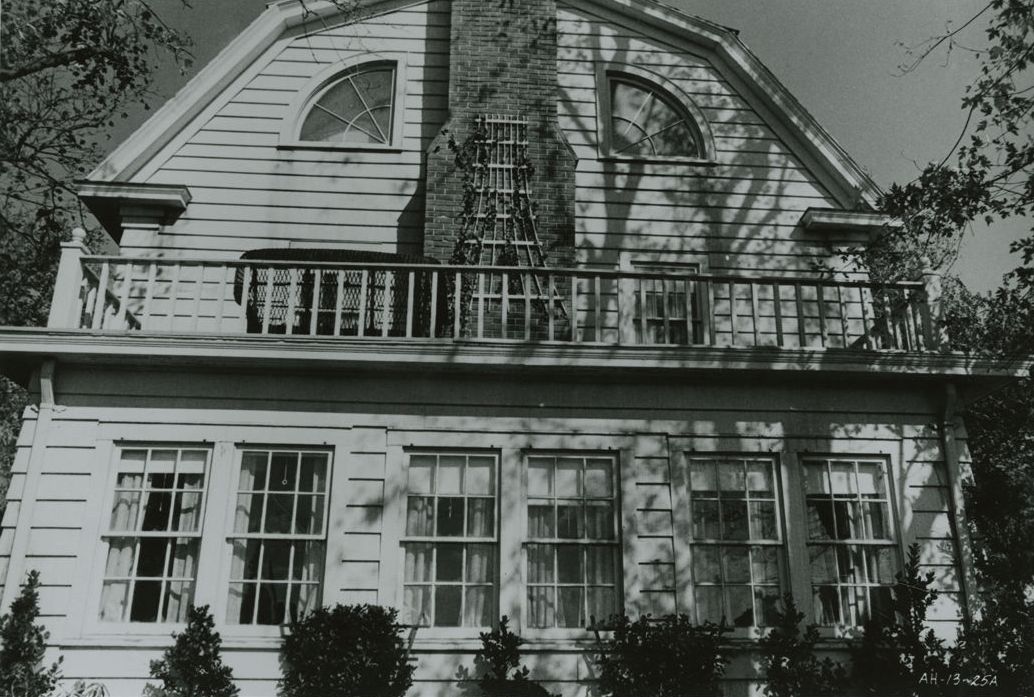
The Poltergeist reboot has us talking about the great haunted house movies over the years and how much they’ve changed. From the creaky old mansions to suburban horror to the curse that will stay with you even after you leave, ghosts have always been able to scare moviegoers and us. Here are our 5 favorite ghost stories:

5. Poltergeist (1982)

This aggressive take on the haunted house tale wraps director Tobe Hooper’s potent horrors inside producer Steven Spielberg’s brightly lit suburbia.

Part of the original’s success emerged from pairing universal childhood fears – clowns, thunderstorms, that creepy tree – with the adult terror of helplessness in the face of your own child’s peril. JoBeth Williams’s performance of vulnerable optimism gives the film a heartbeat, and the unreasonably adorable Heather O’Rourke creeps us out while tugging our heartstrings.

Splashy effects, excellent casting, Spielberg’s heart and Hooper’s gut combine to create a flick that holds up. Solid performances and the pacing of a blockbuster provide the film a respectable thrill, but Hooper’s disturbing imagination guarantees some lingering jitters.

4. The Conjuring (2013)

James Wan built an old fashioned ghost story from the ground up to push buttons of childhood terror. But don’t expect a long, slow burn. Wan expertly balances suspense with quick, satisfying bursts of visual terror.

Ghost stories are hard to pull off, though, especially in the age of instant gratification. Few modern moviegoers have the patience for atmospheric dread, so filmmakers now turn to CGI to ramp up thrills. But Wan understands the power of a flesh and blood villain in a way that other directors don’t seem to.

Claustrophobic when it needs to be and full of fun house moments, The Conjuring will scare you while you’re in the theater and stick with you after. At the very least, you’ll keep your feet tucked safely under the covers.

http://www.youtube.com/watch?v=Vjk2So3KvSQ

3. The Orphanage (2007)

Laura (Belén Rueda) and her husband reopen the orphanage where she grew up, with the goal of running a house for children with special needs – children like her adopted son Simón, who is HIV positive. But Simón’s new imaginary friends worry Laura, and when he disappears it looks like she may be imagining things herself.

A scary movie can be elevated beyond measure by a masterful score and an artful camera. Because director Antonio Bayona keeps the score and all ambient noise to a minimum, allowing the quiet to fill the scenes, he develops a truly haunting atmosphere. His camera captures the eerie beauty of the stately orphanage, but does it in a way that always suggests someone is watching. The effect is never heavy handed, but effortlessly eerie.

One of the film’s great successes is its ability to take seriously both the logical, real world story line, and the supernatural one. Rueda carries the film with a restrained urgency – hysterical only when necessary, focused at all times, and absolutely committed to this character, who may or may not be seeing ghosts.

2. The Innocents (1961)

Quietly desperate and delicately high strung, Deborah Kerr’s performance is the perfect central image in The Innocents, the best of many screen adaptations of Henry James’s The Turn of the Screw. Is Kerr’s hypersensitive governess turning delusional as she spirals toward spinsterhood, or are her angelic charges in danger of becoming possessed by the spectral lovers who seem to haunt the property?

Thanks to Kerr, the wickedly cherubic turn by Martin Stephens as young Miles, and Freddie Francis’s gorgeous black and white photography, this eerie ghost story is a glorious study in the shadowy line between reality and imagination. Countless films – good ones, like The Orphanage and The Others – have walked similar, spooky hallways, but The Innocents will always be the standard bearer.

1. The Shining (1980)

A study in atmospheric tension, Kubrick’s vision of the Torrance family collapse at the Overlook Hotel is both visually and aurally meticulous. It opens with that stunning helicopter shot, following Jack Torrence’s little yellow Beetle up the mountainside, the ominous score announcing a foreboding that the film never shakes.

Let’s not forget Jack. Nicholson outdoes himself. His veiled contempt early on blossoms into homicidal mania, and there’s something so wonderful about watching Nicholson slowly lose his mind. Between writer’s block, isolation, ghosts, alcohol withdrawal, midlife crisis, and “a momentary loss of muscular coordination,” the playfully sadistic creature lurking inside this husband and father emerges.

What image stays with you most? The two creepy little girls? The blood pouring out of the elevator? The impressive afro in the velvet painting above Scatman Crothers’s bed? That guy in the bear suit – what was going on there? Whatever the answer, thanks be to Kubrick’s deviant yet tidy imagination.

Listen to the whole conversation on our FRIGHT CLUB podcat.

Fright Club: Best Female Villains

Today we celebrate the ladies – the really, super scary ones. We are counting down our favorite female villains from horror. Now, we’re not talking about the great supporting villains – the ones who had villainy help – like Julia (Claire Higgins) from Hellraiser or Mrs. White (Piper Laurie) from Carrie. They are outstanding and terrifying, but they’re not the main antagonist in the film. Nor are we including the terrifying protagonists – not Carrie White (Sissy Spacek) or Ginger (Katharine Isabelle) from Ginger Snaps, or May (Angela Bettis). No, our goal is to find the Freddy Krueger, the Hannibal Lecter—or maybe even better.

Listen to the full podcast HERE.

Here are our contenders:

5. Samara (Daveigh Chase) The Ring (2002)

That sweet little face, those plump cheeks, those dark locks, those shadowy circles under her eyes, that disappointed frown, that penetrating stare…young Daveigh Chase commanded attention as the vulnerable/terrifying girl in the well. Her ability to be both the lost child you want to save and the horror that must not be unleashed unnerves. Yes, that bewigged man who crawls out of the TV wearing her waterlogged dress helps with the overall effect, but the wee Chase is haunting.

4. Annie Wilkes (Kathy Bates) Misery (1990)

An Oscar winning turn from the magnificent Kathy Bates brings this character to life in the most terrifyingly realistic way. Her sadistic nurturer Annie Wilkes – rabid romance novel fan, part time nurse, full time wacko – ranks among the most memorable crazy ladies of modern cinema. She nails the bumpkin who oscillates between humble fan, terrifying master, and put-upon martyr. Plus she’s handy with a mallot.

3. Lola (Robin McLeavy) The Loved Ones (2009)

Whatever Lola wants, Lola gets. What an absolutely bizarre character and what a brilliantly wrong-headed performance by McLeavy as Daddy’s little prom princess. She’s funny, malicious, utterly insane with some daddy issues we just don’t need to get into here. Just keep her away from the power tools.

2. Asami (Eihi Shiina) Audition (1999)

Eihi Shiina’s elegant beauty is such a perfect match for the brittle psychology of Asami, a delicate sociopath with real betrayal issues. Director Takashi Miike is no stranger to dismemberment and disemboweling (Ichi the Killer, anyone?), but because of Audition‘s serious tone and Shiina’s meticulous approach to the insanity, she leaves you shaken.

1. La Femme (Beatrice Dalle) Inside (2007)

Beatrice Dalle’s predatory performances, colored by sadistic humor and an explosive temper, is astonishing. Relentless, pitiless, and inventive, she stalks the enormously pregnant Sarah (Alysson Paradis) like a tiger – one who really knows how to do damage with a pair of scissors. This woman can take punishment, but what she can dish out is positively inspired. Her unpredictable mastery of bloody havoc wreaking puts her at the top of our list of female villans we seriously, truly hope never to run into ourselves.

https://www.youtube.com/watch?v=gOk5tiAkEdA

Fright Club: Zealots

Horror films have long told the story of religious zealots, usually of the Black Mass variety – The Mephisto Waltz (1971), Sheitan (2006), Starry Eyes (2014), Rosemary’s Baby (1968). We decided not to look to the cloaked, horned Satanists and instead, examine religious zealots of a different flavor. Here are our favorites.

5. Red State (2011)

Kevin Smith’s first foray into horror is perhaps his very strongest and least seen film. Red State is an underrated gem. Deceptively straightforward, Smith’s tale of a small, violently devout cult taken to using the internet to trap “homos and fornicators” for ritualistic murder cuts deeper than you might expect. Not simply satisfied with liberal finger wagging, Smith’s film leaves no character burdened by innocence.

The usually stellar Melissa Leo chews more scenery than need be as a devoted apostle, but pastor Abin Cooper spellbinds as delivered to us by Tarantino favorite Michael Parks. Never a false note, never a clichéd moment, Parks’s performance fuels the entire picture.

There’s enough creepiness involved to call this a horror film, but truth be told, by about the midway point it turns to corrupt government action flick, with slightly lesser results. Still, the dialogue is surprisingly smart, and the cast brims with rock solid character actors, including John Goodman, Stephen Root, and Kevin Pollak.

Smith said at the time: “I think we have something. It’s creepy and very finger-on-the-pulse and very much about America.”

We agree.

4. The Wicker Man (1973)

In the early Seventies, Robin Hardy created a film that fed on the period’s hippie versus straight hysteria.

Uptight Brit constable Sgt. Howie (Edward Woodward) flies to the private island Summerisle investigating charges of a missing child. His sleuthing leads him into a pagan world incompatible with his sternly Christian point of view.

The deftly crafted moral ambiguity of the picture keeps the audience off kilter. Surely we aren’t to root for these heathens, with their nudey business right out in the open? But how can we side with the self-righteous prig Howie?

Hardy and his cast have wicked fun with Anthony Shaffer’s sly screenplay, no one more so than the ever glorious Christopher Lee. Oh, that saucy baritone!

The film is hardly a horror movie at all – more of a subversive comedy of sorts – until the final reel or so. Starting with the creepy animal masks (that would become pretty popular in the genre a few decades later), then the parade, and then the finale, things take quite a creepy turn leading to what is still a very powerful climax.

https://www.youtube.com/watch?v=21gb49H-Uo4

3. Kill List (2011)

Never has the line “thank you” had a weirder effect than in the genre bending adventure Kill List.

Hitman Jay (a volcanic Neil Maskell) is wary to take another job after the botched Kiev assignment, but his bank account is empty and his wife Shel (an also eruptive MyAnna Buring) has become vocally impatient about carrying the financial load. But this new gig proves to be seriously weird.

Without ever losing that gritty, indie sensibility, Ben Wheatley’s fascinating film begins a slide in Act 2 from crime drama toward macabre thriller. You spend the balance of the film’s brisk 95 minutes actively puzzling out clues, ambiguities and oddities. (The often impenetrable accents don’t exactly help with this sleuthing). The “What the hell is happening?” response to a film is rarely this satisfying.

For those looking for blood and guts and bullets, Kill List will only partially satisfy and may bewilder by the end. But audiences seeking a finely crafted, unusual horror film may find themselves saying thank you.

https://www.youtube.com/watch?v=bQDPp5hxFZQ

2. Martyrs (2008)

This import plays like three separate films: orphanage ghost story, suburban revenge fantasy, and medical experimentation horror flick. The whole is a brutal tale that is hard to watch, hard to turn away from, and worth the effort.

Mining the heartbreaking loneliness of abandoned, damaged children, the film follows the profound relationship between torture survivor Lucie (Mylene Jampanoi) and the only friend she will ever have, an undeterrably loving Anna (Morjana Alaoui).

Constantly subverting expectations, including those immediately felt for Anna’s love, writer/director Pascal Laugier makes a series of sharp turns, but he throws unforgettable images at you periodically, and your affection for the leads keeps you breathlessly engaged.

The proceedings are tough to stomach, but well-conceived and skillfully executed. It holds some gruesome imagery, and though the climax may not be pleasing, it certainly doesn’t disappoint.

https://www.youtube.com/watch?v=-7Qx2dT-lUw

1. Frailty (2001)

Director Bill Paxton stars as a widowed, country dad awakened one night by an angel – or a bright light shining off the angel on top of a trophy on his ramshackle bedroom bookcase. Whichever – he understands now that he and his sons have been called by God to kill demons.

Flash forward and we’re led through the saga of the serial killer God’s Hand by a troubled young man (Matthew McConaughey), who, with eerie quiet and reflection, recounts his childhood with Paxton’s character as a father.

Dread mounts as Paxton drags out the ambiguity of whether this man is insane, and his therefore good hearted but wrong-headed behavior profoundly damaging his boys, or is he really chosen, and his sons likewise marked by God? The film upends everything – repeatedly – until it’s as if it’s challenged your expectations, biases, and your own childhood to boot.

Paxton crafts a morbidly compelling tale free from irony, sarcasm, or judgment and full of darkly sympathetic characters. It’s a surprisingly strong feature directorial debut from a guy who once played a giant talking turd.

https://www.youtube.com/watch?v=89u-uKDNrfU

Listen to the whole conversation on our FRIGHT CLUB podcast.

Fright Club: Best Horror Movies You May Have Missed

We’ve spent more than a month celebrating the best horror movies of each decade, and what that made us want to do is to throw a little party for those under-the-radar gems you may not have caught. This list could go on for days, but we narrowed our recommendations down to a half dozen of our very favorite, woefully underseen horror flicks. Have a look, and if you’ve missed any of these, take our word for it: you need to see these.

6. Eden Lake (2008)

The always outstanding Michael Fassbender takes his girl Jenny (Kelly Reilly) to his childhood stomping grounds – a flooded quarry and soon-to-be centerpiece for a grand housing development. He intends to propose, but he’s routinely disrupted, eventually in quite a bloody manner, by a roving band of teenaged thugs.

European horror tends to do a nice job with the upwardly mobile middle class’s terror of untamed young things. Kids today! The best of these films mix a contempt for proper manners and liberal guilt with a genuine terror of the lower classes.

The acting, particularly from the youngsters, is outstanding. Sure, the “angry parents raise angry children” cycle may be overstated, but Jack O’Connell’s performance as the rage-saturated offspring turned absolute psychopath is chilling.

https://www.youtube.com/watch?v=4g1wYEAWOrs

5. The Woman (2011)

There’s something not quite right about Chris Cleese (an unsettlingly cherubic Sean Bridgers), and his family’s uber-wholesomeness is clearly suspect. This becomes evident once Chris hunts down a feral woman (an awesome Pollyanna McIntosh), chains her, and invites the family to help him “civilize” her.

The film rethinks family – well, patriarchy, anyway. Writer Jack Ketchum may say things you don’t want to hear, but he says them well. And director Lucky McKee, in hi smost sure-footed effort, has no qualms about showing you things you don’t want to see. Like most of Ketchum’s work, The Woman is lurid and more than a bit disturbing.

Nothing happens in this film by accident – not even the innocent seeming baking of cookies – nor does it ever happen solely to titillate. Deeply disturbing and absolutely not for the timid, this is a movie that will stay with you.

4. The Snowtown Murders (2011)

John Bunting tortured and killed eleven people during his spree in South Australia in the Nineties. We only watch it happen once on film, but that’s more than enough.

Director Justin Kurtzel seems less interested in the lurid details of Bunting’s brutal violence than he is in the complicated and alarming nature of complicity. An unflinching examination of a predator swimming among prey, Snowtown succeeds where many true crime films fail because of its understatement, its casual observational style, and its unsettling authenticity. More than anything, though, the film excels due to one astounding performance.

Daniel Henshall cuts an unimpressive figure on screen – a round faced, smiling schlub. But he brings Bunting an amiability and confrontational fearlessness that provides insight into what draws people to a sadistic madman.

There’s not a false note in his chilling turn, nor in the atmosphere Kurzel creates of a population aching for a man – any adult male to care for them, protect them and tell them what to do.

The Snowtown Murders is a slow boil, and painfully tense. It’s hard to watch and harder to believe, but as a film, it offers a powerful image of everyday evil that will be hard to shake.

https://www.youtube.com/watch?v=VJlVmJQPwxo

3. Them (Ils) (2006)

Brisk, effective and terrifying, Them is among the most impressive horror flicks to rely on the savagery of adolescent boredom as its central conceit. Writers/directors/Frenchmen David Moreau and Xavier Palud offer a lean, unapologetic, tightly conceived thriller that never lets up.

A French film set in Romania, Them follows Lucas (Michael Cohen) and Clementine (Olivia Bonamy), a young couple still moving into the big rattling old house where they’ll stay while they’re working abroad.

It will be a shorter trip than they’d originally planned.

What the film offers in 77 minutes is relentless suspense. Creepy noises, hooded figures, sadistic children and the chaos that entails – Them sets up a fresh and mean cat and mouse game that pulls you in immediately and leaves you unsettled.

Watch it. Do it.

2. We Are What We Are (Somos le que hay) (2010)

In a quiet opening sequence, a man dies in a mall. It happens that this is a family patriarch and his passing leaves the desperately poor family in shambles. While their particular quandary veers spectacularly from expectations, there is something primal and authentic about it.

It’s as if a simple relic from a hunter-gatherer population evolved separately but within the larger urban population, and now this little tribe is left without a leader. An internal power struggle begins to determine the member most suited to take over as the head of the household, and therefore, there is some conflict and competition – however reluctant – over who will handle the principal task of the patriarch: that of putting meat on the table.

Writer/director Jorge Michel Grau’s approach is so subtle, so honest, that it’s easy to forget you’re watching a horror film. Grau draws eerie, powerful performances across the board, and forever veers in unexpected directions.

We Are What We Are is among the finest family dramas or social commentaries of 2010. Blend into that drama some deep perversity, spooky ambiguities and mysteries, deftly handled acting, and a lot of freaky shit and you have hardly the goriest film on this list, but perhaps the most relevant.

https://www.youtube.com/watch?v=nQ4-UOB3Y-U

1. The Ordeal (Calvaire) (2004)

A paranoid fantasy about the link between progress and emasculation, the film sees a timid singer stuck in the wilds of Belgium after his van breaks down.

Writer/director Fabrice Du Welz’s script scares up the darkest imaginable humor. If David Lynch had directed Deliverance in French, the concoction might have resembled The Ordeal. As sweet, shy singer Marc (a pitch perfect Laurent Lucas) awaits aid, he begins to recognize the hell he’s stumbled into. Unfortunately for Marc, salvation’s even worse.

The whole film boasts an uneasy, “What next?” quality. It also provides a European image of a terror that’s plagued American filmmakers for generations: the more we embrace progress, the further we get from that primal hunter/gatherer who knew how to survive.

Du Welz animates more ably than most our collective revulsion over the idea that we’ve evolved into something incapable of unaided survival; the weaker species, so to speak. Certainly John Boorman’s Deliverance (the Uncle Daddy of all backwoods survival pics) understood the fear of emasculation that fuels this particular dread, but Du Welz picks that scab more effectively than any filmmaker since.

His film is a profoundly uncomfortable, deeply disturbing, unsettlingly humorous freakshow that must be seen to be believed.

https://www.youtube.com/watch?v=Hn3oba5HmH8

To hear the whole conversation, tune into our FIGHT CLUB podcast.