All posts by maddwolf

Part Man, Part Monkey

Missing Link

by George Wolf

Like its titular character, Missing Link is a bit of a mixed breed. An animated family adventure, its humor is more dry than zany, with a stellar voice cast and an often sophisticated air to its snappy dialog that is centered around a lonely Sasquatch.

And it looks freaking gorgeous.

Hugh Jackman brings charming life to Sir Lionel Frost, an ambitious, self-centered 1800s explorer on the trail of any big discovery that can get him admitted to the prestigious adventurer’s club led by the aggressively pompous Lord Piggot-Dunceb (Stephen Fry).

A hot tip leads Frost to a face-to-face with the fabled missing link between man and monkey who, as it turns out, provided that hot tip.

See, “Mr. Link” (an endearing Zach Galifianakis) is lonely, and figures Sir Lionel is just the guide savvy enough to lead him to his people, the equally urban-legendary Yeti tribe of Shangri-La.

So our heroes set off across the globe, enlisting the help of Frost’s old paramour Adelina (Zoe Saldana) while they try to outwit Stenk (a perfectly villainous Timothy Olyphant), the assassin sent to stop them.

This is the latest animation wonder from Laika studios, and the follow-up to 2016’s amazing Kubo and the Two Strings. Even if Mr. Link’s adventure wasn’t as engaging as it is, the film would be worthy on visuals alone, as you’ve barely digested one “wow” moment when another is there to blow your hair back.

From the texture of Frost’s gloves to the ripples in a puddle, from a slow dissolve into a binocular lens to a wide, eye-popping set piece on an ice bridge and beyond, Missing Link serves up a hearty feast of cutting-edge stop motion technology.

And while the pace may leave the youngest viewers a tad restless, writer/director Chris Butler (Laika’s ParaNorman) crafts a heartwarming, witty and intelligent tale anchored in the layered relationship of Frost and Link.

Jackman and Galifianakis make them a wonderfully odd couple, and play off the indelible supporters around them (including a gloriously droll Emma Thompson) to keep all the globe-trotting character driven, leaving just enough room for the messages about inclusion and progress to be subtly effective.

The result is a film that’s confident but unassuming, fun without being silly, and satisfying from nearly every angle.

 

Let’s Get Small

Little

by Hope Madden

Based on a concept by 14 year-old executive producer and star Marsai Martin (Black-ish), the comeuppance comedy Little flips the script on the Tom Hanks Eighties adventure in manhood, Big.

We open with Martin as Jordan Sanders at 13, a science nerd who takes a chance at the talent show to win over the Windsor Middle School student body. When she fails, she pins her dreams on one day being an adult who bullies everyone else before they can bully her.

Flash forward 25 years. Jordan (now Regina Hall) is a monster boss, terrorizing the developers at her tech firm and making life especially miserable for her assistant, April (Insecure‘s Issa Rae). Can some carbs and a little magic return Jordan to her adolescent form so she can unlearn the lesson that sent her life in the wrong direction?

It’s a slight story, penned from Martin’s idea by director Tina Gordon and co-writer Tracy Oliver (Girls Trip). The two choose not to represent bullying as anything other than a fact of life to be tolerated, but they do layer in some silly fun and spots of surprising humor, mainly thanks to the strength of the two leads.

Rae charms throughout the film. Her smile and energy shine, and she offers natural chemistry with both adult and teen versions of her boss. Rae brings a reluctant but earnest sense of compassion to the role, and her comic timing is spot on.

Martin is the film’s real star. She carries scenes with a clever knack for portraying an adult brain inside a child’s form. The physical performance amuses, but it’s really the way she delivers sly lines with a saucy look or toss of the head that brings a chuckle.

It would be tough for this film to be more predictable, but several side characters—a social services agent (Rachel Dracht) and dreamy 7th grade teacher (Justin Hartley) work wonders with their odd characters and limited screen time.

The plotting is pretty sloppy and at no point does the comedy draw more than a chuckle, but Little is an amusing if forgettable waste of time. Martin is someone to remember, though.

https://www.youtube.com/watch?v=5HdNhpeI1g4

We Don’t Need Another Hero

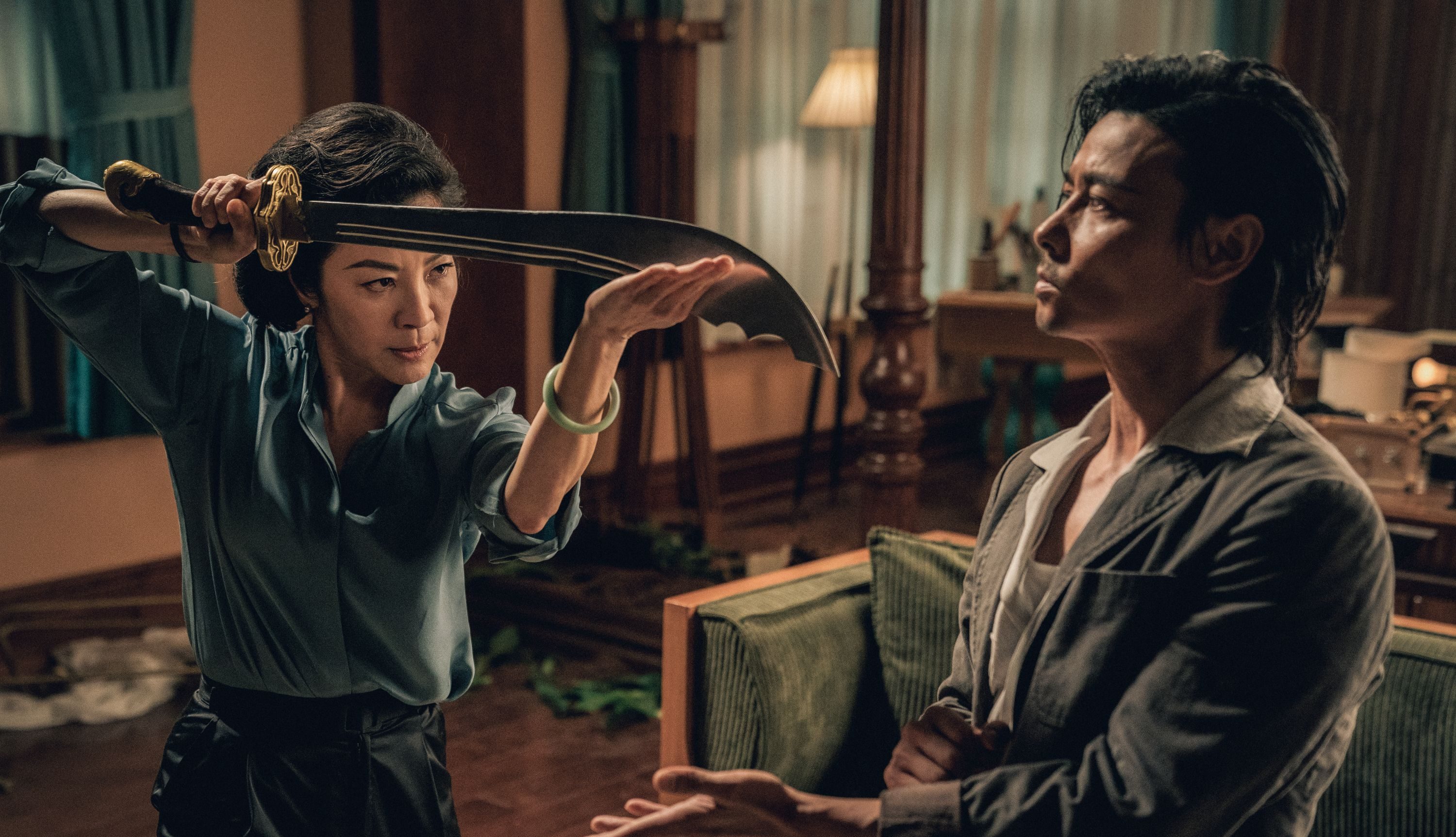
Master Z: Ip Man Legacy

by Matt Weiner

Master Z picks up right where Ip Man 3 left off. Cheung Tin Chi (Max Zhang), still emotionally beaten down after losing his fight to Ip Man, contents himself with living a quiet life with his young son. He has traded in Wing Chun and his martial arts school for a grocery store and what passes for domestic bliss.

This being a martial arts movie, Cheung’s serenity doesn’t last long. He quickly finds himself up against feuding gangsters, local police and their bullying colonial counterparts. When tensions escalate, Cheung’s store goes up in flames, and he and his son move in with sympathetic bar owner Fu (Xing Yu) and his sister Julia (Yan Liu).

For its simple setup, if anything Master Z suffers from too much world-building. The franchise spinoff lacks the compelling history of characters like Ip Man and Bruce Lee, which wouldn’t have to be a problem if the script didn’t insist on so much rote backstory and twists and turns that don’t really go anywhere.

Thankfully, Master Z comes alive during the fight scenes. Director Yuen Woo-ping, who also worked on fight choreography for Ip Man 3, confidently cycles through tense, simmering send-ups to slapstick to death-defying brawls. Each fight has its own emotional character, and taken together they serve as a refreshing reminder that fast-paced action can still be intelligible. It’s amazing what directors can do with choreography when they don’t need to compensate for poor fighting skills or excessive CGI.

Another highlight is Dave Bautista as Owen Davidson, a foreign businessman whose dealings are less savory than the restaurant fronting them. Despite his hero status in the Marvel Cinematic Universe, Bautista has managed to keep an air of unpolished menace to his characters. (That’s not a dig against certain other comically large wrestlers-turned-actors, but it does allow Bautista to carve out an interesting corner for himself even if he continues down a path of big-budget stardom.)

Action royalty Michelle Yeoh and Tony Jaa round out the cast—Yeoh impeccably so as a sharp crime boss, and Jaa all too briefly as one of her hired guns. But for all its machinations, Master Z at least continues the franchise’s deftness at homing in on a message and beating it into you. Master Z is about as family-centric of an action movie as you can get when the subject matter includes limb removals, drug overdoses and the legacy of colonial corruption.

Cheung finds the redemption that eluded him as he goes from everyman to superman for the sake of his son. His story might no longer be the stuff of legends, but Master Z suggests that such a life is equally worthy of celebration. Or, at the very least, a worthy spinoff.

I Don’t Want to Go Out—Week of April 8

Movie and more movies out this week in home entertainment. A couple are great, a couple are near misses, at least one is a real head-scratcher. No worries, though, we’ll sort through it with you.

Click the film title for the full review.

Mirai

The Wind

On the Basis of Sex

A Dog’s Way Home

Welcome to Marwen

Screening Room: Shazam!, Pet Sematary, Best of Enemies, The Public, The Wind, The Aftermath, Diane

Whew! That is a lot of movies. We will talk you through all of them: Shazam!, Pet Sematary, The Best of Enemies, The Public, The Wind, The Aftermath and Diane—plus all that’s fit to watch in new home entertainment.

Listen to the full podcast HERE.

Sometimes, Reboots Are Better

Pet Sematary

by Hope Madden

There is a lot of love out there for Mary Lambert’s 1989 hit Pet Sematary.

Why, again? Was it the wooden lead performances? The adorably sinister villain? Massive Headwound Harry? Come on—there was a lot wrong with that movie and only two things were really right: The Ramones and Zelda.

Zelda was creepy AF.

Fear not! Directors Kevin Kölsch and Dennis Widmyer (Starry Eyes) were obviously also affected by Zelda because she (Alyssa Levine) delivers again. On all other items, the directing duo improve.

Except The Ramones, but they are here in spirit.

Jason Clarke leads things as Louis, big city doc transplanted to quiet, rural Maine. Apparently he and his family—Rachel (Amy Seimetz), Ellie (Jeté Laurence), Gage (Hugo and Lucas Lavoie) and Church the Cat—didn’t ask a lot of questions about that 80-acre lot they bought. Lotta nasty stuff out back.

John Lithgow takes over for the tough to replace Fred Gwynne and his over-the-top Mainer accent. Lithgow’s more subdued Grumpy Old Man neighbor falls victim again to the pull of that “sour ground” out back when his beloved little Ellie’s cat gets hit by one of those semis speeding down the nearby road.

The film really tests your ability to suspend disbelief, but it also layers a lot of history and creepiness in tidy fashion. The superior performances alone make the reboot a stronger film, although familiarity means it has to try a little harder to actually scare you.

One help is a change screenwriters Matt Greenberg and Jeff Buhler make to the story. It’s a big alteration and not everyone will be thrilled, but it limits the laughability once things turn ugly. The film also lessons spiritual guide Pascow’s (Obssa Ahmed) screen time and gives his presence a spookier, less comedic feel. There’s a new ending, too—meaner and more of a gut punch. Nice.

The movie looks good, and Clarke (playing a grieving father for the second time this weekend, after his WWII drama The Aftermath) anchors the events with a thoughtful, believable performance that helps Pet Sematary overcome some of its more nonsensical moments.

It is not a classic, but it delivers the goods.

I still missed The Ramones.

Word Up or Nerd Up

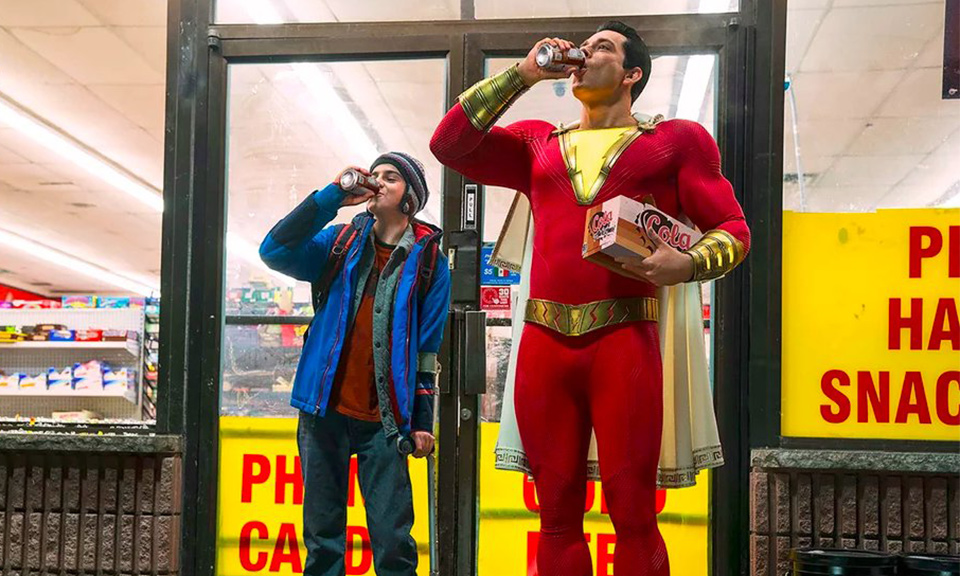
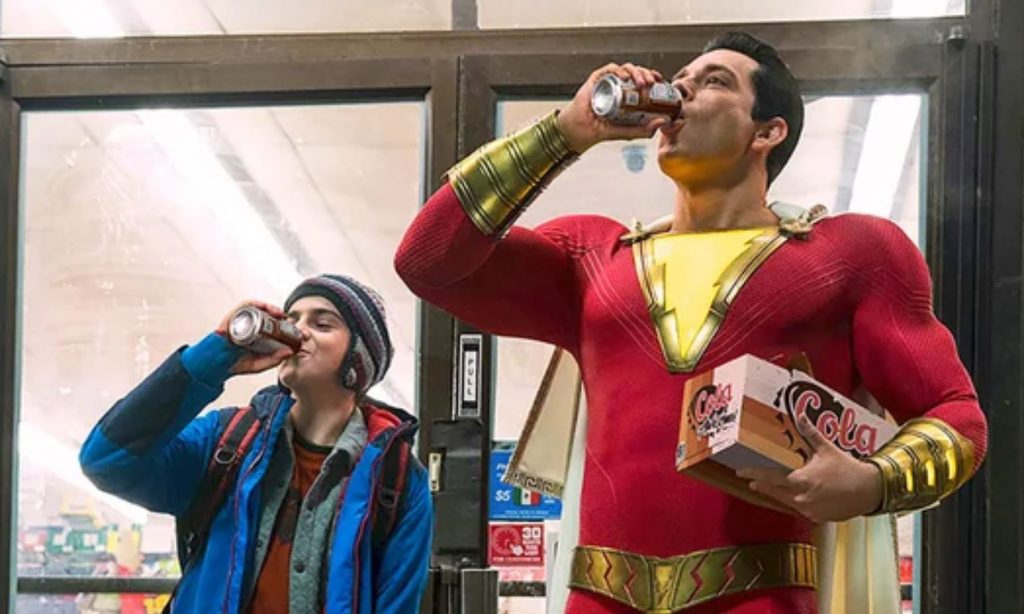
Shazam!

by George Wolf

To paraphrase a classic segment from the old Letterman show: Can a guy in a supersuit get into a strip club?

Easily, which is pretty exciting for the teenage boy inside the super man inside the suit. And it’s just one example of the irreverent vibe Shazam! rides to bring home one of the most fun origin stories in recent memory.

The teenage boy is Billy Batson (Asher Angel), who’s just been placed in the latest of a string of foster homes. Just as he’s getting to know his foster family, including the superhero-crazed Freddy (Jack Dylan Grazer from IT, impressive again), Billy is chosen to replace the aging Wizard Shazam (Djimon Hounsou) as protector of the Realms, bringing a youthful energy that will ensure the Seven Deadly Sin-Monsters cannot assume Earthly forms.

The super-villainous Dr. Thaddeus Silva (Mark Strong, gloriously slimy) does not approve, and vows to defeat the new Shazam (Zachary Levi) and assume all his powers.

So it’s on!

But first, Billy and Freddy have to find out just what superpowers are brought on by saying that magic word, which sets up a series of amusing tests and is the springboard for getting to know this grown up superboy while he mulls over possible super names.

“Thundercrack?” “No! That sounds like a butt thing.”

If you’re thinking Big (and the film acknowledges that you are with a cute homage), you’re right on. Writer Henry Gayden (Earth to Echo) fills the script with action, humor, heart and spunk, while director David F. Sandberg (Lights Out) keeps things lively and engaging with plenty of impressive visual pop.

The entire cast is wonderfully diverse and consistently winning, and a few corny moments aside, makes the feels on friendship, family and responsibility land nearly as flush as the winking riffs on superhero tropes.

There really isn’t much Shazam! doesn’t deliver (okay, maybe it delivers a slightly bloated running time that includes two post-credits stingers), and as fast as you can say the magic word, DC has the best film in its universe since Bale was the Bat.


Necessary Evils

The Best of Enemies

by George Wolf

At the risk of opening recent wounds, it’s hard not to view The Best of Enemies through the lens of last year’s Oscar race debate. It’s a based-on-true-events historical drama draped in racial healing and also, the KKK.

So, is this more BlackKkKlansman, then? Or Green Book?

While it’s nowhere near the rarified air of the former, it does a better job than the latter of veering from the white pandering playbook.

For his debut feature, writer/director Robin Bissell adapts the tale of an unlikely friendship between a black community leader and the president of the local Klan chapter. Ann Atwater (Taraji P. Henson) and C.P. Ellis (Sam Rockwell) were on vastly opposing sides over school segregation in 1971 North Carolina when an arbitration exercise called a charrette forced them to hear each other out.

So you know where it’s going, but too often the trick is getting to that moment of average white awakening without making it the black character’s reward for being exceptional, or the white audience’s reward for being in the theater. Yes, Ellis has the biggest character arc, but Atwater changes, too, and thankfully isn’t here just to help him grow.

So Bissell is wise to put Atwater and Ellis on nearly equal footing, and fortunate to have leads this good. Henson mines powerful emotions as the defiant “Roughhouse Annie,” while Rockwell refuses to make Ellis a caricature villain. Together they find a combative chemistry that is raw and often effectively human.

Bissell is clearly a student of the Scorsese School of Pop Song Insertion, and an early sequence set to Roy Orbison’s “Blue Bayou” is indeed striking. But while the film’s overall structure is workmanlike, a few clunky, pause-for-dramatic-effect moments seem to exist more from indecision than confidence.

The Best of Enemies tells a good story and does plenty right while doing it, but is held back by missed opportunities.

As both factions in a divided community state their cases, the arguments are shockingly current, but Bissell can’t find the tone that clearly connects this past to our present. Just when he’s close (like the rundown of different challenges the black parents faced), some Mayberry-esque comedy re-sets the mood, leaving a worthy but not quite memorable history lesson on the value of reaching across the battle lines.


The Grapes of Something Something

The Public

by George Wolf

Emilio Estevez just does not do nuance.

The Public marks his fifth feature as writer/director, and it sports the conviction of his best work while also suffering from his familliar lack of restraint.

Estevez also stars as Stuart Goodson, a dedicated, stoic manager at the Cincinnati Public Library. While Stuart and his staff deal daily with an array of homeless citizens using the library, he finds himself a “good son” under fire when complaints about body odor lead to one vagrant’s eviction – and a lawsuit.

And then things get complicated.

Beyond the free computer use, the library also offers respite from the bitter winter cold, and when a deadly deep freeze grips Ohio, Stuart sits at the center of an armed standoff between the city and homeless folks needing shelter.

And it’s not just the homeless question The Public is addressing. From addiction and recovery to tabloid journalism, political cowardice and civic (ii.e. “the public”) responsibility, Estevez has plenty of heart available for numerous sleeves, getting admirable support from a solid ensemble cast including Alec Baldwin, Christian Slater, Jeffrey Wright, Taylor Schilling, Michael Kenneth Williams, Gabrielle Union and the ever-ageless Jena Malone.

Characters and subplots converge through dialog that’s too often desperate for authenticity, and a film that decries “intellectual vanity” seems overly proud of its own moments of clumsy enlightenment.

Case in point: a callous TV reporter (Union) is pumped at the social media traction she’s getting for her live reports from the library conflict. While her cameraman points out the plight of people at the heart of the story, she stays glued to her phone.

Point made, but Estevez can’t leave it there.

“Huh? What?” she answers, then a cut to the cameraman rolling his eyes. Second that.

Similarly, the stunt Estevez engineers for the big resolve gets a bystander explanation that is not only unnecessary, but factually dubious at best.

It’s just a culmination of the slow slide from good intentions to self-satisfied finger-wagging. The film has a respect for books and libraries that is indeed admirable, but by the time Goodson starts reading from Steinbeck on live TV, it becomes painfully evident what The Public wants to be when it grows up.


Whispers and Wails

The Wind

by Hope Madden

There are not enough horror westerns. And why not? The whole Wild West thing feels like a terrifying, isolated, dangerous adventure—especially for women.

Director Emma Tammi’s first narrative feature, The Wind, pulls together all those ideas and more into an absorbing little nightmare.

Lizzy and Isaac Macklin (Caitlin Gerard and Ashley Zukerman, respectively) are relieved to see smoke coming from a distant chimney. The only other cabin for miles has been empty a long while, and the prairie does get lonesome.

But companionship and burden go hand in hand for Lizzy, and company won’t chase away all the demons plaguing this harsh land.

Working from a spare script by Teresa Sutherland, Tammi develops a wonderfully spooky descent into madness. Throughout Lizzy’s isolation, Tammi swaps images onscreen from present moment reality to weeks earlier, to months earlier, to a present-day hallucination or specter and back again. The looping time frame and repetitive imagery turn in on themselves to create a dizzying effect that echoes Lizzy’s headspace.

Gerard spends nearly as much screen time alone as she does with co-stars, and her turn is haunting. There’s nothing showy in this performance, Gerard slyly betraying one emotion at a time through the character’s well-rehearsed stoicism and reserve.

It’s a feat of imagination and execution for both Gerard and Tammi, turning this small production—only five principle actors and two sets—into a hypnotic ordeal. Tammi’s confident pacing and Gerard’s masterful performance ensure a gripping trip through a merciless slice of prairie life.