What’s new? One sublime documentary, one less-than-sublime horror flick. Here is the skinny.
Click the film title to link to the full review.
Honeyland

Trick

by Hope Madden and George Wolf
It’s nearly Halloween, and it turns out that children’s hunger for age-appropriate scares rivals their taste for those elusive, full size trick-or-treat candy bars. Mmmmmm … chocolatey age-appropriate scares. Well, we’re here to help stave off starvation with these new- and old-school viewing options.
Hayao Miyazaki – often called Japan’s answer to Walt Disney – shares the sweetly magical tale of a budding young witch. Fun adventures befall the little witch-in-training, who becomes a baker’s courier to gain broom-flying skill. Kids will like the holiday feel, the cat and the hijinks with no worry of big scares.
This film is so utterly enjoyable, charming and silly that you almost miss the true ingenuity and craft in the animation itself. British placticine duo Wallace – inventor and cheese lover – and his silently worried dog, Gromit, take on the bunnies upsetting town gardeners. But things go all Halloweeney on them. This is the kind of film that begs to be scanned for its clever details (the town barbershop is called A Close Shave, for instance), but it’s the unselfconscious, innocent comedy and remarkable animation that make the film a stunning success. Wallace & Gromit belong in the highest echelon of doofus and silent sidekick comedy teams, and everyone in your family has reason to see their first full length feature.
A couple of best buds living in Monstropolis have to keep it under wraps that a child has infiltrated the city. She’s a serious risk of contamination – this is a real danger, actually, because children are filthy germ bags. And they’re often quite sticky. Pixar knows this, and alerts us to the potential epidemic via fuzzy monster characters. The animation is stunning. (Who doesn’t, right now, want to have a fuzzy blue Sulley doll?! You? What are you, a sociopath?)
In stellar black and white, Tim Burton animates the tale of a quiet young scientist and his undead dog. Odes to the classics of horror will entertain the parents (maybe even grandparents) in the audience, but the lovely boy/dog friendship, quirky school kids, and science-related peril will entertain the kids. Plus, Mr. Rzykurski (Martin Landau) is the most spectacular science teacher ever, as depicted in his speech to parents at the PTA meeting: “Ladies and gentlemen. I think the confusion here is that you are all very ignorant. Is that right word, ignorant? I mean stupid, primitive, unenlightened.”
Back in 1993, Tim Burton produced the classic goth holiday extravaganza The Nightmare Before Christmas, having handed over his own sketches and story to director Henry Selick and the world’s coolest stop-action animators. Burton’s team, including Danny Elfman on tunes, assembled a lightheartedly macabre fantasy that artfully yet cataclysmically mixed America’s two most indulgent and excessive holidays. It was inspired.
The first animated film Tim Burton directed himself is equal parts wholesome and gruesome, somehow effortlessly combined. A nervous groom practices his wedding vows in a forest, unwittingly awakening a bride murdered on her wedding night. She misunderstands and accepts his promise of love. The reluctant groom is ushered into the afterlife, which is more like a cool blues club than a cloudy resting place, where he is welcomed by a delightfully grisly cast of characters.
The comedy is clever, the bride’s heartbreak is often genuinely poignant, and the rotty flesh is just as natural as the pre-wedding jitters. It’s no Jack Skellington, but it is close.
This one is likely to scare little ones, what with its super creepy sideshow circus backdrop, scary old man and a house that actually eats people. Loads of endearing and interesting characters fall upon the kinds of everyday scares that bloom in a child’s imagination. Well written, honestly spooky, and eventually quite heart tugging, Monster House was a surprise Oscar nomination back in ’06, and is still an underseen Halloween gem.
Coraline is a two-sided cautionary tale. For kids wishing for more attentive parents, be careful what you wish for. For parents disinterested in their tweens, danger lurks and lures your girls. Adapted for the screen and directed by Henry Selick (Nightmare Before Christmas), Coraline offers darkly magical visuals, quirky and creepy characters, and a surprisingly disturbing storyline. The film is clever and goth-gorgeous, but may be a little too creepy for kids under 10.
“I see dead people” takes on new legs with this animated tale of the supernatural. ParaNorman celebrates cinematic horror with the story of a little boy whose closest buds are the goofy new kid and his own long-dead grandma. But Norman’s gift of seeing ghosts proves pretty beneficial when some witchy chicanery threatens the whole town. Plus, big props for including a gay couple in a family-friendly flick.
.
The humor is silly but not stupid, the frights won’t bring nightmares, the town bully isn’t really that mean, and the town does Halloween like no place you’ve ever seen. It makes for an inviting setting, and once all those costumes and decorations come to life, there is plenty of lower-budget visual pop.
Goosebumps 2 has style, a winning cast, and winking nods to horror classics such as IT and Frankenstein. Plus, it makes books and science seem cool, and gets it all done in under 90 minutes. That adds up to one “fun-size” Halloween treat that doesn’t disappoint.
Now, pass the popcorn and…Happy Halloween!
by Hope Madden and George Wolf
Back in 1985, with “Born in the USA”-mania raging, Bruce Springsteen’s small acting performance in the John Sayles video for “I’m On Fire” spurred talk of a Boss move to feature films.
Aside from a cameo or two, it never happened.
But now, after becoming both an author and playwright in the last five years, Bruce hits the big screen as both star and co-director of Western Stars, an enchanting and meditative live presentation of his 19th album.
Gathering his current, non E-Street band, a 30 piece orchestra and a select audience of friends inside his one hundred-year-old barn, Bruce brings emotional new life to his musings on “the struggle between individual freedom and communal life.”
Tramps like us already know these songs are not what many expect from the Boss. There are no fist-pumping anthems here. These are lush pop symphonies, draped in the 1970s California pop sounds of Brian Wilson, Jimmy Webb, Glen Campbell and even Burt Bacharach.
Bruce has toyed with these styles as far back as “New York City Serenade,” but it was his 2007 album “Magic” that unveiled the first major step toward the musical promise fulfilled by Western Stars.
And though the comments by Bruce and band about the music “taking on a life of its own” sound like self-serving cliches, these live performances back them up. His speaking voice may show his 70 years, but Bruce’s singing only seems richer and more inviting.
“Sleepy Joe’s Cafe” is powered by a more joyous swing and “Sundown” soars with a newfound drive. For both “Stones” and “Moonlight Motel,” by sharing one mic with wife Patti Scialfa, Bruce adds layers of confessional intimacy.
The soul searching is only bolstered by dreamy, between-song vignettes from Bruce and co-director Thom Zimny. Amid gorgeous vistas, charming home movies (the Boss likes tequila!) and flashbacks to the America that shaped him, Bruce shares the songwriting inspirations he found in cars, risk, lies and love.
Longtime fans have often heard Bruce speak of the “conversation” he’s always had with his audience. In that vein, after his autobiography and broadway show, Western Stars is a can’t miss portrait of both the artist and the human being taking life’s journey.
And if you’re new to the conversation, welcome. Today’s Springsteen may not be quite what you’re expecting, but the days are still pretty glorious.

by George Wolf
“How do you say ‘help’ in English?”
A harrowing first person account of one family’s flight from a death sentence, Midnight Traveler frames the refugee debate with honest, heartbreaking intimacy.
In 2015, the work of Afghan filmmaker Hassan Fazili earned him a call for death from the ruling Taliban. Fazili and his family sought asylum in neighboring Tajikistan, only to be denied after 14 months.
Midnight Traveler joins Fazili, his wife Nargis and two young daughters the night before their scheduled deportation back to Afghanistan. Filmed only on three iPhones, the movie documents the family’s years and thousands of miles-long journey in search of a safe place to call home.
In last year’s Oscar-winning doc Free Solo, the filmmakers expressed angst over the effect their cameras might have on the decisions of free climber Alex Honnold. As the dangers mount for Fazili and family, we begin to feel the same, worrying our intrusion might somehow cloud their judgement.
As the Fazili family deals with smugglers, broken promises and spur of the moment evacuations, we also see smaller moments of daily life. The daughters manage to laugh and play, and there is tenderness between Hassan and Nargis, as they smile over past memories of a much simpler and safer time.
Even with a verite nature that is often frantic and understandably desperate, Hassan’s footage reveals an unmistakable eye for form and structure.
This is a family literally crying for help in real time, and a human rights issue that can suffer from anonymous enormity transforms before our eyes, consistently adding strength to the touching impact of Midnight Traveler.
Refugees are more than statistics and political footballs. They are human beings with families, dreams and dwindling options. Within the reams of names on a waiting list are urgent, personal stories of survival.
This is one.
by Hope Madden and George Wolf
“It’s time to nut up or shut up.”
“That line is so 2009.”
There you have it. A horror film that recognizes its desire to wallow in its former glory as well as its need to find something new to say.
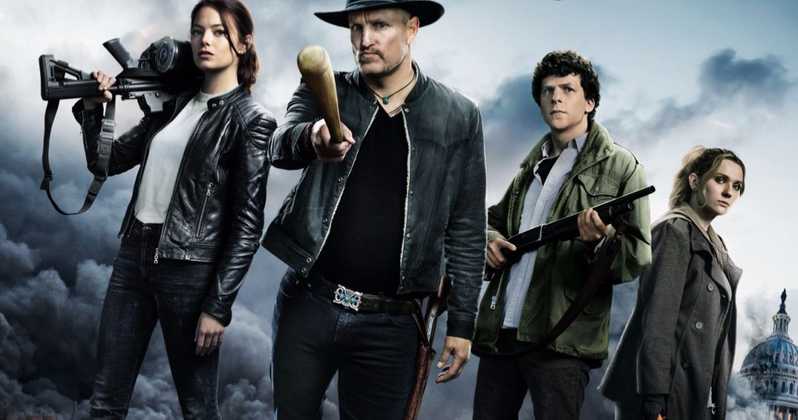
We had our worries about the sequel to one of the all-time best zombie action flicks, Zombieland. Horror sequels so rarely work and Zombieland: Double Tap is slow going at the start, to be sure. But don’t give up on it.
Everybody’s back. Director Ruben Fleischer – who’s spent the last decade trying to live up to Z-land‘s promise – returns, as do writers Paul Wernick and Rhett Reese, along with newbie Dave Callaham, who’s written a lot of really big, really bad movies.
Still, it was enough to draw the most important elements—all four leads. Among Woody Harrelson, Emma Stone, Jesse Eisenberg and Abigail Breslin are seven Oscar nominations and one win. That’s a lot of credibility for a zombie movie.
They reprise their roles, now ten years on as a heavily armed and somewhat dysfunctional family. Little Rock (Breslin), in particular, longs to leave the nest, get away from a smothering Tallahassee (Harrelson) and find people her own age. Wichita (Stone) may be feeling a little smothered in her relationship with Columbus (Eisenberg), though he remains blissfully unaware.
Things pick up when the girls take off, the guys brood, a new survivor enters the picture (Zoey Deutch, scene-stealing hilarious), and a sudden road trip to Graceland seems like it might reunite the family.
The filmmakers spend plenty of time simultaneously ribbing and basking in previous success. So there is plenty here to remind us why we loved the first Zombieland adventure so much (especially during the credits), although Double Tap doesn’t come to life until it embraces some fresh meat.
A run-in with near-doppelgangers (Luke Wilson, Thomas Middleditch) leads to an inspired action sequence inside the Elvis-themed motel run by Nevada (Rosario Dawson). A pacifist commune stands in for the amusement park from part one, letting everyone poke some blood-splattered fun at the culture clash between hippies, survivalists, and of course, the undead.
An underused articulation of the way zombies have evolved over the decade could have offered the biggest update. Still, after a 10 year wait, this revival offers just enough fun to not only avoid a let down, but instantly become Fleischer’s second best film.

by Hope Madden
I’m not going to lie to you, I hated Maleficent. Not because it was a mediocre CGI mess, although it certainly was that. I hated that film because Disney turned one of its absolutely most magnificent villains—one of cinema’s most magnificent villains—into a heartbroken, misunderstood victim.
Screw that.
But five years after Maleficent’s (Angelina Jolie) maternal love saves Aurora (Elle Fanning) and several kingdoms in the process, humans are back to whispering evil stories about the guardian of the Moors. Meanwhile, Aurora and Prince Philip (Harris Dickinson) have decided to marry.
That first family dinner doesn’t go super well.
Stuffed to the antlers with sidetracks and subplots, characters and ideas, Maleficent: Mistress of Evil shows you everything and articulates nothing.
Flashes of social commentary stand out. In the name of greed, evil leadership whips up fear amongst the population to justify racism, jingoism, colonialism and even genocide.
Despite Maleficent’s fangs, the fact that the film clearly leans toward giving the colonizers one more chance as opposed to siding with indigenous rebellion renders the film biteless.
But who could resist Chiwetel Ejiofor? He calls for peace and languishes in some kind of Disney side character purgatory as wizened and wearied Conall, one of the winged Fey who look to Maleficent to lead their kind.
Dear Hollywood: please give Chiwetel Ejiofor better parts in better movies.
Ejiofor is hardly the only talent wasted in this slog. Littered amid the carnage of so, so many side plots are Imelda Staunton, Lesley Manville and Juno Temple, again bothersome at best as three pixies. Sam Riley and Ed Skrein are allowed to smirk and grunt, respectively. Only Jenn Murray stands out, weirdly sadistic playing the queen’s very small enforcer.
Even Fanning once again comes up lame, asked only to beam and blush, though Dickinson has it worse. Be quietly noble, his direction seems to insist. Noble, but never rude.
The film should be Jolie’s show, but she does little more than pose. Robbed of her imposing wickedness by the end of the first movie, she now just seems bored and is more often than not upstaged by Michelle Pfeiffer’s Queen Ingrith.
Ingrith is written with no more depth than any of the other few dozen speaking characters to grace the screen in this overpopulated mess, but it’s always fun to see Pfeiffer chew scenery up and spit it out.
Director Joachim Ronning shows moments of visual inspiration, splashing color across the screen one moment, forbiddingly grim grey tones the next, but the little magical creatures rarely suggest the CGI budget was spent very wisely.
What was the point again?
Oh, right. Maleficent made $758 million.
by Hope Madden
Always choose treat.
That’s a great horror movie tagline. It’s also just good advice. Two for two before the credits even roll, Patrick Lussier. Onward!
Lussier co-writes and directs Trick, a new horror show about an unstoppable, maybe even supernatural serial killer who comes back to Smalltown, America on Halloween to kill teens.
Hang on, isn’t that the basic plot of the Halloween franchise?
It is! But wait, there’s more! This loner wearing face paint appeals to the disenfranchised of the world, creating an online following that’s almost dangerous in its obsessive behavior. Who knows what his influence might make them do…
Well, now that’s just Joker.
Correct! But this guy has a cool knife that says TRICK on one side and TREAT on the other side.
Yeah…that’s kind of cool…So if the knife comes up TRICK, he kills you, right? What if it comes up TREAT?
He still kills you. There’s no additional purpose to the knife. But stay with me, here! A beautiful, studious young woman who’s devoted to her invalid dad survived the first attack and now “Trick” Weaver may be coming back to claim her for his next victim!
Oh, come on! That’s every single slasher sequel. Ever! And this isn’t even a sequel—that’s just lazy. Does Trick bring anything new to the table? Offer anything provocative? Are the kills at least interesting?
Did I tell you about his cool knife?
Sigh.
Lussier (Drive Angry, My Bloody Valentine) cobbles a movie together from pieces of at least four different Halloween films plus a Scream vibe (even poaching two franchise actors, Omar Epps and Jamie Kennedy). His film would feel desperate to be socially relevant if it were not so incredibly lazy in just every conceivable way.
I was looking forward to a treat. Trick is like that time my babysitter said she was giving me a Tootsie Roll and it was really beef jerky.
That totally happened, by the way. I’m still mad.
by George Wolf
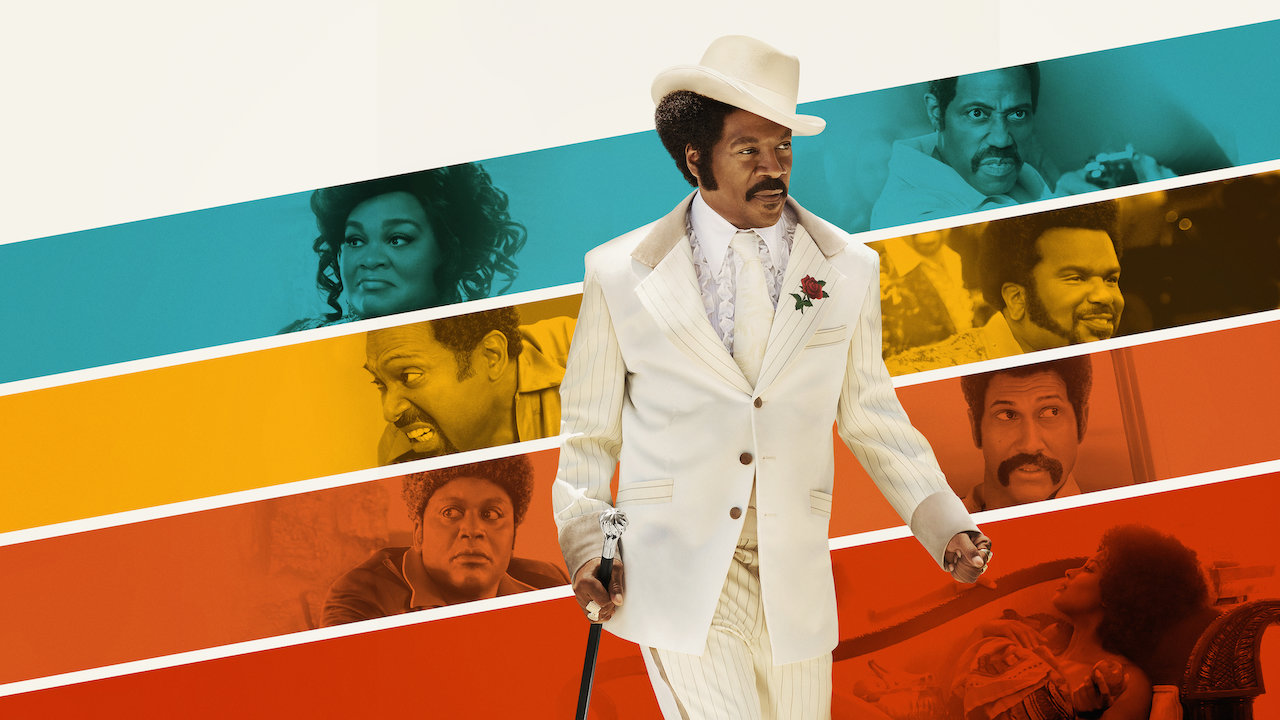
Can’t you just hear Dolemite now?
“I’m so m*&^@f#$@!^*’ bad they got that m*&^@f#$@! Eddie Murphy to play me in a m*&^@f#$@!^’ movie!”
They did, and Murphy could very well ride it to an Oscar nomination in this brash, funny, and often wildly entertaining look at the birth of a cultural icon.
“Dolemite” was the brainchild of Rudy Ray Moore, who created the character for his standup comedy act in the early 70s. Moore’s raw material was much too adult for record companies at the time, but the success of his early underground comedy albums (sample title: “Eat Out More Often”) finally gave Moore the cheering crowds he longed for – and the urge to take Dolemite to the big screen.
Moore’s string of so-bad-their-good blaxploitation classics not only became important influences in the expanding independent film market, but also for rappers and young comics like Murphy himself.
Screenwriters Scott Alexander and Larry Karaszewski, who penned the scripts for The People vs. Larry Flynt, Ed Wood and Man on the Moon among others, are certainly at home fleshing out the stories behind creative legends, and their script fills Dolemite Is My Name with heart, joy and raunchy laughs.
Director Craig Brewer (Hustle & Flow, Black Snake Moan) keeps the pace quick and energetic, crafting a bustling salute to the creative process that never forgets how to be fun.
Two pivotal and very funny scenes bookend the film’s biggest strengths.
Early on, Moore and his crew leave a movie theater dumbfounded by the white audience’s love for a popular feature that had “no titties, no funny and no kung fu!”
Then, during filming of the original Dolemite, Moore doesn’t feel right about his big sex scene until his character’s prowess is pushed to ridiculous levels. We’re laughing, but there’s no doubt we’re laughing with Moore, not at him. And while we’re laughing, we’re learning how Moore took inspiration from the world he lived in, and why he wouldn’t rest until his audience was served.
At the Toronto International Film Festival last month, Murphy said he wanted this film to remind people why they liked him.
Done.
Leading a terrific ensemble that includes Craig Robinson, Keegan-Michael Key, Kodi Smit-McPhee and a priceless Wesley Snipes as the “real” actor among these amateurs, Murphy owns every frame. This film wouldn’t work unless we see a separation between Moore and his character. Murphy toes this line with electric charisma, setting up the feels when Moore’s dogged belief in himself is finally rewarded.
Dolemite Is My Name tells a personal story, but it’s one that’s universal to dreamers everywhere.
And it’s also m*&^@f#$@!^* funny, suckas!
by Hope Madden
“Steal a sheep and they’ll take your hand. Steal a mountain and they’ll make you a lord.”
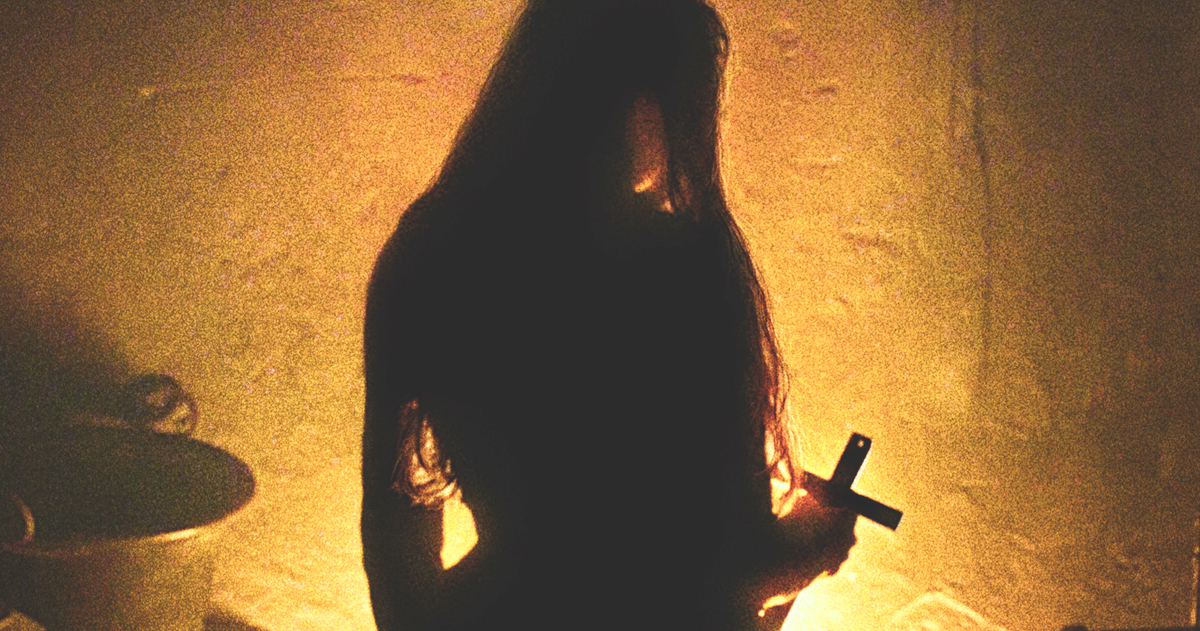
Writer/director William McGregor clarifies the source of real horror in his period chiller Gwen, premiering this week on Shudder.
The Witch, Hagazussa, The Wind – something in the air has horror filmmakers examining the choices facing women throughout our brutal, unforgiving history. McGregor’s addition to the collective reflection is as slow a boil as any of them – slower, maybe. And though his film casts a spell, the scary part is how well it tells the truth.
Gwen (Eleanor Worthington-Cox) is a teenaged farmer’s daughter in 19th century north Wales, where the value of real estate is quite a bit higher than the value of three female lives. Her father’s away at war and her mother (Maxine Peake, extraordinary) seems harder and more frantic by the day.
With her cherubic cheeks and school marm’s stare, Worthington-Cox does an excellent job of oscillating between taking on the maternal role and behaving like a child.
Peake, as ailing matriarch Elen, pits herself against everyone—often even her own daughter—in an attempt to protect her family and stand up for herself. The performance is bone chilling as well as heartbreaking. There is palpable longing in the relationship between Gwen and Elen, both of them desperate for an existence other than this, one where maternal love and nurturing were more than luxuries.
McGregor’s wisest instinct is in confining the story to Gwen’s point of view, her immediate perspective. Outside of two brief scenes, we see only what Gwen sees, hear only what Gwen hears. Even as she readies herself for adulthood, the world is a mystery to Gwen, and so it is a mystery to us. Very little makes sense as she sees it, and that perspective gives the entire film a menacing quality, a spookiness that shapes the narrative.
Certainly if you thought The Witch lacked action, or Hagazussa explained too little, Gwen may be frustrating. Which does not make it any less exceptional as a film.
Though the filmmaker builds atmospheric dread that leads to a stunning climax, it’s a stretch to call Gwen horror. McGregor’s direction calls to mind gothic thrillers—ghosts and isolation, women slowly going mad—all elements he eerily amplifies sonically with whispering winds, crackling lightning, and a distant howl or shriek. The way he lenses Gwen’s surroundings, smoke and mist giving way to mine-ravaged hillsides, conjures similar bleakness.
But the story itself is a socially conscious drama brimming with despair and outrage.