All posts by maddwolf

Triumph of the Kiwi

Jojo Rabbit

by Brandon Thomas

Fargo and No Country for Old Men director Joel Coen has described directing movies as “tone management.” New Zealand filmmaker Taika Waititi obviously feels the same way as his new film Jojo Rabbit walks a tonal tightrope between irreverent, melancholy and playful.

Few other filmmakers would be able to deliver a Nazi dramedy that opens with a German cover of The Beatles’ “I Wanna Hold Your Hand” over the opening credits. 

Young Jojo Betzler (Roman Griffin Davis) is a bright and excitable boy. More than anything in the world, Jojo wants to be a good little Nazi. His dream is to eventually become best friends with the Fuhrer himself. Due to his inability to wring the neck of a cute little bunny, Jojo finds himself on the outs with the rest of the young Nazi trainees. Thankfully, Jojo’s imaginary friend, Adolph Hitler himself (played by director Waititi), is there to reassure him, indulge his worst musings, and generally crack wise. 

Jojo’s carefree reality, where the war lacks any kind of seriousness, is suddenly changed when he finds that his mother (Scarlett Johannson) is hiding a young Jewish girl (Leave No Trace‘s Thomasin McKenzie) in their home. As the indoctrination of the Third Reich begins to wear off, Jojo comes to realize that the world around him is larger and more complex than he ever knew.

Waititi’s ease at telling stories about the difficulties of growing up isn’t new. His previous works, Boy and The Hunt for the Wilderpeople, dealt with young men coming to terms with life’s hard lessons, and Waititi’s inherent playfulness again allows him to recall the wonder the world holds when you’re young. Anything and everything is possible. Waititi’s same understanding of our humanity grounds the characters inside of these silly worlds he concocts.

Jojo Rabbit asks a lot of its audience. Nazis aren’t supposed to be funny. Anything that even touches how the Jewish people were treated during World War II must be handled with the utmost care. This is the fine line Waititi walks through the entire film, as he manages to acknowledge the horrors of the past while making fun of the perpetrators in the same breath. It’s an amazing feat.

The stacked cast helps carry so much of the film’s burdon. Young Roman Griffin Davis is tasked with making us care about a blonde-haired, blue-eyed Nazi. His fervor is icky, to be sure, but his compassion overwhelms everything else. Likewise, Johannson amazes as Jojo’s mother. She hasn’t played a character this spirited in a long time, and her connection with Jojo serves as the film’s moral center. She abhors what her son wants to be, but also sees through the facade he’s constructed.

Jojo Rabbit, like all good satire, doesn’t pull punches. The film firmly places its finger right in the eye of Europe’s troubling past, but it also manages to show that even amongst the death, bombardment and xenophobia, not everyone gave up their soul to hate. 

Insidious

Where’s My Roy Cohn?

by Hope Madden

There’s a tendency in horror cinema, after a villain has established his evil nature in a film or two, to turn the story around and find out what made him a monster. In that vein, Matt Tyrnauer’s documentary Where’s My Roy Cohn? is the madman’s origin story.

Horror fan that I am, I’ve still never been intrigued by what made Jason Jason, why Michael Myers was driven to murder, what caused Leatherface to don the mask. But it turns out, this horror story is more about the sequel, Son of Cohn.

“Where’s my Roy Cohn?” is a tantrum yelped by Donald Trump, unhappy about his attorney general at the time. And the title speaks volumes, about the kind of attack dog Cohn had been as a lawyer, and about the toxic legacy he’s left behind, right down to the oval office.

A fastidious student of the unlikely individual and his or her cultural impact, Tyrnauer made fascinating docs for years about little known citizens with big stories (Scotty and the Secret History of Hollywood and Citizen Jane among them). And though his latest certainly bears some of the markings of Tyrnauer’s previous films, the only person who saw Roy Cohn as a little guy with big ideas was Roy Cohn.

 It’s tough to overstate the ruthless, amoral impact Cohn has had on American politics and culture. Though Tyrnauer shows traces of compassion when underlining Cohn’s self-hating behaviors (whether as a Jew or a homosexual), the filmmaker’s assessment of his cancerous affect is evident.

Cohn was the prosecuting attorney who pushed the Rosenbergs toward the electric chair before he became McCarthy’s advisor, mouth piece and thug. Then on to New York, where his mafia entanglements (he represented John Gotti, Tony Salerno and Carmine Galante) only aided in his close professional and personal relationship with Donald Trump.

A bizarre connector between the worlds of Studio 54, the mafia and the Archdiocese of New York, Cohn’s party photos articulate some kind of bacchanal populated by members of each of these affluent, influential and decadent groups. It would be impressive it weren’t so ominous and seedy.

He also owned the news, dictating stories to the New York Post from his kitchen table and bringing Rupert Murdoch to the oval office with his own dear friend, Ronald Reagan.

Roy Cohn is dead, but as Where’s My Roy Cohn? makes dismayingly clear is that his ghost still haunts us.

Fright Club: Dogs in Horror

Whether used to terrorize us or to break our hearts, dogs add something powerful to a horror movie. Unless it’s Zoltan: Dog of Dracula, because nothing, not even the most gorgeous dog, could save that piece of poo. But these dogs, these dogs are keepers.

6. The Woman (2011)

Maybe you haven’t seen Lucky McKee’s amazing, disturbing 2011 feminist horror The Woman? Get on it! But just in case, we’re going to avoid any spoilers, which means leaving you kind of wondering why this film made the list of best dogs in horror. Suffice it to say, the dogs are mentioned throughout but meeting them … well, please see this movie.

5. Cujo (1983)

A New England couple, struggling to stay afloat as a family, has some car trouble. This naturally leads to a rabid St. Bernard adventure.

Though the film contains many faults, once Donna (Dee Wallace) and her asthmatic son (pre-Who’s the Boss Danny Pintauro) find themselves trapped in their broken down Pinto (What? Those seem like such reliable cars!) with a rabid dog (bigger than the car) attacking, the film ratchets up the tensions and rewards you for your patience.

Profoundly claustrophobic and surprisingly tense, benefitting immeasurably by Wallace’s full commitment to the role, the film traps us in the heat inside that Pinto and quickly makes up for the entire rest of the picture.

4. The Omen (1976)

Billie F. Whitelaw, ladies and gentlemen. Her performance as little Damien’s new nanny really took things up a notch, didn’t they? Instantly, not only was Mummy (Lee Remick) unnecessary, but Daddy (Gregory Peck) found himself in a battle for Alpha—a battle that begins over a dog.

There are actually quite a number of great, terrifying dogs in The Omen, Richard Donner’s iconic Seventies horror. The dogs in the cemetery, the bones in the casket—what, exactly, was Damien’s mother, anyway? But Mrs. Baylock’s Hound of Hell—that’s when the unflappable Robert Thorn realized there may be things to fear inside his home.

3. I Am Legend (2007)

Yes, there are scary dogs in horror movies, but more often than not horror filmmakers use dogs to break our hearts. Oh, sure, kill all the people you want, but once we hear that off-screen whimper, we’re bawling.

Tell us Sam’s death in I Am Legend didn’t gut you. No? Well, stay away from us you sociopath.

Horror has done us some damage in the way they treat dogs: Jaws, Raw, Snowtown, The Babadook, It Comes at Night, Greta, Audition, The Hills H ave Eyes, The Wailing, Hounds of Love. But we not only loved Sam, we recognized Robert Neville’s (Will Smith) aloneness, his vulnerability to grief and madness, because of Sam. That dog is the only reason this movie works.

2. The Voices (2014)

Director Marjane Satrapi’s follow up to her brilliant animated Persepolis is a sweet, moving, very black comedy about why medicine is not always the best medicine.

Ryan Reynolds is Jerry. As Jerry sees it, his house is a cool pad above a nifty bowling alley, his job is the best, his co-workers really like him, and his positive disposition makes it easy for him to get along. Jerry’s kindly dog Bosco (also Ryan Reynolds) agrees.

But Mr. Whiskers (evil cat, also Reynolds) thinks Jerry is a cold blooded killer. And though Mr. Whiskers is OK with that, Jerry doesn’t want to believe it. So he should definitely not take his pills.

1. The Thing (1982)

Who’s a good boy?!

OK, not the new rescue dog on MacReady’s team. What a gorgeous boy he is, though. A perfect specimen, adaptable to Antarctica’s hostile climate, bred to survive. He makes those beard-tastic humans look positively vulnerable.

Ticket for One

Nightmare Cinema

by Hope Madden

Horror short compilations can be tricky business. Mick Garris, far better known for being a horror fan than a horror filmmaker, collects a handful of new shorts for Nightmare Cinema.

As he did with Masters of Horror, a sometimes wonderful and generally competent cable program he produced in 2007, his latest effort pulls in the talents of a few of his pals.

The through-line “The Projectionist” ties the disparate group of shorts together as, one after another, individuals see their names on the lonely marquee of a single screen theater and wander in to sit alone in the dark and watch as their nightmare unspools, controlled by the man in the booth (Mickey Rourke—shirtless, natch).

Those nightmares boast the direction of Joe Dante (The Howling), Alejandro Brugués (Juan of the Dead), David Slade (Hard Candy), Ryuhei Kitamura (The Midnight Meat Train) and Garris himself.

Things open briskly with Brugués’s “The Thing in the Woods,” a slasher/SciFi mishmash with a bit of novelty hiding behind the mask of The Welder, the seemingly unkillable marauder stalking a group of good looking college kids in the woods.

What the short lacks in originality it mainly makes up for with humor, blood and an entirely unexplained basement full of corpses.

Important tangent: If you have not seen Brugues’s glorious 2011 caper Juan of the Dead, you should feel compelled to do so right now. Right now.

Dante’s “Mirare” plays like a particularly corporeal Twilight Zone, with a predictable outcome but a fairly wild journey.

Kitamura’s “Mashit” offers the most compelling visuals and nothing else. It’s just one more tired, lazy entry into the tedious “Catholicism is so bad” subgenre.

Slade’s “This Way to Egress” impresses. Feeling like a genuine nightmare with that same kind of illogical logic and terrifying vaguery that frustrates the dreamer, the short follows Helen (Elizabeth Reaser) through a moment of madness set in a doctor’s office that’s increasingly marred with filth and populated by disfigured janitors grunting through their endless cleanup.

A mysterious plot, Reaser’s wonderfully committed performance and some unsettling imagery combine to make this one the most intriguing of the shorts.

Garris’s own “Dead” completes the lineup with a bland “I see dead people” drama that collides with the framing “The Projectionist” to remind viewers that Garris is better at enjoying horror than he is at creating it.

https://www.youtube.com/watch?v=g-lMGKO9MnQ

It’s Not Your Phone That’s Dead

Countdown

by George Wolf

Who takes the time to read all those terms and conditions, amirite?

Countdown knows we just agree without reading, and has a little fun with the notion that some of us could pay for that….WITH OUR LIVES!!

Smartphones have become such a crutch in everyday life that “our phones want to kill us” is an inevitable – and perfectly understandable – horror premise. For his first big screen feature, writer/director Justin Dec uses it as the basis for a rewrite of The Ring with an unexpected side trip into Conjuring territory.

TV vet Elizabeth Lail takes the Naomi Watts lead as Quinn, a rookie RN who’s still mourning her mother and trying to be a supportive big sis to the teenaged Jordan (Talitha Eliana Bateman).

The mysterious death of one of her patients leads Quinn to download the urban legendary Countdown app. The verdict? Less than three days to live, which means Quinn and the similarly-fated handsome dude she met at the phone store (Jordan Calloway) have to learn the origin of the video tape I mean phone app so they can figure out how to opt out without penalty.

Look, The Ring was great PG-13 horror (in fact, one of the best). While Countdown isn’t nearly as effective, it gives today’s high school horror crowd their own version, and some decent creeps and jump scares to spur date-clinging.

For the rest of us, the film benefits from the comic relief of one smug phone guy (Tom Segura) and a priest (P.J. Byrne) who’s eager to battle demons. And it’s when those demons are conjured that Countdown finds a fun groove to call its own, with Dec ultimately managing to write himself a clever enough way out of these deadly terms and conditions.

So read before signing, or you never know what’s next.

Timeshare: sign up…and your time’s up!

The Wizard of Meh-nlo Park

The Current War

by Matt Weiner

Isn’t there a rule that you shouldn’t make a movie about a subject that sets itself up for so many electricity-related puns if the final product is going to be so dim?

That’s the fate that befalls The Current War, a diverting but disjointed biopic that relies on an impeccable cast and flashy style to make up for its confused substance.

The bright spot: The Current War is much better than its protracted release history would suggest. After an expected holiday release in 2017, the movie was put on hold after the Weinstein Company imploded when news broke about Harvey Weinstein’s rape allegations.

Two years and a fresh re-cut from director Alfonso Gomez-Rejon later, The Current War briskly takes us through key moments leading up to the competition between Thomas Edison (Benedict Cumberbatch) and George Westinghouse (Michael Shannon, excellent as always but maybe even better suited for Edison—or better still, just playing all the leading weirdos for an even more interesting gonzo edit) to power the Chicago World’s Fair.

The contest was the culmination of the War of the Currents, which pitted the world-famous inventor Edison and his direct current against the alternating current favored by Westinghouse, with an assist from Edison’s former employee and eccentric futurist Nikola Tesla (Nicholas Hoult).

The historical details alone should have made for an unusually exciting biopic. Edison might not deserve the blame for Topsy, but his animal body count is still high enough to start his own abattoir.

But whether it’s the invention of the electric chair or Westinghouse’s (stylized) backstory, the film lacks either the interest or the courage to pursue any of the subplots with any real depth.

Which would be surmountable, but the main action participants suffer the same neglect. As much as The Current War’s quick cuts and glassy sound effects try to ape the frenetic spirit of invention, the film is neutered when it comes to having anything of substance to actually say about these people and the trajectory they put the world on.

That’s a bizarre oversight for a script by Michael Mitnick that at least attempts some hand-waving toward a dark reflection of the very same world we’re now living in over a century later: a Gilded Age redux, the foundational mythmaking that has always been tied up between this country and the Great Men doing what it takes in the name of creation, even the vaporware of Silicon Valley (er, Menlo Park) luminaries.

But how about the powerhouse acting! That distraction alone coupled with the film’s tortuous journey to screens suggests that while The Current War isn’t the most insightful biopic, it has a good claim to the one we deserve at the moment.

Cool Running

The Great Alaskan Race

by Rachel Willis

If you’re looking for a movie to watch with your extended family this holiday season, you likely won’t go wrong with director Brian Presley’s film, The Great Alaskan Race. 

Based on a true story, Presley’s film, in which he also stars, is a touching dedication to the mushers and sled dogs who saved the children of Nome, Alaska from a deadly diphtheria outbreak in 1925.

The film opens in 1917 with a voiceover narration introducing the audience to Leonhard Seppala (Presley), a man who has embraced the Alaskan wilderness and its people. We jump ahead one year and learn a flu epidemic has killed half of the native population, including Seppala’s wife, leaving him to care for their infant daughter, Sigrid. 

The opening feels like an unnecessary prologue to a film that addresses this past through dialogue, but its intention is to help us understand Seppala’s motivation to participate in the treacherous run to deliver the diphtheria antitoxin. Once the disease begins to affect the children of Nome, Seppala is terrified his daughter will fall victim to the deadly illness.

Much of the film’s first act is devoted to understanding the tight-knit community in Nome. Through Sigrid (portrayed by Presley’s daughter, Emma), we see that she is beloved by both her indigenous relatives and the settlers to the region, as they share in raising Sigrid while her father works in the area’s gold mines. 

The movie does a good job of letting us know who the characters are, but when it comes to portraying the epic 674-mile run to deliver the lifesaving medicine, it falls short. There are too few scenes of the mushers and their sled dogs fighting the elements and too many scenes of Dr. Welch (Treat Williams) and his nurses tending to the sick kids. For a historical event known as the Great Race of Mercy, we never truly feel the danger and daring involved in such a momentous undertaking.

That’s not to say there aren’t any scenes in which Seppala and some of the other mushers contend with blizzards and subzero temperatures, there just aren’t enough. The scenes they do include are the movie’s most interesting moments. 

For those who already know the story (or have seen the animated Balto from 1995), there may not be many surprises. But for audiences who don’t know this history, or the reason the Iditarod is run yearly, or why there is a statue of Balto the dog in Central Park, they’re likely to learn a few interesting facts. Either way, The Great Alaskan Race is a movie that celebrates community and the great things people can achieve when they work together to help those in need.

Beyond the Sea

The Lighthouse

by Hope Madden and George Wolf

It’s easy to fall into the trap of believing that there are no new ideas in modern film, that everything coming out is a sequel, reboot, adaptation or biopic. And then you spend an hour and 49 minutes with two men and a lighthouse.

What did we just watch?

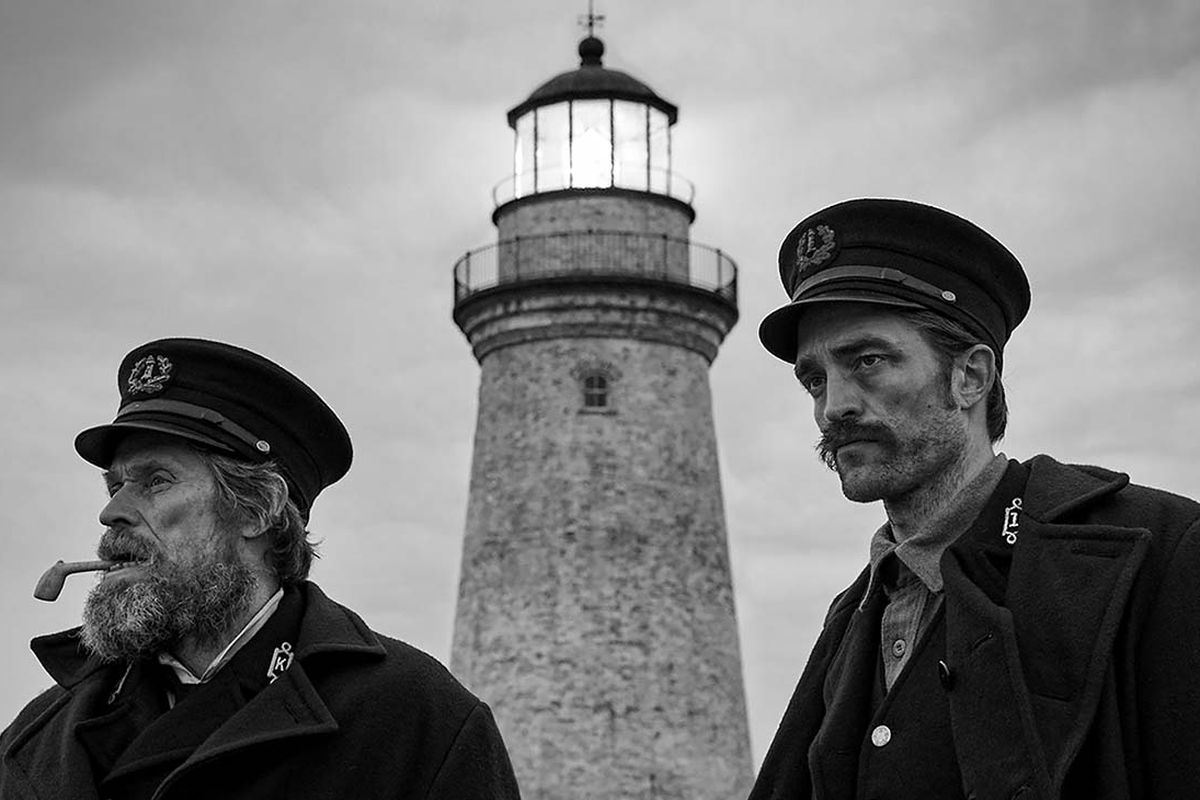
Director/co-writer Robert Eggers follows The Witch, his incandescent 2015 feature debut, with another painstakingly crafted, moody period piece. The Lighthouse strands you, along with two wickies, on the unforgiving island home of one lonely 1890s New England lighthouse.

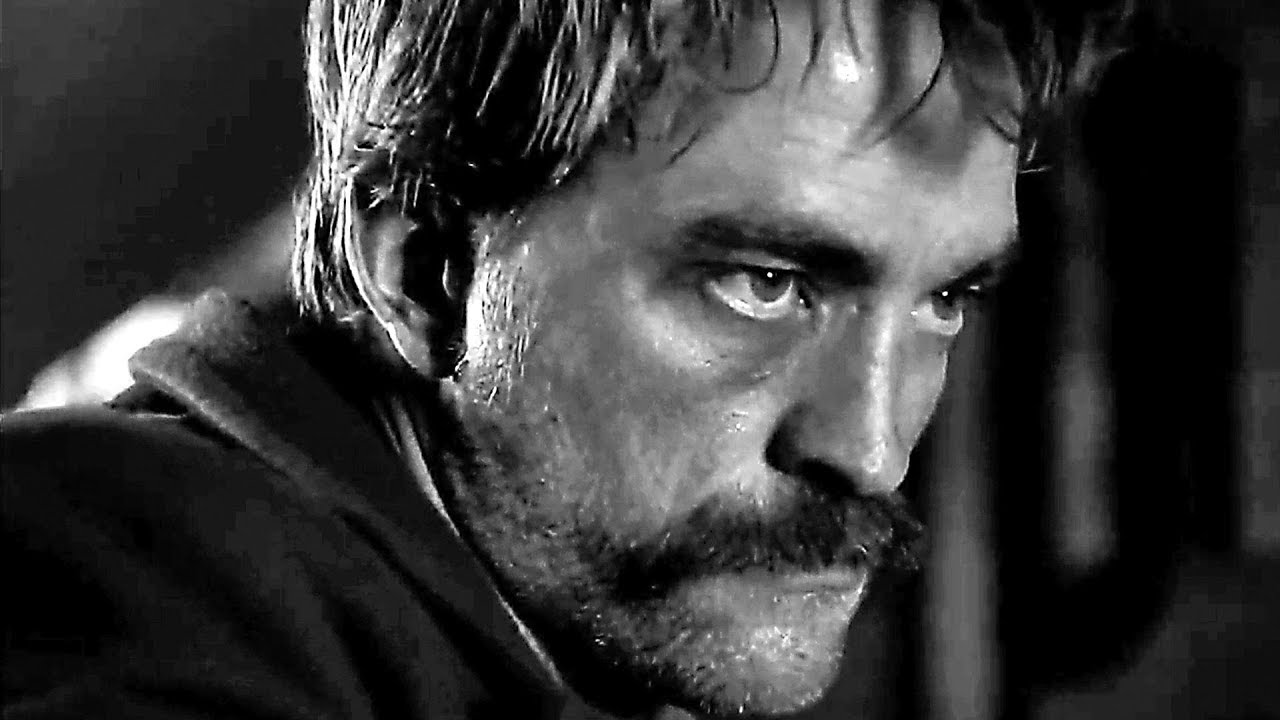
Salty sea dog Thomas Wake (Willem Dafoe) keeps the light, mind ye. He also handles among the most impressive briny soliloquies delivered on screen in a lifetime. Joining him as second is one Ephraim Winslow (Robert Pattinson)—aimless, prone to self-abuse, disinclined to appreciate a man’s cooking.

Eggers’s film is a two-man show, a dizzying, sometimes absurd and often flatulent descent into madness.

The atmosphere is thick and brisk as sea fog, immersing you early with Jarin Blasche’s chilly black and white cinematography and a Damian Volpe sound design echoing of loss and one persistent, ominous foghorn.

For everything Eggers brings to bear, from the Bergmanesque lighting and spiritual undertones to the haunting score to the scrupulous set design to images suitable for framing in a maritime museum – not to mention the script itself – The Lighthouse works because of two breathtaking performances.

Dafoe may be one of the few actors alive who can take this manic-eyed, gimpy-legged version of the Simpson’s sea captain and force us to absorb his every eccentricity. When Winslow finally screams “You’re a parody!” it both wounds and reassures, as by then we’re eager to accept any bit of confirmation that we can trust anything we’re seeing.

As our vessel into this waterlogged nightmare, Pattinson impresses with yet another fiercely committed performance. Winslow comes to “the rock” full of quiet dignity, only to become a soul increasingly tempted by mysterious new demons while running from old ones.

Winslow’s psychological spiral has so many WTF moments, it would crumble without the sympathetic anchor Pattinson provides from the film’s opening moments. Twilight seems like a lifetime ago, and in case you’ve missed any of the impressive indie credits he’s racked up the last few years, we’ll say it again: Pattinson is the real deal.

So is Eggers. His mastery of tone and atmosphere carries a weight that’s damn near palpable. The Lighthouse will leave you feeling cold, wet and woozy, as Eggers trades the literal payoff from The Witch for a series of reveals you’ll be struggling to connect.

This is thrilling cinema. Let it in, and it will consume you to the point of nearly missing the deft gothic storytelling at work. The film is other-worldly, surreal, meticulous and consistently creepy.

And we’ll tell you what The Lighthouse is not. It is not a film ye will soon forget.