Before hitting play on Slay the Dragon, make sure you’re a good social distance away from Grandma’s fine china.
Because you’re going to want to break something.
Directors Chris Durrance and Barak Goodman open their deep dive into political gerrymandering with a quote from Founding Father John Adams about democracies and suicide. They then spend almost two hours making the case that time is running short for America to prove Adams wrong.
The film’s historical context of gerrymandering – or drawing Congressional districts in a hyper-partisan manner – is informative and even entertaining in spots. Who knew the practice got its name from pairing an old Massachusetts governor with a salamander?
But once it digs into the deep pockets and advanced metrics behind “packing,” “stacking” and “bleaching,” the film’s view that this a fight between voters picking winners and winners picking voters does not seem hyperbolic.
The direct, measured approach pushes hardest when reminding us that new district maps are drawn every ten years, so elections in a year that ends in zero – LIKE THIS YEAR – are especially important.
But to make their film a rallying cry for passionate turnout, Durrance and Goodman know that beneath the dirty tricks, blatant hypocrisy, systemic oppression, corporate greed and Supreme Court setbacks, there has to be hope.
We get it via Katie Fahey and Voters Not Politicians, a grassroots movement fighting gerrymandering in Michigan that began with a Facebook post. Fahey, a total neophyte diving into vicious waters, is instantly relatable and easy to root for, creating a narrative contrast that’s a bit simplistic but naturally effective.
It does get a bit long-winded in spots, but Slay the Dragon makes its case with enough info, passion and persistence to make it necessary, especially in a year that ends in zero.
With her 2013 debut It Felt Like Love, Eliza Hittman brought a refreshing honesty to the teen drama. Zeroing in on the summer days when two girls began their sexual lives, the film was an exciting introduction to a writer/director with a quietly defiant voice.
At its core, Never Rarely Sometimes Always could be seen as Hittman’s kindred sequel to her first feature, as two friends navigate a cold, sometimes cruel world that lies just beyond the hopeful romanticism of first love.
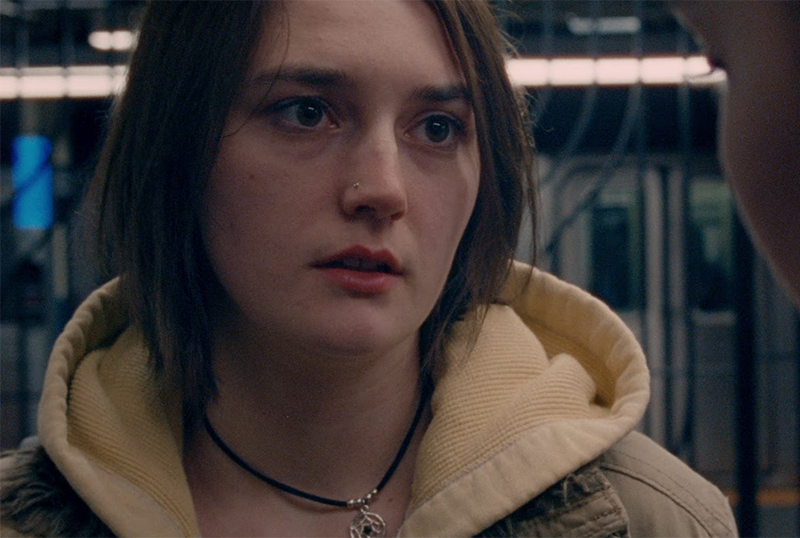
Autumn (Sidney Flanagan) is a talented 17 year-old in Pennsylvania whose crude father berates her for an ever-present foul mood. She’s worried, and when a visit to her local health clinic confirms her fears, Autumn confides only in her cousin Skylar (Talia Ryder) as she weighs her options.
In Autumn’s home state, those options are severely limited, so the girls scrape together as much money as they can and hop a bus to New York, encountering more hard realities along the way.
The over-reliance on metaphor that sometimes hampered It Felt Like Love now feels like that awkward school picture from just a few grades back. NRSA shows Hittman in full command of her blunt truth-telling, demanding we accept this reality of women fighting to control their own bodies amid constant waves of marginalization.
Flanagan, a New York musician making her acting debut, is simply a revelation. There isn’t a hint of angsty teen caricature in Autumn’s dour moodiness, just a beaten down worldview born from all that is revealed in her beautifully brutal interview at the New York clinic.
As an off-camera social worker asks Autumn to give the titular response to a series of questions, Hittman holds tight on Flanagan and she never shrinks from the moment. It’s a devastatingly long take full of hushed experience that may easily shake you.
Just three films in, Hittman has established herself as a filmmaker of few words, intimate details and searing perspective. NRSW is a sensitive portrayal of female friendship and courage, equal parts understated and confrontational as it speaks truths that remain commonly ignored.
Given the subject matter, the film’s PG-13 rating is surprising, but hopeful. This film deserves an audience, much like the conversations it will undoubtedly spark.
Phoenix, Oregon tells the outrageous story of Oregon
hipsters polluting the glorious, white trash game of bowling. $18 pizzas?
Organic pilsners?
What does a sister gotta do to get a large pep and a Bud?
That is, actually, the story it tells, but its focus is more
on the small town coming-of-middle-age saga of the hipsters.
Journeyman James Le Gros is Bobby, a fiftyish bartender at what passes for a fine dining establishment in Phoenix, Oregon. His best friend Carlos (Jesse Borrego) is the chef who can no longer tolerate the cheapskate ways of whining, entitled restauranteur Kyle (Diedrich Bader).
He proposes that Bobby take the fifty grand his mom left him
(along with the Airstream where he’s been living since he downsized after his
divorce) and invest that cash in a dream: said hipster bowling alley/pie shop.
Bobby needs to think—wallow, really—the same way he always
does, by drawing impressive panels in a graphic novel/memoire concerning the
aliens who pre-determine his life.
But really, he mostly draws pictures of his ex-wife.
Gary Lundgren’s direction and production values betray a
minimal budget and comfortably limited imagination. Like Bobby, Phoenix,
Oregon doesn’t set out to impress anybody, so the fully grown slacker kind
of vibe actually suits it.
Le Gros’s slyly low key performance certainly fits. Quiet
and socially uncomfortable, he brings a
realism to the life transition, intentionally but not obnoxiously calling to mind
the same awkwardness of adolescence.
Lisa Edelstein, also bracingly realistic, enlivens all her
scenes with the sexy vitality and charm of world worn freedom.
Characteristically, Kevin Corrigan is a wrong-headed hoot as a repairman with a chip on his shoulder, but even his generally raucous humor feels subdued. Phoenix, Oregon contents itself with a smirk and a shrug. The entire effort’s lack of showiness allows a hometown authenticity to drive the narrative.
Phoenix, Oregon, while pleasant throughout, offers low stakes, low energy, low drama. Rivalries are easily if not tidily overcome and life goes on. It’s sweet and charming in a low key, comfortable way, but it is hardly a thrill ride.
The success of Shudder’s wildly informative and entertaining 2019 doc Horror Noire (still streaming – see it!) paved the way for their new 5-show doc series, Cursed Films. Each of writer/director Jay Cheel’s episodes spends 30 minutes examining one allegedly cursed horror movie production: The Exorcist, Poltergeist, The Omen, The Crow and Twilight Zone: The Movie.
Episodes 1 – 3 were made available for review, and the first thing we noticed was that each show is stronger than the last. Our hopes were highest for Ep 1: The Exorcist, but the series has a tough time finding its footing. The idea of a “cursed” production never really materializes and the episode feels padded with unrelated material.
In particular, time spent with a shyster modern day exorcist adds little to the overall theme of the program and offers limited at best entertainment value.
Poltergeist is a film more recognized for an alleged curse, so there’s a little more meat on Ep 2’s bone. Cheel opens up a handful of different, related conversations and braids them interestingly. The episode actually examines the bad luck that dogged all three films in the Poltergeist series and gets some skinny from one of the filmmakers (no, not that one).
It digs a little more at fan obsession in ways that non-Shudder audiences might mock while feeling perfectly at home with this target market. Still, the content feels light and the doc never seems to unveil much.
By Episode 3, though, Cursed Films finds its groove. The Omen offers not only more bountiful nuttiness to examine, but bigger and more interesting interview opportunities.
The big question: Why repeatedly use the single least flattering photo ever taken of Gregory Peck?
By halfway through the series, Cheel has begun to dig into the psychology of what makes a person – or the public – cling to the idea of a curse in the first place, and the psychology on display in this episode is fantastic. The random nut job guests, however, still feel like an unpleasant way to pad.
Though Episodes 4 and 5 were not available for review, the series seems to have hit its stride just as it hits two films that, while less popular than the first three in the series, suffered more profound bad luck than the first three combined.
The first step toward freedom is telling your own story.
Writer C.S. McMullen and director Malgorzata Szumowska tell
this one really well. Between McMullen’s outrage and the macabre lyricism of
Szumowska’s camera, The Other Lamb offers a dark, angry and satisfying
coming-of-age tale.
Selah (Raffey Cassidy, Killing
of a Sacred Deer, Vox
Lux) has never known any life except that of Eden, the commune where she
lives with the sisters, the wives, and the Sheperd (Michiel Huisman, The
Invitation).
Szumowska doesn’t tell as much as she unveils: Selah’s
defiant streak, Sheperd’s unspoken rules, what puberty can mean if you’re a
good follower. She strings together a dreamlike series of visions that horrify
on a primal level, the imagery giving the film the feel of gruesome poetry more
than narrative.
Selah’s first period and the group’s migration to a new and more isolated Eden offer the tale some structure. Like many a horror film, The Other Lamb occupies itself with burgeoning womanhood, the end of innocence. Unlike most others in the genre, Szumowska’s film depicts this as a time of finding your own power.
The Other Lamb does not simply suggest you question
authority. It demands that you do far more than that, and do it for your own
good.
Selah’s emotional arc plays itself across Cassidy’s face, at first all eyes, piercing blue and eager. But restlessness and defiance outline every expression. Soon Selah’s painterly beauty gives way to the hardness of anger—a transformation Szumowska celebrates.
Despite its title, And Then We Danced uses the art form as more metaphor than setting, as a young dancer fights for the freedom to express himself beyond performance stage or rehearsal studio.
Merab (Levan Gelbakhiani), a dancer in the Georgian National Ensemble, is unsettled by the arrival of Irakli (Bachi Valishvilli), a replacement for a male ensemble member who has been banished amid scandalous rumors.
Irakli is blessed with more natural talent and assured charisma, and a subtle rivalry with Merab soon gives way to a mutual attraction. When a spot in the main ensemble opens up, both men vie to be chosen, even as the danger of their feelings draws increasingly close.
Writer/director Levan Akin unveils the romance in graceful but familiar fashion, keeping the political undertones evident without becoming overbearing. It’s well-crafted and well-acted (especially by Gelbakhiani), but you begin to wonder just when the film will up its ante with a uniquely resonant statement.
And then Akin (Cirkeln, Certain People) and Gelbakhiani demand the spotlight with a finale of intimate defiance. As Merab grapples with societal expectations as both a Georgian Ensemble dancer and a man, the film finally reveals Merab’s soul, speaking to the beauty of liberation in just the way you were hoping it would.
Misery loves company, yeah? So let’s hang out with some other folks whose stir-craziness leads to even worse decision making than our own. For the first time ever (to avoid a salt-in-the-wound effect), we are sticking strictly to movies you can stream right now—which means The Lodge didn’t make it, although we do really love that movie.
6. 10 Cloverfield Lane (2016)
More
of a second cousin than a sequel to 2008’s Cloverfield, 10
Cloverfield Lane is a claustrophobic thriller. No found footage. No shaky
camera. No perturbed kaiju.
Michelle
(Mary Elizabeth Winstead) wakes from a car crash handcuffed to a pipe in a
bunker. Howard (John Goodman, top-notch as usual), may simply be saving her
from herself and the apocalypse outside. Good natured Emmett (John Gallagher
Jr.) certainly thinks so.
First-time director Dan Trachtenberg ratchets up the tension as the film progresses, finding the creepiness in even the most mundane domestic activities, as an award-worthy performance from John Goodman reminds us monsters come in many forms.
*Cheapest on YouTube, Google Play, Vudu
5. Rammbock: Berlin Undead
Why does this film work?
Michael (Michael Fruith) arrives in Berlin to visit his recently-ex
girlfriend. She’s not home. While he waits in her apartment, Berlin falls prey
to the zombipocalypse.
It’s actually the rage virus, and it’s how well Rammbock plays like the
Berlin equivalent of 28 Days Later or Quarantine that helps
it excel.
Michael finds himself trapped inside his ex’s apartment building, scheming
survival tricks with the plumber hiding out with him. The team work, strategy,
human kindness and pathos all combine with really solid acting and more than a
few well-choreographed action bits to help this film more than transcend
familiar tropes.
You love these guys. You believe in them, and the idea that they won’t make it through this is dreadful. Director/co-writer Marvin Kren, blessed with a stellar cast, works your sympathies and your nerves.
*Amazon Prime, Google Play, Vudu, iTunes
4. What Ever Happened to Baby Jane? (1962)
Bette Davis and Joan Crawford? Yes, please!
The two then-aging (just barely, if we’re honest) starlets played aging
starlets who were sisters. One (Davis’s Jane) had been a child star darling.
The other (Crawford’s Blanche) didn’t steal the limelight from her sister until
both were older, then Blanche was admired for her skill as an adult actress.
Meanwhile, Jane descended into alcoholism and madness. She also seemed a bit lax
on hygiene.
Blanche winds up wheelchair bound (How? Why? Is Jane to blame?!) and Jane’s
envy and insanity get the better of her while they’re alone in their house.
Famously, the two celebrities did not get along on set or off. Whether true
or rumor, the performances suggest a deep, authentic and frightening hatred
borne of envy that fuels the escalating tension.
Davis is at her unhinged best in a performance that earned her an Oscar nomination. Crawford pales by comparison (as the part requires), but between the hateful chemistry and the story’s sometimes surprising turns, this is a movie that ages well, even if its characters did not.
*super cheap on Amazon Prime, YouTube, Google Play
3. It Comes at Night (2017)
Deep in the woods, Paul (Joel Edgerton, solid as always),
Sarah (Carmen Ejogo) and their teenage son Travis (Kelvin Harrison, Jr.) have
established a cautious existence in the face of a worldwide plague. They have
boarded their windows, secured their doors, and enacted a very strict set of
rules for survival.
At the top of that list: do not go out at night.
Writer/director Trey Edward Shults explores the confines of the house with a
fluid camera and lush cinematography, slyly creating an effective sense of
separation between the occupants and the dangers outside. But what are those
dangers, and how much of the soul might one offer up to placate fear itself? In
asking those unsettling questions, It Comes at Night becomes a
truly chilling exploration of human frailty.
*Netflix
2. Housebound (2014)
Gerard Johnstone writes and directs, though his brightest accomplishment may
be casting because Morgana O’Reilly’s unflinching performance holds every
moment of nuttiness together with brilliance.
O’Reilly plays Kylie, a bit of a bad seed who’s been remanded to her
mother’s custody for 8 months of house arrest after a recent spate of bad luck
involving an ATM and a boyfriend who’s not too accurate with a sledge hammer.
Unfortunately, the old homestead, it seems, is haunted. Almost against her
will, she, her hilariously chatty mum (Rima Te Wiata) and her deeply endearing
probation officer (Glen-Paul Waru) try to puzzle out the murder mystery at the
heart of the haunting. Lunacy follows.
Good horror comedies are hard to come by, but Johnstone manages the tonal shifts magnificently. You’re nervous, you’re scared, you’re laughing, you’re hiding your face, you’re screaming – sometimes all at once. And everything leads up to a third act that couldn’t deliver any better.
*free on Tubi; also on iTunes
1. The Shining (1980)
It’s isolated, it’s haunted, you’re trapped, but somehow
nothing feels derivative and you’re never able to predict what happens next.
It’s Stanley Kubrick’s masterpiece rendition of Stephen King’s The Shining.
A study in atmospheric tension, Kubrick’s vision of the
Torrance family collapse at the Overlook Hotel is both visually and aurally
meticulous. It opens with that stunning helicopter shot, following Jack
Torrance’s little yellow Beetle up the mountainside, the ominous score
announcing a foreboding that the film never shakes.
The hypnotic, innocent sound of Danny Torrance’s Big Wheel against the weirdly phallic patterns of the hotel carpet tells so much – about the size of the place, about the monotony of the existence, about hidden perversity. The sound is so lulling that its abrupt ceasing becomes a signal of spookiness afoot.
An unidentified body is found buried in the dirt at an unusual crime scene. The county coroner and his assistant/son begin an autopsy, immediately discovering unsettling things. As they dig for more answers, unsettling gradually turns to terrifying.
In 2010, director Andre Ovredal made Trollhunter a fresh blast of B-movie fun. He brings a similar vibe to The Autopsy of Jane Doe, a film with enough wry smarts and acting chops to deliver more satisfying scares than you might expect.
Ovredal, along with screenwriters Ian Goldberg and Richard Naing, knows the payoff is weaker than the premise, so he makes sure you’re plenty invested early on, earning some capital that will be spent when things get a bit silly. Talented leads don’t hurt, either.
As Coroner Tom Tilden and his son Austin, Brian Cox and Emile Hirsch display an easy chemistry and deliver a solid anchor of believability to build upon. We trust these guys, and we don’t doubt they truly want to do right by the young victim through science, and learn the source of her painful death.
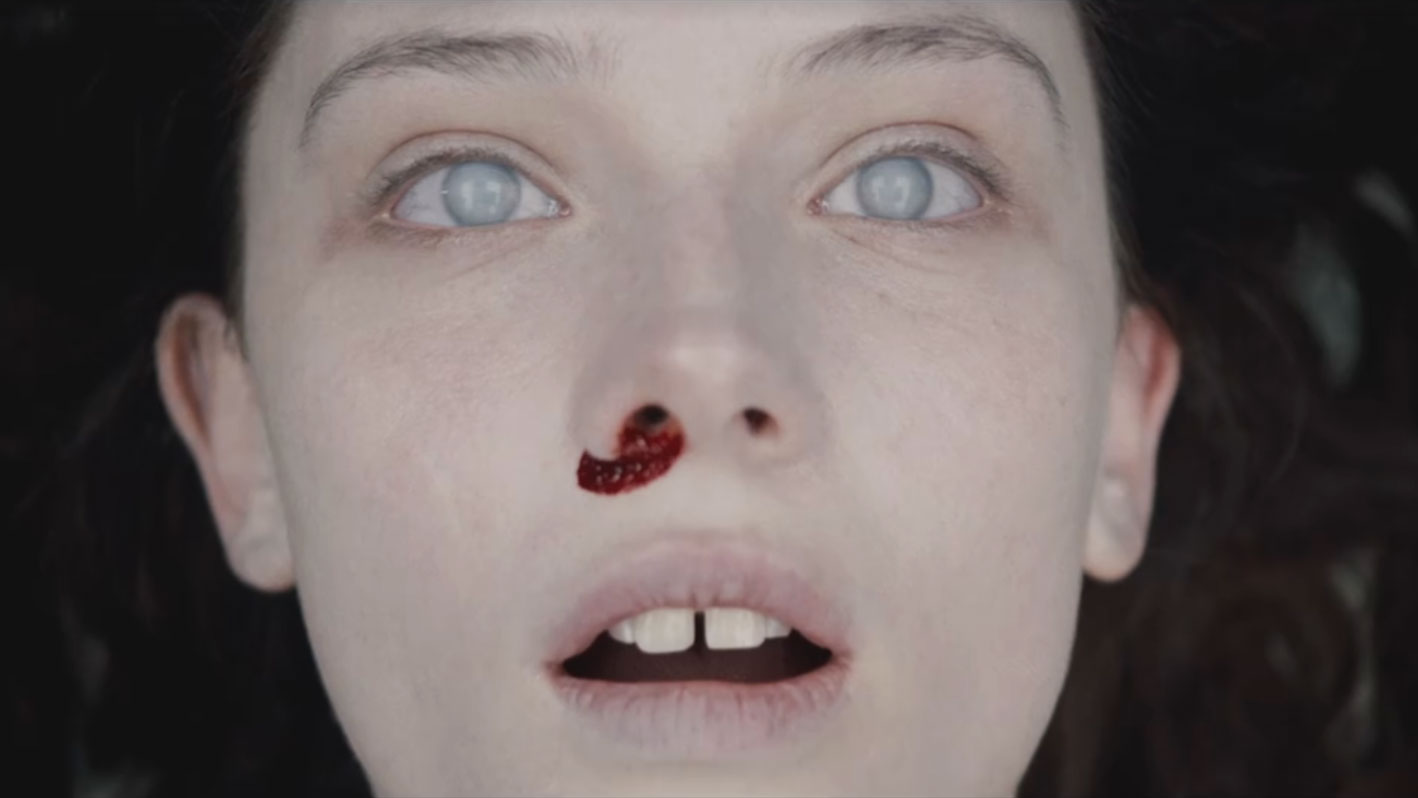
That there is plenty of gruesome body horror should be no surprise, but the under-reliance on a bevy of special effects is a nice one. Even better is Ovredal’s treatment of his lead actress (Olwen Kelly). Yes, the female body on the slab is young, attractive (at least to start) and constantly nude, but the director seems careful not to further exploit that fact with a leering camera, focusing instead on making it increasingly difficult to look her way.
Once the Tildens realize they’re in a literally bloody mess, Jane Doe becomes an adult version of Lights Out, delivering jump scares and red herrings with a knowing, playful touch that says “Why so serious? Let’s have some fun!”