All posts by maddwolf

Cabin. Woods. Uh Oh.

The Retreat

by George Wolf

Does it matter that The Retreat is a “gay” horror film?

Well, no. And then yes.

Renee (Tommie-Amber Pirie) and Valerie (Sarah Allen) are on the verge of making their relationship permanent, but feel like some time away would do them good. The plan is to meet Val’s friends Scott (Turbo Kid‘s Munro Chambers) and Connor (Chad Connell) at a picturesque “gay BnB” for some quiet time in the Canadian countryside.

Or let’s just call it what it is: a cabin in the woods.

Uh oh.

Right, things escalate quickly. Scott and Connor are nowhere to be seen, and with just a touch of contrivance, the girls soon realize they’re being hunted by some sadistic Rambros (Aaron Ashmore, Rossif Sutherland).

From the minute Renee and Val stop for gas, director Pat Mills builds an air of dread and tension minus the usual gimmickry. And once the women are truly fighting for their lives, Mills keeps the adrenaline pumping with a quick pace and crisp editing that helps you forget the distractingly dark tones of the cinematography.

Writer Alyson Richards pens a lean, mean, bloody survival thriller that boasts some welcome surprises and a smart social conscience. Realized via strong performances from Pirie and Allen, Renee and Val’s relationship feels perfectly authentic, with a sexuality that’s never exploited by a leering camera. And while you may be reminded of 2018’s What Keeps You Alive, there is a critical difference.

The couple in that film could have been heterosexual, and it still would have worked. But here, the fact that it is a same sex couple being hunted matters very much to the story at work. It enables Richards and Mills to anchor a revenge horror show with a satisfying metaphor for the violent threats LGBTQ folks continue to face every day.

A big part of that satisfaction is from the blunt force trauma being reserved for the action, not the message. And for those who might be ready to accuse the film of doing some undue stereotyping of its own, take a breath.

A nifty little coup de grace proves The Retreat has seen you coming all along.

Jens Wick

Riders of Justice

by Matt Weiner

Men will single-handedly gun down an entire biker gang rather than go to therapy.

That’s the premise from prolific writer-director Anders Thomas Jensen, where he reunites with Mads Mikkelsen in the dark comic revenge fantasy Riders of Justice.

At least I think this was dark comedy. Mikkelsen stars as Markus, an accomplished soldier who has to return from active duty to take care of his daughter Mathilde (Andrea Heick Gadeberg) after his wife dies in a freak train accident.

Or was it an accident? Fellow survivor Otto (Nikolaj Lie Kaas), an out-of-work programmer, is convinced that he can prove the accident was the work of notorious Danish biker gang the Riders of Justice. He brings in friends and fellow IT outcasts, the extroverted Lennart (Lars Brygmann) and the perpetually bullied Emmenthaler (Nicolas Bro).

Together, the trio enlists the help of Markus as their agent of justice, using a mix of tactics both morally dubious (computer hacking) and sociopathic (Markus quickly amasses a body count that John Wick would envy).

What starts as a straightforward revenge story quickly goes off the rails, but always in truly weird, delightful ways. The violence, once it starts, is swift and brutal. Mikkelsen removes all traces of warmth as the short-fused Markus, with Otto and his friends instead shouldering most of the comedy.

But Jensen isn’t nearly as interested in the physical mayhem as the emotional wreckage his oddball characters are all coping with. Whether it’s Markus and Mathilde working out what it means to be a family with just each other, or Otto and friends learning that not every search for meaning can be solved mathematically, Riders of Justice treats its characters with such forgiving empathy that it’s easy to forget that the group is also almost certainly responsible for the most murders in Denmark since the Vikings.

There’s a moment in the film, while everyone is trying to make sense of their own losses, when someone points out that “Unless you die at a young age, you will end up burying most of the people you love.” It’s hard to imagine a line like that coming up at any point in the Taken franchise. And yet for Riders of Justice, it’s just another observation—punctuated with a bullet, sure, but also a strong commitment to its own madcap existential vision.

Viva Laz Vegaz

Army of the Dead

by Hope Madden

The single best feature film Zack Snyder ever made was his first: 2004’s Romero reboot Dawn of the Dead. (That is my hill.) For that reason (plus my sheer, giddy joy for zombie movies), I was far more eager about his latest zombie installment, Army of the Dead, than in anything else he’s made recently.

Even the title suggested that he was still on the Romero wavelength and, indeed, by his own 2005 Land of the Dead, the maestro of the undead was already dropping us into a town where the Z population had begun to organize.

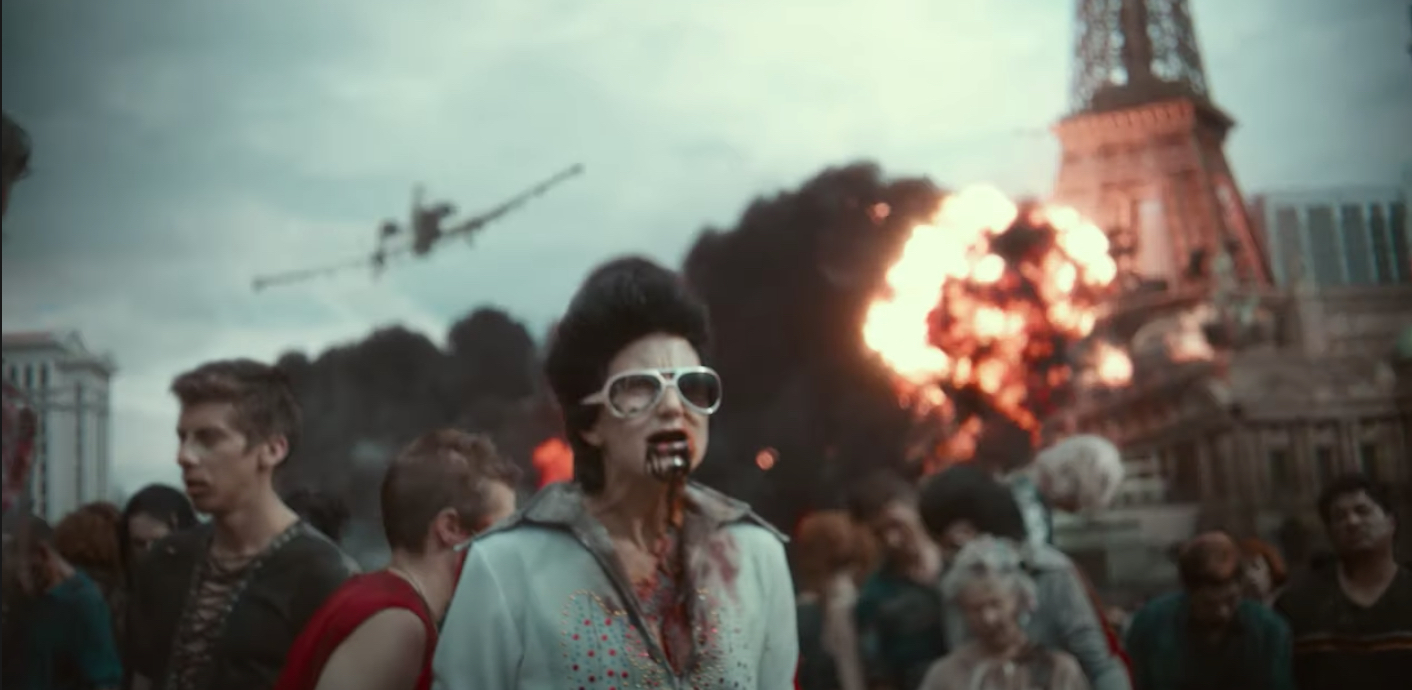
In Snyder’s case, it’s not just any town. We open on the catalyst—a rapid-fire transformation just over the hill from Vegas. Conjuring fond memories of his prior undead flick, Snyder cuts together an excellent opening montage with some inspired musical accompaniment to quickly bring us up to the film’s current plight. (Likely also offering a preview to their upcoming Netflix series.)

Not a moment or line of dialogue wasted. Which is great, because this is going to trudge on for another 2 ½ hours, which is entirely unforgivable for a zombie movie.

How about a zombie heist movie?!

I mean, the zombies aren’t stealing anything, and nobody’s stealing zombies. Instead, some smarmy billionaire (Hiroyuki Sanada) convinces a Z-war hero (Dave Bautista) to get a crew together and head into Vegas to steal a fortune inside his casino vault.

So, Train to Busan: Peninsula. That’s not where Snyder and co-writers Shay Hatten (John Wick 3) and Joby Harold (King Arthur: Legend of the Sword) got all their ideas, though. You will also notice Aliens, The Girl with All the Gifts, I Am Legend, Ghosts of Mars, World War Z, Raiders of the Lost Ark, and just a touch of Danny Ocean.

Still, Army of the Dead would be pretty entertaining if it weren’t so tediously predictable. (That does happen when you borrow so liberally, I guess.) Tig Notaro’s a fun piece of miscasting as the wise-cracking chopper pilot, Matthias Schweighofer delivers a bright performance (though it does feel as if it is part of another film entirely), and it’s always a delight to watch Garret Dillahunt weasel his way through a role.

The whole mess could have been mindless and merry were it not for its bloated running time. (Self-indulgence, thy name is Snyder.) It still delivers the goods here and there, but it won’t stick with you.

Do It For the Hwyl!*

Dream Horse

by George Wolf

How much of a feel good story is this? Dream Horse is the second film to tell it in just the last five years.

2016’s Dark Horse introduced it as a splendid documentary, with archival footage and first person accounts from the working class U.K. folk who pooled their money to breed a race horse. That horse, named Dream Alliance, become an unlikely winner, ultimately racing for the Welsh Grand National title.

If you’ve seen that doc (and I recommend it), it will come as no surprise that narrative filmmakers are having a go at the tale. I mean, it’s got majestic horses, regular Joes and Jans crashing the owners boxes, triumphant sports moments, and it really happened! Barton Fink couldn’t have cooked up anything more big screen ready.

Director Euros Lyn (lots of TV including Doctor Who) has a terrific anchor in Toni Collette, who stars as Welsh barmaid Jan Vokes. It was Jan’s idea to form a “syndicate” ownership group for a racehorse, leaning on bar regular Howard Davies (Damien Lewis) – a tax advisor with some experience around the track – for backup.

For Lyn and screenwriter Neil McKay (also a TV veteran), the challenge becomes keeping the generic sports cliches from overpowering the moments that transcend sport. And for the most part, they do.

Yes, you’re going to hear swelling music and a dismissive trainer admitting “there’s just something about him…” But more importantly, you see people finding a renewed joy in their very existence – and a touching pride in knowing they were a part of something worthy enough to outlive them.

One of the many joys of Dark Horse was getting to know this colorful gang in person – they are a collective hoot. Collette, Lewis and a solid ensemble bring them all to life in warm and witty fashion, while Lyn earns some bonus points for the refreshing way he brings out the real players for a curtain call.

The best sports movies are almost always about more than the sport. Dream Horse doesn’t forget that. You can bet on it.

*a old Welsh saying meaning doing something for the stirring sensation, fervour, emotion and enthusiasm

A Searing Indictment of Hollywood or an Anthropomorphic Cat’s Fantasy? You Be the Judge.

Howard Original

by Christie Robb

This sophomore effort from director Natalie Rodriguez (The Extraordinary Ordinary) is unfocused and confusing. I felt like I was watching a made-for-TV movie about the #MeToo movement while on painkillers after recovering from some sort of dental surgery.

Rodriguez co-wrote the script – based on a 2017 short – with Kevin Sean Michaels (who plays the lead in a somewhat slapstick fashion). The film centers around Howard, an alcoholic screenwriter desperate to see his script Baby Space Cats brought to life on the silver screen. The movie bounces back and forth between black and white scenes depicting the evolution and devolution of Howard’s relationship with his one true love Hannah, and full-color scenes in the present, where Howard is shepherding “Baby Space Cats” through development while simultaneously spiraling in his addiction.

We are presented with a number of auditions for the role of “Fleaow” in which Howard sexually harasses the talent.  There’s a parody of the Kardashians TV show. There’s a dance sequence. Howard talks to a disembodied inner voice named Kendra. There’s a bit with some super racist banter. At one point Howard adopts a cat.

Late in the movie, it’s hinted that Howard might have been dead for the majority of the scenes that take place in the present. Or maybe he’s just a character in the cat’s screenplay. I don’t know, man. If this comes together in some way that I’m just not getting, I’m blaming the pandemic for blunting my cognitive abilities.

The best moments though, by far, are the original songs supplied by “Dave?”—who, according to IMDB, is a high school teacher turned artist. Gems like “Baby, How You Doin?,” “Butter Chicken,” and “Howard (Your Butt Stinks)” give some sequences a real Flight of the Conchords vibe, which made me smile and stop trying too hard to figure out what the point of this project might have been.

In Search of Hunky Boys

Psycho Goreman

by Hope Madden

How much fun is this movie?!

Tons. Endlessly quotable and boasting inspired creature design and a twisted Saturday Morning Kidventure tone, Psycho Goreman is a blast

Mimi (a wrong-headed and glorious Nita-Josee Hanna) and her loyal (OK, cowering) brother Luke (Owen Myre) inadvertently summon—nay, control—an intergalactic evil so dastardly it can bring out the end of worlds.

But they totally control him, so they make him learn their favorite games, wear cowboy hats and do assorted hilarious and embarrassing things.

Fans of writer/director Steven Kostanski’s 2016 breakout The Void (a perfect blend of Lovecraft and Halloween 2) might not expect the childlike lunacy and gleeful brutality of Psycho Goreman (PG for short), but they should. His 2012 gem Father’s Day (not for the easily offended) and his 2011 Manborg define not only his tendencies but his commitment to tone and mastery of his material.

Kostanski’s films—The Void aside—fall on the intersection of silly and gory, most of them with a bold VHS aftertaste. I mean all those things in a good way. The tone here is more live-action children’s programming (gone way, way wrong)–perhaps a tad Turbo Kid in its execution.

There is so much joy here, not only in the lunacy of the story or of the creature design (PG’s nemeses from Planet Gigax make an appearance, natch, and they are a riot to look upon).

Will Mimi’s unphased cruelty and selfishness be curbed by friendship? Or will it save the day? Neither? Oh, ok, well then at least it makes for one fiercely funny central character.

Hanna’s command of this unruly heroine may be what sets the film above others in Canadian production company Astron 6’s arsenal. She’s not alone. Astron regular Adam Brooks steals scenes as the kids’ layabout dad, with Alexis Kara Hancey showing off deadpan delivery as his put-upon spouse.

The ensemble works wonders together, each hitting the comedic beats in Kostanski’s script hard enough that the goretastic conclusion feels downright cheery.

This movie could not be more fun.

New World Disorder

This World Alone

by Rachel Willis

Some of the best post-apocalyptic films don’t worry about the event or events that created a dystopian world. The audience is dropped into this landscape along with the characters and expected to adapt to the new rules and challenges.

With director Jordan Noel’s film, This World Alone, there’s an attempt to balance a Before and After centered around an event only known as The Fall. From the bits and pieces we get by way of opening narration, some cataclysmic incident occurred to render certain electronics (or maybe all of them) useless. The narrator, our main character Sam (Belle Adams), lets us know that cell phones, microwaves, and the internet are now obsolete.

It’s assumed that losing cell phones drove everyone crazy (or is that just my assumption?), mankind was nearly wiped out, and the survivors live in a world where it’s everyone for themselves, food is scarce, and you don’t even want to think about having a pet pig.

The problem with trying to construct a new world in reference to the old one is that it’s easy to trap yourself in numerous logical holes. If you have a good story, it’s easy to ignore those holes. If your story isn’t so good, the holes become chasms.

Sam was born in the Before, but only remembers the After. She spends a lot of time telling us about the Before, which is unnecessary since that’s where we live. Time would have been better spent showing us how this new world operates.

The film’s dialogue is often embarrassing, and it never lets us experience things naturally. Like the narration, it tells us a lot. Sam’s mom, Connie (Carrie Walrond Hood), constantly tells her she’s not ready for the world outside their secluded home. However, if the outside world is as dangerous as Connie always implies, wouldn’t she have better prepared her daughter to fight? Rather than waiting until she’s in her 20’s to suddenly goad her about her weaknesses?

There is some beautiful cinematography, courtesy of Trisha Solyn, that helps enhance the characters’ feelings of isolation. Pointed shots help us see how nature has begun to reclaim the earth. Watching these women alone surviving in a dangerous world is interesting, but a short amount of time is given to this setup.

The cinematography and the score are the movie’s highlights, but unless the film is Koyaanisqatsi, you need more than that to carry your film off successfully.

Screening Room: Woman in the Window, Spiral, Those Who Wish Me Dead & More

Tech Savvy

Profile

by George Wolf

Since its inception, the “real-time computer screen” sub genre has spawned films attempting to expose truths about how small -and dangerous – the wired world has become. By drawing inspiration from urgent real world events, director/co-writer Timur Bekmambetov’s Profile achieves more lasting resonance than most.

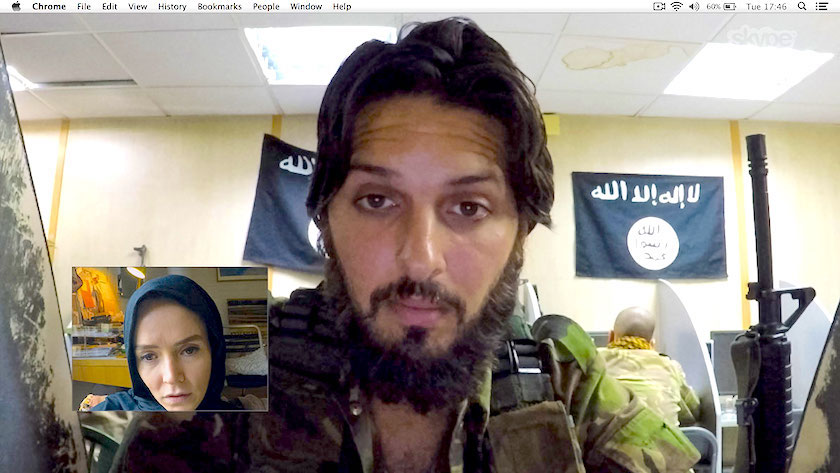
London reporter Amy Whittacker (Valene Kane) is chasing a big story that will expose the online propaganda channels Islamic radicals utilize to recruit European women. Adopting the online profile of “Melody Nelson,” Amy quickly makes contact with Bilel (Shazad Latif), a charismatic recruiter.

It isn’t long before Amy is in way over her head, and even as her friends, boyfriend, and editor urge her to stop, Amy seems seduced by the very tactics she hoped to expose.

The logic isn’t always water tight, and some decisions flirt with absurdity, but authentic performances from Kane and Latif reel in this catfish, and Bekmambetov lands it with a chilling accuracy.

Mighty Neighborly

The Woman in the Window

by George Wolf

The Woman in the Window is a testament to the power of “all in.”

Like if you’re spying on your neighbors, get a zoom lens, take pictures! And if you’re modernizing Hitchcock, embrace that shit from the opening minutes and don’t f-ing look back.

For director Joe Wright and screenwriter Tracy Letts, that’s the play as they adapt A.J. Finn’s bestselling novel. And it’s a smart one.

Psychologist Anna Fox (Amy Adams, fantastic) has a shrink of her own these days (Letts), and plenty of prescriptions. Suffering from crippling agoraphobia, Anna will not leave her spacious Manhattan townhouse. She’s got her cat Punch and her downstairs tenant David (Wyatt Russell), but outside of occasional conversations with her ex-husband (Anthony Mackie), Anna spends most of her time watching her neighbors and old movies.

Then the Russells move in across the street.

Jane (Julianne Moore) comes over for an enjoyable visit, has some wine and admits that Alistair (Gary Oldman) can be angry and controlling. A later conversation with the teenaged Ethan Russell (Fred Hechinger) seconds that.

So when Anna sees Jane stabbed in her apartment, she’s sure Alistair is to blame. But with detectives (Brian Tyree Henry, Jeanine Serralles) looking on, a different Jane Russell (Jennifer Jason Leigh) appears, swearing that she’s never even met Anna before tonight.

For the entire first hour, Wright (Atonement, Darkest Hour, Hanna), Letts (Pulitzer winner for writing August: Osage County) and this splendid ensemble put the hammer down on a delicious mystery ride. Putting stairwells, doors, railings and more in forced perspective, Wright intensifies our relation to Ann’s small world while Letts’s crackling script draws us into the mystery and Danny Elfman’s staccato score hammers it home.

Is any of Anna’s story even real, or is it her meds and fragile psyche talking? This question allows the direct homages to classics like Rear Window and Vertigo to be filtered through a movie-loving unreliable narrator, becoming a wonderfully organic device that feeds this intoxicating noir pot-boiler.

As events escalate and Anna’s plight becomes more overtly terrifying, the novel’s pulpy seams begin to show, and the film stumbles a bit in transition. But Adams is strong enough to keep us rooted firmly in Anna’s camp, long enough for the darker side of Hitchcock to wrestle control.

Taking a story like this from page to screen successfully requires a strong, confident vision and a committed, talented cast. The Woman in the Window is overflowing with riches on both counts, landing as immensely satisfying fun.