Is it me, or does Independence Day feel a little tough to celebrate this year? Is there a downward spiral going on that seems like the backstory of a dystopian SciFi novel? One where the Supreme Court finally crumbles to an administration that embraces white supremacy, gun violence and toxic masculinity?
Oh, it’s not just me, then?
You want to see a movie?
Five years ago, writer/director James DeMonaco spun a tale of a government-sanctioned, pseudo-religious night of violence meant to purge us of our evil. The Purge turned out to be a cautionary tale: if we’re not careful, this could happen.
Three films later, allegories are cast aside. From tiki torches to pussy grabbers, this is Trump’s America.
The First Purge takes us back to the experiment that set off the once-annual night of mayhem. A test, funded by the NRA and backed by the far-right government, is carried out on Staten Island.
DeMonaco returns to write the latest installment, but for the first time he hands off directing duties. Gerard McMurray makes his feature directing debut with a film that does not mix messages.
The African American director and his primarily African American cast take us inside a film that, if it’s not America today, it’s America of like three weeks from now.
DeMonaco didn’t have to work too hard for his script. From robed Klansmen to unrepentant, officially-sanctioned police officers with badges and billy clubs, to doughy white political mouthpieces altering facts to further their agenda, DeMonaco pulls nightmares from reality and pastes them together in a world that’s almost more comforting in that it’s supposed to be fantasy.
McMurray struggles a bit with action sequences, although, as he follows one misguided young man, he does manage a funhouse atmosphere that creates a giddy tension.
His cast, including Lex Scott Davis, Y’lan Noel and Marisa Tomei, offer entirely solid performances in fairly underwritten roles. Meanwhile, Rotimi Paul cuts an impressive figure as Skeletor, one of the few citizens of Staten Island genuinely interested in participating in the experiment.
McMurray and DeMonaco are not all gloom and doom. Mercifully, they root their story in a realistic optimism that we, the citizens of the United States—potential voters, all—are not as easily manipulated as the powerful may think. We are not sheep. Not one of us is expendable and we outnumber them.
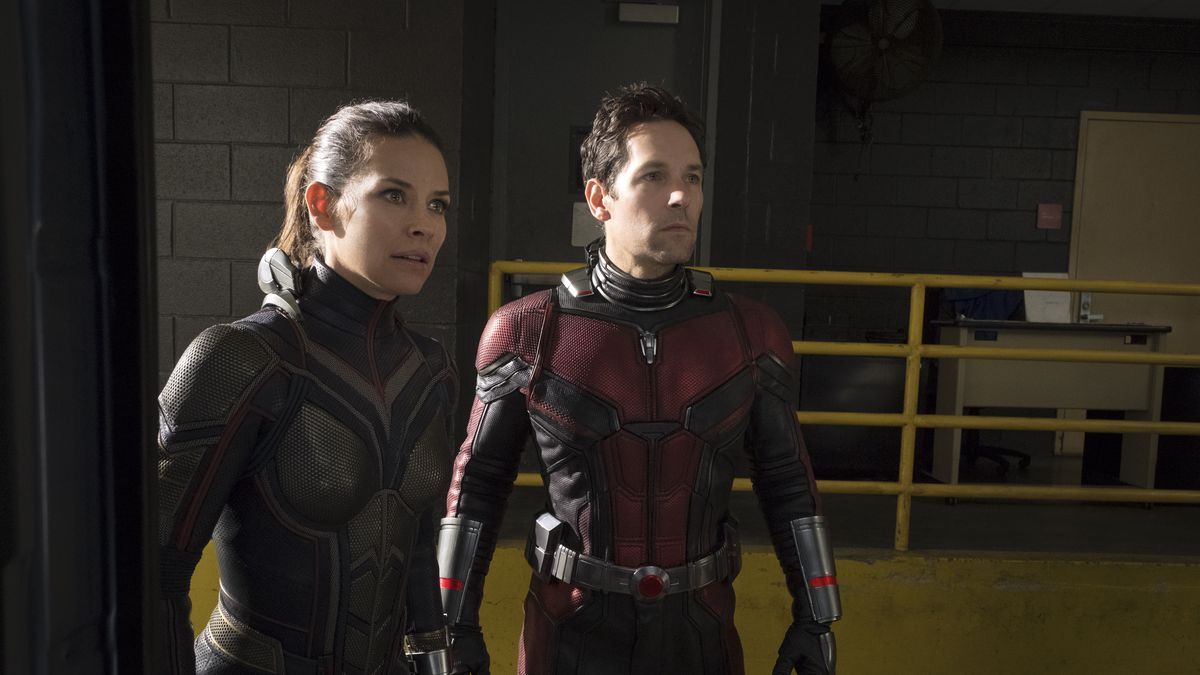
Like the titular heroes who get small to do big things, Ant-Man and the Wasp gets a boost by making its stakes more personal, and its mojo a sweet, witty blast.
“Do you guys just put ‘quantum’ in front of everything?”
Scott Lang/Ant-Man (Paul Rudd) asks that question for him and for us. The answer is yes, they do, but don’t sweat the science and the fun will win out.
Scott’s on the outs with just about everyone since his assist to Captain America (“We call him Cap!”) in Civil War, but he just might be what Dr. Pym (Michael Douglas) and his daughter Hope Van Dyne (Evangeline Lilly) need to rescue their long lost wife/mother Janet Van Dyne (Michelle Pfeiffer) from the “quantum realm” that’s held her for decades.
The team could be on to something huge, and their research has many interested and scary parties, including “Ghost” (Hannah John-Kamen from Black Mirror and Ready Player One), a molecularly challenged young lady who thinks it could save her life.
Too serious? Anything but.
Thanks to Rudd’s comic timing and affable charm, Ant-Man becomes the family friendly cousin to Ryan Reynolds’s Deadpool. Like Reynolds on his DP projects, Rudd again earns a writing credit, filling his character with plenty of snappy dialogue and tongue-in-cheek humor that feels like a comfortable extension of Rudd’s own persona.
He’s a natural, but Lilly is the welcome surprise here. The Wasp’s intro in the first film often seemed like an awkward distraction, but she earns the equal marquee time with a script that allows Lilly the chance to make the character matter.
Director Peyton Reed is also back from part one, showing a confident grasp on Ant-Man’s role in the Marvel Universe. He keeps the pace quick, the gags (many featuring a scene-stealing Michael Pena) on a PG-13 speed dial, and the effects team busy, showcasing plenty of the amazing scale-altering set pieces that give this franchise its unique calling card.
The film knows its place in Marvel’s lineup, too, and that’s hardly an accident. Good as Infinity War was, the break from galaxy-hopping is welcome. Two of the writers from Spider-Man: Homecoming are on board this time, bringing some of the less-is-more sensibility which gave that film such an unexpected freshness.
Yes, it could stand to lose about fifteen minutes of excess, but AMATW has an unassuming vibe that is infectious fun, and the perfect palate cleanser before another bite of Thanos.
And don’t leave early, or you’ll miss a mid-credits bonus that might drop some jaws.
What a killer year 2018 has in horror been already! One mega-blockbuster, another big indie hit, loads of fun stuff big and small. Whether you think the great Annihilation and The Endless are horror, whether you believe unhinged Mom and Dad-style Nic Cage is the best kind of Nic Cage, and no matter where you stand on The Strangers: Prey at Night, we’re here to has it out.
It’s time we count down the best of the best so far this year, and we are thrilled to have Senior Filmmaker Correspondent Jason Tostevin join us, as is tradition, to argue over what is and is not horror, what is and is not great. Plus, we sing!
5. The Ritual
David Bruckner has entertained us with some of the best shorts in horror today, including work from V/H/S, Southbound, and one of our favorites, The Signal. Directing his feature debut in The Ritual, Bruckner takes what feels familiar, roots it in genuine human emotion, takes a wild left turn and delivers the scares.
Five friends decide to mourn a tragedy with a trip together into the woods. Grief is a tricky, personal, often ugly process and as they work through their feelings, their frustration quickly turns to fear as they lose themselves in a foreign forest where danger lurks.
The film works for a number of reasons, but its greatest triumph is in making the woods scary again. That environment has become such a profound cliché in horror that it is almost impossible to make it feel fresh, but there is an authenticity to the performances, the interaction among the characters, and the frustration and fear that grounds the horror. And then there is horror—intriguing, startling, genuinely frightening horror. Yay!
4. Unsane
Sawyer Valentini (Claire Foy—brittle, unlikeable and amazing) is living your worst nightmare. After moving 400 miles to escape her stalker, she begins seeing him everywhere. She visits an insurance-approved therapist in a nearby clinic and quickly finds herself being held involuntarily for 24 hours.
After punching an orderly she mistakes for her stalker, that 24 hours turns into one week. And now she’s convinced that the new orderly George is, in fact, her stalker David (Joshua Leonard—cloying, terrifying perfection).
After laying bare some terrifying facts about our privatized mental health industry, Steven Soderbergh structures this critique with a somewhat traditional is-she-or-isn’t-she-crazy storyline. Anyone who watches much horror will recognize that uneasy line: you may be here against your will, but that doesn’t mean you shouldn’t be here.
And the seasoned director of misdirection knows how to toy with that notion, how to employ Sawyer’s very real damage, touch on her raw nerve of struggling to remain in control of her own life only to have another’s will forced upon her.
He relies on familiar tropes to say something relevant and in doing so creates a tidy, satisfying thriller.
3. Revenge
The rape-revenge film is a tough one to pull off. Even in the cases where the victim rips bloody vengeance through the bodies of her betrayers, the films are too often titillating. Almost exclusively written and directed by men for a primarily male audience, the comeuppance angle can be so bent by the male gaze that the film feels more like an additional violation.
Well, friends, writer/director Coralie Fargeat changes all that with Revenge, a breathless, visually fascinating, bloody-as-hell vengeance flick that repays the viewer for her endurance. (His, too.)
Fargeat’s grasp of male entitlement and the elements of a rape culture are as sharp as her instincts for visual storytelling. Wildly off-kilter close-ups sandwich gorgeous vistas to create a dreamlike frame for the utterly brutal mess of a film unfolding.
Symbol-heavy but never pretentious or preachy, the film follows a traditional path—she is betrayed, she is underestimated, she repays her assailants for their toxic masculinity. But between Fargeat’s wild aesthetic, four very solid performances, and thoughtful yet visceral storytelling, the film feels break-neck, terrifying and entirely satisfying.
2. A Quiet Place
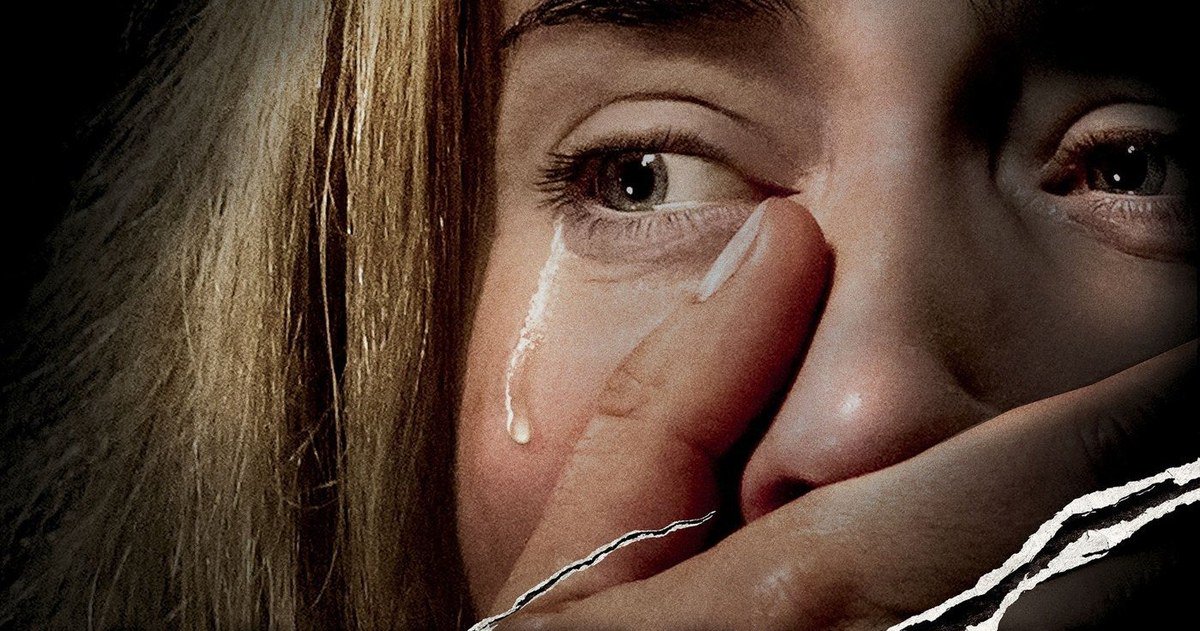
Damn. John Krasinski. That big, tall guy, kind of doughy-faced? Married to Emily Blunt? Dude can direct the shit out of a horror movie.
Krasinski plays the patriarch of a close-knit family trying to survive the post-alien-invasion apocalypse by staying really, really quiet. The beasts use sound to hunt, but the family is prepared. The cast, anchored by Krasinski’s on-and-off-screen wife Emily Blunt is amazing. That you may expect.
What you may not expect is Krasinski’s masterful direction: where and when the camera lingers or cuts away, how often and how much he shows the monsters, when he decides the silence will generate the most dread and when he chooses to let Marco Beltrami’s ominous score do that work for him.
It’s smart in the way it’s written, sly in its direction and spot-on in its ability to pile on the mayhem in the final reel without feeling gimmicky or silly.
1. Hereditary
Grief and guilt color every somber, shadowy frame of writer/director Ari Aster’s unbelievably assured feature film debut, Hereditary.
With just a handful of mannerisms, one melodic clucking noise, and a few seemingly throwaway lines, Aster and his magnificent cast quickly establish what will become nuanced, layered human characters, all of them scarred and battered by family.
Art and life imitate each other to macabre degrees while family members strain to behave in the manner that feels human, seems connected, or might be normal. What is said and what stays hidden, what’s festering in the attic and in the unspoken tensions within the family, it’s all part of a horrific atmosphere meticulously crafted to unnerve you.
Aster takes advantage of a remarkably committed cast to explore family dysfunction of the most insidious type. Whether his supernatural twisting and turning amount to metaphor or fact hardly matters with performances this unnerving and visual storytelling this hypnotic.
So you’ve got some time off work this week, maybe you want to just hang in, avoid the crowds and the heat, eat some Doritos and watch some flicks. We hear ya! Most all your options are solid this week, whether you’re looking for comedy, drama or horror. Here’s the rundown:
You asked for it. Wait, did you? Well, you’ve got it: the best films of the first half of 2018. A great mix of blockbuster and indie, foreign and domestic, action, drama, comedy, SciFi and horror. The second half of the year has a lot to live up to!
10. Annihilation
Alex Garland’s work as both a writer (28 Days Later…, Sunshine, Never Let Me Go) and a writer/director (Ex Machina) has shown a visionary talent for molding the other-worldly and the familiar. Annihilation unveils Garland at his most existential, becoming an utterly absorbing sci-fi thriller where each answer begs more questions.
A strange force of nature dubbed “The Shimmer” has enveloped the land near a remote lighthouse, and is spreading. Years of expeditions inside it have yielded only missing persons – including Kane (Oscar Issac). When Kane suddenly returns home and almost immediately falls prey to a life-threatening illness, his wife Lena (Natalie Portman, perfectly nailing a desperate curiosity) is detained for questioning by the military.
Garland builds the film in wonderful symmetry with the hybrid life forms influenced by The Shimmer. Taking root as a strange mystery, it offers satisfying surprises amid an ambitious narrative flow full of intermittent tension, scares, and blood—and a constant sense of wonder.
Just his second feature as a director, Annihilation proves Ex Machina was no fluke. Garland is pondering similar themes—creation, self-destruction, extinction—on an even deeper level, streamlining the source material into an Earthbound cousin to 2001.
9. The Rider
The classic western sings a song of bruised manliness. Chasing destiny, sacrificing family and love for a solitary life, building a relationship with land and beast—there may be no cinematic genre more full of romance.
This is the hardscrabble poetry that fills writer/director Chloe Zhao’s latest, The Rider.
But what Zhao’s film avoids is sentimentality and sheen. With a hyper-realistic style showcasing performances by non-actors, she simultaneously celebrates and inverts the romance that traditionally fuels this kind of film.
Elegant and cinematic, but at the same time a spontaneous work of verite, The Rider breaks its own cinematic ground.
Zhao’s work is unmistakably indie, not a born crowd-pleaser, but beautifully lifelike. She has given new life to a genre, creating a film about the loss of purpose and, in that manly world of the cowboy, masculinity.
8. Disobedience
Gracefully adapting Naomi Alderman’s novel, Sebastian Lelio (A Fantastic Woman, Gloria) continues his interest in stories of women struggling to be free and live as their true selves, exerting their power to disobey.
Rachel Weisz, Rachel McAdams and Alessandro Nivola are all wonderful, crafting resonant characters as Lelio slowly builds the drama of a conflicting, scandalous triangle. Little backstory is provided early on, giving more weight to pieces that are picked up from characters carefully dancing around old wounds.
The message is love and mercy, and how these basic tenets of religion are often forgotten in the name of enforcing a preferred social order. Lelio and his committed actors make it intensely intimate but never salacious, a parable with a powerful grip.
7. The Death of Stalin
Opening with a madcap “musical emergency” and closing with a blood-stained political coup, The Death of Stalin infuses its factual base with coal-back humor of the most delicious and absurd variety.
The film cements director/co-writer Armando Iannucci (Veep, In the Loop) as a premier satirist, as it plays so giddily with history while constantly poking you with a timeliness that should be shocking but sadly is not.
So many feels are here, none better than the sheer joy of watching this film unfold.
It is Moscow in the 1950s and we meet Josef Stalin and his ruling committee, with nary an actor even attempting a Russian accent. Those British and American dialects set a wonderfully off-kilter vibe.
It all flows so fast and furiously funny, it’s easy to forget how hard it is to pull off such effective satire. We end up laughing through a dark and brutal time in history, while Iannuci speaks truth to those currently in power with a sharp and savage brand of mockery.
6. Foxtrot
From its opening shot – a slow, dizzying swirl above a patterned kitchen floor – Foxtrot commits to a cornerstone of disorientation. Through both narrative and camerawork, writer/director Samuel Maoz keeps you off balance as he constructs a deep, moving dive into one family’s struggle with loss and regret.
Maoz’s visuals, sometimes anachronistic, bold and darkly funny, are never less than fascinating. His writing is incisive and brilliantly layered, confidently moving toward a shattering finale without stopping to worry about whether you’re connecting every loose end.
Just when you may think you know where Maoz is going, you don’t. But the rug isn’t pulled by cheap gimmickry or emotional manipulation, but rather perfectly arranged pieces assembled by deeply affecting performances.
Like its namesake, a dance that will always lead you to “end up in the same place,” Foxtrot can be viewed from different angles with equalimpact. You might see a sociopolitical statement on the filmmaker’s home country, a universal parable on the costs of war, or a starkly intimate take on family bonds.
5. Thoroughbreds
Directing his first feature, Cory Finley adapts his play about teenage girls planning a murder. It’s a buddy picture, a coming-of-age tale, Superbad, if you will. No, not really.
Wicked, surprising, unapologetic, cynical and buoyed by flawless performances, Thoroughbreds is a mean little treat.
Olivia Cooke mystifies, her observant but emotionally disinterested performance a magical thing to witness. Her Amanda has nearly perfected the art of pretending to be normal, pretending to care.
The fact that Anya Taylor-Joy’s Lily can see the advantage of this is what sets this coming-of-age tale apart from others.
If Cooke is great, Taylor-Joy is better. An actor who wears her vulnerability in her every expression, she gives great depth to this character on the precipice of adulthood, learning, as she must, that to prosper in her world you need to rid yourself of human emotions and replace them with acceptably false facsimiles.
It’s a fascinating look at how the other class comes of age, blackly comedic and biting.
4. A Quiet Place
Damn. John Krasinski. That big, tall guy, kind of doughy-faced? Married to Emily Blunt? Dude can direct the shit out of a horror movie.
Krasinski plays the patriarch of a close-knit family trying to survive the post-alien-invasion apocalypse by staying really, really quiet. The beasts use sound to hunt, but the family is prepared. The cast, anchored by Krasinski’s on-and-off-screen wife Emily Blunt is amazing. That you may expect.
What you may not expect is Krasinski’s masterful direction: where and when the camera lingers or cuts away, how often and how much he shows the monsters, when he decides the silence will generate the most dread and when he chooses to let Marco Beltrami’s ominous score do that work for him.
It’s smart in the way it’s written, sly in its direction and spot-on in its ability to pile on the mayhem in the final reel without feeling gimmicky or silly.
3. You Were Never Really Here
Two killers lie on a kitchen floor, gently singing along as the radio plays “I’ve Never Been to Me,” surely one of the cheesiest songs of all time. Only one of the men will get up.
It’s a fascinating sequence, one of many in Lynne Ramsay’s bloody and beautiful You Were Never Really Here. She adapts Jonathan Ames’s brisk novella into a dreamy, hypnotic fable, an in-the-moment pileup of Taxi Driver, Taken and Drive.
Joaquin Phoenix delivers an intensely powerful performance as Joe, a combat veteran whose been wounded in various ways. Joe lives with his mother in suburban New York, whetting his appetite for violence as a vigilante for hire who specializes in rescuing kidnapped girls and exacting brutal justice.
Together, Ramsay and Phoenix ensure nearly each of the film’s 89 minutes burns with a spellbinding magnetism. While Phoenix lets you inside Joe’s battered psyche just enough to want more, Ramsay’s visual storytelling is dazzling. Buoyed by purposeful editing and stylish soundtrack choices, Ramsay’s wonderfully artful camerawork (kudos to cinematographer Thomas Townend) presents a stream of contrasts: power and weakness, brutality and compassion, celebration and degradation.
2. Hereditary
Grief and guilt color every somber, shadowy frame of writer/director Ari Aster’s unbelievably assured feature film debut, Hereditary.
With just a handful of mannerisms, one melodic clucking noise, and a few seemingly throwaway lines, Aster and his magnificent cast quickly establish what will become nuanced, layered human characters, all of them scarred and battered by family.
Art and life imitate each other to macabre degrees while family members strain to behave in the manner that feels human, seems connected, or might be normal. What is said and what stays hidden, what’s festering in the attic and in the unspoken tensions within the family, it’s all part of a horrific atmosphere meticulously crafted to unnerve you.
Aster takes advantage of a remarkably committed cast to explore family dysfunction of the most insidious type. Whether his supernatural twisting and turning amount to metaphor or fact hardly matters with performances this unnerving and visual storytelling this hypnotic.
1. Black Panther
Just when you’ve gotten comfortable with the satisfying superhero origin story at work, director/co-writer Ryan Coogler and a stellar ensemble start thinking much bigger. And now, we need to re-think what these films are capable of.
Not a minute of the film is wasted. Coogler manages to pack each with enough backstory, breathless action, emotional heft and political weight to fill three films.
The cast shines from the top down.Chadwick Boseman, all gravitas and elegance, offers the picture perfect king. And is there anyone more effortlessly badass than Danai Gurira? No. Her General Okoye is here for the beat down.
Lupita Nyong’o is also characteristically excellent in the role of the conscience-driven liberal. In a scene where she expects Gurira’s general to commit what amounts to treason, Coogler expertly reinforces an amazingly well-crafted theme mirrored in other pairings: the friction between surviving by force or by conscience.
This theme is most clearly outlined by the conflict between Boseman’s King T’Challa and his new nemesis, Jordan’s Killmonger.
Michael B. Jordan, people.
Coogler hands this actor all of the most difficult lines. Why? Because it is material a lesser actor would choke on, and Jordan delivers like a perfectly placed gut punch. He sets the screen on fire, and though every single performance in this film is excellent, Jordan exposes the artifice. His castmates are in a Marvel superhero movie. Jordan is not. Instead, he is this rage-filled, broken, vengeful man and he is here to burn this world to the ground.
Coogler works with many of these basic themes found in nearly any comic book film—daddy issues, becoming who you are, serving others—but he weaves them into an astonishing look at identity, radicalization, systemic oppression, uprising and countless other urgent yet tragically timeless topics. The writing is layered and meaningful, the execution visionary.