Tag Archives: Screen Wolf

Earning Your Wings

Palmer

by George Wolf

Palmer has Justin Timberlake, an adorable little kid and a heartwarming message. Heck, it’s not much more than some sexytime and a few beers away from being an afterschool special.

Yes, you can guess where it’s going. No, you will not be sorry for the trip.

J.T. is Eddie, who prefers you just call him by his last name. He was once a hot shot Louisiana high school quarterback with a scholarship to LSU. But after injuries ended Palmer’s career early, his quick temper got him sent away for 12 long on attempted murder.

But he’s served his time, so now Palmer has come back to his small, “church and football” hometown to move in with Grandma Vivian (June Squibb). Once there, it doesn’t take Palmer long to notice Shelly, the trailer train-wreck next door (Juno Temple).

Shelly leaves town a lot, and when she does, her son Sam (Ryder Allen in a perfectly lovable debut) stays with Viv. Sam doesn’t like football. Sam likes princesses, having tea parties, and dressing up in costumes that come with wings and tiaras.

Director Fisher Stevens fleshes out Cheryl Guerriero’s script with a fine instinct for knowing we don’t need to be led by the nose. There will be bonding, bullies beaten down and lessons learned, plus Sam’s pretty teacher (Alisha Wainwright) is single, so, you know.

Timberlake is gritty and finely understated, letting Palmer’s feelings for Sam unveil themselves with a gradual, and ultimately authentic depth. Palmer has scars from his childhood, too, but as expected as his kinship with Sam is, it seldom feels mawkish.

And Allen, well this kid just skips away with the movie tucked inside his glittery backpack. When Palmer tells Sam there are no boys on his favorite TV show and Sam confidently responds that he will be the first, all the hate that the world throws at kids like Sam seems – if only for a moment – miles away.

There is contrivance and familiarity at work in Palmer, no doubt. But there’s also enough heart, and pure hopeful innocence, to earn this film some wings.

Shooting Stars

Supernova

by George Wolf

Sometimes, just watching two master actors at work is worth the price of admission. And though Colin Firth and Stanley Tucci are not all that Supernova has in the win column, they are what keeps the film engaging throughout a fairly familiar narrative.

Firth is Sam and Tucci is Tusker, two longtime partners who have hit the road with their beloved dog, traveling across England in an old RV.

The two men have been in a committed, loving relationship for over twenty years. Now, after Tusker’s diagnosis of early onset dementia, they’re taking the time to catch up with cherished family and friends while they revisit some favorite spots from their past.

For his second feature, writer/director Harry Macqueen is on familiar ground as well, returning to some of the themes that drove Hinterland, his 2014 debut.

Like that film, Supernova becomes a road trip through wonderfully picturesque landscapes, as two souls appreciate the chance to share the beauty – and the heartbreak – that life brings.

But here, with older characters connected by more than just friendship, Macqueen adds a layer that is made beautifully resonant by the warm chemistry and fully formed characterizations of Tucci and Firth.

Every glance and subtle movement between them reflects the preciousness of the time that Sam and Tusker have left. And though its predictability has you wishing Supernova had something a bit more luminous to say, the two shooting stars in the lead are not to be missed.

Check Out Anytime You Like

The Night

by George Wolf

Come on, it’s been forty years, can’t we get a new haunted hotel flick without you screaming bloody redrum?

That’s fair, but what if the new take unveils a slow shower curtain reveal and turns to a golden oldie for creepy soundtrack effect?

Oh. Well then the film’s going to have to work even harder to avoid the dustbin of shameless Shining wannabees.

The Night does just that, and ultimately manages to find its own voice with a goosebump-inducing tale of a frantic family’s sleepless night away from home.

Babak (Shahab Hosseini) and Neda (Niousha Noor) are an Iranian couple living in the U.S. They have a new daughter, who is pretty well-behaved during their game night with some friends.

Neda’s not happy that Babak knocked back a few shots during the evening, so when the GPS starts acting crazy on the drive home and the baby is fussing, Neda suggests they find the nearest hotel and start fresh in the morning.

But from the moment the clerk at the Hotel Normandie (George Maguire – perfectly weird) greets Babak with tales of all the death he’s seen in his life, things ain’t right.

They get worse.

Director/co writer Kourosh Ahari proves adept at spooky atmospherics, with long, not-quite-Kubrick hallways around many turns and unsettling, not-exactly Serling paintings hanging about. Things go bump, voices carry and wandering souls appear, with Hosseini (The Salesman, A Separation) and Noor proving terrific vehicles for selling the scare.

Babek was hoping the booze would dull his toothache, but now he’s just exhausted from being kept awake by what he’s seeing…or just thinks he’s seeing. While Neda, increasingly desperate just to keep her child safe, begins to suspect the key to escaping may lie in revealing some long-held family secrets.

As a simple device with plenty of easy fright potential, the haunted house has served horror well for decades. But elevating it to a metaphor for something deeper is only as successful as the weakest pillar involved.

The Night shows strength all around, and by daybreak a pretty well-known blueprint builds to a satisfying reminder on the cost of deception.

‘Til the End

Our Friend

by George Wolf

We don’t tell the truth about dying.

Writer Matthew Teague came to that realization in 2012 when his wife Nicole died of cancer at the age of 34, leaving behind Matt, two daughters, and one very special best friend.

Five years later, Matt detailed their ordeal in an award-winning piece for Esquire magazine. Though it wasn’t Matt’s original intent, as the piece took shape it became clear his focus was Dane Faucheux, the friend who put his own life on hold to be there for Matt, Nicole and their girls.

Director Gabriela Cowperthwaite and screenwriter Brad Ingelsby deliver Teague’s memoir to the screen with a tender focus on the daily details, and a stellar trio of leads delivering authentic, emotional performances.

Dakota Johnson has never been better as Nicole, bringing a heartbreaking sweetness to the journey into physical and mental decay before her character’s final breaths.

The quiet, committed stoicism that Matt fights to maintain is a natural vehicle for Casey Affleck, and he absorbs the role seamlessly. The Oscar-winning Affleck allows Matt’s hurt to register even in the lightly humorous moments, revealing a man caught between remaining strong and truly processing what the future will bring.

But much like in Teague’s original story, Dane is the soul of this film, thanks to Jason Segel’s warm and vulnerable performance. We see – even before Dane does – that his place in the Teague family has given his life the purpose he’s been craving. Segel never stoops to melodrama, and his scenes with the Teague girls (Isabella Kai and Violet McGraw, both terrific) sparkle with the charm of a man who has found peace within this family.

A wonderful cameo by the always-welcome Cherry Jones as a hospice nurse only cements the effectiveness of this cast, and of Cowperthwaite’s dramatic instincts.

The drawback here is the non-linear structure in Ingelsby’s (The Way Back, Out of the Furnace) script. Though you can see how the shifting timelines might fit a magazine article, on screen they keeps us at a distance, and prevent the trio’s backstory from truly taking root. The chapters in these lives are not equally important, each builds on the other to strengthen the human bonds. Our connection suffers with the re-set of each new time stamp.

Is this a tear-jerker? For sure, but Cowperthwaite (Blackfish, Megan Leavey) creates a mood that steers clear of sappy. That elusive truth of dying will always be uniquely intimate, and the way Cowperthwaite’s camera gently wanders away from characters and conversations provides a consistent reminder that the nature of grieving is that it’s often for the lives left behind.

Because this isn’t really a story about dying, it’s one about caring – caring about other people enough to care for them when it helps. As one family found out, there’s a true beauty in that, and Our Friend lets us glimpse it.

He Ain’t Heavy

Stallone: Frank, That Is

by George Wolf

The title of this documentary is a correct assumption that Frank is not the first name you associate with the last name Stallone.

So that’s a nice, self-aware start to things. But despite a succession of famous faces telling us what a great and multi-talented guy Frank is, the film never can convince us that he’s worthy of a documentary in the first place.

One of the first things writer/director Derek Wayne Johnson lets us know is that Frank loves to talk. He does that often in the film, running through the events in his life with rambling, disjointed stories about how many times he was soooo close to being a contender…only to have fate snatch his dreams away.

Using his own words, many archival stills and too few videos, the Frank Stallone timeline begins to feel propped up by tall tales. These stories are often lacking in specifics (especially for a 73 minute film that clearly has the time) and loosely connected with a magical “and then I get a phone call.”

Still, Frank clearly does have talent. He has a fine voice, has written plenty of songs and even scored one big hit (“Far From Over”, from the film Stayin’ Alive that his brother directed). He’s also shown acting chops in some of the film roles he’s done (Barfly and Tombstone, for example).

But seeing his name as producer of this film only adds to the feeling that it’s nothing but a calculated promotional effort. Many of the platitudes from celebrity friends and facelifts seem more manufactured than authentic, and even though Frank appears fine with poking fun at himself, he never directly address the ironic elephant in the Stallone living room.

He tells us how hard it’s been overcoming the “Rocky’s brother” image even as he’s taking us through a career full of breaks he’s gotten for being just that.

A little self-awareness on that point and SFTI might feel less like, frankly, the insincere vanity project it becomes.

Fright Club: Best Cosmic Horror

Author Hailey Piper joins the club this week to tear through about 25 different cosmic horror movies, eventually landing on some fuzzy math favorites. Join us, won’t you?

6. Hellraiser

“The box…you opened it. We came.”

Man, those cenobites were scary cool, weren’t they?

Hellraiser, Clive Barker’s feature directing debut, worked not only as a grisly splatterfest suited to the Eighties horror landscape. It’s easy to see the film as an occult or supernatural horror, but it’s just as likely a cosmic tale of a dimension you could open without even trying, another reality on the other side of an afternoon’s puzzle past time.

5. Spiral (Uzumaki) (2000)

Higuchinsky’s mind bending 2000 Japanese horror went underappreciated upon release – likely because of the interest in ghosts and digital horror during that period. That’s too bad, because his adaptation of the not-yet-released Manga Uzumaki is a delight.

It starts with a snail shell. It ends with a town in chaos. If you missed it, you should remedy that now.

4. In the Mouth of Madness

Sutter Cane may be awfully close to Stephen King, but John Carpenter’s cosmic horror is even more preoccupied by Lovecraft. The great Sam Neill leads a fun cast in a tale of madness as created by the written world.

What if those horror novels you read became reality? What if that sketchy writer with the maybe-too-vivid imagination was not just got to his own page, but god for real? This movie tackles that ripe premise while ladling love for both of the horror novelists who made New England the creepiest section of America.

3. The Endless

There is something very clever about the way Justin Benson and Aaron Moorehead’s movies sneak up on you. Always creepy, still they defy genre expectations even as they play with them.

Camp Arcadia offers the rustic backdrop for their latest, The Endless. A clever bit of SciFi misdirection, the film follows two brothers as they return to the cult they’d escaped a decade earlier.

It is this story and the pair’s storytelling skill that continues to impress. Their looping timelines provide fertile ground for clever turns that fans of the filmmakers will find delightful, but the uninitiated will appreciate as well.

2. Annihilation

Alex Garland’s work as both a writer (28 Days Later…, Sunshine, Never Let Me Go) and a writer/director (Ex Machina) has shown a visionary talent for molding the other-worldly and the familiar. Annihilation unveils Garland at his most existential, becoming an utterly absorbing sci-fi thriller where each answer begs more questions.

Taking root as a strange mystery, it offers satisfying surprises amid an ambitious narrative flow full of intermittent tension, scares, and blood—and a constant sense of wonder.

Just his second feature as a director, Annihilation proves Ex Machina was no fluke. Garland is pondering similar themes—creation, self-destruction, extinction—on an even deeper level, streamlining the source material into an Earthbound cousin to 2001.

1. The Mist

David Drayton (Thomas Jane) and his young son head to town for some groceries. Meanwhile, a tear in the space/time continuum opens a doorway to alien monsters. So he, his boy, and a dozen or so other shoppers are all trapped inside this glass-fronted store just waiting for rescue or death.

Marcia Gay Harden is characteristically brilliant as the religious zealot who turns survival inside the store into something less likely than survival out with the monsters, but the whole cast offers surprisingly restrained but emotional turns.

The FX look amazing, too, but it’s the provocative ending that guarantees this one will sear itself into your memory.

Screening Room: One Night in Miami, Locked Down, Marksman, Rock Camp, MLK/FBI & More

A History of Non Violence

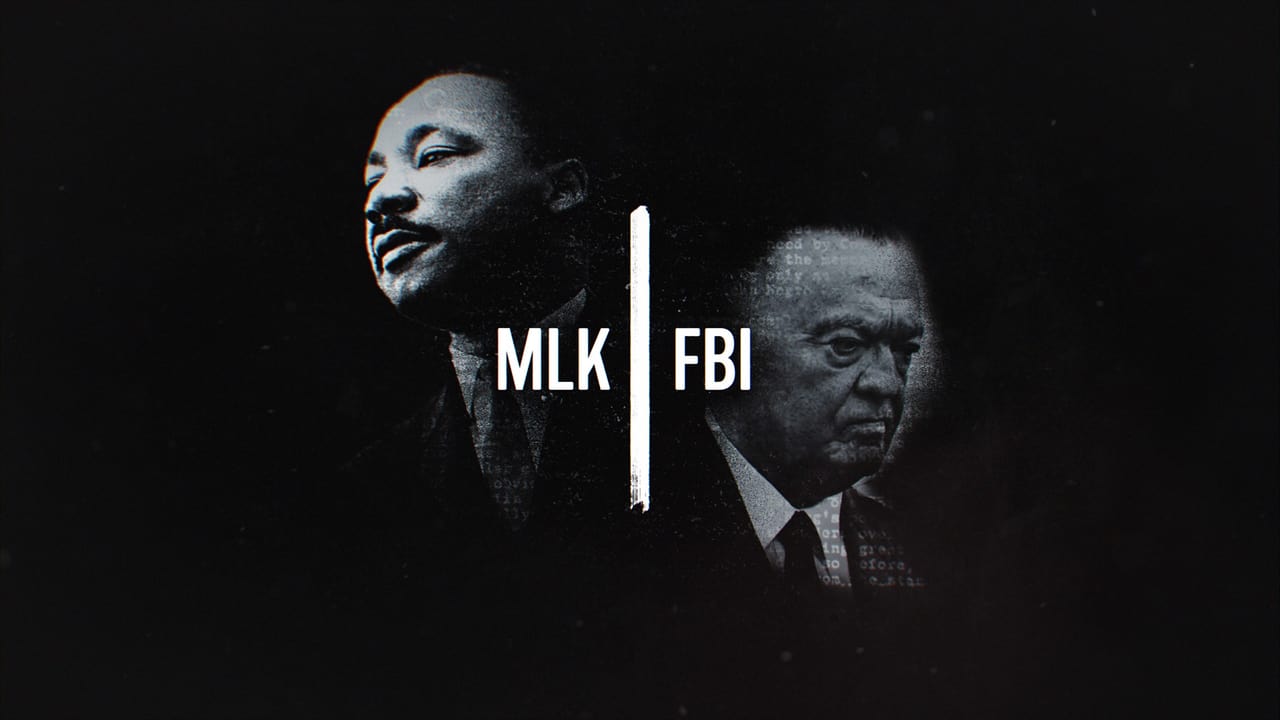
MLK/FBI

by George Wolf

This year’s Dr. Martin Luther King, Jr. day arrives during a time in history that has worn out the word “unprecedented.” And it is the gravity of these times that only serves to make veteran documentarian Sam Pollard’s MLK/FBI ring with more timely urgency.

Mixing some impressive historical footage, newly declassified files and more recent interview perspectives, Pollard dives into the FBI’s harassment of Dr. King with a steady, tactical approach.

For those unfamiliar, it becomes a chilling reminder of a courageous and charismatic civil rights leader, and the powerful white men who felt the best way to weaken Dr. King was through revelations of his sexual indiscretions.

And as you hear racists from decades past recite the same, tired excuses for their fear and bigotry that we’re hearing now, the folly of our confident righteousness is exposed with a sad irony.

Looking back, former FBI director James Comey describes the assault on Dr. King as the saddest days in the history of the bureau. Those times were daunting, too, and they called for accountability that never came.

Are we condemned to repeat that history? We’ll see very soon, which makes the lessons of MLK/FBI as vital as ever.

School of Hard Rocks

Rock Camp: The Movie

by George Wolf

“Thanks for coming out tonight, we’re Motley Jüe..oy!”

Yes, Motley Jüe was a real band, at least for a few days. Picking the perfect band name is just a small part of the fun for the wannabe rockers at Rock and Roll Fantasy Camp. Rock Camp: The Movie takes us inside the experience that bridges the gap between stage and the Gold Circle section.

Because, let’s face it, those in the cheap seats can’t afford this, either. But for the fans that can swing it, RCTM shows us an indulgence that’s a lot less worthy of the kinds of jokes it inspired in year one.

Promoter David Fishof launched the first camp in 1997, to minimal interest. He got the idea from a practical joke played on him backstage by members of Ringo’s All-Starr Band (that home video footage is priceless), though low attendance the first year seemed to signal failure.

But after the camp was featured in various TV and commercial segments, it gained a foothold in popular culture. That brought some big rock stars into the fold, and Fishof (an interesting guy who could merit a documentary himself) suddenly had a hit.

The film is the debut feature for co-writers/directors Renee Barron and Douglas Blush, which often shows. Their focus can wander, and much of the production isn’t far removed from a marketing video. Plus, there’s no escaping that fact that much of the footage – judging by the look of some very famous faces – is clearly less than recent. The overall context of regular folk taking a chance to follow their passion, though, does help these rough edges seem appropriate.

Profiles of fewer campers might have allowed time to foster a more intimate feel, but the dreamers Barron and Blush introduce are worth knowing. We see lives uplifted, families strengthened, and true talent given the chance to grow.

Perhaps most surprisingly, we see rich and incredibly successful musicians truly moved by their students, and reconnecting with the simple joy of music that set them on their path. And some of them – Roger Daltrey, Paul Stanley and Sammy Hagar especially – seem like really nice people.

Yeah, Gene Simmons is still obnoxious. Even fantasies have their limits.

The Room Where It Happened

One Night in Miami

by George Wolf

The room where it really happened was in Miami’s Hampton House. After a young Cassius Clay won the Heavyweight title from Sonny Liston on Feb. 25, 1964, he joined his long time mentor Malcolm X, NFL legend Jim Brown and soul sensation Sam Cooke at the South Florida hotel.

Writer Kemp Powers first imagined how that meeting of legendary minds might have played out, and now Regina King – who already has an acting Oscar – jumps into the race for Best Director with a wise and wonderful adaptation of Powers’s stage play. Propelled by a bold, vital script from Powers himself, King invites us into a frank discussion about the steps in the civil rights movement of the 1960s, and about each man’s role in the struggle.

Though existing mainly inside that single hotel room, One Night in Miami is in a constant state of motion, as four talented actors serve and volley through a ballet of insight and intellect.

Portraying a bigger-than life-personality such as Clay without a hint of caricature is no easy feat, but Eli Goree handles it with smooth charisma.

Clay’s braggadocio is as playful and charming as you remember, but Goree also finds authentic shades of apprehension about the societal role Clay (who would publicly join the Nation of Islam and announce his name change to Muhammed Ali just weeks after the meeting) was about to accept.

Kingsley Ben-Adir’s Malcom X is a measured voice of wisdom, but the film finds its gravitational pull in the forces of Aldis Hodge and Leslie Odom, Jr.

As Brown, Hodge is beautifully restrained power, a man of incredible strength still able to be staggered by sudden blows of racism. Brown’s path as a leader of the civil rights movement contrasts sharply with Cooke’s, and Odom, Jr. gives the singer surprising and resonant layers that include anger at the thought that he’s not all in for the cause.

The characters continually challenge each other, as King and Powers challenge us with a profundity that comes from their refusal to settle for easy answers. Each question the film raises connects past to present with committed grace, and One Night in Miami finds a beautiful dignity that shines in the face of bigotry.