Tag Archives: Screen Wolf

Role Playing

The Father

by George Wolf

How much you’re moved by The Father will likely depend on how you see the central narrative device employed by director/co-writer Florian Zeller.

Is it a gimmick that cheapens the very subject he’s digging into, or is it an effective – even logical – new frame for a familiar picture?

Anthony Hopkins and Olivia Colman star as father and daughter Anthony and Anne. Now, with these Oscar winners as your leads, your device could be the mail-in offer from the back of a cereal box and it would most likely be riveting, but Zeller has more lofty ambitions.

Anthony’s memory is fading fast, forcing Anne to navigate his mood swings and growing combativeness while she looks for an in-home caregiver who can handle him. Young Laura (Imogen Poots) looks promising, but Anthony’s initial charm at their meeting gives way to insults and accusations about a plan to force him from his well-appointed flat.

But is it his flat? And who is the man in the living room (Mark Gatiss) who says he lives there?

Is Anne really planning to move to Paris with a new boyfriend, or is she still married to the impatient and angry Paul (Rufus Sewell)? And just who is that other woman who looks like Anne (Olivia Williams)? Zeller adapts his own stage play with a profound intimacy that feeds the intentional confusion.

In the last several years, movies such as Away From Her and Amour have mined their greatness through the effect of dementia on the longtime spouse of the afflicted.

But here, not only does Zeller make a sympathetic pivot to the adult child of an ailing parent, but his chamber piece finds its greatest resonance through the heartbreaking empathy that comes from giving us Anthony’s point of view.

And even if the whole affair does strike you as gimmicky, the transcendent heights hit by Hopkins and Colman (and indeed, the entire ensemble) make spending time with The Father more than worthwhile.

As artistic as it is nuanced, as lyrical as it is devastating, it’s a film with not only something to say, but a welcome new approach to saying it.

Speak Up and Sing

Truth to Power

by George Wolf

Serj Tankian is a passionate guy.

As frontman for System of a Down (and as a solo artist), he’s passionate about music. As an American of Armenian descent, he’s passionate about America’s foreign policy – specifically the U.S. stance on recognizing the Armenian genocide of 1915.

In Truth to Power, director Garin Hovannisian not only gets us closer to a charismatic and multi-talented performer, but he also tackles the sometimes thorny relationship between art and activism.

For Tankian, shutting up and singing is a ridiculous notion. And though he freely admits he seldom knows what he’s going to say before an onstage rant, Tankian’s social consciousness only increases when the lights come up.

Hovannisian gives us a satisfactory trip through Tankian’s life story and the forming of SOAD with three other Armenian-Americans, then brings us along as the band plays its first Armenian show in 2015. Tankian especially is regarded as a national hero, and the intimate moments where we see how deeply this treatment touches him are among the film’s strongest.

But the broader focus is on Tankian’s push for Turkey to admit to the Armenian genocide, as well as his inspirational role in the Armenian revolution of 2018. And though the film makes an often powerful case for art’s ability to affect change, it ignores a very obvious conflict.

In the last few years, SOAD drummer John Dolmayan has been an outspoken supporter of Donald Trump and various hard right political postures. Though we hear Tankian worry about the rise of such views, Hovannisian never broaches the subject of how the band members co-exist.

Even if the bulk of the film was completed before Dolmayan spoke out, the somewhat slight running time suggests an epilogue would only add relevant context to the entire conversation.

Without it, there’s a pretty major question just sitting there unanswered, and Truth to Power – despite its commendable passion – feels incomplete.

No Moose, Just Squirrel

Flora & Ulysses

by George Wolf

Is “Holy Bagumba!” gonna happen?

Too early to tell, but Flora & Ulysses wants it to happen.

Ten year-old Flora (Matilda Lawler) likes to blurt the phrase out in excited surprise, and there have been plenty of surprises since Ulysses got super powers.

Ulysses (a CGI squirrel with noises courtesy of John Kassir) has skills, no doubt, and in between trashing donut shops and learning how to type, he just might teach a self-described young cynic that there is some magic in this world after all.

Director Lena Khan brings the latest animal adventure tale from novelist Kate DiCamillo (The Tale of Despereaux, Because of Winn-Dixie) to the screen with broad brushes, easily digestible messages and family-friendly hijinks.

Khan does try to keep the parents interested through winking nods to E.T, Alien, and The Shining, along with a curious amount of music montages. The playlist ain’t bad (Bill Withers, Tom Jones) but it’s big enough to make you wonder how much was added just to get the film to feature length.

Young Lawler is a treat, with spunky charm to spare and a seemingly natural sense of comic timing (especially with a CGI co-star). But the adapted script from Brad Copeland (Spies in Disguise, Ferdinand) is all surface-level spoon feeding, where the family strife is sanitized, the danger little more than silly and the squirrel is a furry, slo-mo ninja.

In other words, perfectly fetch for the younger set transitioning from picture books to family films.

https://www.youtube.com/watch?v=05F8MmsiLQs

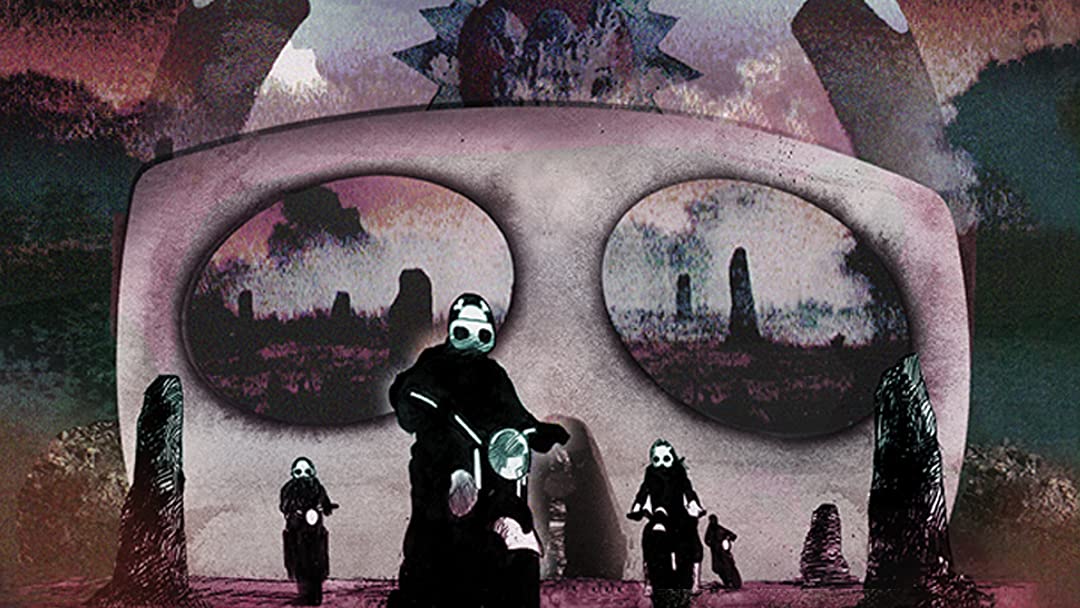
Fright Club: Motorcycle Mayhem

Is it ever too cold to ride? My God, yes – it is way too cold to ride. So instead, we invited our friend Jamie Ray from the Fave Five from Fans podcast to join us as we talk through our favorite chopper-themed horror flicks. Some of these are pretty bad – but so fun! – so prepare for a bumpy ride!

5. Deathmaster (1972)

Oh, there were so many terrible films that could have taken this final slot. Would it be Blood Freak? Chopper Chicks in Zombietown? Werewolves on Wheels?

So many choices!

Deathmaster gets the nod because it combines all the required elements – Satanism, hippies, and motorcycles – but it cranks it up a notch. This subgenre owes its very existence to Charles Manson, who braided those three elements together in the minds of Americans. But Deathmaster takes that one step further by creating a specifically Manson-like character—the charismatic guru Khorda – and making him a vampire.

Why is he a vampire? Maybe because they cast Robert Quarry (Count Yorga), who already had the teeth. Who knows, it comes off as utter nonsense, but it makes for a little fun variety.

4. These Are the Damned (1963)

Black leather, black leather, smash smash smash

Black leather, black leather, crash crash crash

Black leather, black leather, kill kill kill

I got that feelin’ – black leather rock

That, in a nutshell, is how dumb this movie is. And yet, like the ludicrous theme song, it’s just weird enough to stay in your head.

Oliver Reed is at his youngest, sultriest, Oliver Reediest as the street tough who chases his sister and her older American boyfriend right into some kind of underground lair where radioactive children are kept.

Suddenly you’re in what appears to be an entirely different movie. It’s like somebody sewed A Clockwork Orange and Village of the Damned together, buried them under rock, and them lobotomized the final version.

Which is kind of appealing, isn’t it?

3. Psychomania (The Death Wheelers) (1973)

More adorably sketchy Brit motorbikers in this one. Some mods wreak havoc on their bikes (because apparently drivers in England have no idea how much more vulnerable a bike is than a truck). But they crave more!

More danger! More excitement!

So they decide that if they kill themselves they can will themselves back to life and become hip zombie bikers.

The film’s appeal has a strange longevity. It’s never scary for even a moment, and it’s often outright ludicrous – if not adorable – but it does have a style and a couple of performances you can admire.

2. The Rocky Horror Picture Show (1975)

Yes, Janet. Life’s pretty cheap to that type.

Whether it’s the Transylvanians traveling dto Time Warp with the doctor and his domestics, or the arrival (and quick removal) of Eddie, motorcycles play a significant role in this treasure of a film.

It was 1975, after all, and no self-respecting edgy, dangerous film could possibly convince the world of its anti-establishment bonafides if no one rode a motorcycle. It turns out, it’s the ones who aren’t riders you need to watch out for.

1. Race with the Devil (1975)

At some point somebody decided they were tired of seeing the motorcycle riders always turning out to be Satanic hippies. Nope, not this time.

The film re-teams Peter Fonda and Warren Oates – so great together in 1971’s The Hired Hand. They’re buddies taking a top-of-the-line RV out for a spin across Texas, along with their lovely wives. They stop to camp in the middle of nowhere, the guys take their bikes out for a stretch, and next thing you know, they’re being followed by Satanists and who knows which of these backwoods locals can be trusted?

The film generates real tension in much the same way Spielberg had done four years earlier with Duel. That tension, supported by solid, gritty performances, give this one surprising punch.

Screening Room: Judas & the Black Messiah, Barb & Star Go to Vista Del Mar, Saint Maud & Many More

Shimmer Time

Barb and Star Go to Vista Del Mar

by George Wolf

Remember that opening of Napoleon Dynamite, where Napoleon was tossing a green plastic Army man on a string out of the school bus window? If you didn’t think that was funny, it was an early sign you were gonna have a bad time.

Barb and Star Go to Vista Del Mar opens with its own litmus test, as a kid on a bicycle is delivering papers while singing “Guilty” along with the Streisand and Gibb in his headphones.

If that makes you laugh, stick around, you’ll laugh more.

Things have been better for the always perky, cullotte-loving Barb and Star (co-writers Annie Mumolo and Kristen Wiig). They’ve lost their husbands, their spot in weekly “talking club,” and their jobs at the hottest furniture store in Soft Rock, Nebraska (not a real place, but it should be).

With mid-lifers in tube tops, a 24 hour CVS and a parade of guys in Tommy Bahama, Vista Del Mar, Florida promises a vacation paradise perfect for “finding their shimmer.” Plus, it’s the home of the annual Seafood Jam (“where the crowd’s on the older side!”).

After a Disney-on-Viagra greeting at the hotel, it isn’t long before the BFFs’ rock solid bond is threatened by the handsome Edgar (Jamie Dornan) and the chance to rent a banana boat.

Will the girls’ friendship survive all the fibs and sneaking around? And how long can Edgar hide his part in the nefarious plan by an evil genius (also Kristen Wiig) to kill everyone on the island with poisonous mosquitoes?

I’m sorry, what was that second thing?

Just know director Josh Greenbaum keeps a loose grip on a film that’s ridiculous at every turn but still full of good-natured, garish fun and about as many laugh out loud moments as dry patches. Even though Barb and Star are new to us, they feel like characters the two stars have been privately honing for years, and it’s the chemistry of Mumolo and Wiig (who also co-wrote Bridesmaids) that allows a bit about the name “Trish” to continue beyond all limits of good sense until you give in to the hilarity.

You’ll also recognize plenty of faces in the supporting cast, highlighted by Mark Jonathan Davis doing his Richard Cheese lounge singer persona and Damon Wayans, Jr. as a spy with a bad habit of spilling his personal info (“dammit!”).

Expect some goofy outtakes over the credits, and waves of silliness that just won’t rest until your frown is turned upside down! It may not be dynamite, but Barb and Star brings enough laughs to make spending time with them a pleasure.

Just don’t call it guilty.

Rough Justice

The Mauritanian

by George Wolf

In the face of the highest of ideals, America is capable of horrible things. According to his own writings, Mohamedou Ould Salahi believed in those ideals, until he was held without charge in Guantanamo Bay for over 14 years.

Oscar-winning director Kevin Macdonald and a cast full of veteran talent tell the story of The Mauritanian with impressive craftsmanship, a proud conscience and a narrative cluttered with good intentions.

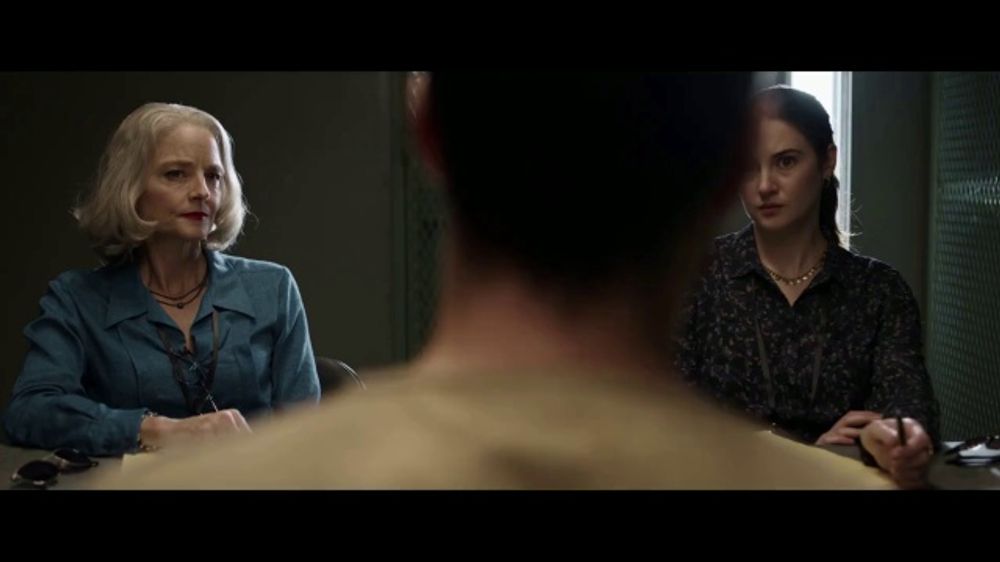
Not long after 9/11, Salahi (Tahar Rahim from A Prophet and The Past) was apprehended with suspicions of being a Bin Ladin confidant and the “Al-Qaeda Forrest Gump.” His was to be the first death penalty prosecution of The Bush/Cheney/Rumsfeld response, until human rights attorney Nancy Hollander (Jodie Foster) took up Salahi’s case pro bono.

The script, adapted from Salahi’s book by M.B. Traven, Rory Haines and Sohrab Noshirvani, picks the emotional teams early. Salahi is a sympathetic character, and quickly charms Hollander’s assistant Teri Duncan (Shailene Woodley) while Hollander herself remains unmoved, committed only to the rule of law.

This commitment serves her well, especially against Marine lawyer Stu Couch (Benedict Cumberbatch), who has a personal and professional stake in seeing Salahi put to death.

Macdonald (The Last King of Scotland, State of Play, One Day in September) breaks from the pack of similarly-themed films with a tone that shifts between self-congratulations and tearful apology. The “rough justice” abuse Salahi suffers is clearly barbaric but still feels sanitized, and part of a larger question the film eschews in favor of heavy hearted hindsight.

But there isn’t a false note in this cast. Even when their character arcs may feel predetermined, every player – from principals to supporting – delivers enough heart and humanity to keep the lessons of Salahi’s ordeal resonating.

Landing at a time when the conscience of the country is literally being voted on, The Mauritanian is a committed if somewhat unwieldy reminder of the stakes.

Forest for the Trees

Land

by George Wolf

After directing one short film and ten episodes of her House of Cards TV series, Robin Wright makes an assured feature debut with Land, mining one shattered life for graceful insight into healing.

Wright also delivers a touching and understated performance as Edee, a woman who clings to grief as her closest connection to the husband and child she has lost, and who can no longer bear any expectations that she will “get better.”

Moving alone to a remote cabin in the Wyoming wilderness, Edee ignores advice to at least keep a vehicle at her disposal and settles in, wanting nothing else to do with anything or anyone.

No surprise, but Wyoming winters are harsh for the inexperienced. Eventually, it is only the aid of a passing hunter named Miguel (Demián Bichir, also terrific) that saves Edee’s life.

Miguel is carrying emotional scars as well, and the two strike a deal. He will teach her the survival skills she needs, and when the lessons are done, she will never see him again.

The screenplay from Jesse Chatham and Erin Dignam may not blaze any thematic trails, but it does resist following the roads most expected. Of course Edee begins to feel a human connection again, but this point isn’t exploited for a cheap and easy narrative out.

The performances from Wright and Bichir make you care about pain even when you haven’t glimpsed it, giving director Wright a solid emotional base to lean on while deftly unveiling the different lives Edee and Miguel used to lead.

Edee’s memories of her family are brought to the screen with a tenderness from Wright that is both touching and well-played. Woven through the beautifully framed and intimidating Wyoming landscapes are wonderful sketches of visual storytelling.

Yes, we’ve heard Land‘s lessons before, but Wright’s feature debut behind the camera impresses through her fine instincts for subtle over showy, paring those lessons down to an essence as timeless as the majestic skyline.

Choosing Sides

Son of the South

by George Wolf

Midway through Son of the South, Bob Zellner – a privileged white college student from 1960s Alabama – is quick to stand up to a young Black man who doesn’t think Bob’s interest in the Civil Rights movement is genuine.

Not far away, another young Black man is preparing for upcoming Alabama protests by trying to remain passive while his friends subject him to some of the verbal and physical abuse that is soon to come.

Director/co-writer Barry Alexander Brown’s juxtaposition is earnest, unmistakable, and surface-layer effective – ultimately a perfect snapshot of the entire film.

Zellner’s story, adapted from his own autobiography, is of one white man shaking off the ugly bigotry of his upbringing and family history to march alongside historical icons such as Rosa Parks and John Lewis.

But more than that, the film is an easily digestible message to well-meaning white America that good intentions mean nothing if they’re left on the sidelines.

We meet Zellner (Lucas Till, TV’s new MacGyver and Havoc from X-Men) when he’s “free, white and 21” in the early 60s, a student at Huntington college with a pretty fiancé (Lucy Hale) and plans for Ivy League grad school.

But writing a paper on race relations leads Bob to attend service at a Black church, where he meets Parks (Sharrone Lanier), Rev. Ralph Abernathy (Cedric the Entertainer) and a townfull of racists who don’t take kindly to fraternizing. One of those is Zellner’s own Grandfather (Brian Dennehy), a proud KKK member who does not sugar coat the stakes.

There isn’t much nuance anywhere in the film, and though that makes for a less riveting narrative, it ends up feeling appropriate. Brown, who has often edited films for Spike Lee (an executive producer here), wisely doesn’t try to mimic Lee’s challenging genius.

Brown seems to be aiming for the crowd that’s still inspired by The Blind Side. Lightening the mood with moments of sly humor (Zellner reading Ebony and Jet) and budding romance, Brown avoids lionizing Zellner while finding an entertaining avenue for making his choices a more universal call to end white silence.

You could call that playing it safe, but you can’t call it dumb.

Fright Club: 1, 2, or 3 Person Casts

Fuzzy math takes over as we count cast members and celebrate minimalist films that can seep into your nightmares with the help of very few performers. There are some great options, but here are our six favorites films with 1, 2, or 3 people in the cast.

Thanks Fright Clubber Michael for the topic!

6. Hard Candy (2005)

It would be two years before Elliot Paige burst into public consciousness as the hilarious and pregnant teen in Juno–still a kid getting herself into trouble, I guess. But the trouble in Hard Candy is tougher to manage.

Paige is a force of nature, playing off Patrick Wilson in a cat-and-mouse game where roles are flexible. Director David Slade keeps tensions ratcheted up to an unbearable level while Brian Nelson (who collaborated with Spade on the underappreciated vampire flick 30 Days of Night) twists the knife in a script as sharp and shady as these actors are wily and hard edged. It’s a breathless exploration of all that’s bad in the world.

5. Buried (2010)

If you’re claustrophobic, you might want to sit this one out. A tour de force meant to unveil Ryan Reynolds’s skill as an actor, Buried spends a breathless 95 minutes inside a coffin with the lanky Canadian, who’s left his quips on the surface.

Writer Chris Spalding stretches credibility as he tries to keep the crises lively, which is unfortunate because the simple story and Reynolds’s raw delivery makes this a gut-wrenching experience.

4. Creep (2014)

This true two-man show boasts dark and twisted humor, a great jump scare, and a truly exceptional mask.

Writer/director Patrick Brice plays Aaron, hapless videographer seeking work, thrills, maybe even love. He answers an ad to record Josef (Mark Duplass) at home, and then on the road. The film toys with that inner warning you hear and then choose to ignore.

Duplass has an incredible aptitude for pushing boundaries just enough to prick that inner voice but not quite enough to guarantee that you’ll head for the exit. As red flag after red flag go unheeded, Brice unveils more and more chilling detail.

3. 10 Cloverfield Lane (2016)

This one is a threesome. Well, not if Howard (a glorious John Goodman) has anything to say about it.

The feature debut from director Dan Trachtenberg toys with the idea of an alien invasion (or some kind of chemical warfare), but it keeps you snugly indoors with Howard and his guests Michelle (Mary Elizabeth Winstead) and Emmett (John Gallagher Jr.). Guess which one Howard doesn’t really want around?

The trio of performances compel your attention, even in the few down moments. This is a tight, taut thrill ride—even if it is confined to one guy’s basement.

2. Antichrist (2009)

Boy, Charlotte Gainsbourg and Willem Dafoe are a one/two punch in this one. A married couple overcoming the guilt and desperate grief of their son’s death, the two make some increasingly dreadful decisions.

Alone in their apartment, the two bodies take up much of the screen. Once we move to the cabin in the woods, the colors become deeper and darker, the atmosphere denser, and the actors appear almost tiny and insignificant inside all this throbbing, living nature. Both performances are jarring and fantastic in a movie quite unlike any other.

1. The Lighthouse (2019)

The one thing you just don’t do as you descend into madness is spill your beans.

Dafoe again, this time with Robert Pattinson as his wickie mate in one of the most fascinating examinations of power shifts in horror history. Gorgeously photographed in black and white and boasting 2019’s best sound design, The Lighthouse offers these two actors plenty to work with.

But in the end, it’s the performances that kill you. Madness!