Tag Archives: Screen Wolf

Fright Club: Best Friends in Horror

Friends to the end – that’s the whole idea when horror filmmakers tackle friendship, isn’t it? Can they be trusted? Who will sacrifice what, and will it be worth it? Or are they both evil? Horror cinema has an excellent run of best friends in movies, but we’re looking at movies specifically about that friendship. Movies like Shaun of the Dead and Jennifer’s Body. (Both brilliant, but not on the list. We know! There are a lot of great ones!) So let’s get to it!

5. Bedevilled (2010)

Cheol-soo Jang’s first feature film bears witnesses not only to some horrific deeds, but to an amazingly confident new filmmaker who knows how to sidestep expectations, turn the screw, and offer surprising insight in a genre that doesn’t always generate that kind of thoughtfulness.

The film opens as beautiful if cold Hae-won (Sung-won Ji) witnesses a crime and chooses not to involve herself. She takes a (somewhat involuntary) vacation on the remote island where she grew up, to find her childhood friend Bok-nam (Young-hee Seo). On the isolated, backward island – though Hae-won is treated to rest and nurturing by her adoring friend – Bok-nam’s life is about as far from ideal as possible.

Jang captures the rugged, isolated beauty of the island and offsets both ideas with his leads – one, an elegant and pristine beauty, the other a rough-hewn image – and sees two sides of the same humanity. This is a morality tale, but it’s also a brutal but sympathetic (and seriously bloody) comeuppance. Jang does not leave off where you think he might, instead crafting a compelling and satisfying whole that will stick with you.

4. Tragedy Girls (2017)

Heathers meets Scream in the savvy horror-comedy that mines social media culture to truly entertaining effect.

Besties Sadie (Brianna Hildebrand) and McKayla (Alexandra Shipp) are looking for more followers to improve their brand, and they have been doing a lot of research to make their content more compelling. The Tragedy Girls plumb their small Ohio town’s surprising death toll with more insight than the local police seem to have. Where do they get their knowledge?

Provocative.

Hildebrand and Shipp (both X-Men; Hildebrand was the moody Negasonic in Deadpool while Shipp plays young Storm in the franchise proper) nail their characters’ natural narcissism. Is it just the expectedly shallow, self-centeredness of the teenage years, or are they sociopaths? Who can tell these days?

3. Tucker & Dale vs Evil (2010)

Horror cinema’s most common and terrifying villain may not be the vampire or even the zombie, but the hillbilly. The generous, giddy Tucker and Dale vs. Evil lampoons that dread with good-natured humor and a couple of rubes you can root for.

In the tradition of Shaun of the Dead, T&DVE lovingly sends up a familiar subgenre with insightful, self-referential humor, upending expectations by taking the point of view of the presumably villainous hicks. And it happens to be hilarious.

Two backwoods best buds (an endearing Tyler Labine and Alan Tudyk) head to their mountain cabin for a weekend of fishing. En route, they meet some college kids on their own camping adventure. A comedy of errors, misunderstandings and subsequent, escalating violence follows as the kids misinterpret every move Tucker and Dale make.

T&DVE offers enough spirit and charm to overcome most weaknesses. Inspired performances and sharp writing make it certainly the most fun participant in the You Got a Purty Mouth class of film.

2. Let the Right One In (2008)

In 2008, Sweden’s Let the Right One In emerged as an original, stylish thriller – and the best vampire flicks in years. A spooky coming-of-age tale populated by outcasts in the bleakest, coldest imaginable environment, the film breaks hearts and bleeds victims in equal measure.

Kare Hedebrant‘s Oskar with a blond Prince Valiant cut needs a friend. he finds one in the odd new girl (an outstanding Lina Leandersson) in his shabby apartment complex. She, as it turns out, needs him even more.

This is a coming-of-age film full of life lessons and adult choices, told with a tremendous atmosphere of melancholy, tainted innocence, and isolation. Plus the best swimming pool carnage scene ever.

The unsettling scene is so uniquely handled, not just for horrifying effect (which it certainly achieves), but to reinforce the two main characters, their bond, and their roles. It’s beautiful, like the strangely lovely film itself.

1.  They Look Like People (2015)

Christian (Evan Dumouchel) is killing it. He’s benching 250 now, looks mussed but handsome as he excels at work, and he’s even gotten up the nerve to ask out his smokin’ hot boss. On his way home from work to change for that date he runs into his best friend from childhood, Wyatt (MacLeod Andrews), who’s looking a little worse for wear. Christian doesn’t care. With just a second’s reluctance, Christian invites him in – to his apartment, his date, and his life.

But there is something seriously wrong with Wyatt.

Writer/director Perry Blackshear’s film nimbly treads the same ground as the wonderful Frailty and the damn near perfect Take Shelter in that he uses sympathetic characters and realistic situations to blur the line between mental illness and the supernatural.

Wyatt believes there is a coming demonic war and he’s gone to rescue his one true friend. Andrews is sweetly convincing as the shell shocked young man unsure as to whether his head is full of bad wiring, or whether his ex-fiance has demon fever.

The real star here, though, is Dumouchel, whose character arc shames you for your immediate assessment. Blackshear examines love – true, lifelong friendship – in a way that has maybe never been explored as authentically in a horror film before. It’s this genuineness, this abiding tenderness Christian and Wyatt have for each other, that makes the film so moving and, simultaneously, so deeply scary.


Sweet Hats, Plenty of Cattle

The Harder They Fall

by George Wolf

Who doesn’t love a good Western?

If you’re the one, I’ve got two reasons not to saddle up with The Harder They Fall.

  1. It’s a Western
  2. It’s good

Ruthless Rufus Buck (Idris Elba) is getting out of jail, and that’s mighty interesting news to Nat Love (Jonathan Majors), who has no love for Rufus.

Nat has a serious score to settle, so he re-assembles his old gang, led by sharpshooter Bill Pickett (Edi Gathegi), and sets out on horseback. Along the way, Nat rekindles a flame with saloon owner Stagecoach Mary (Zazie Beetz) and earns the trust of Mary’s silent-but-deadly bodyguard Cuffie (Danielle Deadwyler).

And even though Nat is a wanted man, Marshall Bass Reeves (Delroy Lindo) decides he’d rather be on the team that finally takes Buck down.

But Rufus has some pretty solid support in his corner, too. Treacherous Trudy Smith (Regina King) speaks softly but shows no mercy, while quick draw legend Cherokee Bill (LaKeith Stanfield) leads a posse of men helping Rufus kick Sherrif Wiley Escoe (Deon Cole) out of Redwood and take over the town.

And that town ain’t big enough for both Buck and Love.

Director and co-writer Jeymes Samuel (aka The Bullitts) plants his flag early, with onscreen text telling us that he may not be telling a true story, but these people did exist. So while you may be reminded of Tarantino (or his many shared influences), this film’s history isn’t alternative. Samuel and his committed ensemble are here to remind us that it’s the whitewashed Hollywood version of the Old West that’s fiction.

Yes, these dusty roads are well traveled and the dialog can be a bit musty (“love is the only thing worth dying for…”), but there’s so much stylish bloodshed, gallows humor and terrific acting in every frame that the film wins you over on pure entertainment value alone.

Plus, it looks fantastic. Samuel frames the landscape with gorgeous panoramas, while wrapping some nimble camera movements and pulsing rhythms around those steely stare downs, frantic shoot ’em ups, freshly-pressed hats and dusters and plenty of other delicious period details.

The Harder They Fall is big, bold, visionary fun. It takes characters, races and lifestyles that have been hijacked by history and reclaims them all with the brashness of an early morning bank job.

This crew ain’t shootin’ blanks, and they rarely miss.

Neverending Story

The Last Duel

by George Wolf and Hope Madden

Take a look at the list of screenwriters on The Last Duel, and one name jumps out at you. There beside Oscar-winning writers Matt Damon and Ben Affleck is Oscar nominee Nicole Holofcener. All three, along with director Ridley Scott, are also listed as producers, and while this project may seem out of character for Holofcener (Can You Ever Forgive Me?, Please Give, Enough Said, Lovely & Amazing) her insight proves indispensable,

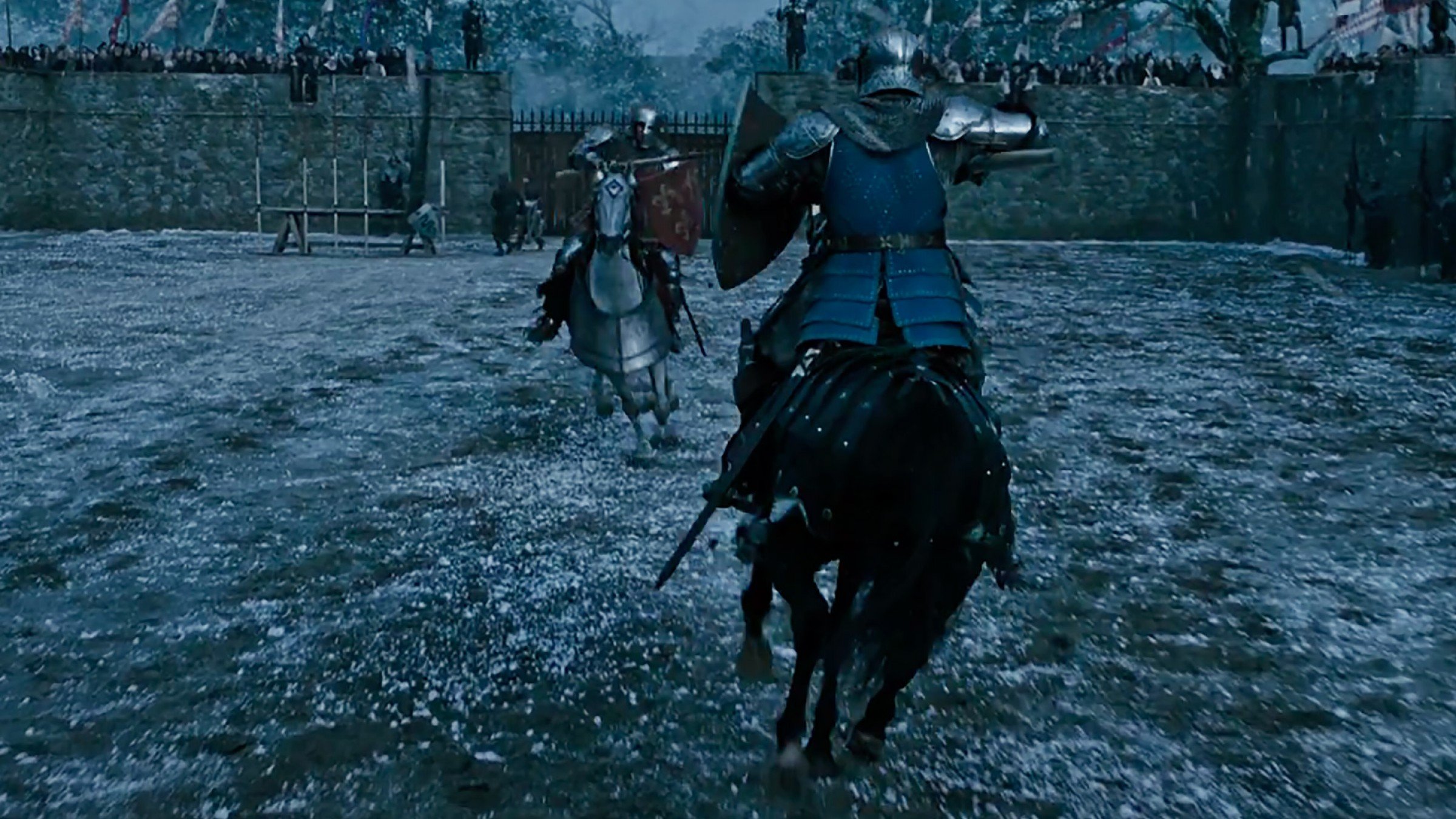
Based on the 2004 book by Eric Jager, the film chronicles events leading to the last officially recognized judicial duel in France, a 1386 trial by combat between knight Jean de Carrouges and squire Jacques Le Gris.

Carrouges (Damon) accused Le Gris (Adam Driver) of raping his wife Marguerite (Jamie Comer). Unsatisfied with the lenient decision handed down by Count Pierre d’Alencon (Affleck), Carrouges appealed directly to King Charles VI (Alex Lawther), where Carrouges threw down the challenge that Le Gris accepted. 

Scott presents the tale with exceptional craftsmanship and spectacle, getting big assists from Dariusz Wolski’s gritty, expansive cinematography and Michael Fentum’s detailed sound design.

This is a brooding, brutal, violent and sexually violent film, one that utilizes a Rashomon-style narrative to frame an often-debated moment in history around a centuries-old struggle that continues today.

Separated into three chapters, the film gives us the truth according to Carrouges, Le Gris, and then Marguerite, when the onscreen text holds a few extra beats on the phrase “the truth.” And while what changes with each new side of the story is vital, there’s equal importance to be found in the elements that don’t change.

One man’s crime is another’s entitlement, one man’s denial gets “the benefit of the clergy,” while one woman’s truth is disregarded among the power of men.

The ensemble cast is outstanding, led by Driver’s convincing cad, Damon’s gruff brute and Affeck’s delightful range as the shallow Count. But as Marguerite’s acerbic mother-in-law (a terrific Harriet Walter) dresses down her accusation with a pointed “You think you’re the only one?” Comer shoulders the courage that becomes the soul of the film. 

Her nuanced performance chapter to chapter tells us everything about the perspectives of the two men involved, and she carries Marguerite’s mindset with a weary bravery that depicts just how tiresome – even 600 years ago – it is to have to defend yourself after you’ve been raped.

It’s not just Comer, though. Scott’s camera lingers tellingly on the reactions of different women throughout the story as they silently respond to the charges.

Scott presents the climactic duel with the completely thrilling treatment it requires, but by then it’s clear why Holofcener’s contributions were so vital. As talented as Scott, Affleck and Damon are, making this film without the filmmaking perspective of an equally gifted woman would have amounted to more of the same: men telling us how rape is for women.

The Last Duel aims for more than just a gripping history lesson. It’s ultimately able to use that history to remind us that the way society treats women generally – and women’s sexuality specifically – has changed little since the freaking Middle Ages. 

Shame.

Cue and A

V/H/S/94

by George Wolf

You ready for scary?

1994 was almost thirty years ago. Three zero.

So the fourth film in the V/H/S series places the found footage premise in a decidedly nostalgic vibe, with plenty of videotape filter effects, “taped over” moments and no worries about smartphones crashing the internal logic.

Five filmmakers deliver separate short film visions, as four segments are bookended by an anchor meant to tie them all together as a narrative whole.

Jennifer Reeder handles the wraparound, entitled “Holy Hell,” which follows a SWAT team invading a compound while members shout about drugs and search warrants. They find much more than drugs in a frantic, satisfactory opening that suffers from some uneven production values and pedestrian acting.

Chloe Okuno’s “Storm Drain” finds an Ohio TV reporter and her cameraman investigating the local legend of the Rat Man. Venturing a little too deep in the sewers, what they find sheds a nicely subtle light on the plight of the homeless before the creature effects come calling.

Okuno’s camerawork and dark tunnel framing is effective, and Anna Hopkins delivers a fine performance as the reporter, but like all the segments here, “Storm Drain” feels like a great idea that’s never fully realized.

That is the most true with Simon Barret’s “Empty Wake.” Barrett, writer of You’re Next, The Guest and Blair Witch, gives us a funeral home employee waiting out a wake that no one is attending. As a storm escalates outside, noises from inside the casket suggest a soul may not be ready to move on.

Barrett lays out some nicely simplistic stakes, and plays a fine game of peek-a-boo with the inside lights going off and on, but the payoff ultimately lands as a bit familiar and anti-climactic.

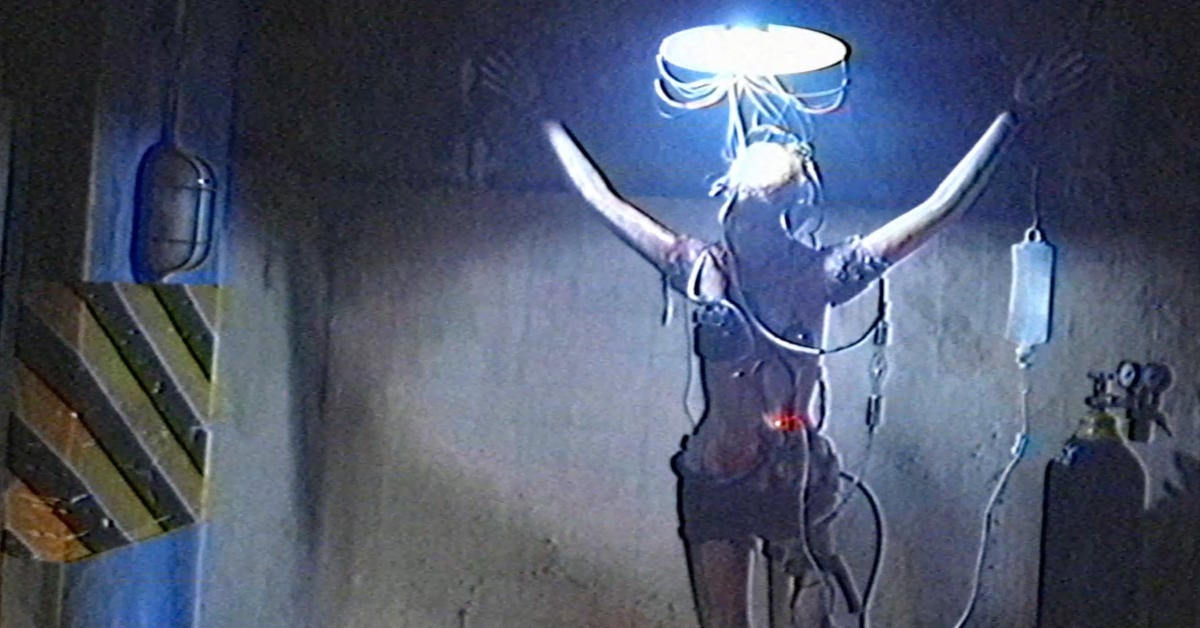
The opening shot of Timo Tjahjanto’s “The Subject” grabs your attention immediately, bringing you into the horrific laboratory of a mad scientist conducting human experiments. What starts as a fun and gore-filled homage to both Frankenstein and Tetsuo descends into an overlong, first-person shooter game that squanders much of its early potential.

“Terror,” the final segment from Ryan Prows, brings horror comedy to the party with a look at good ‘ol boy militia members aiming to overthrow the government. They’re more than well-armed, they’re fostering a supernatural entity. And you can guess how well that goes.

Prows never completely sets the tone, as the few truly comedic moments crash into an overall atmosphere that plays it too straight for satire.

Reeder closes it all out with the conclusion of “Holy Hell,” bringing a surprise to one of the SWAT teamers and an overly tidy reinforcement of the videotape theme.

V/H/S/94 presents a host of promising ideas and several solid moments. A step up from Viral for sure, but with too many false starts for a rewind-able experience.

Screening Room: Venom: Let There Be Carnage, The Many Saints of Newark, Titane, Addams Family 2 & More

Daughter of Darkness

The Addams Family 2

by George Wolf

Two years ago, The Addams Family returned to their cartoon roots with an animated feature that leaned heavily on little Wednesday Addams for its few sparks of macabre fun.

Despite turning to a more convoluted plot line, AF2 doesn’t do much to improve the family reputation.

Wednesday (Chloe Grace Moretz) is still the standout here, putting the creepy and kooky in the 3rd grade science fair. She’s denied a prize thanks to a new “everybody wins” school policy, but her brilliance catches the eye of shady scientist Cyrus Strange (Bill Hader).

Worried she’s being dumbed down by the idiots around her, Wednesday rebuffs cheer up attempts from Dad Gomez (Oscar Isaac) and Mom Morticia (Charlize Theron) when a pushy lawyer (Wallace Shawn) comes knocking with a bombshell.

His clients believe Wednesday may actually be their daughter and are requesting a DNA test. What else can Mom and Dad do except pack Wednesday, Pugsley (Javon “Wanna” Walton, stepping in for the now deeper voiced Finn Wolfhard), Fester (Nick Kroll) and Lurch (Conrad Vernon, who again co-directs with Greg Tiernan and newcomer Laura Brousseau) into the haunted camper for that fallback device for hastily-connected hi jinx, the road trip!

It’s a three week trek to (where else?) Death Valley and back, stopping in Miami, San Antonio, and the Grand Canyon long enough to catch up with more family (Snoop Dogg’s Cousin It) and try out some mildly amusing gags.

Only a precious few – like the guy who keeps trying to propose to his girlfriend and “Thing” trying to stay awake while driving – actually land, and it’s up to Moretz and her perfect deadpan (“I’ve been social distancing since birth”) to remind us of what makes this family dynamic.

The script from Dan Hernandez and Benji Samit veers off into wild Dr. Moreau territory, adding even more baggage to a film that would have been wise to pack lighter. Inspired soundtrack choices (from Gordon Lightfoot to Motorhead) give way to forced pop and hip-hop, and the film’s attempt at an “own who you are” message seems half-hearted at best.

But what’s really lost is the inherent fun The Addams Family brings to wherever they are. When the world goes light, they go dark. That’s a fun and funny idea ready to be exploited.

Once again, Wednesday’s just waiting for the rest of the gang to get back to the family business.

Flesh & Bone & Other

Titane

by George Wolf

I’m just going to go with the official synopsis:

“Following a string of unexplained murders in France, a father is reunited with the son who has been missing for ten years.”

Fine, done, because knowing anything more about Julia Ducournau’s Palme d’Or-winning Titane could steal some of the mesmerizing, can’t-look-away, what-is-happening spell it inflicts on you.

Ducournau’s 2016 feature debut Raw shocked audiences with a brutally in-your-face metaphor mixing primal appetites and familiar bonds. She ups all the antes available with Titane, claiming her film is “its own wild animal” like a mad doctor unleashing her creation on an unsuspecting city of fools.

The film is alive with alternating color palettes, pulsating sounds and endless shocks of body horrific visuals. The sudden bursts of violence are downright pedestrian alongside the parade of boldly squirm-inducing clashes of flesh, bone and other.

But as she did with Raw, Ducournau finds humanity clawing out from the inhumane. Truly unforgettable performances from Vincent Lindon and Agathe Russell provide intimate examples of the extremes that even the most damaged souls are capable of in the search to care and be cared for.

It may not be shy about homages and influences, but Titane is indeed its own ferocious animal. Open the cage look the F out.

Undead American Summer

Black As Night

by George Wolf

“That was the summer I got breasts and fought vampires.”

Yes, a lot is happening in Shawna’s life, but Black As Night never loses that matter-of-fact teenage perspective even as it broaches some plenty familiar horror terrain.

Shawna (Asjha Cooper) and her BFF Pedro (Fabrizio Guido) uncover a ring of vampires in their New Orleans precinct, and it’s going to take some help from the hunky Chris (Mason Beauchamp) and a privileged Twilight fan (Abbie Gayle) to track down the lead bloodsucker and take him out.

Black As Night is part of 2021’s “Welcome to the Blumhouse” collaboration with Amazon, and it continues last season’s focus on films by and about women and/or people of color.

Director Maritte Lee Go and writer Sherman Payne mix Candyman‘s themes of gentrification and disposable populations with the surface level adventures of Buffy and The Lost Boys for a vampire tale that is most noteworthy for its fresh cultural lens.

The message isn’t unique or particularly subtle, production values can be shaky and there’s a hearty helping of exposition shortcuts, but these kids have spunk. Cooper makes Shawna’s journey from insecure wallflower to confident vampire killer an endearing one, and Keith David is here to lend his always welcome gravitas.

And though it often feels like Black As Night is content to just jump on a crowded ride, it consistently finds small moments to call its own. Plus, large numbers of vampires to kill!

So, how was your summer?

Born Under a Bad Sign

The Many Saints of Newark

by Hope Madden and George Wolf

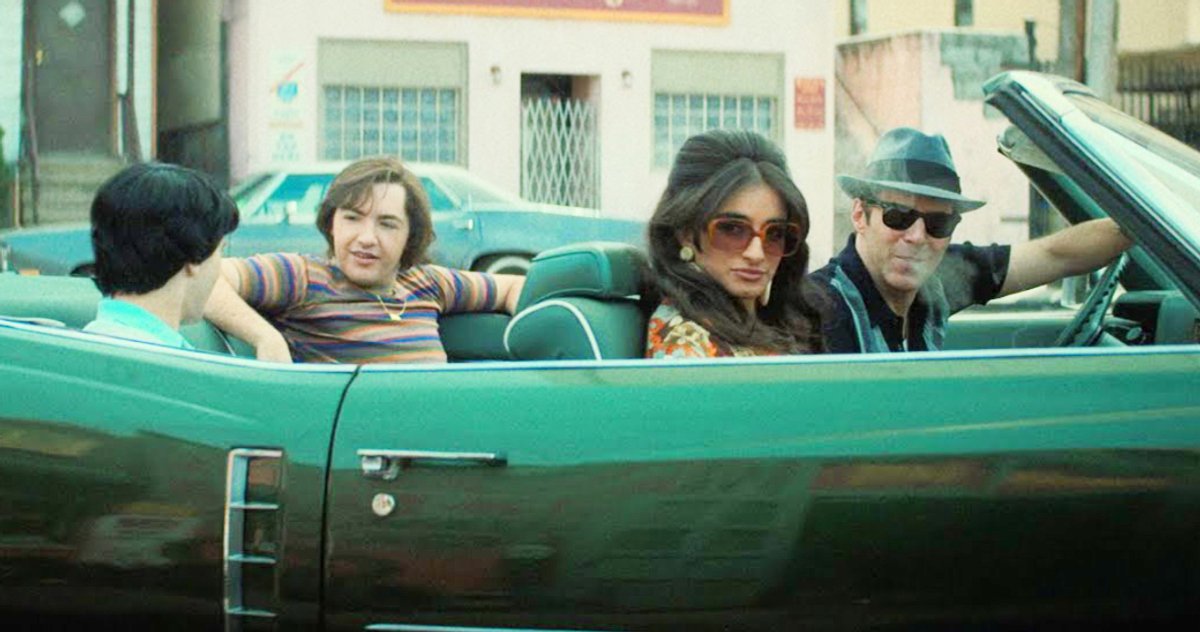
Murmurs, complaints, and whispers come in and out of focus as a camera meanders through an empty cemetery at midday: we hear souls telling the stories of their lives. We stop over the resting place of Christopher Moltisanti (Michael Imperioli). He has a tale to tell.

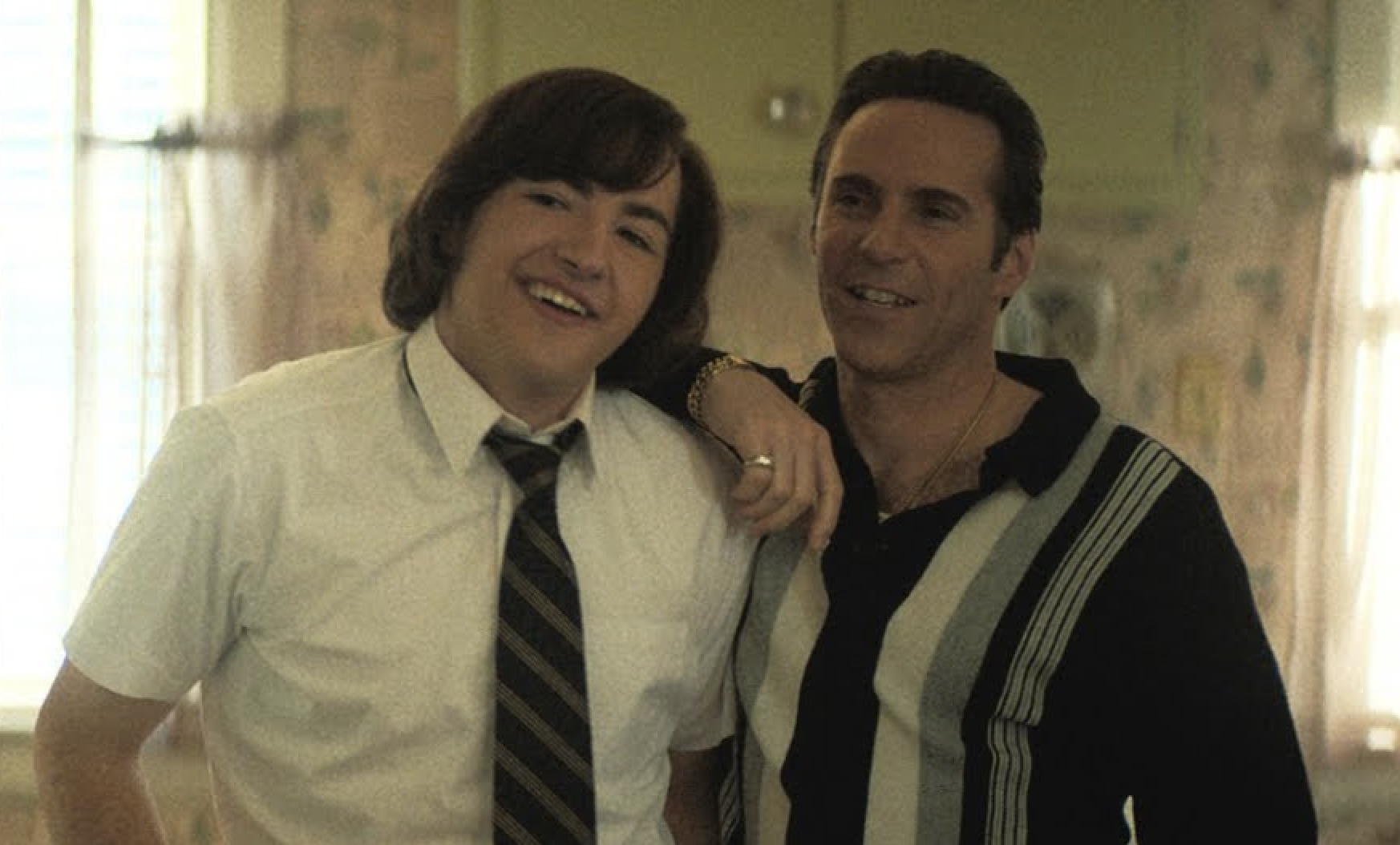
It’s a beautiful opening, spooky but with a bitter, familiar humor about it. With it, director Alan Taylor sets the mood for a period piece that lays the groundwork for one of the best shows ever to grace the small screen. The Many Saints of Newark brings Christmas early for Sopranos fans, but this is not exactly the story of Tony Soprano. In uncovering the making of the future, Taylor and writer Lawrence Konner invite us into the life of Uncle Dickie Moltisanti (Alessandro Nivola).

Nivola makes for an ideal choice to play the beloved “uncle.” The always reliable actor depicts the film’s central figure as the struggling, complicated result of his circumstances – an excellent theme given the film’s long game to uncover the forces that forged a future boss. In many ways, Uncle Dickie’s weaknesses, indulgences, strengths and goals create a mirror image of the Tony Soprano we would come to know over eight years and six seasons.

Longtime fans will have a bada bing blast recognizing familiar characters in their youth. Vera Farmiga is characteristically excellent as Tony’s formidable mother. John Magaro is a spot-on and hilarious Silvio, matched quirk for quirk by Billy Magnussen as Paulie Walnuts. Corey Stoll brings a younger but no less awkward Uncle Junior to life beautifully.

Of course, the one you wait for is young Tony, played with lumbering, melancholic sweetness by James Gandolfini’s son Michael. The resemblance alone gives the character a heartbreaking quality that feeds the mythology, but young Gandolfini serves Tony well with a vulnerable, believable performance that only expands on our deep investment in this character.

But the film is really more interested in those we never got to know: Tony’s father Johnny Boy Soprano (Jon Bernthal), Dickie’s father Aldo and uncle Sal Moltisanti (Ray Liotta, in two exceptional and very different roles), and stepmother Guiseppina Moltisanti (Michela De Rossi).

De Rossi and Leslie Odom Jr. (who plays colleague-turned-competitor Harold McBrayer) offer some of the most intriguing complexity and context in the entire film. The first half pokes holes in the “woe is me” backstory of the entitled white male Mafioso figure by spending some time with two characters who actually did have a tough go making a life for themselves in this community.  

Taylor (Thor: the Dark World, Terminator Genisys, GoT) helmed nine Sopranos episodes, winning an Emmy for one, while Konner penned three solid episodes of his own, although his decades of work for the big screen has been mediocre at best.

But here the filmmakers combine for extended family drama that, despite one major plot turn landing as entirely illogical, weaves themes old and new in a ride that is often operatic and downright Shakespearean.

If the Sopranos family feels like family, turning back the clock on these indelible characters is just as giddy and delightful as it sounds. But The Many Saints of Newark impresses most by the balance it finds between fan service and fresh character arcs.

It’s an often cruel and bloody tale of wanton crime, treacherous deceit, family dysfunction and cold-blooded murder. And it just might be the most fun you’ll have at the movies all year.