So you’ve got the final draft of your first full screenplay, which you plan to develop for your debut feature as a director. It’s a solid script, but it treads some familiar ground, and there’s never much doubt about where it will lead in act three.
What’s the smart play? Cast esteemed talent that’s capable of elevating that material at every turn. And writer/director Matthew J. Saville is no dummy, letting the great Charlotte Rampling leave a memorable mark all over Juniper, a family drama blessed with fine performances across the ensemble.
Rampling is Ruth, an alcoholic and former war photographer who has moved in with her estranged son, the recently-widowed Robert (Marton Csokas), as she recovers from a broken leg. But Robert must attend to some business out of town, leaving his teenage son Sam (George Ferrier) to assist Nurse Sarah (Edith Poor) every time Ruth rings that damn bell.
She rings it often, and Sam is not amused by this grandmother he’s never met before suddenly barking orders at him.
But Sam isn’t amused by much. The death of his mother is still a fresh wound, his father seems clueless to his needs, and the young ladies aren’t too interested lately. Plus, Sam’s been suspended from school, which gives Robert an excuse to punish him with elder-sitting duties.
Can this resentful teen and his feisty granny find some common ground in their anger at the world, maybe even develop a begrudging respect on their way to learning from each other, and cherishing this new family bond?
The things Ruth has seen have hardened her to pretense and empty gestures, and she’s only too happy to dig into everyone around her as she searches for those with substance and a zest for living. Rampling brings all of this to the screen with wonderful authenticity, sometimes needing only a steely glare to get the job done. She’s a treasure.
And kudos to the young Mr. Ferrier. He doesn’t let Rampling’s shadow block him out, and the two share a natural chemistry that fuels the organic melting of the ice between their two characters.
Saville’s storytelling is sound and well-intentioned, it’s just not overly profound. Much like nearly every romantic comedy you’ve ever seen, the trick for Juniper is how well it gets to where you know it’s going. And thanks to Rampling and her solid support, the trip is constantly engaging.
Belgium’s Close is one of two current Oscar nominees for Best International Film (along with Ireland’s The Quiet Girl) to draw its emotional power from the sensational debut performance of a teenager.
Director and co-writer Lukas Dhont met young Eden Dambrine on a train ride, ultimately offering him an audition after watching his facial expressions from a few seats away.
Dhont’s instincts were spot on. Dambrine proves a natural at communicating complex emotions with understated effort, propelling the film’s tender and sweetly heartbreaking take on friendship and innocence lost.
Thirteen year-olds Léo (Dambrine) and Rémi (Gustav De Waele) are best friends with a wonderfully expressive and joyous bond. But their first year in a different school brings whispers from new peers, leading to a disruption in the boys’ relationship. Slowly, Léo begins reaching out to Rémi’s mother Sophie (Émilie Dequenne), in hopes of reconciling his mix of feelings.
There is no shortage of films reflecting on the years when two young friends begin to explore different paths. Dhont reinforces that theme with subtle details, such as when the boys choose different routes on a bike ride home. But Dhont is also interested in how the path to adulthood has changed, and how today’s young people must often grapple with emotional questions that should never be asked of them.
And as heartbreaking as the film can be, it’s careful to retain a sense of tenderness. From bathing Léo in a field of golden flowers, to the patience with which Sophie waits for Léo to include her in what he’s feeling, Dhont’s second feature displays an assured command of tone. Sad but never maudlin, telling an intimate story with universal resonance, Close becomes a small miracle of healing.
Several years back, someone who deserved a promotion came up with the idea of packaging the year’s Oscar nominated short films into three separate features, and making them available to theaters. Every year, it’s a wonderful chance to get the local big screen experience for films often only available through festivals or smaller screen streaming.
And again this year, the programs are well worth seeking out.
Animated Block
An Ostrich Told Me the World Is Fake and I Think I Believe It Australia 11 mins. Writer/Director: Lachlan Pendragon
It had you at the title, didn’t it? In a bit of Office Space meets Wallace and Grommit absurdity, an online toaster salesman gets red-pilled by a wise flightless bird. A stop-motion gem.
Ice Merchants Portugal 14 mins. Writer/Director: João Gonzalez
In this lovely short, a father and son live in a frigid house attached to a cliff, parachuting down each day to a village where they sell their ice. On its face, a parable on climate change, but works real magic through the abstract nature of a late surprise. Our pick for the hardware.
My Year of Dicks Unted States/Iceland Writer: Pamela Ribon Director: Sara Gunnarsdóttir
Another arresting title. And this nominee, based on Ribon’s memoir, is a charmingly honest look back at one young woman’s attempts to get some. Utilizing a mix of animation styles, the film speaks sweetly to how friendship can often help get us through those awkward years.
Based on an incredibly true event from 1917, a sailor is blown skyward from an accidental explosion, soaring naked as he contemplates life in a state of near-death. The latest from a Palme d’Or-winning duo is eight minutes of surprising profundity.
The Boy, The Mole, The Fox and The Horse United Kingdom 32 mins. Writers: Jon Croker (from the book by Charlie Mackesy) Directors: Peter Baynton, Charlie Mackesy
Was unable to preview this one.
Live Action Block
An Irish GoodbyeIreland 23 mins. Writers/Directors: Tom Berkeley, Ross White
With Banshees of Inisherin all over the feature nominations, this one gives the Emerald Isle some short subject love. In rural Northern Ireland, two brothers reunite after their mother’s passing. One brother wants to quickly sell the house and leave, while the other aims to complete Mom’s bucket list. Two fine performances drive a warm and human tale.
Night Ride(Nattrikken) 15 mins. Norway Writer/Director: Eirik Tveiten
On a very cold winter night, Ebba is force to wait outside for a tram while the driver takes a break. Some unlikely events later, she’s driving the tram and picking up a few other passengers. What begins with hi-jinks becomes a poignant lesson in empathy.
The Red Suitcase 18 mins. Luxembourg Writers: Guillaume Levil, Cyrus Neshvad Director: Cyrus Neshvad
A 16-year old Iranian girl is hesitant to pick up her suitcase from baggage claim at the Luxembourg airport. The new life that the girl’s father has arranged for her is a life she does not want, and the film becomes an effectively tense attempt to evade the man waiting at the gate with flowers.
Ivalu16 mins. Denmark Writers: Anders Walter, Morten Dürr (graphic novel) Directors: Anders Walter, Pipaluk K. Jørgensen
Pipaluk is desperate to find her sister Ivalu, who has suddenly vanished. Though their father seems unconcerned, Pipaluk begins a search through the wilderness, where memories may reveal painful secrets. It’s a bit obvious, but beautifully realized.
Le Pupille 38 mins. Italy Writers: Alice Rohrwacher, Carmela Covino Director: Alice Rohrwacher
From Disney and producer Alfonso Cuarón comes a Christmas story based on a letter that the Italian writer Elsa Morante wrote to a friend. Set in Italy at a Catholic boarding school for girls during WWII, the film employs gentle humor and wonderful performances to comment on religion, power, sacrifice, mercy and the lure of lusciously moist cake. The likely winner.
Documentary Block
The Elephant Whisperers India 41 mins. Writers: Kartiki Gonsalves, Priscilla Gonsalves, Garima Pura Patiyaalvi Director: Kartiki Gonsalves
This touching doc takes us to South India, where a couple raises orphaned elephants as if they were their own children. It’s a beautiful testament to an intelligent and sensitive species, and to the bond possible between humans and the animal world.
Haulout 25mins. United Kingdom/Russia Writers/Directors: Maxim Arbugaev, Evgenia Arbugaeva
For ten years, scientist Maxim Arbugaev made an annual trek to a small hut in the Russian Arctic to observe walrus migration. What he found over the years is heartbreaking, and (hopefully) eye-opening. Haulout stands as an intimate example of just one stark consequence of our warming oceans.
How Do You Measure a Year?29 mins. United States Director: Jay Rosenblatt
From the time his daughter Ella was two, until the day she turned eighteen, Jay Rosenblatt filmed an annual question-and-answer session between them. What is power? What are dreams? What do you want to be when you grow up? Sure, it’s a sweet and personal keepsake of their relationship, bit it’s also a universal look at how our children become their own unique selves. Parents, get ready for the feels.
The Martha Mitchell Effect 40 mins. United States Directors: Anne Alvergue, Debra McClutchy
The title refers to a real psychological term for when a patient’s accurate perception of events is misdiagnosed as delusional. If you don’t remember Martha and her role in the Watergate scandal, this will be a fascinating introduction. And if you lived through those endless news reports, the film is a must-see closeup on an angle you may have glossed over.
Stranger at the Gate 29 mins. United States Director: Joshua Seftel
What happens when a former U.S. Marine meets the very individuals he was planning to kill with a homemade bomb? A simply jaw-dropping story of forgiveness, enlightenment, and how the ignorance of blind hatred can be healed. The Oscar favorite.
It may not be a textbook Rashomon approach, but director/co-writer Benjamin Caron leans on a similar structure in his impressive feature debut for Apple Originals, Sharper.
Set up in chapters named for the main personalities, the film first introduces us to Tom (Justice Smith, from Jurassic World: Fallen Kingdom and Pokémon: Detective Pikachu). Tom owns a struggling bookstore in NYC, and is mostly estranged from his billionaire father, Richard (John Lithgow) and his new wife, Madeline (Julianne Moore).
But when Tom sells a book to PhD student Sandra (The Tender Bar‘s Briana Middleton), a relationship begins. And a few weeks later, Tom is offering to give Sandra thousands of dollars to settle her troubled brother’s debts with some bad guys. He gives her the satchel full of cash, and watches her walk away. Yeah.
So, right away, we’re on Tom’s side. But then, we get Sandra’s backstory, which includes some important details about her life before walking into that bookstore, and about her shady brother.
And then there’s the relationship between Richard and Madeline, which gets plenty complicated with the sudden arrival of Madeline’s ne’er-do-well son, Max (Sebastian Stan).
Caron, from TV’s The Crown, Andor and Sherlock, weaves the agendas together with a fine hand, revealing mysterious secrets just when they can add the most fun to the journey.
And this is an entertaining slice of life on the grift, one leaning more toward gloss and polish than neo and noir. The performances are all stellar, which ironically adds to the film’s slight stumble at the finish line. That final twist will not be hard to sniff out, even for mildly experienced film buffs. But we believe these people know all the angles, and when a character calls out a con midway through, it should only increase the chance that their antenna would be up for this same play later on.
But cons are just fun, aren’t they? And Sharper is a well-crafted and clever one, even with a finale that dulls its edges a bit.
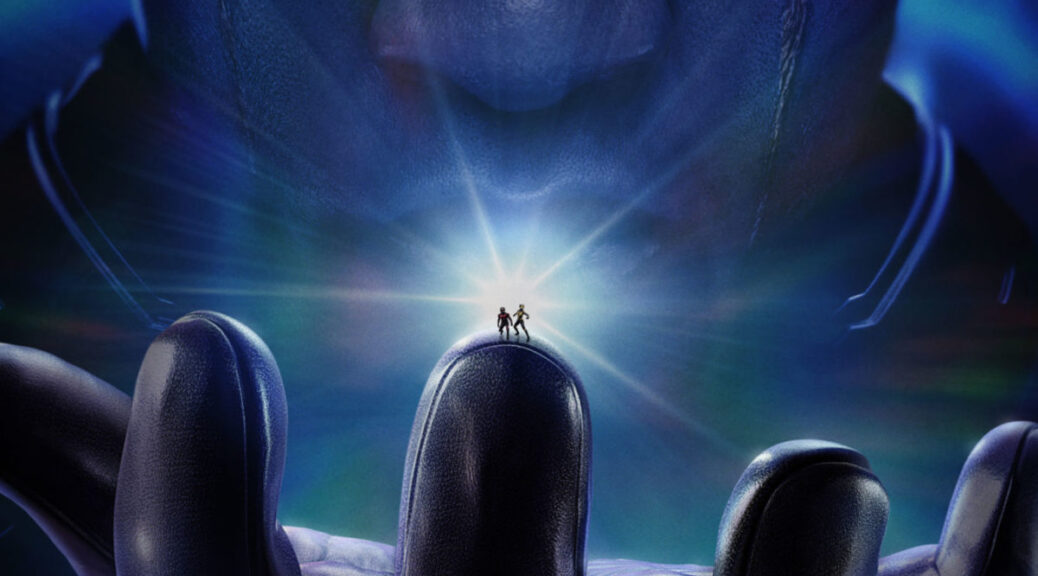
Time to set your phasers to “5” Marvel Fans, and hope for better days ahead. Because Ant-Man & The Wasp: Quantumania is a messy, lackluster kick-off to the new stage.
After the prologue and before the two end stingers, Quantumania is bookended by two winning sequences, both set to the theme from “Welcome Back, Kotter.” They’re self-effacing and full of the unique charm that has defined Paul Rudd’s Ant-Man/Scott Lang character since the first installment. And the rest of the film can never quite measure up.
While Scott has been off Avenging, his daughter Cassie (Kathryn Newton) has grown into an impressive young scientist herself. In fact, the new sub-atomic telescope she invented seems pretty nifty, until a family pizza party ends with Scott, Cassie, Hope/Wasp (Evangeline Lilly), Hank (Michael Douglas) and Janet (Michelle Pfeiffer) all sucked back into the Quantum Realm.
And it turns out, there’s plenty Janet didn’t let on about the 30 years she spent down there. Some of it involves Krylar (Bill Murray, channeling Criswell). But the life-threatening details revolve around how Kang the Conqueror (Jonathan Majors) wound up there, and why he must never make his way out.
Director Peyton Reed returns from parts 1 and 2, but his powers are more limited in the quantum realm than Kang’s. Without city landmarks and average Joes to ground the comedy, the Ant-Man dorkishness falls flat.
The writing doesn’t help, although it’s tough to blame series newcomer Jeff Loveness in his feature debut. The first film was written by Edgar Wright, Joe Cornish and Adam McKay, for Pete’s sake. But Loveness cannot find a groove, throwing comedy bits that suit Aqua Teen Hunger Force into hyper-serious melodrama with a Barbarella backdrop.
Much of the film is blatantly Star Wars, with attempts at Ragnorak humor that run headlong into extended exposition and Kang’s quest for dominating multiple plexes. None of it works.
Rudd’s a doll, per usual, and Newton’s a charmer. Pfeiffer continues to have charisma to burn, which is a good thing because Lilly’s as engaging as a paper sack and Douglas is mainly wasted. But the real pity is Majors, another profound talent floundering in an underwritten villain role that relies on speechifying rather than acting.
There are some big ideas here, and the attempts at world building are ambitiously borrowed, but much the same as its unlikely Avenger, Quantumania comes up small.
Killer crushes, literally – that’s what we’re talking about this time. We also run down our own biggest celebrity crushes, because why not? And we talk about the best horror films to capture the moment obsession turns dangerous.
5. Be My Cat: A Film for Anne (2015)
Adrian is a Romanian filmmaker who likes girls and cats. He does not like dogs or boys. His favorite thing? Anne Hathaway as Cat Woman.
He was so inspired by her performance that he knew he had to make a film with her. To convince her, he’s lured three actresses to shoot a film with him. That film is really just to convince Anne, his beloved, that she should star in the real movie.
She’s not going to want to.
This movie works on the sheer, weird charisma of writer/director/star Adrian Tofei. He is pathetic and charming and terrifying as he documents his direction as a kind of “behind the scenes” for Anne, so she can understand how truly perfect she is for his film and he is for her artistic future. The result is unsettling, unique and wildly entertaining.
4. The Phantom of the Opera (1925)
You know the story – a shadowy figure haunts the Paris opera house, demading that the object of his affection, Christine, be given the lead in Faust. In what amounts to a cautionary tale about women prioritizing career over family, the story revolves around a masked and disfigured madman and the singer who is easily duped, then saved by righteous men.
The reason this particular version of the film works so well is, of course, Lon Chaney’s now-legendary look. The actor devised his own make up and underwent painful tricks of physical contortion, succeeding in shocking audiences with a ghastly but very realistic visage. His flair as an actor is also on display, and though other versions sometimes mine for a bit of empathy or heartbreak as this hideous creature connives for a love triumphant, Chaney delivers menace and horror.
3. The Fan (1982)
The first thing Eckhart Schmidt’s film has in its favor is that the audience is meant to empathize with the fan, Simone (Désirée Nosbusch). Generally, we see the fanatical from the celebrity’s point of view, but this makes more sense because every member of the audience is more likely to have lost their shit over a teen idol than they’ve been worshipped themselves.
And yet, Simone clearly has a screw loose. Schmidt’s approach to her obsession as seen through the eyes of worried parents, apologetic postmen and other adults is confused and compassionate. Teenage girls – who can understand them? The tone is ideal to set up the explosive heartbreak you know is coming, as well as a third act you couldn’t possibly see coming.
2. Antiviral (2012)
If you could catch Kim Kardashian’s cold, would you?
This is the intriguing concept behind writer/director Brandon Cronenberg’s seething commentary on celebrity obsession, Antiviral.
Young Syd March (Caleb Landry Jones) works for a clinic dealing in a very specific kind of treatment. They harvest viruses from willing celebrities, encrypt them (so they can’t spread – no money if you can’t control the spread), and sell the illnesses to obsessed fans who derive some kind of bodily communion with their adored by way of a shared herpes virus. Gross.
But the ambitious Syd pirates these viruses by injecting himself first, before the encryption. Eventually, his own nastiness-riddled blood is more valuable than he is, and he has to find a way out of quite a pickle. Maybe vitamin C?
1. Misery (1990)
Kathy Bates had been knocking around Hollywood for decades, but no one really knew who she was until she landed Misery. Her sadistic nurturer Annie Wilkes – rabid romance novel fan, part-time nurse, full-time wacko – ranks among the most memorable crazy ladies of modern cinema.
James Caan plays novelist Paul Sheldon, who kills off popular character Misery Chastain, then celebrates with a road trip that goes awry when he crashes his car, only to be saved by his brawniest and most fervent fan, Annie. Well, she’s more a fan of Misery Chastain’s than she is Paul Sheldon’s, and once she realizes what he’s done, she refuses to allow him out of her house until she brings Misery back to literary life.
Caan seethes, and you know there’s an ass-kicking somewhere deep in his mangled body just waiting to get out. But it’s Bates we remember. She nails the bumpkin who oscillates between humble fan, terrifying master, and put-upon martyr. Indeed, both physically and emotionally, she so thoroughly animates this nutjob that she secured an Oscar.
It’s been a few hundred years since Emily Dickinson wrote “Hope is the thing with feathers,” but the Oscar-nominated All That Breathes shows there are at least two people in the world who still believe it.
For the past twenty years, as the city of Delhi has deteriorated around them, brothers Mohammad Saud and Nadeem Shehzad have devoted their lives to the rescue of the Black Kite, a bird they say can “swim, like a lazy dot in the sky.”
We witness that swimming in the film’s opening minutes, just one of the countless images that director Shaunak Sen presents with a bittersweet majesty. Aided by stellar craftsmanship from Ben Bernhard’s cinematography team and editors Charlotte Munch Bentsen and Vedant Joshi, Sen drives home the devastating effects of climate change and pollution with an ironically gorgeous display of shot-making.
Sen’s approach is immersive from the start, letting quiet conversations and sobering landscapes outline the roadblocks to the brothers’ commitment. But in the midst of their search for the funds to open a true rescue hospital, Saud and Nadeem give voice to concerns of rising societal fractures, including the marginalizing of Muslims and outbreaks of street violence.
Sen weaves these themes together with grace and restraint, letting the focus at work in this basement mission of mercy speak in universal terms. The belief that “Delhi is a gaping wound, and we are just a Band Aid” reflects the unyielding hope that drives the two brothers. We share our “community of air” with every living thing that relies on it. And as long as there is value given to All That Breathes, then all cannot truly be lost.
Even if you know nothing of acclaimed Iranian filmmaker Jafar Panahi, No Bears (Khers nist) should be an absorbing and compelling experience.
But when you consider that Panahi (This Is Not a Film, Taxi, Closed Curtain) not only shot the film in secret, but currently sits in a Tehran prison, and is barred from writing, directing, giving interviews or traveling outside Iran until 2030, his continued commitment to agitation through artistic expression grows immeasurably inspirational.
With No Bears, Panahi uses the parallel lives of two Iranian couples to comment on the struggles of that expression, and on the powerful forces that conspire to restrict free will.
Panahi plays himself, arriving at a small village near the Turkish border to set up a base where he can direct his latest film remotely, joining the set through internet connection. While two actors in his cast (Mina Kavani and Bakhtiyar Panjeei) are trying desperately to land fake passports and flee Iran, Panahi quickly becomes a person of interest in the village.
Word has spread that Panahi may have unwittingly snapped a photo of a young Iranian woman (Darya Alei) with a man (Amir Davari) other than the one who has “claimed” her. Villagers are demanding the photo as proof of a grave misdeed, while the woman in question fears the bloodshed that will come from the photo’s existence.
Despite numerous reassurances to Panahi about “honorable” intent, the pressure from the villagers only increases, much like the desperation of his actors looking to start a new life.
Panahi films in a style that is understandably guerilla, but stands in sharp contrast to the dense, and thrillingly complex storytelling at work. He is deftly calling out both the oppressors and the enablers, while he weighs the rippling effect of his own choices amid a deeply ingrained bureaucracy of fundamentalism and fear, superstition and gossip.
No Bears is a brave and bold blurring of fact and fiction, with Panahi embracing the gritty authenticity of the most urgent first person documentary and the layered storylines of a political page-turner. It may be his most daring project to date, accentuated by a defiant final shot that teeters on the line between ending and beginning.