Screening Room: Maestro, Boy and the Heron, Eileen, Wonka, Sacrifice Game
by George Wolf
In the last couple decades, documentaries such as Standing in the Shadows of Motown and the Oscar-winning 20 Feet from Stardom have given just due to the unknown musicians and singers who have long backed up our idols.
Director Denny Tedesco may have been first with the idea, though his debut doc The Wrecking Crew! endured years of delays until its 2008 release. Tedesco is back with Immediate Family, and while he’s still looking behind the musical scenes, his second feature boasts some important distinctions.
To start, it’s much more contemporary. This one features a trove of interviews that are not only recent, but feature musicians that are still highly relevant, such as Stevie Nicks, Don Henley, Jackson Browne, James Taylor, Keith Richards, Lyle Lovett and more.
And secondly, for serious music fans (and even casual fans of a certain age), the names Leland Sklar, Russ Kunkel, Waddy Wachtel and Danny “Kooch” Kortchmar may already be plenty familiar. As the film points out, that’s largely thanks to producers Peter Asher and Lou Adler, who in the 1970s decided to start featuring the names and faces of these longtime sidemen in the liner notes of the many albums they played on.
But even if you recognize these players, it’s still a kick to hear the superstars go into detail about how valuable they are, and to watch their specific grooves morph into fully produced classics.
It all follows a formula very similar to the one that made The Wrecking Crew! so irresistible, but with greatly improved production values that increase the immediacy along with the timeline.
Immediate Family ends up feeling like the next logical step in Tedesco’s musical journey. We get more great tunes, witness more important stages in the evolution of popular music, and spend some quality time with four more unique talents that are well worth getting to know better.

by George Wolf
You need an “easy on the eyes” vamp for your nourish thriller? Anne Hathaway’s on your short list, for sure.
Soft-spoken, sheltered waif with eyes that long for a new life? Get me Thomasin McKenzie!
The casting in Eileen may be no surprise, but there are big surprises in store. And the way the two leads slowly draw their characters toward a deadly intersection keeps William Oldroyd’s second feature engaging throughout.
McKenzie is the put-upon Eileen, who quietly spends her days fantasizing about sex and violence and stashing away all the money she makes doing secretarial work at a boys correction facility in early 1960s Massachusetts. Eileen is also the daughter of the town’s former police chief (Shea Whigham), currently a paranoid, drunk widower with a penchant for verbal abuse and gun waving.
Eileen’s world is rocked when the facility’s staff psychologist retires, and Rebecca (Anne Hathaway) shows up to replace her. Tall, Ivy League-schooled with a sarcastic wit and a smoldering sensuality, Rebecca stands out plenty in the little New England ‘burg.
They meet for a couple drinks at the local bar and hit the dance floor while Rebecca belittles the leering regulars. Eileen is transfixed.
So she jumps at the invitation to visit over the holiday break, where Rebecca (and screenwriter Luke Goebel, Causeway) have a big bomb to drop.
Adapted from Ottessa Mosfegh’s award-winning 2015 novel, the film is a slow boil that leans on mood and atmospherics to lull you, even as you feel the creep of dread.
Both Hathaway and McKenzie are perfection, consistently smoothing the bumps when Oldroyd (Lady Macbeth) seems a bit hesitant to fully embrace the story’s pulpy underbelly. He and Goebel also tweak the novel’s ending, leaving the resolution more open-ended and abstract.
Fans of the book may feel slighted, but Eileen lands on the big screen as its own slippery shape shifter, a simmering throwback with just enough thrills to satisfy.
by George Wolf
“Get back to your roots.”
It’s an old adage, maybe even a cliche. But Godzilla Minus One reminds us it can also be a damn good idea.
Writer/director Takashi Yamazaki returns to themes he explored ten years ago in The Fighter Pilot, tips some unmistakable hats to both Jaws and Dunkirk, and emerges with a completely satisfying Kaiju adventure.
And though Yamazaki makes sure Godzilla wreaks his havoc early and often, Minus One is a film driven by characters with all-too-human complexities.
As Japan is struggling to recover from WWII, pilot Koichi Shikishima (Ryunosuke Kamiki) is suffering from survivor’s guilt, and the taunts of townspeople who feel he is a coward for not “dying with honor.” He’s also suppressing memories of Godzilla, the whispered-about monster he witnessed wipe out an island military base near the end of the war.
Years pass, with Koichi scraping by in the small place he shares with Noriko (Minami Hamabe) and the orphan child she has taken in. In need of money, Koichi accepts a dangerous job clearing old mines from coastal waters. And once out on the boat, Koichi and his shipmates realize they’re going to need a bigger one.
Yamazaki – who’s also credited as the VFX supervisor – gives Godzilla a wonderfully classic look, with imposing and well-defined features like those spiky scales that turn blue when he’s about to spit that fire! Hell yeah!
But back to the roots.
By taking the setting back to post-war Japan, Yamazaki’s script not only revisits the original cautions of the atomic age, but adds some new layers of depth. The clever plan to defeat Godzilla may let Japan rewrite some history, but Yamazaki doesn’t let his homeland’s approach to war off that easy.
The morals are clearly marked, but this is a crowd pleasing and often thrilling adventure, with some well-chosen moments of humor woven into a pace that rarely bogs down, despite a bit of schmaltz and one or two unsurprising surprises that dot the landscape. Yamazaki deftly balances the destruction with the reflection, and Minus One raises up a welcome addition to Godzilla lore.

by George Wolf
December is a busy month, so Brian (Joel Kinnaman) has some helpful reminders written on his wall calendar.
“Pick up Mom from the airport?”
“Buy a ham?”
No, no, Brian is thinking bigger this year, especially for his Christmas Eve party plans.
“Kill them all!”
And, if things go really well, “start a gang war?” Yes, he really writes that down.
A year ago, Brian’s son was killed by a stray bullet from a gangland shootout in suburban Texas. Brian himself was shot in the throat during the mayhem, and he’s spent all his silent days and nights since then ignoring his wife (Catalina Sandino Moreno, doing what she can with a thankless role) and planning some very bad tidings of revenge.
Silent Night is director John Woo’s first American film in 20 years, but his considerable skill with an action sequence is never enough to elevate the film beyond a misguided fantasy of bloodlust and wall-building.
And even then, the blood-spilling combat doesn’t begin until nearly halfway in, as we wade through 50 tedious minutes of dialog-free montages with Brian target shooting, reinforcing his ride and making anguished faces.
Despite the title, the Christmas setting feels tacked-on for marketing purposes, becoming the only theme in Robert Archer Lynn’s script that’s soft-pedaled. The “silent” gimmick becomes contrived pretty quickly, there are numerous gaps in logic and you wonder why everyone involved here was so comfortable with an angry, self-righteous white man executing countless Mexicans.
Sure, Brian tips off an African-American cop (Scott Mescudi) about his mission to do what the law won’t, but the film is never hazy about what heroes and villains look like.
Those hand-written calendar notes teased the possibility for some humorous lunacy that is completely ignored, as the only thing over-the-top here is the utter seriousness of tone. Could Nic Cage and a face-off machine have saved this holiday turkey? Tough call. Even Woo’s battle sequences seem uninspired and repetitive, and the most memorable piece of the action in Silent Night becomes how much louder its speaking.

by George Wolf
“Destiny has brought me here! Destiny has brought me this pork chop!”
And a silly food fight ensues between Napoleon and Josephine, just minutes before director Ridley Scott unveils a simply breathtaking recreation of 1805’s Battle of Austerlitz.
Scott’s Napoleon is a film that succeeds with moments both big and small, but suffers from a lack of connective tissue that might have formed it into one unforgettable whole.
Joaquin Phoenix makes the legendary emperor and military commander as endlessly fascinating as you’d expect, while Vanessa Kirby’s equally mesmerizing turn as Josephine creates a dynamic that authenticates Napoleon’s lifelong devotion.
But even if we didn’t already know Scott’s 4-hour director’s cut is coming, this 2 and 1/2 hour version ends up feeling like a stunningly crafted, IMAX-worthy appetizer. It’s every bit a grand spectacle with epic vision of history, but never quite the incisive character study that may be waiting in the streaming wings.
by George Wolf
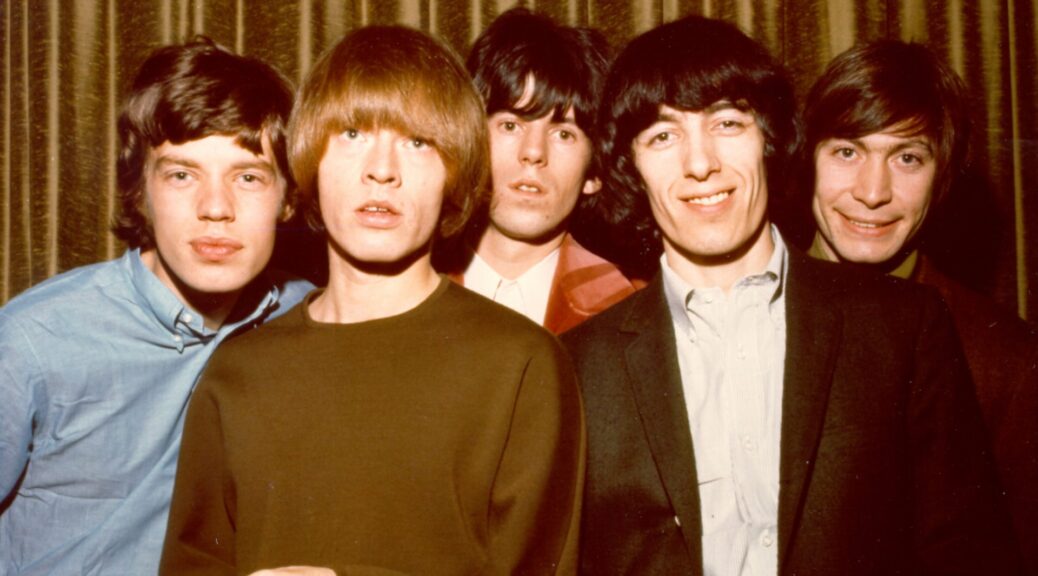
At this point, it’s a good bet that any Rolling Stones fan who is familiar with the name Brian Jones is 1) dedicated 2) old or 3) both.
With The Stones and Brian Jones, documentarian Nick Broomfield aims to add some numbers to that list, reminding all who will listen about Jones’s place in the Stones enduring legacy.
It was, after all, guitarist and blues devotee Brian who is credited with forming the band at the age of 19. He recruited Mick, Keith, Charlie and Bill via other groups or local advertisements, and was the Stones figurehead until the Jagger/Richards cocktail of rock charisma and songwriting prowess began to take over.
As he did with 2019’s Words of Love: Marianne and Leonard, Broomfield leans on archival footage and interview audio to effectively stamp the time and place. He surrounds us with England in the 1960s, pulling us into the story of a young man whose troubled relationship with his parents drove both his ambition and his self-destructive nature.
We hear from other musicians (retired Stone and devoted archivist Bill Wyman serves as a consultant on the film), friends, family and the various girlfriends who bore his 5 children. And while we certainly get a peek behind the rock star curtain (“He just uses people”), Jones’s eventual fade into the background comes off as inevitable.
His haircut was mod, his aim to keep the band bluesy was pure and his attention to fan mail was sweet, but he didn’t sing and didn’t write songs.
Again, do the math.
For music fans, Broomfield has assembled a wealth of audio and video that feels like a must-see scrapbook on the birth of a legend. Ironically, it all casts a spell that’s only broken by the more recent Zoom-like interviews that are included (including Wyman, which only draws more attention to the absence of Mick and Keith).
It’s hard not to smile as a young Brian tells a reporter that he’d do it all again “a hundred times,” and wonder if he ever could have imagined that even today, the history of the band he started would somehow still be adding chapters.
But Brian’s personal history was cut short, and much like in Words of Love, a parting note from long ago becomes a bittersweet ode to the real lives that got away from the people living them. Mr. Jones may not have been a survivor, but as Broomfield makes clear, he should be remembered as more than a footnote.