Tag Archives: Netflix

Better Together

Nyad

by George Wolf

Numerous biopics have shown us numerous ways to illustrate a life through formula and cliche. Nyad smartly maneuvers around most of those by anchoring a tale of persistence and achievement with a warm and intimate friendship.

The achievement is Diana Nyad’s quest to become the first to swim the 110 miles from Cuba to Key West. She tried – and failed – at the age of 28, then took a few years off. Well, more than a few.

Crediting a “soul ignited by passion,” Nyad (Annette Bening) returned to her dream at the age of 61. And her best friend Bonnie Stoll (Jodie Foster) was there to train her, push her, and sometimes protect her from herself.

Oscar-winning documentarians Jimmy Chin and Elizabeth Chai Vasarhelyi (Free Solo, The Rescue) are right at home with a true story of personal struggle, but together with screenwriter Julia Cox and the two veteran leads, carve out an entertaining and satisfying narrative.

Nyad is proud, motivated, and shamelessly self-absorbed (“It’s not that I don’t know I’m this way!”), while Bonnie is pragmatic, patient and heroically loyal. They make a fascinating and sometimes frustrating pair, and of course, Bening and Foster bring them both to life with a brilliant, lived-in authenticity.

And rather than a generic, chronological rehashing of Nyad’s life, indelible moments are seen in flashback, often at the most organic times. The long, solitary hours in the water meant Nyad’s mind would search for motivation, even if it was painful.

Chin and Vasarhelyi are not shy about weaving in some actual archival footage. And while that helps accentuate both the difficulty of Nyad’s quest and her love of self-promotion, it also adds to the list of story elements being juggled.

But with Bening and Foster setting the gravitation center, this ship never strays too far off course, and Nyad comes ashore as a worthwhile endeavor.

Marching Orders

Rustin

by Hope Madden and George Wolf

In 2020, filmmaker George C. Wolfe used theatrical set design combined with snappy, rhythmic editing to contextualize the mournful, defiant music of Ma Rainey’s Black Bottom. Wolfe’s style remains much the same for his biopic of trailblazing civil rights activist Bayard Rustin. And once again, the drama sings.

That’s much thanks to a soaring performance by Colman Domingo. A character actor known for decades of memorable performances, Domingo takes the lead in Rustin and owns the film from frame one. Vulnerability and resolve pass across Domingo’s face in a performance the should absolutely be remembered this coming award season.

He’s not alone. Support work from Audra McDonald, CCH Pounder, Glynn Turman, Aml Ameen and a scorching cameo from Jeffrey Wright bring enough acting mastery to make Chris Rock’s turn seem a bit out of out of place.

Rustin was a key figure in the 1963 March on Washington, battling racism and homophobia as he mobilized scores of volunteers, advocacy groups and sometimes competing interests.

Ands Wolfe, working from a script by Julian Breece (When They See Us) and Dustin Lance Black (Milk, When We Rise), keeps his film grounded in the political realities that not only mark American history but American present. Fueled by an electric performance, Wolfe’s production saturates that history with undeniable life and passion.

The film consistently moves with the energy and staging of a musical. It’s an approach that should help hold sustained interest for home streaming, but one that results in a broad-brushed, sometimes hurried feel to the important matters at hand.

But Rustin should invite further study about a man who deserves it. And while doing so, it reminds us that the fight for equality doesn’t end until it includes all of us, and that every victory depends on the day-to-day groundwork of warriors we may never get to know.

Plus, Colman Domingo. Get to know him.

Hip to Not Care

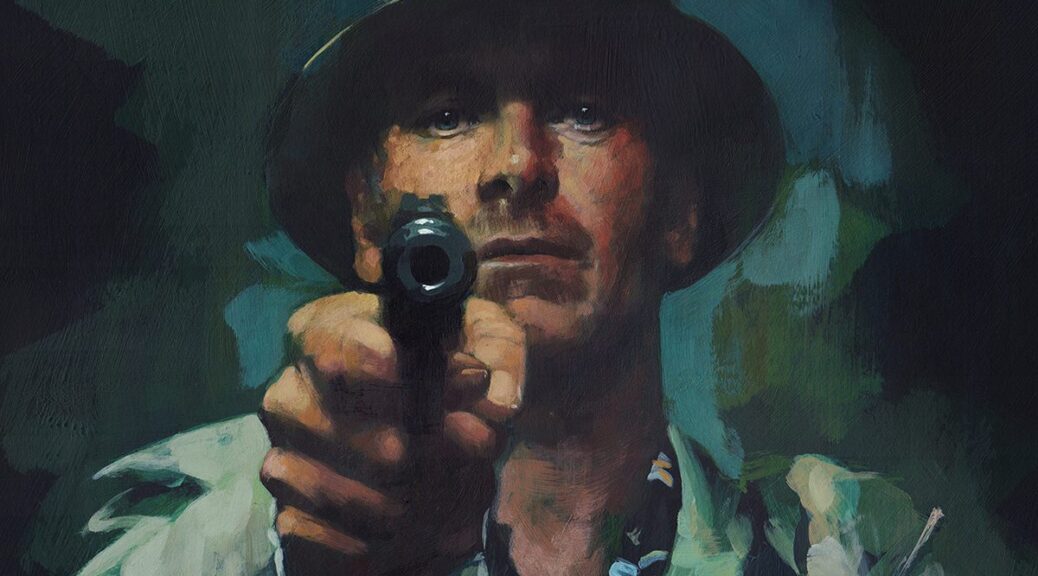
The Killer

by George Wolf

It’s been over twenty years since American Psycho personified the soulless self-interest of the Reagan 80s with bloody, hilarious precision.

Around the same time, the French duo of writer Alexis “Matz” Nolent and illustrator Luc Jacamon published the first of their graphic novels centered around the life of “Le Tueur” a ruthless, unnamed assassin.

Now, writer/director David Fincher gives us The Killer as a Patrick Bateman for a new generation. And while his film is not as outwardly comedic as Mary Harron’s classic, Fincher manages some dark fun as he probes our descent into cold, violent narcissism.

After some brisk and stylish opening credits, Fincher and star Michael Fassbender slow the pace to a crawl, and the opening chapter of their character study begins in France, with the quiet assessing of a target.

The Killer (Fassbender) is an ex-law student turned assassin for hire, and his years of completed assignments have earned him big targets and big rewards. The Killer has iron clad rules for success in work and in life, and Fassbender’s voiceover narration puts them on repeat.

“Keep calm. Keep moving.”

“Empathy is weakness. Weakness is vulnerability.”

“What’s in it for me?”

But when The Killer’s aim fails him on that Paris job, he is the one who is suddenly hunted. Things get nasty, and The Killer sets off on a multi-national manhunt for vengeance, buoyed by another effectively moody, pulsating score from Trent Reznor and Atticus Ross.

There are no business cards involved, but passports with increasingly funny aliases (brush up on your classic sitcoms) provide levity as scores are settled with inventive bloodshed and impressive fight choreography. And through it all, The Killer keeps preaching his mantra as a MAGA Bond, unwavering in his devotion to self and the perpetual need to feel aggrieved.

Fassbender is perfection as this meticulous, emotionless killbot, and the great Tilda Swinton’s late stage cameo brings the film more star power, plus one genuinely hilarious and insightful moment.

It’s a fascinating film, and one that feels like a new kind of Fincher. Recalling not only American Psycho, but also his own Fight Club and Anton Corbijn’s assassin creed The American, The Killer succeeds both as a surface-level thriller, and as a deeper illustration of another empty era.

Missions Possible

The Magician’s Elephant

by George Wolf

Anything is possible, just believe in your dreams.

That’s a fine moral for The Magician’s Elephant. But much like the film itself, it’s a bit generic and less than memorable.

Based on the children’s book by Kate DiCamillo, this Netflix animated adventure takes us to the land of Baltese, where strange clouds have rolled in and “people stopped believing.” Young orphan Peter (voiced by Noah Jupe) is being raised by an old soldier (Mandy Patinkin) to live a soldier’s life, which will be hard because “the world is hard.”

It gets harder when Peter uses meal money for a fortune teller (Natasia Demetriou) to tell him how his long lost sister can be found. The soldier told Peter the girl died at birth, but that’s not what he remembers, and a palm reading confirms that she is indeed alive.

To find her, Peter must “follow the elephant.”

But there are no elephants in Baltese, at least until a desperate magician (Benedict Wong) makes one fall from the sky. And after the magician and the elephant are both locked up for causing trouble, Peter begs the King (Aasif Mandvi) to let him care for the beast, as it is “only guilty of being an elephant.”

The King agrees, providing Peter can complete three tasks. Three impossible tasks.

Ah, but remember, nothing is impossible!

Director Wendy Rogers (a visual effects vet helming her first feature) and screenwriter Martin Hynes have plenty of threads to juggle, from animal cruelty to the costs of war to a Dickensian twist of fate. The resulting narrative ends up feeling overstuffed and convoluted.

The muted coloring no doubt reflects the village’s cloudy atmosphere, and the stiff animation may be intended to recall a children’s popup, but there is little in the film’s aesthetic that is visually inspiring.

Mandvi and Patinkin are the most successful at crafting indelible characterizations, while the rest of the voice cast (also including Brian Tyree Henry and Miranda Richardson) manages workmanlike readings that neither disappoint or standout.

Same for the film. The Magician’s Elephant pulls plenty from its crowded hat, but has trouble conjuring anything that is truly magical.

We’re Gonna Need a Montage

Hustle

by George Wolf

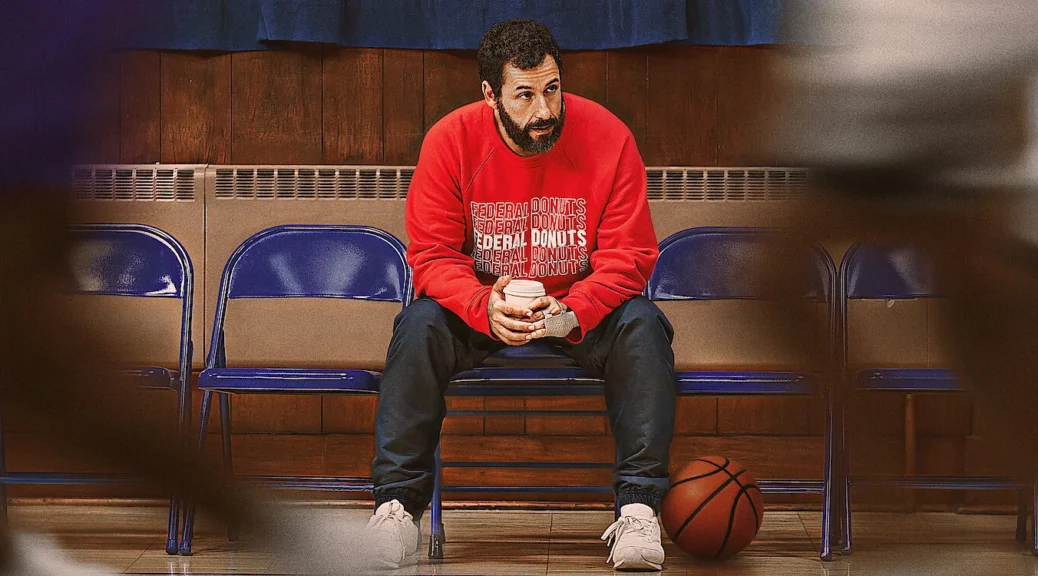
Adam Sandler’s passion for basketball is fairly well known, so the fact that Hustle is a love letter to the NBA shouldn’t be a huge surprise. And, this being a sports movie, you can expect some familiar benchmarks the film wisely doesn’t shy away from.

But this film about the heart and commitment that’s required in the Association boasts plenty of both from nearly everyone involved, landing Netflix an enjoyable winner.

Sandler plays Stanley Sugerman, a road-weary scout for the Philadelphia 76ers whose devotion to team owner Rex Merrick (Robert Duvall) is finally rewarded with a job on the bench as Assistant Coach.

But with clear shades of the Buss family drama in L.A., Rex’s son Vince (Ben Foster) wrestles control of the team from his sister (Heidi Gardner), and Stan is back living out of a suitcase while he scours the globe for a susperstar.

Writers Will Fetters and Taylor Materne set some nice stakes early, as Vince dangles a return to coaching in front of Stan. The quicker he finds the team a game-changing phenom, the sooner he can be home closer to his wife (Queen Latifah) and daughter (Jordan Hull).

On a gritty playground in Spain, Stan thinks he’s found his unicorn in the 6’9” Bo Cruz (NBA vet Juancho Hernangomez). The talk of big money lures Bo to Philly, but the path to a payday hits some roadblocks, and Bo’s longing for this mom and daughter back home creates some effective character-driven parallels with Stan.

Sandler and Hernangomez share a sweet, funny chemistry, and a constant stream of past and present NBA stars adds plenty of authenticity. Even better is director Jeremiah Zagar’s (We the Animals) skill in framing on-court action with speed, sweat and a tense, in-the-moment feel that gives the standard sports themes some needed vitality.

Hustle is a story of father figures, redemption, perseverance, and leaving your mark. No one’s claiming to re-invent anything here, and the winking nod to an iconic Rocky moment cements a self-awareness that only adds to the film’s charm.

It’s also another example of Sandler’s versatility, and the good that comes from surrounding himself with unique voices. When Sandler cares, he shines.

And he clearly cares about basketball.

The Impossible Dream

14 Peaks: Nothing is Impossible

by George Wolf

Nirmal “Nims” Purja likes to keep a positive outlook.

“I’m not going to die today. Maybe tomorrow, but not today.”

And while tomorrow isn’t promised to any of us, Nims tends to tempt fate more than most. A mountaineer, adventurer and former member of the Special Forces in Nepal, Nims feels most alive when he’s dreaming big and living life on the edge.

Netflix’s 14 Peaks documents his biggest dream: summiting all 14 of the world’s 8,000 meter + peaks (26, 247 feet and above) in just 7 months. To put that in proper context, the previous record for achieving the feat was 7 years. And Reinhold Messner – one of the greatest legends in all of climbing – took 16 years to ascend all 14.

So the plan that Nims dubbed “Project Possible” was ambitious, to say the least, and Messner himself sets the stakes for us. To Messner, climbing these wonders of the world “is not fun.” It is a practice filled with pain, danger and death.

That said, Nims sure seems to be enjoying himself, and part of that is helping to document his own journey.

If you come to 14 Peaks only for the breathtaking visuals, you will not be disappointed, especially if you can view it on a wide screen. Director/co-writer Torquil Jones takes us above the clouds over and over again, utilizing sparkling, absolutely thrilling footage often taken by Nims himself (including his incredible shot of a 300-person Mt. Everest traffic jam that quickly went viral).

But Jones also mines tension through the attempts at fundraising for the project (where Nims admits “I sound like a lunatic’) and getting the clearance from the Chinese government to climb in Tibet. Intimacy comes from getting to know Nims himself, who turns out to be a fascinating and endearing subject. We see his preparations and the tests that reveal him to be genetically gifted for enduring high altitude/low oxygen environments, as well as Nim’s commitment to to helping fallen comrades on the mountain, and to getting recognition for the oft-nameless Sherpas who are invaluable to visiting climbers.

And, Jones lets us meet Nims’s family, establishing a touching contrast between his apparent lack of fear and the feeling of failure that comes from being away from his ailing mother as he climbs.

14 Peaks will help you discover both a man and a mission. Separately, they’re pretty compelling. Together, they’re a force of nature.

I’m So Eggcited

Red Notice

by George Wolf

Heist Movie? Gal Gadot? I’m in.

Plus Dwayne Johnson and Ryan Reynolds.

I said I’m in! Sounds like a bunch of fun.

But somehow, it’s just not.

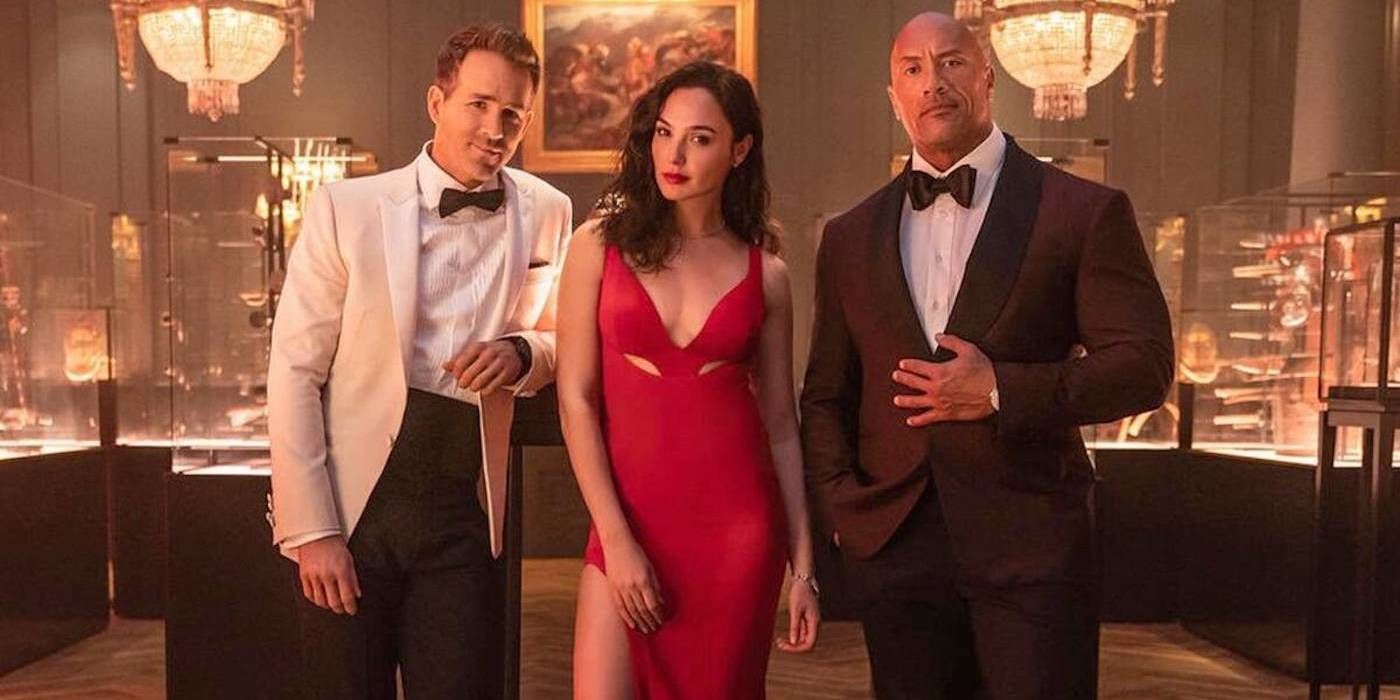
Johnson is FBI agent John Hartley, and he’s on the trail of Nolan Booth (Reynolds), the 2nd most wanted art thief in the world.

Who’s number 1? That would be The Bishop (Gadot), a mysterious criminal who always seems one step ahead of Booth in the quest to reunite three priceless jeweled eggs that Marc Antony once gave to Cleopatra. Yes, Cleopatra.

After a snappy, parkour-heavy chase to open the film, Hartley offers Booth the chance to move up to the top spot on Interpol’s Red Notice (highest level arrest warrant) list. All he has to do is help Hartley and the Feds nab The Bishop.

And the game is on!

Writer/director Rawson Marshall Thurber (Dodgeball, We’re the Millers, Central Intelligence, Skyscraper) has assembled three charismatic A-listers for a globe-trotting adventure with glamourous locales, double crosses and a script full of quippy banter. And it takes barely thirty minutes to begin wondering how it all went wrong.

You would think that watching Gadot, Reynolds and Johnson do anything together would be at least a marginal hoot, but nobody seems comfortable. What chemistry there is feels forced, at best, and none of the three stars bring much beyond the personas they’ve earned in better films. Reynolds carries most of the comedic weight, but with schtick that’s nearly interchangeable from his two Hitman’s Bodyguard films, a stale odor appears early and often.

There are a few LOL moments, most notably Hartley and Booth arguing about Jurassic Park and the real Ed Sheeran showing up to fight some federal agents. But with direct references that include Indiana Jones and Vin Diesel, plus multiple outlandish wardrobe changes (Johnson can’t exactly buy off the rack, so who had the tailor made safari outfit?), Thurber ends up navigating an awkward space that teeters on spoof.

Is Red Notice really trying to launch a new action/comedy franchise? Or is it just riffing on the genre? Either way, it ends up on the naughty list. Even those two Hitmans Bodyguard films embrace their own ridiculousness to deliver some dumb, forgettable fun. Red Notice manages two out of those three, and that ain’t good.

New Travel Agent Wanted

Beckett

by George Wolf

The jury may still be out on the level of acting chops passed from Denzel to John David Washington, but Beckett proves once again JDW can handle a physically taxing role as well as anybody in the business.

He’s taxed early and often as the titular man on the run in Netflix’s Beckett, a moderately satisfying throwback to political thrillers of the 1970s.

While on a “get far, far away from it all” vacation in the mountains of Greece with girlfriend April (Alicia Vikander), Beckett loses control of their car on a steep curve. Crashing through the door of a remote home below, Beckett catches a glimpse of something he’s not meant to, and the threats on his life soon begin.

The local police tell Beckett that April is dead, but they won’t let him see her body, which is the least lethal reason he quickly realizes these cops can’t be trusted. The U.S. embassy in Athens is hours away even by car, but Beckett sets out on foot to beg, borrow and fight his way to safety – and the answer to why he’s a marked man.

As capably as Washington handles the action, he’s never quite able to get Beckett’s frantic paranoia to a level that rings true. And once he gets help from a determined activist (Vicky Krieps), the bad guys become easier to spot and the lack of overall intensity brings a sluggish feel.

Director/co-writer Ferdinando Cito Filomarino delivers some picturesque and well-staged set pieces, but the political conspiracy that’s brewing underneath wears thin despite worthy intentions. The point about how easily anyone can become a marginalized pawn in the game becomes a bit frayed, lost in workmanlike global thriller threads.

The Whole World Is Watching

The Trial of the Chicago 7

by Hope Madden

Oscar winning, much beloved and frequently frustrating writer Aaron Sorkin first ducked behind the camera for the clever if overwritten 2017 indulgence Molly’s Game.

A courtroom drama (very Sorkin) about celebrity tabloid fodder (less Sorkin-like), the film seemed an odd match for the filmmaker. He’s found a much more comfortable focus in his follow up, the tale of eight defendants, their counsel, prosecution, and a corrupt establishment: The Trial of the Chicago 7.

Chicago 7 artfully and urgently recreates the scene of the federal court hearing against eight defendants alleged to have conspired to incite the infamous riot at the 1968 Democratic National Convention in Chicago.

The film rings with historical significance as well as disheartening immediacy. It is another courtroom drama, this one benefitting from surprising restraint, as well as Sorkin’s deep well of passion for the subjects of legal processes and liberalism. Like Ave DuVernay’s 2014 masterpiece Selma, Sorkin’s new film details the past to show us the present.

He’s assembled a remarkable ensemble, each actor leaving an impression though none gets an abundance of screen time. Yahya Abdul-Mateen II is a blistering Bobby Seale while Frank Langella is infuriatingly believable as Judge Julius Hoffman. Eddie Redmayne, Joseph Gordon-Levitt and Mark Rylance are all also excellent, as you might expect.

Jeremy Strong and Sacha Baron Cohen share a comfortable, enjoyable chemistry as Jerry Rubin and Abbie Hoffman, respectively. Both appear in the film, as they did in life, as the wise-cracking comic relief in the room, but Cohen’s turn is thoughtful, wise, and slightly tragic. He’s obviously a talent, but this may be the first time we’ve seen the magnitude of his acting prowess.

An alarmingly relevant look at the power of due process, free speech, and justice, Chicago 7 is catapulted by more than the self-righteousness that sometimes weights down Sorkin’s writing. This is outrage, even anger, as well as an urgent optimism about the possibilities in human nature and democracy.

If I may quote my own review of Molly’s Game and my take on Sorkin as a filmmaker:

His are dialogue-driven character pieces where brilliant people throw intellectual and moral challenges at one another while the audience wonders whether the damaged protagonist’s moral compass can still find true north.

Still the case. But with Chicago 7, Sorkin’s struck a balance. He’s found a story and convened a cast that demand and receive his very best, because The Trial of the Chicago 7 is a story about today, this minute.

Save a Prayer

The Devil All the Time

by Hope Madden and George Wolf

“Lord knows where a person who ain’t saved might end up.”

Indeed. The constant fight to overcome the worst in ourselves lies at the heart of The Devil All the Time, director Antonio Campos’s darkly riveting realization of Donald Ray Pollock’s best-selling novel.

Bookended by the close of World War II and the escalation in Vietnam, the film connects the fates of various characters living in the small rural towns of Southern Ohio and West Virginia.

Arvin (Tom Holland), the son of a disturbed WWII vet (Bill Skarsgård), fights to protect his sister (Eliza Scanlen) while he ponders his future. Husband and wife serial killers (Jason Clarke and Riley Keough) look for hitchhikers to degrade, photograph and murder. A new small town preacher (Robert Pattinson) displays a special interest in the young girls of his congregation.

It’s a star studded affair—Mia Wasikowska, Haley Bennett and Sebastian Stan joining as well—but every actor blends into the woodsy atmosphere with a sense of unease that permeates the air. No stars here, all character actors in service of the film’s unsettling calling.

Pollock’s prose created a dizzyingly bleak landscape where Flannery O’Connor and Cormac McCarthy might meet to quietly ponder man’s inhumanity to man. Campos unlocks that world courtesy of Pollock himself, who narrates the film’s depravity with a backwoods folksiness that makes it all the more chilling.

As rays of light are constantly snuffed out by darkness, Campos (who also co-wrote the screenplay) uses Pollock’s voice and contrasting soundtrack song choices to create a perverse air of comfort.

Redemption is a slippery aim in and around Knockemstiff, Ohio, and grace is even harder to come by. With a heavier hand, this film would have been a savage beating or a backwoods horror of the most grotesque kind. Campos and his formidable ensemble deliver Pollock’s tale with enough understatement and integrity to cut deeply, unnerving your soul and leaving a well-earned scar.