Tag Archives: movies

Hello Darkness, My Old Friend

Silence

by Hope Madden

Yes, the faithful believe Jesus sacrificed himself for us – to clear our sins with God. But would he have sacrificed us for the sake of reverence?

Martin Scorsese’s elegant pondering on faith, Silence, enters the mind of Jesuit priest Fr. Rodrigues (Andrew Garfield) as he and his colleague Fr. Garrpe (Adam Driver) venture into 1640s Japan in search of a mentor priest lost to a violently anti-Catholic government.

Gorgeous, imposing shots paint the image of the vast and dangerous beauty of God’s world and the small if admirable people trying to survive there. Garrpe and Rodrigues first hide with faithful Japanese villagers, losing their primary mission while serving those oppressed Christian Japanese longing for signs of the church.

Garfield and Driver cut nicely opposing images, Garfield the sweet-faced picture of buoyant faith, Driver the more skeptical, impatient believer. While it’s Garfield whose story we hear, Driver’s counterpoint is a required piece of this crisis of faith driving the film and his performance delivers something painful and honest.

Scorsese’s abiding interest – some might say preoccupation – with faulty men and their tenuous grasp on Catholic faith has flavored many a film, though rarely as thoroughly as this one. What is faith? What is it, really? And who’s to say what harm Jesus would have you do to protect him?

The film may take itself too seriously (though, this is hardly light fare). Any possible misstep Scorsese can mostly overcome with meticulous, near-magical craftsmanship, though there are a handful of hang ups that sometimes break the seduction of the project.

These are Portuguese priests in 17th Century Japan speaking English (why?), and mainly with British/Irish accents (Liam Neeson plays lost Fr. Ferreira). (At least Driver gives the Portuguese accent a shot.)

And though Garfield is a genuine talent, this role requires something perhaps uglier than what he has to offer.

Mainly, though the film’s resolution is both nuanced and satisfying, there are certain answers, certain signs that feel more like movie magic than spiritual presence. They are minor flaws in a beautiful if ponderous work, but they keep Silence from joining Scorsese’s true masterpieces.

Verdict-3-5-Stars

Lost & Found

Lion

by Hope Madden

Inspirational, true-life tales – however tailor-made they seem to be for a big screen presentation – can be tough to deliver with integrity. In fact, the more tailor-made they seem, the tougher it can be.

Director Garth Davis manages to hit most of the right notes with his cinematic telling of Saroo Brierley’s amazing journey in Lion.

At 5-years-old, Saroo (played as a child by the impossibly cute and talented Sunny Pawar) follows his older brother to the train station where they’ll scrounge what they can from between seats and on the ground. But Saroo wanders off, falls asleep in a train car, and by the time he gets off, he’s thousands of miles from home – alone in a train station in Calcutta.

What follows – told with surprising restraint and solid focus – are the details of his struggle to survive and, decades later, to find his mother.

The adventure is harrowing. Davis chooses wisely between the events to explore deeply and those to leave ambiguous. We glimpse things that are clearly menacing but not fully explained because we’re seeing them through the eyes of a bewildered child. The result is a dark sense of all that could have occurred, not a sledge-hammer about the lurid details Saroo couldn’t possibly have articulated.

Once the film moves to Australia, where the boy relocates with an adoptive family, Davis again shares enough details to give the film a memorable sense of authenticity. The now grown and well-cared-for Saroo (Dev Patel) struggles with longing, guilt and a crippling concern for the pain his birth-family must bear because of his absence.

Patel deserves credit for a performance unlike the work we’ve seen from him in previous efforts. As a performer, he has tended toward painfully earnest representations, an over-actor who relies heavily on hyperbolic reactions.

Here, though, is a far more nuanced turn – one that benefits immeasurably by the chemistry he shares with Nicole Kidman, playing his adoptive mother Sue Brierley.

Dependable as ever to explore the depths of grief, Kidman conveys the conflicting emotions that, in their way, inform Saroo’s struggle. She’s surrounded by solid performances from a strong ensemble.

The film does make its missteps. The talented Rooney Mara is both underused and overused. Her flatly written character contributes little to the overall narrative, and yet the romance crowds a story that has more interesting things to say.

Faults aside, Lion dives into grief, guilt and love with refreshing honesty to tell the most unbelievable story in a way that echoes with a human connection we can all appreciate.

Verdict-3-5-Stars

American Gothic

The Eyes of My Mother

by Hope Madden

The Eyes of My Mother will remind you of many other films, and yet there truly is no film quite like this one.

First time feature writer/director Nicolas Pesce, with a hell of an assist from cinematographer Zach Kuperstein, casts an eerie spell of lonesome bucolic horror.

Shot in ideal-for-the-project black and white, an Act 1 event could come from any number of horror films. A mother looks out her window to see her young daughter, playing alone in the front lawn, talking with a stranger. There is something clearly wrong with the stranger, and things take a bad turn. But for Pesce, this simple, well-worn set-up offers endless unexplored possibilities. Because this bad man doesn’t realize that the isolated farm family he’s come to harm is very comfortable with dissection.

His film is told in three parts. Part 1, with the stranger, sees the young Francisca (Olivia Bond) finding her role in her family. It changes after the stranger’s visit.

Parts 2 and 3 catch up with the family quite a few years later. The now-grown Francisca (Kika Magalhaes) takes some extreme measures to end her loneliness.

There is much power in dropping an audience into a lived-in world – the less we know, the better. Pesce understands this in the same way Tobe Hooper did with The Texas Chainsaw Massacre, and though The Eyes of My Mother lacks the cynicism, satire and power tools of Hooper’s farmhouse classic, it treads some similar ground.

Where Eyes differs most dramatically from other films is in its restraint. The action is mostly off-screen, leaving us with the sounds of horror and the quiet clean-up of its aftermath to tell us more than we really want to know.

As retrained as it is, The Eyes of My Mother hardly lacks in sensual experience. Stunning, gorgeously lit frames are matched with garish sound editing.

Kuperstein’s cinematography is sometimes almost Malick-like. Pesce focuses that camera on nearly silent moments full of traumatic images. He creates dissonance between the peaceful, idyllic scenes and the pinpoint imagery, the horrifying sounds.

The quiet amplifies Francisca’s isolation. The sounds amplify something else entirely.

Though Eyes of My Mother is reminiscent of several Seventies horrors, its muted telling exposes a patience rarely found in the genre. Pesce repays you for your patience.

Verdict-4-0-Stars

Come Out at Night

Nocturnal Animals

by Hope Madden

Style, elegance and crippling loneliness – though Tom Ford’s two films seem to be wildly different beasts, the same solitude and heartbreak inform both.

Like George (Colin Firth) in Ford’s incandescent 2009 feature debut A Single Man, Susan (Amy Adams) is at a crossroads in life with a future that looks unbearably grim.

Nocturnal Animals follows present-day Susan, a successful gallery owner struggling to keep up appearances in her marriage and finances, who’s surprised to receive a manuscript written by her first husband, Edward. Alone in her austere LA home, she reads through the night.

We flash occasionally to the Susan of 20 years ago (also played by Adams), just settling into a nurturing romance with Edward (Jake Gyllenhaal) – the sensitive writer dubbed “too weak” by Susan’s mother (played with bitter relish by Laura Linney).

But most of the film is dedicated to Edward’s novel, Nocturnal Animals.

Unlike the over-the-top style of the film’s “real world,” the novel-come-to-life has its own aesthetic – dusty, sunburnt and chaotic. As the novel’s hero Tony – also played by Gyllenhaal – drives through West Texas with his wife and daughter, he runs afoul of three not-so-good-old-boys.

Adams-lookalike Isla Fisher plays Tony’s wife, which hints at the themes driving the ex-husband’s work. The internal narrative plays like an arthouse twist on a traditional testosterone-laden revenge fable – and the film itself is about revenge, to a degree, just not the kind you might find in Charles Bronson’s Death Wish.

The world Ford creates inside the novel is its own surprising destination, playing with preconceived notions and haunting us with one startling image after another. The always wonderful Michael Shannon, along with a freakishly believable Aaron Taylor-Johnson, give the novel’s screen time a current of authenticity and terror.

Gyllenhaal and Adams – two of the strongest actors in film today – work wonders. Playing the same character caught twenty years apart, Adams reflects both the change the decades have left on Susan, as well as those elements of her personality that remain with her.

Gyllenhaal is likewise nuanced and powerful. While his two characters are separate entities, they are, in many respects, the same person. The strength across the film – and also its weakness – is the way the internal narrative informs and is informed by the real world of the characters.

The structure, the style, the sound – every aesthetic choice – is meticulous, but there’s a tidiness in the manufacturing of the movie that makes the way themes play out feel too orderly.

It’s a minor flaw, but it’s enough to keep Nocturnal Animals from reaching noir/pulp/arthouse mash-up heights of Blue Velvet or Drive. It’s not enough to keep it – particularly its many award-worthy performances – from being remembered at the end of the year, though.

Verdict-4-0-Stars

Ain’t That Peculiar?

Miss Peregrine’s Home for Peculiar Children

by Hope Madden

The biggest problem facing Miss Peregrine’s Home for Peculiar Children is that the film is not nearly peculiar enough.

Tim Burton takes on director duties for Ransom Riggs’s popular young adult novel about how special it is to be special. Jake (Asa Butterfield) lost his beloved grandfather (Terence Stamp) mysteriously and visits the orphanage of his childhood looking for closure.

What he finds involves loops in the time space continuum, Burton-esque hotties, creepy twins dressed as scarecrows, and eyeball eating.

It’s impossible to watch this film without comparing it to both the X-Men and Harry Potter series, which means Peregrine has to be Goth enough to set itself apart. You would think, if anybody can Goth up a story, that body is Tim Burton.

Working again with cinematographer Bruno Delbonnell, Burton gives the film a lovely look that creates a nostalgic quality. He’s also made a couple of casting choices that elevate the effort.

Eva Green excels as the titular headmistress, giving the character just enough falcon-like characteristics to make her fascinating.

Samuel L. Jackson – working with some pretty weak dialog – still brims with more swagger than necessary to keep his villainous Baaron interesting.

Butterfield – so tender and wonderful in Scorsese’s 2011 Hugo – falls flat here. So, so flat. His awkward outsider, so weary with the ordinariness of his suburban Florida adolescence, is perhaps too convincingly flattened out by life.

There is a fun Ray Harryhausen-inspired fight sequence in the third act, but by that time you realize that the film has offered so little in the way of interesting visuals or action of any sort that it’s almost jarring.

Not as jarring as all that eyeball eating, though.

On first blush, Miss Peregrine’s Home for Peculiar Children felt like the perfect match of content and director. And Burton could use material that makes him work for it (Big Eyes), rather than just “Tim Buttoning” it (Alice in Wonderland). Maybe the most peculiar thing about the film is that he does neither.

Verdict-2-5-Stars

You Lookin’ at Me?

Snowden

by Hope Madden

Oliver Stone’s cinematic output has been hit or miss. The hits leave a mark: Platoon, JFK, Salvador. Unfortunately, it’s been mostly misses this millennium.

But any time Stone has a topic that means something, one with government conspiracy and one hyper-serious guy trying to make things right, at least he’s in his wheelhouse.

Snowden offers him exactly that.

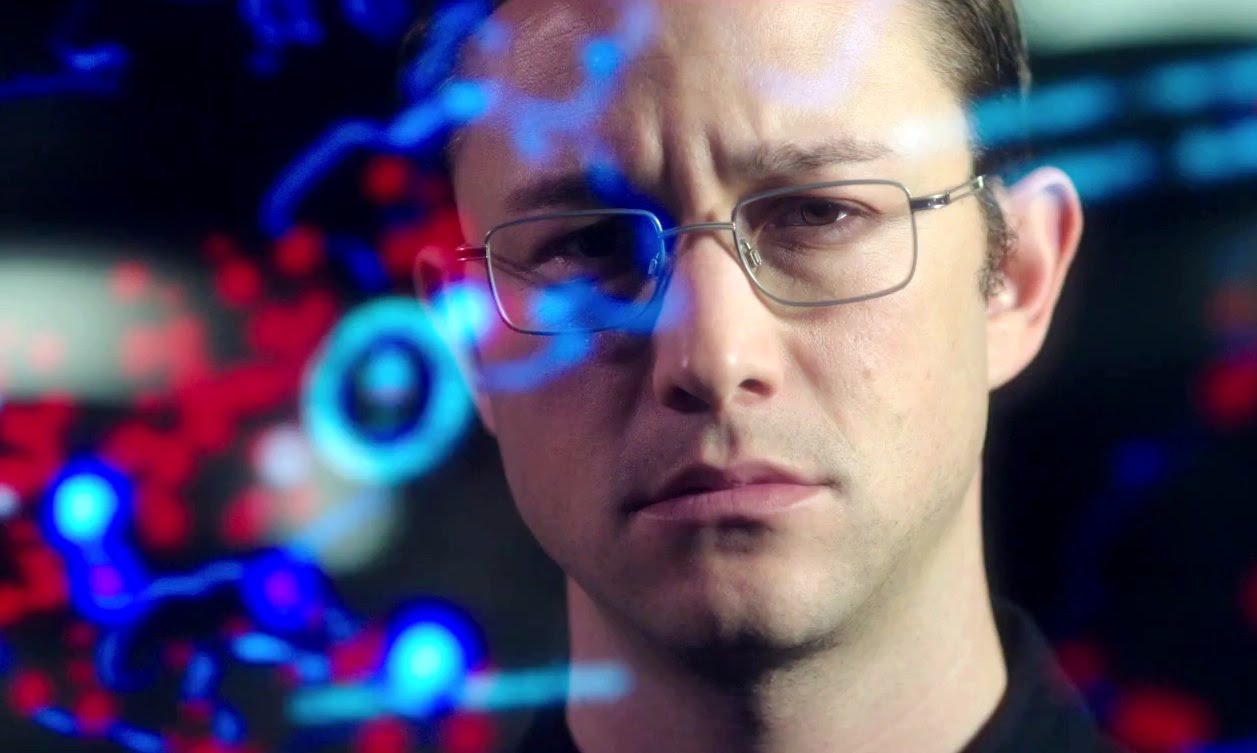
Opening with the clandestine meeting between NSA whistleblower Edward Snowden (Joseph Gordon-Levitt) and the journalists who would make the 2014 documentary Citizenfour (see it if you haven’t), Stone takes us through the harrowing journey that led to that taping.

Gordon-Levitt continues to impress in a performance that is eerily authentic. We see Ed as an optimistic patriot who becomes increasingly more outraged by what he sees and does with his high-security clearance for the CIA.

Interestingly, what the film itself lacks is outrage. Ed Snowden’s personality is very subdued. This no doubt benefitted his escapade, but it does not make for a vivid film.

And while vivid is Stone’s middle name, his attempts to enliven the story too often feel like tricks from an old bag: the mysterious mentor who conveniently shares information just when it’s most provocative; intensely suspicious camera angles; ominous score.

For the most part, though, Stone dials it down this time around, and that’s kind of a shame. Just a touch of the hyperbole and bombast of his usual fare might have benefitted a film that should deeply shock and appall, but does not.

Streamlining would have helped, as well. The 2+ hour running time sometimes feels like 3, often because Stone and his team of writers skim across so much information rather than digging deeply in a single area.

A large supporting cast includes some real gems – Zachary Quinto is especially good. Many of the minor characters, though, are so cartoonishly drawn (Rhys Ifans, in particular) that they distract from what is, in most areas, a reasonably realistic portrait.

There are just enough Stone-isms here to make the film irritating, but not enough to leave a mark. Despite strong performances and directorly panache, Snowden feels unfocused. Worse still, it lacks the gut punch that it should deliver.

Verdict-2-5-Stars

Mean Machine

Morgan

by Hope Madden

The weekend of wasted talent rolls on with Morgan, a derivative AI adventure that boasts an impressive cast and a lot of borrowed material.

Luke Scott’s feature directorial debut finds trouble with the L7 – an unnamed corporation’s newest attempt at artificial intelligence. There’s been an injury, and we don’t want a repeat of Helsinki, (it’s always Helsinki!) so Corporate sends the risk analyst (Kate Mara) to assess the situation.

The cast offers loads of reason for optimism. Joining Mara are Brian Cox, Jennifer Jason Leigh, Toby Jones and the great Paul Giamatti. That is a stacked ensemble. And even if every single one of them is underused, each brings something genuine and human – you know, the kind of thing that comes from deep and true talent – to the proceedings.

Highest hopes, though, are hung on the potentially dangerous cyborg herself, played by Anya Taylor-Joy. Hot off a brilliant lead in The Witch, Taylor-Joy again takes on a role in which her innocence is in question.

Like Witch helmsman Robert Eggers, Scott employs full screen close ups of Taylor-Joy’s face – her enormous, wide-set eyes and round, innocent features – to exacerbate a struggle to determine whether the character is good or evil.

And Scott clearly knows a good idea when he sees it because he borrows, grabs and plunders with glee.

His film is a mish-mash of Ex Machina, The Silence of the Lambs, Blade Runner and Terminator buoyed with decent performances and one vaguely fresh notion.

Every major character – every hero, villain, person of authority and character pivotal to the plot – is female. Every good decision, poor decision, and bit of badassery is made by a woman. And – get this – even when two of those women are soaking wet, their shirts are neither clingy nor sheer.

Right?!

I’m not going to lie to you – any horror/action hybrid with a predominantly female cast that chooses not to stoop to titillation and exploitation gets an extra star.

There are subtle moments that toy with sexuality, and Scott wisely lets Taylor-Joy express these themes primarily through a nuanced physicality. That, decent pacing and performances better than the material demands elevate the film above the predictable off-season action vehicle that it is.

Verdict-3-0-Stars

Drowning in Sap

The Sea of Trees

by Hope Madden

In 2002, filmmaker Gus Van Sant released one of his more polarizing and thoughtful films. In Gerry, two guys named Gerry (Casey Affleck and Matt Damon) hike ill-prepared into the desert to find themselves fighting for survival.

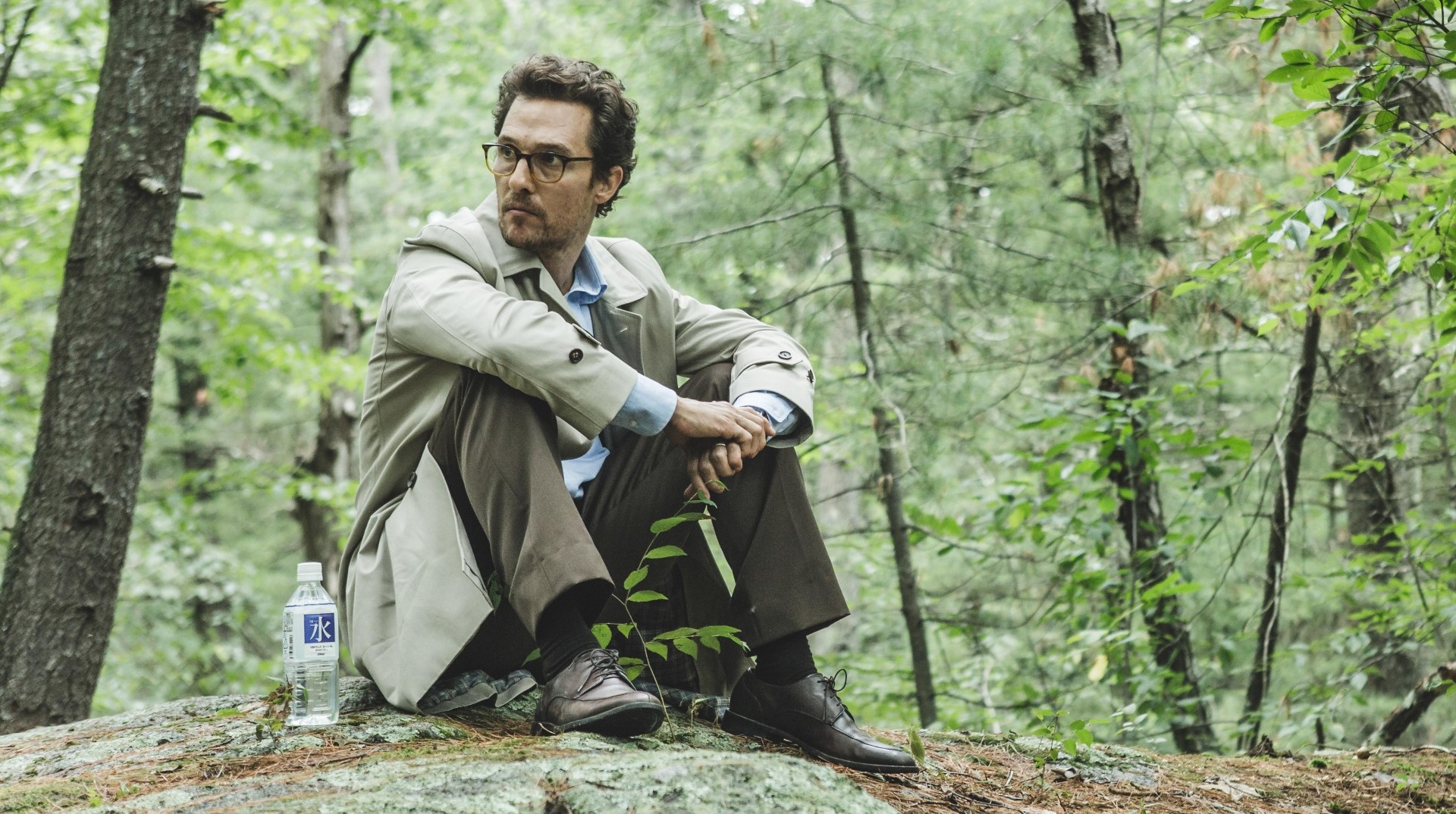
A quick glance at The Sea of Trees suggests that perhaps Van Sant returned to these themes. Matthew McConaughey loses himself in a Japanese forest, befriends another wayward traveler (Ken Watanbe), their treacherous journey offering life lessons aplenty.

Because horror writer Chris Sparling penned The Sea of Trees, I was kind of hoping the film would be a cross between Gerry and The Blair Witch Project.

It is not.

No, it’s an overtly sentimental, culturally patronizing waste of one Oscar winner and two Oscar nominees.

We wander Aokigahara, Japan’s “suicide forest,” with McConaughey’s Arthur Brennan. Brennan’s a scientist, and you know that that means. That’s right – atheist.

Van Sant falls back on the crutch of the flashback to help us understand what this handsome scientist is doing in the suicide forest. It’s in these segments that we meet Naomi Watts’s Joan Brennan and begin to unravel the mystery behind Arthur’s trip into the woods.

Watts suffers most from Sparling’s hackneyed dialog. Her few scenes need to be pivotal and weighty – we know this because of her utterly unrealistic speeches as well as Mason Bates’s condescending score.

Van Sant is no stranger to schmaltz. As great a filmmaker as he has been, sentimentality tripped him up in Promised Land, Finding Forrester and others. His career is peppered with other writers’ projects, many of them with a point to make, and those statement films tend to be Van Sant’s weakest.

Perhaps it’s because, rather than finding his own language for the story via camerawork or score, he relies on an existing style. The Sea of Trees certainly suffers from a heavy handed score. Van Sant also misses opportunities to create a sense of foreboding, claustrophobia, isolation or even redemption with the forest itself, Kasper Tuxen’s photography instead offering irrelevant yet lovely images of windblown treetops.

Trees can definitely be sappy.

Verdict-2-5-Stars

Yes, and…

Don’t Think Twice

by Cat McAlpine

The three rules of improv are as follows:

1. Say yes
2. It’s all about the group
3. Don’t think

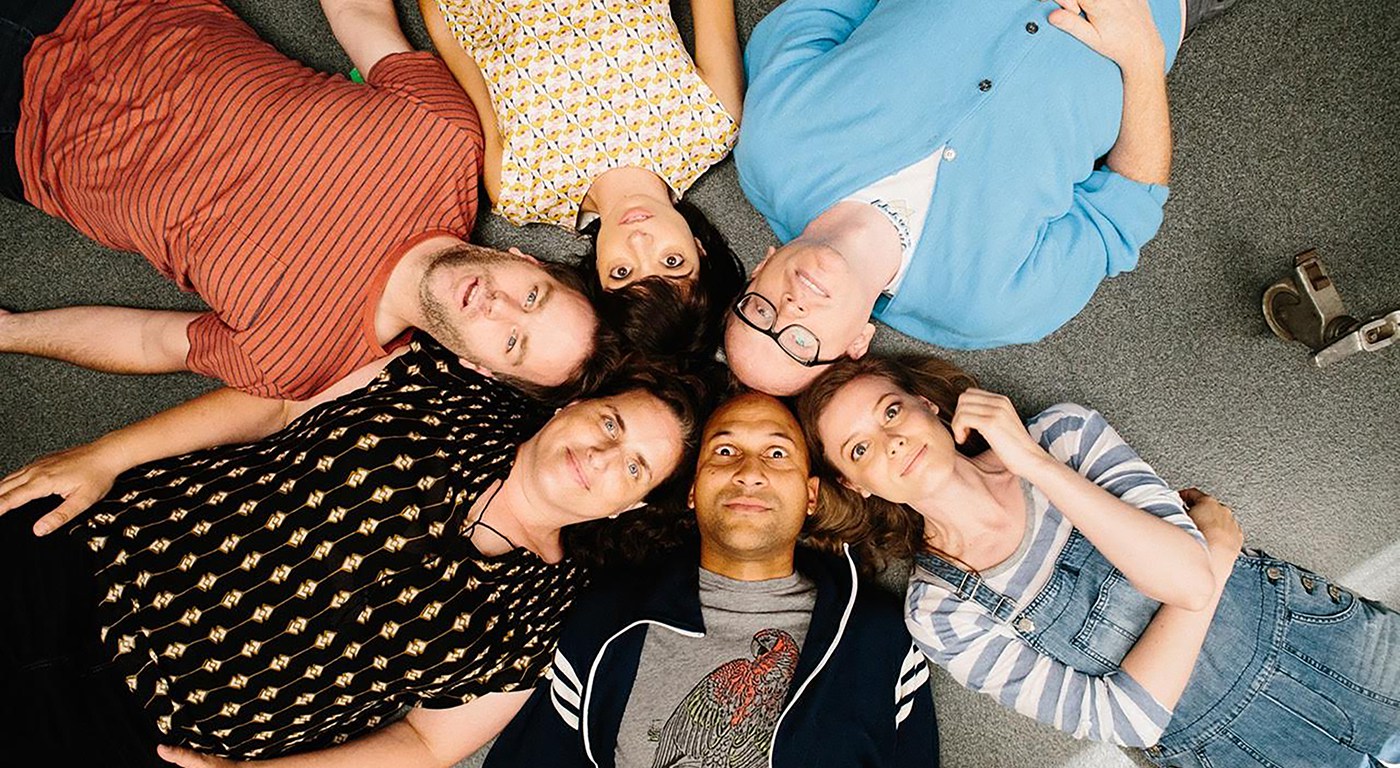
The six members of improv troupe The Commune live, bend, and break these rules on stage and in the green room in Don’t Think Twice. The ensemble dramedy pits the dreams of your 20s against the hard realities of your 30s and asks: When is it okay to be about me?

With the self-awareness of an improv performance, Don’t Think Twice keeps it real and stays grounded. The most recognizable face in the cast, Keegan-Michael Key (Key and Peele), plays Jack, the guy with a real shot at stardom. Samantha (Community’s Gillian Jacobs), has the skill but not the desire while Miles (Mike Birbiglia, who also wrote and directed) refuses to accept that he just doesn’t have what it takes.

Don’t Think Twice is intentional in its choices that way, inviting the audience to arrive with whatever context they can. Birbiglia never lets the drama spiral too low, either, immediately scooping you up again with jokes and laughter. The Commune develops several inside jokes throughout the course of the film, meaning you’re not only in on it, you understand how this sort of family keeps laughing even when life stops being funny.

At the beginning of each Commune show, Samantha asks “Did anyone have a particularly difficult day?” The ironic part, as most actors and improvisers will tell you, is that the best place to work through your own intimate problems is on stage in front of an audience.

We see this mechanism in action quite beautifully throughout this film, as Birbiglia uses the show-inside-a-show format to explore many themes.

His most powerful visual element, for instance, is the staging of chairs. Before each performance starts, the cast chairs are arranged onstage. In prepping for the performance, all the chairs are lined up neatly in a row, and if a performer is missing their chair is removed. The improvisers drag these chairs across the stage as needed throughout their performance, with the point being there is a chair for each of them. This literal setting of the stage underscores the narrative’s emotional current, and becomes a strong indicator of mood. “Hey, we’re about to work through some shit, and here’s exactly what we’re working with.”

Don’t Think Twice is a film that takes an honest look at “making it” from all sides. It challenges the notions of success and fame, and suggests that it’s okay to love doing something even if you never want to be famous for it.

If you’re invited to go see Don’t Think Twice this weekend, reply “Yes, and…”

Verdict-3-5-Stars

Texas Two Step

Hell or High Water

by Hope Madden

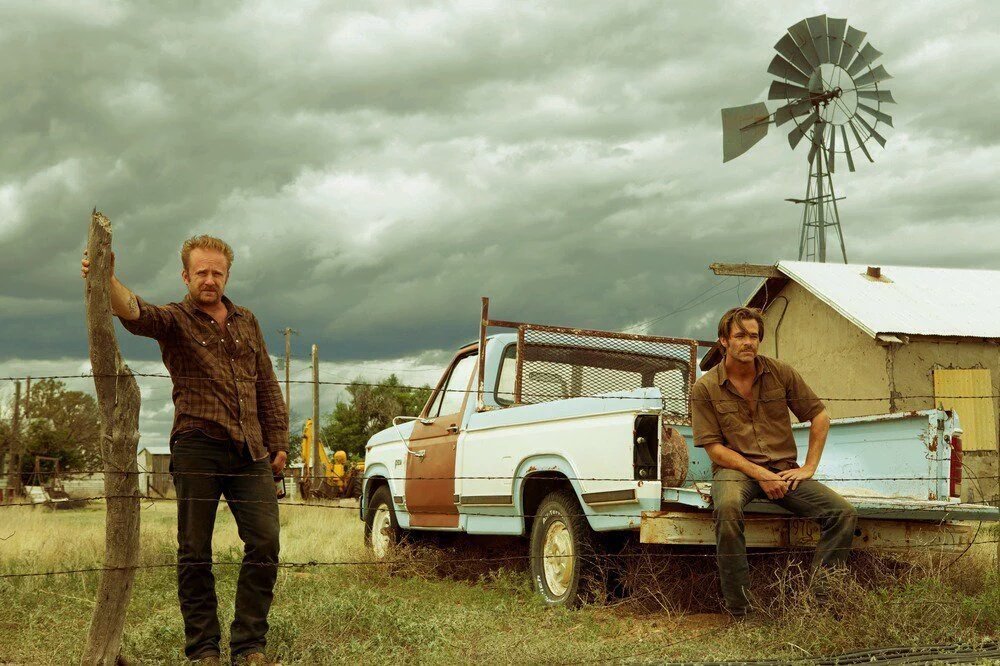
Two brothers in West Texas go on a bank robbing spree. Marshalls with cowboy hats pursue. It’s a familiar idea, certainly, and Hell or High Water uses that familiarity to its advantage. Director David Mackenzie (Starred Up) embraces the considerable talent at his disposal to create a lyrical goodbye to a long gone, romantic notion of manhood.

Two pairs of men participate in this moseying road chase. Brothers Toby and Tanner – Chris Pine and Ben Foster, respectively – are as seemingly different as the officers trying to find them. Those Texas Marshalls, played with the ease that comes from uncommon talent, are Marcus (Jeff Bridges) and Alberto (Gil Birmingham).

Though both pairs feel like opposites at first blush, their relationships are more complicated than you might imagine. Foster, a magnificent character actor regardless of the film, is a playful menace. Though Pine’s Toby spends the majority of the film quietly observing, his bursts of energy highlight the kinship. Their often strained banter furthers the story, but moments of humor – many landing thanks to Foster’s wicked comic sensibility – do more to authenticate the relationship.

Likewise, Bridges – wearing the familiar skin of a grizzled old cowboy – makes every line, every breath, ever racist barb feel comfortably his own. Birmingham impresses as well, quietly articulating a relationship far muddier than the dialog alone suggests.

These four know what to do with Taylor Sheridan’s words.

Sheridan more than impressed with his screenwriting debut, last year’s blistering Sicario. Among other gifts, the writer remembers that every character is a character and his script offers something of merit to every body on the screen – a gift this cast does not disregard.

The supporting actors populating a dusty, dying landscape make their presence felt, whether Dale Dickey’s wizened bank teller, Katy Mixon’s spunky diner waitress, or a hilarious Margaret Bowman as another waitress you do not want to cross.

Even with the film’s unhurried narrative, not a moment of screen time is wasted. You see it in the investment in minor characters and in the utter, desolate gorgeousness of Giles Nuttgen’s photography. Every image Mackenzie shares adds to the air of melancholy and inevitability as our heroes, if that’s what you’d call any of these characters, fight the painful, oppressive, emasculating tide of change.

A film as well written, well acted, well photographed and well directed as Hell or High Water is rare. Do not miss it.

Verdict-4-5-Stars