The unerring authenticity of The Witch makes it the most unnerving horror film in years.
Ideas of gender inequality, sexual awakening, slavish devotion to dogma, and isolationism roil beneath the surface of the film, yet the tale itself is deceptively simple. One family, fresh off the boat from England in 1630 and expelled from their puritanical village, sets up house and farm in a clearing near a wood.
There William (Ralph Ineson) and Katherine (Kate Dickie) will raise their five children: the infant Samuel, young twins Mercy (Ellie Grainger) and Jonas (Lucas Dawson), nearly adolescent Caleb (Harvey Scrimshaw), and the eldest, Tomasin (Anya Taylor-Joy), nearly a woman now.
Each performance is remarkable. The twins are enormously creepy and both parents are flawed in the most necessary and compelling ways. Young Scrimshaw offers layers and tenderness galore, leading to an astonishing scene it’s hard to imagine a child managing.
Still, it’s Taylor-Joy who not only anchors the film but gives it its vulnerable, burgeoning, ripening soul. She is flawless.
As a series of grim catastrophes befalls the family, members turn on members with ever-heightening hysteria. The Witch creates an atmosphere of the most intimate and unpleasant tension, a sense of anxiety that builds relentlessly and traps you along with this helpless, miserable family.
Every opportunity writer/director Roger Eggers has to make an obvious choice he discards, though not a single move feels inauthentic. Rather, every detail – whether lurid or mundane – feels peculiarly at home here. Even the most supernatural elements in the film feel appallingly true because of the reality of this world, much of which is owed to journals and documents of the time, from which Eggers pulled complete sections of dialog.
Though The Witch is Eggers’s first feature as filmmaker, his long career in art direction, production and costume design are evident in this flawlessly imagined and recreated period piece.
Equally important is the work of Eggers’s collaborators Mark Kovan, whose haunting score keeps you unnerved throughout, and cinematographer Jarin Blaschke. From frigid exteriors to candle-lit interiors, the debilitating isolation and oppressive intimacy created by Blaschke’s camera feed an atmosphere ripe for tragedy and for horror.
As frenzy and paranoia feed on ignorance and helplessness, tensions balloon to bursting. You are trapped as they are trapped in this inescapable mess, where man’s overanxious attempt to purge himself absolutely of his capacity for sin only opens him up to the true evil lurking, as it always is, in the woods.
Upending rom-com clichés has become its own cliché, and yet, with the right minds and talent, it can still be a fresh and funny experience. Please see Trainwreck.
Seriously. Please see it.
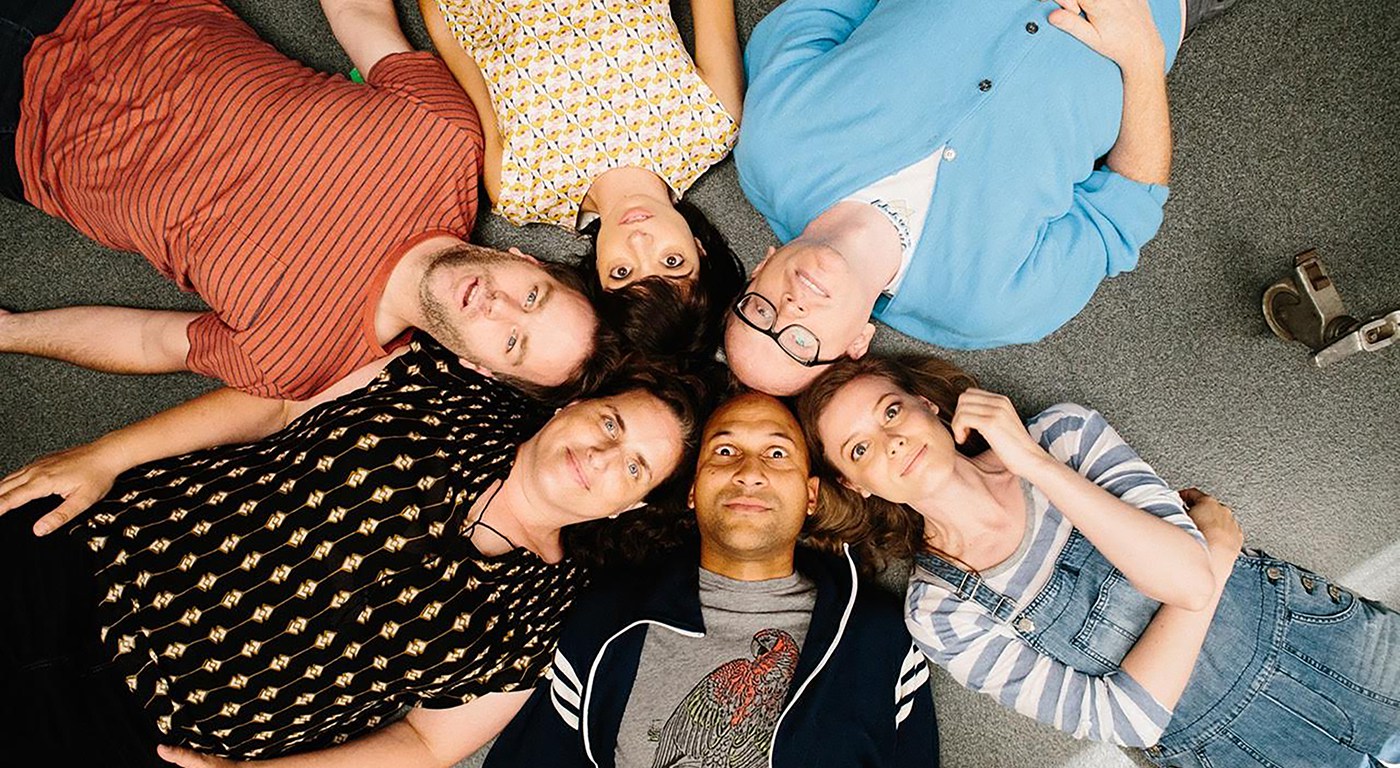
How to Be Single makes a valiant attempt to send up genre clichés as it follows four ladies and a handful of gentlemen, each failing to make that love connection with the Manhattan backdrop. It tries too hard, honestly, but it does get off a few good lines along the way.
Dakota Johnson anchors the ensemble as Alice, our everygirl, a new college grad ready to take a break from her longtime beau, head to the Big Apple, and find herself.
Alice’s circle includes her workaholic sister (Leslie Mann) and a wild new BFF (Rebel Wilson). Both comic veterans deliver some genuine laughs – thanks to an occasionally insightful script by Abby Kohn, Marc Silverstein, and Dana Fox – but Wilson, in particular, needs to find a new gimmick.
A revolving door of male characters includes one kooky performance by Jason Mantzoukas (a bright spot in this film, as he was in Dirty Grandpa). Ken Lacy also makes an appearance as basically the exact same character he played in the far superior film Obvious Child.
Which is one of the weirdest things about How to Be Single – it brazenly borrows from other, better films. Leslie Mann has a conversation that is almost identical to one from This Is 40, while her storyline steals an awful lot – including the boyfriend – from Obvious Child. Add to that the fact that Wilson’s boozy party girl schtick was lifted wholesale from Trainwreck, and you start to wonder if the film’s title should be How to Commit Larceny.
This is not to say the movie is bereft of humor. It does offer a handful of laughs, and it often lulls you into believing that characters are about to follow a formula, only to have that tiresome trope cleverly undermined.
It’s not that the film is bad, it’s just that it’s not as good as many other films and it knows it.
“For all you lost souls racing down that long road to redemption…”
That’s a theme – a concept that informs everything from a Springsteen song to a Mad Max movie with many, many stops in between. In a horror movie, though, redemption can be harder to come by. With Southbound, we’re given five tries to get it right.
Successful anthology horror is difficult to pull off. Varying directorial styles, tones, and themes often render certain tales tedious by comparison to others, and the quality differential can make it tough for a film to hold together as a single entity. Southbound, for the most part, manages to transcend these issues as it spins its diabolical tale, interlocking five stories of travelers on a particularly desperate stretch of highway.
The film opens strong as two bloodied passengers rush to a desolate gas station to clean up and take stock of their situation – a situation we’re given very few clues about. But the immediately menacing, we-know-something-you-don’t-know atmosphere inside that gas station sets us up for the nightmarish episode that will unravel.
What follows are pieces on similarly distressed wayfarers – a rock trio with a flat tire, a distracted driver, a brother searching desperately for his missing sister, a family on an ill-planned vacation, then back to the original bloodied pair heading for gas.
Though each story makes is own impression – some darkly comic, others more evidently supernatural, others grittier or bloodier – each allows the desert highway to inform a retro style influenced by the indie American horror of the Seventies. A soundtrack supplied by the lonesome radio DJ on everyone’s dial – when used effectively – underscores this throwback aesthetic, as the all-knowing DJ (Larry Fessenden) emphasizes that the trouble facing these journeymen is quite beyond their control.
Rather than feeling like five shorts slapped together with a contrived framing device, the segments work as a group to inform a larger idea – together they help to define this particular and peculiar stretch of highway. Time for Fessender to cue up AC/DC.
R-rated super hero movies are few and far between, but there are some subjects that would be so neutered with a teen-friendly rating that the hero would cease to be. Like Deadpool.
A thug with a quick wit, foul mouth, a likeminded girl, and quite possibly a ring pop up his ass, Wade Wilson has it all – including inoperable cancer, which sends him into the arms of some very bad doctors. The rest of the film – in energetically non-chronological order – is the revenge plot.
Directing newcomer (longtime video game FX guy) Tim Miller gets the nod with this off-season but still highly anticipated Marvel flick, and he does two things quite well. He knows how to stage an action sequence – which is key, obviously. But more importantly, he understands the tone needed to pull this film off.
Deadpool was introduced onscreen back in 2009 in X-Men Origins: Wolverine, but those films are so serious. Miller understands that, to make the most of this character, humor is the name of the game.
An utterly unbridled Ryan Reynolds returns as the titular Super (yes) Hero (no), and though the actor’s reserve of talent has long been debated, few disagree that his brand of self-referential sarcasm and quippage beautifully suits this character.
T.J. Miller and Morena Baccarin go toe to toe with Reynolds, and Leslie Uggams gets a couple of good lines, too. I’m sorry – what?
Penned by Rhett Reese and Paul Wernick – scribes behind the brilliant and hilarious genre mash up Zombieland – Deadpool is a nasty piece of fun from the opening credits (as magnificent a gag as any you’ll see for the entire 108 minute run time).
Even the sloppy and slow pieces – the inevitable X-Men tie ins, for instance – are sent up mercilessly, as if the writers and Reynolds himself know what the audience is thinking, which is: Who are these two lamos and why are they in this movie? Seriously, where’s Mystique?
All the sarcastic cuteness can wear thin, but Deadpool does not stoop to hard won lessons or self-sacrificing victories. It flips the bird at the Marvel formula, turns Ryan Reynolds into an avocado, and offers the most agreeably childish R-rated film of the young year.
It is the most tired and tiresome of all horror film gimmicks, but are there worthwhile found footage movies to be celebrated? Or are they all simply the result of an inexpensive narrative device that allows for sloppy filmmaking and weak production values? Well, we did the research and found that there are many worthwhile offerings in this field. Yes, the bad outnumber the good 10 – 1, but there are good ones. Here are our five (OK – 6!) favorites.
All ancient cultures generated fairy tales. They passed on stories that wrapped the virtues most respected at the time inside common dangers to tell tales of heroism and humor. Norway’s fairy tales all involve trolls. Indeed, their entire national culture seems weirdly identified with trolls. Why is that? Well, writer/director Andre Ovredal’s Trollhunter suggests that maybe it’s because trolls are a real problem up there.
Ovredal’s approach is wry and silly – adjectives that rarely hang out together, but maybe we haven’t seen enough of Norway’s cinematic output. The FX are sometimes wonderful, and especially effective given the otherwise verite, documentary style. Ovredal makes droll use of both approaches.
Trollhunter is definitely more comedy than horror, as at no time does the film actually seek to scare you. It’s a wild ride into a foreign culture, though, and it makes you think twice about the Norway section of Epcot, I’ll tell you what.
https://www.youtube.com/watch?v=vy2nAOdBUlw
5. Paranormal Activity (2007)
Paranormal Activity, or The Little Ghost Story That Could, opened on a handful of screens in just a few cities around the country for midnight weekend shows only. All screenings promptly sold out. Powerful word-of-mouth and an aggressive marketing campaign propelled the modest flick into multiplexes worldwide. Why the hubbub? Well, for those patient enough to let it seep in – for those who do not require a jump, a slash, or a violent act in every fifth frame – Paranormal Activity is an effective, creepy little production.
A classic ghost story, the film evolves Blair Witch-style, as a couple pestered by something spectral begin cataloguing incidents with a night vision camera. The entire film consists solely of the video footage, tracking about three weeks’ worth of rising tension, most of it captured in the couple’s bedroom while they sleep.
The couple (Katie Featherston and Micah Sloat) is annoyingly believable in their pensions for doing the wrong thing simply to cater to each other’s insecurities. This, and the simplicity in the filmmaking – limited effects, incredibly limited cast and sets, minimal backstory – create an unnerving air of authenticity. The cam-corder timestamp rolls quickly forward, providing shorthand imaging of the couple sleeping, then slows to real time tracking just as something is about to happen. This repetitive gimmick proves so succinct and effective that dread begins to build while still fast forwarding. By the time the clock slows, half the audience is holding its breath.
4. The Last Horror Movie (2003)
A clever concept handled very craftily, The Last Horror Movie is found footage in that we, the audience, have found it recorded over the VHS tape we are apparently watching. What serial killer Max (a top notch Kevin Howarth) has done, you see, is made a documentary of his ghastly habits and shared them with an audience that’s shown, by virtue of the movie it intended to rent just now, its predeliction for someting grisly.
There’s a lot of “yes, I’m a bad person, but aren’t you, too” posturing going on, and while it is an idea to chew on, it nearly outlives its welcome by the time Max applies his theory to concrete action. It’s an idea explored masterfully by Michael Haneke in 1997 (and again, ten years later) with Funny Games, and by comparison, The Last Horror Movie feels a bit superficial. (Not a huge criticism – few could withstand a comparison to Michael Haneke.)
But director Julian Richards deserves immense credit for subverting expectations throughout the film. Just when we assume we’re seeing a predator anticipating the pounce – just when we’re perhaps feeling eager to see someone victimized – the film makes a hard right turn. In doing this, Richards not only manages to keep the entire film feeling fresh and unpredictable, but he enlightens us to the ugliness of our own horror movie fascinations.
https://www.youtube.com/watch?v=McCUO5tQ5gk
3. Man Bites Dog (1992)
Oh, Belgium. How we do love your horror output. In a bit of meta-filmmaking, Man Bites Dog is a pseudo-documentary made on a shoestring budget by struggling, young filmmakers. It is about a documentary being made on a shoestring budget by struggling, young filmmakers. The subject of the documentary is the charismatic Ben – serial killer, narcissist, poet, racist, architecture enthusiast, misogynist, bird lover.
There’s more than what appears on the surface of this cynical, black comedy. The film crew starts out as dispassionate observers of Ben’s crimes – which is certainly morally questionable to begin with. Eventually their commitment to the project, fear of retaliation, bloodlust, or sense of camaraderie pushes them toward aiding Ben, and then finally, to committing heinous crimes themselves.
It’s a bitter view of their chosen industry, and – much like The Last Horror Movie – a bit of a condemnation of the viewer as well. The fact that much of the decidedly grisly content is played for laughter makes it that much more unsettling.
2. [REC] (2007)
[Rec] shares one cameraman’s footage of the night he and a reporter tagged along with a local fire department. The small news crew and two firefighters respond to a call from an urban apartment building. An elderly woman, locked inside her flat, has been screaming. Two officers are already on the scene. Bad, bad things will happen.
Just about the time the first responders realize they’re screwed, the building is completely sealed off from the outside by government forces. Power to the building is cut, leaving everyone without cell reception, cable, and finally, light. Suddenly we’re trapped inside the building with about fifteen people, some of them ill, some of them bleeding, some of them biting.
Filmmakers Jaume Balaguero and Paco Plaza make excellent use of their found footage approach, first by way of the news report, then because of the need to use the camera to see once power’s been cut. They play the claustrophobic nature of the quarantine to excellent effect, creating a kind of funhouse of horror that refuses to let you relax. The American reboot Quarantine is another excellent choice, but our vote has to go with the original.
https://www.youtube.com/watch?v=YGJ_jPKOj1c
1. The Blair Witch Project (1999)
BW is, of course, the now famous instigator of the found footage movement. Yes, Cannibal Holocaust was the first film to use the found footage conceit, but a) it sucked, and b) it didn’t show the audience this footage exclusively. Cannibal Holocaust built a narrative around the film canisters, and then looked at them. One of several truly genius ideas behind Blair Witch is that the filmmakers made the audience believe that the film they were watching was nothing more than the unearthed footage left behind by three disappeared young people.
Between the novelty of the found footage approach and the also novel use of viral marketing, the film drew a huge audience of people who believed they were seeing a snuff film. Nice.
And those two cutting edge techniques buoyed this minimalistic, naturalistic home movie about three bickering buddies who venture into the Maryland woods to document the urban legend of The Blair Witch. Twig dolls, late night noises, jumpy cameras, unknown actors, and not much else blended into an honestly frightening flick that played upon primal fears.
Doran and Yoav Paz have hit upon a ripe premise. Inside the walled city of Jerusalem is the epicenter for three of the world’s largest and most eruptive religions. If Judaism, Islam, and Christianity all share one holy land, is there something about this place – something otherworldly? And wouldn’t this be the likely spot for the Armageddon to begin?
Jeruzalem opens promisingly enough, inviting you into this microcosm of faith and humanity to witness an event too big to even be called biblical. Unfortunately, the filmmaking brothers derail the effort almost immediately with a found footage gimmick.
Sarah (Danielle Jadelyn) receives Google Glass from her father as a gift. The entire balance of the film is basically a first person shooter video game with precious little in the way of shooting or action and far less in terms of character development.
It is so hard to do a decent job with found footage, a stunt that has far outlived its novelty. By virtue of some early-film contrivances, the Paz brothers manage to eliminate some of the obvious pitfalls of found footage, but the fact that we spend the film’s entire 87 minutes with that unnatural seeing-eyed view is Jeruzalem’s greatest drawback.
Sarah and her bestie Rachel (Yael Grobglas) are going to Tel Aviv and then onto Jerusalem. Sarah’s been unhappy since her brother’s recent death and Rach things this will perk her up. Running into that hot archeologist on board the plane (because archeologists are always gorgeous twentysomethings) did seem to boost Sarah’s mood, and now the girls have decided to hit Jerusalem first so they can spend more time with their own personal Indiana Jones (Yon Tumarkin).
Too bad they show up just in time for the end of days.
The Pazes unearth similarities in the judgement day tales of the three faiths, weaving them together into a kind of zombie myth, which, again, should have felt much more ingenious than it does. Their clever concept is utterly hamstrung by the film technique.
Watching as Sarah falls behind every time anyone runs, listening to her unrelenting and unrealistic breathing, sighing, crying, and screaming – it all becomes too tedious to bear. More than that, though, the fact that you are basically watching a zombie shooter video game in which zombies are almost never shot is incredibly frustrating on the most basic level.
“I’m into motiveless malignacy. I’m a Shakespeare man.”
So begins the battle of wits and wills at the center of Mojave, writer/director William Monahan’s meditation on the alpha male.
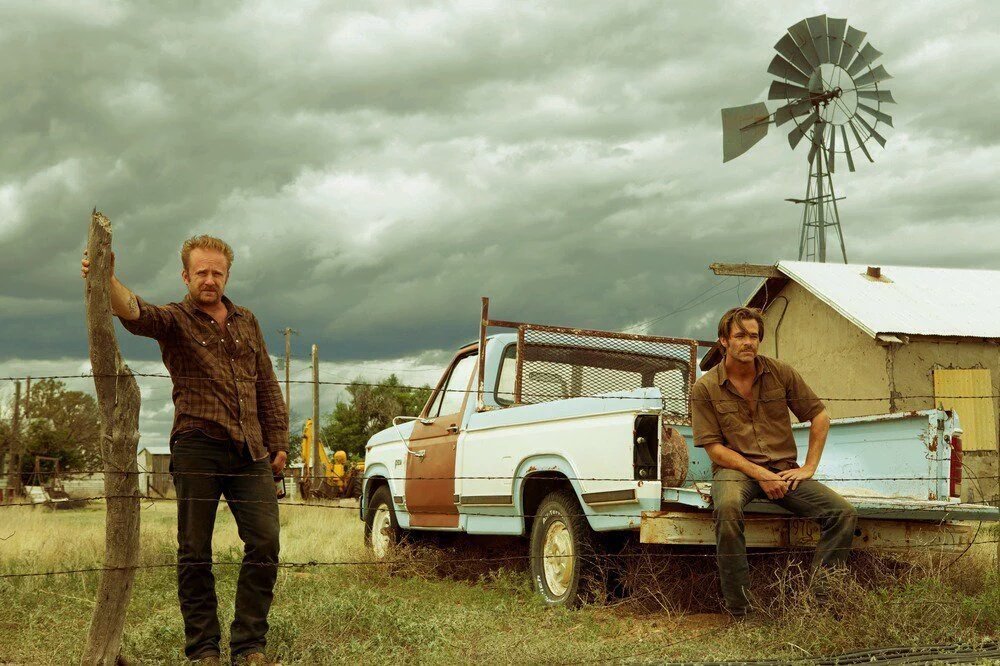
Thomas (Garrett Hedlund) is having an existential crisis. He’s been famous his entire adult life, and now that he has everything, there’s nothing left for him to want. His downward spiral leads him into the desert, where he happens upon a drifter (Oscar Isaac).
The duo’s hyper-literate fireside exchange is tinged with predatory tones, each man intrigued by the shifting ground of dominant/submissive beneath the wordplay.
The stilted, noir-esque characters – including bizarre cameos from Walton Goggins and Mark Walberg – are too hard boiled to be authentic. Instead Monahan and his cast create entertainingly dead-eyed facsimiles of humans, each floating (often meaninglessly) in and out of the battling pair’s dilemma.
What is that dilemma? Well, something happened out in that desert, and as drifter Jack says, “The game is on, brother.”
The wealthy, handsome Thomas misjudges his lowlife adversary, but Jack is equally guilty of underestimating the superficial pretty boy he’s set as his mark. Don’t look for a good guy in this battle, though, because the world would be better off without either party, and they both know it.
Isaac ranks among the most talented actors working today. If you only know him from Star Wars, you need to look deeper into this chameleonic performer’s work. He struggles here and there with Mojave, though, because Monahan’s writing makes it hard to find a real person beneath all the machismo.
Hedlund is no Isaac, but it’s fun to see the chemistry between the two (who shared a similarly uncomfortable chemistry during their fateful car ride in Inside Llewyn Davis).
Ultimately the cat-and-mouse thriller drowns in its own testosterone – the pair of utterly suicidal antiheroes buckling beneath their burdensome masculinity. Still, as literary references abound and the more-alike-than-different outsiders bristle at societal constraint, this over-written mess remains curiously fascinating.
Often a joyous riot of colors and sounds, and just as often a somber and spare smattering of dehumanizing imagery, Boy and the World poignantly encapsulates the clashing emotions and evolving comprehension of the human spirit.
Ale Abreu’s Oscar nominee for Best Animated Film offers deceptively simple animation to pull you into complex ideas. Boy – the wee, titular character who is about to start quite an adventure – sees a wondrous, kaleidoscopic world saturated with confusing but fascinating sounds and images, colors and experiences.
But as thrilling and vibrant as these early moments are, Abreu’s vision is edged with cynicism. It’s an idea that takes hold sporadically, when industrialization depletes the chaotic energy from the screen, when scores of stooped stick figures lose their meager jobs, when urban blight changes the tone from primary colors to smoky browns and greys, and finally when animation gives over to live action footage of deforestation.
Though the filmmaker’s themes are always evident – occasionally less subtle than they might be – the heartbeat of the story is that of the imaginative, innocent Boy. It gives the whole film a touch of sadness, but balances the anger with an optimism and innocence that’s often beguiling.
A contagious score from Ruben Feffer and Gustavo Kurlat emboldens Abreu’s pictures, emphasizing the vibrancy of the individual’s spirit as well as the celebration of human connection.
Boy’s journey is a circuitous one, a coming of age and acceptance informed by struggle and nostalgia but brightened with bursts of color.
There is something terribly lonesome but simultaneously jubilant about Boy and the World. It’s a heady mix from a confident new filmmaker, and a welcome addition to an entirely laudable set of animated Oscar contenders.
While it may be tough to separate the release of 13 Hours: The Secret Soldiers of Benghazi from the US presidential race, there’s little question that the tale itself offers the kind of compelling material suitable for the big screen.
Director Michael Bay helms the film chronicling the disastrous consequences of understaffing the security detail surrounding an American ambassador and a secret CIA installation in one of the globe’s most unstable nations.
The trivia section for this film’s IMDB page notes that this is Michael Bay’s third film based on true events, after Pearl Harbor and Pain & Gain. That does not inspire a lot of optimism. And yet, for a Michael Bay film, 13 Hours is surprisingly restrained, respectful, and solid.
Had it been any other director, the word “restrained” would probably not appear in that sentence, but Bay dials down his own bombast to a degree that is genuinely surprising.
The screenplay, written by Chuck Hogan from Boston Globe reporter Mitchell Zuckoff’s book (co-written by surviving members of the security team), offers the point of view of the veteran security detail hired by the CIA to police and protect their compound. Staffed by retired Marines, Navy SEALs, and Army Special Forces, the security team on the ground on the 11th anniversary of the September 11th attacks had the skills, but not the number, to contend with the organized militant attack.
John Krasinski and James Badge Dale anchor the film with believable if under-dimensional performances of two of the security contractors in a by-the-numbers combat procedural.
Sidestepping politics in favor of nerve-shredding action, Bay creates set piece after explosion-and-firebombing-ready set piece. His tendencies and crutches are on full display, though the film feels relatively simply crafted when compared to his other atrocious efforts. It’s a welcome change of pace because self-congratulatory violence would undermine this truly harrowing ordeal.
Yes, CIA agents are painted as one-dimensional pencil pushers jealous of and abusive to their physically superior security guards; yes, individual character weaknesses are exaggerated; yes, tragedies and fatalities are telegraphed from the opening scene. And, yes, the story these survivors have to tell would likely have been better handled by another filmmaker.
13 Hours, though, is not a terrible film. It’s no Zero Dark Thirty, not even a Lone Survivor, and perhaps the sheer volume of blood spilled for the sake of excitement and hoo-rah is too great to consider the film deeply respectful of its subject matter. But I think it’s safe to say that Bay really tried, and, to a limited degree, he succeeded.
I like a good twin movie as much as the next guy – probably more – but let’s be clear. The Forest is not a good twin movie. It’s not a good movie at all.
Through her freaky twin telepathy, Sara (Natalie Dormer: Hunger Games, Game of Thrones) knows something’s wrong with her sister Jess, living in Japan. She knows she’s alive and in danger, although the authorities calling to verify Jess’s missing person status believe she is dead because she’s gone alone into the suicide forest on Mount Fuji.
Well, off to Japan Sara goes, to enter the forest alone, stray from the path, see ghosts, listen to the advice of creepy school girls who appear in the middle of the forest at night (because there’s nothing at all suspicious about that), and just generally make bad choices.
Every individual has specific buttons horror movies can push. Some people are afraid of clowns, some of enclosed spaces. Some of us have a pathological terror of the woods. Some of the same of us have a twin sister. So, the idea of getting lost in the dark in a forest full of angry ghosts and ghouls as you hunt desperately for your twin sister – well, for some of us, these are buttons that should make it really easy for a movie to be scary.
Here’s what I’m saying – I am the audience for this movie, and it was as scary as an episode of Three’s Company.
Dormer’s performance is far more lifeless than those stiffs hanging from the trees, and director Jason Zada’s overreliance on jump scares and inability to develop atmosphere guarantee a tedious walk in the woods.