Tag Archives: movie reviews

I’m On a Boat

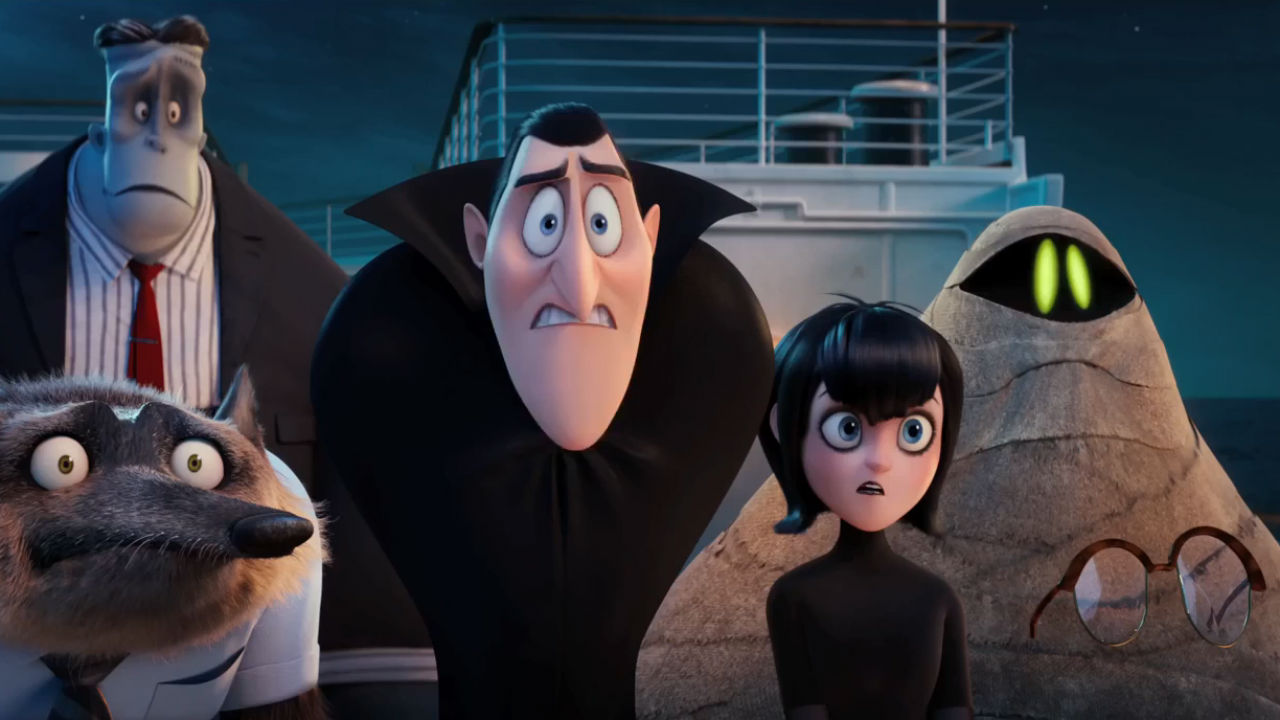
Hotel Transylvania 3: Summer Vacation

by Rachel Willis

These days, whenever an animated movie is released, it’s a near guarantee it will become a franchise. A few of these sequels are as good or better than the originals that spawned them, but most of them aren’t.

There’s nothing inherently problematic with milking successful movies for more material, provided the new stories are able to stand alone. Hotel Transylvania 3 manages to do so, but there are areas of the film that suffer from the same problems as other sequels.

The latest installment in the Hotel Transylvania series introduces us to the centuries-long feud between Dracula and the Van Helsing family. A brief montage shows the audience Abraham Van Helsing’s many failed attempts to destroy Dracula. When it finally seems Van Helsing will no longer be a threat, we’re brought to the present day Hotel Transylvania to catch up with Dracula, his daughter Mavis and their clan of family and friends.

Deciding her dad needs his own vacation based on his more-spastic-than-usual behavior, Mavis books a family trip on a monster cruise. Along for the ride are a number of characters from the previous films, but the new film would have been better served if they’d been left behind in favor of fleshing out the new faces. Aside from Mavis and Dracula, none of the previous films’ characters seem to have been given much thought.

As Dracula, Adam Sandler brings a new aspect to a centuries-old character. Instead of menacing, Dracula is a spaz. While trying to woo the captain of the monster cruise, Ericka, he’s a nervous wreck. It’s an interpretation that serves the franchise well as it provides moments of humor for both children and adults.

Kathryn Hahn as Ericka is a good addition to the series, though her character’s animation is reminiscent of Tweety Bird. She’s a humorous character, and her scenes are among the movie’s best. Hahn plays well against Sandler, and together, they’re the glue that binds the film.

Director Genndy Tartakovsky has helmed all three films in the Hotel Transylvania series, and he’s done well with the material. The latest film will likely appeal to children of all ages, though their parents may surreptitiously check their phones once or twice.

Feel the Burn

Sorry to Bother You

by Hope Madden

The stars are aligning for Boots Riley. The vocalist and songwriter for The Coup—the funkiest radical socialist band you’re likely to find—has managed to produce a wild and relevant satire of capitalism that might possibly find a mainstream audience.

And that’s not because he whitewashed his message.

Sorry to Bother You uses splashes of absurdity and surrealism to enliven the first act “pull yourself up by your bootstraps” tale of a weary young man’s ascension through the ranks of telemarketing. It is a funny and pointed send-up of cubical hell that—unlike most office comedies—focuses quickly on a system that benefits very few while it exploits very many.

There is so much untidiness and depth to relationships, characterizations, comedy, horror, style, message and execution of this film that you could overlook Riley’s directorial approach. He expertly uses the havoc and excess, first lulling you into familiar territory before upending all expectations and taking you on one headtrip of an indictment of capitalism.

Led by Lakeith Stanfield (Get Out, Atlanta) and Tessa Thompson (star of Creed, Thor: Ragnarock and her own gleaming awesomeness), Sorry to Bother You finds an emotional center that sets the friction between community and individual on understandable ground.

Thompson offers bursts of energy that nicely offset Stanfield’s slower, more necessarily muddled performance as the “everyman” central character for a new generation.

And who better to embody everything a capitalist system convinces you is ideal than living Ken doll Armie Hammer? He is perfect—an actor who entirely comprehends his physical perfection and how loathsome it can be. He is a hoot.

Riley’s film could not be more timely. Though he wrote it nearly a dozen years ago, and it certainly reflects a trajectory our nation has been on for eons, it feels so of-the-moment you expect to see a baby Trump balloon floating above the labor union picket line.

Bursting with thoughts, images and ideas, the film never feels like it wanders into tangents. Instead, Riley’s alarmingly relevant directorial debut creates a new cinematic form to accommodate its abundance of insight and number of comments.

Does it careen off the rails by Act 3? Oh, yes, and gloriously so. A tidy or in any way predictable conclusion would have been a far greater disaster, though. Riley set us on a course that dismantles the structure we’ve grown used to as moviegoers and we may not be ready for what that kind of change means for us. Isn’t it about goddamn time?

Pleased to Meet Me

Three Identical Strangers

by Hope Madden

The first time I saw Desperately Seeking Susan, I remember being unnerved by the image of three identical men, all dressed the same and leaning up against a building to ogle Madonna as she exited a cab.

Weird, I thought.

Little did I know that those three brothers were the center of a global media hubbub at the time.

Back in 1980, as Robert Shafran moved into college, he was greeted warmly by many as “Eddy.” The 19-year-old would soon meet his doppleganger.

Eddy Gallan—also adopted, also born July 12, 1961—and Bobby became inseparable friends. Brothers, actually, and their story attracted the attention of several newspapers as well as another young man born July 12, 1961.

When David Kellman joined the crew, three brothers separated at birth held the world’s attention. This story itself, told warmly and with great compassion by documentarian Tim Wardle, is endlessly charming based on the contagious joy the brothers felt to be reunited.

And you coast along on that charm for a while until this nagging idea creeps into the party atmosphere: why were they separated in the first place?

Even those who remember the brothers’ tale will find this recounting fresh and fun. Footage and photos of their time together as young men paired with their own lively recounting of the story creates an energy that entertains. Wardle expertly moves the story forward, offering new, often funny and sometimes touching reminiscences of certain events from those closest to the action.

Wardle’s less a master of visual storytelling. Stylistically, the film struggles. Some painful musical choices, stagy reenactments and otherwise uninspired visual representations give the film an amateurish appearance. Late-film montages of earlier revelations and quotes feel like information force-feeding. But, thanks to the truly fascinating story and the charm of its leads, these missteps don’t derail the effort.

The filmmaker’s strictly sequential chronology relies on your assumptions about documentary and ensures consistent surprises. What begins as a zanier-than-life story slowly turns into a dark tale of conspiracy colored by larger themes of nature versus nurture.

As Wardle pieces together a frustrating puzzle, he’s left with more questions than answers. Constantly revealing a new piece of information, a new source and more complications, the investigation itself becomes as much a character in the film as the triplets.

If nothing else, it is quite a story.

Do Not Open

The Devil’s Doorway

by Hope Madden

So many horror films delve into those murky holy waters of Catholicism. So many horror movies are clearly made by lifelong non-Catholics. If Aislinn Clarke’s The Devil’s Doorway gets extra points, it’s for knowing the religion it is lambasting.

Two priests—one young, one a veteran—head into dangerous spiritual territory in a film that fully understands that you will compare it to The Exorcist. How can you not?

The Devil’s Doorway follows Fr. Thomas Riley (Lalor Roddy) and Fr. John Thornton (Ciaran Flynn) to a Magdalene Laundry, one of Ireland’s infamous workhouses populated by women the country wanted to hide and exploit.

The setting itself is a way of inverting the gravitas of The Exorcist, which saw two priests—one firm in his belief, the other confronting a crisis of faith—come to the aid of an innocent girl facing the corruption of her purity from something demonic.

Here, Fr. Riley, the elder priest, has to face his own crisis of faith. But his belief has been stretched to breaking by the corruption of the church itself, as manifest by this place.

So, they go to investigate a miracle but find something more predictably menacing is afoot.

There is an earnestness in the battle between faith and cynicism in this film. The Exorcist and films like it, those that saw the wayward horror of man as only correctable with help from above, have long given way to something else. A demonic possession now feels like it happens within holy walls because that’s where the devil lives in the first place.

While most films of this ilk simply take potshots, The Devil’s Doorway mourns the corrosion of something worthwhile and holy. Applause for finding an honest statement to make within this over-worked subgenre, although the congratulations belong primarily to Roddy.

The Irish actor finds truth in Fr. Riley—Doubting Thomas’s—struggle. He stands out as the only sane person, the only responsible adult in the house. And though the Mother Superior role is written with evil relish (as per usual), Helena Bereen’s delivery stings in a way that is eerily authentic.

Until it’s not.

We get it. Nuns are creepy. Twelve years of Catholic school clarified that.

The film gets a bit caught in genre trappings, and what starts as an indictment of the church becomes so punchdrunk on jump scares it loses its focus entirely. The found-footage gimmick works well enough for a while, but devolves in the end into something so familiar it’s almost sad.

The Devil’s Doorway started out with promise, but like so many lapsed Catholics, it lost its way.

I Don’t Want to Go Out—Week of July 9

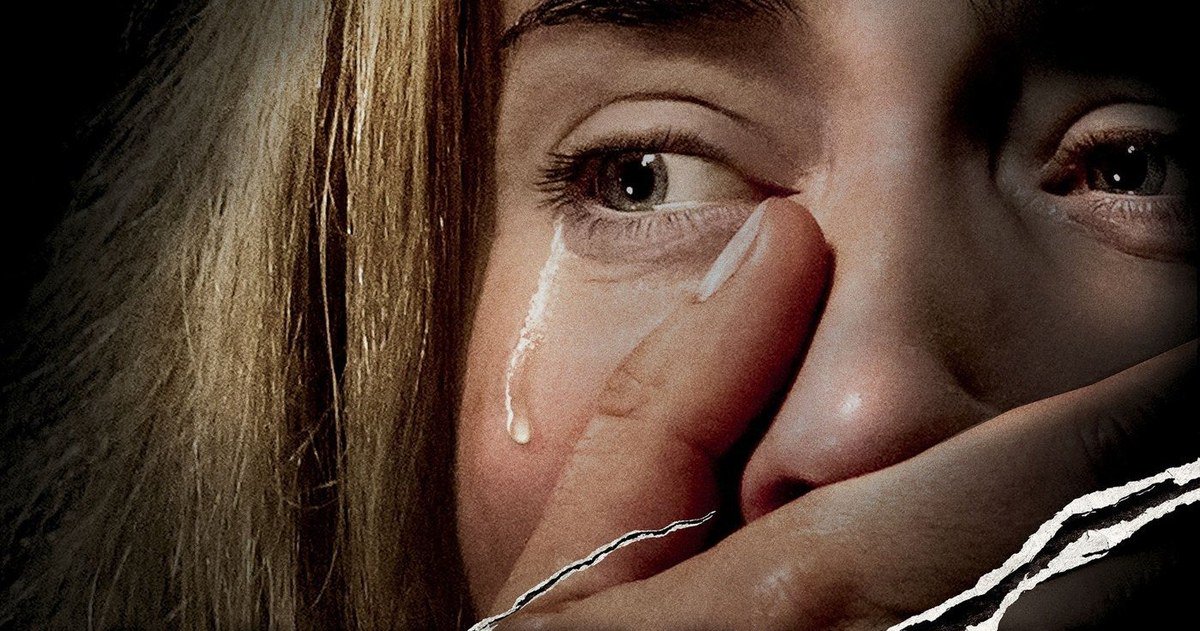
Horror and disappointment available at home this week. Hopefully not at your home. Just movies, you know? One of the best horror movies of the year, and one terrible disappointment.

A Quiet Place

The Leisure Seeker

The Screening Room: Let’s Get Small and Angry

Welcome back to The Screening Room podcast, where we marvel (see what we did there?) at the breezy comedic stylings of Ant-Man and The Wasp, get political along with the latest Purge, celebrate Robert Pattinson’s continued streak with Damsel, discuss why Whitney is such a solid doc, and also run through what’s worth it and what is not in home entertainment.

Listen in HERE.

I Don’t Want to Go Out—Week of July 2

So you’ve got some time off work this week, maybe you want to just hang in, avoid the crowds and the heat, eat some Doritos and watch some flicks. We hear ya! Most all your options are solid this week, whether you’re looking for comedy, drama or horror. Here’s the rundown:

Blockers

Where is Kyra?

The Cured

7 Days in Entebbe

The Female Brain

https://www.youtube.com/watch?v=tP5N5XpGlYo

Screening Room: Naughty and Nice

Welcome back! This week on the podcast we disagree on Sicario: Day of the Soldado, but our thinking is more aligned on Uncle Drew, Won’t You Be My Neighbor?, Hearts Beat Loud and Mountain. Plus, we’ll let you know what’s worth your time in new home entertainment releases.

Listen to the full podcast HERE.

WWFRD?

Won’t You Be My Neighbor?

by Hope Madden

The world did not deserve Fred Rogers.

A loving and tender soul if ever there was one, Fred Rogers saw children not as future consumers, but as vulnerable human beings who needed to know they had value.

Directed by documentarian Morgan Neville (Oscar winner for his 2013 doc 20 Feet from Stardom), Won’t You Be My Neighbor? trollies into the life of the children’s TV host. What you’ll learn is that, yes, Mr. Rogers was really like that.

What might surprise you, though, is how brave he was in representing the themes and conflicts of current events in the neighborhood. It seems everybody missed that—perhaps because of his gentle delivery, or maybe adults just couldn’t see past the puppets to notice. Rogers wasn’t out to be controversial. But when horrifying images from the Vietnam War, assassinations or terrorism splashed across TV screens, Rogers understood that this would frighten children, and they would need ways to cope that would not likely be there. So he did it himself.

The parallels to today are hard to miss, as is the current need for Rogers’s sincerity and idealism.

Neville mines ample archival reels from programs, interviews and home movies and offsets them nicely with talking head footage. The family exposes a man who struggled at times with exactly the kinds of insecurities and fears he addressed head-on for children on his show: fear of being a fraud, the need to be loved.

Neville’s film does not canonize the man. We see how uncomfortable he was with his SNL-style imitators and how infuriating he found trashy children’s programming.

Meanwhile, experts position him among the great child educators and colleagues see him as a fearless and savvy manipulator of the medium. An ordained pastor, Rogers also utilized his time with children to preach by example.

In one episode, Rogers is cooling himself on a hot day by bathing his feet. A visit from Officer Clemons, an African American character played by Francois Clemmons, prompts Fred to ask him to join. The two men sit blandly enough, side by side, their bare feet chilling in a plastic pool.

At that same time – as Neville points out with news footage – children may also have witnessed a different image on their TV screens: one of a public pool manager tossing bleach into the water to bully a black family into leaving the grounds.

Fred Rogers looked out for children, understanding what frightened us and making every attempt to help us through those “difficult modulations.” It’s tough to make it through the film’s 94 minutes without tearing up, and that’s not entirely from sentimentality. It’s from wondering whether today’s world is simply too cruel and cynical for Mr. Rogers.

The Grommets of Oz

Breath

by Hope Madden

Quiet poetry is hardly what we’ve come to expect from a surf movie. But actor-turned-director Simon Baker offers exactly that in his elegantly familiar coming-of-age story, Breath.

Based on Tim Winton’s novel, the film follows two mates in coastal Australia as their childhood friendship faces the snarls of the onset of adulthood.

Pikelet (Samson Coulter) —a beautiful gangle of limbs and promise—is the only child of a humble but loving family. He and Loonie (Ben Spence) are inseparable, though their futures are destined to veer in wildly different directions. Before that happens, they will tumble toward adulthood on some dangerous waves.

The lads find an unlikely mentor in the form of a bohemian surfer. Bodhi…no, I’m lying. His name is Sando (Baker), and for every one of Point Break’s Hollywood-slick moments of waves, wisdom and gleaming tan, Sando offers authentic surf-tossed ruggedness and reflection.

This film is less about that one big one, the one that’ll make you famous. It’s entirely about the journey, the solitude and the fear—what an individual can make of those elements, what those elements make of an individual. It’s about life.

The young actors’ performances are wonderfully true and fresh, each easily articulating those days immediately before adulthood claims a child, determining his inevitable direction. Breath is most at home as these two boys bristle and bond, but slightly less honest as they separate and explore the world’s dangerous secrets on their own.

The lads are full of promise, though you can already see a darker path for one. The adults onscreen, including Sando and his wife Eva (played with appropriate chill by Elizabeth Debicki), represent the many possible ways that journey could go wrong.

Though Baker directed a number of episodes of his TV show The Mentalist, Breath represents his first venture into feature filmmaking. He shows a knack for authenticity and understatement—two elements sorely lacking in coming-of-age dramas, not to mention surf films.

Even the way he captures the water evokes the idea of imperfection and wonder, unlike those crystal blue, foaming tubes we’ve become used to.

It works well with Winton’s words, adapted for the screen by Gerard Lee. Both he and Baker seem to have crafted the entire, lovely effort around one nearly perfect line: Never had I seen men do something so beautiful, so pointless and elegant, as if dancing on water was the best and brightest thing a man could do.

https://www.youtube.com/watch?v=chI8HpQt96Y