Tag Archives: movie reviews

Truth Bombs

Stealing School

by Cat McAlpine

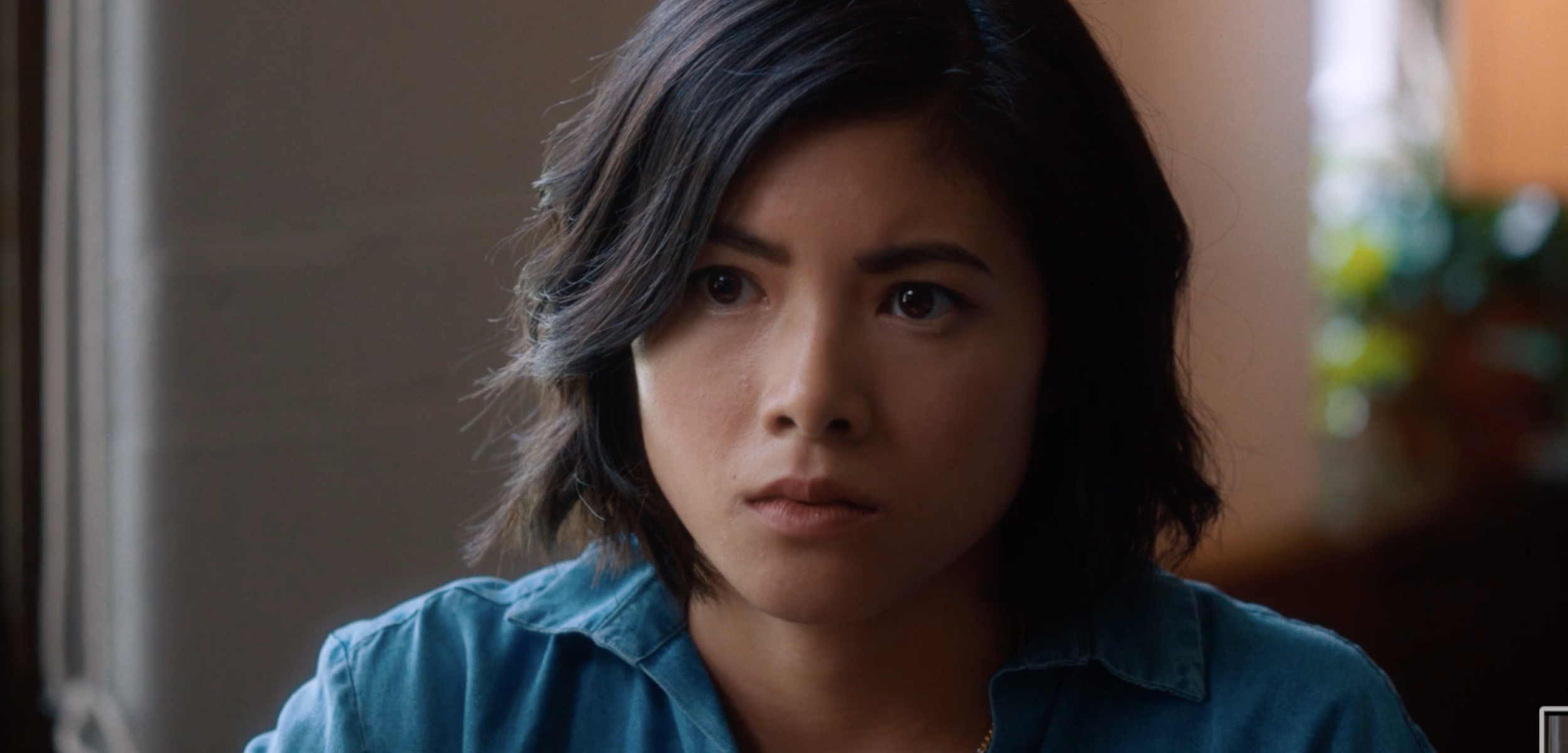
Senior April Chen (Celine Tsai) is days away from graduating from DuPont University, and she already has a lucrative job waiting for her in Silicon Valley. All she has to do is get through her academic misconduct hearing. But her TA, Keith Ward (Jonathan Keltz), is determined to pin her for plagiarism and as the hearing wears on tensions rise and secrets are unearthed.

In a mockery of a courtroom, Stealing School analyzes the personalities and egos that run rampant in academia, criticizing its self-importance, bureaucracy and institutional racism. A particularly good running gag is various character’s introduction of their thesis titles. If you’ve ever had a brush with higher education, you’ll recognize all the archetypes that writer and director Li Dong cross-examines.

Particularly brutal is the Canadian school’s PR policy which seems to rely entirely on “being better than American schools.” Their only answer to accusations of racism and misconduct is that at least they aren’t like the institutions to their south.

Stealing School has good pacing, and a delicious unfurling of tensions between various characters during breaks and in flashbacks. The film analyzes how important it is to be likable, rather than right or good. Keltz is absolutely loathsome and delivers the best performance of the film, being too eager, too righteous, too vindictive. Tsai matches him with a subtler performance, walking a moral gray area that has you unsure of her innocence until the final moments of the film.

The rest of the supporting cast matches their archetype well, all either jaded by the academic world or still obsessed with its ability to give them better opportunities. But Stealing School’s criticisms don’t stop at academia. Dong also explores racism in broad strokes and the toxic culture of tech that only asks that you provide good code.

Stealing School is a tight hour and 14 minutes, which keeps its mostly single setting from feeling claustrophobic. With good pacing and a satisfying end, this is a great watch for your evening, especially if you regret your degree.


War Torn

Cherry

by Hope Madden

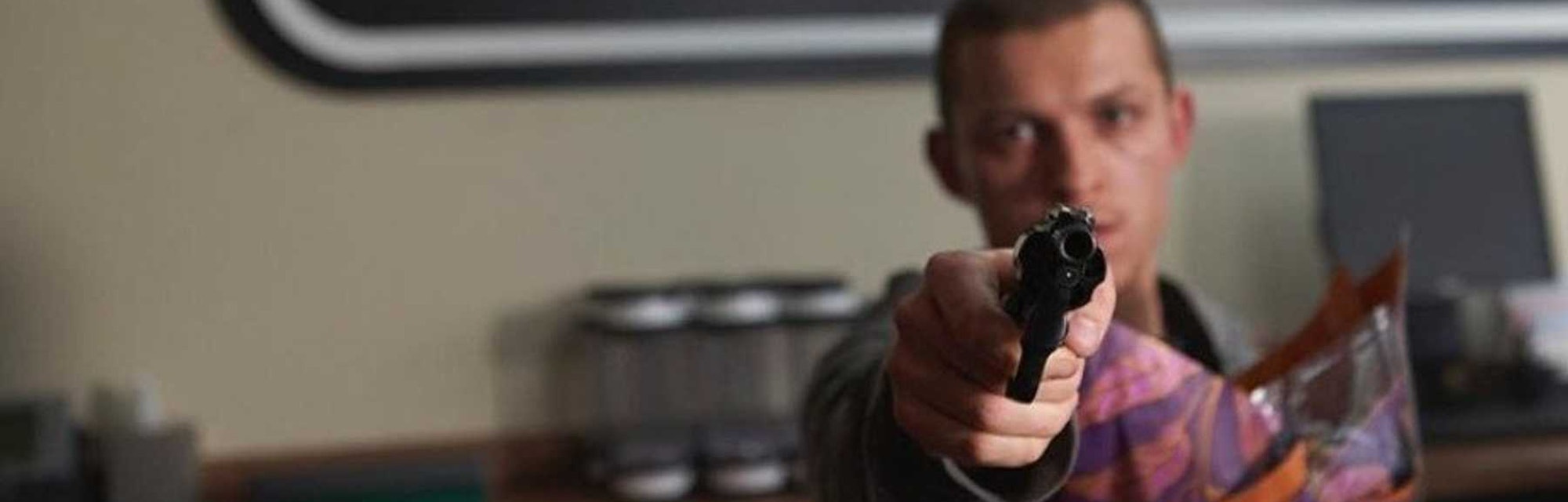
Ohio is trying to kill Tom Holland.

Last year we lured this sweety pie to Knockemstiff with the sole purpose of, well, knocking him stiff in Antonio Campos’s big screen adaptation of Donald Pollack’s novel The Devil All the Time.

And now Cleveland.

Filmmakers and brothers Joe and Anthony Russo—both fans of The Land, having filmed many of their Marvel films there—bring Nico Walker’s Cleveland-based semi-autobiographical novel to the screen. Cherry sees a young man, nameless through most of the film, make a bad decision and then pay for it dearly for the rest of his life.

That young man is played with as much humanity and tenderness as you’ve come to expect from Holland. You cannot root against this kid.

Walker himself, whose novel was adapted for the screen by Angela Russo-Otstot and Jessica Goldberg, apparently wrote what he knew. The Russos take his tale and, in their best moments, inject a cynical visual commentary to offset Holland’s earnest good nature.

The star draws support from some impressive ensemble work. Forrest Goodluck (The Revenant) and Jack Raynor (Midsommar) deliver an excellent mix of tragedy and comedy, while Ciara Bravo gives love interest Emily a believably bruised soul.

The combination, when it works, generates a knowing story about a screwup who paid too high a price for one mistake but never lost his humanity.

It doesn’t always work, though.

Cherry clocks in at a hefty 2:20 and it feels for all the world like the Russos and their writers simply didn’t know how or where to cut Walker’s story down. The movie lacks focus.

And while there are clever stylistic choices made—the names of the banks as written on walls and other nods toward a subversive side commentary—the structure is far, far too standard. This should feel like no other movie you’ve ever seen because Walker’s story is really unusual.

Instead, Cherry seems too much like a string of broken person meets terrible consequences before facing personal demons thrillers.

Role Playing

The Father

by George Wolf

How much you’re moved by The Father will likely depend on how you see the central narrative device employed by director/co-writer Florian Zeller.

Is it a gimmick that cheapens the very subject he’s digging into, or is it an effective – even logical – new frame for a familiar picture?

Anthony Hopkins and Olivia Colman star as father and daughter Anthony and Anne. Now, with these Oscar winners as your leads, your device could be the mail-in offer from the back of a cereal box and it would most likely be riveting, but Zeller has more lofty ambitions.

Anthony’s memory is fading fast, forcing Anne to navigate his mood swings and growing combativeness while she looks for an in-home caregiver who can handle him. Young Laura (Imogen Poots) looks promising, but Anthony’s initial charm at their meeting gives way to insults and accusations about a plan to force him from his well-appointed flat.

But is it his flat? And who is the man in the living room (Mark Gatiss) who says he lives there?

Is Anne really planning to move to Paris with a new boyfriend, or is she still married to the impatient and angry Paul (Rufus Sewell)? And just who is that other woman who looks like Anne (Olivia Williams)? Zeller adapts his own stage play with a profound intimacy that feeds the intentional confusion.

In the last several years, movies such as Away From Her and Amour have mined their greatness through the effect of dementia on the longtime spouse of the afflicted.

But here, not only does Zeller make a sympathetic pivot to the adult child of an ailing parent, but his chamber piece finds its greatest resonance through the heartbreaking empathy that comes from giving us Anthony’s point of view.

And even if the whole affair does strike you as gimmicky, the transcendent heights hit by Hopkins and Colman (and indeed, the entire ensemble) make spending time with The Father more than worthwhile.

As artistic as it is nuanced, as lyrical as it is devastating, it’s a film with not only something to say, but a welcome new approach to saying it.

Best Served Cold

Rage

by Brandon Thomas

Revenge tales are a messy affair. Forget the buckets of blood you’re liable to wade through (metaphorically – of course). No, vengeance cinema revels in discomfort – the more emotionally taxing, the better. Put all of that together in a two-and-a-half-hour movie, and you’ve got something that’s pretty hard to sit through.

That’s what director John Balazs’s film Rage delivers.

Noah (Matt Theo) and Madeline’s (Hayley Beveridge) marriage is already on shaky ground when we meet them. Petty grievances populate their interactions, and the physical component of their relationship is all but forgotten. Their bond is forever fractured when a violent home invasion leaves Noah comatose, Madeline traumatized, and another family member dead. As the two begin to pick up the pieces, the realization that one of their attackers is still out there spurs them into irrational action. 

There’s no shying away from the brutality of violence here. There’s no celebration of it either. Gratuitous isn’t quite the right a word to describe anything in Rage. The violence is meant to make us wince and squirm, not cheer and pump our fists. 

While the ferocity comes in short bursts, the emotional impact is given far more time to breathe. The trauma suffered by Noah and Madeline takes up the bulk of the film’s running time, and it’s here where the real pain is inflicted. Madeline’s near-catatonic state in the latter half of the film is more disturbing than any physical scar could be. 

Rage occasionally abandons Noah and Madeline’s point of view to follow the detective (Richard Norton from Mad Max: Fury Road) working their case. Focusing on the police procedural side of the story takes away some of the urgency around the couple’s crumbling relationship, and, at times, threatens to stop the film dead. As the tension and drama surrounding Noah and Madeline’s actions increase later in the film, it only goes to highlight how unnecessary the police point of view ultimately is. 

Rage isn’t the first film to comment on the never-ending cycle of violence that vengeance can create. It is, however, one of the few films to spend more than a fleeting moment on the emotional ramifications of random brutality. 

Far From Wonderland

Alice Fades Away

by Rachel Willis

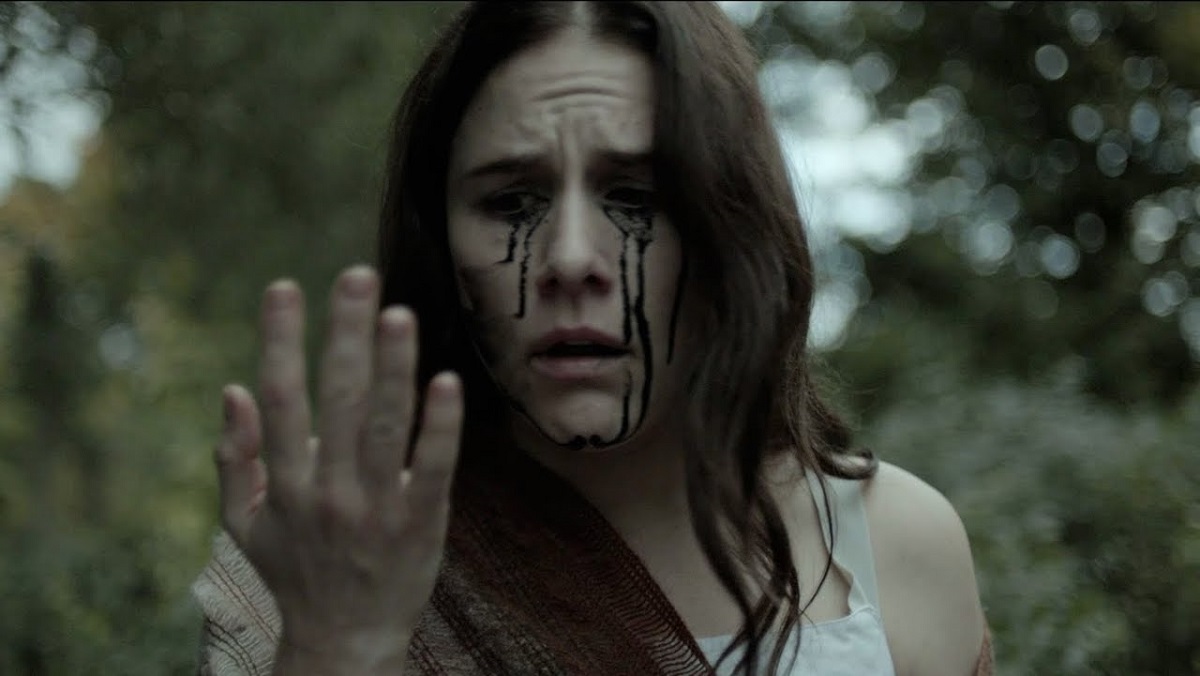
Watching Alice Fades Away is akin to stepping into a Flannery O’Connor short story (without the overt religiosity). The film crackles with ominous energy as a larger-than-life villain haunts the rural, isolated landscape. As a horror/thriller blend, this one hits the mark.

In his first feature, writer/director Ryan Bliss crafts a film that seamlessly blends genres: horror, drama, mystery. Set in the early 1950’s, the film is reminiscent not only of O’Connor, but films such as The Night of the Hunter. The tradition of the Southern gothic lends itself well to Bliss’s vision.

Seeking refuge on her uncle Bishop’s farm, Alice (Ashley Shelton) is on the run. She is accepted by a group of people suffering from their own terrible pasts, all taken under the wing of her generous uncle. We’re not quite sure of Alice’s story, but we’re given disturbing glimpses as past and present merge on screen.

As Alice’s past catches up with her, we’re held hostage to the increasing dread the situation conjures. The cinematography works wonders at turning the idyllic setting of Bishop’s farm into one of dreadful isolation. Its setup as the ideal hideaway melts beautifully into a desolate trap.

All of the actors in the movie are well cast, but the one to watch is Timothy Sekk as Holden. His performance, along with Bliss’s writing, adds depth to a character that could have easily been a lifeless stereotype. Sekk’s energy adds to the mounting horror of what has followed Alice.

With so many great scenes, the film’s blunders are even more obvious. It performs best when it has minimal dialogue, some lines are melodramatic while others are poorly delivered. Many themes are broached, but only a few are explored. A character disappears, leaving us scratching our heads. And what’s with the rabbits?

However, the few moments that don’t land can’t wholly detract from the film’s overall effect. Bliss knows how to invoke dread, and the moments that take us out of the film are easily ignored considering what works. You’ll care less about some of the details and more about what’s ahead.

Same goes for the filmmaker, as Alice Fades Away is a debut that will make you curious to see what Bliss does next.

https://www.youtube.com/watch?v=CBZJCLqUO6c

Arkansas Dreaming

Minari

by Hope Madden

Yes, I am a sucker for films containing devastatingly adorable little kids. Sue me.

Minari fits that bill. Writer/director Lee Isaac Chung essentially recreates the story of his own family’s struggles to become farmers when he was 6. The character based on the filmmaker is played by Alan S. Kim (that little face!), and though Minari is not told exclusively from his perspective, his presence—and the innocence and chaos that represents—suits the effort.

Jacob (Steven Yeun) and Monica (Yeri Han) were having problems before making the move to a tiny plot of Arkansas farmland. As Jacob struggles to turn their fortunes around, he brings his mother-in-law to live with them to make his wife happy.

Lucky for us all Grandma (Youn Yuh-jung, a treat) is a stitch.

The dynamic within the family is sweetly authentic, and the levity never overtakes a scene. There’s a tenderness here that, along with moments of joy, elevates the seriousness and even desperation of the family’s situation.

Chung’s cinematic style quietly beguiles. There is enormous struggle in nearly every scene, but it’s told with gentleness and grace. It’s the rhythm to a song made up of so much more. Chung’s skill as a storyteller is immense, but he couldn’t have created such nuance without such a game cast.

Yeun proves again the depths of his talent. If you missed his menacingly perfect turn in 2018’s Burning, you should definitely watch that right away. To the same degree that his character there was conniving and calculating, Minari’s Jacob is earnest and warm. You ache for him to succeed, and not just as a farmer.

Likewise, Han hits no false note as an involuntary Arkansan. It would have been so easy to oversell the bitterness or disappointment—as it would have been for Yuh-jung to have gone bigger with her “crazy granny” character. But broad strokes are nowhere to be found in this delicate drama.

Plus Alan Kim is just so damn cute.

Minari offers a close look—optimistic, but not sentimental—at the American Dream. If you feel like that’s been done to death, that just means you haven’t seen this movie yet.

Witch Seeking Craft

Earwig and the Witch

by Hope Madden

More than 30 years ago, the great Hayao Miyazaki released a charming animated adventure that shadowed a little witch-in-training and her talking cat. Kiki’s Delivery Service is more interested in children finding their way in an adult world than in magic. The film is magical nonetheless, thanks to Miyazaki’s gorgeous art.

This weekend, Studio Gibli—the house that Hayao built—releases Earwig and the Witch. It’s the same movie, really, just not nearly as good.

Earwig is left as an infant at a proud English orphanage, where she stays for years tucked in among friends who do whatever she wants and staff who do much the same. But she’s adopted one day by a witch and a demon and she’s quite harrumphy about it all.

Director Gorō Miyazaki, Hayao’s son, keeps his focus on this willful little girl who intends to be a witch-in-training no matter what her new guardians expect.

Fans of the genre will immediately take umbrage at the animation style. It’s definitely not his dad’s. Don’t expect the little (or sometimes enormous) creatures that populate the fringes of classics like Spirited Away or My Neighbor Totoro.

That’s hardly where the dissimilarities end. Earwig tosses aside the sublime 2D look of traditional Gibli for a CG animation more in keeping with Pixar’s output. But there’s no nuance, no beauty or humanity in the rendering.

Anime fans may balk, but will children care?

Probably not, which means the film would be fine if only the younger Miyazaki had his father’s (or Pixar’s) grasp on basic storytelling. While Earwig conjures specific story details from Spirited Away and Howl’s Moving Castle, it fails to deliver on any of its plot suggestions. There’s a dungeonlike workroom brimming in equal measure with magical potential and filth, a mysterious redhead, a rock band, a shrouded heritage…all of which amounts to absolutely nothing.

Nothing ties together, and by the final scene’s reveal you feel like you’re watching the cliffhanger for an episodic series that you probably won’t commit to.

Making the Monster

A Nightmare Wakes

by Hope Madden

It’s hard not to be fascinated by Mary Wollstonecraft Shelley, who, at 18, wrote arguably the most iconic piece of Gothic horror or science fiction—or both in one—ever to be penned.

Writer/director Nora Unkel takes us back to that rainy summer night when young Mary, her lover Percy Shelley (Guillian Yao Gioiello) and his friend Lord Byron (Philippe Bowgen, over the top) participated in a challenge to write a ghost story.

We all remember what Mary came up with, right?

Alix Wilton Regan plays the young scribe. It’s an adequate performance in a fairly lifeless film that suggests writing and madness go hand in hand but plays it safe when it comes to what really haunts Mary.

As Mary Shelley suffers through indignities at the hands of a lover she believed to be a better man than he is, she escapes through writing. Aside from one particularly difficult scene, though, Percy’s behavior is largely sanitized or quarantined to offscreen antics we can only guess at.

Wilton Regan offers a needy heroine more likely to lash out at her sister (who may or may not deserve it, Unkel never really clarifies) than to stand up for herself. The performance might have delivered an intriguing central figure—unlikeable and almost impossible to root for.

It seems like a conscious creative decision between Unkel and Wilton Regan, given some of Mary’s behaviors. Creating an unlikeable female to anchor a film is an endlessly intriguing, brave and chancy decision, but the film you hang around her has to turn her performance into something worthy of the attention. Unkel can’t manage it.

Still, Mary descends into a kind of madness and soon enough, her creation takes on a life of its own.

Unkel is not the first filmmaker to conflate the writer’s life with the writer’s product. Just a few years back, Haiffa Al-Mansour’s biopic Mary Shelley convincingly drew Frankenstein as a near autobiography. That film didn’t quite deliver on its promise, either.

In Al-Mansour’s case, hero worship led to a superficial character (played soundly by Elle Fanning) with few faults and a lot of frowning. Unkel’s version is close to the opposite, but both filmmakers set out to depict what it was Mary Shelley was really trying to say when she wrote Frankenstein.

It’s a laudable goal. The problem may just be that Mary Shelley said it so much better.

Fjords of Forgettable

Sacrifice

by Brandon Thomas

If we’ve learned anything from horror cinema over the decades, it’s that Europe is a scary place and to avoid it at all costs. Werewolves on the moors, rage zombies, predatory hostels – just go to Myrtle Beach again and try your luck with the drunk rednecks. And now, with Sacrifice, co-writers/co-directors Andy Collier and Toor Mian give us a taste of the unsavory side of Norway.

Isaac (Ludovic Hughes) and Emma (Sophie Stevens) return to Isaac’s birthplace on a remote Norwegian island to claim his inheritance. Unknown family truths bubble to the surface as Isaac confronts a dark legacy and Emma fears not only for her husband’s sanity but for the life of her unborn child. 

Sacrifice is a frustrating film from the start. The basic “fish out of water” premise is one we’ve seen time and time again, and Sacrifice offers nothing new to this subgenre. The opening credits promise a story built around the works of H.P. Lovecraft, but the closest we get to Lovecraft is unsubtle nods to Cthulhu.

Subtlety in horror certainly has its place. There are countless horror movies that take a more methodical approach to dole out the scares. These movies eventually pay off, though. Sacrifice is a film that tries to build tension and atmosphere, but whiffs at every opportunity. Semi-odd behavior from backwoods Norwegian folk isn’t exactly edge-of-your-seat material. And I would be ashamed of myself if I didn’t mention how the film uses the tried and true “character wakes up from a nightmare that seemed real” device a grand total of four times. 

At this point, I was hoping the movie was a dream.

So much of the films’s tension is built around the unraveling of Isaac and Emma’s relationship. The problem with this is that the characters toggle between unlikable and uninteresting from the get-go. Isaac’s descent into madness never once borders on tragedy. Instead, this turn feels like the filmmaker’s checking off a box on their genre bingo card. 

Even the illustrious Barbara Crampton (Re-Animator, From Beyond) doesn’t come out unscathed. It’s a role that asks her to do little more than be a suspicious local and deliver an uneven Norwegian accent. 

The film does get a lot out of the location shooting in Norway. The lush green fjords with their raging waterfalls inject a strong sense of place. These scenic establishing shots help set an “otherness” to the island, even if the remainder of the film does a poor job of maintaining the eerie mood. 

Sacrifice tries to set itself alongside Europe-centric horror movies like The Wicker Man and Midsommar, but instead comes off as a watered-down, and quite lazy, copy of better movies.