Tag Archives: movie reviews

Love Letter to a Genre

Sensation

by Phil Garrett

Martin Grof’s Sensation is a low-tech science fiction mystery/thriller that pulls together familiar plotlines and devices including a protagonist with a mysterious family history, people with superhuman abilities, research facilities, unknown threats, and the dynamic of the real world vs. the dream world. The film feels more than inspired by films such as Christopher Nolan’s Inception and Tenet, along with the superhuman sub-sub-genre.

The plot centers around Andrew (Eugene Simons, Game of Thrones), a young man with no knowledge of his family history, including his father’s identity. Andrew is drawn into a patchwork mystery after a strange and confrontational meeting with Dr. Marinus (Alastair G. Cumming), who delivers Andrew’s DNA test results. He is then followed by mysterious men in matching gray hats who disappear from the film as quickly as they appear. Marinus confronts him and explains that Andrew’s life is in danger and only by joining a secret research program to explore his superhuman sensory powers will he be safe.

Safe from whom? Good question. The veil of vagueness seems to be part of Grof’s attempt to build tension, but it plays as a trope in the boldest of terms, whether through familiar scenarios or bald dialogue that could be delivered by characters in any similar movie. 

Andrew heads off to a secret research facility in the remote English countryside at an appropriately gothic manor estate. There he meets the “enigmatic” Nadia (Emily Wyatt, the Rise of the Footsoldier franchise) who runs the program. We’re introduced to the research group, all of whom have different super-senses like Andrew, all drawn together for special training to learn, focus and sharpen their abilities, and all in danger from unknown forces.

Sound familiar? The double-secret secret of their powers? They can “receive information” via their senses, which is highly valued by, you guessed it, that vaguely defined threat.

The film weaves its way through scenes and sequences that, again, seem more than inspired by other films, delivered with that mix of vagueness and baldness we’ve become familiar with. The dramatic action plays out fairly flatly with huge exposition dumps dropped in at just the right time. The story heads down a spiral of interwoven plots and subplots that are not fully baked, culminating in a protracted final act that tries hard to be inventive but feels like a different movie altogether.

Story aside, the cinematography visual style – ranging from foreboding interiors of the manor house to the sharp, vibrant streets of London – is well put together and effective for the low-tech nature of the film, often elevating the storytelling. The score is impressive but sometimes used as a crutch for dramatic tension. Eugene Simons and the ensemble should be given credit for their work in trying to bring some emotional truth to the film.

Hard-core genre fans may be interested in this exploration of familiar territory, but overall, Sensation plays like a love letter to a genre, and ends up a fractured, amalgamated narrative that works hard to be entertaining and intriguing but doesn’t quite get there.

Into the Woods

In the Earth

by Hope Madden

If there’s one Ben Wheatley film people don’t seem to like, it’s 2013’s A Field in England. That film feels a lot like an experiment made with limited resources about strained friendship and hallucinogenic substances.

Wheatley’s latest, In the Earth, is a lockdown film—a kind of experiment made with limited resources about strained friendships and hallucinogenic substances. Wait, wait—it works better this time!

Made during and ostensibly about the pandemic, Wheatley’s film finds more terror in avoiding the virus than other lockdown films have found dealing directly with it. We open, Romero-like, with hazmat suits and government facilities, but that makes way pretty quickly to a dreamlike—one might even say enchanted—trek into the woods.

Scientist Martin (Joel Fry, Yesterday) joins park ranger Alma (Ellora Torchia, Midsommar) in an infection-free zone of forest to make a 2-day trip on foot into the depths of the woods. They are here to check in on a scientist (Hayley Squires, In Fabric) who’s been incommunicado. But we all know that you should never go into the woods no matter the reason.

Honestly.

In its best moments, the film feels a bit like the director shaking off the style-over-substance films he’s made lately. (I’m looking at you, Rebecca.) Instead, he leans toward the genre-bending, lower-budget thrillers like those that got him noticed in the first place: Down Terrace, Sightseers, and especially Kill List.

And, yes, A Field in England.

In the Earth blends ecological terror, pagan ritual horror and Lovecraftian SciFi into a dreamlike episode. Performances are wonderful, and when Wheatley gets gritty, watch out. (Oh, Martin and his poor foot!)

Fry’s energy in the film is so thoroughly honest. Martin is not really outdoorsy, he’s a little butt hurt about something, and he’s probably not that used to human company. And thus, his character is entirely articulated before he even speaks.

Torchia’s grounded, handy performance makes a perfect counterbalance, which prepares us for the two wildcards (played brilliantly by Reece Shearsmith and Squires).

It’s expert casting within top-notch visual storytelling. It’s also a bit exasperating, especially its closing moments. The drug-fueled mayhem and madness work to an extent, but also feel a bit like a narrative cheat.

For longtime Wheatley fans, In the Earth feels like a return to form – or at least a step in that direction. It delivers a couple of good wallops, too.

It’s no Kill List, though.

This Old House

The Banishing

by Hope Madden

Filmmaker Christopher Smith has repeatedly proven a knack for horror.

Whether he locks us up in the tunnels beneath London with Franka Potente (2004’s Creep), transports us to the Dark Ages with Sean Bean and Eddie Redmayne (2010’s Black Death), or forces us on a weekend corporate team building of death (the sublime 2006 horror comedy Severance), Smith takes an audience somewhere we probably shouldn’t go.

The Banishing drops us in rural England, just days before WWII. Marianne (Jessica Brown Findlay, Downton Abbey) and her young daughter arrive at a beautiful-if-creepy estate where Marianne’s husband Linus (John Heffernan) has just been appointed Vicar.

Naturally, the house is haunted. The Church says one thing, but this odd redhead from town (Sean Harris, the picture of subdued weirdness) whispers another.

The Banishing is really the first Smith film to walk such familiar ground. His screenplay, co-written with David Beton and Ray Bogdanovich, takes inspiration from England’s infamous Borley Rectory—allegedly the nation’s most haunted house.

The direction that inspiration leads is rarely in question. Smith trots out a lot of familiar ideas, though he does package them well. Some incredibly creepy images accompany Marianne’s deepest fears, and Smith puts horror’s beloved old mirror prop to exceedingly spooky use.

Performances are solid as well. Findlay, in particular, finds depth and genuineness in the frequently portrayed role of the woman to be deemed insane in lieu of dealing with the supernatural.

Smith sometimes crosses over effectively into the inner working of the mind, and these scenes feel freshest and most engaging. They are overwhelmed, unfortunately, with stale plot devices.

The result feels very un-Christopher Smith-like (if there is such a thing). He’s been a tough filmmaker to pinpoint because each of his movies varies so wildly from the last. The Banishing looks and feels unlike anything else he’s done. Too bad it feels so much like what everyone else has.

Tin Soldiers

Moffie

by Samantha Harden

“Moffie” is a derogatory term used in South Africa meaning an “effeminate homosexual man.” Moffie is also the name of the South African-British biographical war film.

The film was written and directed by Oliver Hermanus. With help from his co-writer Jack Sidey, the two created a love story that encapsulates struggles, racism and homophobia. You feel stressed right from the beginning.

The year is 1981, South Africa’s white minority government is entangled in conflicts at its borders with communist-led Angola. All white men between the ages of 17 and 60 must complete two years of mandatory military service.

Nicholas Van der Swart (Kai Luke Brummer) was drafted into South Africa’s military, but he knows he is different from the other men serving. Another recruit develops an intimate relationship with Van der Swart and they realize that they are both in danger. 

This is just an incredible performance by Brummer. You could feel his emotions, the worry and the sadness and most of all, fear. Throughout the movie you rarely saw even the slightest smile. 

The first scene begins with suspenseful music that feels as though it belongs in a horror movie. Of course for young Nick, it is a horror movie.

But once Nick meets Dylan Stassen (Ryan de Villiers) and begins to fit in (at least a little), the music changes to classical opera. Later the music makes another change, and then another, and another. Braam du Toit’s score continues to change throughout the film to match Nick’s moods, an excellent detail.

Moffie not only has an aesthetically pleasing score but it is an aesthetic pleasure of the highest order, on nearly every level. 

The movie is so bright and beautiful even if the story is heartbreaking. In a flashback we see young Nick at the public pool with his parents. The camera follows him underwater and for a moment, Nick is happy and carefree. 

We see Nick again underwater, but this time he isn’t a carefree young child anymore. Now Nick is a soldier in the South African military and he just lost a friend. The world has been cruel to Nicholas Van der Swart, Moffie captured that cruelty. 

Out of the Darkness

The Power

by Hope Madden

Simultaneously sympathetic and vengeful, Corinna Faith’s ghost story The Power sets an emotional tone that suits its core themes.

Today is Val’s (Rose Williams) first shift at a rundown London hospital. It’s 1974, and a coal miners’ strike means rolling blackouts. Val hadn’t anticipated still being at work when the lights went out, but a power struggle with Matron (Diveen Henry) means putting up or shutting up.

Unfortunately, Val’s not great with darkness.

Williams provides a tender central figure, terrified of everything: her new bosses, the sprawling building itself, the dark, failure. Val doesn’t get a lot of support from the rest of the staff, particularly one creepy janitor, a repugnant handyman and a viciously catty colleague (Emma Rigby, spectacular).

When the abuses turn supernatural, Faith begins to dig into the real terrors that faced women in 1974 (and in 974 and in 2021). But the filmmaker never abandons her ghost story in favor of a podium. The Power is an effective allegorical tale, but before that it’s a spooky horror story set in an old hospital.

Why are those always so scary? Session 9 may be the high-water mark, but Faith taps into our fears of the powerlessness that comes with illness and institutions, and she exploits them.

The director makes good use of familiar elements—the Seventies vibe, the crumbling edifice, the darkness—and not only to create an unease that heightens the scares. She crafts an environment that amplifies and clarifies the theme, whether it’s the strike, the systemic sexism and classism, or just the insidious nature of abusing and silencing those without power.

Wonderful performances throughout elevate story tropes that could get old, and the filmmaker’s instincts for using light, shadow and reflection give the film an eerie quality that’s hard to shake.

The Not-So-Friendly Skies

Embryo

by Brandon Thomas

Good old alien horror doesn’t come around as much as I’d like. Outside of the occasional Alien or Predator sequel, this subgenre is pretty much stagnant or banished to the realm of mico-budget dreck. Embryo might skirt the line of microbudget, but this eerie alien tale is anything but dreck. 

The bulk of Embryo follows campers Kevin (Domingo Guzman) and Evelyn (Romina Perazzo) as they venture into the woods of southern Chile. Their camping getaway turns into a nightmare after Evelyn is abducted by extraterrestrials, leaving her in a state of shock. As the effects of her alien abductors take hold, Evelyn becomes increasingly more bloodthirsty, leaving a trail of bodies in her wake.

Director Patricio Valladares approaches alien abduction as a blend between Fire in the Sky’s creeping dread and Cronenberg body horror. Evelyn’s descent into other-worldly terror reveals itself in visceral, extreme violence. We’re talking lots of blood and guts here. However, the explanation of her metamorphosis is kept an enigma. The guessing game surrounding the aliens themselves is left to the deepest levels of the audience’s subconsciousness. It’s an act of omission probably born out of budgetary concerns, yet it ends up aiding the film more than the filmmakers could have foreseen. 

Valladares throws a curveball when constructing the film’s narrative. There’s an occasional break in Kevin and Evelyn’s story where Embryo attempts to open up the world a bit more. This allows the filmmakers to weave together other tales of close encounters in this small Chilean town. Not only are the stories different, but so is the style of filmmaking. By switching to found footage, Valladares is able to emphasize suspense and dread over the fantastical gore that oozes through the main segment.

Despite telling three individual tales, Embryo clocks in at a scant 72 minutes. Even with the different stories, the film threatens to run out of steam on multiple occasions. There’s a repetitiveness to the Kevin and Evelyn segment especially that starts to detract from its overall effectiveness. I can’t believe I’m saying this, but there are only so many times Kevin can lose Evelyn only to find her feasting on a biker, doctor, or other camper. 

Embryo doesn’t quite cross the finish line at full speed, but through deft tone management and a willingness to get gross, the film leaves an overall positive impression.

Come On, Get Happy

Funny Face

by Hope Madden

Though writer/director Tim Sutton’s latest is more a collection of images and moments than a strictly plotted narrative, the story that unfolds is kind of a bittersweet wonder.

An isolated youngish man (Cosmo Jarvis) rails against the impending destruction of his neighborhood, a community he haunts wearing a happy Halloween mask. An act of kindness at a nearby convenience store, though, brings about a surprising and really lovely friendship.  

Jarvis, who was so good in last year’s Calm with Horses, convinces again as an outsider with a lot of pent-up anger but an otherwise sweet heart. There’s a mixture of brutality and vulnerability in the portrayal that calls to mind Tom Hardy or even Brando – although, given a particular preoccupation in the film, he may be aiming for James Dean.

Newcomer Dela Meskienyar matches him step for step as another outsider, also angry at circumstances that feel beyond control, also hiding her face. It’s a remarkable and never forced kind of parallelism Sutton develops–a lost quality that he sees in every character. He uses this thread to braid disparate lives together and to create a sense of empathy, even toward the most loathsome among us.

Sutton is no stranger to tales of white male alienation, bruised masculinity, and an almost childlike struggle with our primal nature. Both his first feature Dark Night (which deals with the 2012 Aurora shooting), and his follow up, Donnybook (about bare knuckle brawls in addiction-riddled Ohio) illustrate his interest.

Funny Face, though, marks a step toward something more stylish. The film has a retro vibe, like a long-lost Seventies indie set in Brooklyn. Given the of-the-moment storyline, this offers his film the timeless quality of a fairy tale—a theme he develops with imagery of equal parts urban realism and magical whimsy.

A sense of mourning fuels Funny Face. While Sutton’s film is intimately linked to its Brooklyn setting, that exact same mourning informs Lesotho’s beautiful This Is Not a Burial, It’s a Resurrection, also releasing this week. Unchecked capitalism is a global cancer, it would seem.

All of Sutton’s films contextualize human struggle within the context of community. This has never been truer than it is with Funny Face, a comment on the way greed destroys history and the sense of place, leaving nothing in that emptiness, even for those who profit.

Not even a smile.  

A Sort Of Homecoming

Like a House on Fire

by Rachel Willis

Is there ever a good reason for leaving your family? And if you come home, can you expect them to welcome you with open arms?

Writer/director Jesse Noah Klein examines what happens to a family when a mother who left them behind wants to return in Like a House on Fire.

When the film opens, we’re not sure why Dara (Sarah Sutherland, Veep) has left her family. But we know from the beginning she wants to be let back in, and that she wants to see her daughter. Her husband, Danny (Jared Abrahamson), isn’t sure he wants that to happen, especially since their almost 4-year-old daughter, Isabel (an unspeakably adorable Margaux Vaillancourt), doesn’t remember mama.

Dara’s backstory, as it unfolds, helps the audience sympathize with her disenchantment upon finding her family hasn’t waited for her. But there’s also sympathy to be had for Danny, and particularly, Isabel. This is not a situation with a clear villain, but a nuanced look at the ways in which families can fall apart.

The film’s best moments come from Sutherland. She conveys the desperation of a woman who needs to reconnect with her daughter, as well as the hope that things will turn out the way she wants. Whenever her efforts are thwarted, we feel her devastation. Dara’s initial meetings with Isabel are touching. Dara’s joy and disappointment commingle whenever she’s with her daughter.

It’s the rest of the film that doesn’t always live up to its character.

There are some needless character conflicts that detract from the story’s focus. Dara’s stepmother (Amanda Brugel – a fabulous actress) is a thorn in her side – but the reasons why are unclear. There’s a stepsister (perhaps a half-sister?) who comes and goes without much to do except provide another reason for the stepmother’s animosity. It doesn’t seem as if much thought went into these two characters.

The college boy that Dara meets and befriends at the park is the film’s messiest issue. The time Dara spends with him would have been better devoted to digging into the larger family issues surrounding Dara – both with her husband and daughter, as well as her father and his family.

As it is, a lot of the issues and relationships in the film putter out. There’s an imbalance that sways the film one way and another, but never lands the audience on solid ground.

Which is perhaps how Dara feels all along.

Undead Again

Train to Busan: Peninsula

by Hope Madden

Back in 2016, filmmaker Sang-ho Yeon made the most thrilling zombie film since 28 Days Later. Sometimes funny, sometimes shocking, always exciting and at least once a heartbreaker, Train to Busan succeeded on every front.

You can’t chalk it up to newness, either. Busan was actually a sequel to Yeon’s fascinating animated take on Korea’s zombie infestation, Seoul Station. So the guy was 2 for 2 in gripping zombie thrills.

Can he make it a hat trick?

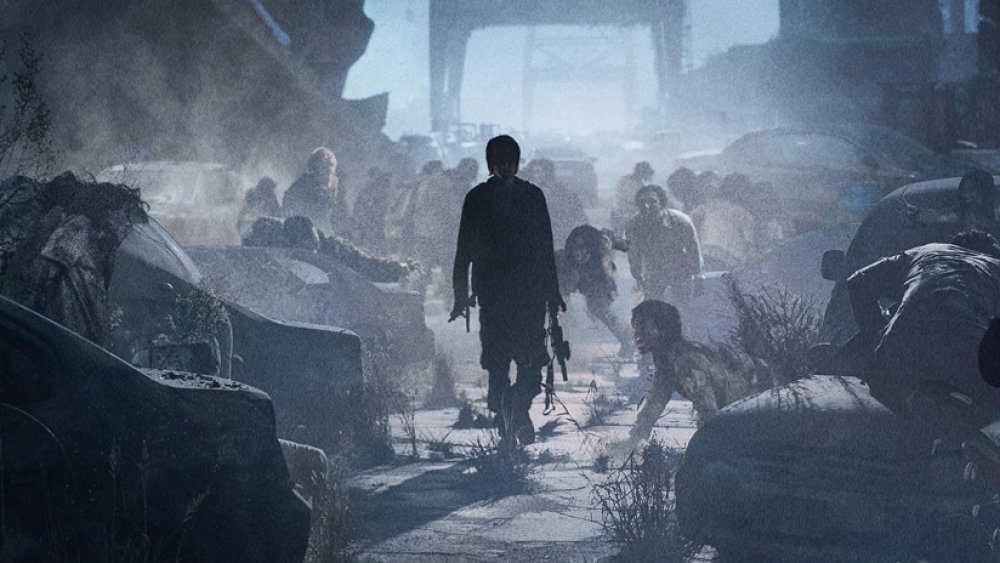
Train to Busan: Peninsula begins on that same fateful day that South Korea falls to the zombipocalypse. Those fleeing Korea by ship are turned around for fear of global contamination, so all survivors descend upon Hong Kong. Four years later, the city’s overrun, survivors are living in poverty, and a rag tag bunch is so desperate, they’re willing to go back to the Korean peninsula to pull a job that will make them rich.

But if Hong Kong looks bad, wait til they see what’s happened since they left the peninsula.

Things feel much more borrowed this time around. Peninsula plays like a mash up of Friedkin’s 1977 adventure Sorcerer (or Clouzot’s 1953 Wages of Fear) and the 4th in George Romero’s line of zombie adventures, 2005’s Land of the Dead. There’s also a little Dawn of the Dead, plus one scene lifted wholesale from 28 Days Later. And you cannot miss a great deal of a great number of Mad Max flicks.

Both the claustrophobia and the relentless forward momentum of the 2016 film are gone, replaced with tactical maneuvering around a fairly stagey looking city scape and military compound. And while you have to believe Yeon had a bigger budget to work with based on the success of his previous effort, Peninsula’s zombie effects are weaker here.

That’s not to say the film is bad, just a letdown. Dong-Won Gang makes for a serviceable quietly haunted hero. Scrappy Re Lee and adorable Ye-Won Lee infuse the film with vibrance and fun, and both Gyo-hwan Koo and Min-Jae Kim create respectably reprehensible villains. (Although the high water mark in zombie villainy was reached with Train to Busan.)

The story is tight, if highly borrowed, and the action scenes are plentiful. Compare it with nearly every other zombie film to come out in the last two decades and it’s a creepy way to spend a couple of hours. Compare it to Yeon’s last two movies, though, and it comes up lacking.  

First Impressions

Making Monsters

by Hope Madden

Call me superficial, but I really enjoy those old school, pre-credit scares in horror films. (I am also a sucker for post-credit stingers, if I’m being totally honest.)

Done well, they set a tone, freak you out, and make you simultaneously afraid to watch the rest of the film and unwilling to turn away. Writer/co-director Justin Harding knows this, obviously. With a brief but exceptionally chilly opening sequence, he and co-director Rob Brunner dare you to finish their film, Making Monsters.

Christian (Tim Loden) and Allison (Alana Elmer) are planning for their wedding, beginning steps toward IVF, and struggling with the changes this is going to mean in their relationship as well as their livelihood. Apparently, their whole gig is a popular online prank show consisting of Christian scaring the poop out of Allison twice a week.

And she’s marrying him?

They run into an old friend, he invites them to his rustic new digs way out in BFE, and they sneak away for a quiet weekend. Or is it another prank?

If you think the viral prank horror premise is weak and tired, you are spot on. Luckily, Making Monsters doesn’t beat it to death, nor do they rely on found footage or a ton of shaky cam or even a lot of slickly produced viral videos. It’s all in there, but some of it serves a narrative purpose and none of it really wears out its welcome.

Elmer is especially solid, delivering a nuanced and believable character who loves and accepts Christian and remains optimistic that he, too, is ready to grow up. Allison is dimensional, and though it takes some time to realize it, so is Christian.

Jonathan Craig is a good time in a weird role, although he pulls too many tricks from Mark Duplass’s bag of magic to be truly fresh. Still, he’s fun in his own way and the rapport among the three main players rings true enough to elevate the material around them.

Not everything lives up to that first shock, but the next 80ish minutes of Making Monsters are worth a watch.