Tag Archives: movie reviews
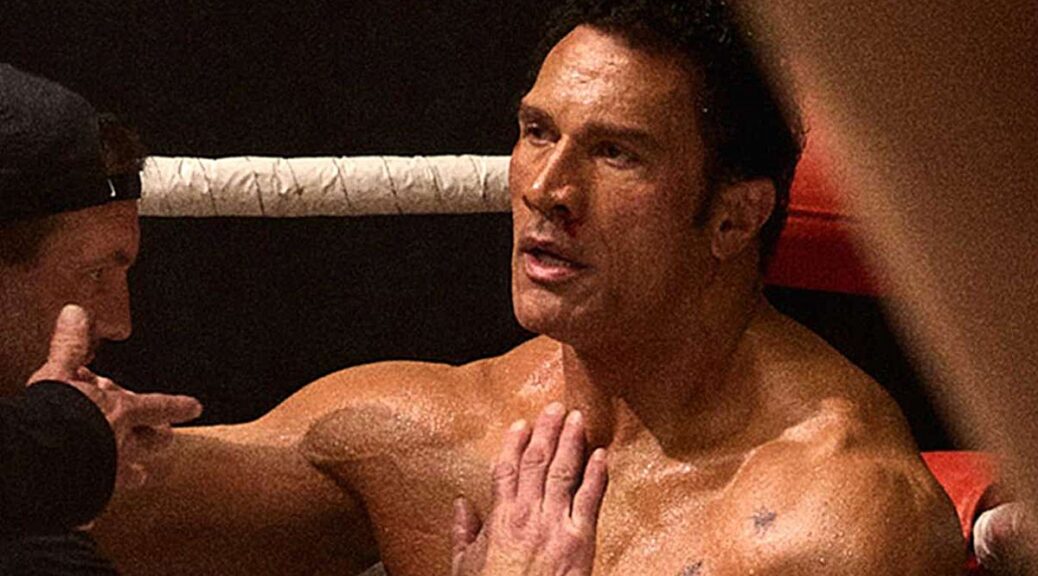
Windflower
Anemone
by Hope Madden
As a young filmmaker, would having arguably the most revered actor of his generation—perhaps of all time—as a father be a blessing or a curse? For Ronan Day-Lewis, directing his first feature with co-writer and lead actor (and dad) Daniel Day-Lewis, it seems to be working out.
Anemone is a tale of fathers and sons, of one generation of men inflicting damage upon the next, and the tenderness that either dies, finds an outlet, or runs to madness.
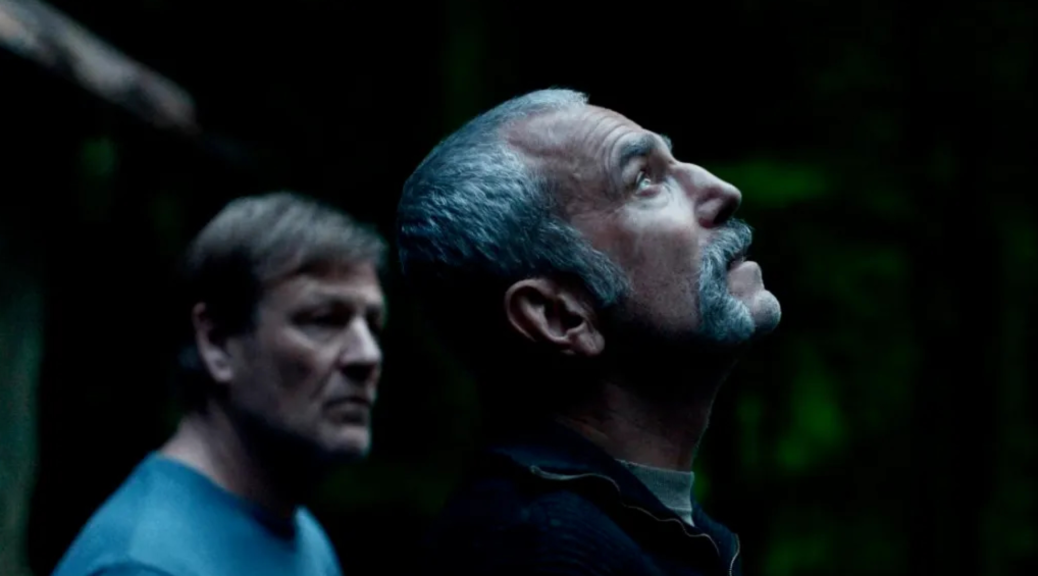
Sean Bean a is Jem, a good man who strikes out from his dodgy neighborhood in Northern England to the woods, led by the navigational coordinates on the back of a page that reads: Anemone: In Case of Emergency, Break Glass.
The coordinates lead him to his brother, Ray (DDL), a hermit since his time fighting against the IRA. Ray is wanted at home.
Like many of Day-Lewis’s greatest performances, his work here impresses with lengthy stretches of silence punctuated by a couple of brilliantly executed monologues. His lean and scrappy physicality belie the character’s vulnerability in ways that expertly match Ray’s reticent then vulgar speech.
Ray’s a man off the rails, while Bean deftly crafts a character who’s found comfort and strength in structure. Neither actor overplays the brothers’ differences, rather falling into a tenuous if lived-in familiarity.
The great Samantha Morton and an impressive Samuel Bottomley round out the cast, but as usual, all eyes are on Day-Lewis.
RDL knows it, not only providing memorable lines, but crafting an atmosphere that evokes Ray’s troubling inner landscape. Bobby Krlic’s (Eddington, Beau Is Afraid, Midsommar) score conjures an angry melancholy while moments of painterly surrealism deliver flashes of beautiful, hopeful madness. Even when lensing the natural elegance of Ray’s isolated world, RDL and cinematographer Ben Fordesman (Love Lies Bleeding, Saint Maud) evoke a magical splendor.
Anemone feels uncertain of how to resolve itself, to bridge the two worlds it creates. Structure failed Ray, and it nearly fails Anemone. But the film offers more than enough reason to believe in filmmaker Ronan Day-Lewis. And if you needed another reason to believe in actor Daniel Day-Lewis, well, here you go.

Tall Tales and Fiction
Killing Faith
by Hope Madden
A raucous opening sequence eventually settles into a classic old Western vibe that keeps you guessing in Ned Crowley’s latest, Killing Faith.
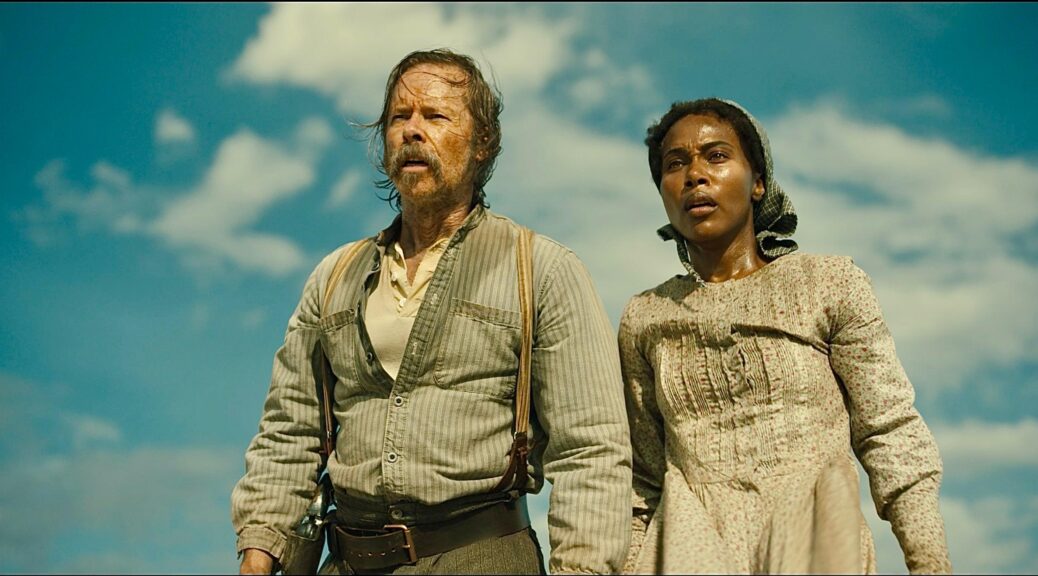
Like Mary Bee Cuddy in The Homesman and Joanna in News of the World, Sarah (DeWanda Wise) is in need of a traveling companion. Her daughter (Emily Ford) needs help that the town doctor (Guy Pearce) can’t offer. Not that the ether-sniffing doc has been much help to his patients of late.
Dr. Steelbender is an ether addict on account of a plague of sorts. Voiceover tells us of a sickness ravaging the countryside almost as savagely as a notorious group of bounty hunters. But Sarah is determined to take her daughter to see Dr. Ross (Bill Pullman) because he deals not just in medicine, but in holy healing.
Crowley’s shot making, particularly in the opening act, is equal parts stunning and unnerving. At his best, he tells the tale like a picture book, images sharing as much of the story as dialog. There’s a grim poetry to the shots that creates an beautifully brutal atmosphere as it delivers information.
Pearce has made a lot of movies, many of them horrible, most mediocre, but he does have a pretty good track record with Westerns. John Hillcoat’s The Proposition is one of the most affecting Westerns of the 21st century. Killing Faith doesn’t nearly reach that high water mark, but it has its moments.
I like the more contemporary Westerns, where no one’s to be trusted and everyone’s a weirdo. Killing Faith is at its most compelling when our little band of travelers finds themselves among unexplained carnage or unexplainable fellow wayfarers. Joanna Cassidy is especially delightful in a macabre way.
But a couple of obvious turns and the general simplicity of the story keep Killing Faith from reaching classic status.
The film loses steam whenever it clings too tightly to its main themes, its hero’s journey. But Crowley elevates that well-worn road with ideas of being haunted by the sight of innocence corrupted, something that connects the Western with dystopian tales, like John Hillcoat’s other Pearce-starring fable, The Road.
All Westerns are about redemption. The best Westerns, new or old, are about hope. Can you allow yourself a flicker of hope? The answer is often what differentiates the classic Western from the contemporary one. Killing Faith toys with those mighty big struggles, sometimes provocatively. The solutions aren’t as interesting as the journey, though.

Poison Pen
A Savage Art: The Life & Cartoons of Pat Oliphant
by George Wolf
“If Pat Oliphant couldn’t draw, he’d be an assassin.”
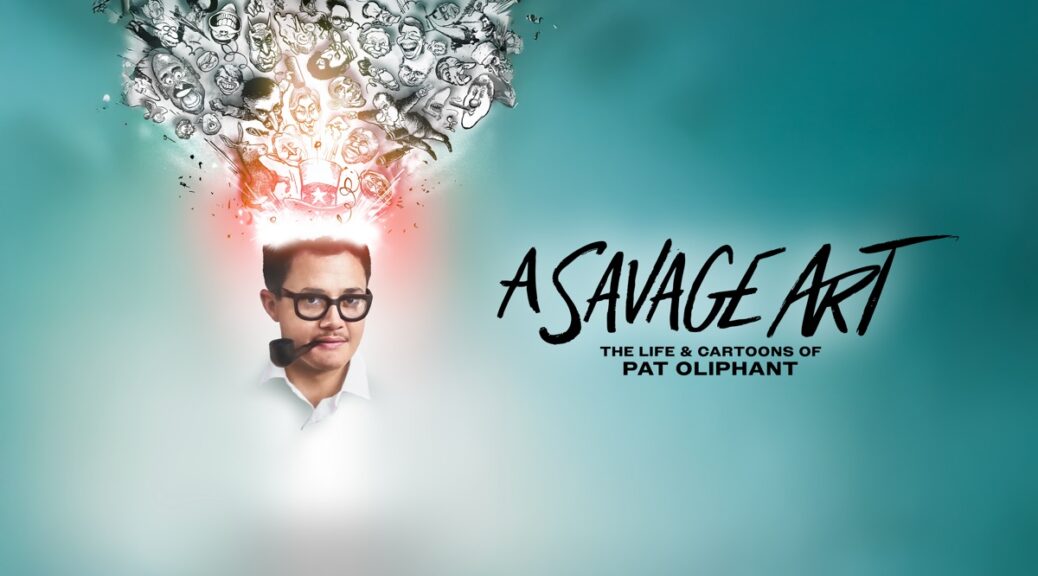
That quote gets your attention, even if you don’t know the name Pat Oliphant. Either way, you’ve probably seen some of his work, and A Savage Art: The Life & Cartoons of Pat Oliphant is a broadly effective intro to a legend of political cartooning.
Oliphant wielded a revolutionary artistic style and the kind of cynical mind that had him rebelling against the very committee that awarded him the Pulitzer Prize in 1967. Aided by his alter ego “Punk” the Penguin, Oliphant skewered the political landscape through five decades and ten U.S. Presidents.
In his feature debut, director Bill Banowsky keeps things pretty standard, rolling out a succession of Oliphant’s best cartoons, and chatting with family members and colleagues to provide some personal details that Oliphant himself seems averse to.
And though today’s political and social climate carries some issues that are very relevant to Oliphant’s legacy, Banowsky doesn’t dig in. We do get mentions of the increased threats to a free press, and to the rise of internet memes as a shallow imitation of cartoon commentary, but those seem to be conversations for another day.
Banowsky’s aim is to give a legend his due and maybe spur some interest in learning more. A Savage Art hits that target square.
Slippery
The Ice Tower
by George Wolf
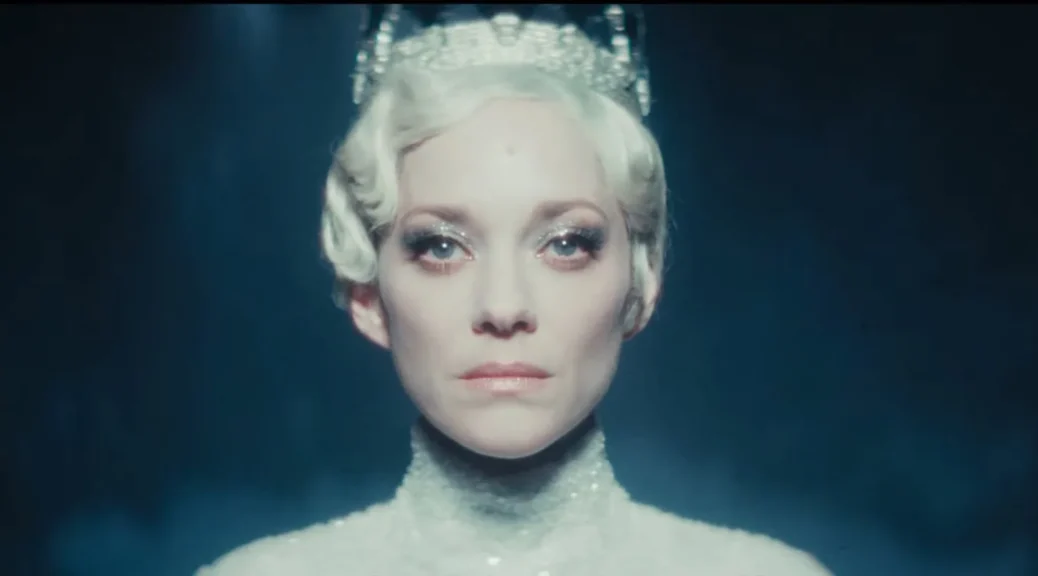
Fifteen-year-old Jeanne doesn’t want to build a snowman. What she wants is an escape, but finds plenty more than she expected in The Ice Tower, Lucile Emina Hadzihalilovic’s dreamlike re-imaging of “The Snow Queen.”
In 1970s France, Jeanne (a wonderful feature debut for Clara Pacini) is among the oldest children in a foster home, where she comforts the younger ones and silently longs for a better life. She finally leaves one evening, taking refuge in an empty warehouse to sleep.
But in the morning, Jeanne finds the warehouse is home to a movie crew, with director Dino (Gaspar Noé, Hadzihalilovic’s husband) filming a new adaptation of the Hans Christian Anderson classic. Mistaken for an extra, Jeanne becomes part of the production and is instantly captivated by the star of the show, Christina (Marion Cotillard).
The Oscar-winning Cotillard is, of course, perfect as the detached and demanding diva who begins to take an equally strong interest in the young Jeanne. But to what end? Hadzihalilovic explores that question with a cold, barren beauty. The aesthetic is tactile and intoxicating, a perfect playground to envelope the film in strange fascination.
The Ice Tower casts an undeniable spell. Despite lingering a bit too long in some dry spots, it crafts an enriching trip to the darker floors of a fairy tale.
No Wake Zone
Bone Lake
by George Wolf
Not long after we meet Sage and Diego, they’re talking about his idea for a novel, debating about what qualifies as “gratuitous” and lamenting that cancel culture has neutered artistic expression.
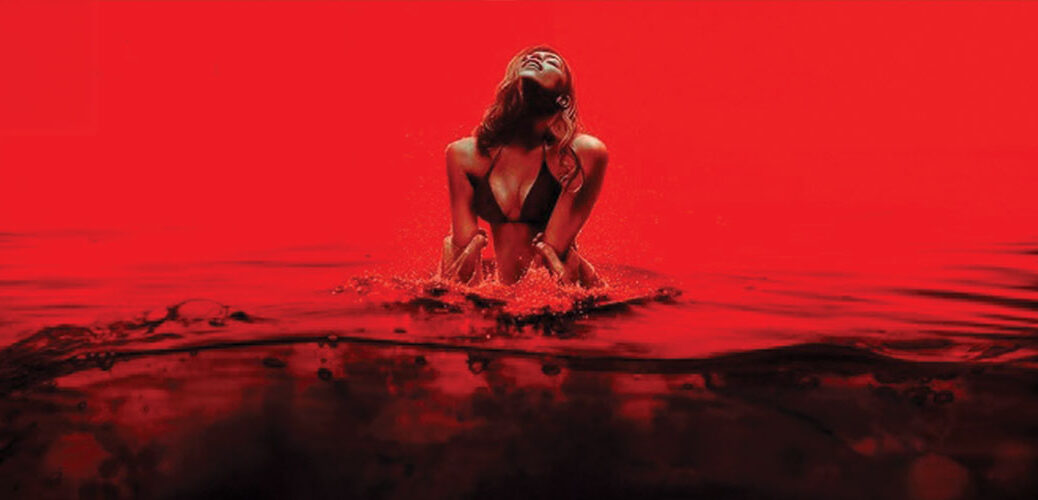
Okay, intriguing. And then you remember that one poster for Bone Lake features the strategically large “R” rating positioned right after the first word in the title.
Alrighty, then, we’re gonna push some limits with both blood and lust, are we? Have some devilish fun with hot button topics and take no prisoners?
No, we are not. We’re going to play it safe and predictable, borrow heavily from better projects and hope some late stage blood splatter stops the questions about why that poster doesn’t read BonePG-13 Lake.
Sage (Maddie Hasson) and Diego (Marco Pigossi) have booked an incredible lakeside mansion for the weekend. Diego’s even brought a ring along to pop the question, but there are two very big complications. Will (Alex Roe) and Cin (Andra Nechita) have also booked the mansion for the weekend! What are four good-lookings gonna do except share the space and really get to know each other?
The character development is rushed but adequate. Will and Cin are openly sexy free spirits, Diego is more buttoned-up and Sage seems to be settling for the comfy life while missing some walks on the wild side. But more than anything, Diego and Sage both seem like a couple of first class idiots.
Writer Joshua Friedlander and director Mercedes Bryce Morgan want to sprinkle some White Lotus sensibilities over a mashup of Funny Games and A Perfect Getaway. But the inspirations are painfully evident, the revelations overly telegraphed, the internal logic gets shaky and the frolicking more silly than sexy.
None of it goes anywhere worth caring about. The marketing angle, an attention-getting prologue and that early art debate make some promises that are never kept, and this trip to the lake is more bore than bone.

Bite Size Frights
V/H/S/Halloween
Screens Sunday, October 19 at noon
by Hope Madden
“Hey, aren’t you a little old for trick or treating?”
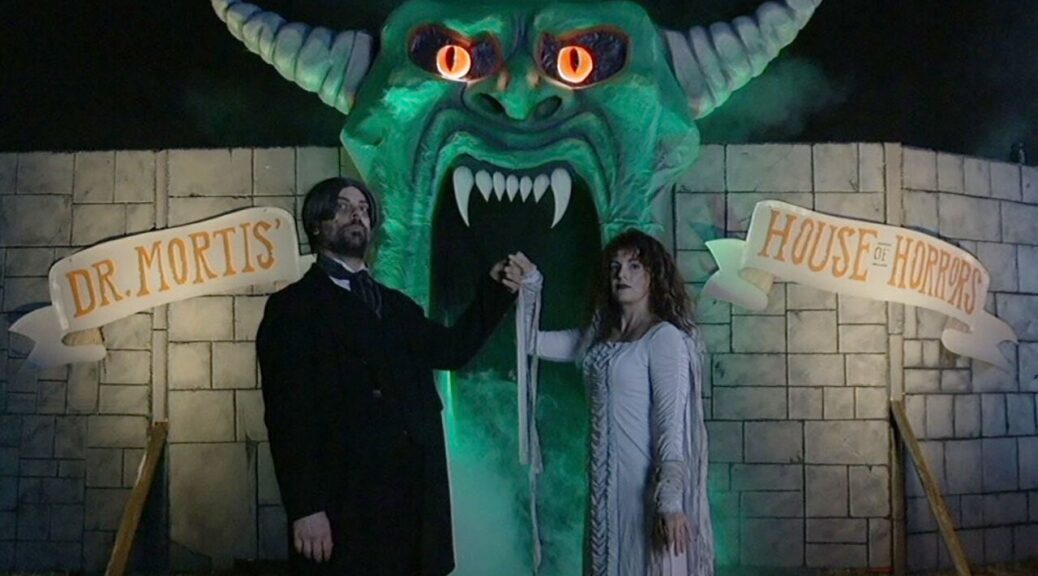
If you’re looking for bite sized horror to match your fun size Butterfinger, the long running found footage franchise delivers a grab bag of options with V/H/S/Halloween. The anthology of shorts focuses on tales of Halloween. Expect costumes, pranks, chocolate, and a surprisingly high amount of child carnage.
Director Bryan M. Ferguson’s wraparound tale Diet Phantasma may mean more to me than it will to you. It would be hard for me to articulate how much I love horror movies or diet pop. In both cases, it’s an alarming amount of love. So, a tale of haunted diet soda and, beginning the theme, child slaughter?
Yes.
David Haydn is a particular riot as the exec who really needs to get this beverage on the shelf by Halloween.
Paco Plaza’s Ut Sup Sic Infra (As Above, So Below) follows a traumatized young man and a host of cops to a crime scene. This is an efficient little gem with a mystery to solve. Performances are solid all around, and the climax packs a frightening surprise.
Anna Zlokovic’s Coochic Coochic Coo and Alex Ross Perry’s Kidprint are the weaker episodes in the group. Zlokovic’s film follows two high school seniors who make consistently ridiculous choices leading to a nonsensical finale. Kidprint is a nasty short without the clever writing needed to elevate it.
Casper Kelly’s Fun Size gets off to a rough start—full grown adults who decide to be zany and trick or treat. But as soon as that “take one” bowl makes its presence known, things get weird. The balance between brightly colored confection and human dismemberment is impressive. This one’s wrong-headed in the best way.
Likewise, Micheline Pitt-Norman & R.H. Norman’s Home Haunt is a lot of fun. There’s a wholesome charm to this short that could draw your attention to the, again, sheer number of children being murdered. But the concept is sort of darling, and the performances are equally dear. The Normans strike a comedic tone that’s hard to manage, and the result is equal parts nostalgia, cringe, and terror.
You can’t get a Twix every time you dig into that bulk candy assortment bag. But V/H/S/Halloween’s ratio of choice treats to forgettable-but-edible is strong enough to leave you with a little sugar high.
Screening Room: One Battle After Another, Eleanor the Great, The Lost Bus & More
Viva la Revolution
One Battle After Another
by Hope Madden
Paul Thomas Anderson, still batting 1000.
This f’ing guy! He spends four or five years directing obscure music videos, hits us with a masterpiece of modern cinema, then back to the tunes. The Phantom Thread, The Master, Boogie Nights, Punch Drunk Love, Licorice Pizza, Hard Eight, Inherent Vice, Magnolia, There Will Be Blood—you get whiplash from genre and stylistic hopscotch. But in each is a gorgeous pathos, a meticulous cinematic experience, and ensemble piece teeming with dozens of the most stunning performances you’ve ever seen.
So, you know what to expect when you sit down to One Battle After Another.
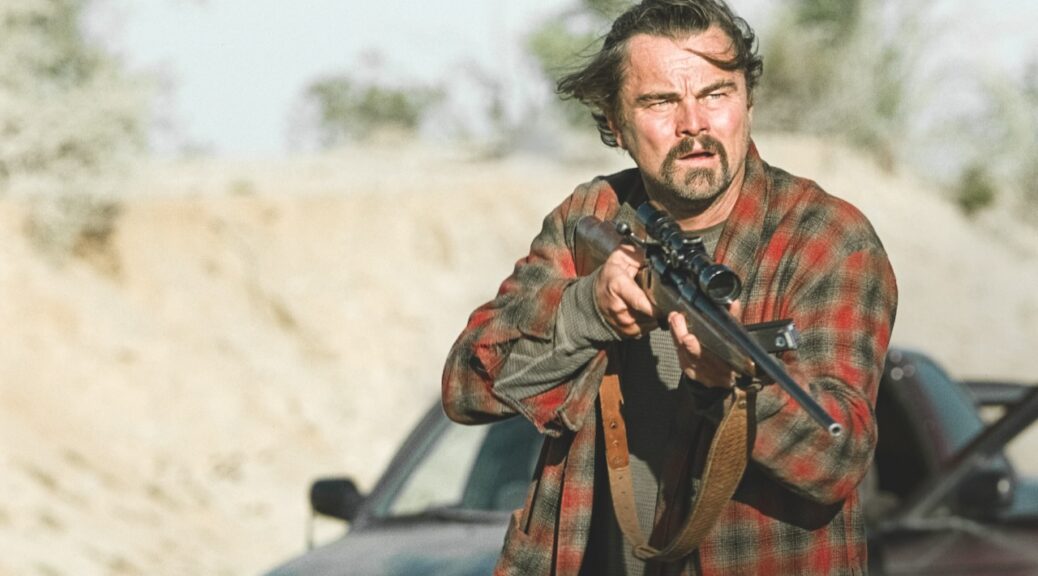
Anderson based the film on Thomas Pynchon’s Vineland, which contrasted the revolutionary spirit of America of the 1960s with the era of Ronald Reagan’s reelection. Anderson finds parallels in the generational necessity for revolution with Bob (Leonardo DiCaprio).
Years ago, Bob and Perfidia Beverly Hills (Teyana Taylor, owning the screen no matter who she shares it with) were revolutionaries disrupting W.’s ugly border policies, among other things. But everything went to hell, much thanks to Col. Steven J. Lockjaw (great name!). And about 16 years later, Lockjaw comes looking for Bob and the baby he disappeared with off-grid all those years ago (Chase Infiniti).
Sean Penn is Lockjaw, and he hasn’t been anywhere near this compelling or transformed since Milk (although he was a ton of fun in Licorice Pizza).
Though the massive cast is characteristically littered with incredible talents crackling with the electricity of Anderson’s script, Benicio del Toro stands out. He brings a laidback humor to the film that draws out DiCaprio’s silliness. While much of One Battle After Another is a nail-biting political thriller turned action flick, thanks to these two, it’s also one of Anderson’s funniest movies.
It may also be his most relevant. Certainly, the most of-the-moment. A master of the period piece, with this film Anderson reaches back to clarify present. By contrasting Bob’s paranoid, bumbling earnestness with the farcical evil of the Christmastime Adventurer’s Club, he satirizes exactly where we are today and why it looks so much like where we’ve been during every revolution.
But it is the filmmaker’s magical ability to populate each moment of his 2-hour-41-minute run time with authentic, understated, human detail that grounds the film in our lived-in reality and positions it as another masterpiece.

Everyday People
The Lost Bus
by George Wolf
Paul Greengrass loves him a true survival story. And with Captain Phillips, United 93, Bloody Sunday and more, he’s shown great instincts for bringing those stories to the screen. That craftsmanship is on display again in The Lost Bus, a harrowing retelling of a heroic rescue from Northern California’s catastrophic Camp Fire that killed 85 people and destroyed ninety percent of a city’s homes in 2018.
Adapting Lizzie Johnson’s book, Greengrass and co – writer Brad Ingelsby get us up to speed early and effectively. The town of Paradise has not had rain for over 200 days, and the threat of wind gusts up to 90 mph bring multiple wildfire warnings.
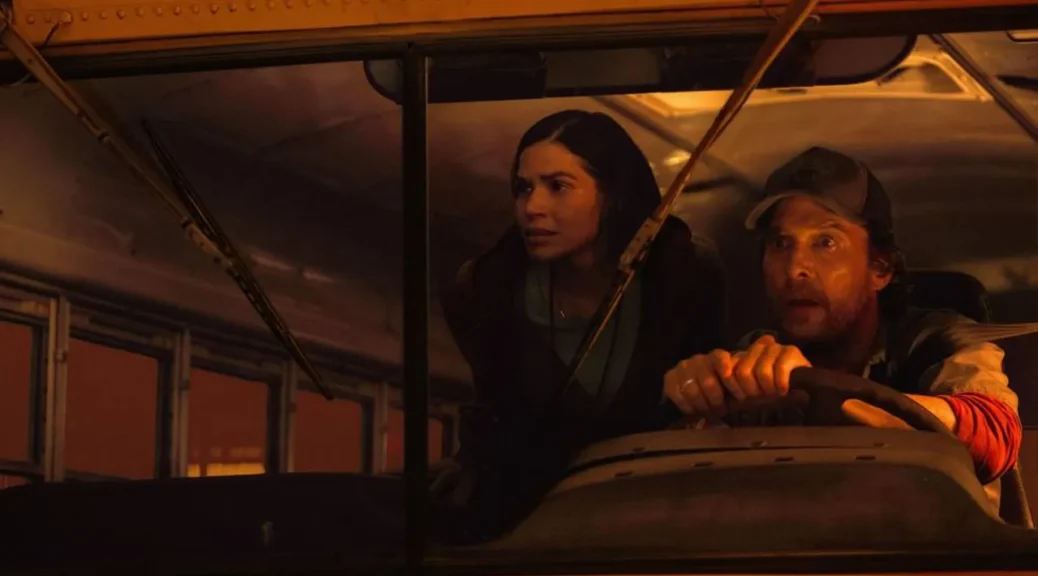
Kevin McKay (Matthew McConaughey) is begging for extra shifts as a school bus driver, trying to keep his life together amid an aging mother (McConaughey’s mother Kay), a rebellious son (McConaughey’s son Levi), a disappointed ex-wife (Kimberli Flores), an impatient boss (Ashlie Atkinson) and a dying dog.
He’s also struggling with guilt after his father’s death, and it’s only McConaughey’s skill with grounding the character that keeps Kevin from collapsing under the strain of an overly tortured and reluctant hero.
A faulty power line ignites a small fire that quickly grows to overwhelm firefighters, and as evacuation panic sets in, a call goes out to any bus drivers able to rescue a group of stranded schoolchildren. McKay answers, picking up teacher Mary Ludwig (America Ferrera) and her class of 22 kids. The radios are out and the bus is unreachable, adding even more anxiety to the frightened parents waiting at a shelter.
Ferrera also does wonders with a broadly drawn character. She and McConaughey create effective snapshots of everyday heroes pushed to the brink, the perfect anchor for Greengrass’s frenzied shaky-cam plunge into the fire. What the effects team accomplishes with the mix of embers, wind and flame is just spectacular, and though none of the bus’s perilous moments surpass the white knuckle nerve-shredding of Sorcerer, just the fact that Greengrass can bring Friedkin’s classic to mind is a high-five in itself.
McKay and Ludwig certainly deserve plenty of those. And the bluntly titled The Lost Bus gives them their due in grand, appropriately no-nonsense fashion. Unimaginable circumstances bring on an unparalleled fight for survival, and heroes emerge. Hold on tight for a gripping ride, especially if you can catch this Apple TV release on the big screen.
