Screening Room: Spencer, Eternals, The Beta Test, Finch & More
by Christie Robb
Adolescence is hard. It’s beset with conflicts and struggles that come from all directions—society, parents, peers, your own body… In Tracey Deer’s Beans, we see Tekahentakwa’s (nicknamed Beans) coming-of-age narrative, well, a slice of it anyway. She’s coming up on her seventh-grade year and contemplating a move from her neighborhood school to Montreal’s posh Queen Heights Academy.
The posh and majority-white Queen Heights Academy.
Which is more than usually fraught because Beans is a Mohawk and the Mohawks are fighting to keep White Quebecois developers from expanding a golf course onto a Mohawk cemetery.
Inspired by the true events of the Oka Crisis aka Kanesatake Resistance of 1990, Beans is a mix of archival news footage and fictional drama.
What begins as a peaceful protest at the cemetery turns violent once a riot squad shows up and starts lobbing tear gas at the protestors. A police officer is killed, which leads to a stand-off. Mohawks and white police face each other behind barricades. Beans’s town is cut off from supplies, leaving it more or less under siege.
The details of the stand-off are a little unclear, the way world events can seem when you are in middle school. What Beans experiences is a betrayal of white adults. They fail to live up to their roles in the social system she thought she was living under. Shop keepers won’t sell groceries to “her kind.” Police won’t protect a car full of women and children from folks throwing rocks. People scream obscenities and spit at her adorable kid sister.
In the midst of this, Beans is trying on possible versions of her adult self. She meets an older, more contemptuous, teenage mentor and seeks advice on how to toughen up. She abandons her baggy 90s overalls and braids and experiments with side ponytails, crop tops, and lipstick. She practices swearing in front of the mirror. She learns more about administering violence and suffering it.
As tensions with the developers and government mount, Beans’s life grows increasingly complicated, forcing her to make choices and figure out the type of person she wants to be.
The cast delivers authentic performances. As Beans, Kiawentiio nails the vulnerability covered with a brittle armor of cynicism that I remember from middle school. Paulina Alexis does a great job as the tough older girl who has been through some shit. And Rainbow Dickerson shines as the ultimate adult role model—strong and nurturing, and able to let loose with the lecture to kids and adults alike.
As a monolingual person from the States, I would have appreciated subtitles for the French language news footage and a little bit more context on how the Mohawks and the Canadian Government came to a resolution. But, overall, Beans is a moving coming-of-age story that depicts many strong First Nations women. This is Tracey Deer’s first feature film and I look forward to seeing what’s next.

by Hope Madden
I remember watching the inexplicably popular Bad Boys for Life and marveling at the film’s narrative purpose: to convince Marcus (Martin Lawrence) that being a violent man is better than being a man who does not commit violence against others.
Sure, there’s a mother/son angle, some explosions, a disco scene, but everything that happens does so to convince Marcus that his real purpose is to commit violence.
It’s different than the traditional “one man against the world” action flick, where a peaceful man is forced back into violence to avenge the death of his wife/child/puppy. Those have long existed. This idea that a man who chooses not to physically harm others needs to somehow be persuaded that he prefers a life of violence, that it is his nature and should be celebrated, is kind of new. This theme is also the driving force behind the admittedly enjoyable Nobody, among others.
The latest film that hates to see a man get his baser instincts under control is David Hackl’s Dangerous.
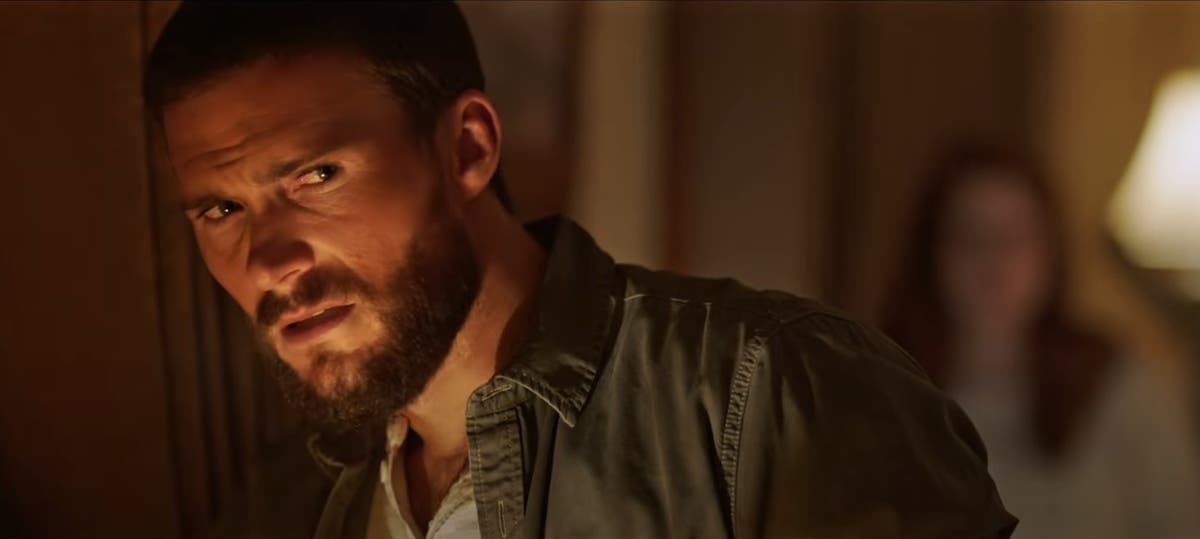
Scott Eastwood leads a solitary life. He works out. He eats frozen dinners. He waters his plants. Then his mind-numbing peace is disrupted when his brother Sean’s death brings him to the remote island where Sean had been renovating an old military base into a hotel.
Eastwood, who channels his father more and more these days, is now non-violent with the help of some personality-deadening drugs and call-me-whenever guidance from his therapist, played by Mel Gibson.
That’s funny.
Hackl’s clearly working on a shoestring here, and though the film sometimes shows a lack of funds, on the whole, it’s competently made. The humor Hackl, Gibson and Eastwood mine from Christopher Borrelli’s script delivers Dangerous’s saving grace.
Because, yes, D (Eastwood’s character) falls into ex-military, Black Op style gunplay once on the island, but first the recovering sociopath has to deal with his mom. Beyond that, the mystery is convoluted beyond measure, Tyrese Gibson and Famke Janssen are pointless, performances are forgettable.
In the end, the whole mess feels like the familiar fantasy of doing right by your mother just one time and then disappearing so you can’t screw it up. Which is a better story than the one about a sociopath who decides being a decent human is just not being true to himself.

by Rachel Willis
Urban legends are everywhere. But some are real.
So begins writer/director, Justin LaReau’s attempt to combine urban legend, local myth and slasher horror in Lantern’s Lane.
When Layla (Brooke Butler) returns home from the city at the invitation of old friend Missy (Ashley Doris), the two (and two others along for the ride) end up at one of their high school haunts – Lantern’s Lane. The legend is that a ghost woman wanders the road with a lantern. However, the referenced urban legend doesn’t quite make the woods around the lane sinister.
Neither does the cast of characters, despite what noises they hear or antics they get up to. The most interesting part of the first act is the clear tension between Layla and Missy.
The enmity between the former friends is uncomfortable. Layla’s disdain for their old high school hijinks — ever present for the ones left behind in their hometown — grates on those who feel judged for their choices. This tension represents the one successful tactic in the movie because it feels like the others are trying to punish Layla for moving on. Looks exchanged between characters suggest something going on behind the action on screen.
But for a horror film, that’s just not enough. A boarded-up house offers some promise, but little of what’s found in the house frightens. There’s nothing you wouldn’t expect in an empty home vandalized by local teens. (But thank goodness for those maxi pads someone left behind.)
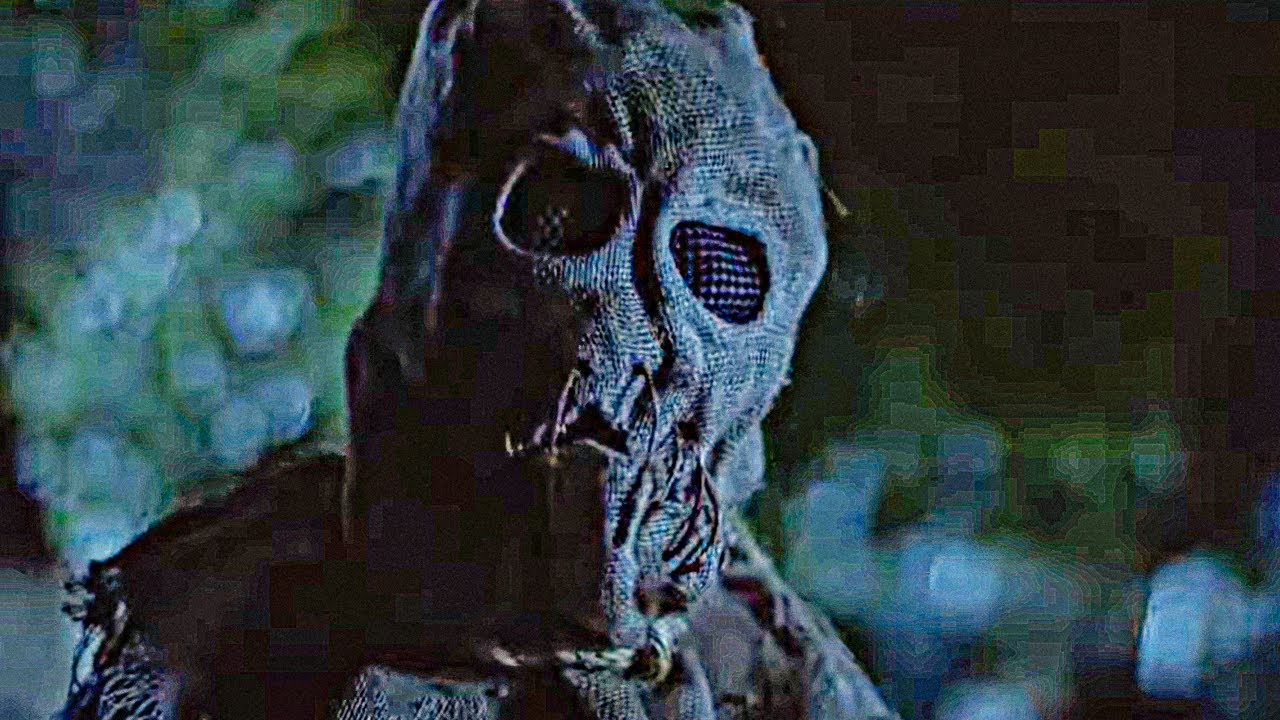
The action is very slow to get started, so much so that we’re still waiting for scares at more than halfway through the running time. The few attempted jump scares are ineffective. Once the horror does starts, the previous half’s attempted misdirection leaves us feeling flat. And the villain that comes to call doesn’t inspire much terror.
There are little bits thrown in here and there, but they never connect into something satisfying. Worse, first half padding mainly reiterates what we already know. And yet, despite the time we spend with these characters, none of them really come to life.
LaReau never manages to make you care what happens to Layla, Missy or any of the others. Without characters – or a villain – to root for, this horror mashup becomes a floundering mess.

by Hope Madden
Oh, they’re so attractive. They’re so rich. In fact, the five souls at the center of writer/director David Verbeek’s Dead & Beautiful are so attractive and rich that they have to stick together because literally no one else on earth can understand where they come from.
Each has a family fortune in the billions, and every week one of the five takes a “turn” — they decide what the group will do for fun, and their buddies have to participate, no questions asked. But it’s so hard! They’ve done everything.
Verbeek makes his point early. These five people contribute nothing to the world. As the rich and beautiful, they are the alpha predators. And yet, their unfulfilled lives spin out of control after one “turn” may have inadvertently changed them into vampires.
Thus begins the psychological experiment. When you have no soul to begin with, you’ve essentially lived off the masses your whole life, is there really any difference between you and a vampire?
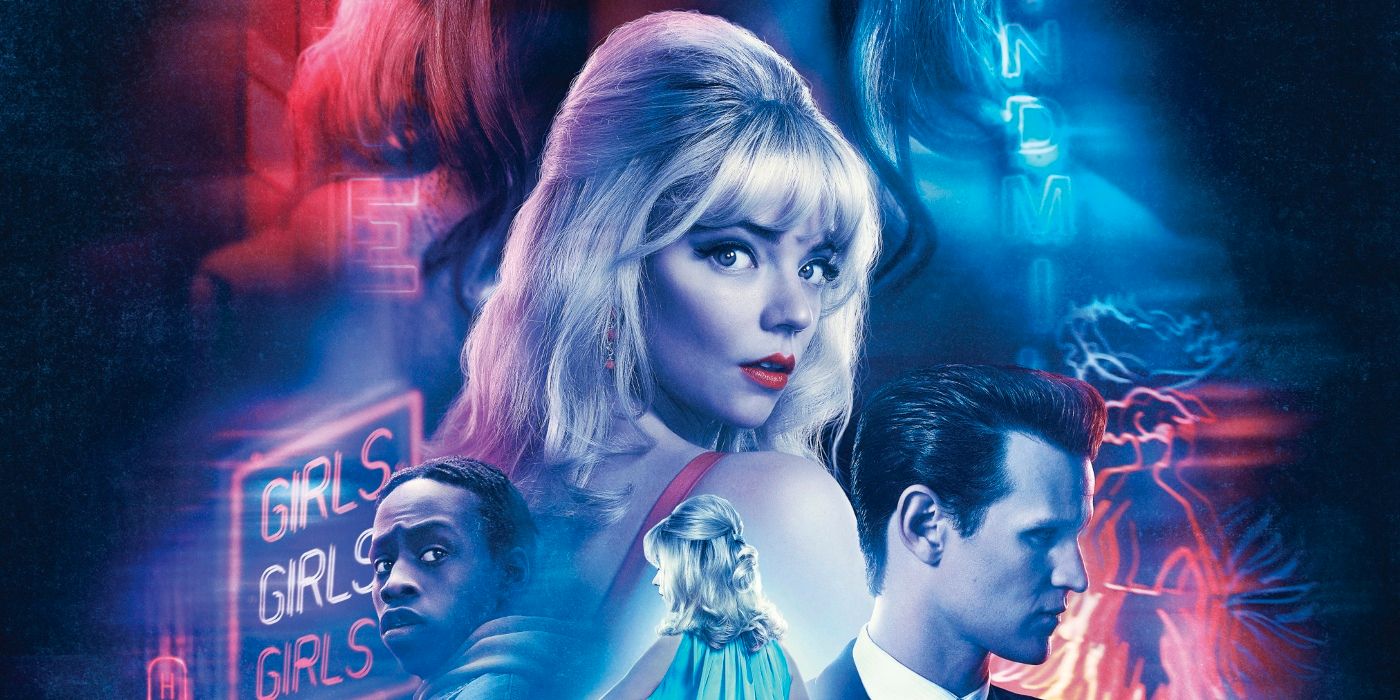
We find out in rain-slicked, neon-tinted urban late nights, following five impossibly thin and unreasonably attractive people through a whole lot of nothing.
Very, very little happens during this movie. Camaraderie and sexual tensions feel fake. Individual suffering rings false. The psychological game at the heart of the action is as bloodless as the film itself. This is a horror film in the loosest sense.
Dead and Beautiful would play more like a social satire if it didn’t emulate the same tedious, vacuous billionaire youth that it pretends to skewer.
A handful of funny moments help the time pass, mainly thanks to Philip Juan, whose character believes he mind-controlled his way into a pack of Wrigley’s spearmint gum. A frustrating number of scenes begin with great promise — well-framed, intriguingly populated possibilities for those alpha predators to prove their label. What’s frustrating is how blandly these scenes all end.
Verbeek lenses a gorgeous late-night cityscape — never sinister, never forbidding, just pretty and mainly empty. Like his film.
by Hope Madden
If Eyes Wide Shut had been a brutal commentary on the film industry and Tom Cruise had been an unsympathetic, insecure, entitled white man…the point is, The Beta Test is a wild, insanely tense satire.
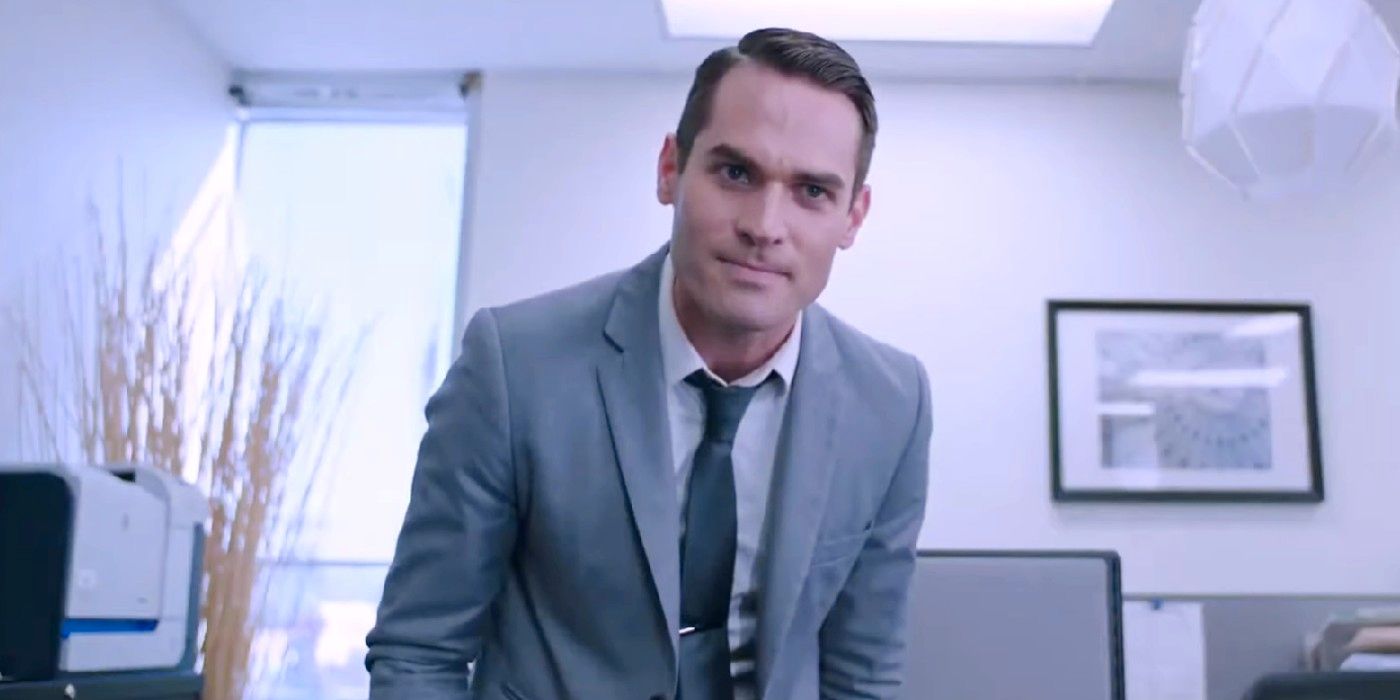
Co-writers/co-directors/co-stars Jim Cummings and PJ McCabe invite you into a world populated by people who miss the days before Harvey Weinstein’s ousting. The two play Jordan and PJ, respectively—Hollywood agents with no real purpose, no real value, a lot of spin, a lot of anxiety, and a chip on their collective shoulders about the stuff they can no longer get away with.
Then Jordan finds a purple invitation in his mailbox and the mystery begins.
Whether or not Jim Cummings has range as an actor is yet to be seen, but as the awkward, barely recovering alcoholic on the verge of a nervous breakdown, he is perfect. His performance here never broaches the level of vulnerable beauty he showcased in Thunder Road, and even the self-centered ineptitude of his werewolf hunting sheriff in The Wolf of Snow Hollow feels wholesome when compared to Jordan.
But somehow Cummings creates moments where you almost root for this guy. It’s a deceptively layered performance at the center of a biting piece of social commentary.
Cummings is not alone. McCabe works well as Jordan’s far more likable (thought probably no more genuine) bestie/worstie. Jacqueline Doke, playing an office assistant who most closely resembles a normal human, injects scenes with a grounding perspective that only makes Cummings’s anxious antics funnier.
Virginia Newcomb —so spot-on as the disbelieving spouse in 2019’s underseen treasure The Death of Dick Long — is once again excellent in the role of a partner who just cannot believe the behavior of the man she loves. Her role is a bit underwritten, unfortunately, but she and Cummings play off each other well.
Outrage roils beneath the surface of this film so loudly that it almost drowns out the actual plot, which is fine. The mystery itself, convoluted as it is, mainly allows Cummings and McCabe opportunities for inspired, seethingly comical hijinks.
Mass
by George Wolf
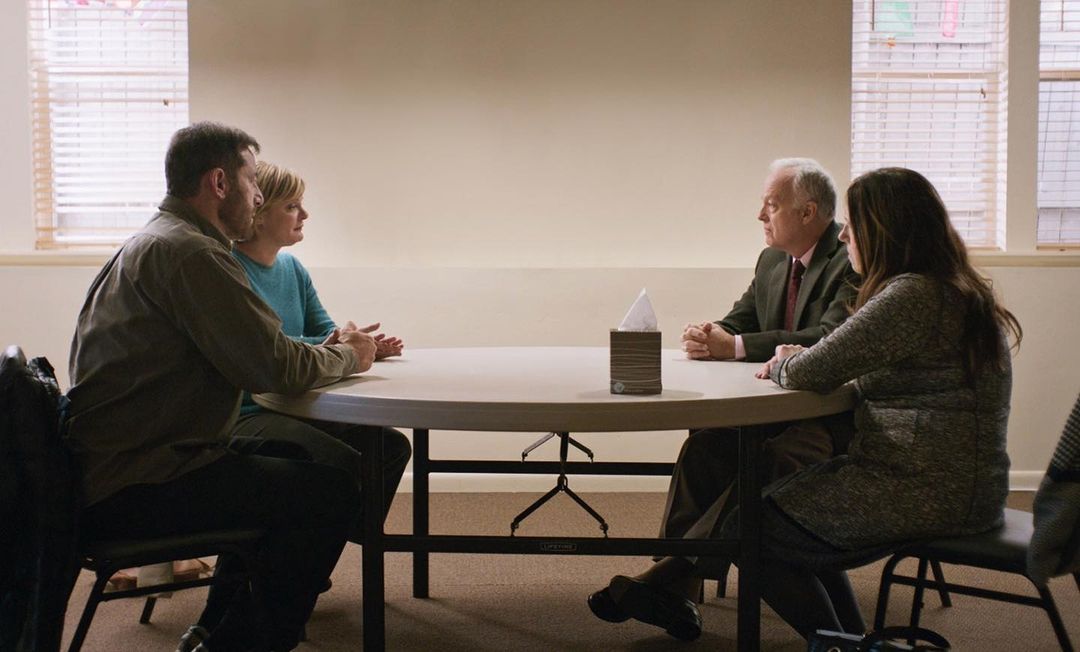
Jay and Gail (Jason Isaacs and Martha Plimpton) arrive at a local church, both uneasy about their planned meeting with Linda and Richard (Ann Dowd and Reed Birney). While the choir practices upstairs, a room has been reserved for the couples to talk.
There is a small table with four chairs. There is water. And there are tissues.
An unthinkable tragedy has connected these four people for life, and veteran actor Fran Kranz explores their journey of healing with a gently assured filmmaking debut full of shattering emotion.
Yes, you will need some of those tissues, too. But Kranz’s touch is so perfect, and the characterizations so real, that you never feel preached to, even with a large crucifix dominating the room.
The four actors are raw and touching, each exploring different levels of anger, blame, guilt and forgiveness. Writer/director Kranz gives Gail the most complete journey, and Plimpton realizes it with an award-worthy turn, while Dowd finds the subtle grace in a final confession that could have easily turned overwrought.
Mass is a spare chamber piece that makes sure nothing comes easy. You hang on every word, afraid to intrude on this intimate pain yet welcoming the invitation. With insightful writing, superb performances and unassuming direction, it’s a cathartic film that deconstructs an all too common tragedy with overdue honesty.
by Hope Madden
There is a satisfying if confounding unpredictability about Emir Ezwan’s Malaysian folk horror Soul (Roh).
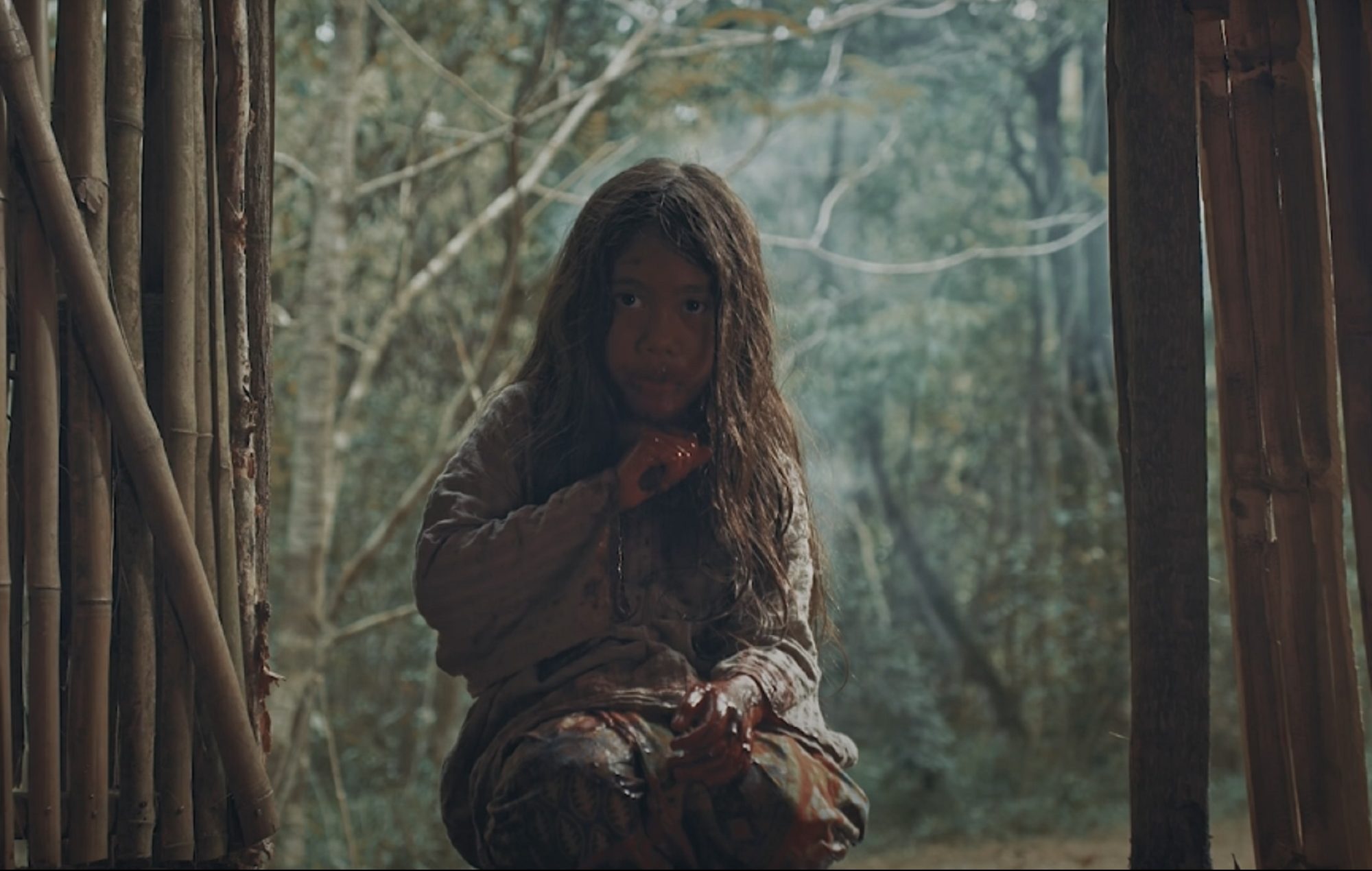
A slow burn set in an unspecified past, the film shadows a bloody, filthy little girl (Putri Qaseh) in a jungle as she watches a village burn before disappearing into the tree cover. When she later follows a pair of siblings back to their isolated hut, we know Mom (Farah Ahmad) probably should not take the straggler in.
But how could she turn her away?
What follows is a spooky tale of rural superstition that sees humans as gullible playthings to supernatural forces.
Ezwan draws naturalistic, believable performances from the cast of six, three of them children. Though Qaseh delivers only one line, she makes it count. But it’s Ahmad’s performance unadorned performance that generates the film’s uneasy central idea that a person’s character, choices, strengths or weaknesses are irrelevant in the face of a cruel and random power.
Whether that power is God or evil, nature or society doesn’t much matter.
Making the most of limited resources, the filmmaker casts a spell of a kind only found deep in the woods. The setting itself behaves as its own character, menacing and magical. Saiffudin Musa’s camera conjures the beauty and decay, both danger and sustenance around every turn.
You never know what you’ll find—true of the jungle and of this film.
There’s nothing showy about Ezwan’s feature debut. Instead, a raw but graceful understatement balances something supernatural with something profoundly earthly to deliver blood, dread and fear.

by Hope Madden
Hey, do you remember what a non-stop laugh riot Scott Cooper’s Out of the Furnace was? No? Well, compared to his latest — the long, long-awaited horror Antlers — it is.
The film takes us to depressed, smalltown Oregon at the height of the opioid crisis. Julia (Keri Russell) has returned after decades away. She lives with her brother, the town sheriff (Jesse Plemons), teaches middle school and deals with her demons.
Someone else’s demons are less metaphorical.
Cooper co-wrote the screenplay with Henry Chaisson and Nick Antosca, who adapts his own short The Quiet Boy. The short uses fairy tale language to cast an image of abuse and horror — an idea Antlers plays with but eventually abandons for more heavy-handed parallels between child abuse, addiction and economic blight.
At the center of the action is 12-year-old Lucas Weaver (Jeremy T. Thomas) in a remarkable turn. Hollow-eyed and tragic, he conveys secrecy and desperation in equal measure. And as soon as your heart breaks for Lucas, you see his little brother Aidan (a crushingly adorable Sawyer Jones).
The boys have a problem that seems unsolvable, but it might have played better if Cooper could have kept the focus a little more on the monster movie and a little less on the metaphor.
There is a monster —literal and figurative—in this film. The creature effects for the literal monster amaze and unnerve, thanks to an impressive design and to emotional seeds planted early in the film by actor Scott Haze.
Antlers looks great, whether cinematographer Florian Hoffmeister’s camera lingers in the woods, tiptoes down hallways, or witnesses red-flare lit doom in a mine. But Cooper is an odd choice for a supernatural film, and perhaps an entirely wrong-headed filmmaker to take on the perspective of a child to tell a horrific fairy tale.
Whimsical he ain’t.
In the end, the film suffers from a lack of imagination. Cooper and team lead us through a dour metaphor full of familiar genre tropes and leave us with a brutal, great-looking, well-acted lecture.