Tag Archives: movie reviews

We’re Gonna Need a Montage

Hustle

by George Wolf

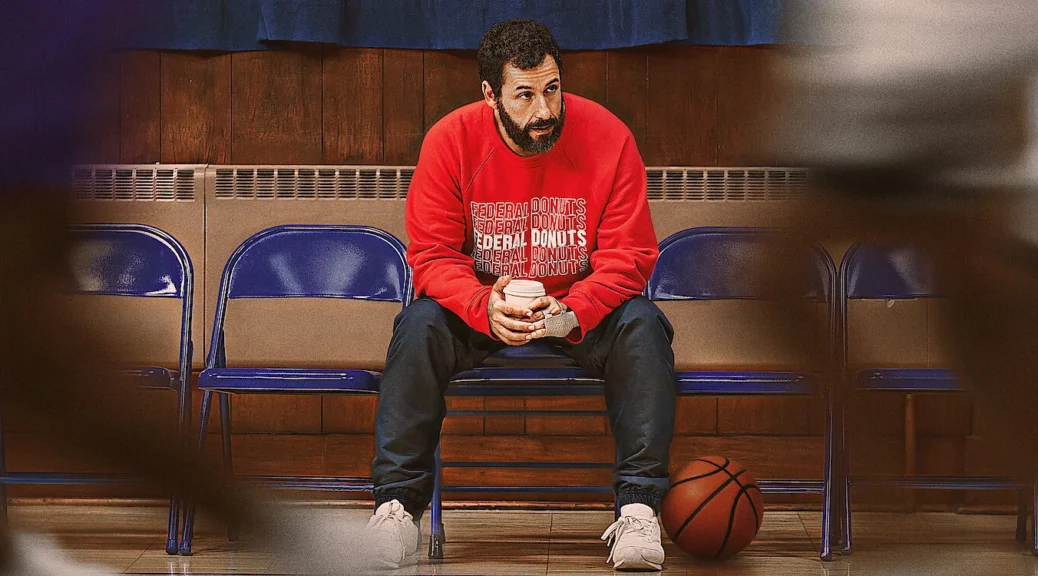
Adam Sandler’s passion for basketball is fairly well known, so the fact that Hustle is a love letter to the NBA shouldn’t be a huge surprise. And, this being a sports movie, you can expect some familiar benchmarks the film wisely doesn’t shy away from.

But this film about the heart and commitment that’s required in the Association boasts plenty of both from nearly everyone involved, landing Netflix an enjoyable winner.

Sandler plays Stanley Sugerman, a road-weary scout for the Philadelphia 76ers whose devotion to team owner Rex Merrick (Robert Duvall) is finally rewarded with a job on the bench as Assistant Coach.

But with clear shades of the Buss family drama in L.A., Rex’s son Vince (Ben Foster) wrestles control of the team from his sister (Heidi Gardner), and Stan is back living out of a suitcase while he scours the globe for a susperstar.

Writers Will Fetters and Taylor Materne set some nice stakes early, as Vince dangles a return to coaching in front of Stan. The quicker he finds the team a game-changing phenom, the sooner he can be home closer to his wife (Queen Latifah) and daughter (Jordan Hull).

On a gritty playground in Spain, Stan thinks he’s found his unicorn in the 6’9” Bo Cruz (NBA vet Juancho Hernangomez). The talk of big money lures Bo to Philly, but the path to a payday hits some roadblocks, and Bo’s longing for this mom and daughter back home creates some effective character-driven parallels with Stan.

Sandler and Hernangomez share a sweet, funny chemistry, and a constant stream of past and present NBA stars adds plenty of authenticity. Even better is director Jeremiah Zagar’s (We the Animals) skill in framing on-court action with speed, sweat and a tense, in-the-moment feel that gives the standard sports themes some needed vitality.

Hustle is a story of father figures, redemption, perseverance, and leaving your mark. No one’s claiming to re-invent anything here, and the winking nod to an iconic Rocky moment cements a self-awareness that only adds to the film’s charm.

It’s also another example of Sandler’s versatility, and the good that comes from surrounding himself with unique voices. When Sandler cares, he shines.

And he clearly cares about basketball.

Rites of Passage

Tahara

by George Wolf

If you saw Rachel Sennot’s breakout performance in last year’s wonderful Shiva Baby, the setup of Tahara is going to look pretty familiar. But in their feature debut, writer Jess Zeidman and director Olivia Peace find a vibrant, refreshing lens for their own look at one funeral’s anxious aftermath.

Sennot is terrific again as the self-centered Hannah, who joins her more reserved best friend Carrie (Madeline Grey DeFreece, also excellent) at the service for their Hebrew school classmate Samantha. Samantha killed herself at the age of 18, and after the funeral the girls will join other classmates at a grief session to talk about their feelings.

They will also gossip, navigate cliques, and bitch about having to be there while they try to catch the eye of Tristan (Daniel Taveras).

At least Hannah will be flirting with Tristan. Because Carrie is hiding some true feelings for her bestie, a conflict that Peace and Zeidman surround with some touching and effective parallels.

Peace frames most of the film in a square, 1:1 aspect ratio, but goes wide at important moments, most of which are animated. It’s a clear nod to the times when Carrie, a young Jewish queer woman of color, sees herself – and the world – in new ways.

Though the animation sequences and lack of score can give the film an experimental feel, a juxtaposition with the Jewish ritual meant to cleanse the body before burial (Tahara) ultimately grounds it as a deeply personal journey.

The students tell their teacher (and by extension, those not familiar with Jewish traditions) that the ritual’s goal is to “erase social status,” which feeds perfectly into the teenage power struggles (and one suicide) we see through the eyes of a type of character not often represented.

At times funny, uncomfortable, and heartbreaking, Tahara is an ambitious and ultimately moving film, from a pair of voices we should look forward to hearing again.

Nippon Dynamite

Ninja Badass

by Matt Weiner

The title of Ninja Badass also serves as a statement of purpose: if nothing else, this is a movie that knows what it wants to be.

Ryan Harrison, the movie’s (take a quick breath) writer/director/producer/actor/special effects guy, clearly has a vision for his low-budget cult flick. Ninja Badass aims for somewhere between midnight grindfest and “so bad it’s good.” Harrison remains dedicated to hitting that mark far more than sticking to an even remotely coherent story.

Rex (Harrison), an aimless Midwesterner fresh out of jail, finds himself on a journey. He aims to become a “real ninja” and save hot babes from ritual sacrifice at the hands of the Ninja VIP Super Club, run by the supremely evil Big Twitty (Darrell Francis). Along for the ride are his best friend Kano (Mitch Schlagel), new sensei Haskell (Steven C. Rose), and the mysterious and formidable Jojo (Tatiana Ortiz).

And… that’s pretty much it. The movie is less concerned with developing its leads than using them as human canvases for explosions, torn limbs and pureed puppies. The trail of destruction these ninjas leave across Indiana is immense, with copious digital blood sprays augmented by enjoyably gross practical effects and gore.

It would be a category error to spend a lot of time trying to figure out whether or not Ninja Badass is a good movie. Are numbers spicy? Can vegetables convert Eastern to Mountain Time? These aren’t the right questions.

Good movie? Bad? Ninja Badass is certainly an offensive one, almost deliriously so with the star-spangled Midwesterners constantly misunderstanding and conflating an entire continent’s worth of influences and languages. We’re clearly meant to be in on the joke, although Harrison dips into that well a bit too often.

Ninja Badass is also highly watchable, if you can allow yourself to have as much fun as Harrison clearly had getting this made. The action wears too thin by the end for the film to become a full-blown cult classic like the unintentionally bad films it borrows from. But this is also a country that gave American Ninja enough sequels to be considered a proper franchise. In the pantheon of weird white dude ninja movies, Ninja Badass more than holds its own.

Chillier than Casual Friday

Nude Tuesday

by Hope Madden

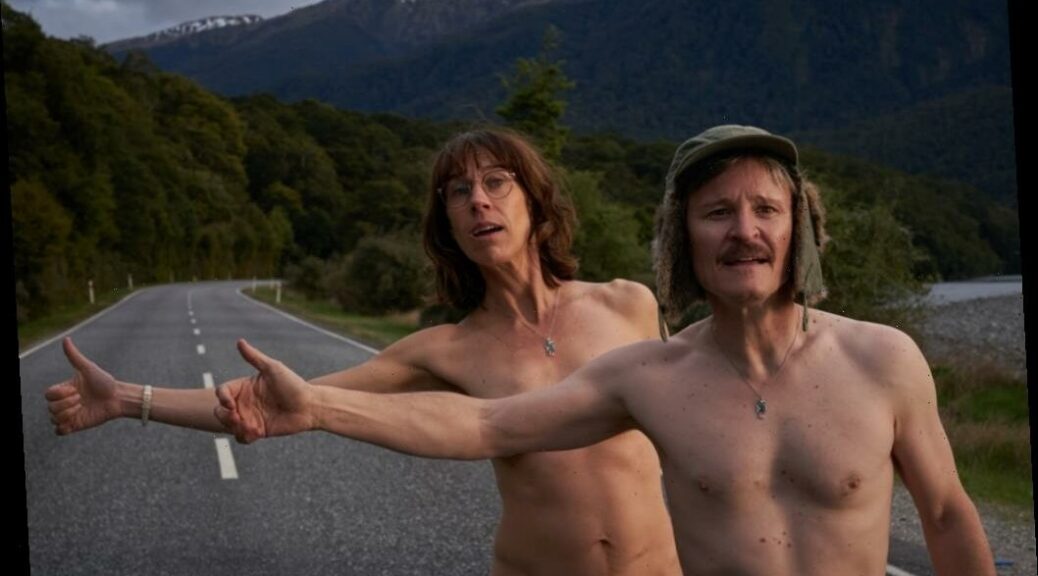
“It’s rude not to be nude on Nude Tuesday.”

It’s with this kind of casually dropped line and its sincere acceptance that co-writer/director Armagan Ballantyne laughingly challenges status quo and self-help in equal measure.

It’s nothing if not an odd film.

Ballantyne writes with star Jackie van Beek (What We Do in the Shadows) and Ronny Chieng. Ballantyne and van Beek composed the script, which is written entirely in a very Nordic-sounding gibberish language. Chieng wrote the subtitles.

This makes you wonder, was the English language version available to the actors, or did Chieng figure out what they were saying later? And why?

Either way, the actors convince. You’ll immediately forget that this is not a real language (which means you’ll cease to marvel at its delivery, and that’s a crime).

Van Beek is Laura, whose marriage to Bruno (Damon Herriman) has been unsatisfying for a while. His mum has noticed, so she bought them a trip to a retreat run by the charismatic Bjorg (Jemaine Clement).

The duo will try new things, learn about themselves, slowly unveil the buried troubles in their relationship, and work toward that day of days: Nude Tuesday.

Before we get there, though, Ballantyne runs through an absurd comedy of manners. Van Beek’s awkward, do-what’s-expected delivery is perfect, and Herriman’s over-eager approach creates a funny balance.

Clement’s simpleton narcissism delivers the most consistent laughter in a film that’s cleverly delightful if not bust-a-gut funny.

The cast wields the language impressively. Still, the creative decision is a head-scratcher. The fictional language doesn’t impede enjoyment of the film, but it doesn’t heighten it, either. Because of the subtitles, it doesn’t do anything at all. Would we be able to follow along without captions? And if not, why put the cast through learning the false dialog and the audience through reading the real deal?

It’s a conundrum, but not one worth a lot of energy. Nude Tuesday delivers a charming coming-of-middle-age comedy (and a lot more nudity than you probably need).

Not All Men

Watcher

by George Wolf

If you’re a fan at all of genre films, chances are good Watcher will look plenty familiar. But in her feature debut, writer/director Chloe Okuno wields that familiarity with a cunning that leaves you feeling unnerved in urgent and important ways.

Maika Monroe is sensational as Julia, an actress who has left New York behind to follow husband Francis (Karl Glusman) and begin a new life in Bucharest. With a mother who was Romanian and a fluent grasp on the language, Francis instantly feels at home.

Julia does not, and her feelings of vulnerability are compounded by her trouble communicating, the news reports of a serial killer, her husband’s late nights at the office…and the man in the window across the street (the effortlessly creepy Burn Gorman) who is constantly watching her.

And as soon as Julia makes accusations, the games begin.

Is the watcher really a threat? Is he stalking Julia, or is she the one who’s following him?

None of these beats are new, and as events escalate, others are pretty clearly telegraphed. But it’s the way Okuno (who helmed the impressive “Storm Drain” segment from V/H/S /94) slowly twists the gaslighting knife that makes the film’s hair-raising chills resonate.

She finds a perfect conduit in Monroe, who emits an effectively fragile resolve. The absence of subtitles helps us relate to Julia immediately, and Monroe never squanders that sympathy, grounding the film at even the most questionably formulaic moments.

Even as Julia pleads to be believed, the mounting indignities create a subtle yet unmistakable nod to a culture that expects women to ignore their better judgment for the sake of being polite.

And from the friendly bystander who jokes about the creeper’s “crush” to Francis’s weak-willed humoring, Okuno envelopes Julia in male gazes that carry threats of varying degrees, all building to a bloody and damn satisfying crescendo.

Rebel Without a Pulse

Unhuman

by Hope Madden

No one ever said high school was easy.

Since the day Hollywood realized that teens spent a lot of money on movies, films have depicted high school angst. Often enough those movies offer suggestions, simple enough remedies to the woes inside those hallowed halls.

A makeover, perhaps? Saturday detention? Karate lessons?

Director Marcus Dunstan’s darkly comedic Unhuman thinks maybe an apocalyptic field trip could do the trick.

A high school science class and one teacher who’s no better than the worst of the teens set off on an extra-credit adventure. And before you know it, you’re eyeball deep in a zombie flick, redneck menace film and John Hughes movie all rolled into one.

Briannae Tju (TV’s I Know What You Did Last Summer) plays Ever, who keeps her head down, her mouth shut and tries not to make waves. She and bestie Tamra (Ali Gallo) are having a moment—it’s that moment when the cool kids want only one of you for their clique and you pretend you aren’t both aware of it.

But suddenly, after a bus crash, scary radio broadcast and a throat-biting murderous attack, Ever and Tamra must team up with those cool kids and whoever else escaped the bus to survive the field trip.

Expect more than you bargain for, including solid performances from Tju, Gallo, Benjamin Wadsworth and a busload of actors finding ways to color outside the lines.

This is the same writing team that launched into the horror scene with Project Greenlight winner Feast. Unhuman shares an irreverent tone with that early work.

Dunstan, co-writing with longtime partner Patrick Melton, sees a darling simplicity in old-school teen movies. At one point, Randall (Wadsworth) tells us, “It’s a microcosm for life. High school doesn’t end. It spreads.”

The filmmakers sell that kind of 80s influence well, but don’t assume Melton and Dunstan buy it.

There’s real cynicism lying under the viscera, although the surface-level laughs and shocks help Unhuman masquerade as simple bloody levity.

Digging Our Scene

Poser

by Hope Madden

No matter how familiar the synopsis might sound to you, know for certain that Poser will surprise you.

Directors Noah Dixon and Ori Segev, working from Dixon’s script, drop you into the indie music scene you may never have realized existed in Columbus, Ohio. Lennon (Sylvie Mix) wants to change that with her podcast. She may not have a lot of listeners, but she promises those who do listen a deep dive into the scene, with interviews and performances from the best bands you’ve never heard of.

She’s kind of banking on that last bit, actually.

Mix’s open stare and stealthy movement — a technique she used to great effect in her haunted Christmas flick Double Walker — here feels slyly deceptive. Lennon’s an introvert, a fan, an artist herself. Or is she?

A clever opening in an art gallery sets wheels in motion, and you’re never quite sure how sympathetic Lennon really is. Mix masters pseudo-innocence, only betraying Lennon’s true nature in glimpses during meet-ups with her sister.

Lennon’s real purpose materializes with the introduction to idol/muse Bobbi Kitten, a rock star on the scene who is all that Lennon would like to become.

Like a cagey, pink-haired Jena Malone, Kitten commands the screen playing a version of herself. The singer from Columbus-based indie band Damn the Witch Siren, Kitten performs along with bandmate Z Wolf, whose presence adds a fascinating air of whimsy, danger and apathy.

Though Kitten and Mix are more than enough to keep your attention, the music scene and Columbus itself offer fascinating, pulsating ensemble support. The music for Poser, and the likely ad-libbed dialogue from band members, enliven every scene.

And Columbus looks terrific. Logan Floyd’s gorgeous cinematography meshes with performances and story to depict the melancholy and madness that go hand-in-hand with youth, art and punk rock.

Star Girl

Maika: The Girl from Another Galaxy

by Tori Hanes

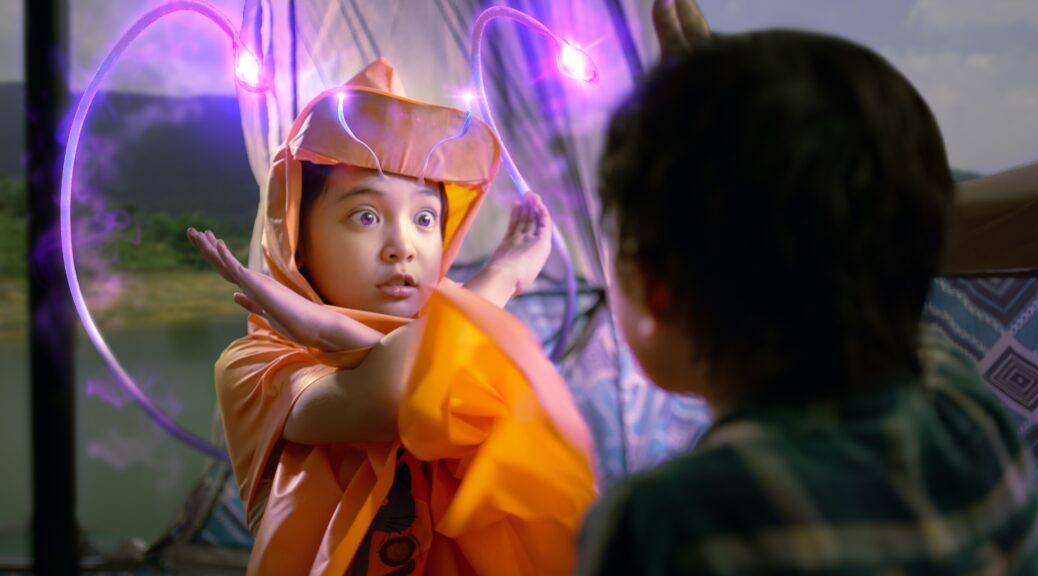
Mourning the recent loss of his mother, young Hang (Truong Phu) is tasked with helping the recently crash-landed alien Maika (Chu Diep Anh) in her search for her lost extraterrestrial comrade. Director Ham Tran drives the classic setup through otherworldly twists while still steering delicately toward a grounded yet humor-filled reality. 

Maika has one thing pulsing through its veins that bleeds into every aspect: heart. A big, family-friendly, overly sentimental, beating heart.

The film finds beauty in its earnestness but the sincerity can become suffocating, specifically within the first thirty minutes. Hung’s mother has passed away, his best friend is forced to move, his father’s business is failing, his neighborhood is being poached by gentrifiers… you may feel beaten over the head with a lead pipe of ethos.

So, when Maika is introduced and the E.T.-esque romp of intergalactic friendship begins, the audience is relieved. We have suffered sufficiently. 

Once the film is able to find its balance, a fun-loving tale ensues. Billionaire bad guys, sleazy goons, alien technology – it seems obvious that Tran was inspired by the glory days of 80s children’s adventures. 

With this, a unique aspect of what immortalized the Goonies/Gremlins/E.T. generation reveals itself – a willingness to explore with a young audience. This interest in pressing uncomfortable, interesting, and sometimes frightening topics gives children the permission to safely authenticate these emotions and ideas. That is where Maika succeeds. 

Unfortunately, much like its 80s counterparts, Maika meanders. At an hour and 47-minute runtime, the plot drags before picking up breakneck momentum, only to rein itself back to a turtle’s pace. It’s hard to not feel some form of whiplash. Still, the story ultimately succeeds in retaining and respecting the audience’s attention.

At surface level, Maika aims to please. And ultimately, it does just that. But it also wants to feel, to hurt, to explore, and to breathe… and the invitation it extends to the audience to participate is what sets Maika apart.

Poetry in Motion

Benediction

by Christie Robb

A languid, disjointed film about British WWI poet Siegfried Sassoon, Terence Davies’ Benediction sets the stage for several exquisite recitations of Sassoon’s poetry.

And the poetry is really the star of the show.

This isn’t to say that Sassoon’s life is boring and without conflict. Not at all. As a lieutenant fighting in France, Sassoon was horrified by trench warfare, and the tone of his poetry shifted from romantic and patriotic to a gritty depiction of rotting corpses, suicide, and a growing sense of futility amidst the mud and gas attacks.

He was awarded the Military Cross for “conspicuous gallantry” and then wrote a letter to his commanding officer (forwarded to the press and House of Commons) refusing to return to active service, condemning the motives of an unjust war. Instead of being shot for treason, he was sent to a Scottish war hospital to recover from “shell shock.”

After the war, he had several love affairs with men (writers, actors, and aristocrats). He married a woman, had a son, converted to Catholicism and was appointed Commander of the Order of the British Empire.

Writer/Director Davies doesn’t give the story of Sassoon a clear focus/narrative arc. It bounces back and forth in time, setting the few jewel-like moments in which the poems are performed among a series of vignettes from the author’s life. In these, he searches for authenticity and connection in a fractured world. Sometimes we wander about through tasteful interiors while people in sumptuous clothing shout about relationships that aren’t completely explained. Occasionally this is intercut with archival footage from WWI.

This experimentation in form and use of stream-of-consciousness is a technique employed by literature in the period after the Great War. It allows us to experience Sassoon’s longing and disappointment as he tries to find meaning and salvation in political action, relationships, family, and religious devotion—all of which fail him.

Both the actors playing Sassoon, Jack Lowden (young) and Peter Capaldi (old), give heroic, emotionally vulnerable performances. My only real criticism here is that there isn’t enough of a throughline connecting Lowden’s open-hearted optimism (even post-war and post-breakup) to Capaldi’s cantankerous hatred of all things modern.

Lowden does such a good job of keeping Sassoon’s emotional self locked behind a façade of genteel wit and English manners that, in the scenes from his later life depicted by Capaldi, the Sassoons seem like two completely different people.

Still, the fragmented structure of the film and the character does a superb job of depicting the trauma sustained by a generation who experienced the unprecedented horrors of what was supposed to be the War to End All Wars.