For a middling thriller, The Accountant offers a handful of worthy items.
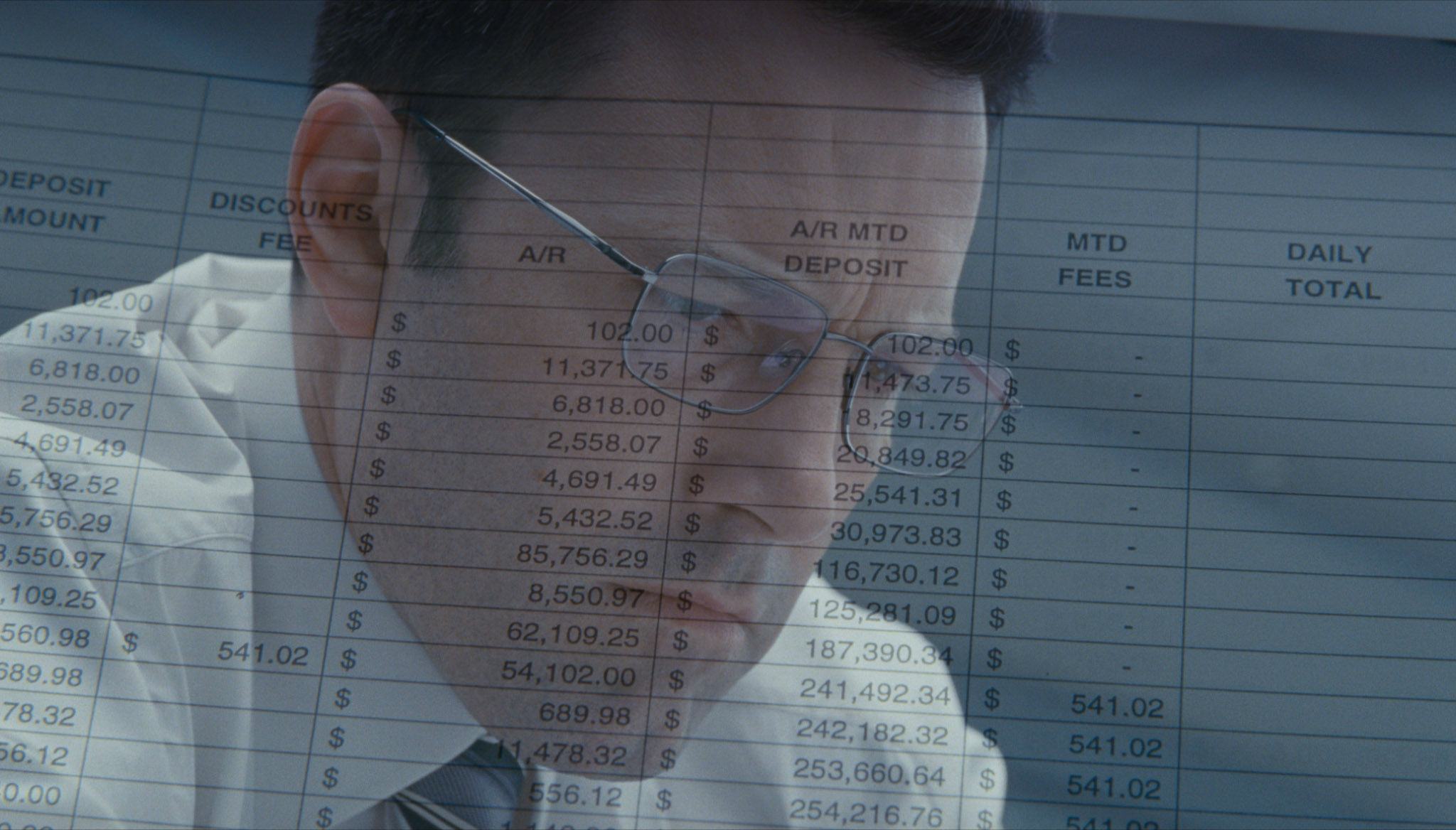
Its central character Christian (Ben Affleck) is an unusual choice for a hero. He’s a mathematical genius on the autism spectrum whose youth was spent learning to function in society, and developing mad mercenary skills. Why the second? Never really clear.
Affleck is a proven director. He doesn’t direct The Accountant, but recent roles suggest he’s become savvier with his acting choices as well. He seems to recognize what the rest of us have known for a while – he lacks range.
What better character for him, then, than a man who struggles to show the slightest emotion?
The film also boasts – much thanks to Affleck’s performance – humor. Rather than an amalgam of stereotypes and contrivances, Affleck’s bean counter comes off as a relatable human.
Another item of note: director Gavin O’Connor (Warrior) choreographs the impeccable action sequences with the kind of clarity and efficiency that reflect the film’s protagonist. Even as that sounds potentially dull, the result is quite the opposite. These are some of the clearest and most interesting action pieces of the year, actually.
O’Connor’s direction and Affleck’s performance are subtle with Christian’s tics, focusing our attention instead on slight changes in the character that make him more provocative. By pairing him with Anna Kendrick’s corporate CPA Dana – a sweet, jovial type – O’Connor explores the social awkwardness in all of us.
Now for the problems.
These fall mostly to the script, penned by Bill Dubuque, whose triad of storylines climaxes in a clean and witty shootout. Too bad every intentional surprise has long-since been guessed, leaving only those inconsistencies in the plot that are probably not supposed to have been noticed, either.
Christian, drawn to puzzles and possessing a super human knack for math, often works with disreputable clients. He’s taken a legit client – a robotics firm that makes prosthetics for the medical industry. But this isn’t as it seems, and brings Christian in contact with a corporate hitman who wants him silenced.
Meanwhile, the Treasury Department is finally piecing together Christian’s whereabouts and may be onto him. Why now? Another mystery.
The criss-crossing, flash-backing, money-following and head-scratching don’t pay off because, at its core, the thriller is just exploiting a gimmick. But Affleck and O’Connor are not, which is why the film turns out as well as it does.
Maybe you’ve heard the claim that, back in the 80s, pop balladeers Air Supply could in fact “make all the stadiums rock.”
But did they really?
Hard to say, as we never got that live footage which may have provided the elusive evidence of the Supply, a stadium and that aforementioned rocking.
Such unanswered questions will not haunt Kevin Hart. What Now? takes us to Lincoln Financial Field in Philadelphia, where in August of last year Hart sold out his hometown stadium for a standup routine featuring rock concert ambitions. A football stadium sold out for a comedy show. Impressive, and though Hart’s third concert film takes a little time to hit its stride, it eventually delivers steady and sometimes gut-busting laughs.
As with 2011’s Laugh at My Pain and 2013’s Let Me Explain, What Now? buffers the standup with additional footage directed by Hart favorite Tim Story (Think Like a Man, both Ride Along films). The opening checks in with Hart some three hours before showtime and mixes parodies of both 007 and The Equalizer (Denzel version) that rate more clever than funny, earning bonus entertainment points courtesy of cameos from Halle Berry, Don Cheadle and Ed Helms.
Once Hart trades his tux for leather and hits the stage, Leslie Small takes the director’s chair, leaning a bit too heavily on quick cuts and overly manipulative audience reaction shots. I get it, there’s only one performer to frame and you’d like to avoid ninety minutes of Chris Rock-style stage stalking, but letting Hart’s set, adorned as it is with jumbo video screens and changing backgrounds, breath a bit would better feed an in-the-moment atmosphere.
The film, like its star, is always likeable, consistently funny and sometimes hilarious. Now that Kevin Hart has rocked a stadium harder than Air Supply, What Now? answers one question while it’s asking another.
There have long been filmmakers whose ultimate goal is not entertainment; the idea being that art is meant to affect, not entertain. These filmmakers, from Sam Peckinpah to Lars von Trier, generally develop impenetrable indie credibility and a line of devoted, bawling fans. No one in recent memory has applied this ideology to horror cinema as effectively as writer/director Greg McLean with his Outback opus Wolf Creek.
Some of the best scares in film have come as the reaction to urbanites’ fear of losing the tentative grasp on our own link in the food chain once we find ourselves in the middle of nowhere. With Wolf Creek, it’s as if McLean looked at American filmmakers’ preoccupation with backwoods thrillers and scoffed, in his best Mick Dundee, “That’s not the middle of nowhere. This is the middle of nowhere.”
A quick glimpse of a map of Australia points out that nearly every city with a population higher than that of an Ohio State University dorm is along the coastline. McLean explores the isolated beauty of this vast, empty middle with spectacularly creepy results.
Using only digital cameras to enhance an ultra-naturalistic style, McLean’s happy backpackers find themselves immobile outside Wolf Creek National Park when their car stops running. As luck would have it, friendly bushman Mick Taylor (John Jarratt) drives up offering a tow back to his camp, where he promises to fix the vehicle.
If this sounds predictable and obvious to you, rest assured that McLean has plans to burst every cliché in the genre, and he succeeds on almost every level.
His first triumph is in the acting. Jarratt’s killer is an amiable sadist who is so real it’s jarring. You find yourself hoping he’s an actor. His performance singlehandedly shames the great Tobe Hooper and Wes Craven, whose backwoods horror films relied so completely on caricatures for villains.
A horror film this realistic is not only hard to watch, but a bit hard to justify. What makes an audience interested in observing human suffering so meticulously recreated? This is where, like a true artist, McLean finally succeeds. What is as unsettling as the film itself is that its content is somehow satisfying.
Listen weekly to MaddWolf’s horror podcast FRIGHT CLUB. Do it!
By 2011, finding a zombie film with something new to say was pretty difficult, but writer/director/Cuban Alejandro Brugues managed to do just that with his bloody political satire Juan of the Dead.
First, what a kick ass title. Honestly, that’s a lot to live up to, aligning yourself to three of the great zombie flicks, both Dawns and Shaun of the Dead. That’s heady company, begging the comparison of Dawn’s scathing social commentary and Shaun’s ingenious wit. Juan actually survives this comparison.
Breathtakingly and unapologetically Cuban, the film shadows slacker Juan and his layabout pals as they reconfigure their longtime survival instincts to make the most of Cuba’s zombie infestation.
I’m sorry – dissidents. Thankfully the Cuban media is on top of this situation, letting the faithful patriots know that the violent, flesh-hungry villains outside are all dissidents. You old, fat auntie? Dissident. Paperboy, missing a foot and dragging himself toward that priest? Dissident.
One of a thousand hilarious touches is that the word zombie is never used – even Juan and his friends thoughtlessly refer to the mayhem happy characters as dissidents. It’s a whole new approach to the zombiepocalypse – not to mention social satire – and it’s entirely entertaining.
Alexis Diaz de las Villegas is outstanding as longtime, intentional loser Juan. Brugues surrounds him with a charmingly disreputable posse ready to take on the dissidents and find freedom – if that’s what they want.
It’s such a clever, eye-opening film with some added oomph via soundtrack and closing credits animation. Juan of the Dead promises one killer dia de los muertos!
Listen weekly to MaddWolf’s horror podcast FRIGHT CLUB. Do it!
From the brightly lit opening cemetery sequence to the paranoid power struggle in the house to the devastating closing montage, Night of the Living Dead teems with the racial, sexual and political tensions of its time. An unsettlingly relevant George A. Romero knew how to push societal panic buttons.
Two hundred miles outside Pittsburgh, squabbling siblings Barbara and Johnny visit a cemetery to put a wreath on their father’s grave. Then comes the first of the film’s many iconic quotes: They’re coming to get you, Barbara.
My favorite, though, has always been, “Yeah, they’re dead. They’re all messed up.”
A befuddled, borderline useless Barbara (Judith O’Dea) stumbles to an old farmhouse, where the very useful and not easily befuddled Ben (Duane Jones) takes her under his wing and boards up the place. Meanwhile, TV newsmen declare that the, “scene can best be described as mayhem” and note that Barbara, Ben and all those folks down the basement should avoid the mayhem’s “murder-happy characters.”
Romero’s responsible for more than just outstanding dialogue. (OK, at times, like the heavy handed score, the dialogue isn’t entirely outstanding. But often enough, it is.) As the first film of its kind, the lasting impact of this picture on horror cinema is hard to overstate. His inventive imagination created the genre and the monster from the ground up.
They’re dead.
They’re back.
They’re hungry for human flesh.
Their bite infects the bitten.
The bitten will eventually bite.
Aim for the head.
The tensions inside the house are almost as serious as the danger outside the house, once bossypants Mr. Cooper pokes his head out of the basement. And wouldn’t everybody be better off if Romero could write a worthwhile part for a female?
Still, the shrill sense of confinement, the danger of one inmate turning on another, and the unthinkable transformation going on in the cellar build to a startling climax – one that utterly upends expectations – followed by the kind of absolutely genius ending that guarantees the film’s eternal position in the annals of horror cinema.
Listen weekly to MaddWolf’s horror podcast FRIGHT CLUB. Do it!
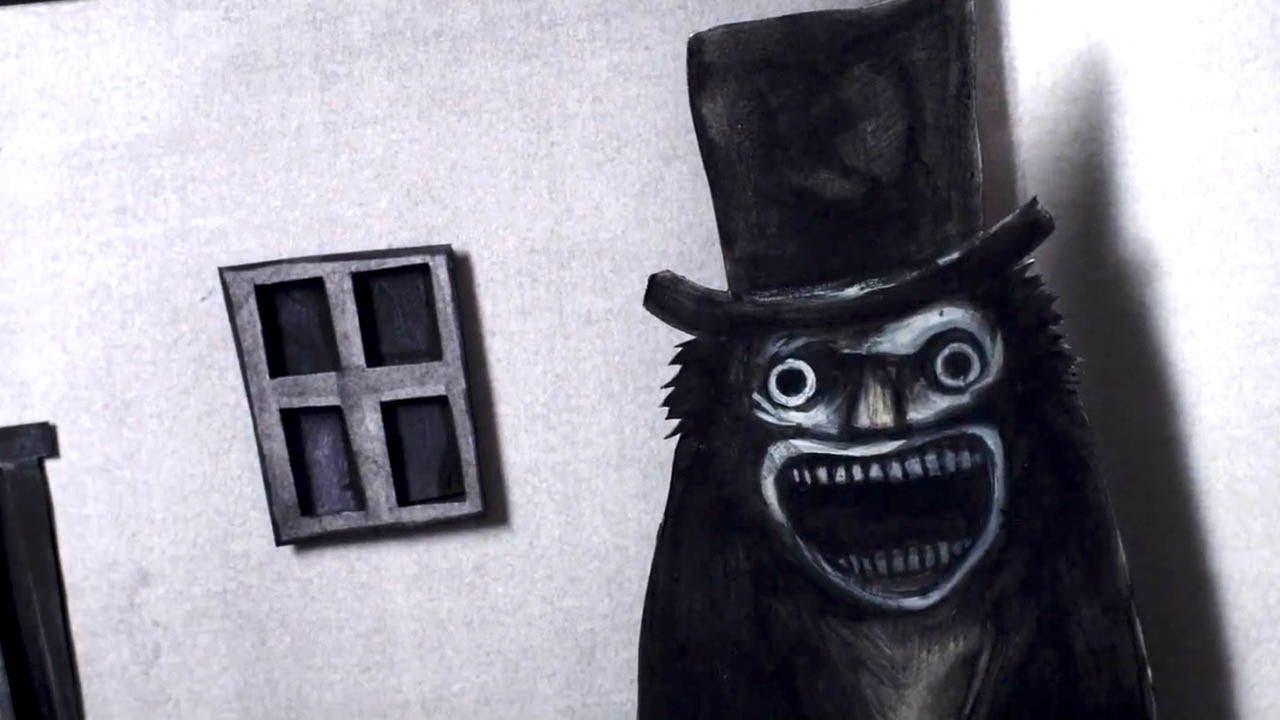
You’re exhausted – just bone-deep tired – and for the umpteenth night in a row your son refuses to sleep. He’s terrified, inconsolable. You check under the bed, you check in the closet, you read a book together – no luck. You let him choose the next book to read, and he hands you a pop-up you don’t recognize: The Babadook. Pretty soon, your son isn’t the only one afraid of what’s in the shadows.
It’s a simple premise, and writer/director Jennifer Kent spins her tale with straightforward efficiency. There is no need for cheap theatrics, camera tricks, or convoluted backstories, because Kent is drilling down into something deeply, frighteningly human.
Like a fairy tale or nursery rhyme, simplicity and a child’s logic can be all you need for terror.
Kent’s film is expertly written and beautifully acted, boasting unnerving performances from not only a stellar lead in Essie Davis, but also the alarmingly spot-on young Noah Wiseman. Davis’s lovely, loving Amelia is so recognizably wearied by her only child’s erratic, sometimes violent behavior that you cannot help but pity her, and sometimes fear for her, and other times fear her.
Likewise, Wiseman delivers as a tender, confused, dear little boy you sometimes just want to throttle. Their naturalistic performances genuinely showcase the baggage that can exist between a parent and a child.
Radek Ladczuk’s vivid cinematography gives scenes a properly macabre sense, the exaggerated colors, sizes, angles, and shadows evoking the living terror of a child’s imagination.
Much of what catapults The Babadook beyond similar “presence in my house” flicks is the allegorical nature of the story. There’s an almost subversive relevance to the familial tensions because of their naked honesty, and the fight with the shadowy monster as well as the film’s unusual resolution heighten tensions.
The film’s subtext sits so close to the surface that it threatens to burst through. Though that does at times weaken the fantasy, it gives the film a terrifying urgency. In the subtext there is a primal horror, a taboo rarely visited in film and certainly never examined with such sympathy. Indeed, the compassion in the film may be the element that makes it so very unsettling.
Eerily familiar yet peculiar and unique, The Babadook immediately ranks among the freshest and more memorable films the genre has to offer. It also marks a filmmaker to keep an eye on.
Listen weekly to MaddWolf’s horror podcast FRIGHT CLUB. Do it!
For some filmmaker and even audiences, a horror film can provide catharsis. It can be a way to channel one particularly horrifying experience into art. A crumbling marriage can inspire this kind of horror. Of course, it can also become the tidy underpinning of a mystery or a comedically evil revenge plot.
Here are our five favorite horror films about marital problems.
5. Candyman (1992)
Candyman is a seduction film, like a vampire fable, and for it to work this film needed two things.
1) A seducible heroine.
Enter Helen Lyle (Virginia Madsen). While she researches her graduate work on urban legends, her professor husband Trevor (Xander Berkeley) philanders with nubile co-eds.
2) A seductive villain, which it delivered with a dreamy baritone in the form of Tony Todd.
No, he’s not classically handsome. In fact, on paper, Candyman is not that sexy of a villain. He has a hook for a hand, bees in his chest, that moldy velvet robe thing has to smell awful. But Todd’s voice is the push over the cliff. When he tells Helen, “Don’t fear the pain. The pain is exquisite,” you can’t help but want to believe.
https://www.youtube.com/watch?v=95pK97apBDc
4. The Crate (segment from Creepshow) (1982)
Several of the shorts featured in the George Romero/Stephen King collaboration focused on troubles between husband and wife, but there was one particularly toxic marriage.
College professor (very popular figures in bad marriage horror, eh?) Henry Northrup (Hal Holbrook) has a problem. His wife.
One might guess at the focus of his early attraction to Wilma (Adrienne Barbeau), but we’re introduced to the couple well into their worn out, unhappy pairing. Wilma’s a belligerent drunk, you see, and Henry’s friend needs a little help with this monster he’s unwittingly unleashed from a crate beneath the stairs back on campus…
Henry probably thought of Wilma as a tasty dish once before, too.
3. Diabolique (1955)
Pierre Boileau’s novel was such hot property that even Alfred Hitchcock pined to make it into a film. But Henri-Georges Clouzot got hold if it first. His psychological thriller with horror-ific undertones is crafty, spooky, jumpy and wonderful.
And it wouldn’t work if it weren’t for the weirdly lived-in relationship among Nicole (Simone Signoret) – a hard-edged boarding school teacher – and the married couple that runs the school. Christina (Vera Clouzot) is a fragile heiress; her husband Michel (Paul Meurisse) is the abusive, blowhard school headmaster. Michel and Nicole are sleeping together, Christine knows, both women are friends, both realize he’s a bastard. Wonder if there’s something they can do about it.
What unravels is a mystery with a supernatural flavor that never fails to surprise and entrance. All the performances are wonderful, the black and white cinematography creates a spectral atmosphere, and that bathtub scene can still make you jump.
2. The Brood (1979)
Dr. Hal Ragland – the unsettlingly sultry Oliver Reed – is a psychiatrist leading the frontier in psychoplasmics. His patients work through their pent-up rage by turning it into physical manifestations. Some folks’ rage turns into ugly little pustules, for example. Or, for wide-eyed Nola Carveth (Samantha Eggar), rage might turn into bloodthirsty, puffy coated spawn. This is Cronenberg’s reimagining of procreation, and it is characteristically foul.
What’s she so mad about? Her divorce. So angry, indeed, that she’s gone mad – and begun neglecting, even endangering, her puffy coated actual daughter.
Cronenberg wrote the film during his own ugly divorce and custody battle. He created a fantasy nightmare rooted firmly in the rage, despair, and the betrayal that comes from watching someone who once loved you turn into someone who seems determined to harm you.
Cronenberg is the king of corporeal horror, and The Brood is among the best of the filmmaker’s early, strictly genre work. Reed and Eggar both are unseemly perfection in their respective roles. Eggar uses her huge eyes to emphasize both her former loveliness and her current dangerous insanity, while Reed is just weird in that patented Oliver Reed way.
https://www.youtube.com/watch?v=RVQkJJxjdIM
1. Possession (1981)
Speaking of sex and monsters – wait, were we? – have you seen Possession? WTF is going on there?
Andrzej Zulawski – writer/director/Czech – created this wild ride with doppelgangers, private investigators, ominous government agencies, and curious sexual appetites. It’s more precisely fantasy than horror, but it strikes me as David Cronenberg meets David Lynch, which is a pairing I can get behind.
Sam Neill plays Mark. Mark has just left his job. He’s being offered a lot of money to stay, but he needs to go home. We don’t know why.
Back at home, he greets his genuinely adorable son Bob (Michael Hogben). I love that his name is Bob. Bob – it’s so normal, and yet feels so unusual for a small child. Mark’s wife Anna (Isabelle Adjani) is also at home with Bob. There’s nothing normal about Anna.
Mark and Anna’s relationship boasts an intentional artificiality- a queasying sexuality- that makes it hard to root for either of them as their marriage deteriorates. Anna, it seems, is in love with someone else. Is it the sexually open – really, really open – Heinrich? Is it a bloody, mollusk-like monster? Is Mark boning Anna’s mean friend with a cast on her leg? Does Bob’s kindergarten teacher bear an unreasonable resemblance to Anna? Is anyone caring properly for Bob?
These questions and more go basically unanswered in a deviant, summary-defying, fantastical bit of filmmaking. Surreal and unnerving as it is, Possession is maybe the bet cinematic nightmare interpretation of a crumbling marriage you will find.
A paranoid fantasy about the link between progress and emasculation, The Ordeal sees a timid singer stuck in the wilds of Belgium after his van breaks down en route to his big Christmas gig.
Writer/director Fabrice Du Welz’s script scares up the darkest imaginable humor. If David Lynch had directed Deliverance in French, the concoction might have resembled The Ordeal. As sweet, shy singer Marc (a pitch perfect Laurent Lucas) awaits aid, he begins to recognize the hell he’s stumbled into. Unfortunately for Marc, salvation’s even worse.
The whole film boasts an uneasy, “What next?” quality. It also provides a European image of a terror that’s plagued American filmmakers for generations: the more we embrace progress, the further we get from that primal hunter/gatherer who knew how to survive.
Du Welz animates more ably than most our collective revulsion over the idea that we’ve evolved into something incapable of unaided survival; the weaker species, so to speak. Certainly John Boorman’s Deliverance (the Uncle Daddy of all backwoods survival pics) understood the fear of emasculation that fuels this particular dread, but Du Welz picks that scab more effectively than any filmmaker since.
Plus there’s dancing!
The entire cast – freaks, every one – is so memorable, so fascinating. Du Welz creates an almost amiable curiosity with each character, although poor Marc’s increasingly horrific circumstances proves that even the biggest sweetheart here is capable of really, seriously bad things.
His film is a profoundly uncomfortable, deeply disturbing, unsettlingly humorous freakshow that must be seen to be believed. So, you know, watch it!
Listen weekly to MaddWolf’s horror podcast FRIGHT CLUB. Do it!
Give writer/director Jorge Michel Grau credit, he took a fresh approach to the cannibalism film. His Spanish language picture lives in a drab underworld of poverty teeming with disposable populations and those who consume flesh, figuratively and literally.
In a quiet opening sequence, a man dies in a mall. It happens that this is a family patriarch and his passing leaves the desperately poor family in shambles. While their particular quandary veers spectacularly from expectations, there is something primal and authentic about it.
It’s as if a simple relic from a hunter-gatherer population evolved separately but within the larger urban population, and now this little tribe is left without a leader. An internal power struggle begins to determine the member most suited to take over as the head of the household, and therefore, there is some conflict and competition – however reluctant – over who will handle the principal task of the patriarch: that of putting meat on the table.
We’re never privy to the particulars – which again gives the whole affair a feel of authenticity – but adding to the crisis is the impending Ritual, which apparently involves a deadline and some specific meat preparations.
Grau’s approach is so subtle, so honest, that it’s easy to forget you’re watching a horror film. Indeed, were this family fighting to survive on a more traditional level, this film would simply be a fine piece of social realism focused on Mexico City’s enormous population in poverty. But it’s more than that. Sure, the cannibalism is simply an extreme metaphor, but it’s so beautifully thought out and executed!
The family dynamic is fascinating, every glance weighted and meaningful, every closed door significant. Grau draws eerie, powerful performances across the board, and forever veers in unexpected directions.
We Are What We Are is among the finest family dramas or social commentaries of 2010. Blend into that drama some deep perversity, spooky ambiguities and mysteries, deftly handled acting, and a lot of freaky shit and you have hardly the goriest film in the genre, but certainly one of the most relevant.
Listen to MaddWolf’s weekly horror movie podcast FRIGHT CLUB. Do it!
Not every book makes for a good movie – not even those page turners that seem cinematic as you read them.
Paula Hawkins’s insanely popular novel The Girl on the Train, for instance, had the feel of a pulpy film noir from the get go. Unfortunately, director Tate Taylor (The Help, Get On Up) can’t deliver on that promise.
Emily Blunt does, though. As the titular traveler – a vodka-addled protagonist of the most unreliable sort – her performance is as frustrating, sympathetic and confused as it needs to be to sell the sordid tale.
Rachel (Blunt) lives vicariously through the couple she passes twice daily on her commute. So fortunate they’re always home – on the porch, in the yard, or conveniently screwing just inside the window. How lovely they are. How vibrant.
Of course, some of this could be the overactive imagination of a very lonely woman who’s really diverting her own attention away from the house two doors down. The one that used to be hers, with the husband that used to be hers, along with his new wife and baby.
Yes, her imagination gets her into lots of trouble. That and her blackouts.
Taylor, with the help of screenwriter Erin Cressida Wilson, takes a stab at shifting the points of view of the three female leads – Rachel, her ex’s new wife Anna (Rebecca Ferguson), and that dreamy neighbor Megan (Haley Bennett, who is everywhere right now).
Only Blunt manages to keep your attention, though. Bennett and Ferguson are saddled with one-dimensional props for characters: misty eyed sexpot and brittle housewife, respectively. What should be an intriguing mystery soaked in the criss-crossing perspectives of three damaged women becomes a character study kept in motion by lifeless cogs.
Not that their male counterpoints fare any better. Taylor wastes Luke Evans and Edgar Ramirez with broadly drawn stereotypes, though Justin Theroux gets to chew a little scenery.
It’s impossible to watch this film without longing for David Fincher (Gone Girl, Girl with the Dragon Tattoo), whose proven that dark chick lit can create undeniably watchable cinema. Like Rachel’s own window on the world, Taylor’s film is little more than a bleary mess.