Tag Archives: MaddWolf

Another Tricky Day

Now You See Me 2

by George Wolf

Now You See Me 2 tells us “the best tricks work on many levels,” while the film itself works best when it digs no deeper than embracing the fun of its own ridiculousness.

And it is plenty ridiculous.

Part one struggled not only because magic tricks seem less amazing in a medium already built on visual amazement, but because it just took itself way too seriously. New director John M. Chu, a veteran of such strong social commentary as Jem and the Holograms and Justin Beiber’s Believe, abandons all pretense for a glitzy, Oceans 11-style caper full of cons, wisecracks, and one strange Matthew McConaughey impersonation.

Since we left the Four Horsemen, Henley (Isla Fisher) has been replaced by Lula (Lizzy Caplan), who openly lusts for Jack (Dave Franco) while Merritt (Woody Harrelson) and Atlas (Jesse Eisenberg) wonder when Dylan (Mark Ruffalo), the ringleader working both sides as an FBI agent, will give them another assignment.

They eventually get one, but it comes from billionaire tycoon Walter Mabry (Daniel Radcliffe), who wants the Horsemen to rectify the financial pain their last gig caused him by stealing an incredibly powerful new piece of computer technology. It all gets much more convoluted, weaving in returns for both Michael Caine and Morgan Freeman, and serving up the coup de grace of Harrelson, in an “old man pubes” wig and fake teeth, going full McConaughey to play his own twin brother.

By that point, you’re not far from the unhinged universe where John Travolta and Nicholas Cage exchange faces, so none of the preposterous plot turns in Ed Solomon’s script should be taken too seriously.

Enjoy the flash and likable cast, stop wondering why the title isn’t “Now You Don’t,” and give in to the moments of over-the-top fun that Now You See Me 2 brings center stage.

Just don’t expect anything of substance behind the curtain.

Verdict-2-5-Stars

London Calling to the Underworld

The Conjuring 2

by Hope Madden

The thing that made James Wan’s 2013 ghost story The Conjuring so effective – more than the solid cast, more than the tense atmosphere, more than those hideous Seventies fashions – was Wan’s use of practical effects.

That woman on top of the wardrobe?! Terrifying!

It helped that he had a creepy story in the hands of capable actors. More importantly, he knows how to frame scenes in a way that trains the audience to scan corners, peer into shadows and look through empty windows, constantly on edge waiting for that next spooky moment.

With his sequel, he still boasts two of those three elements.

Vera Farmiga and Patrick Wilson return as Lorraine and Ed Warren, real-life paranormal investigators working with the Catholic church to validate claims of hauntings and possessions. It’s 1977, and the two are still recovering from that incident in Amityville when they’re asked to help a single mum with four kids living in North London.

The put-upon family is sympathetic enough. Wilson and Farmiga are compelling enough. The period detail is nice. Well, The Clash’s London Calling wasn’t actually released until 1979, but all is forgiven because of the utterly fantastic use of Starsky & Hutch posters.

So, what’s wrong with C2?

A few things.

The story never feels particularly cohesive – more like a series of vignettes strung together. Because of this, characters never seem fully formed and relationships feel forced. Supernatural clues and plot twists border on the nonsensical. (Seriously, ask yourself about the bite marks.) Maybe that’s because there’s a red herring, but too much valuable time is wasted with that thread and not enough devoted to true scares.

There are two demonic images in the film – both excellently chosen nightmare images from childhood (mine, anyway) – but some video game editing and CGI identify them quickly as movie magic, leeching their power.

Most importantly, there’s no inspired, memorable, terrifying jump scare. Wan is an absolute master of the spooky longshot, the creeping camera, but in this film’s predecessor those unendurably tense spans were punctuated by some of the best spook house scares in recent memory. Think clapping hands.

Though there are some startles and above-average scares, there’s nothing to elevate this film above mediocrity.

Verdict-2-5-Stars

Fright Club: Best Final Girls

A staple of the horror genre – the final girl. She’s been beaten, tied up, duct taped, stabbed and generally misused, but she soldiers on. Whether through virtue, savvy, or just general badassedness, these women are not above doing what’s necessary to make it through to the sequel – even if that means putting on Jason’s dead mother’s moth-eaten sweater, because that shit had to be gamey. So today our Senior Aussie/Slasher Correspondent Cory Metcalfe joins us again to celebrate the best final girls in horror.

6. Erin (Sharni Vinson – You’re Next, 2011)

Erin is Australian, which is clearly the deciding factor here. She joins her boyfriend for a family holiday in a gorgeous vacation home deep in the woods. Which sounds worse, the first meeting with the family or “deep in the woods”? In her case, that is seriously a toss-up. The gathering is disrupted by violent, mask-wearing psychopaths, but they weren’t prepared for Erin.

Erin’s one of the few at the event who’s new to the family, so she’s hard for the villains to predict. And we find that her boyfriend – a college prof who dates his students, including Erin – doesn’t know nearly enough about her. It’s a great tale of unreasonably low expectations. It’s also, a great character because Erin is savvy, tough, and fearless.

5. Mia (Jane Levy – Evil Dead, 2013)

With the helpful pen of Oscar winner Diablo Cody (uncredited), Fede Alvarez turns all the particulars of the Evil Dead franchise on end. You can tick off so many familiar characters, moments and bits of dialog, but you can’t predict what will happen.

One of the best revisions is the character of Mia: the first to go and yet the sole survivor. She’s the damaged one, and the female who’s there without a male counterpart, which means (by horror standards), she’s the one most likely to be a number in the body count, but because of what she has endured in her life she’s able to make seriously tough decisions to survive – like tearing off her own damn arm. Nice!

Plus, it rains blood! How awesome is that?!

4. Sarah (Shauna McDonald – The Descent, 2005)

Sarah is another one who appears to be the weak link but proves her meddle. She suffers an almost unendurable tragedy in the opening scene, and a year later, when she and her friends regroup to spend a holiday together spelunking in West Virginia, she appears to be the delicate one. What she goes through in the early part of the film informs her ability to survive – as her friend Beth points out (to her and to us) when Sarah gets caught in the narrow tunnel.

She’s quiet and observant, smart and proactive – all excellent qualities once we find out that the group is not only lost inside an unmapped underground cave with no hope of being found, but that the cave already has residents, and dude! Are they creepy!

The way Sarah evolves, and the turns the character and the film take, are surprising and impressive.

3. Sally Hardesty (Marilyn Burns – The Texas Chainsaw Massacre, 1974)

Back in 1974, the “final girl” formula hadn’t been perfected. The slasher genre barely even existed, but Tobe Hooper already knew how to play with genre expectations. Yes, Sally Hardesty is the sweet one, the pretty one, the one likeliest to be the last in line for that chainsaw, but there’s a lot more to her than halter tops and bell bottoms.

Marilyn Burns mines for something primal in this performance, which is absolutely necessary if we’re to believe this girl has what it takes to survive the cannibal family. Sally’s mania is recognizable, necessary to the viewer. No one is yelling advice or judgement at the screen because who in the hell could possibly know what to do in this situation?

Unlike so many female characters in horror before her and since, Sally doesn’t whimper and rely on the villain’s conscience to save her. She negotiates, and when she realizes that’s getting her nowhere, she makes tough choices (like throwing herself out a window – because no fate could be worse than the one that clearly awaits her otherwise). In keeping with the film, Burns’s performance is gritty, unpleasant, insane and perfect.

2. Laurie Strode (Jamie Lee Curtis – Halloween, 1978)

In 1978, Laurie Strode became the definition of “final girl” in much the same way that Carpenter’s horror masterpiece became the definition of slasher – the blueprint for the genre. For many, Jamie Lee Curtis’s girl-next-door is the ultimate final girl.

There’s great reason for that. She distilled everything that came before and became the model for what would come after in the slasher film: virtuous, smart, self-sacrificing. But Curtis does it with more intelligence and onscreen grace than those before or (mostly) after in the slasher genre. She’s virtuous, but not judgy. She’s hot, but not overtly so. She’s also brave and smart.

The reason the character transcended genre trappings to become iconic is not the writing or the film itself, but Curtis’s performance. An effortless intelligence shines through regardless of Laurie’s actions, and it elevates the film and the genre.

1. Ellen Ripley (Sigourney Weaver – Alien, 1979)

Who could possibly push Laurie Strode to second place? Ellen Ripley could.

Sigourney Weaver’s character in Alien and its many sequels is a savvy, tough, no-nonsense survivor. She is clearly the smartest member of the Nostromo crew: she understands chain of command and values quarantine regulations; she’s the first to recognize Ash (Ian Holm) as a villain; she understands the need to blow the ship; she outsmarts the predator.

Her sexuality is beside the point, which is entirely refreshing in this genre and for the role of final girl. She also changed the game for “final girls.” No longer could we accept a beautiful, sobbing mess who made ridiculous decisions, refused to fight back, and survived based entirely on her virtue. Ripley is never a victim, rarely makes an uninformed decision, and kicks all manner of ass. That’s why she survives. She’s not hoping to be saved, she’s just doing what it takes to get the F out of Dodge and keep Earth safe.

Thanks, Ellen!

Mock U

Popstar: Never Stop Never Stopping

by George Wolf

I admit it, I’ve laughed at The Lonely Island videos. “I’m On a Boat?” “Captain Jack Sparrow” with Michael Bolton? “I Just Had Sex?” All funny. “Dick in a Box?” Classic. Even the cover of their Turtleneck and Chain album is chuckle-worthy.

The nice thing about those projects is they all last about three minutes or less. With Popstar, Andy Samberg and his best buds (Akiva Schaffer, Jorma Taccone) have feature length ambitions, but only prove that even a slight 86 minutes is excessive.

Samberg stars as Conner4Real, the worldwide pop sensation who hit it big in the Style Boyz with childhood buddies Owen (Taccone) and Lawrence (Schaffer), only to leave them behind when solo stardom came calling. After a smash debut album, Conner’s plans for an encore shape Popstar‘s mockumentary approach to lampooning the absurdity of today’s pop music scene.

The irony, of course, is the very level of that actual absurdity makes parody even more difficult.

Will Ferrell and Zach Galifianakis had the same problem poking fun at the idiocy of political pandering in The Campaign, and The Lonely Island boys (who both write and direct) can’t find a satisfying thread to connect all their new tunes. There are some hits here, such as “Equal Rights (I’m Not Gay),” an overtly sexual love song called “Bin Laden” and “Incredible Thoughts (featuring the return of Bolton),” but the project feels too much like a soundtrack in search of a movie.

Or, more pointedly, a series of SNL skits dreaming of the multiplex. In that vein, there are guest stars and cameos galore, including Will Arnett leading a priceless sendup of the obnoxious TMZ “newsroom.”

Any music scene mockumentary is bound to live in the shadow of This Is Spinal Tap, and The Lonely Island does acknowledge that challenge with a couple winking homages. But the laughs are rarely sustained and never go to 11 (sorry), and Popstar becomes a fairly forgettable tune.

Verdict-2-5-Stars


Fright Club: Best Clown Horror

Clowns! You hate ’em, we hate ’em. There may be nothing as universally terrifying as the clown, and yet, a proper clown horror film is a tough nut to crack.

So, before we launch into the 5 best clown films, let’s first pay tribute to the 5 scariest clowns to ever grace the screen:

5. Zombieland Clown (Derek Graf)

Zombie-Clown-zombieland-20358487-1280-1024

4. Captain Spalding (House of 1000 Corpses/Devil’s Rejects) (Sid Haig)

captainspaulding4_by_mortikye

3. Poltergeist Clown

poltergeist_035pyxurz-annabelle-the-creepiest-doll-of-all-time-jpeg-144531

2. Twisty the Clown (American Horror Story: Freakshow) (John Carrol Lynch)

american-horror-story-freak-show

1. Pennywise (It) (Tim Curry)

maxresdefault

On to the main event! Here are the five clowniest horror movies!

5. Clownhouse (1989)

There are several fascinating pieces of information concerning the derivative yet uniquely weird Clownhouse. These range from odd to awful.

1) The Sundance Film Festival somehow found this film – this one, Clownhouse, the movie about 3 escaped mental patients who dress as clowns, break into a house where three brothers are home alone on Halloween night, and commence to terrify and slaughter them – worthy of a nomination for Best Drama. If you haven’t seen this film, you might not quite recognize how profoundly insane that is.

2) The great and underappreciated Sam Rockwell made his feature debut as the dickhead oldest brother in this movie. The clowns themselves – Cheezo, Bippo, and Dippo – are genuinely scary and garishly fascinating, but outside of them, only Rockwell can act. At all.

3) Writer/director Victor Salva would go on to create the Jeepers Creepers franchise. But first he would serve 15 months of a 3-year state prison sentence for molesting the 12-year-old lead actor in this film, Nathan Forrest Winters.

Basically, there are four really solid clown horror movies in the world and about 200 truly bad ones. Clownhouse does set itself above the rest of the muck with these disturbing points of interest.

https://www.youtube.com/watch?v=xi0ci-GjLx4

4. Clown (2014)

Sympathetic, surprising, and often very uncomfortable, Jon Watt’s 2014 horror flick, though far from perfect, does an excellent job of morphing that lovable party favorite into the red-nosed freak from your nightmares.

Kent (a pitiful Andy Powers) stumbles across a vintage clown outfit in an estate property he’s fitting for resale. Perfect timing – his son’s birthday party is in an hour. What a surprise this will be, unless the suit is cursed in some way and will slowly turn Kent into a child-eating demon.

It does! Hooray!!!

A weird-as-ever supporting turn from Peter Stormare helps the film overcome other acting weaknesses, but Watts gets credit for taking the horror places you might not expect, and for squeezing as much sympathy as possible before that last swing of the ax.

3. The Man Who Laughs (1928)

The German Expressionist director Paul Leni (Waxworks, The Cat and the Canary) worked with J. Grubb Alexander’s adaptation of Victor Hugo’s novel to cast a macabre spell with this film – one of our very favorites.

A nobleman offends the king, who kills the nobleman (iron maiden!) and has his son, Gwynplaine, disfigured by a surgeon so he can spend his life laughing at his fool of a father. The boy is tossed out, wandering in the snow. He finds a blind baby girl, and the two are saved by a traveling carny.

As is Hugo’s way, goodness is found in the tormented and hideous while the gorgeous society show themselves to be the true beasts. The film looks gloomily gorgeous, and in the hands of silent film star Conrad Veidt, Gwynplaine becomes Hugo’s most sympathetic and heartbreaking monster.

2. Stitches (2012)

There are a lot of scary clowns in films, but not that many can carry an entire film. Stitches can.

This Irish import sees a half-assed clown accidentally offed at a 6-year-old’s birthday party, only to return to finish his act when the lad turns 16.

Yes, it is a familiar slasher set up: something happened ten years ago – an accident! It was nobody’s fault! They were only children!! And then, ten years later, a return from the grave timed perfectly with a big bash that lets the grisly menace pick teens off one by one. But co-writer/director Connor McMahon does not simply tread that well-worn path. He makes glorious use of the main difference: his menace is a sketchy, ill-tempered clown.

Dark yet bawdy humor and game performances elevate this one way above teen slasher. Gory, gross, funny and well-acted – it brings to mind some of Peter Jackson’s early work. It’s worth a look.

1. The Last Circus (2010)

Who’s in the mood for something weird?

Unhinged Spanish filmmaker Alex de la Iglesia returns to form with The Last Circus, a breathtakingly bizarre look at a Big Top love triangle set in Franco’s Spain.

Describing the story in much detail would risk giving away too many of the astonishing images. A boy loses his performer father to conscription in Spain’s civil war, and decades later, with Franco’s reign’s end in sight, he follows in pop’s clown-sized footsteps and joins the circus. There he falls for another clown’s woman, and stuff gets nutty.

Like Tarantino, Igelsia pulls together ideas and images from across cinema and blends them into something uniquely his own, crafting a film that’s somewhat familiar, but never, ever predictable.

The Last Circus boasts more than brilliantly wrong-minded direction and stunningly macabre imagery – though of these things it certainly boasts. Within that bloody and perverse chaos are some of the more touching performances to be found onscreen.

Baby Mama Drama

The Ones Below

by Cat McAlpine

Having a child is an amazing and joyous event. It is also terrifying. Alien knew it. That whole Season 8 arc of the XFiles knew it. We’ve even dedicated a Fright Club to Pregnancy Horror. But The Ones Below favors less bursting out of chests and more psychological slow burn.

Enter a small house containing two flats, one upstairs, and one downstairs. Upstairs is home to longtime residents Justin (Stephen Campbell Moore) and Kate (Clémence Poésy), who is pregnant with her first child after years of denying motherhood. New neighbors have moved in downstairs, and Kate finally catches a glimpse of equally pregnant Theresa (Laura Birn).

Theresa and husband Jon (David Morrissey) come upstairs for dinner one evening, and express how desperate they’ve been for a child over some very stilted small talk. Thus tears the rift between the two couples, which only grows after a tragic accident leaves everyone scurrying to dodge guilt and blame.

First time feature director David Farr chases a touch of timelessness in his arrangement and almost pulls it off. There’s a neither here nor there quality to the set and costuming. Milk is delivered daily in glass bottles on the doorstep, smart phones fill hands but pictures are taken with digital cameras, young couples work in open floor plan offices. The upstairs couple dresses as modern young professionals, comfortably. The downstairs pair is more pressed, more clean, and further off trend. A perfectly manicured garden gives off an eerie, Stepford feel.

The editing and design seem to struggle with Farr’s intention a bit. Cool tones downplay some of the raw emotional quality of the scenes, making more intimate moments feel a bit detached. This could be intentional, or I could be trying to cover up for the lack of chemistry between couples.

The most intriguing performance by far is Birn’s Theresa, who is fascinating to watch with equal measures of conniving and innocent. Poésy and Moore are both down-to-earth and relatable, but Poésy ultimately just doesn’t have much to work with. Moore, as the straight man character to everyone else’s crazy, gives a solid performance and becomes the beating heart of the film.

The dialogue mostly consists of bickering, which lends both realism and additional tension, but doesn’t seem to otherwise motivate the characters. There are vague references to strained relationships, which, while underdeveloped, provide breadcrumbs leading to both false and unbelievable-but-true conclusions.

The film ends, deliciously, with a few sharp twists. The thriller connoisseur will see these tricks coming, but the payoff to Farr’s mounting tensions is welcome either way. The Ones Below is a middling to good directorial debut for David Farr that promises, with a few more turns around the block, he will be serving up a style undeniably his.

Verdict-3-5-Stars

It’s No Tea Party

Alice Through the Looking Glass

by Hope Madden

One billion dollars. That’s global money, keep in mind, but still, who’d have thought Tim Burton’s utterly banal and forgettable 2010 acid trip Alice in Wonderland had made so very much money? Too much – and not just because the film had no genuine merit, but because that kind of sum necessitates a sequel, however wildly and wholly unnecessary – even unwanted – that kind of muchness must be.

And so, back to Underland we go, accompanying an adult(ish) Alice who returns from a stint as sea captain to find Victorian England just as restrictive as it had been when she was a child escaping into her imagination. And so, to her imagination she returns.

Director James Bobin (The Muppets) has the unenviable task of following Burton into the rabbit hole – not unenviable because he may suffer by comparison, but because his options are somewhat limited based on the film’s predecessor. Expect garishly overdone visuals that offset weekly drawn characters.

Familial tensions are at the heart of the tale, penned by Linda Woolverton and based on some of Lewis Carroll’s most dreamlike and incongruous storytelling. Too bad Woolverton and Disney insisted on hemming Carroll’s wild imagination inside such a tediously structured framework.

The Hatter is depressed to the point of death and Alice has to go back in time to save him. Basically. But you can’t change the past – a lesson she’d allegedly learned in her first fantastic voyage, but I guess it didn’t stick. So, let’s learn it again, with the help of Time himself, as played by Sacha Baron Cohen with a Schwarzenegger-esque accent.

Aside from that new face, the same forgettably wacky group returns to the future/past. The talented Mia Wasikowska struggles to find life inside the bland Alice while Helena Bonham Carter pointlessly chews scenery.

An underused Anne Hathaway brightens certain scenes, and Johnny Depp – reliable as ever inside a fright wig and exaggerated make up – does bring a wistful humanity to the otherworldly events.

But imagination and tiresome capitalism butt heads from the opening sequence, and without the foundation of compelling characters or the requirement of engaging storytelling, Through the Looking Glass proves to be a pointless, though colorful, bore.

Verdict-1-5-Stars

A Beautiful Trainwreck

A Bigger Splash

by Christie Robb

Remember that infamous high school math problem about the trains? You know, the one where two trains leave different cities heading toward each other and you are tasked with discovering when and where they collide?

A Bigger Splash is a lot like that, only instead of trains we are dealing with ex-lovers and the location of the collision is a gorgeous volcanic island off the coast of Italy.

Rock star Marianne Lane (Tilda Swinton) is on vacation, recovering from throat surgery with her studly younger partner Paul De Smedt (Matthias Schoenaerts), when they are interrupted by unexpected houseguests: her ex-lover and producer, Harry (Ralph Fiennes), and his recently-discovered, lascivious daughter Penelope (Dakota Johnson). It’s clear that Harry still carries a torch for Marianne. It’s also apparent that he is more than willing to use the close quarters to fan those flames into obsession.

A catastrophe is inevitable. It’s just a matter of time — which, in this film, can tend to drag a little bit. This is not just a movie about nostalgic characters. With its long takes and dramatic score, director Luca Guadagnino’s film itself demonstrates a palpable longing for an earlier cinematic age. But with the stellar cast, breathtaking setting, and stylish costumes, the extra length, like a spare tire on an old flame, is easy to forgive. There is something beautiful in nearly every shot.

Schoenaerts and Johnson deliver solid performances in their somewhat underwritten characters (disdainful melancholic and crafted nymphet, respectively). Fiennes and Swinton, however, are delightful contrasts. Fiennes very nearly steals the show with his frenetic outbursts of verbal diarrhea — and in the scene where he dances to the Rolling Stones, he does. However, in the end this is Swinton’s movie. The layers of emotion she manages to convey with minimal dialogue is what truly makes the biggest splash.

Verdict-4-0-Stars

Fright Club: Coming of Age Horror

For many – perhaps most – coming of age is a horror in and of itself, full of confusion, embarrassment, personality change, even blood. Which is why it is ripe fodder for horror, a genre that has plumbed the depths of adolescent despair for any number of monster movies, slashers, camping horrors, and nasty prom dates. Today we celebrate the unmitigated horror of burgeoning adulthood with our list of the five best Coming of Age horror films, with the help of Get It Together podcasters Pete Stroup and David Huff.


5. Ginger Snaps

Sisters Ginger and Bridget, outcasts in the wasteland of Canadian suburbia, cling to each other, and reject/loathe high school (a feeling that high school in general returns).

On the evening of Ginger’s first period, she’s bitten by a werewolf. Writer Karen Walton cares not for subtlety: the curse, get it? It turns out, lycanthropy makes for a pretty vivid metaphor for puberty. This turn of events proves especially provocative and appropriate for a film that upends many mainstay female cliches.

Walton’s wickedly humorous script stays in your face with the metaphors, successfully building an entire film on clever turns of phrase, puns, and analogies, stirring up the kind of hysteria that surrounds puberty, sex, reputations, body hair, and one’s own helplessness to these very elements. It’s as insightful a high school horror film as you’ll find, peppered equally with dark humor and gore.


4. Let the Right One In

In 2008, Sweden’s Let the Right One In emerged as an original, stylish thriller – and the best vampire flicks in years. A spooky coming of age tale populated by outcasts in the bleakest, coldest imaginable environment, the film breaks hearts and bleeds victims in equal measure.

Kare Hedebrant‘s Oskar with a blond Prince Valiant cut falls innocently for the odd new girl (an outstanding Lina Leandersson) in his shabby apartment complex. Reluctantly, she returns his admiration, and a sweet and bloody romance buds.

This is a coming of age film full of life lessons and adult choices, told with a tremendous atmosphere of melancholy, tainted innocence, and isolation. Plus the best swimming pool carnage scene ever.

The unsettling scene is so uniquely handled, not just for horrifying effect (which it certainly achieves), but to reinforce the two main characters, their bond, and their roles. It’s beautiful, like the strangely lovely film itself.


3. Carrie

The seminal film about teen angst and high school carnage has to be Brian De Palma’s 1976 landmark adaptation of Stephen King’s first full length novel, the tale of an unpopular teenager who marks the arrival of her period by suddenly embracing her psychic powers.

Sure the film opens like a ‘70s soft core porno, with images created by a director who has clearly never been in a girls’ locker room and therefore chose to depict the one in his dirty, dirty mind. But as soon as the bloody stream punctures the dreamlike shower sequence, we witness the definitive moment in Mean Girl Cinema. The “plug it up” refrain, coupled with Sissy Spacek’s authentic, even animalistic portrayal of panic, sets a tone for the film. Whatever Carrie may do, we (the voyeurs, no doubt more like the normal kids than like Carrie) are to blame.

This film exposes a panic about the onslaught of womanhood. The same panic informs <em>The Exorcist</em> and dozens of others, but De Palma’s version offers more sympathy than most. Spacek is the perfect balance of freckle-faced vulnerability and awed vengeance.


2. It Follows

It Follows is a coming of age tale that mines a primal terror.  Yes, it’s the STD or horror movies, but don’t let that dissuade you. Writer/director David Robert Mitchell understands the anxiety of adolescence and he has not simply crafted yet another cautionary tale about premarital sex.

Mitchell has captured that fleeting yet dragging moment between childhood and adulthood and given the lurking dread of that time of life a powerful image. There is something that lies just beyond the innocence of youth. You feel it in every frame and begin to look out for it, walking toward you at a consistent pace, long before the characters have begun to check the periphery themselves.

Mitchell borrows from a number of coming of age horror shows, but his film is confident enough to pull it off without feeling derivative in any way. The writer/director takes familiar tropes and uses them with skill to lull you with familiarity, and then terrify you with it.


1. The Witch

Ideas of gender inequality, sexual awakening, slavish devotion to dogma, and isolationism roil beneath the surface of this film, yet the tale itself is deceptively simple. One family, fresh off the boat from England in 1630 and expelled from their puritanical village, sets up house and farm in a clearing near a wood.

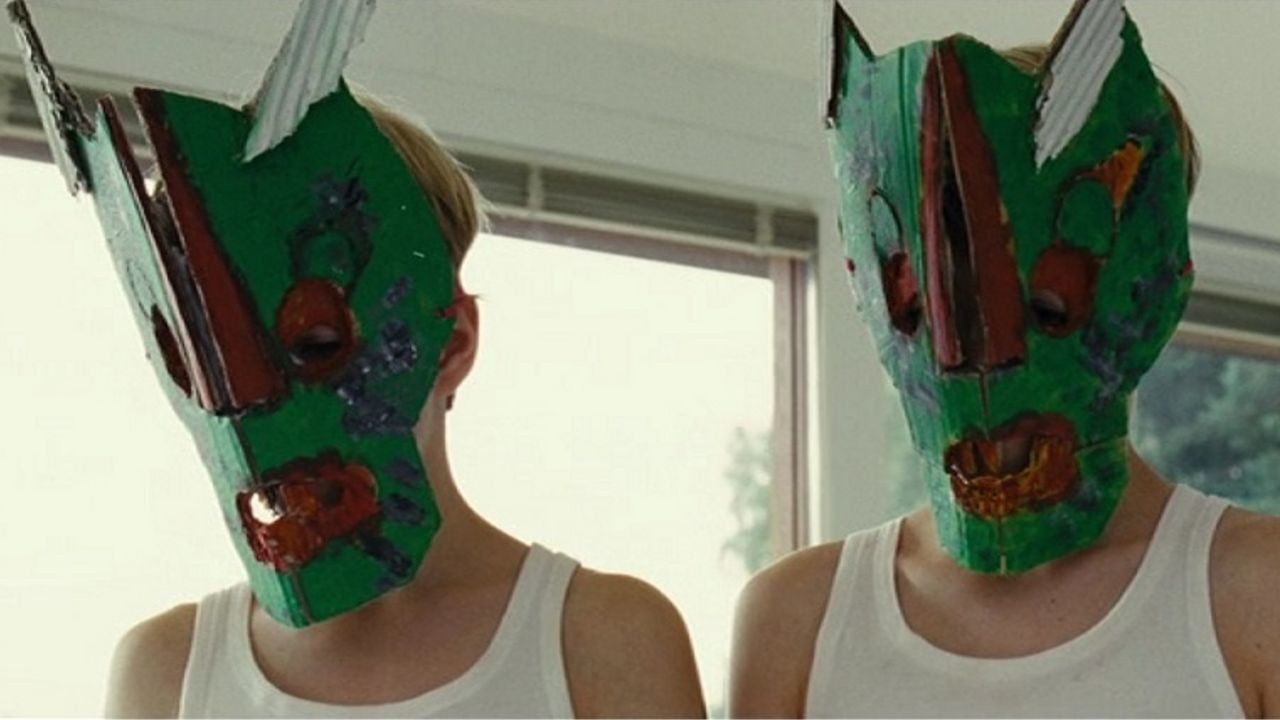
There William (Ralph Ineson) and Katherine (Kate Dickie) will raise their five children: the infant Samuel, young twins Mercy (Ellie Grainger) and Jonas (Lucas Dawson), nearly adolescent Caleb (Harvey Scrimshaw), and the eldest, Tomasin (Anya Taylor-Joy), nearly a woman now.

As a series of grim catastrophes befalls the family, members turn on members with ever-heightening hysteria. The Witch creates an atmosphere of the most intimate and unpleasant tension, a sense of anxiety that builds relentlessly and traps you along with this helpless, miserable family.

As frenzy and paranoia feed on ignorance and helplessness, tensions balloon to bursting. You are trapped as they are trapped in this inescapable mess, where man’s overanxious attempt to purge himself absolutely of his capacity for sin only opens him up to the true evil lurking, as it always is, in the woods.


Nice Nice Baby

The Nice Guys

by Hope Madden

Tell me you’ve seen any of the countless trailers for Shane Black’s new action comedy The Nice Guys. Funny! I haven’t had such high expectations for a new film yet this year.

Ever since Black announced his presence with authority, penning ‘87’s iconic buddy cop action flick Lethal Weapon, he’s been one to watch. Kiss Kiss Bang Bang, his directorial debut, suggested he might even be keeping his best stuff for himself. But after a while, his tics and tendencies grow tiresome.

The Long Kiss Goodnight, anyone?

And though his newest effort absolutely revisits most of the filmmaker’s by-now obvious predilections, his craftsmanship and casting have never been better.

Hey girl, guess what – Ryan Gosling is a hoot! No, no, I didn’t say he’s hot (as that goes without saying). He’s a hoot. And if you found his scene-stealing performance in last year’s gem The Big Short a refreshing and joyous change of pace for the award-bedecked actor, you will surely enjoy this masterpiece of comic timing and physicality.

Gosling plays Holland March, an alcoholic PI with questionable parenting skills who reluctantly teams up with muscle-for-hire Jackson Healy (Russell Crowe). What begins as a low-rent missing persons case snowballs into an enormous conspiracy involving porn, the government, and the all-powerful auto industry. (It is 1977, after all.)

Aah, 1977 – when everybody smoked, ogled women, and found alcoholism a laugh riot. Black puts this time machine quality to excellent use in a film that would have felt stale and rote during his Eighties heyday, but today it serves as an endlessly entertaining riff on all that was so wrong and so right about the Seventies.

A brightly lit (if smog-choked) Southern California noir-turned-buddy-action comedy, The Nice Guys does a surprisingly good job at finding its tone. All the lurid, twisty plot fodder could easily weigh the film down in gritty drama, but Shane’s heart is in the budding, unsanitized bromance.

Gosling’s impeccable hilarity is custom-made for Black’s machine gun fire dialog, but Crowe also manages to get comfortable in the script, allowing both the conversation and action to breathe and take shape. The pair’s chemistry is a joy to watch, and is aided immeasurably by Angourie Rice’s flinty, intelligent turn as March’s disappointed daughter, Holly.