Tag Archives: MaddWolf

Everything Except Temptation

The Happy Prince

by Hope Madden

“Why does one run toward ruin? Why does it hold such fascination?”

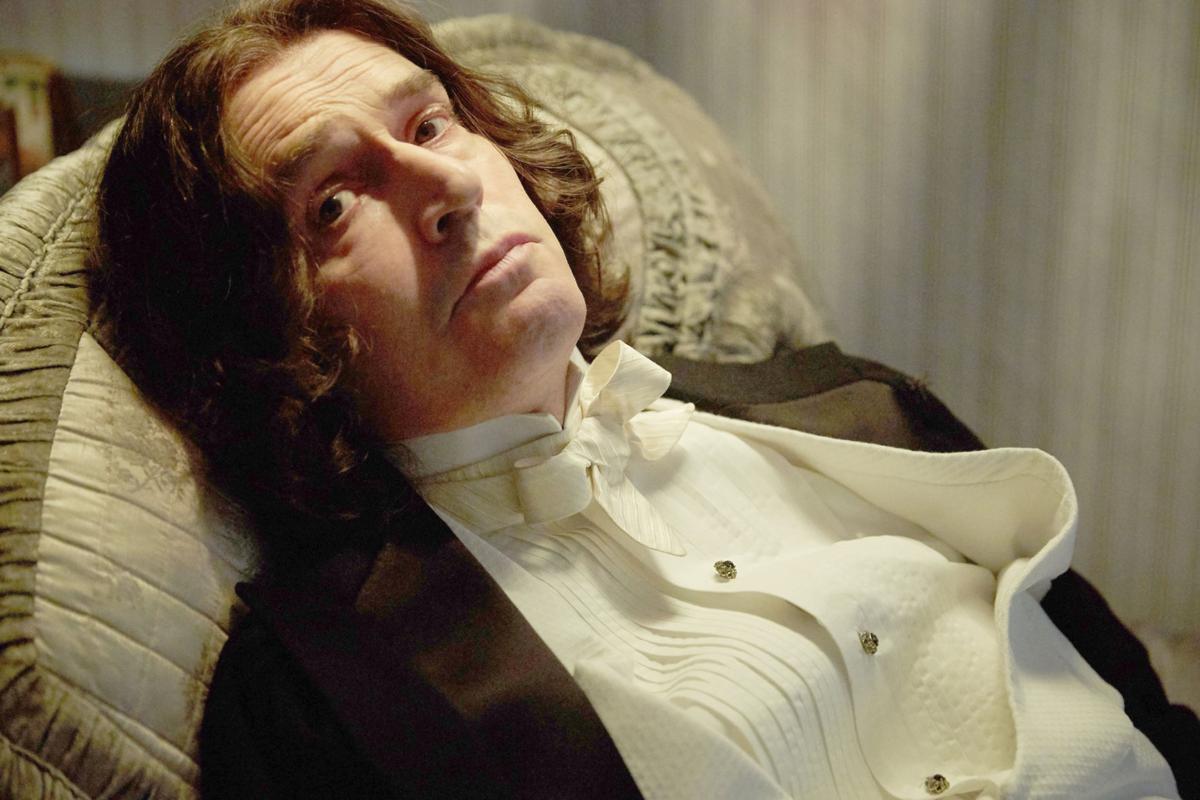
Oscar Wilde, by way of writer/star Rupert Everett, wonders these potent lines partway through The Happy Prince, director Everett’s biopic of the infamous decadent/undeniable genius.

Everett’s tale flashes backward and forward but mainly focuses on the period between Wilde’s 1897 release from prison and his death in 1900. A rather bleak time in a very rich and colorful life, but Everett’s execution never forgets the heights, and his performance is haunted with the fall.

Upon his release, Wilde finds support with sometime lover and literary agent Robert Ross (Edwin Thomas) and writer/friend Reginald Turner (Colin Firth – delightful, especially when his character is not the focus of a scene). But Wilde cannot or will not deny his desire for Alfred “Bosie” Douglas (Colin Morgan).

It is a perfect vehicle for a film that lays bare this particular genius and that rumination on running toward ruin. Only a few years earlier, Wilde’s ego required recompense from his lover’s father, who’d libeled him. Wilde’s suit, however, only uncovered his own then-illegal dalliances and instead of recompense he found himself facing hard labor.

And yet, even with emotional support from his friends and financial support from his wife jeopardized by the decision, Wilde joyously takes Bosie back and the two travel to Naples to misbehave.

Everett’s film more than forgives Wilde’s wildness, though it doesn’t go so far as to fully admire it. His lead performance is colored by an understanding of the difference between living lustily when you have everything, and when all that you once had is forever out of reach.

As a writer and director, Everett tries too hard to use Wilde’s short story The Happy Prince to create a running metaphor, perhaps suggesting that Wilde’s end, like the story’s, reaches transcendence. It’s a tough sell, passing off the short’s image of voluntary self-sacrifice as analogous to Wilde’s fall from grace.

Otherwise, though, the first-time filmmaker delivers a vision edged with the melancholy of a brilliant mind never again able to see the world as bountiful and beautiful. It’s as touching as it is resonant, and nothing in The Happy Prince articulates this tragedy as beautifully as Everett’s performance.

It’s a performance simultaneously full of life and of death. You see the enormous loss, but more than that, the deflating ugliness of this world etched on Everett’s face, echoing in his every gesture.

Everett’s instincts behind the camera come as a nice surprise. With more than 70 acting credits to judge by—many of them quite fine, some even awards contenders—the real surprise is that he had this performance in him.

Screening Room Podcast: Big Air, Deep Water

We talk through Gerard Butler’s place in cinematic history, Jonah Hill’s place as a filmmaker, and Alex Honnold’s place as a crazy person as we break down Hunter Killer, Mid90s and Free Solo. We also run through the best and worst in new home entertainment.

Listen to the full podcast HERE.

Gerard Has the Con

Hunter Killer

by Hope Madden

On a scale from Gerard Butler to 10, how bad is Hunter Killer?

It’s not London Has Fallen bad. Or Gods of Egypt bad. It’s not Geostorm bad, but what is, really?

But is it any good?

Well, no. Don’t get loony. I’m just saying, it could be worse. You know, because Gerard Butler stars.

That doesn’t make him the worst actor in history. It’s just that he’s not especially talented and he makes impressively awful films. And yet, the king of January inexplicably gets a prime October release with this one, playing Captain Joe Glass.

He’s not an Annapolis guy, but that doesn’t mean he can’t successfully lead his first crew through Arctic waters to save the President of Russia from a botched coups attempt.

If you’re worried about subtitles—well, you’re clearly not familiar with the work of Mr. Butler. No, fortunately the Russians only speak Russian when it doesn’t matter if we understand what they say. The moment the dialog is important they switch (sometimes mid-scene) to English. How lucky is that?

I’m sure we’d never be able to follow this plot otherwise. It’s not like every scene is telegraphed in advanced.

Director Donovan Marsh’s film is not unwatchable. It’s shallowly packaged derivative entertainment, boasting passable water scenes and hand-to-hand action choreography that’s entirely adequate. It’s the drama that will make you wince.

There are three primary focal points. Firstly, the drama back in DC, where level heads try to outmaneuver war mongers. Gary Oldman plays a monger.

Everybody follows up their Oscar with garbage. Don’t fret for Gary.

Common plays one of those level heads. This is literally Common’s third film in three weeks. The prior two—The Hate U Give and All About Nina—were both very good. Nobody bats 1000.

The second dramatic focus takes place on the ground—thank God, because honestly, without the small military unit landing covertly on Russian soil with their drones, swagger and witty banter, this movie would never leave a confined area and you would feel even more trapped by it.

The highest drama is, of course, hundreds of feet underwater with noble everyman Cap. Glass. You know what he has? A level head.

Just not, you know, a ton of talent.

I Don’t Want to Go Out—Week of October 22

One of the year’s boldest films and certainly among its most impressive directorial debuts makes its way to your home this week. Also, a lackluster sequel. Not that we’d judge you depending upon your choice.

Click the film title for the full review.

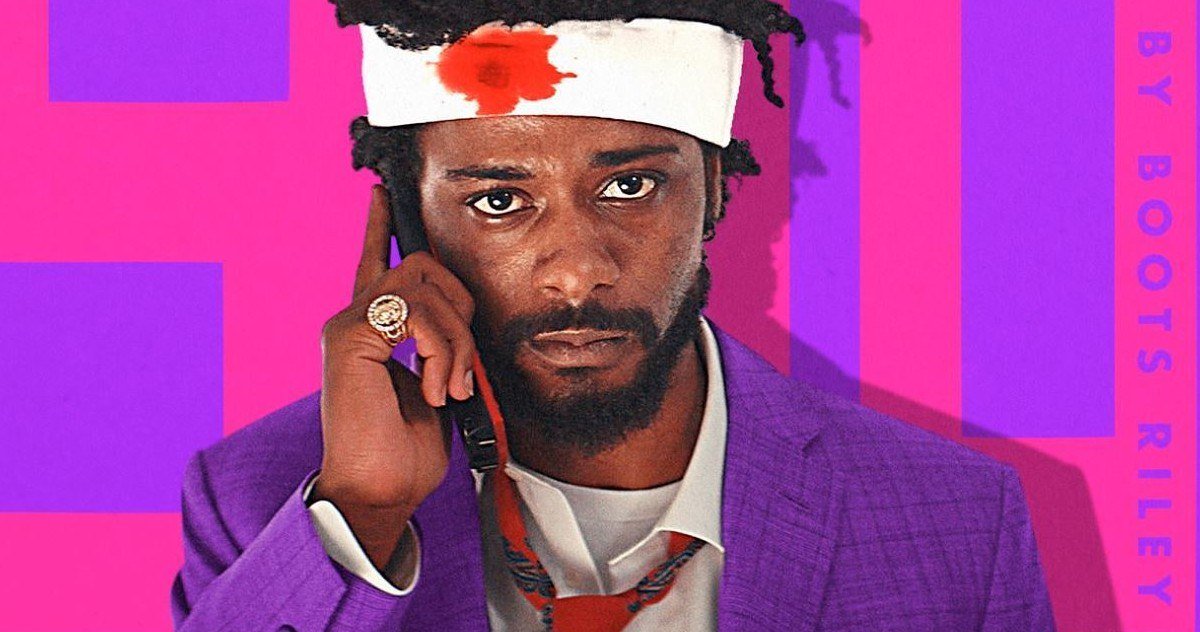
Sorry to Bother You

Mamma Mia! Here We Go Again!

Screening Room: Old Tricks, New Treats

The Screening Room breaks down the new Halloween, talks through The Oath and the new YA The Hate U Give. Plus, we’ll run through what’s worth watching in new home entertainment releases.

Listen to the full podcast HERE.

No Weapon, No Weakness

The Hate U Give

by George Wolf

The Hate U Give becomes one of the year’s better films not because it elevates an oft-maligned genre (though that fresh air blast certainly doesn’t hurt), but instead for how it wraps troubling, vital societal issues around an absorbing family drama.

Adapted from the best selling Young Adult novel by Angie Thomas, the film slaps you with reality right from the opening, when a commanding father (Russell Hornsby) is giving his young children “the talk” – not about sex, but about how to survive when they are pulled over by the police. You may see this as either familiar or eyebrow-raising, and that is precisely the point.

Like so many YA dramas, THUG is anchored by a special young girl. Here, she’s Starr Carter (Amandla Stenberg), but Starr’s specialness isn’t a device that panders, it’s one that is intelligently used to illustrate two very different Americas.

She lives in a Georgia “hood” with her family, but attends a private Catholic school in the ‘burbs, and not, as her mother (Regina Hall) says, “because she needs to learn how to pray.”

On the ride home after a weekend party in her neighborhood, Starr becomes the only witness to the fatal police shooting of her childhood friend Khalil (Detroit‘s Algee Smith). She’s reluctant to come forward for a variety of reasons (all logical), and as the pressure builds from different sides, reactions to the killing bring the contrasts between Starr’s two worlds into clear, illuminating focus.

Director George Tillman, Jr. (Notorious) and screenwriter Audrey Wells (who sadly passed away just weeks ago) craft a thoughtful balance as the narrative progresses, cutting deeper via an impressive restraint that holds until the final few minutes hit a more tidy, didactic vein.

But when this film works, which is most of the time, it works wonderfully. Through Starr’s eyes (and yes, narration) we navigate heady terrain: white privilege, systemic oppression, Black Lives Matter, all lives matter, victim blaming, mass incarceration, cultural appropriation and liberal guilt. And Stenberg, leading a strong ensemble which also includes Anthony Mackie, Issa Rae and Common, rises to the material after some cookie-cutter YA fare (The Darkest Minds, Everything, Everything) with her best performance to date, moving Starr believably through grief, confusion, anger, defiance and hard decisions.

It’s character development that respects both the character and the audience. And in trusting that YA audience with some bitter pills, The Hate U Give becomes a required dose for the rest of us.

The Shape of Horror

Halloween

by Hope Madden

Any sequel to an iconic horror—particularly one that introduced a nightmarish, game changing villain—is bound to disappoint in some fashion because our imagination has attached its own terror to the story and the boogeyman that no one else can match.

Though they certainly tried their best with the Michael Myers franchise, to the tune of seven sequels and two reboots preceding this 40th anniversary comeback, Halloween.

Wisely, director/co-writer David Gordon Green and his writing partners Danny McBride and Jeff Fradley ignore all those other films, creating a universe where only John Carpenter’s 1978 original exists.

Jamie Lee Curtis returns to the star-making role of Laurie Strode, Carpenter’s final girl who has spent the last 40 years struggling to recover from the trauma of that Halloween night by stockpiling guns, booby-trapping her home and alienating her family.

She’s not the only character with a one-track mind. Myers’s attending doc, Dr. Sartain (Haluk Bilginer) thinks of, studies and devotes himself to nothing else but his star patient.

“You’re the new Loomis,” Laurie Strode quips upon meeting him—exactly what we were thinking. And though Bilginer’s performance borders on camp (and not in that respectable way Donald Pleasance had of overacting), his musings articulate the film’s basic principles. After 40 years of obsessing over having failed to achieve their goals—neither killed the other—Laurie Strode and Michael Myers are as connected as they might be if they were still siblings.

See, that came up in 1981’s Halloween II, so no longer canon.

Green’s direct sequel is, above all things, a mash note to the original. Visual odes continually call back to Carpenter, often in ways that allude to an intriguing about face the film is leading to.

Aside from Bilginer and Andi Matichak—unmemorable as Strode’s high school-aged granddaughter, Allyson—the cast is far stronger than what any of the other sequels could boast.

The humor peppered throughout the film, mainly as dialog between characters about to be butchered, too often undermines the tension being built. But Green, whose style refuses to be pinned down, embraces the slasher genre without submitting to it.

Kills—more numerous and grisly than the first go round—are often handled offscreen, just the wet thud or slice of the deed to enlighten us until the corpse gets a quick showcase. The result is a jumpy, fun, “don’t go in there!” experience reminiscent of the best of the genre.

The film takes it up a notch in its final reel, as tables turn, panic rooms open and cop heads become Jack-o-lanterns. The result is a respectful, fun and creepy experience meant to be shared with a crowd.

Indivisible

The Oath

by Hope Madden

The Oath, writer/director/star Ike Barinholtz’s deep, dark comedy of manners and political upheaval, almost feels like a prequel to The Purge franchise.

As Kai (Tiffany Haddish, criminally underused) and Chris (Barinholtz) prepare for the yearly celebration of family dysfunction that is Thanksgiving, pressure within and outside the house builds around the US government’s new Patriot’s Oath.

This oath is a pledge of unfaltering dedication to the president. It is voluntary—and anyone who loves America would certainly volunteer. Deadline for signing is Black Friday.

The premise allows Barinholtz to mine the old dinner table comedy concept for insights about a divided nation. As lead, he creates a self-righteous liberal who’s quick to judge, blindly passionate and dismissive of other opinions.

Chris’s opposite this holiday season is not exactly his conservative brother Pat (played by actual brother Jon Barinholtz) as much as it is Pat’s Tomi Lahren-esque girlfriend, Abbie (perfectly played by Meredith Hagner). The rest of the family —played by Nora Dunn, Carrie Brownstein, and Chris Ellis —fall somewhere between the two on the political spectrum. Mainly, they’d just like some quiet to enjoy their turkey.

The Oath exacerbates tensions with an all-too-relevant and believable horror, but makes a wild tonal shift when two government officials (John Cho, Billy Magnussen) arrive on Black Friday to talk to Chris, who hasn’t signed.

Barinholtz’s premise is alarmingly tight. Equally on-target is the tension about sharing holidays with politically opposed loved ones, as well as the image of our irrevocably altered news consumption. But beyond that, The Oath doesn’t offer a lot of insight.

It makes some weird decisions and Barinholtz’s dialog—especially the quick one-offs—are both character defining and often hilarious. But as a black comedy, The Oath can’t decide what it delivers. A middle class family comfortably in the suburbs faces the unthinkable: potential incarceration and separation with no true justice system in place to work for their freedom.

Unfortunately, this actually describes far too many immigrant families for the film to pull that final punch. Barinholtz settles, offering a convenient resolution that robs his film of any credibility its first two acts had earned.

I Don’t Want to Go Out—Week of October 15

What’s new in home entertainment? The most likable Avenger comes home, as does one underappreciated horror and one doc destined for Oscar contention. Let us help you choose.

Click the film title for a full review.

Whitney

Ant-Man and the Wasp

Unfriended: Dark Web

Twisted Sisters

The Sisters Brothers

by Hope Madden

How many Jacques Audiard films have you seen? You should probably see all of them, including his latest, The Sisters Brothers.

Like his previous films (Rust and Bone, A Prophet, Dheepan), The Sisters Brothers starts out as one film, inserts another fascinating story, and as those two come together the movie unveils its true intent. Unlike Audiard’s other films, The Sisters Brothers is a Western.

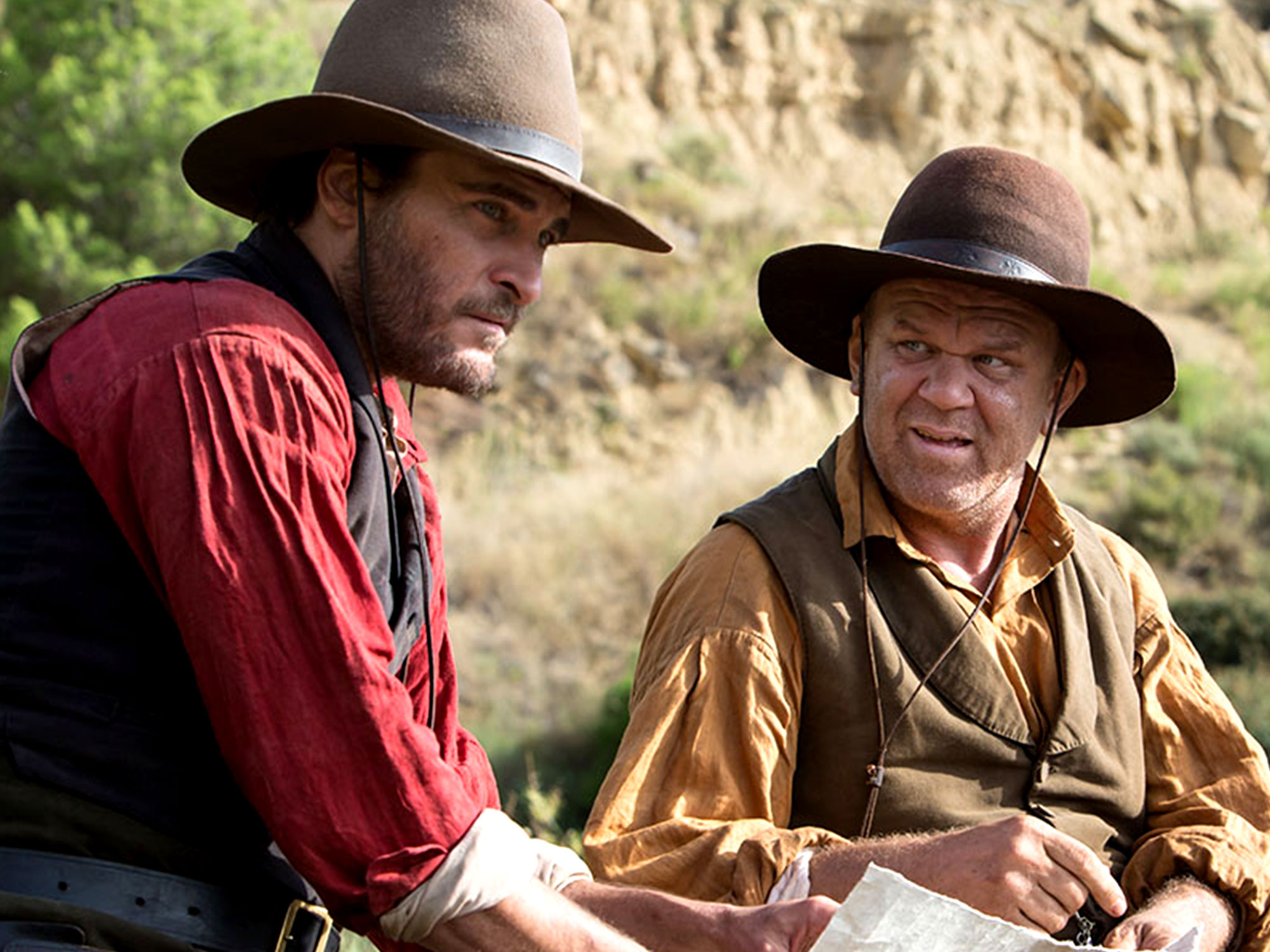
We open with Charlie and Eli Sisters (Joaquin Phoenix and John C. Reilly, respectively), two gunslingers for hire on the job. Their next big gig assigned by The Commodore (Rutger Hauer) will put them on the trail of a prospector in the 1850s West.

Phoenix, who is having a banner year even for him (if you haven’t already seen You Were Never Really Here and Don’t Worry, He Won’t Get Far on Foot, please do), plays the loose cannon brother. Making trouble is in his blood—a fact his brother is trying to forget.

Eli longs for something better for himself, something settled and adult. But he is bound to his brother and their friction bristles with the bonds and bondage of family. Reilly’s conflicted tenderness and responsibility mingle with a genuine longing that offers an emotional center for the film.

A few days’ ride ahead of the brothers is the tracker The Commodore hired to assist in the deed. Jake Gyllenhaal’s John Morris is an observer and a loner, a man who believes in his own intellect but is willfully blind to the consequences of his career choice—until he befriends the object of The Commodore’s interest, a chemist with ideals and a compound that seriously simplifies the act of finding gold.

Good-natured chemist Hermann Kermit Warm is played by Riz Ahmed (also having quite a year, back to back this week with his strong turn in the overly criticized Venom). He and Gyllenhaal remind you of the amazing chemistry they shared in 2014’s Nightcrawler. Though their characters couldn’t be more different this time around, the two actors again share a natural rapport that makes you a believer.

Peppered with fascinating images, intriguing side characters and the lonesome beauty that infects the best Westerns, Audiard’s film embraces a genre without bending to expectations. Does it all come down to daddy issues? Yes, but the longing for camaraderie and the quest for redemption has rarely been this charming.

The film meanders intentionally, serving the rugged outdoorsiness required of its genre, but relies on its four leads to craft fascinating characters whose relationships and destinies infect you with a hope often lacking in Westerns.